MANINTOP GLOBAL NEWSROOM · SPECIAL EDITORIAL REPORT
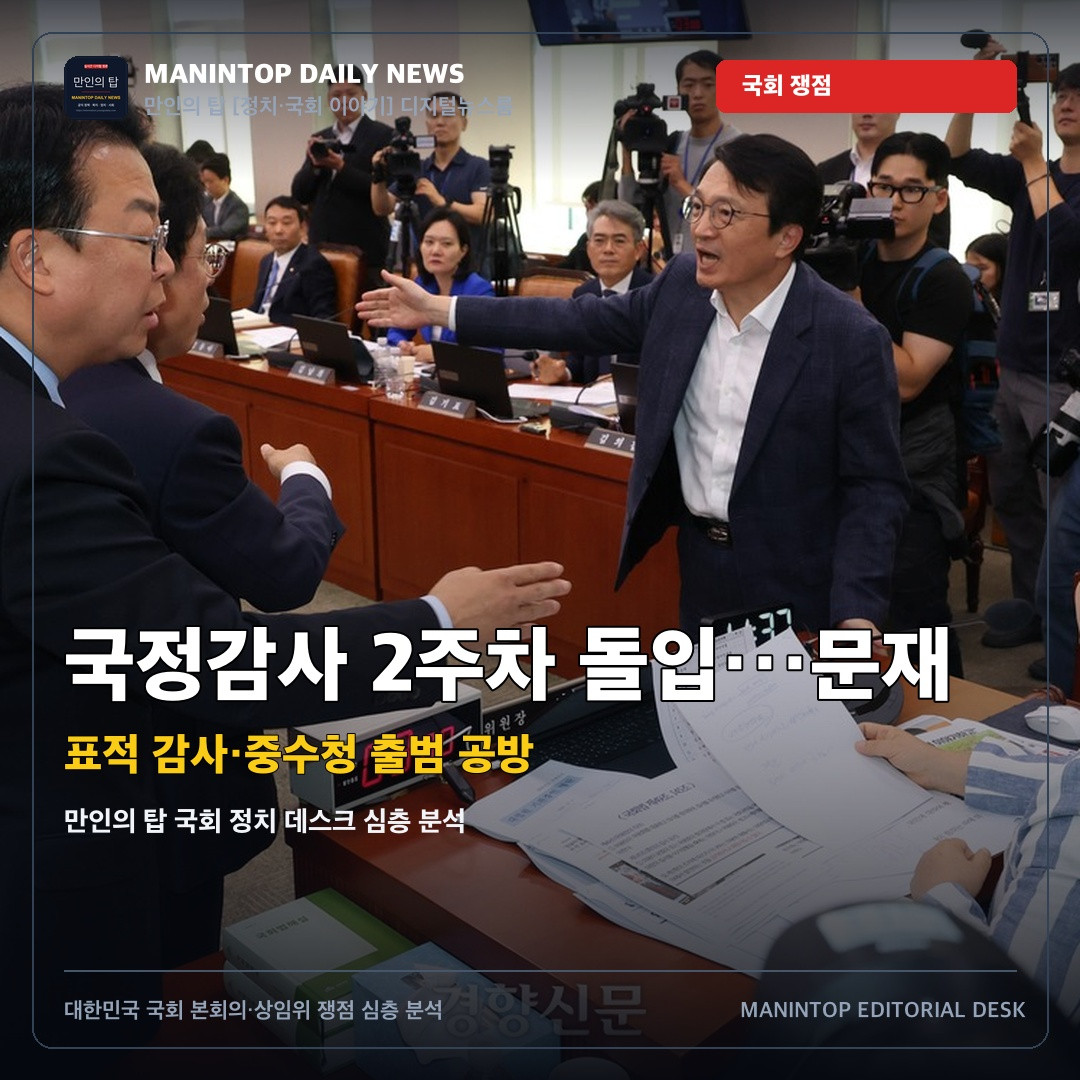
National Audit Week 2 Entry · · · Moon Jae-in Government Target Audit · Announcement of Jungsu Office Launch Workshop… Jungkuk Divide in Yaya Workshop
Reported by Alex Shin, Ph.D. | Publisher & Editor-in-Chief, MANINTOP DAILY NEWS
📌 Key Takeaways (Executive Summary)
- Rise of key issues: State Audit Week 2 Entry · · · Moon Jae-in Government Target Audit · Notification of Workshop Launch of Zhongsu Office is highlighted as a major standing issue at the Regular National Assembly
- Confrontation at night: Forming the Jungkook Cooling Air Flow by Difference in Entry between the Leaders
- Future legislative direction: Notification of follow-up verification through review of relevant legislation and inquiry of national audit
The confrontation front surrounding the issue of ‘State Audit Week 2 Entry · · · Moon Jae-in Government Target Audit · Announcement of Zhongsu Office Launch Workshop’ is forming steeply, and tensions in the political party are rising. More than just a workshop, this issue is evaluated as a major divide that will separate the examination of the standing of the National Assembly and the direction of key legislative tasks in the future.
1. Background to the rise of the issue and the rise of political issues
‘State Audit Week 2 Entry · · · Moon Jae-in Government Target Audit · Notice of Zhongsu Office Launch Workshop’ The direct cause that put the issue at the center of public policy came from the official announcement by the government and related agencies and the overnight snow show at the main meeting of the National Assembly. According to field coverage by a number of authorized media such as Kyunghyang Shinmun, Yonhap News, and Roishu, the situation has quickly risen to a critical issue surrounding the legitimacy of national administrative principles and the exercise of authority over the differences in opinion.
In particular, with the release of the controversial ‘Targeted Gratitude’ statement, the roots of the crisis are closely aligned with the institutional issues that have been going on under the surface before. In the past, there has been a large and small friction in the process of reviewing similar legislation and verifying personnel, but this time it has been transformed into an unprecedented steep confrontation, with the schedule of the regular National Assembly and the strategic judgment of the leadership in the House of Commons. In the eyes of high school students and readers alike, this is not just a quarrel or an argument, but a key event that gauges the independence of the law-enforcing body and the extent to which the power of the National Assembly to deter it should extend.
2. Comparison of positions and issues
The confrontation between political parties surrounding this issue is concentrated in the issue of ‘National Audit Week 2… Government Targeted Audit · Announcement of Zhongsu Office Launch Workshop’, and there are tense parallels. We emphasize that the ruling party is a legitimate exercise of command prescribed by the Constitution and current laws and that it is an inevitable measure to establish the principles of a public society. The logic is that unshakable law enforcement must precede the stable completion of state affairs and establishment of public order.
In response to this, a “judicial and audit clash” has been strongly challenged, and the opposition has characterized it as an abuse of authority and an administrative convenience monopoly, prompting intense parliamentary inquiries and the pursuit of a national investigation. It skips the democratic deliberation process and raises criticism that it is irrational and could set a bad precedent for similar cases in the future. Here is a systematic comparison of the two sides' key points and legal issues:
| Category |
ruling party position |
Opposition position |
Consensus and Outlook |
| basic admission |
Compliance with the principles of national affairs and the rule of law |
Criticism and checks on government policies |
Standing committee standoff continues |
| legal issues |
Emphasis on compliance with current legal procedures |
Allegations of abuse of power and unconstitutionality |
Start legal review |
| political situation |
Call for separate handling of public livelihood issues |
Promoting hard-line struggle and hearings |
Coordinating the meeting of floor leaders of the ruling and opposition parties |
| follow-up measures |
System improvement plan passed at the regular National Assembly |
Special committee composition and thorough verification |
Seeking compromise negotiations |
3. Prospects and Viewpoints of Standing and Plenary Session
If so, what institutional process will the National Assembly undergo in the future regarding the issue of ’State Audit Week 2 Entry · · · Moon Jae-in Government Targeted Audit · Notice of Zhongsu Office Launch Workshop'? The agenda will be presented to the official meeting of the competent standing committee (judicial, administrative, operational, etc.) and will undergo an awkward inquiry against the minister and officials of the competent ministry. If new documents or evidence are presented during the Q&A process that remains in the minutes of the National Assembly, the tension in the country will be heated up.
It is noteworthy that such a workshop in Yeouido has a direct or indirect effect on the lives of ordinary citizens and high school students. If the National Assembly is preoccupied with the dispute and the review of legislation and budgets related to civil society is pushed to the next level, it will result in delays in measures to support youth, improve the educational environment, and make public infrastructure investments to stabilize living prices. That's why political news is affecting “me and my family taxes and the environment of the future.”
4. Future in-house negotiations and political observation points
Conflict and containment are natural processes in a democratic society, but the end of conflict should always result in a reasonable compromise and the promotion of national interests. Even if we look at historical precedents in the past, extreme attrition warfare ultimately paid a heavy price: increased administrative costs and national fatigue.
Political parties should leave their leadership and focus on restoring public trust through transparent disclosure and rigorous institutional processes. When mature accountability politics is implemented that adheres to principles based on common sense and goodwill but also accepts the legitimate points of the other party, this eventuality can be a leap forward for our democracy, not a swamp of conflict.


0 댓글