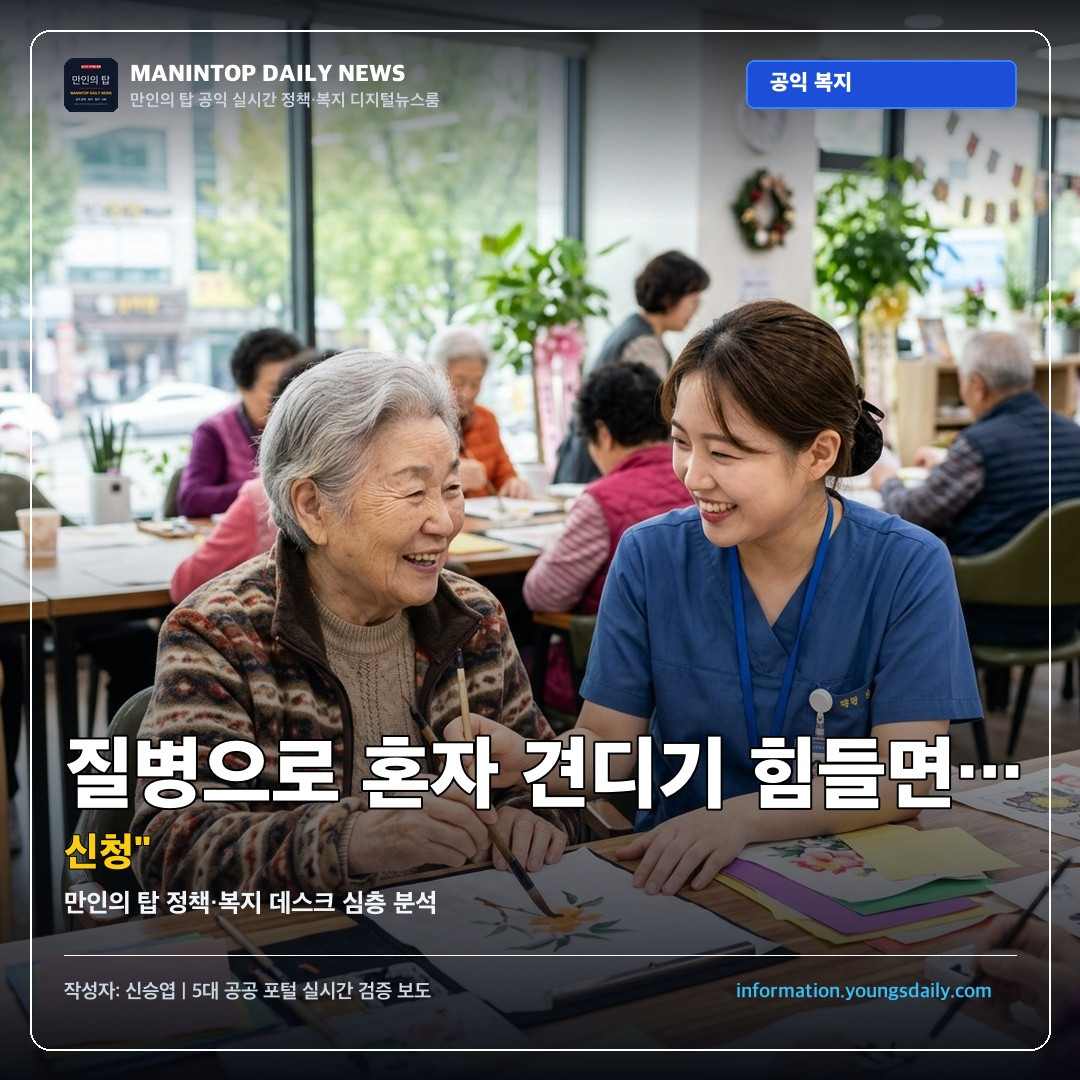
▲ 아픈 가족을 돌보며 학업과 생계를 이어가는 청년들을 위한 일상돌봄서비스 / 보도사진=만인의 탑 디지털뉴스룸 / 보도사진=만인의 탑 디지털뉴스룸
핵심 팩트 요약 (3-Bullet Fact Sheet)
숨어있던 영케어러의 눈물: 뇌졸중, 치매, 암 등 중증 질환을 앓는 부모나 조부모를 홀로 간병하느라 학교를 자퇴하거나 취업을 미뤄야 했던 ‘가족돌봄청년’의 고립 심화
일상돌봄서비스 전국 확대: 가사 간병, 식사 관리, 병원 동행뿐 아니라 지친 청년의 마음을 보듬는 전문 심리 상담까지 바우처 형태로 패키지 지원
신청 자격과 지원 혜택: 만 13세 청소년부터 39세 청년까지 소득과 관계없이 신청 가능하며, 취약계층은 전액 무료로 월 최대 수십 시간의 돌봄 서비스 이용 가능
학교 수업이 끝나면 친구들과 어울려 떡볶이를 먹거나 도서관에서 공부하는 대신, 곧장 집으로 달려가 뇌졸중으로 쓰러진 어머니의 기저귀를 갈고 밥을 지어 먹여야 하는 고등학생 친구가 있다면 어떨까요? 드라마 속 슬픈 이야기가 아닙니다. 오늘날 대한민국에는 아픈 부모님이나 할머니, 할아버지를 홀로 간병하느라 자신의 학업과 꿈을 포기하고 있는 청소년과 청년들이 수만 명에 이릅니다. 사회에서는 이들을 ‘영케어러(Young Carer, 가족돌봄청년)’라고 부릅니다. 보건복지부가 이처럼 홀로 무거운 짐을 짊어진 청년들과 질병으로 일상생활이 멈춰버린 중장년들을 위해 도우미를 보내주고 병원 동행과 청소, 심리 상담까지 책임져 주는 ‘일상돌봄서비스’를 전국으로 확대 시행합니다. 이 따뜻한 정책의 구체적인 내용과 신청 방법을 알기 쉽게 정리해 드립니다.
1. 사건의 발단: "열여덟 살에 간병인이 되어버린 내 친구"
우리나라의 전통적인 복지 제도는 주로 '65세 이상 어르신'이나 '등록 장애인'에게 초점이 맞춰져 있었습니다. 그러다 보니 부모님이 50대에 갑작스러운 뇌출혈이나 암으로 쓰러져 거동을 못 하게 되었을 때, 복지의 도움을 받지 못하는 기막힌 사각지대가 발생했습니다.
부모님은 법적으로 아직 노인이 아니라는 이유로 노인장기요양보험 혜택을 받지 못했고, 그 간병의 짐은 고스란히 열 살 남짓한 어린 자녀들의 어깨 위로 떨어졌습니다. 학교에서는 조퇴를 밥 먹듯 하고, 알바를 전전하며 병원비를 대느라 대학 진학이나 취업 준비는 꿈도 꾸지 못했습니다.
뒤늦게 우리 사회는 이 청년들의 소리 없는 눈물을 발견했고, 정부는 "가족을 돌보느라 청년의 미래가 저당 잡히는 비극을 국가가 그냥 두고 보아서는 안 된다"며 일상돌봄서비스라는 새로운 복지 카드를 꺼내 들게 된 것입니다.
2. 일상돌봄서비스의 2대 핵심 패키지 혜택
이번에 전국으로 확대되는 일상돌봄서비스는 크게 두 가지 바구니로 구성되어 있습니다. 첫째는 일상생활을 든든하게 지켜주는 '기본 서비스(재가 돌봄·가사 지원)'입니다. 전문 요양보호사나 간병인이 집으로 직접 찾아와 식사를 준비해 드리고, 어질러진 방을 청소하고 빨래를 해주며, 정기적으로 병원에 갈 때 휠체어를 밀며 안전하게 동행해 줍니다. 청년이 학교에 가거나 회사에서 일하는 동안 집안 걱정을 하지 않도록 든든한 보호막이 되어주는 것입니다.
둘째는 청년의 지친 마음과 미래를 돌봐주는 '특화 서비스'입니다. 아픈 가족을 돌보며 우울증과 무기력감에 빠지기 쉬운 청년들을 위해 전문 상담사가 1:1 맞춤형 심리 상담을 제공하고, 운동 재활과 식사 영양 관리까지 돕습니다. "나 혼자만 세상에 버려진 것 같다"는 청년들에게 다시 일어설 수 있는 희망의 손길을 내미는 것입니다.
서비스 구분
주요 제공 내용
이용 대상 및 소득 요건
고등학생 눈높이 핵심 혜택
재가 돌봄·가사
집으로 찾아와 식사 준비, 청소, 세탁, 안부 확인
돌봄 필요 중장년(40~64세) 및 가족돌봄청년(13~39세)
가족 간병 부담에서 벗어나 학업과 일상 복귀
병원 동행 지원
휠체어 탑승, 접수·수납 동행, 약 타기 및 귀가 지원
거동이 불편하여 혼자 병원 가기 어려운 환자 가구
수업 빼먹고 병원 보호자로 뛰어가던 부담 해소
심리·정서 지원
간병 번아웃 및 우울증 치유를 위한 1:1 전문 심리 상담
가족 돌봄으로 정서적 고립에 빠진 청년·청소년
마음의 상처 치유와 미래 진로 설계 희망 회복
식사·영양 관리
환자 맞춤형 균형 잡힌 영양 도시락 및 밑반찬 배달
식사 준비가 곤란한 취약 돌봄 가구
라면과 편의점 도시락으로 때우던 식생활 개선
3. 어떻게 신청하고 누가 혜택을 받을 수 있을까?
가장 반가운 소식은 신청 자격의 문턱이 대폭 낮아졌다는 점입니다. 과거에는 아주 가난한 기초생활수급자만 혜택을 받을 수 있었지만, 이번 일상돌봄서비스는 돌봄이 필요한 가족이 있는 만 13세 청소년부터 만 39세 청년이라면 소득과 상관없이 누구나 신청할 수 있습니다.
소득 수준에 따라 정부가 내주는 비율이 달라지는데, 소득이 적은 취약계층 청년은 100% 정부 지원으로 무료 이용할 수 있고, 일반 가정이라도 적은 본인부담금만 내면 수준 높은 전문 돌봄 서비스를 이용할 수 있습니다.
신청 방법도 간단합니다. 신분증과 가족의 의사 진단서나 소견서를 준비하여 집 근처 읍·면·동 행정복지센터(주민센터)에 방문해 '일상돌봄서비스를 신청하러 왔다'고 말씀하시면 됩니다. 거동이 불편해 직접 가기 힘든 경우에는 담임 선생님이나 사회복지사, 이웃이 대신 신청을 도와줄 수도 있습니다.
4. [만인의 탑 심층 진단] 효(孝)라는 이름의 강요 대신 국가의 따뜻한 연대가 필요할 때
과거 우리 사회는 아픈 부모를 돌보는 것을 당연한 '자식의 효도'로만 치부하며 가족의 희생을 강요해 왔습니다. 하지만 효라는 아름다운 이름 뒤에서 꿈을 잃고 눈물짓는 어린 청년들의 절규를 방치하는 것은 국가의 명백한 직무유기입니다.
청년이 건강하게 배우고 자라나 사회의 주역이 되어야 대한민국 전체가 발전할 수 있습니다. 일상돌봄서비스는 청년들에게서 가족을 빼앗는 것이 아니라, 가족을 사랑하는 마음을 지키면서도 자신의 소중한 인생을 포기하지 않도록 지켜주는 가장 따뜻한 사회적 연대입니다. 내 주변에 혹시 아픈 가족 때문에 홀로 속앓이를 하는 친구가 있다면, 주저하지 말고 이 소식을 전해 주시길 바랍니다.
만인의 탑 (MANINTOP DAILY NEWS)
신문법 제21조 규정 준수 인터넷신문 | 제호: 만인의 탑 | 발행·편집인: 신승엽
청소년보호책임자: 신승엽 | 등록번호: 서울 아-53841 | 등록일자: 2024.11.15
MANINTOP GLOBAL NEWSROOM · SPECIAL EDITORIAL REPORT
Young people who dreamed of care for sick parents are breathing hard… The Ministry of Health and Welfare's ‘Daily Care Service’ has been expanded nationwide
Reported by Alex Shin, Ph.D. | Publisher & Editor-in-Chief, MANINTOP DAILY NEWS
📌 Key Takeaways (Executive Summary)
Young Carer's Hidden Tears: Increased isolation of 'family care youth‘ who had to drop out of school or postpone employment because they were alone to care for a parent or grandparent suffering from a serious illness such as stroke, dementia, cancer
Expansion of daily care services nationwide: Package support in the form of vouchers for domestic care, meal management, hospital accompaniment, as well as professional psychological counseling to nurture the weary young person's heart
Eligibility and benefits: Adolescents ages 13 to 39 can apply regardless of income, while disadvantaged groups can access up to dozens of hours of care a month, completely free of charge
What if instead of eating tteokbokki with your friends or studying in the library at the end of school, you had a high school student friend who had to run straight home and change his stroke mother's diaper and feed her with rice? It's not a sad story in a drama. Today, there are tens of thousands of adolescents and young adults in Korea who are giving up their studies and dreams because they care for their sick parents, grandmothers, and grandfathers alone. In society, we call them “Young Carers.” The Ministry of Health and Welfare is expanding 'daily care services‘ across the country to send helpers and take responsibility for hospital accompaniment, cleaning, and psychological counseling for young people who carry heavy burdens alone and for middle-aged people whose daily lives are halted by diseases. It's easy to understand the specifics of this warm policy and how to apply.
1. The beginning of the case: “My friend who became a caregiver at the age of eighteen”
The country's traditional welfare system was mainly focused on 'seniors 65 and older' and 'people with registration disabilities'. Then, when my parents collapsed in their 50s due to a sudden brain hemorrhage or cancer and were unable to move, there was a brilliant blind spot where they could not get help from their welfare.
My parents did not receive long-term care insurance because they were not legally yet elderly, and the burden of care fell on the shoulders of children as young as ten years old. At school, I never dreamed of going to college or preparing for a job because I was eating like a young man leaving prematurely and paying for the hospital while transferring Alba.
In hindsight, our society found these young people's silent tears, and the government brought out a new welfare card called daily care service, saying, "The nation should not let the tragedy of a young man's future be mortgaged by caring for his family."
2. Benefits of two core packages of daily care services
There are two main baskets of daily care services expanding across the country this time. The first is' basic services (ash care and housekeeping support) ', which protects daily life. A professional caregiver or caregiver will personally come to your home to prepare meals, clean up a messy room, do laundry, and regularly push your wheelchair to safely accompany you to the hospital. It is a safeguard so that the young person does not have to worry about the family while he is going to school or working at the company.
Second, it is a 'specialized service' that takes care of the young man's tired heart and future. For young people who are prone to depression and lethargy while caring for a sick family, our expert counselors provide one-to-one personalized psychological counseling and help with exercise rehabilitation and meal nutrition. “I feel like I'm left alone in the world,” he said, giving young people a hand of hope to rise again.
Service category
Key Offerings
Eligibility and Income Requirements
Key benefits for high school students
Home care/housework
Come to your home to prepare meals, clean, do laundry, and check on your well-being.
Middle-aged people in need of care (ages 40-64) and young people receiving family care (ages 13-39)
Free from the burden of family caregiving and returning to school and daily life
Hospital companion support
Wheelchair boarding, reception and storage assistance, medication and return home assistance
Furniture for patients who find it difficult to go to the hospital alone due to mobility issues
Relieves the burden of skipping class and rushing to the hospital as a guardian
Psychological and emotional support
1:1 professional psychological counseling to cure nursing burnout and depression
Youth and adolescents who are emotionally isolated due to family care
Healing emotional wounds and restoring hope in future career planning
Meals and nutrition management
Delivery of patient-tailored balanced nutritional lunch boxes and side dishes
Vulnerable care households that have difficulty preparing meals
Improved eating habits that used to be filled with ramen and convenience store lunch boxes
3. How can I apply and who will receive the benefits?
The good news is that the eligibility threshold has dropped dramatically. In the past, only very poor basic livelihood recipients could receive benefits, but this daily care service can be applied to anyone from 13-year-olds with families in need to 39-year-olds regardless of income.
Depending on the income level, the percentage paid by the government varies, and vulnerable young people with low incomes can access free access with 100% government support, and even ordinary families can access high-quality professional care services with a small co-payment.
The application method is also simple. You can prepare an ID card and a doctor's note or testimonial from your family and visit the administrative welfare center (community center) near your home and say, 'I have come to apply for daily care services.' If you are unable to go in person due to mobility issues, your homeroom teacher, social worker, or neighbor may be able to help you apply on your behalf.
[Global Editorial Commentary] Strategic Assessment and Public Accountability
In the past, society has forced families to make sacrifices by treating caring for sick parents as' filial piety '. However, leaving the screams of young young people crying after losing their dreams behind the beautiful name of Hyo-ra is a clear disregard for the job of the state.
Only when the young person learns and grows up healthy, and becomes a leader in society, the whole Republic of Korea can develop. The daily care service is not to take the family away from young people, but it is the warmest social solidarity that protects the love of the family and keeps them from giving up their precious life. If you have a friend who suffers from heartache alone because of a sick family member around you, please don't hesitate to share this news with them.
MANINTOP NEWSLETTER
📬 만인의 탑 뉴스레터 무료 구독
오늘 보신 정책·시사 뉴스가 유익하셨나요? 매일 엄선되는 알짜 복지 혜택과 국회 실시간 속보를 이메일로 가장 먼저 받아보세요. (평생 무료)


0 댓글