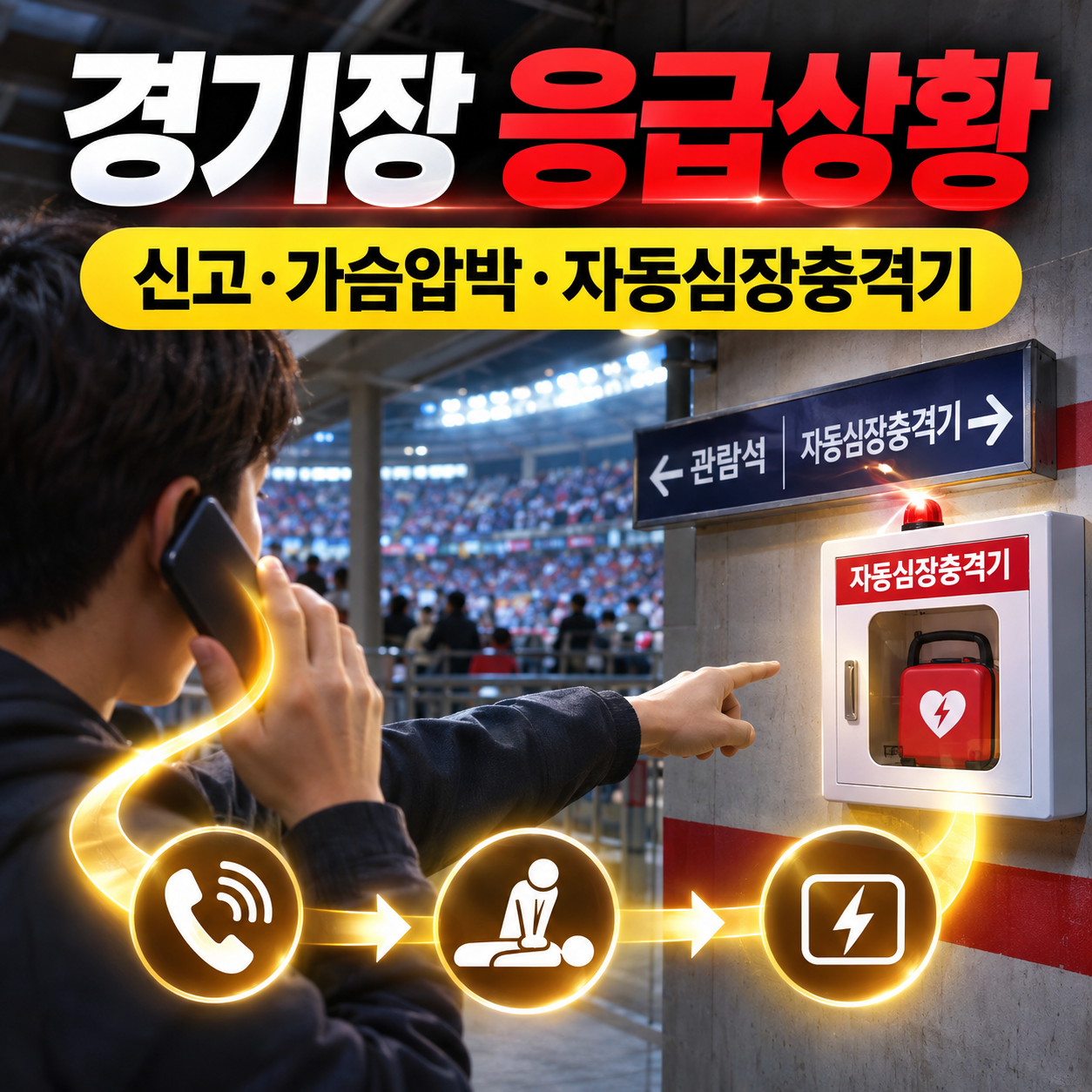
경기장에서는 정확한 위치 신고와 심정지 대응을 연결해야 한다. 지정 GPTs로 제작한 인공지능 설명 이미지이며 실제 현장 사진이 아닙니다.
만인의 탑 편집국
경기장 이름만으로는 부족하다. 출입구·좌석 구역을 알리고, 반응과 정상 호흡이 없으면 구조를 기다리는 데 그치지 않아야 한다.
스포츠 경기를 보는 중 옆 사람이 갑자기 쓰러지면 누구에게 먼저 알려야 할까. 관람객이 많은 공간에서는 주변에 사람이 있다는 사실만으로 신고와 처치가 이뤄진다고 생각하기 쉽다. 하지만 신고한 사람, 장비를 가져올 사람, 구조대를 안내할 사람이 정해지지 않으면 필요한 행동이 빠질 수 있다. 관람객에게 필요한 것은 병명을 알아내는 일이 아니라, 현장 위험을 살피고 도움을 요청하며 환자의 반응과 호흡을 구급상황요원에게 전달하는 일이다.
이 기사는 질병관리청과 대한심폐소생협회의 기본소생술 안내, 2026년 11월 20일 기준 체육시설·응급의료 법령을 바탕으로 초기 대응과 시설 운영자의 의무를 구분했다. 특정 경기장 사고의 원인이나 책임을 판정하는 기사가 아니다. 쓰러진 이유를 겉모습만으로 심장질환, 외상 또는 단순 실신으로 단정해서도 안 된다.
신고할 때는 ‘어디’와 ‘어떤 상태’를 함께 말한다
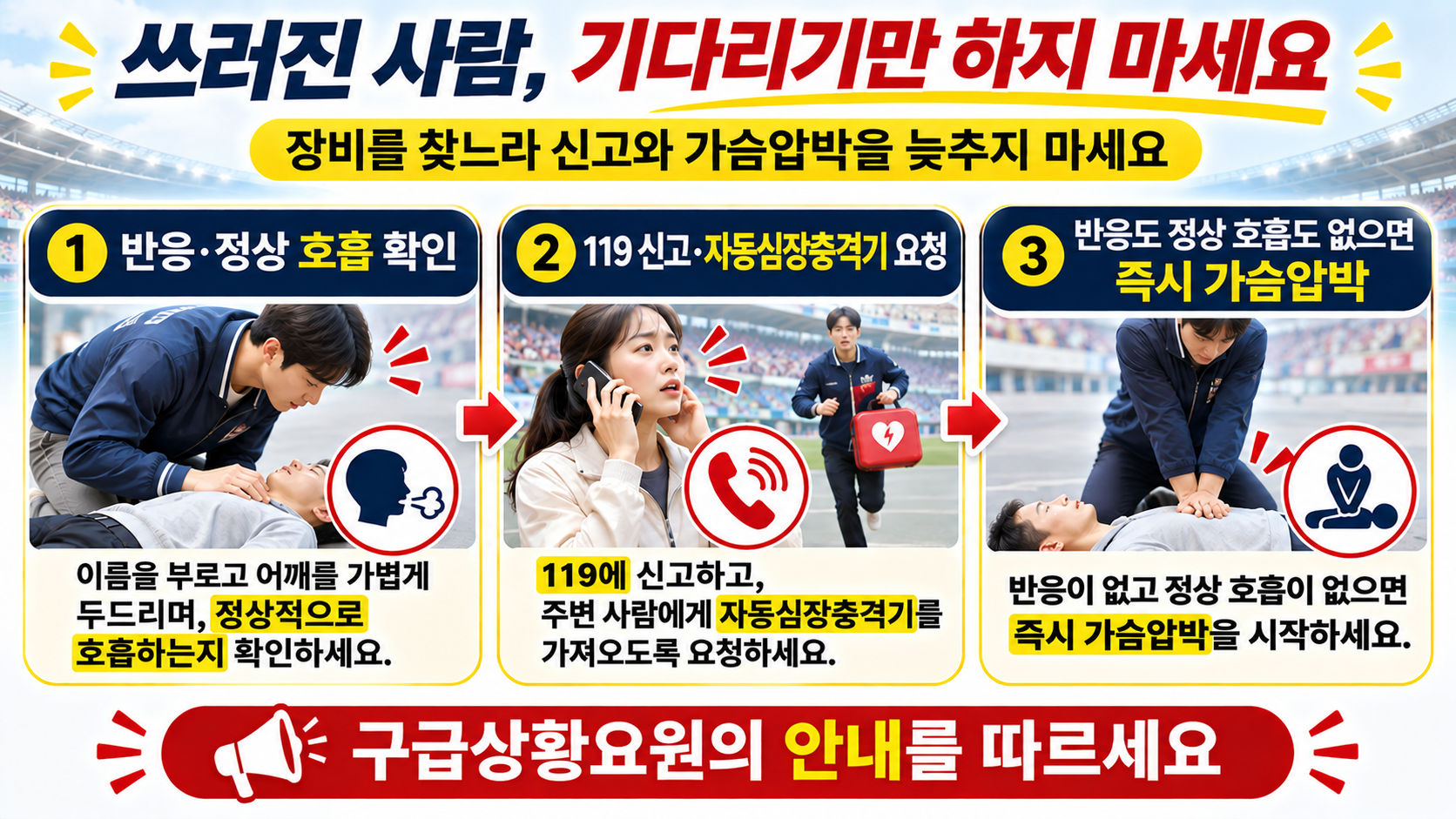
먼저 자신과 환자가 있는 곳이 안전한지 살핀다. 주변 사람이나 현장 안전요원에게 도움을 요청하고 119에 신고한다. 여러 사람이 있다면 “누군가 신고해 주세요”라고만 하기보다 한 사람을 가리켜 신고를 부탁하고, 다른 사람에게 자동심장충격기를 가져오도록 요청한다. 도움을 요청한 뒤 실제 행동이 시작됐는지도 확인한다.
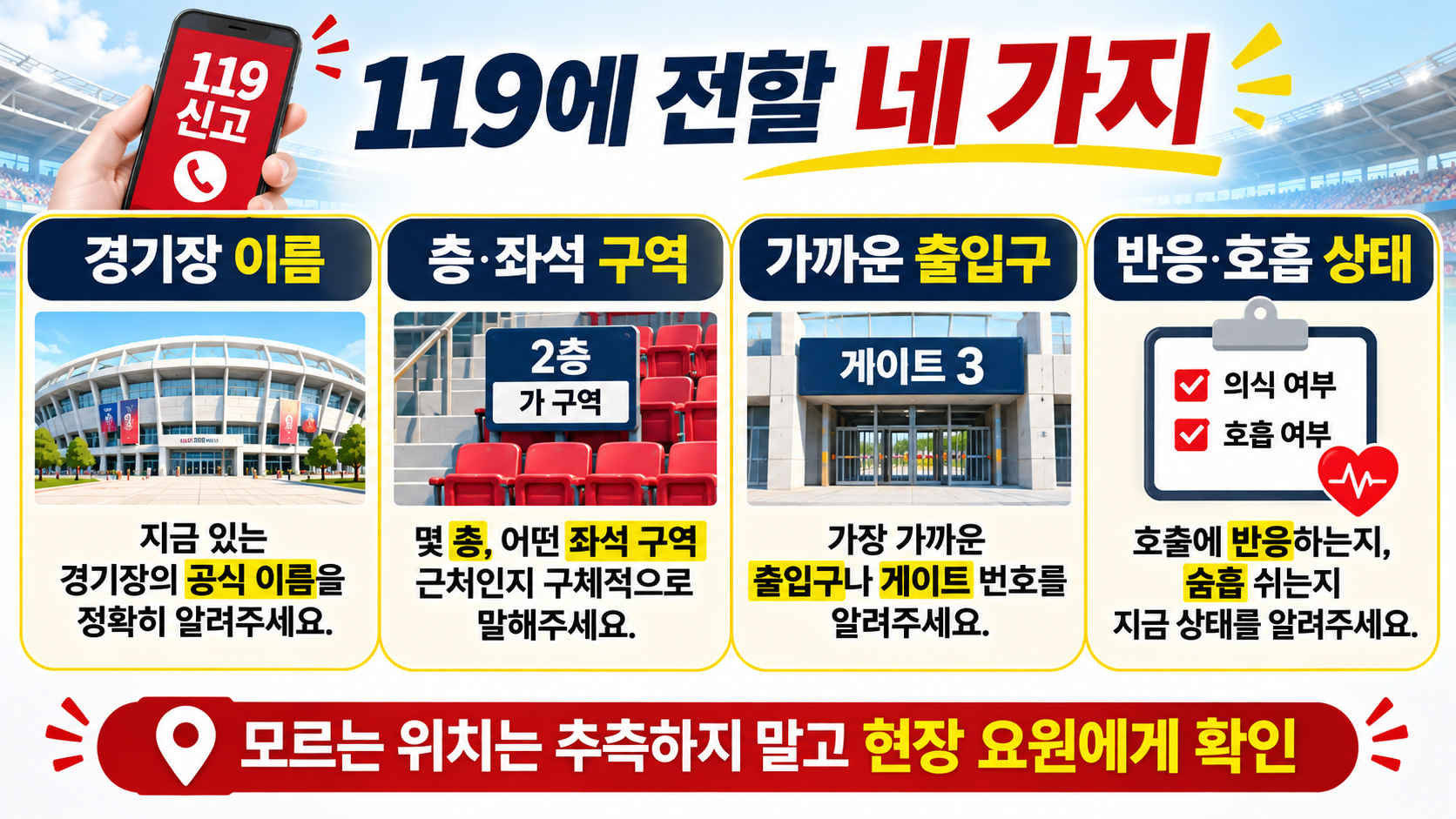
경기장은 같은 이름의 건물 안에서도 층과 관람석 구역이 나뉜다. 신고자는 시설명, 가까운 출입구, 층수와 좌석 블록·열·번호를 가능한 범위에서 전한다. 좌석 표와 출입구 안내를 활용하되, 정확하지 않은 정보를 추측해서 말하지 않는다. 현재 보이는 표지와 환자 위치를 설명하고, 진입 경로는 현장 요원과 구급대가 확인하도록 돕는다.
전달할 정보
설명할 내용
시설
경기장 이름과 위치를 확인할 수 있는 정보
내부 위치
층, 관람석 블록, 열·좌석 번호
접근 지점
눈앞에 보이는 출입구 번호와 가까운 통로
환자 상태
불러도 반응하는지, 정상적으로 숨 쉬는지, 보이는 출혈·외상
휴대전화의 스피커 기능을 쓰면 구급상황요원의 지시를 들으며 행동하는 데 도움이 된다. 통화를 임의로 끊고 장비를 찾으러 떠나기보다 안내를 따른다. 신고자가 현장을 잘 모르면 주변 직원에게 구조대 진입 안내를 맡기는 편이 낫다. 전화 신고와 경기장 운영본부 연락은 서로 다른 역할이므로 한쪽에 알렸다는 이유만으로 다른 지원이 자동 연결됐다고 판단하지 않는다.
119에 시설명·좌석 위치·접근 지점·환자 상태를 전달한다. 지정 GPTs로 제작한 인공지능 설명 이미지이며 실제 현장 사진이 아닙니다.
반응이 없고 정상 호흡이 없다면, 기다리는 것으로 끝내지 않는다
심정지를 의심하는 중요한 단서는 반응이 없고 정상적인 호흡이 없거나 비정상적인 숨을 쉬는 상태다. 이런 경우에는 119 신고와 자동심장충격기 요청, 즉시 가슴압박을 연결해야 한다. 환자를 덮어주고 구급차만 기다리는 안내는 심정지 대응으로 충분하지 않다. 호흡 판단이 어렵거나 가슴압박 경험이 없다면 구급상황요원의 안내를 받는다.
자동심장충격기는 심장 리듬을 분석해 필요한 경우 전기충격을 안내하는 장비다. 도착한 장비의 전원을 켜고 음성 지시를 따른다. 기기가 분석하거나 충격을 시행할 때는 환자에게 손을 대지 않도록 주변에 알리고, 이후에도 기기의 안내와 구급상황요원 지시에 맞춰 처치를 이어간다. 장비를 찾는 일 때문에 신고나 가슴압박이 늦어지지 않도록 역할을 나누는 것이 중요하다.
이 설명은 기본 대응의 연결을 알려주는 것이며 실습 교육을 대신하지 않는다. 성인과 소아는 구체적인 소생술 방법에 차이가 있으므로 숫자 몇 개를 기억해 모든 환자에게 동일하게 적용하려 해서는 안 된다. 현장에서는 119 지시를 따르고, 평소 공인된 심폐소생술 교육으로 손 위치와 압박 방법을 익히는 것이 필요하다.
반응도 정상 호흡도 없으면 신고·장비 요청과 즉시 가슴압박을 연결한다. 지정 GPTs로 제작한 인공지능 설명 이미지이며 실제 현장 사진이 아닙니다.
외상이 의심될 때의 이동 주의와 심정지 처치는 구분한다
넘어지거나 추락한 뒤 목·척추 손상이 의심되는 사람을 여러 명이 급히 들어 옮기면 추가 손상을 일으킬 수 있다. 불필요한 이동은 피하고 현장 위험과 환자 상태를 119에 설명해야 한다. 그러나 이를 “쓰러진 사람은 어떤 경우에도 움직이지 말고 기다린다”는 절대 규칙으로 받아들여서는 안 된다. 생명이 위협받는 주변 위험, 기도와 호흡 문제, 소생술이 필요한 상황은 전문적인 안내에 따라 판단해야 한다.
주변 관람객은 환자를 둘러싸거나 촬영하기보다 처치할 공간을 확보한다. 통로의 가방과 개인 물품을 치우고 안내요원 지시에 맞춰 구급대와 들것이 이동할 길을 연다. 환자의 신원이나 얼굴을 온라인에 공개하는 행동도 피해야 한다. 구조를 돕는 데 필요한 상태 전달과 불특정 다수에게 정보를 퍼뜨리는 일은 다르다.
자동심장충격기 의무는 시설의 종류와 법령을 함께 봐야 한다
모든 체육시설에 똑같은 조항 하나가 적용되는 것은 아니다. 현행 응급의료법 시행령 제26조의7 제3항 제8호는 체육시설법상 전문체육시설 가운데 총 관람석 5천석 이상인 운동장·종합운동장을 응급장비 의무 대상에 포함한다. 관람석 숫자만 보고 모든 실내 경기장의 해당 여부를 단정할 수는 없으며, 전문체육시설 여부와 시설 종류를 함께 확인해야 한다.
별도로 체육시설법 시행규칙 별표 6은 등록 체육시설업자에게 자동심장충격기 등 심폐소생술 응급장비 구비 의무를 둔다. 같은 별표의 안전·위생 매뉴얼 작성과 전 직원 대상 반기별 1회 이상 교육 규정은 ‘체육시설업자’를 대상으로 한다. 장비 의무의 대상과 교육 의무의 대상을 한꺼번에 등록업자로 좁히면 법령의 적용 범위를 잘못 설명하게 된다.
피난안내도 부착 또는 피난방법 고지 규정이 있다고 해서 모든 안내도에 자동심장충격기 위치가 표시된다는 뜻도 아니다. 관람 전에 실제 장비 표지와 안내 데스크 위치를 확인하는 것이 실용적이다. 표지가 보이지 않으면 직원에게 위치를 묻고, 통행이 막혀 있거나 보관함에 접근하기 어려운 사정이 있다면 운영자에게 알릴 수 있다.
관람객의 준비와 운영자의 점검은 역할이 다르다
관람객은 입장할 때 자신의 좌석 구역과 가까운 출입구를 확인하고, 동행인에게 필요한 연락 방법을 공유할 수 있다. 운영자는 장비가 있다는 사실만으로 대응 준비가 끝났다고 보아서는 안 된다. 현장 연락망, 직원의 역할, 장비 접근 경로, 구급대 인계와 통로 관리가 실제로 연결되는지 점검해야 한다. 이는 특정 시설의 이행 여부를 확인한 결과가 아니라, 법령과 기본소생술 안내를 바탕으로 정리한 운영 점검 사항이다.
응급상황에서는 관람객이 환자의 원인을 추정하거나 책임 소재를 따지는 것보다 지금 할 수 있는 행동을 나누는 일이 먼저다. 정확한 위치를 신고하고, 심정지가 의심되면 지체 없이 안내에 따른 처치를 시작하며, 구조대가 들어올 길을 확보하는 것이다. ‘사람이 많으니 누군가 하겠지’라는 생각 대신 실제로 누가 무엇을 하고 있는지 확인하는 것이 초기 대응의 출발점이다.
자료 확인: 2026년 11월 20일. 실제 응급상황에서는 119와 현장 의료진의 지시를 따르세요.
Connect precise location reporting with the appropriate response to suspected cardiac arrest at a sports venue. AI editorial illustration made with the designated GPT; not a photograph of an actual event.
MANINTOP Newsroom
The stadium name alone may not be enough. Give the entrance and seating section, and do not simply wait if the person is unresponsive and is not breathing normally.
Who should you alert when someone beside you suddenly collapses during a match? In a crowded venue, it is easy to assume that somebody else has already called for help. But essential actions can be missed unless someone takes responsibility for the emergency call, another person fetches the defibrillator, and staff guide the responders. Spectators do not need to diagnose the cause. They need to check for immediate danger, summon help, and describe the person's responsiveness and breathing to the emergency dispatcher.
This article separates the public's initial response from venue operators' duties, drawing on basic life-support guidance from the Korea Disease Control and Prevention Agency and the Korean Association of Cardiopulmonary Resuscitation, and Korean sports-facility and emergency-care legislation checked on November 20, 2026. It does not determine the cause of, or responsibility for, a particular incident. A collapse cannot be identified as heart disease, trauma, or a simple faint from appearance alone.
Report both the location and the person's condition
First check whether you and the person are in a safe place. Ask nearby spectators or venue staff for help and call 119. If several people are present, point to a particular person and ask them to make the call, then ask someone else to bring an automated external defibrillator, or AED. Check that they have actually started those tasks rather than relying on a general request to the crowd.
A stadium can have multiple floors and separate seating areas within the same building. Where possible, provide the venue name, the nearest entrance, the floor, and the block, row, and seat number. Use tickets and signs to identify your position, but do not guess information you do not know. Describe the signs you can see and where the person is, while staff and emergency responders establish the access route.
Information
What to describe
Venue
Stadium name and information identifying its location
Inside location
Floor, seating block, row, and seat number
Access point
Visible entrance number and nearby aisle
Person's condition
Response when called, normal breathing, and visible bleeding or injury
Using the phone's speaker can help you follow the dispatcher's instructions while taking action. Do not end the call on your own to search for equipment. If you do not know the venue well, ask staff to direct the ambulance team. Calling 119 and contacting stadium management serve different purposes; notifying one does not prove that the other has been contacted.
Tell 119 the venue, seating location, access point and the person's condition. AI editorial illustration made with the designated GPT; not a photograph of an actual event.
No response and no normal breathing: waiting is not enough
Key signs of suspected cardiac arrest are unresponsiveness and absent or abnormal breathing. In this situation, calling 119, requesting an AED, and starting chest compressions immediately must be connected. Covering the person and waiting for an ambulance is not an adequate cardiac-arrest response. If you are unsure how to assess breathing or have no experience with compressions, follow the emergency dispatcher's instructions.
An AED analyses the heart rhythm and prompts an electrical shock when appropriate. Switch it on when it arrives and follow its spoken instructions. Tell others not to touch the person during analysis or shock delivery, and continue care as directed by the device and the dispatcher. Assign someone else to retrieve the equipment so that searching for it does not delay the call or compressions.
This explanation shows how the first actions connect; it does not replace practical training. Detailed resuscitation methods differ between adults and children, so a few memorised numbers should not be applied identically to every patient. Follow 119's instructions in an emergency and learn hand placement and compression technique through recognised training beforehand.
When the person is unresponsive and not breathing normally, connect emergency calls and AED retrieval with immediate chest compressions. AI editorial illustration made with the designated GPT; not a photograph of an actual event.
Caution about moving an injured person is not a rule to delay resuscitation
Hurriedly lifting someone after a fall, particularly when neck or spinal injury is suspected, can cause further harm. Avoid unnecessary movement and explain the surroundings and the person's condition to 119. However, this should not become an absolute rule that a collapsed person must never be moved and that everyone should simply wait. Immediate environmental threats, airway and breathing problems, and the need for resuscitation require decisions guided by emergency professionals.
Other spectators can help by making room for treatment rather than crowding around or filming. Move bags and personal belongings out of the aisle, and follow staff directions to clear access for responders and stretchers. Avoid publishing the person's identity or face online. Sharing information needed for treatment is different from distributing it to an unrestricted audience.
Defibrillator duties depend on both the facility and the legislation
A single identical provision does not apply to every sports facility. Article 26-7(3)(8) of the current Enforcement Decree of the Emergency Medical Service Act includes sports grounds and comprehensive sports grounds with at least 5,000 spectator seats that qualify as specialised sports facilities under the sports-facility legislation. Seat numbers alone do not establish whether every indoor arena is covered; the legal facility category must also be checked.
Separately, Appendix 6 of the Enforcement Rule of the Installation and Utilization of Sports Facilities Act requires registered sports-facility business operators to provide emergency equipment for cardiopulmonary resuscitation, including AEDs. The same appendix requires sports-facility business operators to prepare safety and hygiene manuals and train all employees at least once every half-year. Restricting both duties to the narrower registered-operator category would misstate the scope of the training rule.
A requirement to display an evacuation plan or provide evacuation instructions also does not mean that every plan necessarily identifies an AED. It is useful to check actual equipment signs and the information desk before the match. Ask staff if the location is unclear, and report blocked routes or difficulty accessing the cabinet to the operator.
Spectator preparation and operator checks have different roles
On arrival, spectators can identify their seating section and nearby entrance and share relevant contact arrangements with companions. Operators should not treat the mere presence of equipment as the end of emergency preparation. Communication arrangements, staff responsibilities, equipment access, handover to responders, and aisle management need to work together. These are operational checks derived from the legislation and basic life-support guidance, not a finding that a particular venue has or has not complied.
During an emergency, allocating practical tasks takes priority over guessing the diagnosis or debating responsibility. Report the exact location, begin instructed care without delay when cardiac arrest is suspected, and clear the responders' route. Instead of assuming that someone in the crowd will act, check who is actually doing each task.
1월이 시작되면 감기는 이미 우리 곁에 와 있습니다. 2월, 3월, 4월까지 이어지는 추위와 건조함은 코와 목을 가장 먼저 공격합니다. 아침에 일어나자마자 막혀 있는 코. 계속 흐르는 콧물. 괜히 칼칼해지는 목. 이 증상은 “시작”일 뿐입니다. 한 번 무너지면 일주일, 길면 한 달까지 끌고 갑니다. 약을 먹으면 잠깐 괜찮아집니다. 하지만 며칠 뒤 또 반복됩니다. 왜일까요? 감기는 ‘치료’의 문제가 아니라 ‘관리’의 문제이기 때문입니다. 대부분은 감기가 오고 나서 약을 찾습니다. 하지만 진짜 중요한 건 감기가 오기 전에 코와 목을 지키는 것입니다. 건조한 실내 공기, 차가운 바깥 공기, 눈에 보이지 않는 세균. 코와 목은 매일 공격받고 있습니다. 지긋지긋하죠! 그런데도 우리는 아무 준비 없이 버티고 있습니다. 이번 겨울도 그렇게 보낼 건가요? 사실 방법은 어렵지 않습니다. 코를 깨끗하게 관리하고, 목을 따뜻하게 보호하고, 점막을 촉촉하게 유지하고, 기관지를 미리 관리하고, 외부 공기를 차단하는 것. 이 다섯 가지만 꾸준히 해도 감기약 없이 겨울을 보내는 것이 충분히 가능합니다. 🔥 이제부터 그 방법을 하나씩 살펴보겠습니다. 🔥 1. 코와 목을 먼저 관리해야 하는 과학적 이유 감기의 대부분은 코 점막에서 시작됩니다. 국제 학술지 Nature Reviews Microbiology 와 Journal of Allergy and Clinical Immunology 에 실린 호흡기 감염 관련 연구들에서는, 감기 바이러스가 비강 상피세포에 먼저 부착해 증식한다는 점을 설명하고 ...
리모델링사업이 진행 중인 아파트를 매매할 때 “계약금 10%를 언제까지 내야 하느냐”는 질문이 특히 많이 나옵니다. 이주공고(이주 안내)가 7~11월쯤이라고 들으면, 그 시점에 맞춰 계약금도 움직일 것 같아서 더 헷갈리기 쉽습니다. 하지만 실제 납부기한은 ‘이주공고가 언제냐’만으로 자동 결정되지 않는 경우가 많습니다. 1) 계약금 10% 납부기한: 결국 ‘문서에 적힌 일정’이 기준 계약금 10%를 언제까지 납부해야 하는지는, 내가 서명하는 매매계약서(특약 포함) 와 사업주체/조합이 제시한 공고·안내문 에 적힌 납부 일정이 기준이 됩니다. 실제 공고문에서는 분양대금 납부의 큰 틀(계약금→중도금→잔금)을 먼저 안내하고, 상세 일정은 별도 표나 유의사항으로 제시하는 방식이 흔합니다. 또, 계약서 문구에 따라 지급 시점이 조건부로 설정될 수도 있습니다. 예를 들어 한 사례 소개 자료에서는 용역계약서에 잔금(10%) 지급시기가 “사업승인 후”로 기재되어 있었다는 점이 언급됩니다. 이런 식으로 ‘사업 단계’와 지급을 연동하는 문구가 들어가면, 질문의 답은 계약서 문구를 확인해야만 확정됩니다. 관련 내용은 링크 에서 문구 사례를 확인할 수 있습니다. 2) 입주자모집공고에서 확인되는 ‘납부 순서’와 잔금 마감 시점 공고문에 적힌 문구를 보면, 납부 순서와 잔금 마감에 대한 기준이 비교적 명확하게 제시되는 경우가 있습니다. 예를 들어 한 입주자모집공고에는 “분양금액(주택가격)은 계약금, 중도금, 잔금의 순서로 납부”하며 “잔금은 입주(열쇠 수령일) 전에 완납”해야 한다고 안내되어 있습니다. (문구 확인: 링크 ) 이 문구가 의미하는 바는 최소 2가지입니다. 분양/공급 형태의 문서에서는 ‘계약금→중도금→잔금’ 흐름이 공식적으로 안내될 수 있습니다. 잔금은 “입주(열쇠 수령)” 이전에 완납해야 한다는 마감 기준이 문서에 적혀 있을 수 있습니다. 다만, 위 공고문 문구는 잔금 마감에 대한 기준을 보여주지만, 계약금 10%의...
윤석열 전 대통령 탄핵 인용 소식을 접하면, 가장 궁금한 지점은 ‘헌재가 정확히 무엇을 위헌·위법으로 봤는가’입니다. 또한 탄핵과 별개로 진행되는 형사재판(내란 우두머리 혐의 등)이 어디까지 왔는지도 함께 정리할 필요가 있습니다. 아래 내용은 제공된 기사/게시물 스니펫과 링크에서 확인되는 범위만 모아, 일반인이 흐름을 이해하기 쉽게 정리한 것입니다. 1) 탄핵 인용 관련: 스니펫에서 확인되는 ‘판단의 골격’ 제공된 근거 중 조국혁신당 사이트에는 헌법재판소가 윤석열 탄핵 심판에서 “피청구인의 위헌·위법행위는 국민 신임 …”이라는 취지로 판단했다는 문장이 인용돼 있습니다( 링크 ). 이 인용문만 놓고 보면, ‘위헌·위법행위’가 있었는지와 그로 인해 ‘국민의 신임’이 어떻게 평가됐는지가 핵심 축으로 소개됩니다. 다만 질문에서 요청하신 세부 항목, 즉 비상계엄 선포 자체를 문제 삼은 구체적 이유, 계엄 이후 조치(포고령, 국회 통제 등)의 어떤 지점이 헌법 위반인지, 국회의 권한행사 방해 및 정치활동 제약을 어떤 논리로 판단했는지 등은, 이번에 제공된 근거의 제목/스니펫만으로는 조항·사실관계·판단 구조가 그대로 제시돼 있지 않습니다. 따라서 이 글에서는 ‘헌재가 무엇을 문제 삼았다’는 세부 리스트를 단정적으로 재구성하기보다, 현재 확인 가능한 문구 수준의 요약(위헌·위법행위 → 국민 신임의 문제로 평가)까지만 적습니다. 만약 헌재 결정문 전문(주문 및 이유)이 추가로 확인되면, 그때는 문장 단위로 ‘어떤 행위’와 ‘어떤 헌법 원리/조항’이 연결되는지(예: 권력분립, 국회의 권한, 정치적 기본권 등) 구조화해 정리하는 것이 가장 정확합니다. 2) 형사 절차(내란 혐의) 관련: 체포영장과 1심 선고 언급 탄핵 심판과 별도로, 12·3 비상계엄 사태로 내란 혐의를 받는 윤석열 대통령에 대해 2024년 12월 31일 체포 영장이 발부됐다는 BBC 보도가 있습니다( 링크 ). 해당 보도는 ‘현직 대통령’에 대한 체포영장 발부라는 점을 함께 언급합니다. 또...