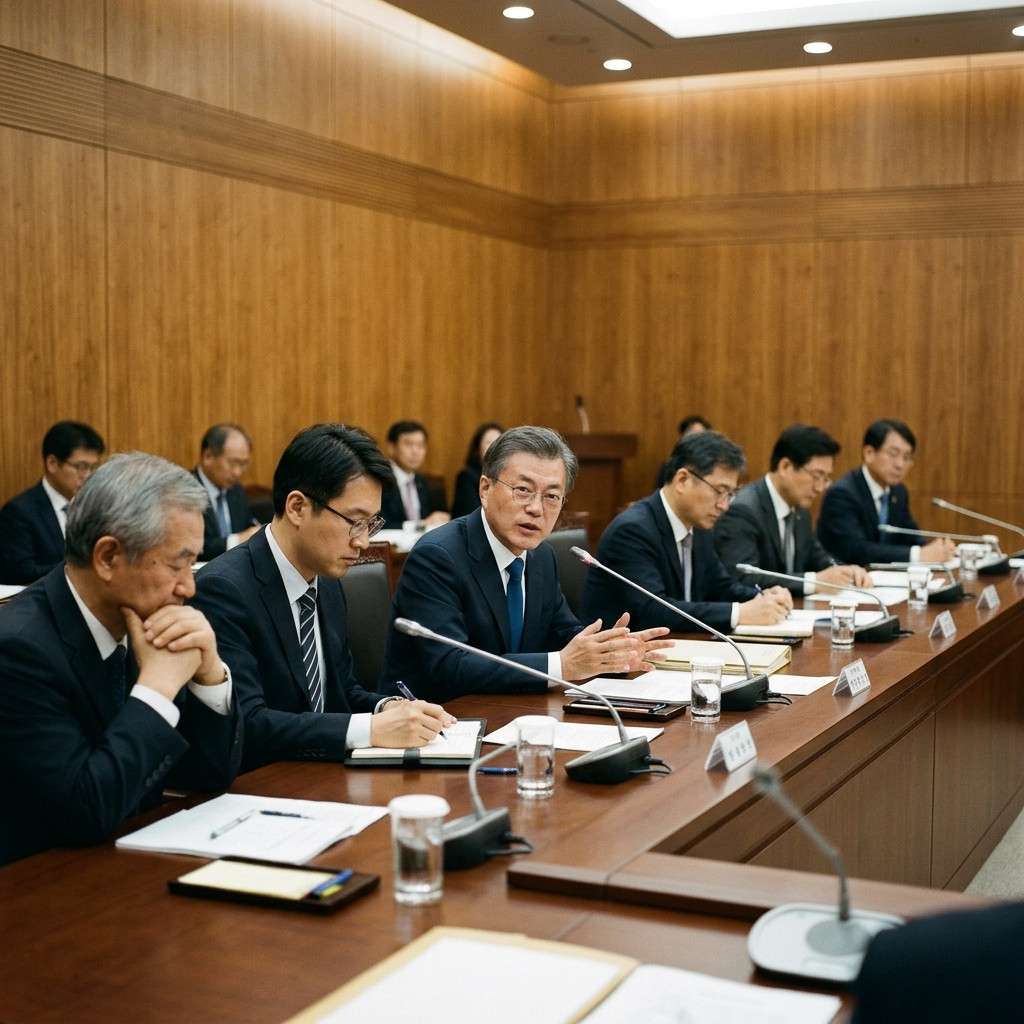
▲ 국회 농림축산식품해양수산위원회 회의실에서 여야 의원들과 정부 관계자들이 농협법 개정안 조항을 심의하고 있다. / 보도자료사진
◈ 핵심 팩트 브리핑 (Key Fact Briefing)
20년 만의 농협 지배구조 전면 수술: 187만 전 조합원 1인 1표 직선제 도입과 2028년 차기 중앙회장 선거 전면 적용 확정
외부 독립 특수법인 농협감사위원회 신설: 농식품부 장관 제청 및 대통령 임명 위원장 등 7인 체제로 내부 셀프감사 원천 차단
제왕적 회장 권한 분산과 내부통제 강화: 계열사 부당 경영개입 및 언론사·재단 겸직 금지, 16조 무이자자금 배분 사전 보고 의무화
여야 극렬 대치와 관치 논란: 야당의 표결 불참 및 관치농협법 반발 속 상임위 전체회의·법사위 격돌 및 헌법상 자율권 공방
국회 농림축산식품해양수산위원회 법안심사소위원회가 농협중앙회장에 대한 187만 전 조합원 직선제 도입과 외부 독립 감사기구 신설을 골자로 한 농협 지배구조 개혁법을 전격 의결하며 20년 만의 제도적 수술에 돌입했다. 자산 700조 원에 달하는 거대 금융·유통 복합체의 제왕적 회장 권력을 견제하고 만연한 비위 카르텔을 근절하겠다는 취지지만, 야당인 국민의힘과 농협중앙회는 헌법상 협동조합 자율성을 침해하는 관치 농협화라며 강력 반발하고 있다. 정기국회 후반기 여야 대치의 최대 뇌관으로 부상한 농협법 개정안의 3대 핵심 축과 쟁점, 그리고 반복되는 중앙회장 비리 잔혹사의 구조적 원인을 심층 진단한다.
1. 8개월 진통 끝 소위 통과… 20년 만의 농협 지배구조 개혁 전환점
2026년 11월 3일 열린 농해수위 농림축산식품법안심사소위원회는 더불어민주당 주도로 농업협동조합법 일부개정법률안을 단독 처리했다. 지난 3월 당정 협의를 거쳐 윤준병 의원이 대표 발의한 지 8개월 만이자 총 7차례에 걸친 법안 심사와 입법 공청회를 거친 끝에 국회 첫 문턱을 넘어선 것이다. 특히 10월 26일 대통령과 농어민의 대화 행사에서 정부의 전 조합원 직선제 추진 의지가 재확인되면서 입법 논의가 급물살을 탔다.
그러나 표결 직전 국민의힘 강승규, 김용태 의원 등 야당 위원들은 여당의 일방적인 날치기 처리라며 전원 퇴장한 뒤 국회 소통관에서 규탄 기자회견을 열었다. 야당은 이번 개정안을 농협 개혁을 빙자해 정부가 민간 협동조합을 손아귀에 쥐려는 관치농협법으로 규정하고 상임위 전체회의 상정 중단을 촉구했다. 향후 농해수위 전체회의와 법제사법위원회, 본회의로 이어지는 입법 일정 내내 극심한 여야 충돌이 불가피한 형국이다.
2. 농협법 개정안의 3대 핵심 축… 직선제·외부감사기구·내부통제 강화
개정안의 첫 번째 핵심 기둥은 농협중앙회장 선출 방식을 기존 1,104개 회원조합 조합장 중심의 간선제에서 전국 약 187만 명의 농민 조합원이 1인 1표로 참여하는 전 조합원 직선제로 전환하는 것이다. 법안이 본회의를 통과해 공포되면 2028년 초 예정된 차기 중앙회장 선거부터 전 조합원 직선제가 전면 적용된다. 이는 소수 대의원과 조합장 중심의 밀실 담합과 금품 선거 관행을 뿌리 뽑기 위한 특단의 조치로 평가받는다.
개편 핵심 영역
현행 제도 (간선제)
개정안 주요 내용
제도적 기대 효과
중앙회장 선출
1,104명 조합장 간선제
187만 전 조합원 직선제
밀실 담합 차단·민주적 대표성 복원
감사 기구 체제
중앙회 내부 조합감사위
외부 독립 특수법인 분리
온정주의 셀프감사 원천 차단
회장 겸직 및 권한
언론사·재단 겸직 및 인사 전횡
겸직 금지 및 지주사 개입 차단
700조 금융·경제 황제 경영 견제
무이자자금 운용
16조~18조 원 재량 배분
농식품부 사전 보고 의무화
선거 통치자금 변질 원천 봉쇄
두 번째 축은 기존 중앙회 내부 조직이던 조합감사위원회를 떼어내 별도 특수법인 형태의 외부 독립 기구인 농협감사위원회로 신설하는 것이다. 총 7인으로 구성되는 신설 감사위원회는 농식품부 장관 제청으로 대통령이 임명하는 위원장과 금융위, 대한변협, 공인회계사회 추천 위원 등 외부 전문가가 과반을 차지한다. 여기에 중앙회장의 계열사 부당 경영 개입 및 언론사·재단 이사장 겸직을 전면 금지하고, 16조 원 규모의 무이자자금 배분 시 농식품부 사전 보고를 의무화하는 지배구조 쇄신안이 결합되었다.
3. 쟁점 진단: 187만 조합원 직선제와 외부 감사기구를 둘러싼 찬반 격돌
▲ 농업계 대표단과 정책 전문가들이 컨퍼런스 회의장에서 농협 지배구조 개혁과 투명성 제고 방안을 심의하고 있다. / 보도자료사진
그러나 187만 전 조합원 직선제를 둘러싼 법리적·실무적 대립은 팽팽하다. 국민의힘과 일부 조합장들은 농협중앙회의 법적 구성원이 개별 농민이 아닌 법인체인 회원조합이라는 점을 들어, 2차 협동조합 연합회 회장을 개별 조합원이 직접 선출하는 것은 협동조합 기본 원리와 법체계에 위배된다고 주장한다. 또한 200억 원대에서 400억 원 이상으로 엇갈리는 막대한 선거 관리 비용과 행정력 낭비 역시 거센 논쟁거리다.
특히 조합원 수가 적은 소규모 지자체의 대표성 왜곡 우려가 제기된다. 강원도의 경우 회원조합 수는 전국의 7.18%에 달하지만 조합원 수는 6.24%에 불과해, 단순 인구 비례 직선제가 도입될 경우 대규모 농가가 밀집한 영남과 호남으로 표심이 쏠리며 소외될 수 있다는 지적이다. 반면 여당은 모바일 및 전자투표 고도화로 비용을 대폭 절감할 수 있으며, 200만 농민의 주권 회복이 협동조합 민주주의의 본령이라고 맞서고 있다.
4. 구조적 배경: 700조 자산 제왕적 회장 권력과 반복되는 비리 잔혹사
가장 첨예한 전선은 외부 독립 감사기구 신설에 따른 관치 농협 공방이다. 국민의힘과 강호동 현 농협중앙회장은 헌법 제123조와 농협법 제9조가 규정한 협동조합의 자율성과 독립성이 정면 침해된다고 반발한다. 농협이 운영비를 전액 부담하면서 정부와 외부 기관이 감사위원회를 장악하는 것은 노골적인 공공기관 산하기관화이자, 금융감독원 감사와 겹치는 과도한 중복 규제라는 주장이다.
주요 쟁점 사항
정부·여당 개혁 입장
야당·농협 반대 논리
향후 심사 핵심 변수
직선제 법적 정합성
200만 농민 조합원 주권 복원
2차 협동조합 연합회 원리 위배
1,104개 회원조합 총회 의결 여부
선거비용 및 행정력
모바일 투표로 200억 내외 절감
선관위 위탁 등 400억 이상 낭비
선거비용 국비 지원 및 시스템 분담
외부 감사위 독립성
74건 징계 묵살 등 비위 차단
정부 입맛 산하기관화·관치농협
감사위원 추천 비율 및 운영비 분담
지역별 표심 격차
1인 1표 보편적 참정권 보장
강원 등 소규모 지자체 소외 심화
지역별 가중치 보정 법안 도입 논의
이에 대해 농식품부와 민주당은 정부합동 특별감사 결과를 제시하며 셀프감사의 폐해를 지적한다. 중앙회 내부 감사위원회가 조합장에 대해 요구한 징계 74건이 현장에서 묵살되었고, 중앙회장의 금품 수수 및 계열사 일감 몰아주기 의혹이 자체 감시망을 무력화시켰다는 것이다. 정치적 연줄과 내부 온정주의로부터 완전히 차단된 독립적 외부 감찰 기구 없이는 부실 조합 증가와 금융 사고를 막을 수 없다는 논리다.
이러한 제도적 개혁이 분출한 근본적 배경에는 1988년 민선 회장 도입 이래 선출된 7명의 역대 중앙회장 중 6명이 비자금 조성, 뇌물 수수, 불법 선거 등으로 옥고를 치르거나 수사를 받은 비리 잔혹사가 자리 잡고 있다. 현직인 7대 강호동 회장 역시 취임 전후 수천만 원대 금품 수수 혐의로 경찰 압수수색과 장시간 소환 조사를 받았으며, 재단 사업비를 유용한 선거 보은 의혹이 연이어 불거진 상태다.
5. 결론 및 향후 전망… 상임위·법사위 대치와 농민 실익 중심의 구조개혁 과제
근본적인 구조적 모순은 2012년 신경분리(신용·경제 분리) 이후에도 중앙회가 NH농협금융지주와 농협경제지주의 지분을 100% 장악하며 700조 원 권력이 1인에게 집중된 데 있다. 비상근 명예직이라는 명목 뒤에서 수억 원대 연봉과 인사 전횡, 무이자자금을 활용한 조합장 줄세우기가 지속되며 중앙회장은 견제 없는 제왕으로 군림해 왔다. 농협 개혁이 단순한 선거 방식 변경을 넘어 권력 분산으로 나아가야 하는 이유다.
결국 농협법 개정안의 성패는 상임위 전체회의와 법사위 통과 과정에서 여야 정쟁을 넘어 진정한 농민 실익 중심의 타협점을 도출할 수 있는지에 달려 있다. 전국농민회총연맹 등 현장 농민 단체들이 지적하듯, 단순한 기구 개편을 넘어 막대한 본사 관리비를 양산하는 지주회사 체제의 거품을 걷어내고 지역 회원조합 중심의 경제사업 유통 혁신을 이뤄내야만 농협이 본연의 설립 목적으로 돌아갈 수 있을 것이다.
Published: 2026-11-04 |
Desk: Manintop Politics & Parliamentary Bureau |
Author: Dr. Seung Youb Ssin (Seung Youb Ssin, Ph.D.)
▲ Lawmakers and policy officials deliberate statutory provisions during the parliamentary hearing on Agricultural Cooperative Act amendments. / Press Documentation
◈ Executive Briefing & Strategic Insights
Landmark Governance Overhaul: Enacting universal direct voting for 1.87 million farmer members effective from the 2028 federation election.
Independent External Audit Board: Establishing a statutory oversight commission under presidential appointment to dismantle self-policing failures.
Restricting Imperial Executive Powers: Prohibiting subsidiary intervention, banning concurrent titles, and mandating disclosure for 16 trillion KRW funds.
Intense Partisan Gridlock: Opposition walkout and fierce resistance from cooperative leaders warning against unconstitutional state control.
The Agriculture, Food, Rural Affairs, Oceans and Fisheries Committee subcommittee of the National Assembly passed a historic amendment to the Agricultural Cooperative Act, inaugurating a major structural overhaul of the National Agricultural Cooperative Federation for the first time in twenty years. The legislative package mandates universal direct elections for the federation chairman by 1.87 million farmers and institutes an external autonomous audit board to dismantle chronic corrupt practices across the 700 trillion KRW conglomerate. However, the opposition People Power Party and senior federation executives fiercely resist the bill, condemning it as an unconstitutional state takeover that violates cooperative autonomy. This dispatch provides a comprehensive assessment of the core pillars, intense legislative disputes, and deep-seated historical governance dilemmas surrounding the landmark reform.
1. Passing Committee After Eight Months: A Turning Point in Agricultural Cooperative Governance
On November 3, 2026, the legislative review subcommittee approved the amendment under the sole sponsorship of the Democratic Party of Korea. The legislative milestone materialized eight months after its initial introduction by Representative Yoon Jun-byeong following executive-legislative consultations, navigating seven intensive review sessions, public hearings, and regional briefings. Deliberations gained decisive momentum after President Lee Jae-myung reaffirmed unwavering executive commitment to direct member voting during a televised dialogue with farmers and fishermen on October 26.
In response to the vote, opposition lawmakers including Representatives Kang Seung-gyu and Kim Yong-tae staged a walkout and convened an emergency press conference at the National Assembly briefing room. Denouncing the legislative maneuvering as an unconstitutional power grab, the opposition characterized the measure as bureaucratic subjugation masked as institutional reform. With both the conservative opposition and the federation leadership mounting unified resistance, acute parliamentary polarization is poised to engulf upcoming plenary committee reviews, Judicial Committee oversight, and final chamber votes.
2. Three Core Pillars of Reform: Universal Direct Voting, External Audit Board, and Internal Controls
The foremost structural pillar of the reform transitions the chairman election from an indirect delegate system of roughly 1,100 local cooperative heads to universal direct balloting, empowering approximately 1.87 million eligible agricultural members on a one-person, one-vote basis. Once ratified and promulgated by the National Assembly, the universal direct balloting mechanism will take effect starting with the next chairman election in early 2028. Policy architects intend this systemic redesign to eliminate collusive vote-buying, backroom patronage networks, and illicit campaign expenditures endemic to indirect delegate formats.
Governance Sector
Incumbent Regime
Statutory Amendment
Expected Impact
Chairman Election
1,104 Cooperative Heads
Universal Direct Balloting
Eliminating Collusive Backroom Pacts
Auditing Body
Internal Audit Board
External Statutory Corporation
Dismantling Self-Auditing Failures
Executive Authority
Concurrent Affiliate Titles
Strict Prohibition of Dual Roles
Restricting Imperial Group Leadership
Credit Subsidies
Discretionary Allocations
Mandatory Ministerial Filing
Preventing Patronage slush deployment
The second major pillar establishes the Agricultural Cooperative Audit Committee as an independent statutory corporation, completely extricating internal audit functions from federation hierarchy. Composed of seven commissioners, the independent watchdog will be led by a chairperson nominated by the Minister of Agriculture and appointed by the President, with external experts recommended by the Financial Services Commission, the Korean Bar Association, and certified accountant institutes comprising a decisive majority. Complementing this oversight, the legislation bars chairmen from interfering in financial subsidiaries, forbids simultaneous executive titles at affiliate publications or foundations, and mandates ministerial reporting for discretionary interest-free credit allocations exceeding 16 trillion KRW.
3. Critical Dilemmas: Direct Balloting Logistics and the Debate Over External Audit Sovereignty
▲ Agricultural economists and cooperative delegates deliberate governance overhauls during a national policy symposium. / Press Documentation
Nevertheless, fierce statutory and operational objections cloud the direct balloting mandate. Opposition lawmakers and regional cooperative leaders argue that the legal constituent members of the federation are corporate primary cooperatives rather than individual farmers. Electing the leader of a secondary cooperative federation through direct grassroots balloting arguably contradicts fundamental cooperative jurisprudence. Operational friction is compounded by substantial cost disparities, with government estimates projecting 20 billion KRW while federation analysts forecast over 40 billion KRW in nationwide balloting expenses.
Regional representational distortion also poses acute logistical concerns for less populated agricultural provinces. Gangwon State accounts for 7.18 percent of all primary cooperatives but only 6.24 percent of individual members, raising anxieties that proportional direct voting will concentrate electoral hegemony within densely populated agricultural hubs across the southern provinces while marginalizing smaller prefectures. Conversely, the ruling coalition insists that advanced mobile and encrypted electronic voting platforms will dramatically curtail administrative expenditures while restoring democratic sovereignty to agricultural producers.
The sharpest ideological friction centers upon the externalization of the statutory audit board. Conservative lawmakers and current Federation Chairman Kang Ho-dong contend that establishing a government-appointed watchdog directly violates constitutional and statutory guarantees of cooperative independence and self-governance. Critics argue that forcing the federation to fully underwrite operational financing while surrendering appointment and inspection authority to government ministries constitutes overt bureaucratization and imposes disruptive redundant oversight alongside existing Financial Supervisory Service inspections.
Critical Dispute
Pro-Reform Rationale
Opposition Objections
Legislative Pivot
Legal Jurisprudence
Restoring Farmer Sovereignty
Violates Secondary Union Axioms
Primary Cooperative General Consent
Election Outlays
Electronic Voting Limits to 20B
Exceeds 40B KRW in Fiscal Burden
State Subsidy and Digital Frameworks
Audit Independence
Ending 74 Buried Disciplinary Cases
Overt State Subjugation Threat
Commissioner Nomination Ratios
Regional Equity
Universal One-Person-One-Vote
Marginalization of Smaller States
Weighted Regional Compensation Debate
In stark contrast, agricultural authorities and ruling lawmakers defend the statutory audit board by citing devastating findings from joint government investigations. State audits uncovered 74 disciplinary demands issued by internal audit bodies that were systematically ignored and buried at local levels, while high-level executive graft and decade-long exclusive vendor contracts evaded internal scrutiny entirely. Reform advocates argue that without an external tribunal insulated from fraternal patronage and institutional complacency, systemic balance sheet insolvency and financial malpractice cannot be contained.
The inescapable historical catalyst propelling this regulatory intervention is the sordid governance record of the federation presidency, where six of the seven popularly elected chairmen since 1988 have suffered criminal indictment or imprisonment for bribery, slush funds, or electoral fraud. Incumbent Chairman Kang Ho-dong himself remains embroiled in criminal investigations concerning allegations of receiving over 100 million KRW in illicit cash from vendor representatives prior to inauguration, alongside unauthorized foundation disbursements for election souvenirs and inappropriate boardroom interference at securities subsidiaries.
5. Conclusion and Strategic Outlook: Legislative Standoff and Advancing Substantive Farmer Welfare
At the heart of this systemic vulnerability lies the 2012 structural restructuring that segregated banking and agribusiness operations into two holding corporations while leaving total equity ownership concentrated under the central federation. This configuration concentrated supreme appointment, budgetary, and auditing authority across both banking and agricultural enterprises into the singular office of the federation chairman. Despite ostensibly serving as an unpaid honorary dignitary, chairmen have wielded unfettered imperial hegemony, pocketing lavish advisory remuneration while deploying discretionary zero-interest funds to enforce absolute fealty among regional cooperative heads.
Ultimately, the success of the Agricultural Cooperative Act reform hinges on whether lawmakers can transcend partisan warfare to deliver tangible economic dividends to grassroots farming households. As independent rural advocacy groups emphasize, institutional cosmetic rearrangements must expand into dismantling bloated holding company administrative overhead and devolving commercial logistics back to regional primary cooperatives. Only through profound structural decentralization can the 700 trillion KRW cooperative behemoth truly reclaim its foundational mandate of serving the agricultural community.
Dr. Seung Youb Ssin (Seung Youb Ssin, Ph.D.) Senior Political & Parliamentary Correspondent This dispatch was authored in strict adherence to journalistic integrity and macroeconomic analysis. All rights reserved.
PRO SOURCING ENGINE만인의 탑 빅데이터 솔루션
★ 가입 시 600 크레딧(120회) 전원 무료
내가 찾는 상품 키워드, 지금 얼마나 검색될까?
네이버 월간 검색량 + 구글 볼륨 + 아이템스카우트 실시간 상품수와 경쟁강도 배지를 0.5초 만에 무료로 확인하세요.
MANINTOP NEWSLETTER
📬 만인의 탑 뉴스레터 무료 구독
오늘 보신 정책·시사 뉴스가 유익하셨나요? 매일 엄선되는 알짜 복지 혜택과 국회 실시간 속보를 이메일로 가장 먼저 받아보세요. (평생 무료)
1월이 시작되면 감기는 이미 우리 곁에 와 있습니다. 2월, 3월, 4월까지 이어지는 추위와 건조함은 코와 목을 가장 먼저 공격합니다. 아침에 일어나자마자 막혀 있는 코. 계속 흐르는 콧물. 괜히 칼칼해지는 목. 이 증상은 “시작”일 뿐입니다. 한 번 무너지면 일주일, 길면 한 달까지 끌고 갑니다. 약을 먹으면 잠깐 괜찮아집니다. 하지만 며칠 뒤 또 반복됩니다. 왜일까요? 감기는 ‘치료’의 문제가 아니라 ‘관리’의 문제이기 때문입니다. 대부분은 감기가 오고 나서 약을 찾습니다. 하지만 진짜 중요한 건 감기가 오기 전에 코와 목을 지키는 것입니다. 건조한 실내 공기, 차가운 바깥 공기, 눈에 보이지 않는 세균. 코와 목은 매일 공격받고 있습니다. 지긋지긋하죠! 그런데도 우리는 아무 준비 없이 버티고 있습니다. 이번 겨울도 그렇게 보낼 건가요? 사실 방법은 어렵지 않습니다. 코를 깨끗하게 관리하고, 목을 따뜻하게 보호하고, 점막을 촉촉하게 유지하고, 기관지를 미리 관리하고, 외부 공기를 차단하는 것. 이 다섯 가지만 꾸준히 해도 감기약 없이 겨울을 보내는 것이 충분히 가능합니다. 🔥 이제부터 그 방법을 하나씩 살펴보겠습니다. 🔥 1. 코와 목을 먼저 관리해야 하는 과학적 이유 감기의 대부분은 코 점막에서 시작됩니다. 국제 학술지 Nature Reviews Microbiology 와 Journal of Allergy and Clinical Immunology 에 실린 호흡기 감염 관련 연구들에서는, 감기 바이러스가 비강 상피세포에 먼저 부착해 증식한다는 점을 설명하고 ...
리모델링사업이 진행 중인 아파트를 매매할 때 “계약금 10%를 언제까지 내야 하느냐”는 질문이 특히 많이 나옵니다. 이주공고(이주 안내)가 7~11월쯤이라고 들으면, 그 시점에 맞춰 계약금도 움직일 것 같아서 더 헷갈리기 쉽습니다. 하지만 실제 납부기한은 ‘이주공고가 언제냐’만으로 자동 결정되지 않는 경우가 많습니다. 1) 계약금 10% 납부기한: 결국 ‘문서에 적힌 일정’이 기준 계약금 10%를 언제까지 납부해야 하는지는, 내가 서명하는 매매계약서(특약 포함) 와 사업주체/조합이 제시한 공고·안내문 에 적힌 납부 일정이 기준이 됩니다. 실제 공고문에서는 분양대금 납부의 큰 틀(계약금→중도금→잔금)을 먼저 안내하고, 상세 일정은 별도 표나 유의사항으로 제시하는 방식이 흔합니다. 또, 계약서 문구에 따라 지급 시점이 조건부로 설정될 수도 있습니다. 예를 들어 한 사례 소개 자료에서는 용역계약서에 잔금(10%) 지급시기가 “사업승인 후”로 기재되어 있었다는 점이 언급됩니다. 이런 식으로 ‘사업 단계’와 지급을 연동하는 문구가 들어가면, 질문의 답은 계약서 문구를 확인해야만 확정됩니다. 관련 내용은 링크 에서 문구 사례를 확인할 수 있습니다. 2) 입주자모집공고에서 확인되는 ‘납부 순서’와 잔금 마감 시점 공고문에 적힌 문구를 보면, 납부 순서와 잔금 마감에 대한 기준이 비교적 명확하게 제시되는 경우가 있습니다. 예를 들어 한 입주자모집공고에는 “분양금액(주택가격)은 계약금, 중도금, 잔금의 순서로 납부”하며 “잔금은 입주(열쇠 수령일) 전에 완납”해야 한다고 안내되어 있습니다. (문구 확인: 링크 ) 이 문구가 의미하는 바는 최소 2가지입니다. 분양/공급 형태의 문서에서는 ‘계약금→중도금→잔금’ 흐름이 공식적으로 안내될 수 있습니다. 잔금은 “입주(열쇠 수령)” 이전에 완납해야 한다는 마감 기준이 문서에 적혀 있을 수 있습니다. 다만, 위 공고문 문구는 잔금 마감에 대한 기준을 보여주지만, 계약금 10%의...
윤석열 전 대통령 탄핵 인용 소식을 접하면, 가장 궁금한 지점은 ‘헌재가 정확히 무엇을 위헌·위법으로 봤는가’입니다. 또한 탄핵과 별개로 진행되는 형사재판(내란 우두머리 혐의 등)이 어디까지 왔는지도 함께 정리할 필요가 있습니다. 아래 내용은 제공된 기사/게시물 스니펫과 링크에서 확인되는 범위만 모아, 일반인이 흐름을 이해하기 쉽게 정리한 것입니다. 1) 탄핵 인용 관련: 스니펫에서 확인되는 ‘판단의 골격’ 제공된 근거 중 조국혁신당 사이트에는 헌법재판소가 윤석열 탄핵 심판에서 “피청구인의 위헌·위법행위는 국민 신임 …”이라는 취지로 판단했다는 문장이 인용돼 있습니다( 링크 ). 이 인용문만 놓고 보면, ‘위헌·위법행위’가 있었는지와 그로 인해 ‘국민의 신임’이 어떻게 평가됐는지가 핵심 축으로 소개됩니다. 다만 질문에서 요청하신 세부 항목, 즉 비상계엄 선포 자체를 문제 삼은 구체적 이유, 계엄 이후 조치(포고령, 국회 통제 등)의 어떤 지점이 헌법 위반인지, 국회의 권한행사 방해 및 정치활동 제약을 어떤 논리로 판단했는지 등은, 이번에 제공된 근거의 제목/스니펫만으로는 조항·사실관계·판단 구조가 그대로 제시돼 있지 않습니다. 따라서 이 글에서는 ‘헌재가 무엇을 문제 삼았다’는 세부 리스트를 단정적으로 재구성하기보다, 현재 확인 가능한 문구 수준의 요약(위헌·위법행위 → 국민 신임의 문제로 평가)까지만 적습니다. 만약 헌재 결정문 전문(주문 및 이유)이 추가로 확인되면, 그때는 문장 단위로 ‘어떤 행위’와 ‘어떤 헌법 원리/조항’이 연결되는지(예: 권력분립, 국회의 권한, 정치적 기본권 등) 구조화해 정리하는 것이 가장 정확합니다. 2) 형사 절차(내란 혐의) 관련: 체포영장과 1심 선고 언급 탄핵 심판과 별도로, 12·3 비상계엄 사태로 내란 혐의를 받는 윤석열 대통령에 대해 2024년 12월 31일 체포 영장이 발부됐다는 BBC 보도가 있습니다( 링크 ). 해당 보도는 ‘현직 대통령’에 대한 체포영장 발부라는 점을 함께 언급합니다. 또...