[심층기획] '20년 만의 블루 쓰나미와 3차 탄핵 뇌관' 2026 美 중간선거 대격변… 3500억 달러 투자 검증과 반도체 344조 슈퍼사이클
만인의 탑 편집국11월 14, 2026
[심층기획] '20년 만의 블루 쓰나미와 3차 탄핵 뇌관' 2026 美 중간선거 대격변… 3500억 달러 투자 검증과 반도체 344조 슈퍼사이클
월드와이드 심층취재팀 | 워싱턴 의회 권력 재편과 글로벌 산업 분석2026. 11. 14 23:45 KST
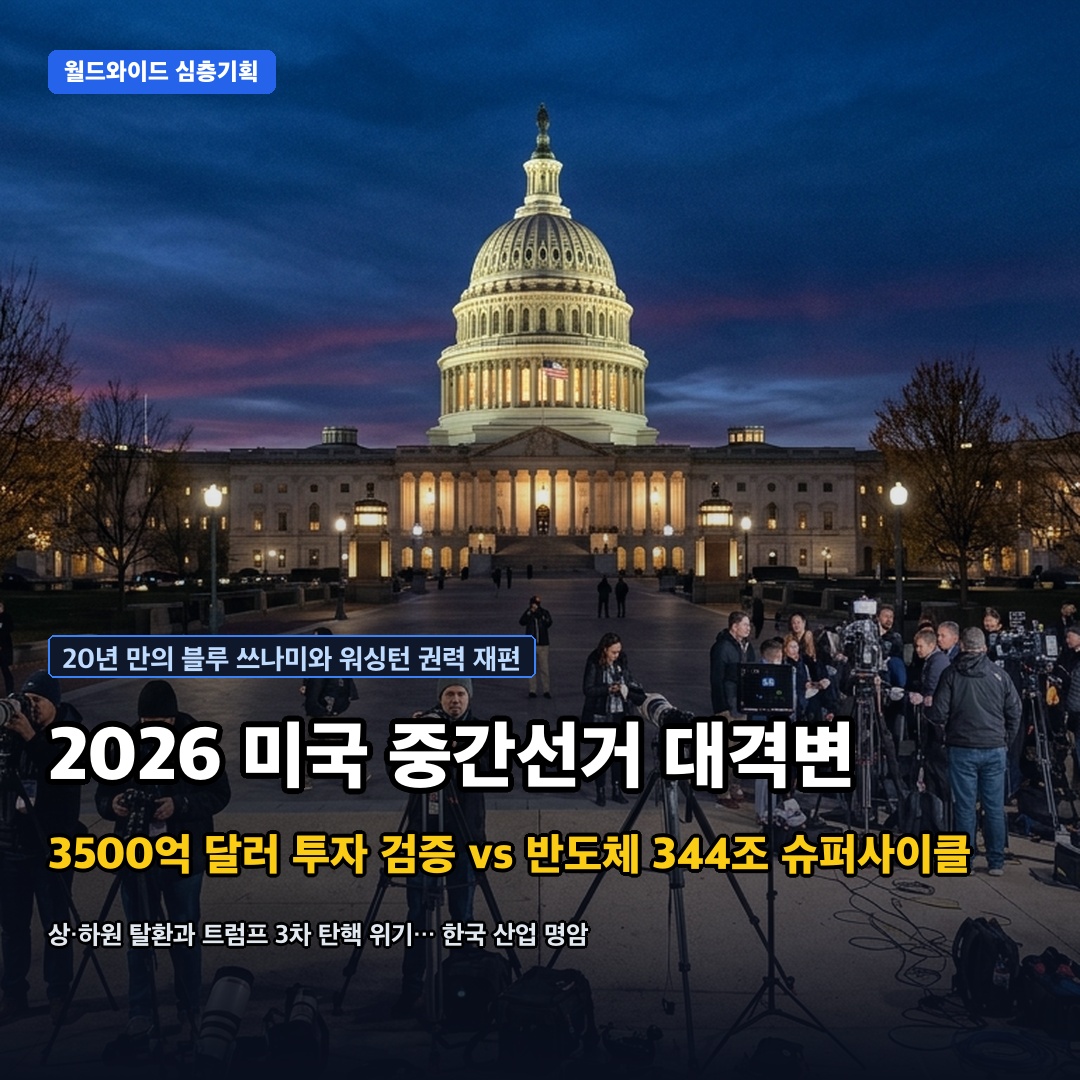
▲ 2026년 11월 미국 중간선거 개표 당일 밤 푸른 조명이 감도는 워싱턴DC 국회의사당 돔 전경. 민주당이 20년 만에 상·하원을 동시 탈환하는 '블루 쓰나미'를 기록하면서 워싱턴 권력 구도와 글로벌 경제 질서에 일대 대격변이 시작되었다. [사진: 워싱턴 프레스 풀]
2026년 11월 3일(현지시간) 치러진 미국 중간선거가 연방 상원과 하원을 모두 야당인 민주당이 휩쓰는 거대한 '블루 쓰나미(Blue Tsunami)'로 막을 내리면서 전 세계 정치와 경제 지형에 일대 지각변동이 시작되었습니다. 이는 조지 W. 부시 행정부 시절인 2006년 이후 20년 만에 민주당이 의회 권력을 동시에 틀어쥔 역사적 대격변으로, 2024년 대선과 총선에서 상·하원을 모두 석권했던 공화당의 '레드 스윕' 체제는 불과 2년 만에 힘없이 무너졌습니다. 임기 후반 2년을 앞둔 도널드 트럼프 대통령은 극심한 조기 레임덕과 함께 미국 헌정사상 초유의 '세 번째 탄핵 소추'라는 절체절명의 위기에 몰렸습니다. 여기에 워싱턴발 보호무역 관세와 3,500억 달러(약 469조 원)에 달하는 대미 투자 검증 입법, AI 데이터센터 전력 규제 역풍 속에서도 344조 원 메모리 슈퍼사이클을 맞이한 한국 산업계의 명암을 본보가 입체적으로 긴급 심층 분석합니다.
1. 20년 만의 '블루 쓰나미'와 워싱턴 의회 권력 재편
이번 선거는 주지사 36명, 상원의원 35명, 하원의원 435명 전원을 새로 뽑는 초대형 선거로 치러졌으며, 결과는 2000년대 이후 공화당이 겪은 선거 가운데 가장 뼈아픈 역대급 참패로 기록되었습니다. 민주당은 2022년에 내주었던 하원 다수당 자리를 4년 만에 253석 대 155석(미확정 27석)이라는 압도적 의석수로 탈환했습니다. 나아가 47석 대 53석으로 열세였던 상원마저 무려 7석을 순증시키며 과반(51석)을 훌쩍 뛰어넘는 54석을 조기에 확정 지었고, 알래스카와 미시시피 등 미확정 2개 주의 개표 결과에 따라 최대 56석까지 불어날 전망입니다. 주지사 선거에서도 민주당이 28곳을 가져가며 연방 의회와 지방 행정 권력을 모조리 장악했습니다.
가장 충격적인 이변은 공화당의 철옹성으로 불리던 중서부와 남부의 보수 텃밭이 일제히 파란색으로 물들었다는 사실입니다. 캔자스주 상원의원 선거에서는 1932년 대공황 이후 무려 94년 만에 민주당 후보가 당선되는 기적이 일어났고, 텍사스주 상원의원 선거 역시 1988년 이후 38년 만에 민주당이 의석을 탈환하는 파란을 일으켰습니다. 아이오와, 오하이오, 조지아 등 전통적인 레드 스테이트(공화당 우세주)에서도 민주당 후보들이 대거 승리를 거머쥐며 트럼프 정권 10년에 대한 유권자들의 누적된 피로감이 폭발했습니다.
민심이 급격히 돌아선 데는 세 가지 민생 쟁점이 결정적으로 작용했습니다. 첫째는 트럼프 행정부의 대이란 군사개입과 보복 관세로 인해 기름값과 장바구니 물가가 치솟으며 발생한 극심한 '생활비 위기(Affordability Crisis)'였습니다. 둘째는 빅테크 기업들의 무분별한 AI 데이터센터(AIDC) 증설로 주민 전기요금이 폭등하고 환경 파괴 논란이 번진 점이었습니다. 셋째는 저소득층 건강보험인 메디케이드 축소와 공교육 재정 삭감에 대한 성난 민심이었습니다. 특히 퓨리서치 조사 결과, 트럼프식 무차별 이민자 추방 정책에 대해 전통적 공화당 지지층이었던 히스패닉 유권자의 62%가 과도하다며 등을 돌린 것이 공화당 패배의 쐐기를 박았습니다.
구분
상원 (총 100석 / 과반 51석)
하원 (총 435석 / 과반 218석)
주지사 (총 50개 주)
선거 이전 판세
민주 47석 vs 공화 53석 (공화 우위)
민주 214석 vs 공화 218석 (공석 2)
민주 24명 vs 공화 26명
2026 선거 결과
민주 54석 확정 (미확정 2석, 최대 56석)
민주 253석 압승 (미확정 27석)
민주 28명 당선 (미확정 2명)
권력 변동 핵심
민주당 7석 순증, 다수당 탈환 성공
단독 탄핵 가결 가능한 압도적 과반
지방 행정 권력 과반 확보로 교두보 마련
역사적 이변 지역
캔자스(94년 만), 텍사스(38년 만) 탈환
오하이오·아이오와 등 러스트벨트 압승
선벨트 조지아·텍사스 민주 약진
2. 벼랑 끝 트럼프와 세 번째 탄핵 뇌관… 상원 67석 가결 역학
상·하원 양원을 야당에 완전히 내어준 트럼프 대통령은 남은 임기 동안 입법권과 예산권을 완전히 상실한 채 식물 대통령으로 전락할 위기에 놓였습니다. 하원 과반(218석)을 가뿐히 넘긴 민주당은 즉각 트럼프 일가의 축재와 이권 개입, 백악관 개선문 건설 등 제왕적 행태에 대한 전방위 청문회를 예고하며 세 번째 탄핵 소추안 발의를 공식화하고 있습니다. 미국 헌법상 하원에서 탄핵소추안이 가결된 뒤 상원에서 출석 의원 3분의 2인 67표 이상의 유죄 평결을 받으면 대통령직에서 즉시 파면됩니다. 민주당이 상원에서 54~56석을 확보함에 따라, 탄핵 가결선까지 필요한 공화당 이탈표는 불과 11~12표에 불과한 상황입니다.
미국 역사상 하원을 통과한 대통령 탄핵소추는 앤드루 존슨, 빌 클린턴, 도널드 트럼프(1·2차) 등 네 번이 있었으나 상원에서 파면된 사례는 아직 없었습니다. 하지만 이번에는 공화당 내부 균열이 심상치 않습니다. 이미 2021년 2차 탄핵 당시 7명의 공화당 상원의원이 찬성표를 던졌고, 2026년 6월 톰 틸리스 의원의 수정안 표결 때는 12명의 공화당 상원의원이 트럼프의 지침을 거부하고 반란표를 던진 전력이 있습니다. 더욱이 트럼프는 헌법상 3연임이 금지되어 2028년 대선 공천권을 행사할 수 없습니다. 레임덕에 빠진 트럼프와 함께 침몰하지 않겠다는 인식이 확산되면서, JD 밴스 부통령이 선거 직후 '참패 원인은 이란 전쟁'이라며 선을 긋고 피트 헤그세스 국방장관에 대한 탄핵까지 거론되는 등 여권 내부의 원심력이 걷잡을 수 없이 커지고 있습니다.
3. 통상 전선의 대충돌… 301조 영구 관세와 FIRM 법안의 기습
의회 권력의 손바뀜에도 불구하고 통상 전선에서는 트럼프의 관세 폭탄이 쉽게 가라앉지 않을 전망입니다. 미 연방대법원이 2026년 2월 국제비상경제권한법(IEEPA)에 근거한 상호관세에 위헌 결정을 내렸지만, 트럼프 행정부는 무역법 122조를 즉각 발동해 최장 150일간 15% 일괄 관세를 매기며 사법부 판결을 우회했습니다. 백악관은 150일 기한 만료에 맞춰 무역법 301조(불공정 무역 관행 조사)와 무역확장법 232조(국가안보 안보위협), 관세법 338조(최대 50% 보복관세)를 동원해 영구적 품목별 관세 체제로 갈아탈 채비를 마쳤습니다. 한국 등 16개국 21개 제조업에 대한 301조 과잉생산 조사가 이미 진행 중이며, 민주당 의회가 견제에 나서더라도 대통령의 통상 재량권과 거부권을 무력화하기는 법적으로 쉽지 않습니다.
한국 기업들에게 한층 더 직접적인 복병은 민주당 의회가 추진하는 '외국기업 투자 성과 검증(FIRM) 법안'입니다. 한국 기업들은 2025년 대미 협상 과정에서 무려 3,500억 달러(약 469조 원)라는 천문학적 대미 투자를 약정했습니다. 민주당이 발의한 FIRM 법안은 이 3,500억 달러를 정조준하여 독립 검증 기구를 세우고, 현지 일자리 창출 기여도와 지역사회 공헌도, 국내 부품업체 참여도 등을 현미경 검증하겠다고 벼르고 있습니다. 반도체법과 인플레이션 감축법(IRA)에 따른 보조금과 세액공제 예산, 인프라 승인권을 의회가 틀어쥐고 있어 기업들의 행정적 부담이 극에 달할 수 있습니다. 아울러 민주당의 환경 규제 강화로 대미 투자의 한 축이었던 알래스카 LNG 개발 등 화석연료 프로젝트는 인허가 거부로 표류할 위험이 커졌습니다.
4. 산업별 희비 교차… AI 데이터센터 규제 역풍과 반도체 344조 슈퍼사이클
산업계 전반에서는 AI 인프라를 둘러싼 빛과 그림자가 뚜렷하게 갈리고 있습니다. 텍사스, 오하이오, 조지아, 네바다 등 미국 9개 주 이상에서 빅테크 기업들의 무차별적인 AI 데이터센터(AIDC) 증설에 성난 주민들의 반발이 들불처럼 번졌습니다. 데이터센터가 엄청난 전력을 잡아먹으면서 일반 가정의 전기요금이 급등했고, 극심한 소음과 용수 고갈로 생활환경이 망가졌지만 현지 일자리 창출은 미미했기 때문입니다. '이익은 실리콘밸리가 독식하고 비용은 주민이 떠안는다'는 분노 속에 당선된 민주당 주지사와 의원들이 데이터센터 착공 규제와 전력망 기업 부담 강화를 공언하면서 단기적으로 공사 일정이 늦춰질 우려가 커졌습니다.
하지만 이러한 규제 쇼크는 오히려 한국 에너지와 인프라 기업들에게 새로운 활로를 열어주고 있습니다. 공공 전력망 연결이 막힌 미국 빅테크들이 자체 민간 발전소 구축으로 급선회하고 있기 때문입니다. 메타(Meta)가 2026년 1월 비스트라, 테라파워, 오클로 등과 손잡고 최대 6.6GW에 달하는 원자력 전력 확보 계약을 맺은 것이 대표적입니다. 24시간 끊김 없는 기저전력을 확보하기 위해 소형모듈원자로(SMR), 가스터빈, 대용량 에너지저장장치(ESS), 초고압 변압기 수요가 폭발하면서 HD현대일렉트릭, LS ELECTRIC, 두산에너빌리티 등 한국 중전기기 기업들의 북미 수주 잔고가 사상 최대치를 갈아치우고 있습니다.
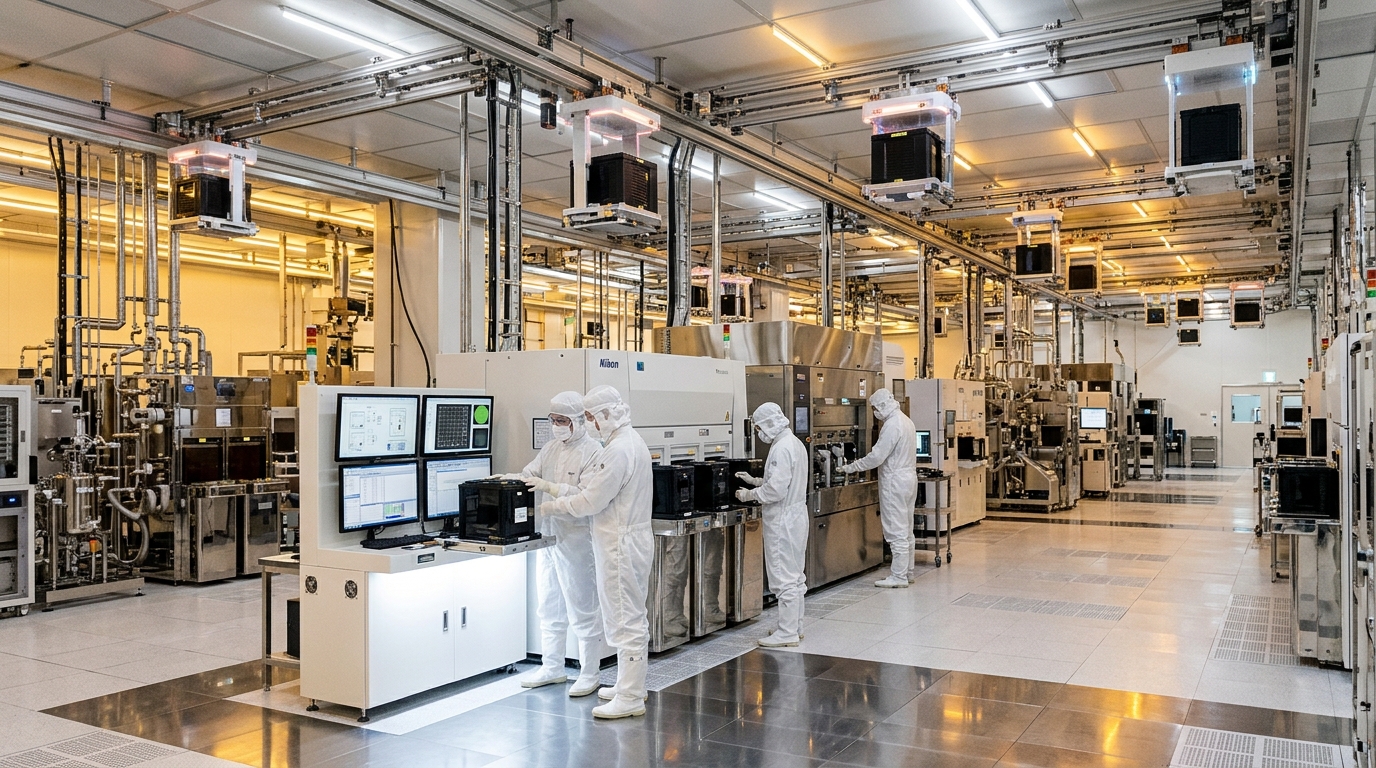
▲ 경기도 평택의 최첨단 반도체 팹 클린룸에서 방진복을 착용한 전문 엔지니어들이 고대역폭메모리(HBM) 및 차세대 D램 웨이퍼 생산 라인을 실시간 점검하고 있다. 글로벌 AI 데이터센터 규제 논란 속에서도 메모리 반도체 공급 부족에 힘입어 삼성전자와 SK하이닉스의 합산 연간 영업이익은 사상 최대인 344조 원에 달할 것으로 전망된다. [사진: 반도체 산업 프레스 풀]
무엇보다 한국 경제의 버팀목인 반도체 산업은 흔들림 없는 펀더멘털을 과시하고 있습니다. 메모리 반도체 시장은 역사적인 공급 부족 슈퍼사이클에 진입했습니다. 낸드플래시 고정가격은 2025년 3월 2.51달러에서 2026년 3월 17.73달러로 7배 폭등했고, 8GB DDR4 D램 가격 역시 1.35달러에서 13달러로 863% 수직 상승했습니다. 증권가 분석에 따르면 삼성전자는 HBM4 조기 양산과 판가 인상에 힘입어 2026년 연간 170조 원의 영업이익을 올릴 것으로 추산됩니다. SK하이닉스 역시 설비투자 절제와 장기공급계약(LTA) 선수금 구조를 발판 삼아 연간 174조 원이라는 창사 이래 최대 실적을 달성할 전망입니다. 양사의 합산 메모리 영업이익만 344조 원에 달할 것이라는 실측 전망은 단기적 AIDC 규제 우려를 단숨에 압도하고 있습니다.
다른 주력 산업들도 안도의 한숨을 내쉬고 있습니다. 배터리 업계는 민주당의 상·하원 장악 덕분에 트럼프 대통령이 공언했던 인플레이션 감축법(IRA) 전기차 세액공제 폐지 시도가 완전히 수포로 돌아가면서 최악의 정책 리스크를 벗어났습니다. 방위산업과 조선업계 역시 미 해군 함정의 유지·보수·정비(MRO) 사업 수주와 지정학적 자주국방 수요가 지속되면서 안정적인 성장세를 이어가고 있습니다.
산업 분야
단기 영향 및 리스크 요인
중장기 기회 및 구조적 요인
핵심 수혜 및 점검 대상 기업
반도체 / HBM
AIDC 착공 지연 우려에 따른 심리 위축
D램·낸드 공급 부족 및 합산 344조 영업익
삼성전자, SK하이닉스
전력설비 / 전선
데이터센터 건설 지연 시 단기 납품 순연
빅테크 자체 발전 구축 및 노후 송배전망 교체
HD현대일렉트릭, LS ELECTRIC
2차전지 / 배터리
FIRM 법안의 3500억 달러 투자 검증 압박
민주당 승리로 트럼프의 IRA 세액공제 폐지 무산
LG에너지솔루션, 포스코퓨처엠
원자력 / SMR
엄격해진 환경 심사로 인한 착공 시차 확대
메타 등 6.6GW 원전 확보 등 빅테크 장기계약 급증
두산에너빌리티, 한국전력
조선 / 방위산업
전작권·핵잠수함 합의의 의회 예산 통제
미 해군 함정 MRO 사업 및 글로벌 자주국방 수주
HD현대중공업, 한화에어로스페이스
5. 외교·안보 합의의 장벽과 글로벌 금융시장 '안도 랠리'
외교·안보 분야에서는 민주당 의회의 견제로 복잡한 고차방정식이 펼쳐지고 있습니다. 한미 정상이 원칙적으로 합의했던 핵추진잠수함 건조 지원과 전시작전통제권(전작권) 환수는 민주당의 엄격한 비핵화 원칙과 국방수권법(NDAA) 예산 심사라는 높은 벽에 부딪혔습니다. 여기에 선거 참패로 궁지에 몰린 트럼프 대통령이 국면 전환용 승부수로 김정은 북한 국무위원장과의 직접 담판을 전격 시도할 가능성이 커졌습니다. 최근 김여정 노동당 부장이 비핵화 불가와 제재 완화를 요구하며 기선 제압에 나선 가운데, 트럼프가 정치적 돌파구를 위해 '핵 동결' 수준에서 대북 제재를 풀어주는 깜짝 거래를 감행할 경우 한국이 배제되는 이른바 '코리아 패싱'의 안보 위협이 도사리고 있습니다.
반면 글로벌 금융시장은 미국 의회의 견제와 균형 회복을 반기며 '연말 안도 랠리' 시동을 걸고 있습니다. 트럼프 행정부의 무리한 감세와 국채 발행 폭주에 제동이 걸리면서, 한때 5.31%까지 치솟았던 미국 10년물 국채 금리가 하향 안정세로 돌아섰습니다. 2월 미국 비농업 고용이 9만 2,000명 감소하고 실업률이 4.4%로 오르는 등 과열되었던 노동시장이 진정되면서 연준의 기준금리 인하 기조도 탄력을 받아 최종 정책금리가 3.4%까지 낮아질 전망입니다. 이에 따라 1,516원까지 치솟았던 원·달러 환율은 1,420~1,430원대로 안정되고 있습니다. 이재명 대통령은 국무회의에서 '미 의회 및 주정부와의 초당적 협력망을 즉각 넓히고 3,500억 달러 투자와 국익을 빈틈없이 지켜내라'고 특별 지시했습니다. 격변하는 워싱턴 권력 구도 속에서 치밀한 경제 외교와 압도적 기술 초격차만이 대한민국의 번영을 담보하는 유일한 열쇠입니다.
[In-Depth Analysis] The Blue Tsunami and Looming Third Impeachment: Washington's Historic Power Shift, 350 Billion Dollar Investment Audits, and the 344 Trillion Won Semiconductor Supercycle
Worldwide In-Depth Investigative Desk | Global Trade, Geopolitics, and Industrial Analysis2026. 11. 14 23:45 KST
▲ The United States Capitol dome illuminated in twilight during election night in Washington, D.C. A historic Blue Tsunami delivering concurrent majorities in both congressional chambers to the Democratic Party for the first time in twenty years has triggered sweeping geopolitical and macroeconomic realignments. [Photo: Washington Press Pool]
The United States midterm elections concluded on November 3, 2026, in a sweeping Blue Tsunami that delivered decisive majorities in both the Senate and the House of Representatives to the Democratic Party, triggering a seismic realignment across global politics and the international economy. This historic transfer of legislative authority represents the first concurrent Democratic takeover of both congressional chambers in twenty years since 2006 under the George W. Bush administration, thoroughly shattering the Republican Red Sweep achieved just two years earlier during the 2024 elections. Entering the final two years of his term, President Donald Trump confronts acute early lame-duck isolation alongside an unprecedented third presidential impeachment peril in American constitutional history. Concurrently, heightened trade protectionism, congressional scrutiny targeting South Korea's 350 billion dollar investment pledge under the FIRM Act, and AI datacenter regulatory pushback contrast sharply with an extraordinary 344 trillion won memory semiconductor supercycle, creating a dynamic terrain of risks and strategic opportunities for South Korean industry.
1. The 20-Year Blue Tsunami and the Realignment of Congressional Power
Encompassing elections for 36 governorships, 35 Senate seats, and all 435 seats in the House of Representatives, the vote delivered the Republican Party its most severe electoral defeat since the turn of the century. In the House, Democrats reclaimed majority status after four years, capturing 253 seats against 155 for Republicans, with 27 contests remaining uncalled. In the Senate, Democrats overturned a 47-to-53 minority by netting seven seats to secure 54 seats, comfortably surpassing the 51-seat threshold, with uncalled races in Alaska and Mississippi holding the potential to expand that tally to 56. Furthermore, Democrats secured 28 state governorships, consolidating concurrent executive and legislative authority across national and subnational governing arenas.
The most striking narrative of the election was the collapse of long-standing Republican strongholds across the American Midwest and South. In Kansas, a Democratic candidate captured a United States Senate seat for the first time in 94 years since 1932 during the Great Depression. In Texas, Democrats staged a historic upset by winning a Senate seat for the first time in 38 years since 1988. Sweeping victories across traditional red states including Iowa, Ohio, and Georgia reflected accumulated voter exhaustion with a decade of Trump-era governance and polarizing institutional confrontation.
This decisive shift in public sentiment was propelled by three central pocketbook grievances. First, military intervention in Iran alongside aggressive retaliatory tariffs precipitated acute price spikes in automotive fuel and household staples, igniting a severe affordability crisis. Second, unconstrained expansion of AI datacenters by Silicon Valley technology conglomerates triggered surging household electricity tariffs and intense environmental frictions. Third, sweeping federal budget cuts to Medicaid healthcare coverage and public schooling fueled widespread civic backlash. Crucially, Pew Research Center surveys revealed that 62 percent of Hispanic voters—a pivotal demographic targeted by Republican outreach—condemned the administration's indiscriminate deportations as excessive, dealing a fatal blow to the incumbent coalition.
Branch / Level
US Senate (100 Seats / Majority 51)
US House (435 Seats / Majority 218)
Governorships (50 States Total)
Pre-Election Balance
Dem 47 vs Rep 53 (Republican Majority)
Dem 214 vs Rep 218 (2 Vacancies)
Dem 24 vs Rep 26 Governors
2026 Election Outcome
Dem 54 Confirmed (2 Uncalled, Up to 56)
Dem 253 Decisive Majority (27 Uncalled)
Dem 28 Secured (2 Uncalled)
Power Realignment
Net +7 Democratic Gain, Majority Recaptured
Unilateral Impeachment Authority Established
Subnational Executive Governance Consolidated
Key Ground Shifts
Kansas (First in 94 Yrs), Texas (38 Yrs)
Sweeps across Rust Belt and Suburbs
Crucial Gains across Georgia and Sun Belt
2. Trump on the Brink: Dynamics of a Third Impeachment and the 67-Vote Senate Threshold
Stripped of legislative control across both chambers, President Trump faces profound executive paralysis during his remaining tenure. Armed with a commanding House majority exceeding the 218-vote constitutional quorum, Democrats immediately announced comprehensive congressional hearings probing presidential family wealth accumulation, sovereign patronage, and imperial executive conduct, formally initiating steps toward a third impeachment resolution. Under the United States Constitution, presidential removal requires a two-thirds supermajority of 67 votes in the Senate. With Democrats holding 54 to 56 seats, the threshold for conviction requires merely 11 to 12 Republican defections.
Throughout 250 years of American constitutional history, four presidential impeachments cleared the House—Andrew Johnson, Bill Clinton, and Donald Trump twice—yet none achieved conviction in the Senate. However, contemporary Senate dynamics indicate severe intra-party fissures. Seven Republican senators voted to convict Trump in January 2021, and twelve Republican senators broke party ranks in June 2026 to support Senator Thom Tillis's Anti-Weaponization amendment. Furthermore, constitutional term limits prohibit Trump from seeking the presidency in 2028, nullifying his control over future primary nominations. Anxious to avoid sinking alongside a waning administration, Vice President JD Vance publicly distanced himself by attributing the defeat to the Iran conflict, while congressional discussions surrounding the potential impeachment of Defense Secretary Pete Hegseth demonstrate accelerating centrifugal forces within the conservative establishment.
3. Clash on the Trade Frontier: Section 301 Tariffs and the FIRM Act Investment Trap
Despite congressional realignment, administrative tariff pressures will not readily recede. While the United States Supreme Court ruled reciprocal tariffs unconstitutional under the International Emergency Economic Powers Act (IEEPA) on February 20, 2026, the administration swiftly bypassed the judiciary by invoking Section 122 of the Trade Act to impose a 15 percent universal tariff for 150 days. Upon expiration, the White House prepares to deploy Section 301 unfair trade practice investigations, Section 232 national security assessments, and Section 338 retaliatory provisions targeting 21 major manufacturing sectors across 16 economies, including South Korea. Because tariff administration remains broadly delegated to executive discretion, congressional resolutions cannot easily compel trade concessions absent a two-thirds veto-proof majority.
A far more acute legislative challenge for South Korean corporations emanates from the Democratic-sponsored Foreign Investment Review and Monitoring (FIRM) Act. South Korean enterprises committed an unprecedented 350 billion dollars (approximately 469 trillion won) in direct US investments during bilateral negotiations in 2025. The FIRM Act establishes an independent oversight agency explicitly tasked with auditing job creation metrics, local supply chain integration, and community welfare commitments tied to these capital expenditures. Because Congress controls discretionary allocations for CHIPS Act subsidies, Inflation Reduction Act (IRA) tax credits, and utility permitting, corporate compliance burdens will escalate markedly. Additionally, rigorous environmental oversight by Democratic committees threatens to stall capital-intensive fossil fuel ventures, such as the Alaska liquefied natural gas (LNG) export project.
4. Diverging Industrial Fortunes: AI Datacenter Pushback Versus the 344 Trillion Won Semiconductor Supercycle
The artificial intelligence infrastructure domain reveals stark contrasts between localized regulatory backlashes and surging structural demand. Across more than nine states, including Texas, Ohio, Georgia, and Nevada, grass-roots resident resistance erupted against hyperscale AI datacenter construction. Excessive grid consumption escalated household power utility bills, while heavy water cooling demands and acoustic noise degradation generated fierce local grievances against facilities offering negligible local employment. Under the popular rallying cry that Silicon Valley extracts profits while local communities absorb structural costs, newly elected governors and legislators pledged stringent zoning controls and utility cost-allocation mandates, dampening near-term construction timelines.
However, this utility bottleneck has accelerated a transformative pivot toward off-grid private generation by hyperscale technology conglomerates. In January 2026, Meta forged strategic agreements with Vistra, TerraPower, and Oklo to procure up to 6.6 gigawatts of dedicated nuclear capacity. Securing continuous baseload power has unleashed unprecedented demand for small modular reactors (SMRs), industrial gas turbines, utility-scale battery energy storage systems (BESS), and ultra-high-voltage transformers. South Korean heavy electrical equipment leaders, including HD Hyundai Electric, LS ELECTRIC, and Doosan Enerbility, are witnessing unprecedented backlog expansion across North American infrastructure markets.
▲ Specialized cleanroom engineers inspect next-generation DRAM and High Bandwidth Memory (HBM) wafer fabrication lines inside an advanced semiconductor fabrication facility in Pyeongtaek, South Korea. Despite localized regulatory headwinds surrounding AI datacenters, severe memory shortages are projected to propel Samsung Electronics and SK Hynix to a historic combined operating profit of 344 trillion won. [Photo: Semiconductor Press Pool]
Crucially, South Korea's core semiconductor industry demonstrates exceptional structural resilience driven by a historic memory supply deficit. Fixed benchmark prices for NAND flash surged sevenfold from 2.51 dollars in March 2025 to 17.73 dollars in March 2026, while 8GB DDR4 DRAM contracts vaulted 863 percent from 1.35 to 13.00 dollars. Financial market consensus projects Samsung Electronics to generate 170 trillion won in operating profit for 2026, propelled by early HBM4 commercialization and pricing power. Similarly, SK Hynix is forecasted to achieve an unprecedented 174 trillion won in operating profit via strict capex discipline and multi-year long-term advance agreements. Their combined memory operating profit of 344 trillion won decisively refutes near-term skepticism surrounding AI hardware demand.
Other core South Korean industrial sectors secured meaningful defensive stability from the election outcome. The secondary battery industry averted critical policy disruptions as Democratic control over both chambers permanently blocked administrative efforts to repeal electric vehicle tax credits under the Inflation Reduction Act. Simultaneously, defense and shipbuilding enterprises maintain steady revenue visibility, supported by United States Navy maintenance, repair, and overhaul (MRO) contracts and escalating worldwide sovereign defense procurement.
Industrial Sector
Near-Term Risks and Friction
Mid- to Long-Term Structural Growth
Key Companies to Watch
Semiconductors / HBM
Sentiment softness from AIDC construction pauses
Severe memory shortages; 344T won combined operating profit
Samsung Electronics, SK Hynix
Power Equipment / Grid
Temporary delivery re-phasing on delayed data builds
Big tech off-grid power generation and grid replacement surge
HD Hyundai Electric, LS ELECTRIC
Secondary Batteries
Heightened FIRM Act compliance audits on $350B investments
Democratic majorities thwart Trump's IRA tax credit repeal
Meta's 6.6GW nuclear procurement pacts and baseload demand
Doosan Enerbility, KEPCO
Shipbuilding / Defense
Congressional spending caps on nuclear sub and OPCON transfers
US Navy MRO contracts and sustained global sovereign defense
HD Hyundai Heavy Industries, Hanwha Aerospace
5. Security Preconditions, North Korea Direct Dialogue Risks, and the Global Relief Rally
In diplomatic and security affairs, legislative scrutiny introduces heightened complexity to bilateral commitments. Bilateral understandings regarding nuclear-powered submarine construction and the transition of wartime operational control (OPCON) confront strict Democratic non-proliferation orthodoxy and National Defense Authorization Act (NDAA) spending preconditions. Concurrently, an isolated Trump may pursue high-stakes direct summits with North Korean leader Kim Jong-un to orchestrate dramatic diplomatic spectacles. Following official statements by North Korean Vice Department Director Kim Yo-jong asserting nuclear permanence and demanding sanctions relief, strategic concerns intensify that Washington might trade away sanctions enforcement for a mere ICBM testing freeze, sidelining Seoul's fundamental security interests in a perilous Korea Passing scenario.
Conversely, global financial markets greeted the restoration of congressional institutional checks with a robust year-end relief rally. Reining in unconstrained fiscal expansion and bond issuances prompted benchmark United States 10-year Treasury yields to retreat from peaks of 5.31 percent. As labor conditions cooled—highlighted by a 92,000 decline in non-farm payrolls and unemployment rising to 4.4 percent—Federal Reserve monetary easing gained traction, anchoring terminal policy rate expectations near 3.4 percent. The dollar-won exchange rate consequently moderated from highs of 1,516 won toward the 1,420 to 1,430 range. President Lee Jae-myung instructed the Cabinet to broaden bipartisan outreach across the US Congress, state governors, and industry leadership to safeguard national interests and corporate capital assets. Navigating this transformed Washington landscape requires agile economic diplomacy anchored by unassailable technological supremacy.
PRO SOURCING ENGINE만인의 탑 빅데이터 솔루션
★ 가입 시 600 크레딧(120회) 전원 무료
내가 찾는 상품 키워드, 지금 얼마나 검색될까?
네이버 월간 검색량 + 구글 볼륨 + 아이템스카우트 실시간 상품수와 경쟁강도 배지를 0.5초 만에 무료로 확인하세요.
MANINTOP NEWSLETTER
📬 만인의 탑 뉴스레터 무료 구독
오늘 보신 정책·시사 뉴스가 유익하셨나요? 매일 엄선되는 알짜 복지 혜택과 국회 실시간 속보를 이메일로 가장 먼저 받아보세요. (평생 무료)
1월이 시작되면 감기는 이미 우리 곁에 와 있습니다. 2월, 3월, 4월까지 이어지는 추위와 건조함은 코와 목을 가장 먼저 공격합니다. 아침에 일어나자마자 막혀 있는 코. 계속 흐르는 콧물. 괜히 칼칼해지는 목. 이 증상은 “시작”일 뿐입니다. 한 번 무너지면 일주일, 길면 한 달까지 끌고 갑니다. 약을 먹으면 잠깐 괜찮아집니다. 하지만 며칠 뒤 또 반복됩니다. 왜일까요? 감기는 ‘치료’의 문제가 아니라 ‘관리’의 문제이기 때문입니다. 대부분은 감기가 오고 나서 약을 찾습니다. 하지만 진짜 중요한 건 감기가 오기 전에 코와 목을 지키는 것입니다. 건조한 실내 공기, 차가운 바깥 공기, 눈에 보이지 않는 세균. 코와 목은 매일 공격받고 있습니다. 지긋지긋하죠! 그런데도 우리는 아무 준비 없이 버티고 있습니다. 이번 겨울도 그렇게 보낼 건가요? 사실 방법은 어렵지 않습니다. 코를 깨끗하게 관리하고, 목을 따뜻하게 보호하고, 점막을 촉촉하게 유지하고, 기관지를 미리 관리하고, 외부 공기를 차단하는 것. 이 다섯 가지만 꾸준히 해도 감기약 없이 겨울을 보내는 것이 충분히 가능합니다. 🔥 이제부터 그 방법을 하나씩 살펴보겠습니다. 🔥 1. 코와 목을 먼저 관리해야 하는 과학적 이유 감기의 대부분은 코 점막에서 시작됩니다. 국제 학술지 Nature Reviews Microbiology 와 Journal of Allergy and Clinical Immunology 에 실린 호흡기 감염 관련 연구들에서는, 감기 바이러스가 비강 상피세포에 먼저 부착해 증식한다는 점을 설명하고 ...
리모델링사업이 진행 중인 아파트를 매매할 때 “계약금 10%를 언제까지 내야 하느냐”는 질문이 특히 많이 나옵니다. 이주공고(이주 안내)가 7~11월쯤이라고 들으면, 그 시점에 맞춰 계약금도 움직일 것 같아서 더 헷갈리기 쉽습니다. 하지만 실제 납부기한은 ‘이주공고가 언제냐’만으로 자동 결정되지 않는 경우가 많습니다. 1) 계약금 10% 납부기한: 결국 ‘문서에 적힌 일정’이 기준 계약금 10%를 언제까지 납부해야 하는지는, 내가 서명하는 매매계약서(특약 포함) 와 사업주체/조합이 제시한 공고·안내문 에 적힌 납부 일정이 기준이 됩니다. 실제 공고문에서는 분양대금 납부의 큰 틀(계약금→중도금→잔금)을 먼저 안내하고, 상세 일정은 별도 표나 유의사항으로 제시하는 방식이 흔합니다. 또, 계약서 문구에 따라 지급 시점이 조건부로 설정될 수도 있습니다. 예를 들어 한 사례 소개 자료에서는 용역계약서에 잔금(10%) 지급시기가 “사업승인 후”로 기재되어 있었다는 점이 언급됩니다. 이런 식으로 ‘사업 단계’와 지급을 연동하는 문구가 들어가면, 질문의 답은 계약서 문구를 확인해야만 확정됩니다. 관련 내용은 링크 에서 문구 사례를 확인할 수 있습니다. 2) 입주자모집공고에서 확인되는 ‘납부 순서’와 잔금 마감 시점 공고문에 적힌 문구를 보면, 납부 순서와 잔금 마감에 대한 기준이 비교적 명확하게 제시되는 경우가 있습니다. 예를 들어 한 입주자모집공고에는 “분양금액(주택가격)은 계약금, 중도금, 잔금의 순서로 납부”하며 “잔금은 입주(열쇠 수령일) 전에 완납”해야 한다고 안내되어 있습니다. (문구 확인: 링크 ) 이 문구가 의미하는 바는 최소 2가지입니다. 분양/공급 형태의 문서에서는 ‘계약금→중도금→잔금’ 흐름이 공식적으로 안내될 수 있습니다. 잔금은 “입주(열쇠 수령)” 이전에 완납해야 한다는 마감 기준이 문서에 적혀 있을 수 있습니다. 다만, 위 공고문 문구는 잔금 마감에 대한 기준을 보여주지만, 계약금 10%의...
윤석열 전 대통령 탄핵 인용 소식을 접하면, 가장 궁금한 지점은 ‘헌재가 정확히 무엇을 위헌·위법으로 봤는가’입니다. 또한 탄핵과 별개로 진행되는 형사재판(내란 우두머리 혐의 등)이 어디까지 왔는지도 함께 정리할 필요가 있습니다. 아래 내용은 제공된 기사/게시물 스니펫과 링크에서 확인되는 범위만 모아, 일반인이 흐름을 이해하기 쉽게 정리한 것입니다. 1) 탄핵 인용 관련: 스니펫에서 확인되는 ‘판단의 골격’ 제공된 근거 중 조국혁신당 사이트에는 헌법재판소가 윤석열 탄핵 심판에서 “피청구인의 위헌·위법행위는 국민 신임 …”이라는 취지로 판단했다는 문장이 인용돼 있습니다( 링크 ). 이 인용문만 놓고 보면, ‘위헌·위법행위’가 있었는지와 그로 인해 ‘국민의 신임’이 어떻게 평가됐는지가 핵심 축으로 소개됩니다. 다만 질문에서 요청하신 세부 항목, 즉 비상계엄 선포 자체를 문제 삼은 구체적 이유, 계엄 이후 조치(포고령, 국회 통제 등)의 어떤 지점이 헌법 위반인지, 국회의 권한행사 방해 및 정치활동 제약을 어떤 논리로 판단했는지 등은, 이번에 제공된 근거의 제목/스니펫만으로는 조항·사실관계·판단 구조가 그대로 제시돼 있지 않습니다. 따라서 이 글에서는 ‘헌재가 무엇을 문제 삼았다’는 세부 리스트를 단정적으로 재구성하기보다, 현재 확인 가능한 문구 수준의 요약(위헌·위법행위 → 국민 신임의 문제로 평가)까지만 적습니다. 만약 헌재 결정문 전문(주문 및 이유)이 추가로 확인되면, 그때는 문장 단위로 ‘어떤 행위’와 ‘어떤 헌법 원리/조항’이 연결되는지(예: 권력분립, 국회의 권한, 정치적 기본권 등) 구조화해 정리하는 것이 가장 정확합니다. 2) 형사 절차(내란 혐의) 관련: 체포영장과 1심 선고 언급 탄핵 심판과 별도로, 12·3 비상계엄 사태로 내란 혐의를 받는 윤석열 대통령에 대해 2024년 12월 31일 체포 영장이 발부됐다는 BBC 보도가 있습니다( 링크 ). 해당 보도는 ‘현직 대통령’에 대한 체포영장 발부라는 점을 함께 언급합니다. 또...