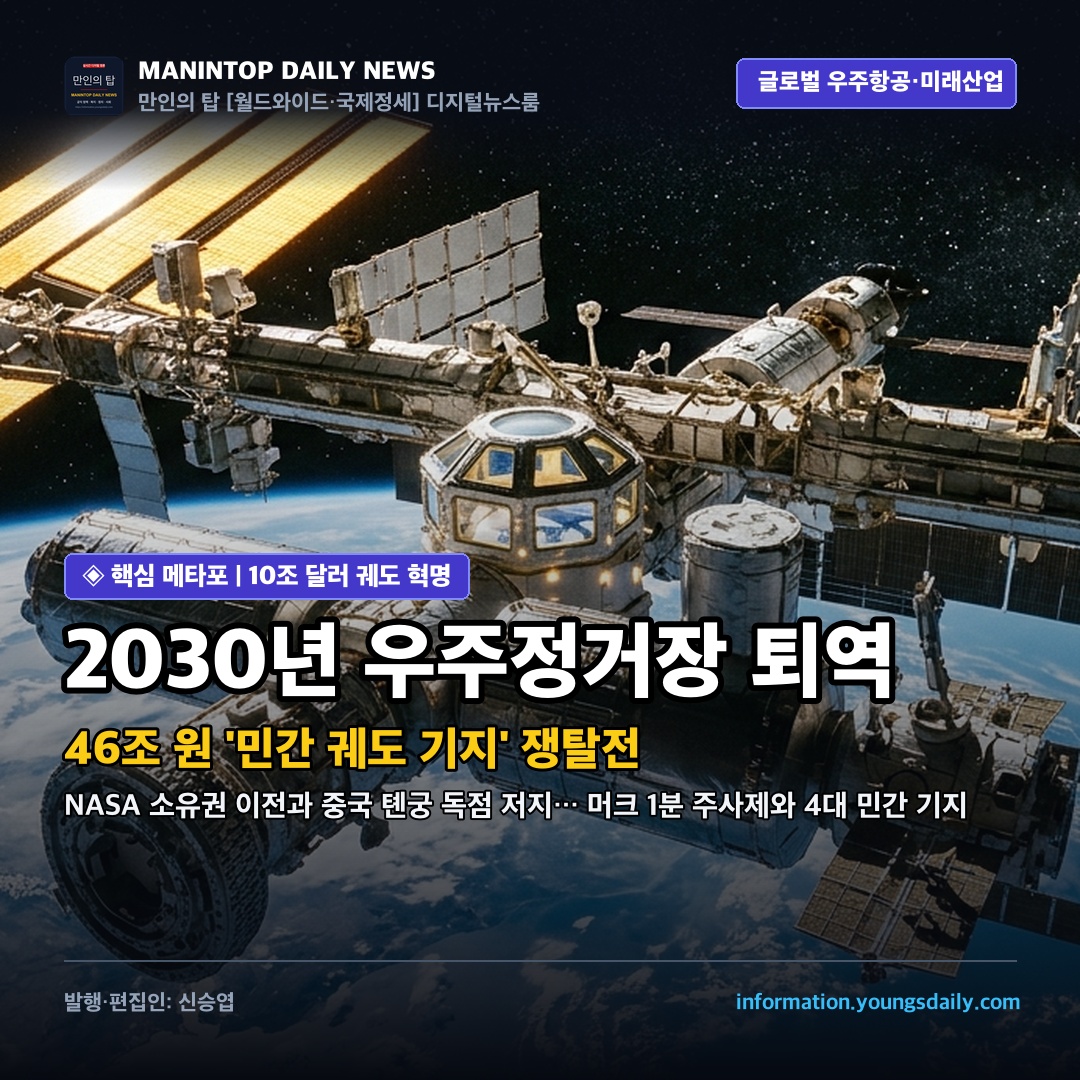
▲ 지구 저궤도를 비행하는 차세대 상업용 모듈형 우주정거장의 모습. 2030년 ISS 퇴역을 앞두고 NASA와 글로벌 민간 기업들이 46조 원 규모의 대체 기지 개발에 속도를 내고 있다. / 공식 우주항공 보도 자료 사진
인류가 지구 밖 400km 상공에 세운 가장 거대한 요새, 국제우주정거장(ISS)이 2030년 공식 퇴역을 앞두고 카운트다운에 돌입했습니다. 25년 넘게 극한의 우주 환경을 버텨온 시설 노후화와 연간 30억 달러에 달하는 천문학적 유지비로 NASA는 우주정거장을 직접 짓는 대신 민간 기지의 방을 빌려 쓰는 대전환을 선택했습니다. 총 사업 규모 341억 달러, 한화 약 46조 원에 달하는 미 항공우주국 상업 저궤도 개발 프로그램(CLDC)을 둘러싸고 바스트 스페이스, 액시옴 스페이스, 스타랩 스페이스, 오비탈 리프 등 4대 민간 우주 기업의 치열한 패권 쟁탈전이 불붙고 있습니다.
25년 우주 요새의 황혼… 2030년 퇴역 카운트다운과 태평양 수장 계획
1998년 첫 번째 모듈 자랴(Zarya)가 발사된 이래, 국제우주정거장(ISS)은 인류 과학기술 협력의 상징이었습니다. 축구장 크기만 한 거대한 기체가 고도 400km에서 시속 2만 8,000km 속도로 매일 지구를 열여섯 바퀴씩 선회해 왔습니다. 하지만 4반세기가 넘는 동안 ISS는 매 회전마다 영상 120도와 영하 150도를 넘나드는 270도의 극단적인 온도 격차에 노출되었고, 수천 번의 열팽창과 수축을 거치며 금속 구조재의 피로도가 한계점에 도달했습니다.
실제로 캐나다의 로봇팔 캐나담2(Canadarm2)에는 5mm 크기의 미세운석이 관통한 흔적이 뚜렷이 남아 있으며, 러시아 즈베즈다(Zvezda) 모듈에서는 미세 균열로 인한 공기 압력 누출 사고가 반복되고 있습니다. 여기에 매년 들어가는 유지보수 비용만 약 30억 달러, 한화로 4조 원이 넘습니다. 이 예산의 80% 이상을 홀로 부담해온 미국 정부로서는 차세대 달 탐사인 아르테미스(Artemis)와 화성 유인 탐사에 재원을 집중하기 위해 ISS의 손을 떼야 하는 재정적 압박에 직면했습니다.
NASA는 이미 스페이스X와 8억 4,300만 달러 규모의 탈궤도 우주선(US Deorbit Vehicle) 제작 계약을 체결했습니다. 계획대로라면 2030년 이후 추진 엔진을 가동해 ISS를 지구 대기권으로 재진입시키고, 불타지 않고 남은 파편들을 육지에서 가장 먼 남태평양의 '포인트 니모(Point Nemo)' 해역에 안전하게 수장시킬 방침입니다. 비록 미 상원에서 2032년 9월까지 운용을 연장하자는 법안이 만장일치로 통과되었으나, 기체 노후화와 러시아의 분리 위협 등을 고려할 때 2030년 전후의 퇴역은 피할 수 없는 현실로 다가오고 있습니다.
중국 톈궁의 '독점 플랫폼' 야욕과 NASA의 46조 원 임차인 대전환
ISS가 퇴역하면 지구 저궤도에 발생하는 거대한 '안보와 기술의 공백'은 심각한 전략적 위기를 낳습니다. 만약 미국과 서방이 대체 기지를 마련하지 못한다면, 저궤도에 유일하게 남아있는 유인 기지는 중국의 톈궁(Tiangong) 우주정거장뿐입니다. 중국은 이미 세 명의 우주비행사가 6개월씩 상시 거주하며 기지를 6개 모듈로 확장하고 있으며, 남미·아프리카·중동 등 이른바 글로벌 사우스 국가들을 상대로 무상 궤도 실험과 우주인 파견을 제안하며 공격적인 우주 외교를 펼치고 있습니다.
만약 전 세계 과학계와 다국적 기업들이 중국 톈궁에 의존하게 된다면, 도킹 규격부터 통신 주파수, 데이터 보안 체계까지 모든 궤도 표준이 중국 주도로 굳어지는 이른바 '플랫폼 고착화(Lock-in)'가 일어납니다. 이는 모바일 생태계에서 특정 앱스토어가 시장을 독점하듯, 향후 수십 년간 우주 공간에서의 주도권을 중국에 완전히 내주는 결과를 뜻합니다.
이를 저지하기 위해 NASA가 빼 든 카드가 바로 상업 저궤도 개발 프로그램(CLDC)입니다. 과거 아폴로나 ISS 시절처럼 정부가 기지 전체를 설계하고 소유하며 모든 비용을 떠안는 것이 아니라, 민간 기업이 자체 자본으로 상업 우주정거장을 건설하고 정부는 필요한 연구 공간과 우주비행사 숙소를 빌려 쓰는 '임차인(세입자)' 모델로 체질을 완전히 바꿨습니다. NASA가 책정한 조달 예산은 기본 8년(2027~2035년)에 옵션 7년을 더해 최대 341억 달러, 우리 돈으로 약 46조 원에 달합니다. 특히 초기 4년 동안에만 유인 비행 4회와 화물 보급 8회를 확정 보장하여 연간 최소 18억 5,000만 달러(약 2조 5,000억 원)의 안정적인 정부 매출을 제공하기로 했습니다.
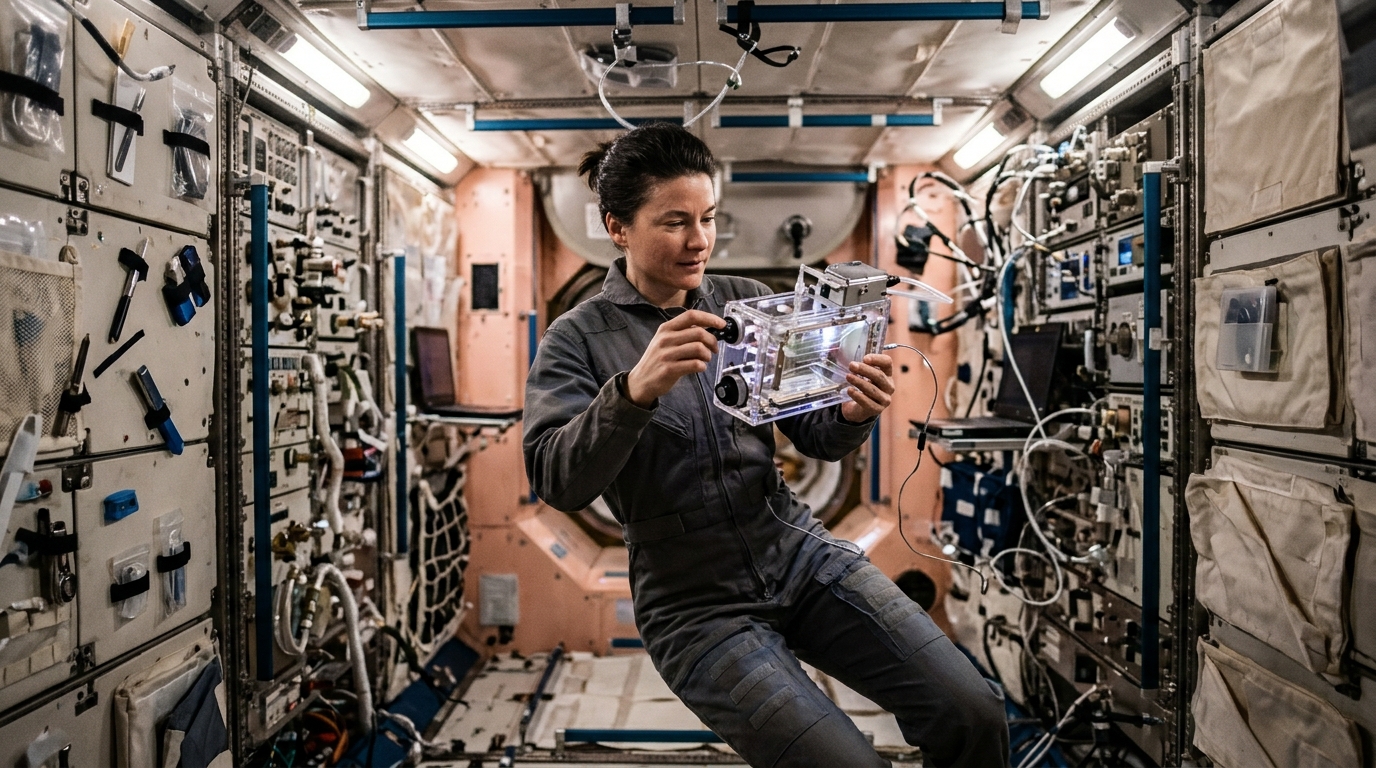
▲ 우주정거장 내부 미세중력 환경에서 단백질 결정화 및 바이오 신약 실험을 진행하는 우주 과학자. 중력이 사라진 공간은 새로운 고부가가치 의약품과 특수 신소재의 황금 제조소로 탈바꿈하고 있다. / 공식 궤도 연구 현장 사진
저궤도 4대 민간 우주정거장 대격돌… 4개 컨소시엄의 기술과 승부수
NASA의 46조 원 조달 파이를 차지하기 위해 미국의 첨단 항공우주 기업들이 4대 진영으로 나뉘어 진검승부를 펼치고 있습니다. 각 진영은 기술적 접근법과 사업 모델에서 완전히 차별화된 전략을 선보이며 저궤도 시장을 선점하려 하고 있습니다.
첫 번째 주자인 바스트 스페이스(Vast Space)는 암호화폐 억만장자 제드 맥케일럽이 설립한 기업으로, 가장 빠른 속도전을 펼치고 있습니다. 2027년 발사를 목표로 하는 'Haven-1' 모듈은 직경 3.8m의 단일 캡슐형 기지로, 스페이스X의 팰컨9 로켓 한 번으로 통째로 쏘아 올립니다. 복잡한 궤도 조립 과정이 없어 비용이 가장 저렴하며, 스타링크 레이저 통신을 탑재해 궤도에서도 지상과 기가비트급 실시간 데이터 통신을 지원합니다.
두 번째 강자인 액시옴 스페이스(Axiom Space)는 가장 안전하고 현실적인 점진적 독립 전략을 택했습니다. 완전히 새로운 기지를 우주에 바로 띄우는 위험을 피하기 위해, 먼저 2026년부터 기존 ISS 전면 도킹 포트에 자체 상업 모듈을 하나씩 결합합니다. ISS로부터 전력과 생명유지 지원을 받으며 실전 검증을 거친 뒤, ISS가 퇴역하는 2028년 무렵 결합을 분리하여 독자적인 'Axiom Station'으로 홀로서기에 나선다는 구상입니다. 이미 다국적 민간 우주비행 임무를 세 차례나 성공시킨 경험이 가장 큰 자산입니다.
세 번째 연합체인 스타랩 스페이스(Starlab Space)는 전통 우주항공의 거인들이 뭉친 글로벌 연합군입니다. 미국의 보이저 스페이스를 필두로 유럽의 에어버스, 일본의 미쓰비시, 미국의 방산 대기업 노스럽 그루먼이 참여했습니다. 직경 8m에 달하는 거대한 메탈릭 스테인리스 스틸 모듈을 스페이스X의 차세대 초대형 발사체 '스타십(Starship)'에 실어 단 1회 발사로 우주에 배치합니다. 에어버스의 우주 실험실 노하우와 노스럽의 화물 보급선 시그너스 기술이 유기적으로 결합되어 있습니다.
네 번째 연합인 오비탈 리프(Orbital Reef)는 아마존 창업자 제프 베이조스의 블루오리진과 시에라 스페이스가 이끌고 있습니다. 이 팀의 비기는 팽창형 모듈 '라이프(LIFE)'입니다. 로켓에 실릴 때는 접혀 있다가 우주에 도달하면 질긴 직물 소재가 풍선처럼 부풀어 올라 300세제곱미터(m³)에 달하는 3층 복층 구조의 넓은 공간을 만듭니다. 여기에 날개 달린 우주비행기 '드림 체이서'를 결합해 활주로에 부드럽게 수평 착륙함으로써, 우주에서 만든 정밀 의약품이나 바이오 장기를 충격 없이 안전하게 지구로 가져오는 강점을 자랑합니다.
기업 및 프로젝트
모듈 구조 및 규격
발사 및 전개 방식
핵심 경쟁력 및 차별점
바스트 스페이스 (Haven-1)
직경 3.8m 금속 원통형 단일 모듈 (4인 탑승)
스페이스X 팰컨9 로켓 1회 단독 발사
2027년 가장 빠른 궤도 가동 목표, 스타링크 기가비트 레이저 통신 탑재
액시옴 스페이스 (Axiom Station)
다중 확장형 가압 거주 및 연구 모듈
ISS 전면 포트에 연결 운용 후 2028년 독자 분리
검증된 유인 우주비행 운용 실적, 사우디·이탈리아 등 풍부한 해외 고객망
스타랩 스페이스 (Starlab)
직경 8m 스테인리스 스틸 일체형 거대 구조
스페이스X 스타십 차세대 초대형 로켓 1회 발사
에어버스·미쓰비시·노스럽 그루먼의 글로벌 기술 및 방산 신뢰성 결합
오비탈 리프 (Orbital Reef)
팽창형 직물 모듈 LIFE (300m³ 3층 복층 구조)
뉴 글렌 발사 및 드림 체이서 우주왕복선 수평 착륙
3G 이하 활주로 저충격 착륙으로 단백질 결정 및 바이오 화물 손상 방지
중력 없는 궤도 공장이 연 10조 달러 시장… 머크 1분 주사제와 바이오 혁명
민간 기업들이 수조 원의 천문학적 자본을 우주정거장에 쏟아붓는 이유는 단순한 정부 용역 사업 때문만이 아닙니다. 우주 저궤도의 '미세중력(Microgravity)' 환경이 지상에서는 불가능했던 첨단 제조업의 빗장을 풀어주고 있기 때문입니다. 지구에서는 중력 때문에 액체 내에서 무거운 물질이 가라앉는 침전 현상과 온도 차에 의한 대류 현상이 끊임없이 일어납니다. 하지만 중력이 100만 분의 1로 줄어드는 궤도에서는 물질이 완벽하게 균일하게 섞이고 정지 상태를 유지합니다.
가장 대표적인 혁신이 글로벌 제약사 머크(Merck)의 면역항암제 '키트루다(Keytruda)' 사례입니다. 키트루다는 암 환자들의 생명을 연장하는 블록버스터 약물이지만, 지상에서는 단백질 결정의 크기가 제각각으로 뭉쳐 환자가 병원에 누워 2시간 동안 링거로 정맥주사를 맞아야만 했습니다. 머크는 ISS 국립연구소와의 궤도 결정화 실험을 통해, 무중력 상태에서 입자 크기가 20마이크로미터 이하로 균일하게 정렬된 초고순도 단백질 결정을 합성하는 데 성공했습니다.
이 균일한 우주 결정을 바탕으로 약물의 점도를 획기적으로 낮춤으로써, 환자가 병원에 가지 않고 집에서 단 1분 만에 스스로 투여할 수 있는 피하주사(SC) 제형이 개발되었고, 2025년 9월 미국 식품의약국(FDA) 승인을 획득했습니다. 이는 우주 공간이 더 이상 관측용 망원경 기지가 아니라, 연간 수십조 원의 가치를 창출하는 '초정밀 제조 공장'임을 입증한 결정적 사건이었습니다. 이 외에도 지상에서는 형태를 유지하지 못해 무너지는 3D 인공 혈관과 장기 프린팅, 신호 손실이 거의 없는 차세대 ZBLAN 광섬유, 그리고 격자 결함이 없는 초고순도 화합물 반도체 웨이퍼 제조까지 궤도 경제의 영역은 무한히 확장되고 있습니다. 글로벌 투자은행 모건스탠리는 궤도 제조를 포함한 전체 우주 산업의 시장 규모가 2040년 1조 달러를 돌파하고, 장기적으로 10조 달러에 이를 것으로 내다봤습니다.
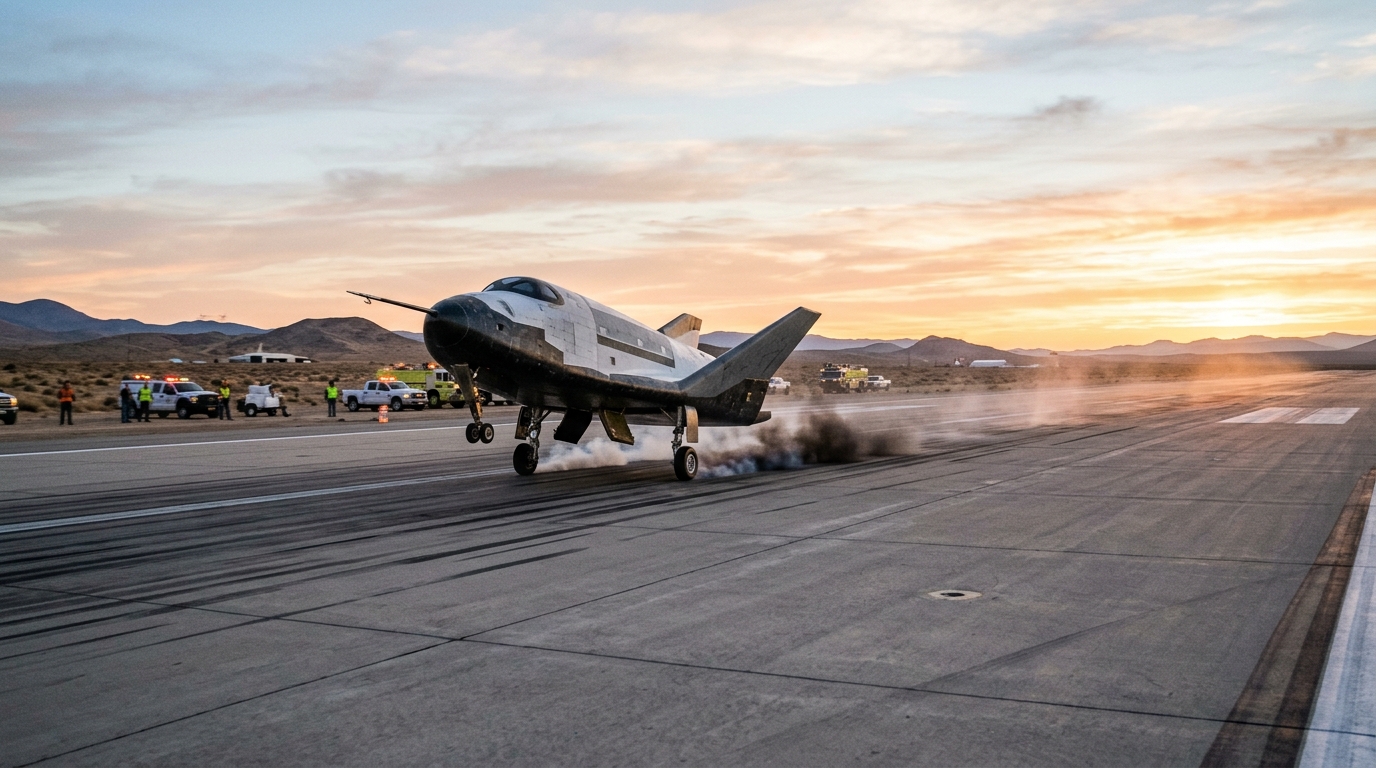
▲ 우주정거장에서 생산된 귀중한 의약품과 바이오 장기를 싣고 활주로에 수평 착륙하는 드림 체이서 우주왕복선. 3G 이하의 부드러운 저충격 귀환 기술은 궤도 상업 경제의 핵심 물류망이다. / 공식 항공우주 보도 사진
지구 밖 상업 생태계가 온다… 한국 항공우주와 첨단 제조업의 생존 전략
ISS의 퇴역과 민간 우주정거장 시대의 개막은 대한민국 우주항공청(KASA)과 국내 제조 기업들에게도 중대한 패러다임 전환을 요구하고 있습니다. 지금까지 우리의 우주 개발이 누리호 발사체 완성이나 위성 부품 조달 같은 '궤도에 올라가는 수단'에 초점을 맞췄다면, 이제는 '우주 궤도에 올라가서 무엇을 생산해 돈을 벌 것인가'라는 상업화 단계로 시야를 넓혀야 합니다.
한국은 세계 최고 수준의 바이오 제약 위탁생산(CDMO) 역량과 반도체 제조 인프라, 그리고 특수 소재 가공 기술을 보유하고 있습니다. 이 독보적인 지상 제조 능력을 민간 우주정거장의 무중력 챔버와 연결하는 선제적 파트너십 구축이 시급합니다. 이미 미국의 액시옴이나 스타랩 같은 민간 플랫폼들은 전 세계 기업과 연구소를 대상으로 유료 실험 슬롯을 판매하고 있습니다. 정부가 나서서 국내 바이오·소재 기업들이 상업 우주정거장에서 궤도 실험을 할 수 있도록 지원 바우처를 마련하고, 국제 표준 규격 제정에 주도적으로 참여해야 합니다.
우주정거장은 더 이상 슈퍼강대국들만의 정치적 과시용 무대가 아닙니다. 2030년 민간 기지들이 지구 궤도를 뒤덮을 때, 그곳에서 개발된 신약과 신소재를 쥐지 못한 국가는 미래 글로벌 제조업 밸류체인에서 심각한 기술적 도태를 겪게 될 것입니다. 우주로 향하는 문이 국가 독점에서 민간 시장으로 활짝 열린 지금, 한국 산업계의 과감하고 발 빠른 우주 비즈니스 베팅이 절실한 시점입니다.
만인의 탑 정론 뉴스룸 | 월드와이드 특별취재팀
발행인 겸 편집인: 신승엽 (Seung Youb Ssin)
본 기사는 NASA 공식 조달 보고서, 미국 의회 의안정보시스템(CRS), CASIS 국립연구소 연구 데이터, 미 식품의약국(FDA) 승인 내역 및 4대 민간 우주정거장 컨소시엄 공개 백서를 기반으로 정밀 검증을 거쳐 편찬되었습니다.
Retiring the ISS: Inside the $34 Billion Commercial Race to Rule Low Earth Orbit
▲ Next-generation commercial modular space station operating in low Earth orbit. As the ISS nears retirement, NASA and global aerospace consortia accelerate a $34 billion replacement program. / Official Aerospace Press Archive
The International Space Station, humanity's largest artificial habitat 250 miles above Earth, is entering its final operational chapter toward retirement by 2030. Faced with structural fatigue after more than a quarter-century of orbital service and an annual operational expense exceeding $3 billion, NASA is executing a historic pivot from owning orbital infrastructure to becoming a commercial tenant. Under the Commercial Low Earth Orbit Development program representing up to $34.1 billion in procurement value, four major aerospace consortiums are competing fiercely to deploy the next generation of private space stations before orbital hegemony slips away.
Twilight of a 25-Year Outpost: The 2030 Deorbit Clock and the Pacific Splashdown
Since the launch of the Zarya functional cargo block in 1998, the International Space Station has stood as a monument to global scientific cooperation. Spanning the footprint of an American football field and hurtling through low Earth orbit at 17,500 miles per hour, the outpost circles the globe every ninety minutes. Yet across twenty-five years of service, the station has endured brutal thermal swings of 500 degrees Fahrenheit every single orbit. Thousands of thermal cycles have pushed the primary structural alloys and pressure shells toward unavoidable metal fatigue.
Physical evidence of orbital wear is undeniable. A five-millimeter hole punched by a micrometeoroid remains visible in the Canadarm2 robotic arm, while persistent micro-fissures in Russia's Zvezda service module have triggered recurring cabin pressure leaks. Compounding the physical degradation is an annual operational cost exceeding $3 billion, with the United States government financing over eighty percent of the burden. With the Artemis lunar missions and eventual Mars exploration demanding vast capital, maintaining a legacy orbital asset has become financially unsustainable.
To execute an orderly decommissioning, NASA awarded an $843 million contract to SpaceX to build the United States Deorbit Vehicle. This specialized spacecraft will dock with the outpost and fire powerful thrusters to guide the 450-ton structure into an atmospheric re-entry, dropping surviving debris into Point Nemo, the most remote oceanic desert in the South Pacific. While the United States Senate unanimously approved a reauthorization bill seeking to extend operations through September 2032, aging hardware and geopolitical friction make retirement around 2030 inevitable.
China’s Tiangong Monopoly Threat and NASA’s $34 Billion Shift to Tenant Buyer
The impending retirement of the ISS creates a profound geopolitical and technological vacuum in low Earth orbit. If Western nations fail to deploy operational successors in time, Beijing's Tiangong will become the sole inhabited station in orbit. Tiangong is already permanently occupied by three taikonauts, expanding toward a six-module complex, and aggressively courted by nations across South America, Africa, and the Middle East through turnkey flight offers and collaborative science experiments.
Should the international scientific community pivot to China's station, the foundational technical standards of orbit, spanning docking mechanisms, power protocols, communication bandwidths, and telemetry encryption, will be dictated by Beijing. Much like platform monopolies in digital ecosystems, this scenario threatens to create deep architectural lock-in, forfeiting Western leadership in orbital operations for decades to come.
To prevent this monopoly, NASA initiated the Commercial Low Earth Orbit Development (CLDC) program. Abandoning the Cold War model of direct government ownership, NASA transformed into an anchor commercial customer. The agency is providing initial development grants while committing to lease research berths, power, and astronaut accommodations from private operators. The procurement blueprint spans a base eight-year term from 2027 to 2035 with a seven-year option through 2042, representing a maximum contract ceiling of $34.1 billion. In the initial four years alone, guaranteed demand provides four crewed missions and eight cargo rotations annually, securing at least $1.85 billion in recurring yearly revenue for private developers.
▲ Astronaut scientist conducting protein crystallization and biotechnology experiments inside an orbital microgravity module. The absence of gravity transforms the station into an advanced manufacturing frontier. / Official Laboratory Press Archive
The Four Commercial Contenders: Technologies and Blueprints for the Next Orbital Era
Four commercial groups have emerged to compete for NASA's multibillion-dollar procurement awards. Each consortium brings distinct engineering methodologies, deployment schedules, and capitalization strategies to capture the commercial space frontier.
Leading the sprint on deployment speed is Vast Space, founded by billionaire technologist Jed McCaleb. Vast’s Haven-1 is an integrated 3.8-meter diameter cylindrical outpost designed to reach orbit on a single SpaceX Falcon 9 rocket by 2027. By eliminating the risks and delays of complex on-orbit robotic assembly, Vast offers the fastest timeline to operational revenue, enhanced by optical laser links to Starlink for continuous gigabit communications.
Taking an incremental evolutionary path, Axiom Space is attaching commercial modules directly to the forward port of the ISS starting in 2026. By utilizing the existing station's life support and power grid, Axiom mitigates launch risks before detaching its interconnected cluster into an autonomous Axiom Station around 2028. Its operational track record running three commercial astronaut missions to the ISS gives it significant credibility with sovereign space agencies.
Starlab Space represents a transatlantic industrial powerhouse uniting Voyager Space, Airbus, Mitsubishi Corporation, and Northrop Grumman. Starlab relies on a rigid eight-meter diameter stainless steel module launched in a single shot aboard SpaceX’s Starship. The platform merges Airbus’s specialized European Columbus module heritage with Northrop Grumman’s automated Cygnus cargo spacecraft technology.
Finally, the Orbital Reef partnership between Jeff Bezos’s Blue Origin and Sierra Space introduces high-volume inflatable structures. Sierra Space’s LIFE module travels inside a payload fairing and expands into a three-hundred-cubic-meter, three-story habitat in space. Coupled with the winged Dream Chaser spaceplane that glides down to standard airport runways with gentle deceleration below 3G, Orbital Reef offers an ideal logistical highway for delicate crystalline pharmaceuticals and bio-printed tissues.
Consortium & Platform
Structural Architecture
Deployment Logistics
Core Market Advantage
Vast Space (Haven-1)
3.8-meter metallic cylindrical single module (4-crew)
Single launch on SpaceX Falcon 9
Earliest operational launch target in 2027 with gigabit Starlink laser mesh
Axiom Space (Axiom Station)
Multi-module pressurized habitable research hub
Docking to ISS forward port before 2028 separation
Proven crewed flight operations and sovereign commercial astronaut contracts
Starlab Space (Starlab)
8-meter diameter rigid stainless steel habitat
Single direct delivery via SpaceX Starship
Aerospace tier-1 alliance of Voyager, Airbus, Mitsubishi, and Northrop Grumman
Orbital Reef (Orbital Reef)
Inflatable LIFE textile module (300m³ multi-deck)
New Glenn heavy booster with Dream Chaser spaceplane
Low-G runway return under 3G preserving crystalline drug samples and organs
The Trillion-Dollar Orbital Factory: Merck’s 1-Minute Therapy and Microgravity Bio
Commercial interest in low Earth orbit extends far beyond government exploration budgets. The microgravity environment fundamentally alters physical processes, unlocking unprecedented precision in advanced manufacturing. On Earth, gravity drives sedimentation and thermal convection, causing denser particles to sink and creating structural imperfections in crystals and fluids. In microgravity, where gravitational forces diminish by six orders of magnitude, materials disperse in perfect equilibrium without convective currents.
The most striking validation came from pharmaceutical giant Merck & Co. and its flagship immunotherapy Keytruda. While saving millions of cancer patients, terrestrial formulations suffered from heterogeneous crystal sizes, forcing patients to endure two-hour intravenous infusions in clinical oncology suites. Through orbital crystallization experiments on the ISS National Laboratory, researchers synthesized uniform protein microcrystals under twenty micrometers with exceptional purity.
This orbital crystalline uniformity drastically lowered solution viscosity, enabling a subcutaneous injection that can be self-administered in under one minute. The formulation secured FDA approval in September 2025, validating orbital platforms as commercially viable biomanufacturing hubs. Similar revolutions are emerging across 3D scaffold-free bioprinting of cardiac tissues, ultra-pure ZBLAN optical fibers free of gravitational light scattering, and defect-free semiconductor crystals. Morgan Stanley projects the space economy will exceed $1 trillion by 2040, with long-term industrial manufacturing reaching multi-trillion valuations.
▲ Dream Chaser spaceplane touching down on an airfield runway after returning from orbital manufacturing missions. Its low-deceleration glide landing safeguards delicate biopharmaceuticals from structural stress. / Official Aerospace Documentation
Beyond Space Launchers: Strategic Imperatives for Global Aerospace and Advanced Industry
The commercial transformation of low Earth orbit signals an urgent strategic shift for international aerospace agencies and advanced manufacturing conglomerates. While past space initiatives focused almost exclusively on launch vehicle autonomy and satellite payloads, the next industrial frontier will be defined by orbital manufacturing productivity.
Industrial powers with mature semiconductor fabs, advanced contract biomanufacturing networks, and precision materials fabrication must establish early access agreements with private station operators. Both Axiom and Starlab are actively leasing automated payload racks and microgravity berths to commercial enterprises. Governments must provide research vouchers and standard integration frameworks so domestic biotechnology and electronics innovators can participate in orbital production trials.
Space stations are no longer sovereign prestige monuments reserved for superpowers. When private commercial hubs operationalize orbit by 2030, nations lacking proprietary production pipelines in space risk severe technological obsolescence across critical pharmaceuticals and semiconductor technologies. The gates to low Earth orbit have transitioned from government monopolies to open markets, demanding bold and calculated commercial commitment.
MANINTOP NEWSROOM | Worldwide Investigative Desk
Publisher & Editor: Seung Youb Ssin
This analytical report is synthesized and verified using official NASA procurement documents, Congressional Research Service legislative archives, CASIS National Laboratory technical reports, FDA regulatory disclosures, and technical filings from commercial station consortia.
PRO SOURCING ENGINE만인의 탑 빅데이터 솔루션
★ 가입 시 600 크레딧(120회) 전원 무료
내가 찾는 상품 키워드, 지금 얼마나 검색될까?
네이버 월간 검색량 + 구글 볼륨 + 아이템스카우트 실시간 상품수와 경쟁강도 배지를 0.5초 만에 무료로 확인하세요.
MANINTOP NEWSLETTER
📬 만인의 탑 뉴스레터 무료 구독
오늘 보신 정책·시사 뉴스가 유익하셨나요? 매일 엄선되는 알짜 복지 혜택과 국회 실시간 속보를 이메일로 가장 먼저 받아보세요. (평생 무료)
1월이 시작되면 감기는 이미 우리 곁에 와 있습니다. 2월, 3월, 4월까지 이어지는 추위와 건조함은 코와 목을 가장 먼저 공격합니다. 아침에 일어나자마자 막혀 있는 코. 계속 흐르는 콧물. 괜히 칼칼해지는 목. 이 증상은 “시작”일 뿐입니다. 한 번 무너지면 일주일, 길면 한 달까지 끌고 갑니다. 약을 먹으면 잠깐 괜찮아집니다. 하지만 며칠 뒤 또 반복됩니다. 왜일까요? 감기는 ‘치료’의 문제가 아니라 ‘관리’의 문제이기 때문입니다. 대부분은 감기가 오고 나서 약을 찾습니다. 하지만 진짜 중요한 건 감기가 오기 전에 코와 목을 지키는 것입니다. 건조한 실내 공기, 차가운 바깥 공기, 눈에 보이지 않는 세균. 코와 목은 매일 공격받고 있습니다. 지긋지긋하죠! 그런데도 우리는 아무 준비 없이 버티고 있습니다. 이번 겨울도 그렇게 보낼 건가요? 사실 방법은 어렵지 않습니다. 코를 깨끗하게 관리하고, 목을 따뜻하게 보호하고, 점막을 촉촉하게 유지하고, 기관지를 미리 관리하고, 외부 공기를 차단하는 것. 이 다섯 가지만 꾸준히 해도 감기약 없이 겨울을 보내는 것이 충분히 가능합니다. 🔥 이제부터 그 방법을 하나씩 살펴보겠습니다. 🔥 1. 코와 목을 먼저 관리해야 하는 과학적 이유 감기의 대부분은 코 점막에서 시작됩니다. 국제 학술지 Nature Reviews Microbiology 와 Journal of Allergy and Clinical Immunology 에 실린 호흡기 감염 관련 연구들에서는, 감기 바이러스가 비강 상피세포에 먼저 부착해 증식한다는 점을 설명하고 ...
리모델링사업이 진행 중인 아파트를 매매할 때 “계약금 10%를 언제까지 내야 하느냐”는 질문이 특히 많이 나옵니다. 이주공고(이주 안내)가 7~11월쯤이라고 들으면, 그 시점에 맞춰 계약금도 움직일 것 같아서 더 헷갈리기 쉽습니다. 하지만 실제 납부기한은 ‘이주공고가 언제냐’만으로 자동 결정되지 않는 경우가 많습니다. 1) 계약금 10% 납부기한: 결국 ‘문서에 적힌 일정’이 기준 계약금 10%를 언제까지 납부해야 하는지는, 내가 서명하는 매매계약서(특약 포함) 와 사업주체/조합이 제시한 공고·안내문 에 적힌 납부 일정이 기준이 됩니다. 실제 공고문에서는 분양대금 납부의 큰 틀(계약금→중도금→잔금)을 먼저 안내하고, 상세 일정은 별도 표나 유의사항으로 제시하는 방식이 흔합니다. 또, 계약서 문구에 따라 지급 시점이 조건부로 설정될 수도 있습니다. 예를 들어 한 사례 소개 자료에서는 용역계약서에 잔금(10%) 지급시기가 “사업승인 후”로 기재되어 있었다는 점이 언급됩니다. 이런 식으로 ‘사업 단계’와 지급을 연동하는 문구가 들어가면, 질문의 답은 계약서 문구를 확인해야만 확정됩니다. 관련 내용은 링크 에서 문구 사례를 확인할 수 있습니다. 2) 입주자모집공고에서 확인되는 ‘납부 순서’와 잔금 마감 시점 공고문에 적힌 문구를 보면, 납부 순서와 잔금 마감에 대한 기준이 비교적 명확하게 제시되는 경우가 있습니다. 예를 들어 한 입주자모집공고에는 “분양금액(주택가격)은 계약금, 중도금, 잔금의 순서로 납부”하며 “잔금은 입주(열쇠 수령일) 전에 완납”해야 한다고 안내되어 있습니다. (문구 확인: 링크 ) 이 문구가 의미하는 바는 최소 2가지입니다. 분양/공급 형태의 문서에서는 ‘계약금→중도금→잔금’ 흐름이 공식적으로 안내될 수 있습니다. 잔금은 “입주(열쇠 수령)” 이전에 완납해야 한다는 마감 기준이 문서에 적혀 있을 수 있습니다. 다만, 위 공고문 문구는 잔금 마감에 대한 기준을 보여주지만, 계약금 10%의...
윤석열 전 대통령 탄핵 인용 소식을 접하면, 가장 궁금한 지점은 ‘헌재가 정확히 무엇을 위헌·위법으로 봤는가’입니다. 또한 탄핵과 별개로 진행되는 형사재판(내란 우두머리 혐의 등)이 어디까지 왔는지도 함께 정리할 필요가 있습니다. 아래 내용은 제공된 기사/게시물 스니펫과 링크에서 확인되는 범위만 모아, 일반인이 흐름을 이해하기 쉽게 정리한 것입니다. 1) 탄핵 인용 관련: 스니펫에서 확인되는 ‘판단의 골격’ 제공된 근거 중 조국혁신당 사이트에는 헌법재판소가 윤석열 탄핵 심판에서 “피청구인의 위헌·위법행위는 국민 신임 …”이라는 취지로 판단했다는 문장이 인용돼 있습니다( 링크 ). 이 인용문만 놓고 보면, ‘위헌·위법행위’가 있었는지와 그로 인해 ‘국민의 신임’이 어떻게 평가됐는지가 핵심 축으로 소개됩니다. 다만 질문에서 요청하신 세부 항목, 즉 비상계엄 선포 자체를 문제 삼은 구체적 이유, 계엄 이후 조치(포고령, 국회 통제 등)의 어떤 지점이 헌법 위반인지, 국회의 권한행사 방해 및 정치활동 제약을 어떤 논리로 판단했는지 등은, 이번에 제공된 근거의 제목/스니펫만으로는 조항·사실관계·판단 구조가 그대로 제시돼 있지 않습니다. 따라서 이 글에서는 ‘헌재가 무엇을 문제 삼았다’는 세부 리스트를 단정적으로 재구성하기보다, 현재 확인 가능한 문구 수준의 요약(위헌·위법행위 → 국민 신임의 문제로 평가)까지만 적습니다. 만약 헌재 결정문 전문(주문 및 이유)이 추가로 확인되면, 그때는 문장 단위로 ‘어떤 행위’와 ‘어떤 헌법 원리/조항’이 연결되는지(예: 권력분립, 국회의 권한, 정치적 기본권 등) 구조화해 정리하는 것이 가장 정확합니다. 2) 형사 절차(내란 혐의) 관련: 체포영장과 1심 선고 언급 탄핵 심판과 별도로, 12·3 비상계엄 사태로 내란 혐의를 받는 윤석열 대통령에 대해 2024년 12월 31일 체포 영장이 발부됐다는 BBC 보도가 있습니다( 링크 ). 해당 보도는 ‘현직 대통령’에 대한 체포영장 발부라는 점을 함께 언급합니다. 또...