"청년 5명 중 1명이 당뇨 전단계"… 2030 덮친 혈당 쇼크와 '거꾸로 식사' 비즈니스 혁신
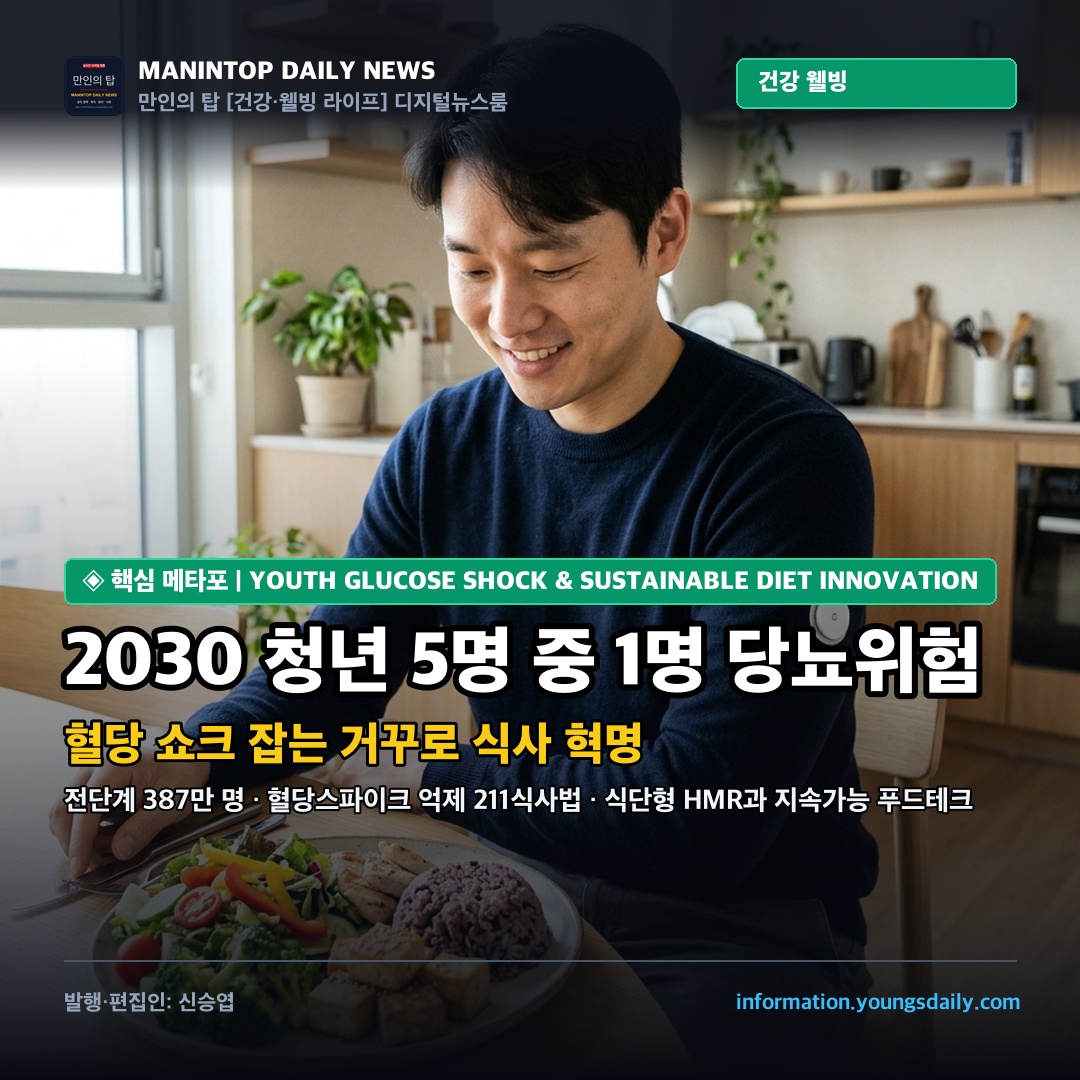
▲ 접시의 절반을 신선한 채소, 4분의 1을 두부 등 단백질, 4분의 1을 통곡물로 채운 영양균형 211 식단을 즐기는 청년 직장인. 식사 순서를 채소-단백질-탄수화물로 바꾸는 것만으로도 식후 혈당 스파이크를 효과적으로 예방할 수 있다. [사진=만인의 탑 보건의학DB]
1. 청년 5명 중 1명이 당뇨 전단계: 2030 세대를 덮친 '혈당 쇼크'의 실태
과거 중장년층의 질환으로 여겨졌던 2형 당뇨병이 청년층을 무섭게 파고들고 있습니다. 대한당뇨병학회 공식 학술지에 게재된 삼성서울병원 연구팀의 역학 분석에 따르면, 19세부터 39세 사이 청년층의 당뇨병 유병률은 2010년 1.02%에서 2020년 2.02%로 10년 만에 정확히 2배로 폭증했습니다. 환자 수만 37만 2,700여 명에 달하며, 이들 중 67.8%가 체질량지수(BMI) 25 이상의 비만 상태입니다.
더욱 심각한 잠재적 뇌관은 당뇨 전단계인 공복혈당장애 인구입니다. 19~39세 청년 인구 중 무려 387만 명(20.9%)이 당뇨 전단계에 진입해 있습니다. 청년 5명 중 1명이 언제든 당뇨 환자로 전환될 수 있는 위험선에 서 있는 셈입니다.
젊은 시절의 당뇨병은 혈당에 노출되는 기간이 길어 조기 합병증 위험이 극도로 높습니다. 청년 당뇨 환자의 79.8%가 이상지질혈증을 앓고 있고, 78.9%가 지방간, 34.2%가 고혈압을 동시에 앓고 있습니다. 가공식품, 과자, 배달 음식의 범람과 옥수수 전분으로 만든 액상과당의 과다 섭취가 인슐린 저항성을 급격히 악화시킨 주범으로 지목됩니다.
이에 따라 대한당뇨병학회의 2023 당뇨병 진료지침은 일반 성인의 선별검사 시작 연령을 기존 40세에서 35세로 전격 하향 조정했습니다. 또한 비만 위험인자가 있는 경우 19세 이상 모든 성인이 매년 혈당 검사를 받도록 권고하고, 남성 90cm, 여성 85cm 이상의 복부비만을 핵심 위험인자로 신설했습니다.
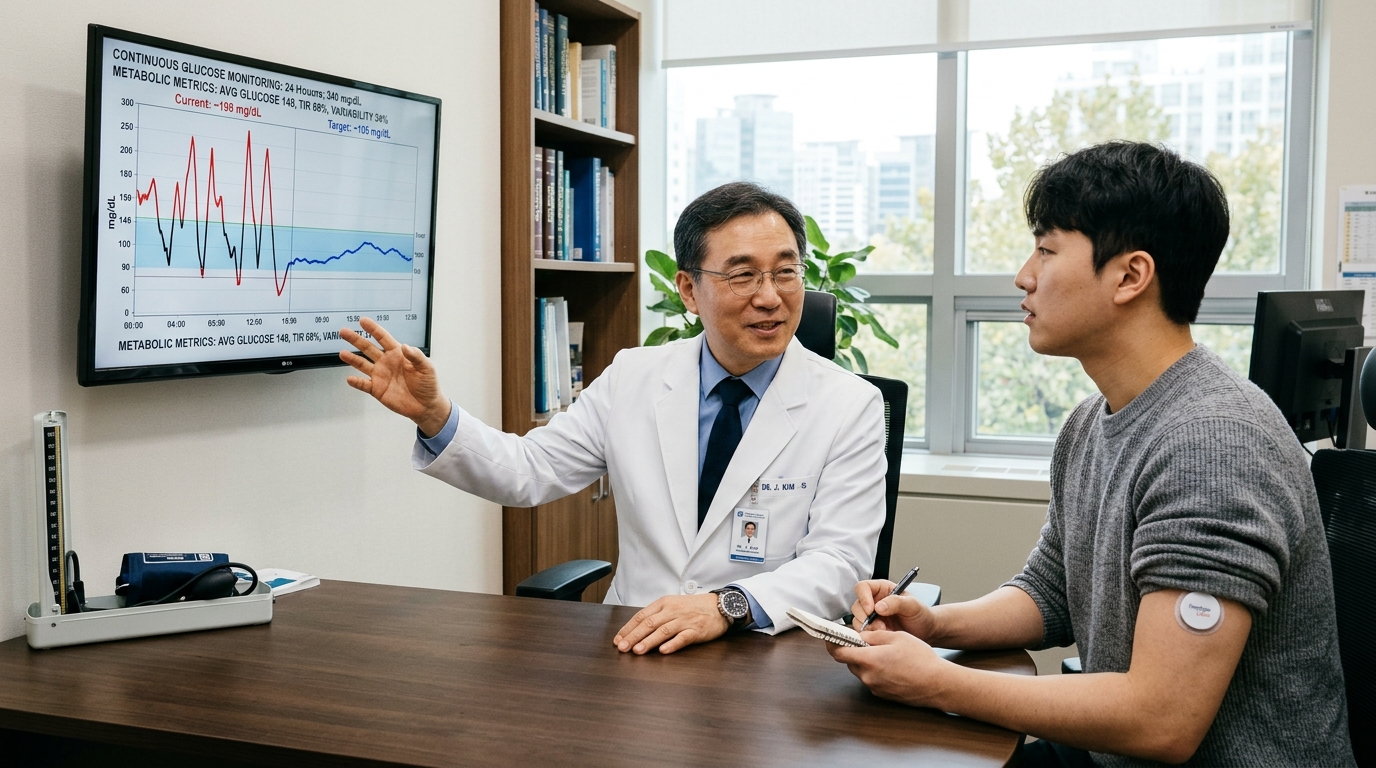
▲ 대학병원 내분비내과 전문의가 30대 환자에게 연속혈당측정(CGM) 데이터에 나타난 식후 혈당 스파이크 곡선과 복부 내장지방의 상관관계를 설명하고 있다. 식후 극심한 졸음과 피로는 혈당 급변동의 주요 신호다. [사진=만인의 탑 보건의학DB]
2. 소리 없는 혈관 파괴자 '혈당 스파이크'와 '거꾸로 식사법'의 과학
건강검진에서 공복 혈당이 100 mg/dL 미만으로 정상 판정을 받았더라도 안심할 수 없습니다. 식사 후 혈당이 짧은 시간에 180~200 mg/dL 이상 치솟았다가 급격히 곤두박질치는 혈당 스파이크는 혈관 내피세포를 망가뜨리고 만성 염증을 일으킵니다. 식사 후 1~2시간 만에 통제할 수 없을 정도로 쏟아지는 극심한 식곤증과 집중력 저하, 식후 단 음식이 당기는 가짜 배고픔이 바로 혈당 스파이크의 경고 신호입니다.
이를 잡는 가장 단순하면서도 확실한 해법이 바로 '식이섬유(채소) ➔ 단백질·지방 ➔ 탄수화물(밥·면)' 순서로 먹는 거꾸로 식사법입니다. 같은 칼로리와 반찬을 먹더라도 순서만 바꾸면 네 가지 생리학적 방어벽이 가동됩니다.
• 위 배출 지연: 채소와 단백질이 위에 먼저 들어가면 음식물이 십이지장으로 넘어가는 속도가 2~3배 늦춰져 탄수화물이 혈액으로 급속 유입되는 것을 차단합니다.
• 장 점막 겔 완충망: 채소의 수용성 식이섬유가 소장 벽에 끈적한 겔 막을 형성해 포도당 흡수 속도를 완만하게 늦춥니다.
• 포만 호르몬(GLP-1·CCK) 분비: 단백질과 불포화지방이 소장에 먼저 도달하면 인크레틴 호르몬인 GLP-1과 포만감 호르몬 CCK가 조기에 분비되어 췌장의 인슐린 과부하를 막고 과식을 원천 차단합니다.
• 체지방 축적 차단: 혈당이 완만하게 오르면 잉여 포도당이 간과 복부 지방으로 저장되지 않고 근육 세포의 순수 에너지원으로 온전히 연소됩니다.
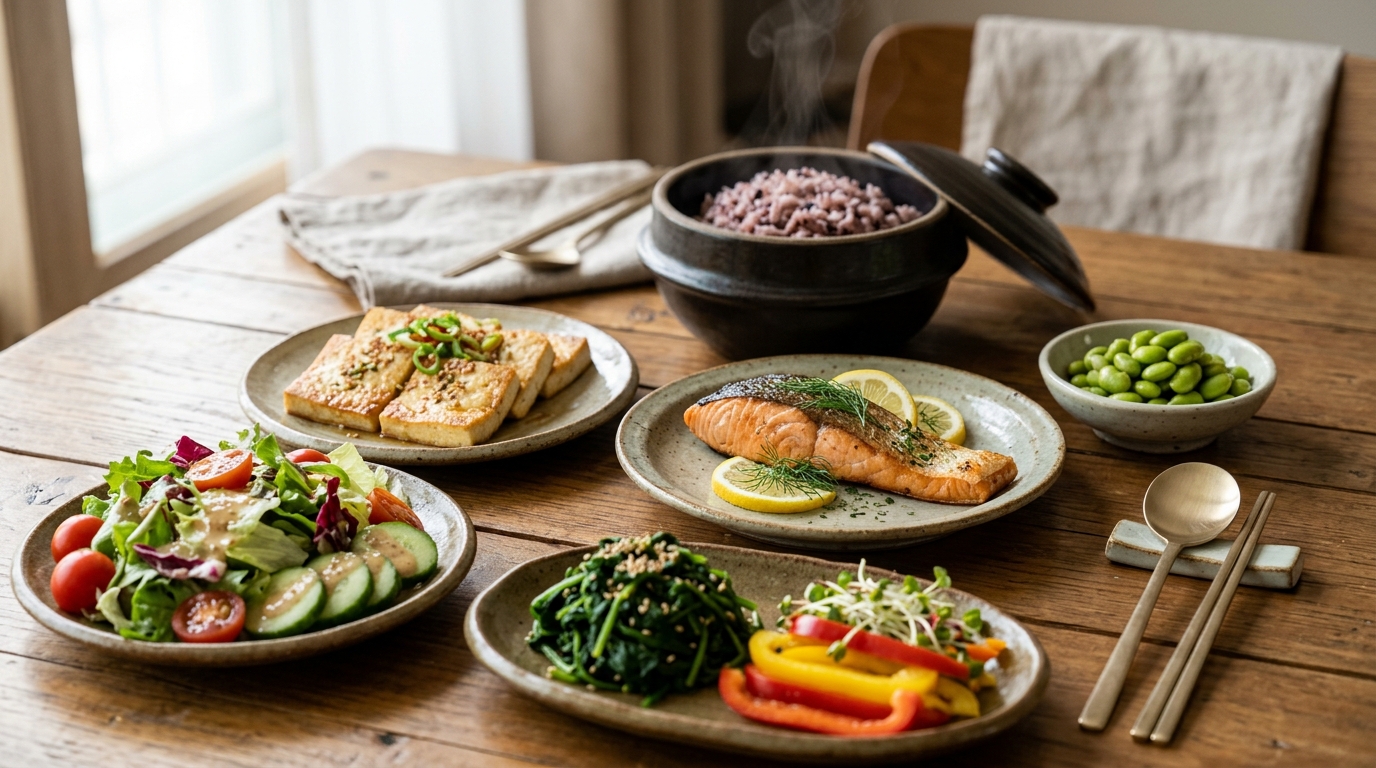
▲ 채소 샐러드와 나물(1단계 식이섬유), 두부와 생선구이(2단계 단백질), 잡곡밥(3단계 탄수화물)으로 차려진 식탁. 식사 시간을 20분 이상 유지하고 식후 가벼운 15분 산책을 병행할 때 혈당 안정 효과가 극대화된다. [사진=만인의 탑 보건의학DB]
3. 식사 관리 정밀 대조표: 영양 원칙부터 식품산업 맞춤형 솔루션까지
일상 식생활의 단계별 실천 지침과 임상 효과, 그리고 식품 산업계의 제품화 현황을 4열 정밀 대조표로 집약했습니다.
| 식사 관리 및 솔루션 구분 | 주요 영양 구성 및 실천 원칙 | 임상적 혈당·대사 개선 효과 | 산업계 비즈니스 및 식단형 제품화 현황 |
|---|---|---|---|
| 1단계: 식이섬유 채소 우선 섭취 | 식사 시작 후 5~10분간 샐러드, 나물 무침, 쌈채소, 브로콜리 등 꼭꼭 씹어 섭취 | 소장 내 겔 완충망 형성, 위 배출 지연, 식후 혈당 정점 급상승(스파이크) 억제 | 풀무원 등 종합식품기업의 '영양균형 211 식사법'(접시의 1/2을 채소로 구성) 도입 확산 |
| 2단계: 양질의 단백질 및 지방 | 두부, 달걀, 생선, 살코기 등 담백하게 조리된 메인 단백질 반찬 섭취 | 인크레틴(GLP-1) 및 포만 호르몬(CCK) 조기 분비, 췌장 인슐린 과부하 완화 | 두부텐더, 식물성 런천미트, 두부면 등 지속가능 '지구식단' 대체육 포트폴리오 확장 |
| 3단계: 정제 탄수화물 마무리 | 식사 후반 잡곡밥, 통곡물, 현미밥을 평소의 2/3 이하 정량 섭취 | 포도당 흡수 속도 완만화, 체지방 합성 억제 및 자연스러운 식사량 조절 | 식약처 기준 '당뇨환자용 식단형 식사관리식품'(열량 500~800kcal, 나트륨 1,350mg 이하) HMR 출시 |
| 외식 대처 및 디지털 관리 | 국밥 밥 말지 않기, 면류 건더기 우선, 식사 20분 유지, 식후 15분 산책 | 목표혈당범위(TIR 70~180 mg/dL) 70% 초과 유지, 저혈당 4% 미만 관리 (저혈당 시 단순당 15g 섭취) | AI 건강진단 기반 맞춤형 D2C 케어푸드 플랫폼(디자인밀) 및 스마트 조리가전(스팀쿡) 생태계 연계 |
임상 연구에 따르면 전문 영양사가 설계한 당뇨 도시락을 1주간 섭취한 환자는 평균 혈당이 11.9 mg/dL 감소하고 당화혈색소가 0.4% 개선되었습니다. 또한 탄수화물, 단백질, 지방 비율을 4:3:3으로 조정한 식단을 12주간 제공했을 때 당화혈색소가 0.97%나 감소하는 강력한 혈당 강하 효과가 입증되었습니다.
4. 외식·간편식(HMR) 시대의 딜레마와 식약처 식단형 기준
국민 3명 중 1명(31%)이 하루 한 끼 이상 외식을 하고 배달과 가정간편식(HMR) 의존도가 급증하면서, 편의점 삼각김밥, 덮밥, 컵밥의 고탄수화물 편중과 찌개류의 나트륨 과다는 청년 대사 건강의 큰 걸림돌이 되었습니다.
이에 식품의약품안전처는 만성질환자를 위한 특수용도식품 고시를 개정하여 당뇨병환자용 식단형 식사관리식품 기준을 마련했습니다. 한 끼당 열량 500~800 kcal, 포화지방 유래 열량 10% 미만, 단백질 18g 이상, 나트륨 1,350mg 이하를 엄격히 준수하도록 하여 소비자들이 시판 도시락을 고를 때 명확한 영양 안전망을 갖추도록 지원하고 있습니다.
5. 두부에서 맞춤형 푸드테크로: 풀무원의 연매출 3조 4천억 지속가능 승부수
2030 세대의 혈당 위기와 건강 지향 소비는 식품 대기업의 비즈니스 지형까지 근본적으로 바꾸고 있습니다. 40여 년간 바른먹거리 가치를 지켜온 풀무원은 2024년 지속가능식생활(Sustainable Diet)의 공식 정의를 선포하고 사업 포트폴리오를 전면 재편했습니다.
풀무원이 정립한 지속가능식생활 4대 실천 수칙인 채소부터(거꾸로 식사), 천천히(30회 씹고 20분 식사), 골고루, 담백하게는 최신 대사증후군 예방 의학 지침과 완벽히 일치합니다. 식사의 절반을 채소로 채우는 211 식사법을 제품 개발의 근간으로 삼았습니다.
대표 브랜드인 풀무원지구식단을 중심으로 두부텐더, 식물성 런천미트, 두부면 등 혁신적인 식물성 단백질 라인업을 공격적으로 확장하고 있으며, 건강식물원 브랜드를 통해 지속가능 건강식품 영역을 넓혔습니다. 아울러 CEO 직속 미래사업부문을 신설하여 인공지능(AI) 기반 맞춤형 식생활 브랜드인 디자인밀을 론칭, 식단과 건강기능식품을 아우르는 토털 케어푸드 D2C 정기구독 모델을 본격화했습니다. 여기에 45% 매출 성장을 기록한 스마트 오븐 스팀쿡을 연계하여 올바른 조리와 보관, 영양 관리를 아우르는 라이프스타일 생태계를 완성했습니다.
이러한 체질 개선은 실적으로 입증되었습니다. 풀무원은 2025년 연결 기준 연간 매출 3조 3,802억 원(전년 대비 5.2% 증가)으로 사상 최대 매출을 달성했고, 영업이익 932억 원을 기록했습니다. 2028년까지 매출 4조 1,000억 원, 영업이익 1,650억 원, ROE 13~15%를 달성하겠다는 중기 재무 목표를 제시했습니다. 또한 미국 S&P 글로벌 주관 지속가능성 평가(CSA)에서 3년 연속 글로벌 Top 5(세계 4위, 국내 식품기업 최고 순위)에 올랐으며, 한국ESG기준원 평가에서 통합 A+ 등급과 지배구조(G) 최우수기업상을 수상하며 가치소비와 기업 성장의 선순환을 증명해 보였습니다.
"1 in 5 Young Adults Face Prediabetes": The 2030 Glucose Shock and the Rise of Reverse-Eating Foodtech Innovation
▲ A young professional enjoys a balanced 211 meal comprising half fresh vegetables, one-quarter grilled tofu protein, and one-quarter whole grains. Changing the food intake sequence suppresses postprandial glucose spikes without restrictive deprivation. [Photo: MANINTOP Health DB]
1. One in Five Young Adults at Risk: The Reality Behind the 2030 Glucose Shock
Type 2 diabetes, once considered a disease of middle age and seniority, is invading younger demographics at an unprecedented rate. According to epidemiological research published in Diabetes & Metabolism Journal by a team at Samsung Medical Center, type 2 diabetes prevalence among young adults aged 19 to 39 doubled from 1.02 percent in 2010 to 2.02 percent in 2020. Diagnosed patients now exceed 372,700 individuals, with 67.8 percent classified as clinically obese with a body mass index (BMI) of 25 kg/m2 or higher.
The far greater silent hazard lies in the prediabetes cohort facing impaired fasting glucose. Approximately 3.87 million young adults aged 19 to 39 (20.9 percent) suffer from prediabetes. More than one in every five young people stands directly on the brink of chronic disease without timely lifestyle intervention.
Developing diabetes at an early age dramatically escalates the risk of early-onset vascular complications due to extended lifetime glycemic exposure. Among young type 2 diabetic patients, 79.8 percent battle comorbid dyslipidemia, 78.9 percent have fatty liver disease, and 34.2 percent suffer from hypertension. Sedentary lifestyles combined with high-fructose corn syrup from processed sweets and delivery fast foods are identified as the primary culprits driving severe insulin resistance.
In response, the 2023 Clinical Practice Guidelines from the Korean Diabetes Association decisively lowered the screening baseline age for all adults from 40 to 35. Furthermore, all adults aged 19 and older with risk factors such as obesity are urged to undergo annual glycemic screenings, with waist circumferences exceeding 90 cm for men and 85 cm for women established as vital screening benchmarks.
▲ A university hospital endocrinologist reviews continuous glucose monitoring (CGM) spike curves and visceral adiposity metrics with a young adult patient. Overwhelming postprandial fatigue serves as a key clinical sign of rapid glycemic fluctuation. [Photo: MANINTOP Health DB]
2. Silent Vascular Destroyer: The Science Behind Glucose Spikes and Reverse Eating
A normal fasting glucose test below 100 mg/dL does not ensure metabolic safety. When blood sugar surges past 180 to 200 mg/dL shortly after dining and plunges rapidly under excessive insulin surges, vascular endothelial cells suffer severe oxidative stress. Overwhelming drowsiness, mental fog 1 to 2 hours post-meal, and intense sugar cravings signal dangerous postprandial glucose spikes.
The most potent physiological antidote is the reverse-eating method: sequencing dietary fiber (vegetables) first, proteins and healthy fats second, and carbohydrates (rice, bread, noodles) last. Consuming the exact same meal in this sequence triggers four distinct biological defense mechanisms:
• Gastric Emptying Delay: Pre-loading the stomach with fiber and protein slows stomach-to-intestine transit by twofold to threefold, preventing sudden glucose flooding into capillaries.
• Mucosal Gel Barrier: Soluble vegetable fibers form a viscous gel lining along the small intestine, buffering digestive enzymes and moderating sugar absorption.
• Incretin (GLP-1 and CCK) Hormonal Surge: Proteins and unsaturated fats stimulate ileal L-cells to release GLP-1 and CCK, advancing satiety cues, relieving pancreatic stress, and curbing overeating.
• Inhibition of Adipose Storage: Flattening the glucose curve ensures ingested glucose is cleanly utilized for cellular energy rather than synthesized into visceral fat.
▲ A Korean table setting structured for reverse eating: vegetable salads and namul (Stage 1), pan-seared tofu and grilled fish (Stage 2), and purple multigrain rice (Stage 3). Sustaining a 20-minute meal duration and light 15-minute post-meal walking maximizes glycemic stability. [Photo: MANINTOP Health DB]
3. Comprehensive Dietary Management and Industrial Innovation Matrix
The practical guidelines, physiological impacts, and commercial foodtech advancements are synthesized in this detailed comparative matrix:
| Dietary Management Dimension | Core Nutritional & Action Principles | Clinical Glycemic & Metabolic Impact | Industry Foodtech & Product Innovation |
|---|---|---|---|
| Stage 1: Dietary Fiber First | Spend the first 5 to 10 minutes thoroughly chewing salads, namul, and raw greens | Forms mucosal gel buffer, delays gastric emptying, and prevents sharp postprandial spikes | Adoption of 211 Balanced Diet (half-plate vegetables) across food conglomerates like Pulmuone |
| Stage 2: High-Quality Protein & Fat | Consume grilled fish, tofu, eggs, and plant-based protein centerpieces second | Triggers early GLP-1 and CCK incretin secretion, alleviating pancreatic beta-cell strain | Expansion of Earth Diet alternative meats including tofu tenders, plant luncheon meat, and tofu noodles |
| Stage 3: Carbohydrate Conclusion | Finish the final meal phase with whole grains and multigrain rice at two-thirds normal portions | Blunts glucose absorption curve, halts lipogenesis, and maintains stable fullness | Launch of functional HMR meal kits compliant with MFDS diabetic standards (500-800 kcal, sodium under 1,350mg) |
| Dining Out & Digital Glycemic Care | Eat stew solids first without soaking rice; take 20 minutes to dine; walk for 15 minutes post-meal | Maintains Time in Range (TIR 70-180 mg/dL) above 70% with hypoglycemia below 4% (treat with 15g simple sugars) | AI-powered personalized D2C carefood subscription platforms (Designmeal) linked to smart cookers (Steamcook) |
Clinical trials demonstrate that providing dietitian-designed diabetic meals for one week lowered average blood glucose by 11.9 mg/dL and HbA1c by 0.4 percent. A 12-week study utilizing pre-packaged meals balanced at a 4:3:3 carbohydrate-to-protein-to-fat ratio achieved a notable 0.97 percent drop in HbA1c.
4. Modern Dining Out Dilemmas and Regulatory Meal Kit Standards
With 31 percent of adults dining out at least once daily and convenience meal consumption surging, reliance on convenience store lunchboxes, rice bowls, and delivery meals has introduced severe nutritional imbalances characterized by excessive refined carbs and sodium.
To establish an authentic nutritional safety net, the Ministry of Food and Drug Safety enacted official standards for diabetic meal management foods: capping calories at 500 to 800 kcal per meal, restricting saturated fat below 10 percent of energy, providing over 18g of protein, and limiting sodium to 1,350mg. This provides consumers with a clear, scientifically regulated framework when choosing ready-to-eat products.
5. From Tofu Pioneer to Foodtech Leader: Pulmuone 3.4 Trillion KRW Sustainable Transformation
Consumer awareness surrounding metabolic wellness is fundamentally reshaping food corporate strategy. Pulmuone, possessing a 40-year heritage in wholesome food production, officially proclaimed its Sustainable Diet paradigm in 2024, reorienting its core business around plant-forward nutrition.
Pulmuone four sustainable eating pillars—vegetables first, chew slowly for 20 minutes, balanced variety, and low-sodium seasoning—mirror modern metabolic medicine. The company operationalized the 211 Balanced Diet (half vegetables, quarter protein, quarter whole grains) across its product pipeline.
Through its core sustainable brand, Pulmuone Earth Diet, the company has popularized plant-based protein alternatives including tofu tenders, plant-based luncheon meats, and high-protein tofu noodles. Under the CEO direct leadership, the Future Business Division established Designmeal, an AI-driven personalized D2C platform delivering tailored clinical nutrition and functional supplements. This digital carefood ecosystem connects seamlessly with smart cooking appliances such as the Steamcook oven, which recorded 45 percent revenue growth.
These structural transformations have yielded record-breaking financial returns. In 2025, Pulmuone posted consolidated annual revenues of 3.38 trillion KRW (up 5.2 percent year-over-year) and operating profit of 93.2 billion KRW. The company announced midterm financial targets for 2028: 4.1 trillion KRW in sales, 165 billion KRW in operating profit, and ROE of 13 to 15 percent. Furthermore, Pulmuone ranked among the global Top 5 in S&P Global Corporate Sustainability Assessment for three consecutive years (global 4th, highest in Korea) and earned an integrated A+ ESG rating with the Grand Prize in Corporate Governance from the Korea Institute of Corporate Governance and Sustainability, proving that ethical, health-focused nutrition drives robust corporate value.
내가 찾는 상품 키워드, 지금 얼마나 검색될까?
네이버 월간 검색량 + 구글 볼륨 + 아이템스카우트 실시간 상품수와 경쟁강도 배지를 0.5초 만에 무료로 확인하세요.


