| 대한민국판 서울 16.5℃ 맑음
🔍 기사 검색 🔑 로그인 · 구독 신문사 소개 기사 제보
/
LIFE & INFO 삶의 지혜
MANINTOP DAILY NEWS 우리들의 삶을 윤택하게 하는 정보를 담은 뉴스
DAILY NEWS 유익한 정보
만 인 의 탑
우리들의 삶을 윤택하게 하는 정보를 담은 뉴스
MANINTOP DAILY NEWS
인터넷신문 | https://information.youngsdaily.com

[기획] "나도 맞출게" 5초 메신저에 54조 주물렀다… 국고채 1.6조 과징금 폭탄과 여의도 적자 쇼크
기획 심층취재 경제·부동산

[기획] "나도 맞출게" 5초 메신저에 54조 주물렀다… 국고채 1.6조 과징금 폭탄과 여의도 적자 쇼크

"인사말도 생략한 채 단 5초 만에 오간 은밀한 메신저 대화로 무려 54조 원 규모의 국고채 입찰이 조작되었습니다. 공정위가 1조 6,266억 원이라는 단일 사건 사상 최대 과징금을 부과하며 여의도 금융가는 사상 초유의 적자 쇼크와 충당금 공포에 휩싸였습니다. 카르텔의 내막과 서민 대출 금리로 번지는 후폭풍을 알기 쉽게 짚어봅니다."
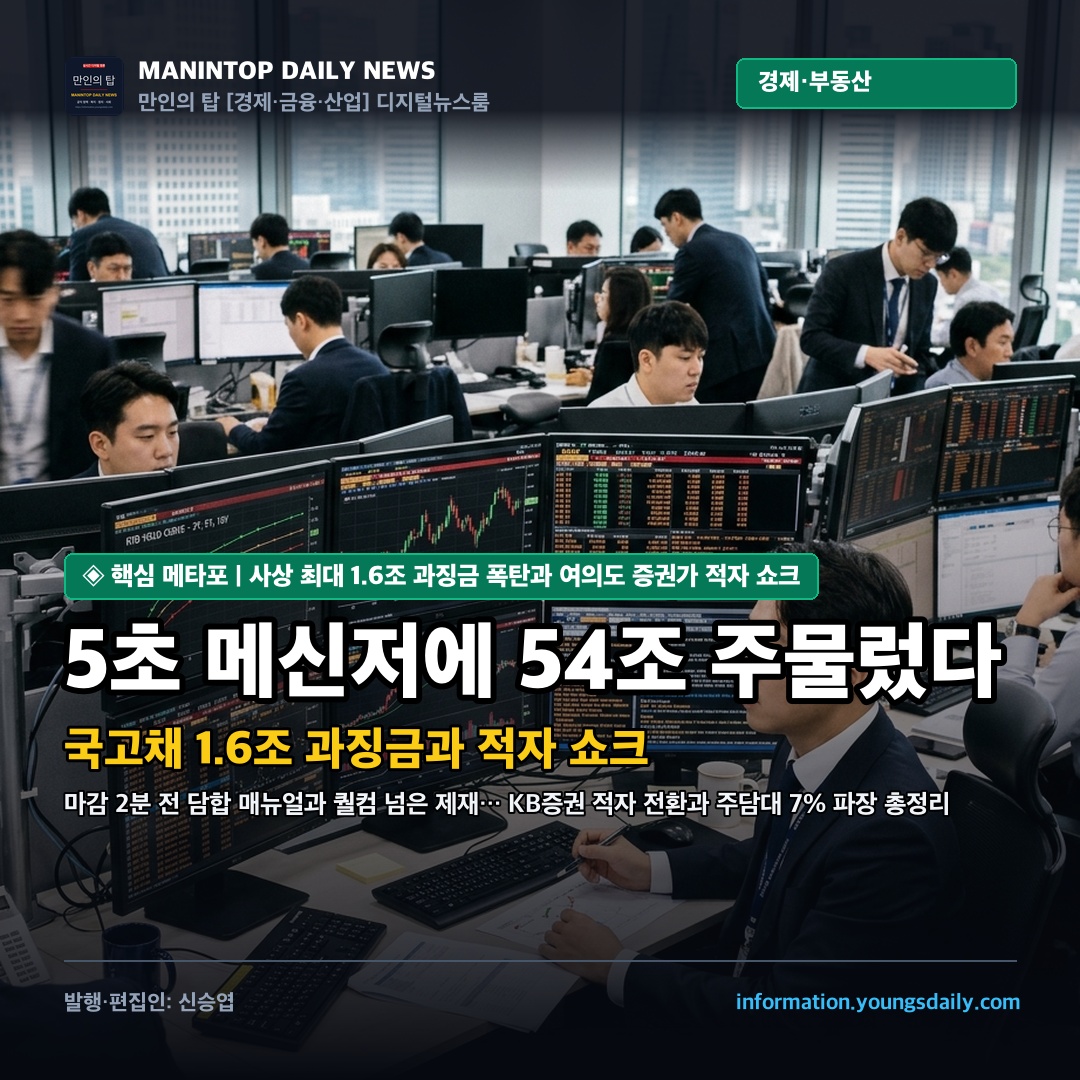
서울 여의도 금융투자업계 채권 딜링룸에서 딜러들이 멀티 모니터를 주시하며 채권 금리와 호가 변동을 분석하는 모습
▲ 공식 보도사진 — 서울 여의도 주요 증권사 채권 트레이딩 룸에서 딜러들이 국고채 입찰 금리와 시장 수익률 그래프를 긴장감 속에 응시하고 있다. 공정거래위원회가 15개 금융사에 역대 최대인 1.6조 원 과징금을 통보하면서 여의도 채권 데스크와 자금 운용 시장은 극도의 거래 위축 상태에 빠져들었다.

📌 핵심 사안 3줄 요약

  • 공정거래위원회가 국고채 입찰 담합을 벌인 15개 금융사에 총 1조 6,266억 원의 역대 최대 과징금을 부과하고 KB증권, 미래에셋, NH투자증권 등 7개사를 중대범죄수사청에 형사 고발했습니다.
  • 딜러들은 마감 직전 5초 메신저 대화와 비밀 매뉴얼을 가동해 '받자금리'와 '골대금리'를 조율하며 54조 원에 달하는 국채 낙찰 물량을 나눠 먹었습니다.
  • KB증권이 3분기 실적을 흑자에서 591억 원 적자로 긴급 정정하는 등 증권가 실적 쇼크가 터져 나왔으며, 국채 금리 급등세가 서민 주택담보대출 7%대 이자 폭탄으로 전이되고 있습니다.

대한민국 국고의 핵심 조달 창구인 국고채 입찰 시장에서 단 5초짜리 비밀 메신저 대화로 무려 54조 원의 나랏돈 물량을 주무른 금융권 카르텔의 충격적인 실체가 드러났습니다. 공정거래위원회가 15개 은행과 증권사를 향해 총 1조 6,266억 원이라는 건국 이래 사상 최대 과징금 폭탄을 투하하자, 여의도 금융가는 연간 흑자가 순식간에 수백억 원대 적자로 뒤집히는 전례 없는 실적 쇼크에 직면했습니다. 국가 신용의 근간을 뒤흔든 짬짜미의 전말과 이로 인해 가계 주택담보대출 금리가 7%대로 치솟게 된 경제적 전이 경로를 입체적으로 해부합니다.

건국 이래 사상 최대 1.6조 과징금… 퀄컴 제재 뛰어넘은 공정위의 철퇴

공정거래위원회는 2026년 11월 11일 정부세종청사에서 긴급 브리핑을 열고, 기획재정부 국고채 경쟁입찰 과정에서 투찰 금리와 인수 물량을 사전에 합의한 15개 국고채전문딜러(PD)사에 대해 시정명령과 함께 총 1조 6,265억 7,500만 원의 과징금을 부과하기로 의결했습니다. 이는 2016년 글로벌 통신칩 제조사 퀄컴에 부과했던 종전 최고액(1조 311억 원)과 카르텔 역대 최대였던 전분당 사건(7,476억 원)을 단숨에 갈아치운 단일 사건 기준 대한민국 헌정 사상 최대 규모의 경제 제재입니다.

제재 대상은 국내 대표 증권사 10곳과 은행 5곳입니다. 증권업계에 부과된 금액만 전체의 84.6%에 달하는 1조 3,760억 2,900만 원에 달합니다. 특히 담합을 주도하고 입찰 공정성을 심각하게 훼손한 미래에셋증권, NH투자증권, KB증권, 키움증권, 한국투자증권 등 대형 증권사 5곳과 중소기업은행, 한국산업은행 등 국책은행 2곳을 포함한 총 7개 법인은 중대범죄수사청(중수청)에 형사 고발되었습니다. 공정위는 국가 재정과 직결된 국채 시장에서 기관투자가들이 사익을 위해 입찰 가격을 왜곡한 중대한 국기문란 행위라고 단언했습니다.
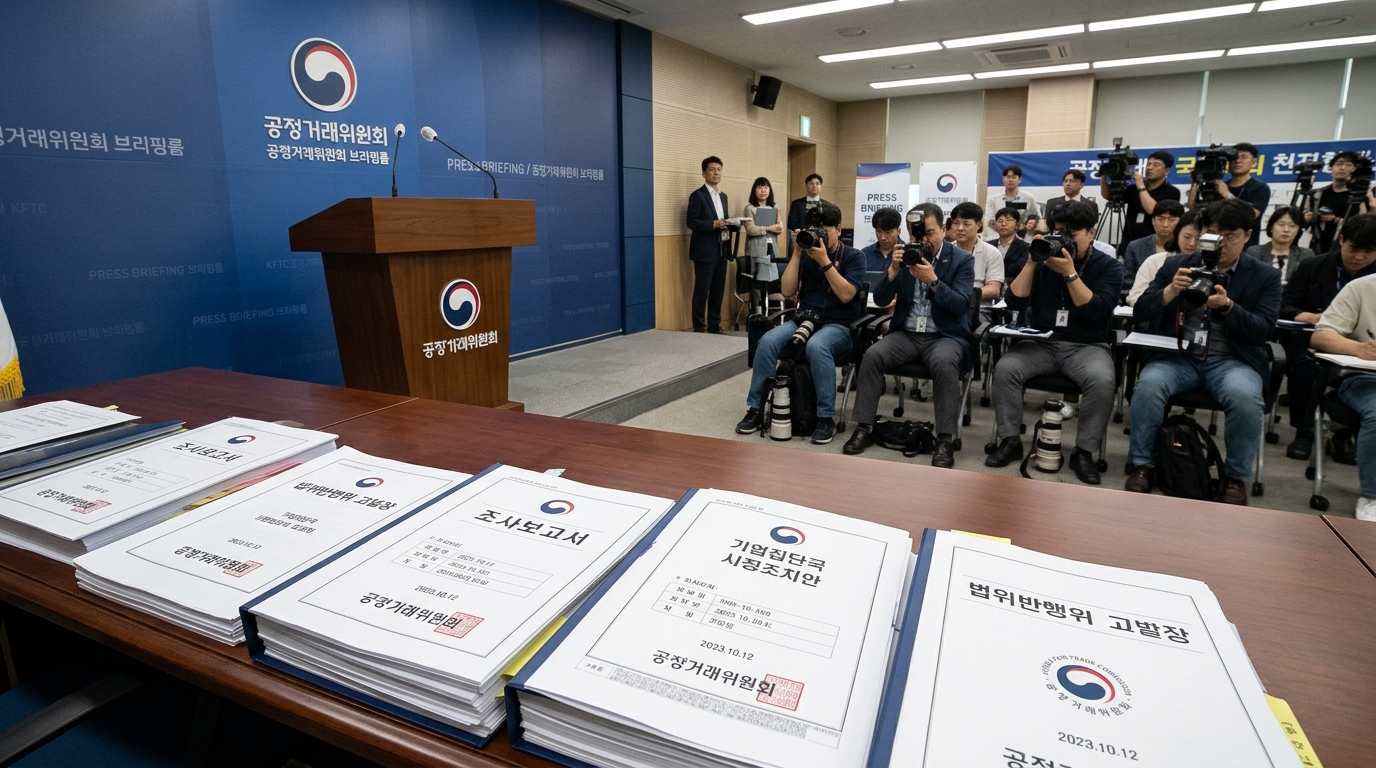
정부세종청사 공정거래위원회 브리핑룸 연단과 탁자 위에 놓인 국고채 입찰 담합 사건 조사 결과 보고서 및 심사보고서 서류철
▲ 공식 보도사진 — 정부세종청사 공정거래위원회 브리핑룸. 공정위 카르텔조사국이 15개 국고채 전문딜러사의 3년 6개월간 입찰 내역과 메신저 대화 포렌식 결과를 정리한 심사보고서를 탁자 위에 공개하고 있다. 사상 최대인 1.6조 원 과징금 부과와 함께 7개 금융사가 중대범죄수사청에 고발 조치되었다.

마감 2분 전 "나도 맞출게"… 안부도 생략된 5초 메신저와 담합 매뉴얼

공정위가 복원한 딜러들의 메신저 대화록은 충격 그 자체였습니다. 지난 2020년 1월부터 2023년 6월까지 3년 6개월간 진행된 총 345건의 국고채 입찰 중 거의 절반에 달하는 150건에서 사전에 입찰 정보가 오갔으며, 이 가운데 145건에서 실질적인 담합 합의가 실행되었습니다. 딜러들은 증권사 전용 메신저와 텔레그램을 넘나들며 일상적인 인사말조차 생략한 채 단 5초 만에 수조 원의 입찰 계획을 결정했습니다. "나도 맞출게", "이번엔 발행물량의 6%만 가져가자", "너 얼마 쓰니?"라는 짤막한 암호 같은 문답이 오간 뒤 그대로 전산에 입력되었습니다.

이들은 정교한 시간대별 담합 매뉴얼까지 만들어 공유했습니다. 입찰 마감 15분 전에는 최소 5개 이상의 경쟁 딜러사에 연락해 예상 금리를 1차 조사하고, 마감 5분 전에는 장내 호가 변동을 반영해 계획을 다시 맞췄습니다. 그리고 마감 불과 2분을 앞두고는 경쟁사의 투찰 기준선에 0.5bp(1bp=0.01%p)나 1bp를 얹는 확정 공식으로 자사의 투찰 금리를 확정했습니다. 심지어 딜러 인사이동이 있을 때는 메신저 계정과 담합 연락망을 '공식 인수인계 문서'로 작성해 후임자에게 넘겨주기까지 했습니다. 비담합 기간에 불과 8.5%에 불과했던 '소수점 셋째 자리까지 일치하는 동일 금리 투찰 빈도'는 담합 기간 동안 46.7%로 무려 5배 이상 치솟았습니다.

받자금리와 골대금리의 꼼수… 정부 평가 제도가 부추긴 비정상적 관행

여의도 채권 시장에서 통용되던 그들만의 은어는 바로 '받자금리'와 '골대금리'였습니다. '받자금리'란 해당 회사가 당일 꼭 낙찰받아 소화해야 하는 목표 물량을 위해 시장 금리보다 낮게 써내는 공격적인 투찰을 뜻합니다. 반대로 '골대금리'란 기획재정부의 규정상 '탈락하더라도 낙찰 금리보다 2~3bp 이내로 근접해 떨어지면 인수 실적으로 인정해 주는 가이드라인'을 노리고 써내는 방어적 허수 투찰이었습니다.

딜러들은 기획재정부의 우수 PD 평가에서 탈락해 자격을 박탈당하지 않으면서도 실제 채권 인수에 따른 금리 변동 위험을 회피하기 위해 이 같은 꼼수를 동원했습니다. A 증권사가 오늘은 물량을 받아 가야 하니 낮은 받자금리를 쓰겠다고 신호를 주면, B 증권사는 낙찰을 피하면서 실적만 챙길 수 있는 골대금리에 0.5bp를 얹어 형식적으로 입찰에 들러리를 섰습니다. 공정위는 이를 시장 경쟁을 전면 무력화한 명백한 카르텔로 규정했으나, 금융권은 정부가 도입한 불합리한 PD 평가 제도가 사실상 딜러들에게 시장 탐색과 리스크 헷지를 강요한 구조적 비극이라고 항변합니다.

수수료 1억 vs 1.6조 과징금… '낙찰 원금 54조 기준'을 둘러싼 정면충돌

제재 수위가 발표되자 금융투자업계는 사상 초유의 법적 대전쟁을 선포했습니다. 격돌의 핵심은 과징금 산정의 기준선입니다. 공정거래법 시행령에 따르면 입찰 담합의 과징금은 담합과 관련된 '계약 금액'이나 '매출액'을 기준으로 부과됩니다. 공정위는 145건의 입찰에서 15개 금융사가 낙찰받은 국고채 원금 54조 원 전액을 관련 매출액으로 규정하고 법정 최고 가중치인 4.5%를 곱해 1.6조 원을 도출했습니다.

하지만 증권업계의 시각은 정반대입니다. 국채 PD 업무는 회사가 채권을 사서 영구 보유하는 것이 아니라, 정부로부터 발행된 국채를 시장에 분산 공급하고 건당 불과 0.01~0.02%(1억~2억 원) 수준의 미미한 인수 수수료를 받는 일종의 공적 대행 서비스입니다. 금융투자협회 고위 관계자는 "수수료 총합이 몇십억 원에 불과한 박리다매 업무에 수십조 원의 채권 액면 원금을 매출로 간주해 조 단위 과징금을 물리는 것은 징벌적 과잉 금지의 원칙을 정면으로 위반한 것"이라며 즉각 행정소송에 나설 방침을 밝혔습니다. 반면 공정위는 "원금을 기준으로 하지 않으면 대규모 자본 시장의 입찰 짬짜미를 억제할 실효적 수단이 없다"며 팽팽히 맞서고 있습니다.
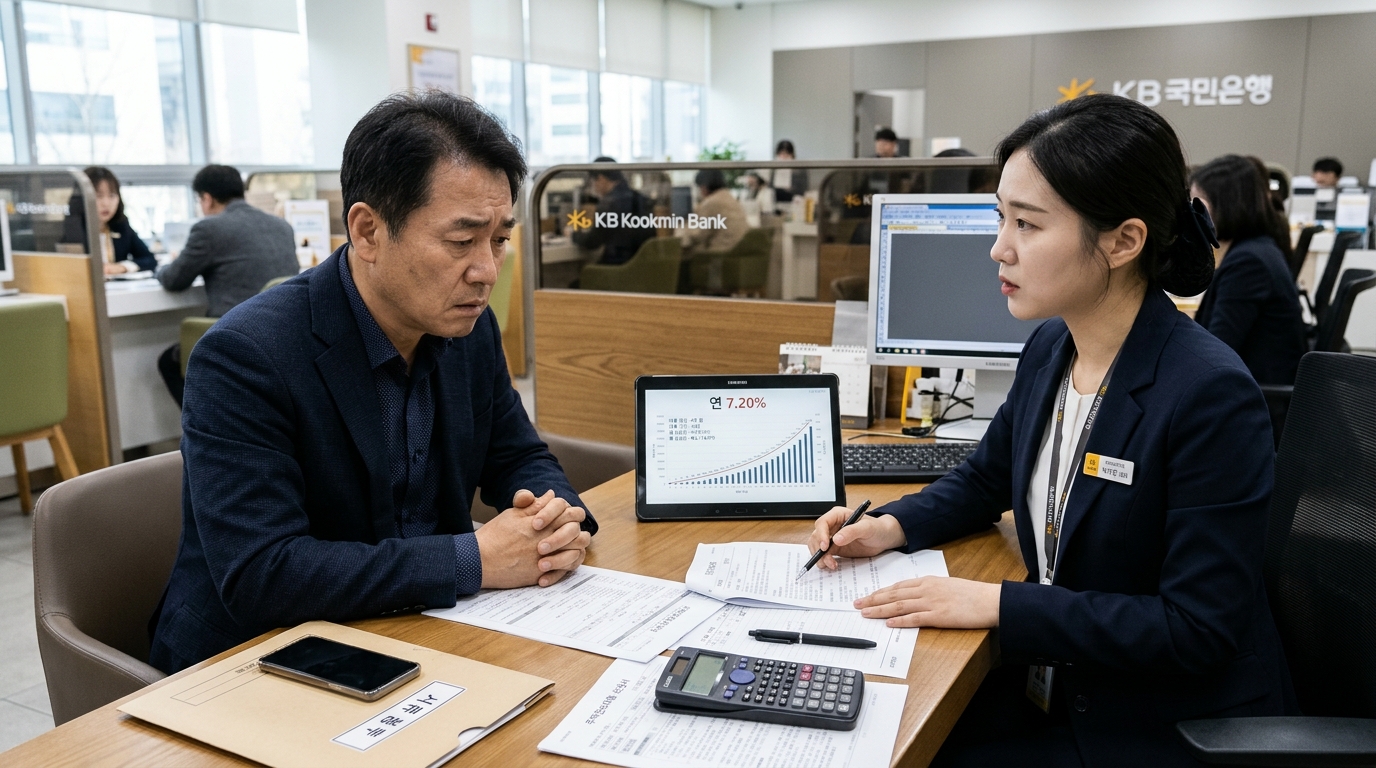
서울 시내 시중은행 대출 창구에서 상담 직원이 고객에게 금리 시뮬레이션 표와 대출 상환 계획서를 보여주며 주택담보대출 금리 인상을 설명하는 모습
▲ 공식 보도사진 — 서울 시내 한 시중은행 가계대출 상담 창구. 은행 직원이 고객에게 국고채 및 은행채 금리 급등에 따른 변동형 주택담보대출 금리 인상 시뮬레이션을 설명하고 있다. 채권 시장의 딜러 담합 사태와 징벌적 제재가 국채 금리를 밀어 올리면서 가계 대출 금리가 7%대로 치솟는 연쇄 부작용이 현실화되고 있다.

KB증권 흑자 엎고 적자 전환 쇼크… 여의도 증권가 충당금 비상과 WGBI 악재

이번 1.6조 원 과징금 폭탄은 당장 대형 금융사들의 장부를 처참하게 초토화시켰습니다. 가장 큰 충격을 받은 곳은 단일 회사 기준 최대인 3,322억 원의 과징금을 통보받은 KB증권입니다. KB증권은 앞서 3분기 누적 순이익 2,730억 원의 탄탄한 흑자를 공시했으나, 과징금 전액을 충당부채로 긴급 반영하면서 순식간에 591억 원의 분기 영업적자로 돌아섰습니다. 창사 이래 최초로 넘보던 연간 순익 '1조 클럽' 달성 꿈도 완전히 물거품이 되었습니다.

다른 대형사들도 비상이 걸렸습니다. 2,428억 원을 두들겨 맞은 NH투자증권은 3분기 순이익(3,836억 원)의 63%가 한 번에 증발했고, 1,473억 원의 신한투자증권은 분기 순익(653억 원)의 2.2배가 넘는 손실이 확정되었습니다. 여기에 미래에셋증권(2,148억 원), 대신증권(1,201억 원), 삼성증권(1,189억 원), 중소기업은행(1,358억 원) 등도 막대한 충당금을 쌓아야 합니다. 더 심각한 것은 글로벌 시장의 시선입니다. 정부가 야심 차게 추진해 온 세계국채지수(WGBI) 편입을 앞두고 국가 채권 시장의 공정성이 통째로 무너지면서, 외국인 자금 유치와 국채 대외 신인도에 씻을 수 없는 치명타를 입었다는 지적이 나옵니다.

고래 싸움에 등 터진 서민들… 국채발 금리 도미노와 주담대 7% 이자 폭탄

가장 뼈아픈 대목은 이번 카르텔 사태와 금융당국의 징벌적 제재가 빚어낸 시장 마비의 피해가 고스란히 서민 가계로 전가되고 있다는 점입니다. 과징금 폭탄과 검찰 고발에 직면한 PD사들이 몸을 사리며 응찰을 대거 포기하자, 평소 400%를 웃돌던 국고채 3년물 응찰률은 최근 252%로 무려 150%p 이상 곤두박질쳤습니다. 입찰 수요가 급감하자 국고채 금리는 가파른 상승 곡선을 그리기 시작했습니다.

문제는 대한민국의 모든 대출 금리가 국고채 금리를 기준선으로 삼고 있다는 사실입니다. 국고채 금리가 오르면 시중은행들이 자금을 조달하는 은행채 5년물 금리가 뛰고, 이는 주택담보대출의 기준이 되는 코픽스(COFIX)를 직격합니다. 이미 시중은행의 혼합형 및 변동형 주담대 상단 금리는 연 6%대 중반을 넘어 7.0% 고지를 위협하고 있습니다. 5억 원의 주택담보대출을 보유한 평범한 직장인이 연 4.0% 금리를 적용받을 때 월 이자는 167만 원이었으나, 금리가 7.0%로 오르면 월 292만 원으로 껑충 뜁니다. 여의도 금융사들의 탐욕과 당국의 기계적 규제가 빚어낸 금리 도미노가 매달 125만 원, 연간 1,500만 원이라는 무거운 이자 폭탄이 되어 무고한 가계의 생계를 짓누르고 있습니다.

📊 [표 1] 공정거래위원회 제재 대상 15개 국고채전문딜러(PD)사별 과징금 부과액 및 형사 고발 현황 대조표

금융사명 (업종 구분) 과징금 부과액 (원) 부과 비중 (%) 중수청 형사 고발 여부 실적 충격 및 금융사 핵심 대응
KB증권 (대형 증권) 3,322억 4,000만 원 20.4% (단일사 1위) 고발 조치 (주도) 3분기 2,730억 흑자 취소 및 591억 적자 긴급 정정
NH투자증권 (대형 증권) 2,428억 1,000만 원 14.9% 고발 조치 3분기 영업이익의 63% 증발, 비상경영 체제 돌입
미래에셋증권 (대형 증권) 2,148억 3,000만 원 13.2% 고발 조치 법무법인 선임 완료 및 과징금 효력정지 가처분 신청
신한투자증권 (대형 증권) 1,473억 5,000만 원 9.1% 고발 제외 3분기 분기 순익 653억의 2.2배에 달하는 대규모 손실 반영
중소기업은행 (국책 은행) 1,358억 2,000만 원 8.3% (은행 1위) 고발 조치 국책은행 신뢰도 타격, 중기 대출 재원 잠식 우려
대신증권 / 삼성증권 각 1,201억 / 1,189억 각 7.4% / 7.3% 고발 제외 연간 누적 충당금 대폭 전입 및 주주배당 축소 검토
한국산업은행 (국책 은행) 1,147억 2,000만 원 7.1% 고발 조치 정책금융 지원 여력 축소 및 내부 통제 시스템 감사 착수
한국투자증권 / 키움증권 각 1,105억 / 856억 각 6.8% / 5.3% 2개사 모두 고발 형사 재판 대비 로펌 대응단 구성 및 행정소송 동참
기타 6개 은행·증권사 총 872억 500만 원 5.4% (소액 분산) 고발 제외 단순 가담 딜러사로 분류, 공동 소송단 합류 여부 조율
총계 (15개 금융기관) 1조 6,265억 7,500만 원 100.0% 7개사 형사 고발 대한민국 건국 이래 단일 사건 사상 최대 경제 제재

📊 [표 2] 국고채 입찰 담합 제재를 둘러싼 공정거래위원회 vs 금융투자업계 4대 핵심 쟁점 대조표

핵심 대립 쟁점 공정거래위원회 입장 (규제 당국) 금융투자업계 입장 (은행·증권) 법리적 시사점 및 재판 핵심 변수
1. 메신저 정보 교환의 위법성 투찰 가격과 물량을 사전 공유해 경쟁을 완전히 제한한 명백한 카르텔 장외 채권 시장의 관행적 시황 탐색이며 강제성이나 합의 불이행 페널티 전무 개정 공정거래법상 '정보 교환 담합'의 부당성 입증 여부
2. 과징금 산정 기준 (매출액) 법령에 따라 금융사가 실제 낙찰받은 채권 액면 원금 54조 원을 관련 매출로 산정 단순 중개·인수 수수료(건당 1억)만 취득하므로 원금 기준은 징벌적 과잉 금지 위반 금융 상품 중개 시 '원금 vs 수수료'의 관련 매출 성격 규명
3. 국고 재정 손실의 실체 담합으로 인해 발행 금리가 인위적으로 상승해 막대한 재정 이자 손실 초래 금리가 구체적으로 몇 bp 왜곡되었는지 공정위가 수치적 실증 증거를 미제시 금리 왜곡에 따른 구체적 재정 피해액 산출 및 인과관계 입증
4. 정부 PD 평가 제도의 결함 평가 제도와 상관없이 독립적인 의사결정으로 경쟁 입찰에 참여해야 함 탈락 물량도 2~3bp 이내면 실적 인정해 주는 왜곡된 제도가 담합을 구조적으로 유도 정부 감독 행정과 시장 관행 간의 신뢰보호 원칙 적용 여부

📊 [표 3] 국고채 금리 변동에 따른 5억 원 주택담보대출 가계의 연간·월간 이자 상환 부담 시뮬레이션

대출 금리 수준 (연간) 월평균 이자 납입액 연간 총 이자 부담액 기준(연 4.0%) 대비 추가 부담 가계 재무 위험 및 시장 파장
연 4.0% (과거 저금리 기준) 약 166만 6,000원 2,000만 원 기준선 (0원) 통상적인 소득 대비 원리금 상환 가능 안정 구간
연 5.5% (평균 금리 상승기) 약 229만 1,000원 2,750만 원 +750만 원 (월 +62만 원) 가계 잉여소득 축소 및 소비 여력 감소 시작
연 6.0% (담합 제재 직후 수준) 약 250만 원 3,000만 원 +1,000만 원 (월 +83만 원) 하우스푸어 한계 가구 급증 및 연체율 상승 위험
연 7.0% (국채 금리 충격 극대화) 약 291만 6,000원 3,500만 원 +1,500만 원 (월 +125만 원) 가계 가처분소득 붕괴 및 부동산 담보대출 부실 쓰나미
In-Depth Investigative Report Economy & Financial Markets

[In-Depth Analysis] "I'll Match Yours": Inside the 5-Second Collusion on $40B in Treasuries and the Record $1.2B Fine Triggering a Financial Deficit Shock

"Across brief five-second encrypted instant chats omitting basic courtesies, institutional traders secretly coordinated bidding on forty billion dollars of sovereign government bonds. With the antitrust watchdog imposing an unprecedented 1.2 billion dollar penalty, South Korea's financial hub has plunged into an operational deficit shock and credit provision alarms. We examine the mechanics of the dealer cartel and its spillover into household mortgage interest rates."
Institutional bond traders analyzing multi-monitor market terminals showing government bond yield curves inside a dealing room in Yeouido, Seoul
▲ Official Press Photo — Inside an institutional securities trading desk in Yeouido, Seoul, dealers monitor government bond yields and market quote curves under heightened market volatility. As the Fair Trade Commission announced a record 1.2 billion dollar fine against 15 financial institutions, trading floors have experienced severe bidding paralysis.

📌 Executive Summary

  • South Korea's Fair Trade Commission slapped fifteen primary dealers with a record 1.2 billion dollar fine and referred seven institutions, including KB Securities, NH Investment, and Mirae Asset, to the Major Crimes Investigation Agency.
  • Institutional bond dealers operated clandestine messaging channels to synchronize yield submissions and apportion forty billion dollars in sovereign notes two minutes before auction closings.
  • KB Securities reversed its third-quarter earnings from profit into an operating deficit, while rising government bond yields threaten to propel consumer mortgage borrowing costs toward seven percent.

Across South Korea's sovereign debt issuance machinery, clandestine five-second encrypted instant messages orchestrated the allocation of forty billion dollars in government bonds, exposing an entrenched institutional cartel at the core of national finance. Following the Fair Trade Commission's imposition of a historic 1.2 billion dollar financial penalty against fifteen commercial banks and brokerages, the Yeouido financial center faces an unprecedented deficit crisis, transforming quarterly windfalls into multimillion-dollar balance sheet write-downs. We analyze the anatomy of this bidding collusion and trace its transmission into seven-percent residential borrowing costs for working families.

Record $1.2B Penalty Beyond Qualcomm: Fair Trade Commission Strikes Largest Fine in History

On November 11, the Fair Trade Commission convened an extraordinary press briefing at the Sejong Government Complex, announcing corrective orders and a combined administrative sanction of 1.626 trillion won (approximately 1.2 billion dollars) against fifteen primary dealer institutions. The enforcement action eclipses the previous benchmark penalties established during the 2016 Qualcomm antitrust decision (1.03 trillion won) and the historic starch cartel litigation, representing the largest economic sanction ever levied in the history of the republic.

The sanctions target ten domestic brokerage firms and five major commercial banks. Brokerages absorbed 84.6 percent of the total monetary penalty. Furthermore, seven institutions deemed primary ringleaders—including Mirae Asset Securities, NH Investment & Securities, KB Securities, Kiwoom Securities, Korea Investment & Securities, the Industrial Bank of Korea, and the state-run Korea Development Bank—were formally referred to the Major Crimes Investigation Agency for criminal prosecution. Regulatory officials underscored that artificially rigging sovereign debt yields to secure corporate margins directly strikes at national budgetary stability.

Official cartel investigation dossiers and formal enforcement documentation arranged on the conference table inside the Fair Trade Commission briefing room
▲ Official Press Photo — Inside the Fair Trade Commission press briefing auditorium at the Sejong Government Complex. Official cartel investigation reports and forensic messaging dossiers documenting three and a half years of government bond bidding manipulations lie on the conference table as regulators announce landmark enforcement measures.

"I'll Match Yours" Two Minutes Before Close: Five-Second Messengers and the Collusion Playbook

Digital forensic reconstructions conducted by regulatory investigators laid bare a systematic collusion protocol. Across 345 sovereign bond auctions conducted between January 2020 and June 2023, dealers exchanged advance pricing and allocation intelligence in 150 separate instances, establishing actionable collusive agreements across 145 auctions. Utilizing secure internal messaging platforms and encrypted channels, traders bypassed standard courtesies to settle multibillion-dollar bids within five seconds: "I will match yours," "Let us take only six percent of volume," and "What rate are you entering?"

Dealers institutionalized a rigid chronological coordination timetable. Fifteen minutes prior to deadline, traders polled at least five rival dealing desks to ascertain target yields. Five minutes before closing, allocations were resynchronized against real-time OTC trading screens. Exactly two minutes before the deadline, dealers applied standard formulaic adjustments of 0.5 to 1.0 basis points above rival benchmark rates to finalize their bids. Remarkably, formal transition documents transferred messaging credentials and cartel protocols to incoming personnel during desk rotations. Consequently, the incidence of identical bid rates matching down to three decimal places surged from 8.5 percent in normal periods to 46.7 percent during the collusive timeframe.

The Artifice of Catch and Goalpost Rates: How Government Evaluation Rules Distorted Bidding

Within dealing desks, institutional collusion operated through industry argot: catch rates and goalpost rates. A catch rate represented an aggressive, low-yield bid deployed when a firm needed to physically absorb notes to meet delivery requirements. Conversely, a goalpost rate was an intentionally elevated defensive quote, designed to fail winning notes while remaining within the government's two-to-three basis point margin to secure mandatory primary dealer performance credits.

This coordination allowed financial institutions to shield themselves from sovereign yield volatility while safely maintaining privileged primary dealer licenses issued by the Ministry of Economy and Finance. When Firm A signaled an imperative to acquire volume, Firm B submitted formal goalpost bids to serve as procedural placeholders. While the antitrust authority condemned this mechanism as unlawful market manipulation, financial institutions contend that rigid bureaucratic performance quotas compelled traders to hedge interest rate exposure through collective signaling.

$75,000 Fees vs. $1.2B Fine: The Collision Over Using $40B in Principal as the Penalty Base

The punitive magnitude of the penalty has triggered an intense legal confrontation between regulators and the securities industry. Under statutory antitrust enforcement guidelines, cartel fines are calibrated as a percentage of relevant turnover. The Fair Trade Commission treated the entire fifty-four trillion won (forty billion dollars) in sovereign notes acquired across the 145 tainted auctions as relevant turnover, assessing maximum administrative rates of 4.5 percent.

In sharp contrast, the securities industry maintains that primary dealer operations do not constitute asset purchases for long-term holding, but rather public intermediation services yielding negligible placement fees of 0.01 to 0.02 percent—equivalent to roughly 75,000 to 150,000 dollars per auction. Industry representatives argue that applying the gross face value of sovereign bonds as corporate turnover violates constitutional principles against excessive punishment. Brokerages have declared intentions to pursue immediate judicial injunctions, while the antitrust commission insists that principal-based calculations remain indispensable to deter institutional market abuse.

Bank loan officer explaining mortgage rate simulation charts and monthly debt service escalations to client inside a commercial branch
▲ Official Press Photo — Inside a commercial bank retail branch in Seoul, a lending specialist reviews mortgage repayment calculations with a customer. Upward pressure on sovereign bond benchmarks is spilling directly into bank funding costs, elevating adjustable-rate mortgage ceilings toward the seven percent threshold.

KB Securities Swings to Operating Deficit: Yeouido Reserves Crisis and Global Index Headwinds

The record fine has already destabilized major financial balance sheets. KB Securities absorbed the largest single penalty at 332.2 billion won (250 million dollars). Despite reporting a robust third-quarter cumulative operating profit of 273 billion won, the full provisioning of the fine pushed the firm into an immediate quarterly net deficit of 59.1 billion won, erasing hopes of reaching the one-trillion-won annual profit milestone.

Peers face comparable distress. NH Investment & Securities saw sixty-three percent of its quarterly profit erased by a 242.8 billion won penalty, while Shinhan Securities absorbed fines more than double its third-quarter earnings. Mirae Asset, Daishin, and Samsung Securities were similarly forced to allocate emergency reserves, compromising shareholder dividends. Furthermore, the integrity scandal erupts just as authorities prepare for inclusion in the World Government Bond Index, inflicting reputational damage on South Korea's sovereign debt standing among foreign asset managers.

Collateral Damage for Households: Treasury Yield Dominoes and the 7% Mortgage Rate Surge

The most alarming fallout of the regulatory confrontation is its direct economic transmission onto ordinary mortgage borrowers. As primary dealers curtailed auction participation to avoid regulatory exposure, bid-to-cover ratios on benchmark three-year sovereign notes fell from above four hundred percent to 252 percent. This sudden contraction in secondary absorption capacity has applied sustained upward pressure on benchmark yields.

Because South Korea's retail credit ecosystem prices lending against sovereign benchmarks, higher bond yields immediately inflate five-year bank debentures and the benchmark COFIX rate. Adjustable and hybrid mortgage rates are now breaching 6.5 percent, with top tiers touching seven percent. For a standard household managing a 500-million-won loan (roughly 375,000 dollars), annual debt service costs at four percent stood at twenty million won. At a seven percent interest rate, annual payments surge to thirty-five million won, generating an extra fifteen million won (roughly 11,250 dollars) in annual interest drain. The institutional collusion on dealing desks has culminated in a direct financial shock absorbed by household balance sheets.

📊 [Table 1] Fair Trade Commission Sanctions Against 15 Primary Dealers: Penalty Amounts and Criminal Referrals

Financial Institution & Sector Penalty Amount (KRW) Share of Total (%) Criminal Referral Status Financial Impact & Response
KB Securities (Major Brokerage) 332.24 Billion Won 20.4% (Highest) Referred (Key Target) Reversed Q3 profit into 59.1B won net deficit
NH Investment & Securities 242.81 Billion Won 14.9% Referred 63% of Q3 operating profit eliminated
Mirae Asset Securities 214.83 Billion Won 13.2% Referred Retained legal counsel for immediate stay of execution
Shinhan Securities 147.35 Billion Won 9.1% Exempt from Referral Fine exceeds quarterly net income by 2.2 times
Industrial Bank of Korea 135.82 Billion Won 8.3% (Top Bank) Referred State-bank reputational shock; capital buffer strained
Daishin / Samsung Securities 120.1B / 118.9B Won 7.4% / 7.3% Exempt from Referral Allocating emergency provisioning; reviewing dividend cuts
Korea Development Bank 114.72 Billion Won 7.1% Referred Policy loan lending capacity reduced; audit initiated
Korea Investment / Kiwoom 110.5B / 85.6B Won 6.8% / 5.3% Both Referred Assembled joint defense taskforce for administrative suits
Remaining 6 Financial Firms 87.21 Billion Won Total 5.4% Combined Exempt from Referral Classified as passive participants; considering joint appeals
Total (15 Primary Dealers) 1.626 Trillion Won 100.0% 7 Entities Referred Largest single regulatory economic penalty in national history

📊 [Table 2] Regulatory Clash Over Government Bond Bidding: Fair Trade Commission vs. Financial Industry

Core Battleground Issue Fair Trade Commission Position Financial Industry Position Judicial Precedents & Core Variables
1. Nature of Messenger Dialogue Clear collusive pact sharing bid yields and volumes to restrict competition Standard market soundings with no binding enforcement or default penalties Proving anti-competitive intent under revised information-sharing rules
2. Penalty Basis (Turnover Definition) Statutorily defined as the entire 54T won principal acquired during auctions Fees totaled only modest millions; using gross debt violates proportionality Defining relevant turnover between asset principal versus fee commissions
3. Reality of Fiscal Damages Artificial rate elevation generated substantial sovereign interest expenditures Regulators failed to demonstrate exact basis-point distortions or empirical losses Demonstrating concrete quantifiable fiscal damages and direct causation
4. Flaws in Evaluation Rules Bidders are obligated to participate independently regardless of criteria Rules crediting losing bids within 3 bps structurally compelled coordination Applying legitimate expectations against conflicting administrative guidance

📊 [Table 3] Household Impact Simulation: Monthly and Annual Interest Burden on a $375,000 Mortgage

Mortgage Interest Rate Tier Average Monthly Interest Total Annual Interest Additional Burden vs 4.0% Base Household Financial Risk Analysis
4.0% Annual Rate (Baseline Tier) Approx. 1.67 Million Won 20.0 Million Won Baseline (0 Won) Manageable debt service within standard household budgets
5.5% Annual Rate (Tightening Tier) Approx. 2.29 Million Won 27.5 Million Won +7.5M Won (+620k Won/Mo) Contraction in disposable income and discretionary spending
6.0% Annual Rate (Sanction Surge) Approx. 2.50 Million Won 30.0 Million Won +10.0M Won (+830k Won/Mo) Vulnerable mortgage borrowers entering acute distress territory
7.0% Annual Rate (Full Yield Shock) Approx. 2.92 Million Won 35.0 Million Won +15.0M Won (+1.25M Won/Mo) Severe default risks and broader retail credit asset deterioration
PRO SOURCING ENGINE 만인의 탑 빅데이터 솔루션
★ 가입 시 600 크레딧(120회) 전원 무료

내가 찾는 상품 키워드, 지금 얼마나 검색될까?

네이버 월간 검색량 + 구글 볼륨 + 아이템스카우트 실시간 상품수와 경쟁강도 배지를 0.5초 만에 무료로 확인하세요.

신고하기

이 블로그 검색

환절기 감기 예방법 찐실천 후기와 전문가 조언으로 완성한 코와 목 관리 99% 방어 루틴

리모델링 아파트 계약금 10%는 언제 내나요? 계약서·공고문으로 확인하는 납부 시점

윤석열 탄핵·12·3 비상계엄·내란 혐의 재판까지: 근거로 확인되는 범위만 한 번에 정리
