월드와이드 우주통신·IT인프라 심층취재 | 스페이스X 스타링크 한국 상용화 및 6G 위성주권 분석
공식 정론 배포 | 글로벌 테크놀로지 데스크
[단독] 머스크의 스타링크 韓 공식 상륙… 월 8.7만 원 저궤도 위성 인터넷의 명암
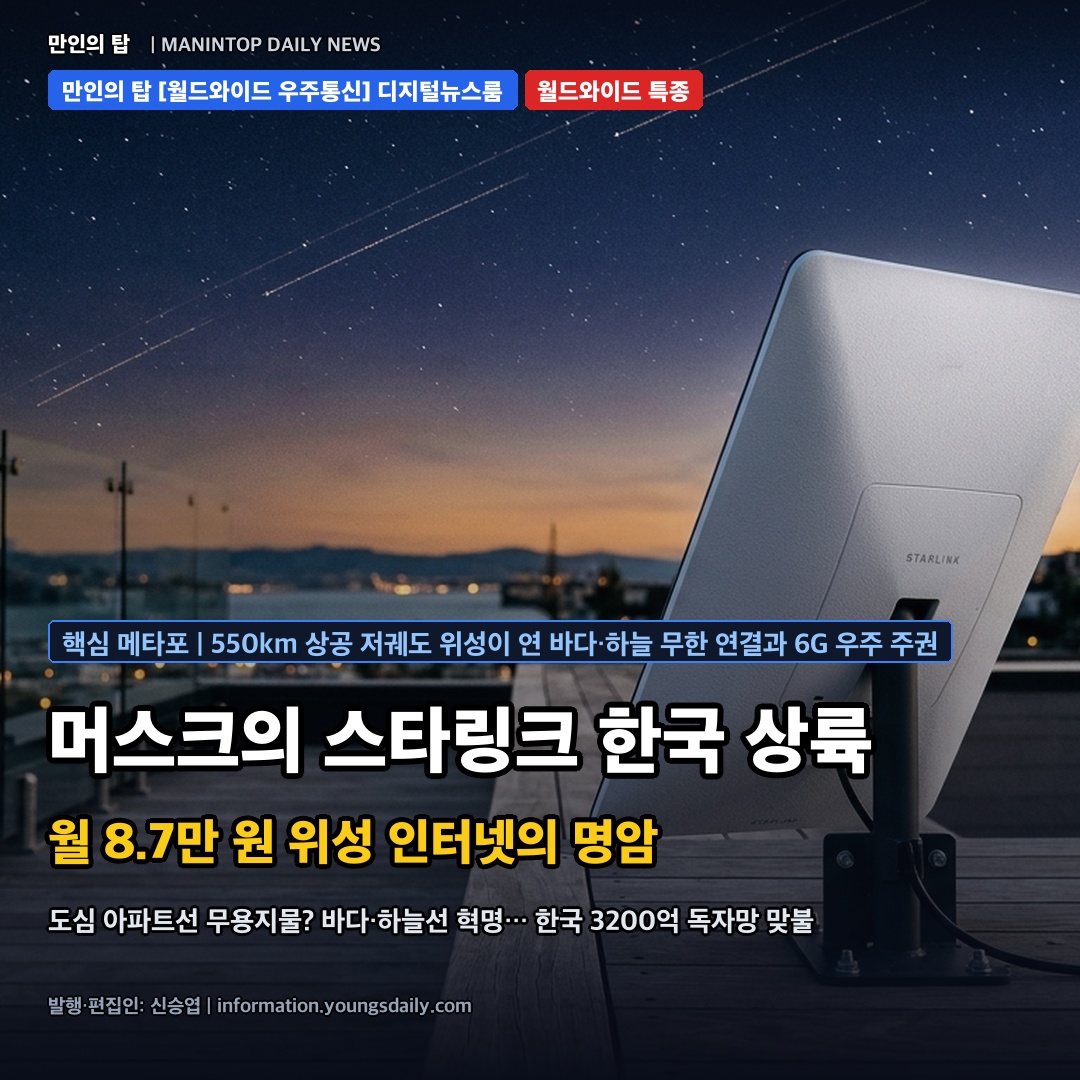
▲ 탁 트인 개활지 상공을 향해 가동 중인 스타링크 평판 안테나 단말기. 550km 상공 8,000여 기의 저궤도 군집 위성을 통해 지상과 바다, 하늘을 잇는 통신 혁명이 한반도에 본격 상륙했다. / 글로벌 통신·우주항공 보도 사진 자료
일론 머스크의 우주 기업 스페이스X가 운영하는 저궤도 위성 인터넷 서비스 스타링크가 대한민국 시장에 공식 상륙하여 본격적인 상용 서비스를 개시했습니다. 과학기술정보통신부의 국경 간 공급 협정 승인과 전파 기술기준 정비를 거쳐 개통된 스타링크는 고도 550km 상공을 비행하는 8,000여 기의 저궤도 군집 위성을 통해 한반도 전역과 연근해에 초고속·저지연 무선 인터넷을 전격 공급합니다. 전 세계 최고 수준의 기가 광랜과 5G망이 촘촘한 도심 아파트 환경에서는 고가의 안테나 장비비와 건물 차폐로 인해 실익이 적다는 냉정한 평가가 나오지만, 바다 위에서 디지털 단절에 시달리던 원양 해운업계와 항공기 기내 와이파이, 그리고 초고층 랜드마크의 재난 방재 백업망에서는 가히 혁명적인 변화가 일어나고 있습니다. 글로벌 빅테크의 위성 통신 공습에 맞서 3,200억 원 규모의 독자 저궤도 위성망 연구개발에 착수한 대한민국의 6G 비지상망(NTN) 주권 전략까지 심층 분석합니다.
일론 머스크가 이끄는 스페이스X의 저궤도(LEO) 위성 인터넷 서비스 '스타링크'가 대한민국 상용 서비스의 닻을 올렸습니다. 과학기술정보통신부가 스타링크코리아와 미국 스페이스X 간의 국경 간 공급 협정을 승인하고 관련 기술기준과 전파 적합성평가를 완료함에 따라, 한반도 전역과 연근해 공역 및 해역에서 위성 직수신 인터넷이 공식 가동되기 시작했습니다.
스타링크의 핵심 경쟁력은 궤도 고도의 파격적인 축소에 있습니다. 과거 위성통신은 적도 상공 3만 6,000km에 위치한 정지궤도(GEO) 위성에 의존했습니다. 지구와의 거리가 워낙 멀다 보니 전파 왕복에만 최소 500밀리초(ms)에서 700ms에 달하는 치명적인 통신 지연이 발생하여 웹서핑은커녕 음성 통화조차 메아리가 울리는 한계가 있었습니다. 반면 스타링크는 고도 550km 상공에 8,000여 기의 소형 통신 위성을 촘촘하게 띄워 하루 10회 이상 지구를 공전시키며 통신을 릴레이합니다. 지구와의 거리가 60분의 1 수준으로 줄어들면서 지연시간이 25~50ms(최빈값 35ms 안팎)로 급감했습니다. 실시간 화상회의와 고화질 온라인 스트리밍, 원격 제어가 지상망과 다름없이 매끄럽게 이뤄지는 배경입니다.
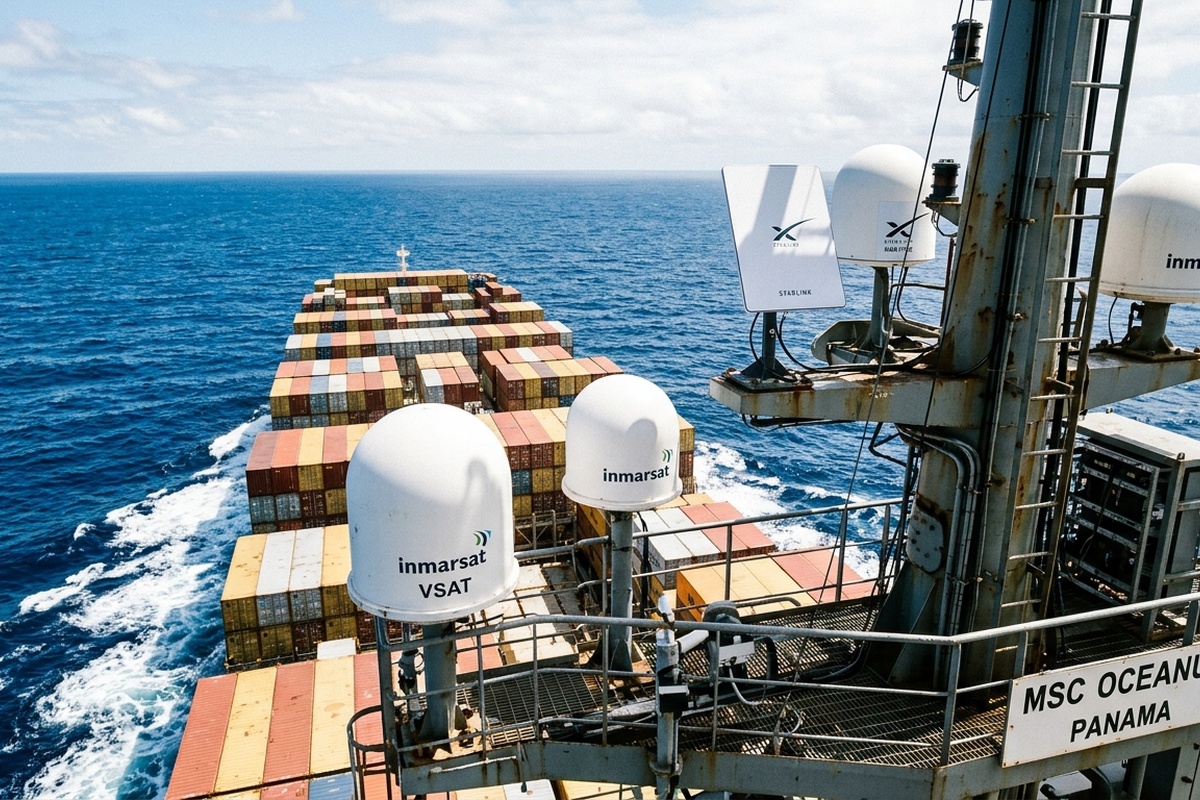
▲ 대양 한가운데를 가르는 대형 원양 상선. 스타링크 상용화로 망망대해에서도 고화질 유튜브와 가족 영상통화가 가능해지며 선원 복지의 일대 패러다임 전환이 일어났다. / 글로벌 해운 물류 현장 취재 보도 사진 자료
"월 8만 7000원의 함정?"… 55만 원 안테나 키트와 도심 아파트 차폐의 냉정한 현실
스타링크의 한국 상륙 소식에 일반 소비자들의 관심이 쏠렸지만, 실제 요금 체계와 하드웨어 스펙을 뜯어보면 국내 도심 거주자에게는 그림의 떡에 가깝습니다. 일반 가정용 고정 요금제인 '주거용'은 월 8만 7,000원으로 약정 없이 자유롭게 해지할 수 있는 구독 모델입니다. 하지만 서비스를 이용하려면 필수적으로 고성능 평판 위상배열 안테나 수신기, 전용 Wi-Fi 라우터, 전원 공급 장치와 마운트로 구성된 '스탠다드 키트'를 55만 원에 일시불로 별도 구매해야 합니다.
더 결정적인 문제는 설치 환경의 제약입니다. 한국인의 대다수가 거주하는 고층 아파트 베란다나 창틀 실내에서는 위성 전파를 잡을 수 없습니다. 시속 2만 7,000km로 빠르게 스쳐 지나가는 저궤도 위성을 포착하려면 사방 100도 이상의 하늘이 가림막 없이 트인 옥상이나 넓은 단독주택 마당이 반드시 확보되어야 합니다. 여기에 한국 출시 라인업에서 도보 배낭여행객용 경량 단말인 '스타링크 미니(1.1kg)'가 제외되고 2.9kg의 스탠다드 단말만 들어왔다는 점, 그리고 집중 호우나 폭설 등 악천후 발생 시 전파 감쇠로 속도가 20~30% 감소한다는 물리적 한계는 도심 일반 이용자에게 높은 진입 장벽으로 작용하고 있습니다.
"바다 위의 넷플릭스"… 청년 선원 구인난 푼 K-해운과 여객기 기내 와이파이 혁명
반면 지상 기지국의 전파가 전혀 닿지 않는 해상과 공역 등 B2B 특수 시장에서는 가히 폭발적인 호응이 터져 나오고 있습니다. 대표적인 분야가 대한민국 해운업계입니다. 수개월간 망망대해를 항해하며 가족 및 사회와 격리되는 해상 근무 환경은 젊은 해기사와 선원들이 배를 떠나는 최대 원인으로 꼽혀왔습니다.
스타링크 도입은 이 구인난의 돌파구가 되었습니다. 선원기금재단은 국가필수선박에 척당 월 80만 원의 통신비를 지원하기 시작했고, 대상 300척 중 절반인 150척이 조기 신청을 마쳤습니다. 국내 최대 벌크선사인 팬오션은 사선 113척 전량에 SK텔링크를 통한 스타링크 도입을 완료했으며, KLCSM 역시 KT SAT과 SK텔링크를 통해 60여 척에 위성망을 깔았습니다. 바다 한가운데서도 100Mbps 이상의 속도로 유튜브와 넷플릭스를 즐기고 고향의 가족과 카카오톡 영상통화를 나눌 수 있게 되면서 원양 선원들의 복지 지형이 송두리째 바뀌었습니다.
하늘길 역시 마찬가지입니다. 한진그룹은 2027년까지 대한항공, 아시아나항공, 진에어, 에어부산, 에어서울 등 산하 5개 항공사의 여객기 전량에 스타링크 기반 기내 초고속 와이파이를 순차 도입하기로 결정했습니다. 답답한 텍스트 전송 수준에 머물렀던 과거 기내 인터넷과 달리, 고도 1만 미터 상공에서도 끊김 없는 스트리밍과 실시간 업무가 무료 혹은 초저가로 제공되는 시대가 열리게 되었습니다.
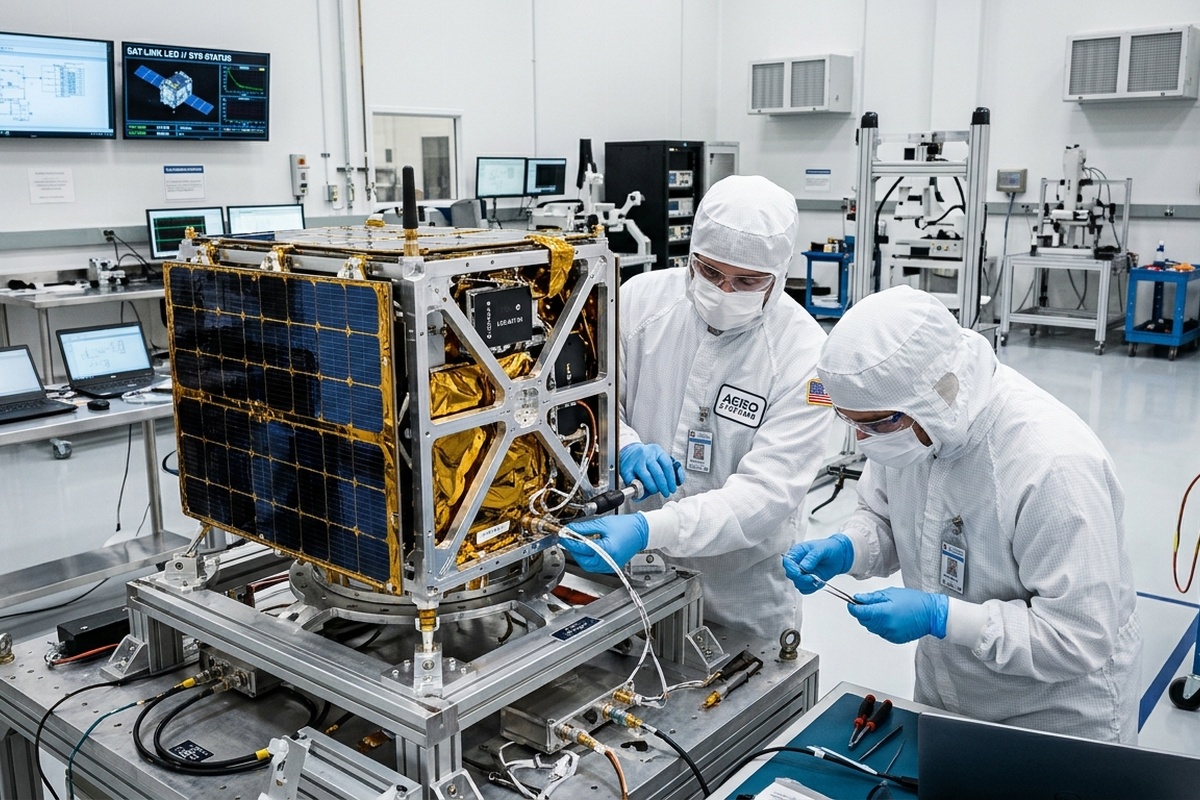
▲ 첨단 우주항공 클린룸 연구실의 모습. 대한민국 정부는 스페이스X 독점에 맞서 3,200억 원을 투입해 독자 저궤도 통신위성과 6G 비지상망 핵심 기술 국산화에 박차를 가하고 있다. / 항공우주 연구개발 현장 취재 보도 사진 자료
롯데월드타워 방재센터와 소양호 무인선의 기적… 국가 재난 통신망의 '최후 보루'
스타링크의 진가는 극한의 재난 환경과 지형적 통신 음영 지대에서 더욱 돋보입니다. 국내 최고층 랜드마크인 롯데월드타워는 대형 지진이나 화재 등으로 지하 유선 통신 관로가 물리적으로 파손되는 최악의 시나리오에 대비해, 지상 22층 피난안전구역과 지하 1층 종합방재센터에 KT SAT과 협력하여 스타링크 위성 시스템을 구축했습니다. 지상망이 완전히 붕괴하더라도 하늘과 직결된 독립 백업 통신망을 통해 소방서 및 군경 구조본부와의 핫라인을 사수할 수 있는 방재 체계를 완성한 것입니다.
공공 환경 계측 분야에서도 독보적인 실증 성과가 확인되었습니다. 한국수자원학회 연구진이 소양호에서 물환경 계측용 자율무인선(USV)을 실증 운항한 결과, 험준한 산악 지형 탓에 LTE 단독 운용 시 95.25%에 그쳤던 통신 커버리지가 스타링크 하이브리드 결합 후 99.90% 이상으로 수직 상승했습니다. LTE 신호가 5Mbps로 급락하는 협곡 음영지에서도 스타링크는 140Mbps의 속도와 35ms의 저지연을 안정적으로 유지했으며, 메이크-비포-브레이크(Make-Before-Break) 핸드오버 기술을 통해 신호 끊김 없이 수질 데이터와 고화질 영상을 실시간 전송하는 데 성공했습니다.
[비교 분석] 스타링크 vs 국내 유선 초고속 광랜 vs 이동통신 5G 핵심 지표 대조
비교 핵심 지표
스페이스X 스타링크 (스탠다드)
국내 초고속 유선 광랜 (FTTH)
이동통신 3사 무선 5G
월 이용 요금
87,000원 (무약정 자유해지)
약 30,000원대 (3년 약정 결합)
55,000원 ~ 130,000원대
초기 단말·장비비
550,000원 (안테나 키트 일시불)
면제 또는 출장비 3만~4만 원
기기값 별도 (유심비 7,700원)
다운로드 전송 속도
135Mbps ~ 200Mbps
500Mbps ~ 1,000Mbps (1Gbps)
600Mbps ~ 1,025Mbps
지연 시간 (Latency)
25ms ~ 50ms (저궤도 군집)
5ms ~ 10ms 미만 (광케이블)
15ms ~ 20ms 미만
주요 커버리지 영역
원양 해상, 산간 오지, 하늘 전역
케이블 매설 도심 및 주거 밀집지
전국 도심 및 지상 도로망 중심
환경 및 날씨 민감도
폭우·폭설 시 20~30% 감쇠
기상 영향 전혀 없음 (완전 무결)
실내·지하 음영 구역 일부 발생
글로벌 위성 종속 막아라… 원웹과의 각축전 및 3200억 토종 6G NTN 우주 주권
스타링크의 진출은 국내 통신 생태계에도 거대한 파장을 던지고 있습니다. 정부는 스타링크에 이어 영국 유텔샛 원웹(Eutelsat OneWeb)의 국경 간 공급 협정 역시 승인하며 복수 경쟁 체제를 구축했습니다. 원웹의 주요 지분을 보유한 한화시스템은 군 통신 및 첨단 방산 네트워크, 도심항공교통(UAM)과의 연계를 겨냥하고 있으며, KT SAT은 무궁화 정지궤도 위성과 스타링크 저궤도망을 아우르는 하이브리드 해양 플랫폼 '엑스웨이브원(X-WAVE ON)'을 가동하며 시장 주도권 방어에 나섰습니다.
궁극적인 승부처는 6G 시대를 이끌 '비지상망(Non-Terrestrial Network, NTN)'입니다. 저궤도 위성은 단순한 오지 인터넷을 넘어, 미래 자율주행 선박, 도심 항공기, 군용 드론을 연결하고 해저 케이블 단선 시 국가 안보를 수호하는 필수 전략 자산입니다. 이에 대한민국 정부는 총 3,200억 원 규모의 대형 연구개발(R&D)을 전격 가동하여 2030년까지 독자 저궤도 통신위성 2기를 발사하고 핵심 탑재체 기술을 국산화하기로 확정했습니다. 스페이스X가 연 우주 인터넷의 문턱에서, 대한민국 통신 주권을 지켜내기 위한 총성 없는 우주 전쟁이 이미 시작되었습니다.
만인의 탑 [월드와이드 우주통신·IT인프라] 취재팀
발행·편집인: 신승엽
WORLDWIDE AEROSPACE & TELECOM INTELLIGENCE | SpaceX Starlink Korea Launch & 6G Space Sovereignty Analysis
OFFICIAL EDITORIAL DISPATCH | GLOBAL TECHNOLOGY DESK
[EXCLUSIVE] Musk's Starlink Lands in South Korea: Inside the $60 Monthly Satellite Web Reshaping Aviation and Maritime
▲ SpaceX Starlink standard phased-array receiver operating under open skies. The low-Earth orbit constellation of 8,000 satellites bridges oceans and skies across the Korean peninsula. / Global Aerospace & Communications Photo Archives
Elon Musk's SpaceX has officially commenced commercial operations of its low-Earth orbit satellite internet service Starlink across South Korea following comprehensive regulatory clearances from the Ministry of Science and ICT. Powered by an orbital megaconstellation of roughly eight thousand satellites circling at an altitude of 550 kilometers, the network delivers low-latency connectivity to the Korean peninsula and surrounding maritime corridors. While urban apartment dwellers enjoying dense gigabit fiber and 5G networks find the 550,000 KRW hardware entry barrier and structural line-of-sight obstruction largely unappealing, the service is driving a sweeping revolution across ocean-going fleets, commercial aviation cabins, and skyscraper disaster resilience networks. As the domestic telecommunications landscape undergoes profound structural realignment, this comprehensive investigation examines the practical realities of satellite connectivity and South Korea's strategic 320-billion-won indigenous non-terrestrial network initiatives.
The 550km Orbital Breakthrough: Overcoming Traditional 500ms Latency Barriers
Elon Musk's SpaceX has officially commenced commercial deployment of its Starlink low-Earth orbit satellite internet service in South Korea. Following regulatory cross-border supply approvals and comprehensive radio frequency certifications by the Ministry of Science and ICT, high-speed, low-latency connectivity has been activated across the peninsula and its surrounding maritime territory.
The fundamental innovation of Starlink lies in its radical reduction of orbital altitude. Legacy satellite communications historically relied on geostationary orbit satellites positioned 36,000 kilometers above the equator, which introduced crippling round-trip latency between 500 and 700 milliseconds. Starlink operates a dynamic orbital mesh of approximately 8,000 satellites at an altitude of just 550 kilometers, orbiting Earth more than ten times daily. By cutting the physical transmission distance by a factor of sixty, round-trip latency has been slashed to 25 to 50 milliseconds, rendering real-time videoconferencing, 4K streaming, and remote teleoperation virtually indistinguishable from terrestrial networks.
▲ A commercial cargo vessel traversing open ocean waters. Starlink connectivity has transformed mariner welfare, enabling streaming entertainment and video calling in mid-ocean isolation. / Global Maritime Logistics Dispatch
The Subscription Paradox: $60 Monthly Rates Versus Severe Urban Canyon Line-of-Sight Limitations
Despite tremendous public anticipation, Starlink presents a paradoxical value proposition in high-density urban South Korea. The residential consumer tier is priced at 87,000 KRW (approximately 60 USD) per month on a flexible, non-contract subscription basis. However, subscribers must make a mandatory upfront investment of 550,000 KRW (roughly 400 USD) for the Standard Kit hardware, comprising an electronic phased-array dish, Wi-Fi 6 router, power supply, and mounting hardware.
Physical line-of-sight constraints present an even steeper hurdle. Operating in high-frequency Ku and Ka bands, the phased-array dish requires an unobstructed 100-degree field of view to track fast-moving satellites across the sky. In South Korea, where the overwhelming majority of the urban populace resides in high-rise apartments, balcony installations fail completely due to building shadow. Furthermore, the absence of the lightweight Starlink Mini (1.1kg) in the domestic launch catalog and a 20 to 30 percent throughput degradation during severe torrential downpours or heavy snow limit consumer utility strictly to rural dwellings and outdoor expeditions.
Floating Netflix: Solving Maritime Recruitment Crises and Revolutionizing In-Flight Wi-Fi
In stark contrast to urban consumer indifference, Starlink has ignited an operational revolution across enterprise maritime and aviation sectors. Prolonged digital isolation during months-long ocean voyages had long triggered severe officer shortages throughout the Korean shipping industry.
To address this critical deficit, the Seafarers Welfare Foundation initiated monthly subsidies of 800,000 KRW per designated national essential ship, with 150 vessels applying immediately. Leading carrier Pan Ocean deployed Starlink systems across its entire owned fleet of 113 bulk carriers via SK Telink, while KLCSM integrated terminals across 60 vessels with KT SAT and SK Telink. Delivering sustained speeds exceeding 100 Mbps in mid-ocean, seafarers now stream high-definition media and maintain uninterrupted video calls with family, fundamentally revitalizing onboard crew welfare.
Commercial aviation is undergoing a parallel transformation. Hanjin Group announced a comprehensive fleetwide deployment across all five subsidiary carriers—Korean Air, Asiana Airlines, Jin Air, Air Busan, and Air Seoul—by 2027. Replacing legacy low-bandwidth text connections, passengers cruising at 35,000 feet will enjoy high-speed streaming and seamless cloud productivity.
▲ Aerospace engineers conducting integration tests on communication satellite avionics. South Korea is investing 320 billion KRW to develop indigenous low-Earth orbit satellite communications and protect orbital frequency sovereignty. / Aerospace Defense Engineering Archives
Lotte World Tower Disaster Continuity and Soyang Lake Autonomous Vessel Resiliency
Starlink's most critical value proposition is demonstrated in mission-critical disaster backup and harsh topographical monitoring. Lotte World Tower, South Korea's tallest skyscraper, deployed Starlink terminals at its 22nd-floor emergency refuge area and underground disaster command center in partnership with KT SAT. In catastrophic seismic or fire scenarios where subterranean fiber conduits are severed, the facility maintains an unseverable satellite lifeline to emergency management authorities.
Rigorous field validation was also established by the Korea Water Resources Association in Soyang Lake. An autonomous unmanned surface vehicle (USV) measuring 5.5 meters demonstrated that combining LTE with Starlink pushed operational coverage from 95.25 percent to over 99.90 percent in mountainous terrain. While LTE bandwidth plunged to 5 Mbps in shadowed gorges, Starlink maintained 140 Mbps throughput with 35 millisecond latency. Utilizing MikroTik policy routing with seamless make-before-break handovers completed within one to three seconds, the vessel sustained flawless telemetry and live high-definition video streaming.
Comparative Benchmarks: SpaceX Starlink Versus Domestic Fiber and 5G Infrastructure
Key Performance Metric
SpaceX Starlink Standard
Domestic Gigabit FTTH Fiber
Mobile Network Operators 5G
Monthly Subscription
87,000 KRW ($60, No Contract)
~30,000 KRW ($21, 3-Yr Bundle)
55,000 - 130,000 KRW ($38-$90)
Upfront Hardware Cost
550,000 KRW ($380 Terminal Kit)
Waived or 35,000 KRW Tech Fee
Zero Hardware Fee (SIM Only)
Download Throughput
135 Mbps - 200 Mbps
500 Mbps - 1,000 Mbps (1 Gbps)
600 Mbps - 1,025 Mbps
Network Latency
25 ms - 50 ms (LEO Mesh)
Under 5 ms - 10 ms (Optical)
Under 15 ms - 20 ms
Primary Deployment Field
Open Oceans, Mountainous Zones, Airspace
Wired Urban Densities & Residences
National Road Networks & Metros
Environmental Vulnerability
20-30% Degradation in Heavy Rain/Snow
Zero Weather Impact
Indoor & Underground Dead Zones
Combating Orbital Monopoly: Eutelsat OneWeb Rivalry and South Korea's 320B KRW 6G NTN Sovereignty
The debut of Starlink has accelerated strategic realignments throughout South Korea's telecommunications ecosystem. In tandem with Starlink, the Ministry of Science and ICT approved cross-border supply agreements for the United Kingdom's Eutelsat OneWeb, establishing a multi-operator competitive structure. Hanwha Systems, an anchor shareholder in OneWeb, is targeting defense communications and urban air mobility (UAM), while KT SAT deployed its hybrid X-WAVE ON solution merging geostationary Mugunghwa satellites with Starlink LEO constellations.
The ultimate strategic contest centers on 6G Non-Terrestrial Networks (NTN). Low-Earth orbit communications constitute vital sovereign infrastructure essential for autonomous ocean shipping, urban air corridors, military drone swarms, and catastrophic undersea cable severances. In response, the South Korean government has committed 320 billion KRW in state research and development to launch two sovereign LEO telecommunications satellites by 2030 and domesticate core payload technologies. At the threshold of space commercialization, the race to secure orbital telecommunications sovereignty has officially begun.
1월이 시작되면 감기는 이미 우리 곁에 와 있습니다. 2월, 3월, 4월까지 이어지는 추위와 건조함은 코와 목을 가장 먼저 공격합니다. 아침에 일어나자마자 막혀 있는 코. 계속 흐르는 콧물. 괜히 칼칼해지는 목. 이 증상은 “시작”일 뿐입니다. 한 번 무너지면 일주일, 길면 한 달까지 끌고 갑니다. 약을 먹으면 잠깐 괜찮아집니다. 하지만 며칠 뒤 또 반복됩니다. 왜일까요? 감기는 ‘치료’의 문제가 아니라 ‘관리’의 문제이기 때문입니다. 대부분은 감기가 오고 나서 약을 찾습니다. 하지만 진짜 중요한 건 감기가 오기 전에 코와 목을 지키는 것입니다. 건조한 실내 공기, 차가운 바깥 공기, 눈에 보이지 않는 세균. 코와 목은 매일 공격받고 있습니다. 지긋지긋하죠! 그런데도 우리는 아무 준비 없이 버티고 있습니다. 이번 겨울도 그렇게 보낼 건가요? 사실 방법은 어렵지 않습니다. 코를 깨끗하게 관리하고, 목을 따뜻하게 보호하고, 점막을 촉촉하게 유지하고, 기관지를 미리 관리하고, 외부 공기를 차단하는 것. 이 다섯 가지만 꾸준히 해도 감기약 없이 겨울을 보내는 것이 충분히 가능합니다. 🔥 이제부터 그 방법을 하나씩 살펴보겠습니다. 🔥 1. 코와 목을 먼저 관리해야 하는 과학적 이유 감기의 대부분은 코 점막에서 시작됩니다. 국제 학술지 Nature Reviews Microbiology 와 Journal of Allergy and Clinical Immunology 에 실린 호흡기 감염 관련 연구들에서는, 감기 바이러스가 비강 상피세포에 먼저 부착해 증식한다는 점을 설명하고 ...
리모델링사업이 진행 중인 아파트를 매매할 때 “계약금 10%를 언제까지 내야 하느냐”는 질문이 특히 많이 나옵니다. 이주공고(이주 안내)가 7~11월쯤이라고 들으면, 그 시점에 맞춰 계약금도 움직일 것 같아서 더 헷갈리기 쉽습니다. 하지만 실제 납부기한은 ‘이주공고가 언제냐’만으로 자동 결정되지 않는 경우가 많습니다. 1) 계약금 10% 납부기한: 결국 ‘문서에 적힌 일정’이 기준 계약금 10%를 언제까지 납부해야 하는지는, 내가 서명하는 매매계약서(특약 포함) 와 사업주체/조합이 제시한 공고·안내문 에 적힌 납부 일정이 기준이 됩니다. 실제 공고문에서는 분양대금 납부의 큰 틀(계약금→중도금→잔금)을 먼저 안내하고, 상세 일정은 별도 표나 유의사항으로 제시하는 방식이 흔합니다. 또, 계약서 문구에 따라 지급 시점이 조건부로 설정될 수도 있습니다. 예를 들어 한 사례 소개 자료에서는 용역계약서에 잔금(10%) 지급시기가 “사업승인 후”로 기재되어 있었다는 점이 언급됩니다. 이런 식으로 ‘사업 단계’와 지급을 연동하는 문구가 들어가면, 질문의 답은 계약서 문구를 확인해야만 확정됩니다. 관련 내용은 링크 에서 문구 사례를 확인할 수 있습니다. 2) 입주자모집공고에서 확인되는 ‘납부 순서’와 잔금 마감 시점 공고문에 적힌 문구를 보면, 납부 순서와 잔금 마감에 대한 기준이 비교적 명확하게 제시되는 경우가 있습니다. 예를 들어 한 입주자모집공고에는 “분양금액(주택가격)은 계약금, 중도금, 잔금의 순서로 납부”하며 “잔금은 입주(열쇠 수령일) 전에 완납”해야 한다고 안내되어 있습니다. (문구 확인: 링크 ) 이 문구가 의미하는 바는 최소 2가지입니다. 분양/공급 형태의 문서에서는 ‘계약금→중도금→잔금’ 흐름이 공식적으로 안내될 수 있습니다. 잔금은 “입주(열쇠 수령)” 이전에 완납해야 한다는 마감 기준이 문서에 적혀 있을 수 있습니다. 다만, 위 공고문 문구는 잔금 마감에 대한 기준을 보여주지만, 계약금 10%의...
윤석열 전 대통령 탄핵 인용 소식을 접하면, 가장 궁금한 지점은 ‘헌재가 정확히 무엇을 위헌·위법으로 봤는가’입니다. 또한 탄핵과 별개로 진행되는 형사재판(내란 우두머리 혐의 등)이 어디까지 왔는지도 함께 정리할 필요가 있습니다. 아래 내용은 제공된 기사/게시물 스니펫과 링크에서 확인되는 범위만 모아, 일반인이 흐름을 이해하기 쉽게 정리한 것입니다. 1) 탄핵 인용 관련: 스니펫에서 확인되는 ‘판단의 골격’ 제공된 근거 중 조국혁신당 사이트에는 헌법재판소가 윤석열 탄핵 심판에서 “피청구인의 위헌·위법행위는 국민 신임 …”이라는 취지로 판단했다는 문장이 인용돼 있습니다( 링크 ). 이 인용문만 놓고 보면, ‘위헌·위법행위’가 있었는지와 그로 인해 ‘국민의 신임’이 어떻게 평가됐는지가 핵심 축으로 소개됩니다. 다만 질문에서 요청하신 세부 항목, 즉 비상계엄 선포 자체를 문제 삼은 구체적 이유, 계엄 이후 조치(포고령, 국회 통제 등)의 어떤 지점이 헌법 위반인지, 국회의 권한행사 방해 및 정치활동 제약을 어떤 논리로 판단했는지 등은, 이번에 제공된 근거의 제목/스니펫만으로는 조항·사실관계·판단 구조가 그대로 제시돼 있지 않습니다. 따라서 이 글에서는 ‘헌재가 무엇을 문제 삼았다’는 세부 리스트를 단정적으로 재구성하기보다, 현재 확인 가능한 문구 수준의 요약(위헌·위법행위 → 국민 신임의 문제로 평가)까지만 적습니다. 만약 헌재 결정문 전문(주문 및 이유)이 추가로 확인되면, 그때는 문장 단위로 ‘어떤 행위’와 ‘어떤 헌법 원리/조항’이 연결되는지(예: 권력분립, 국회의 권한, 정치적 기본권 등) 구조화해 정리하는 것이 가장 정확합니다. 2) 형사 절차(내란 혐의) 관련: 체포영장과 1심 선고 언급 탄핵 심판과 별도로, 12·3 비상계엄 사태로 내란 혐의를 받는 윤석열 대통령에 대해 2024년 12월 31일 체포 영장이 발부됐다는 BBC 보도가 있습니다( 링크 ). 해당 보도는 ‘현직 대통령’에 대한 체포영장 발부라는 점을 함께 언급합니다. 또...