의학·바이오 기획취재팀 | 신승엽 전문기자 (Seung Youb Ssin)
분과: 건강 웰빙 라이프 | 승인: 2026.11.08

▲ [만인의 탑 단독 기획] 1080x1080 울트라 볼드 썸네일: 유산균 섭취의 한계를 넘어 장벽 누수를 막고 뇌 안개를 걷어내는 단쇄지방산과 미주신경의 분자의학 총정리.
매일 아침 값비싼 유산균(프로바이오틱스)을 챙겨 먹고 장에 좋다는 요거트를 챙겨 마셔도, 오후만 되면 머릿속에 안개가 낀 듯 멍하고(브레인포그), 온몸이 찌뿌둥한 만성 피로와 피부 트러블에 시달리는 현대인들이 많습니다.
"유산균을 이렇게 열심히 먹는데 왜 내 머리와 몸은 여전히 무거울까?"
그 해답은 단순히 균을 입에 넣는 것이 아니라, 장내 미생물이 만들어내는 진짜 무기인 '단쇄지방산(SCFA)'과 장과 뇌를 잇는 고속도로 '미주신경(Vagus Nerve)'에 있었습니다. 연세대학교와 미국 UCLA 등 국내외 최정상 연구진이 밝혀낸 장-뇌 축(Gut-Brain Axis)의 놀라운 생명 과학을 알기 쉽게 정리해 드립니다.
1. 머리보다 먼저 깨어나는 '제2의 뇌': 장과 뇌를 잇는 비밀 통로
흔히 장은 음식물을 소화하고 배설하는 파이프 정도로 생각하기 쉽습니다. 하지만 신경과학자들은 장을 가리켜 당당히 '제2의 뇌'라고 부릅니다.
장벽 내부에는 무려 5억 개 이상의 신경세포가 촘촘한 그물망(장관신경계)을 형성하고 있습니다. 이는 척수 전체에 있는 신경세포보다 많은 수치입니다. 더 놀라운 사실은 마음을 편안하게 만들어주는 행복 호르몬인 세로토닌의 90% 이상이 뇌가 아니라 바로 장에서 만들어진다는 점입니다.
뇌와 장은 완전히 분리된 장기가 아니라, 목을 타고 흉부와 복부까지 길게 뻗어 있는 제10 뇌신경, 즉 '미주신경(Vagus Nerve)'이라는 직통 고속도로로 24시간 실시간 교신을 주고받습니다. 이 미주신경 통신의 80%는 뇌가 장에 내리는 명령이 아니라, 장이 뇌로 올려 보내는 감각 보고입니다. 다시 말해 장이 편안해야 뇌도 맑아질 수밖에 없는 생물학적 구조를 지니고 있는 것입니다.

▲ 따뜻한 차 한 잔과 오트밀, 베리류 등 프리바이오틱스 식단이 장내 미생물을 깨우고 머리를 맑게 하는 아침의 여유.
2. 성벽에 구멍이 뚫릴 때: '장누수증후군'과 머릿속 안개(브레인포그)
그렇다면 왜 많은 이들이 머릿속에 안개가 낀 것처럼 집중력이 떨어지고 건망증이 심해지는 '브레인포그(Brain Fog)'에 시달릴까요?
우리 장 점막 세포들은 본래 벽돌담처럼 치밀연접(Tight Junction)이라는 단단한 자물쇠로 잠겨 있습니다. 몸에 좋은 영양소만 쏙쏙 흡수하고, 소화되지 않은 음식 찌꺼기나 세균 독소는 성벽 바깥으로 차단하기 위해서입니다.
하지만 가공식품, 당분 폭탄, 잦은 음주, 항생제 남용, 그리고 극심한 스트레스가 지속되면 이 촘촘한 성벽이 헐거워져 미세한 틈이 벌어집니다. 이것이 바로 장누수증후군(Leaky Gut Syndrome)입니다.
벌어진 틈새로 장내 세균의 독소인 리포다사카라이드(LPS)가 피 속으로 줄줄 새어 들어갑니다. 혈액을 타고 온몸을 돌던 이 독소는 마침내 뇌를 보호하는 방패막인 '뇌혈관장벽(BBB)'마저 느슨하게 뚫어버립니다. 뇌 안의 청소부 면역세포(미세아교세포)가 독소를 보고 깜짝 놀라 맹렬하게 싸움을 벌이면서 신경 염증이 번지게 되는데, 이 과정에서 일어나는 증상이 바로 머리가 멍하고 맑지 않은 브레인포그와 만성 우울감, 그리고 알레르기 피부염입니다.
내가 혹시 장누수와 브레인포그 상태일까? (자가 진단 신호)
• 식사 후 1~2시간 뒤 머리가 멍해지고 집중하기 힘들다.
• 자고 일어나도 개운하지 않고 만성 피로가 가시지 않는다.
• 뱃속에 가스가 자주 차고 변비와 묽은 변이 반복된다.
• 이유 없이 얼굴이나 목에 트러블, 두드러기, 가려움증이 올라온다.
• 감정 기복이 심해지고 사소한 일에도 불안감과 무기력증이 찾아온다.
3. 균보다 중요한 것은 그들이 뿜어내는 무기: 단쇄지방산(SCFA) 3총사
여기서 많은 분들이 오해하는 결정적 사실이 있습니다. "유산균 알약을 하루 100억 마리씩 꿀꺽 삼키면 모든 게 해결될까?" 결코 그렇지 않습니다.
살아있는 유산균(프로바이오틱스)은 장 속에 잠깐 머물다 지나가는 손님에 불과합니다. 진짜 주인공은 장내 유익균들이 우리가 먹은 식이섬유를 잘게 발효시키면서 뿜어내는 대사 부산물, 즉 '포스트바이오틱스'이자 '단쇄지방산(Short-Chain Fatty Acids, SCFAs)'입니다.
| 단쇄지방산 종류 |
체내 생성 비율 |
주요 대사 작용 |
뇌-장 축(Gut-Brain) 건강 핵심 역할 |
| 아세트산 (Acetate) |
약 60% (가장 풍부) |
간과 근육으로 이동해 생체 에너지원 제공 |
뇌혈관장벽(BBB)을 통과해 시상하부 식욕 억제 수용체 자극 |
| 프로피온산 (Propionate) |
약 20% |
간에서 불필요한 포도당 합성 억제 |
포만감 호르몬(GLP-1, PYY) 분비 촉진으로 과식 방지 |
| 부티르산 (Butyrate) |
약 20% |
대장 상피세포의 주 에너지원 (90%) |
장벽 치밀연접 복구, 뇌 신경영양인자(BDNF) 분비, 시상하부 섬모 자극 |
특히 부티르산(Butyrate)은 기적의 연료로 불립니다. 헐거워진 장 점막 세포들이 다시 튼튼하게 자물쇠를 걸어 잠글 수 있도록 에너지를 공급해 장벽 누수를 막아주는 일등공신입니다. 또한 뇌의 기억 중추인 해마에서 뇌유래신경영양인자(BDNF)를 뿜어내게 도와 우울증을 완화하고 기억력을 끌어올립니다.
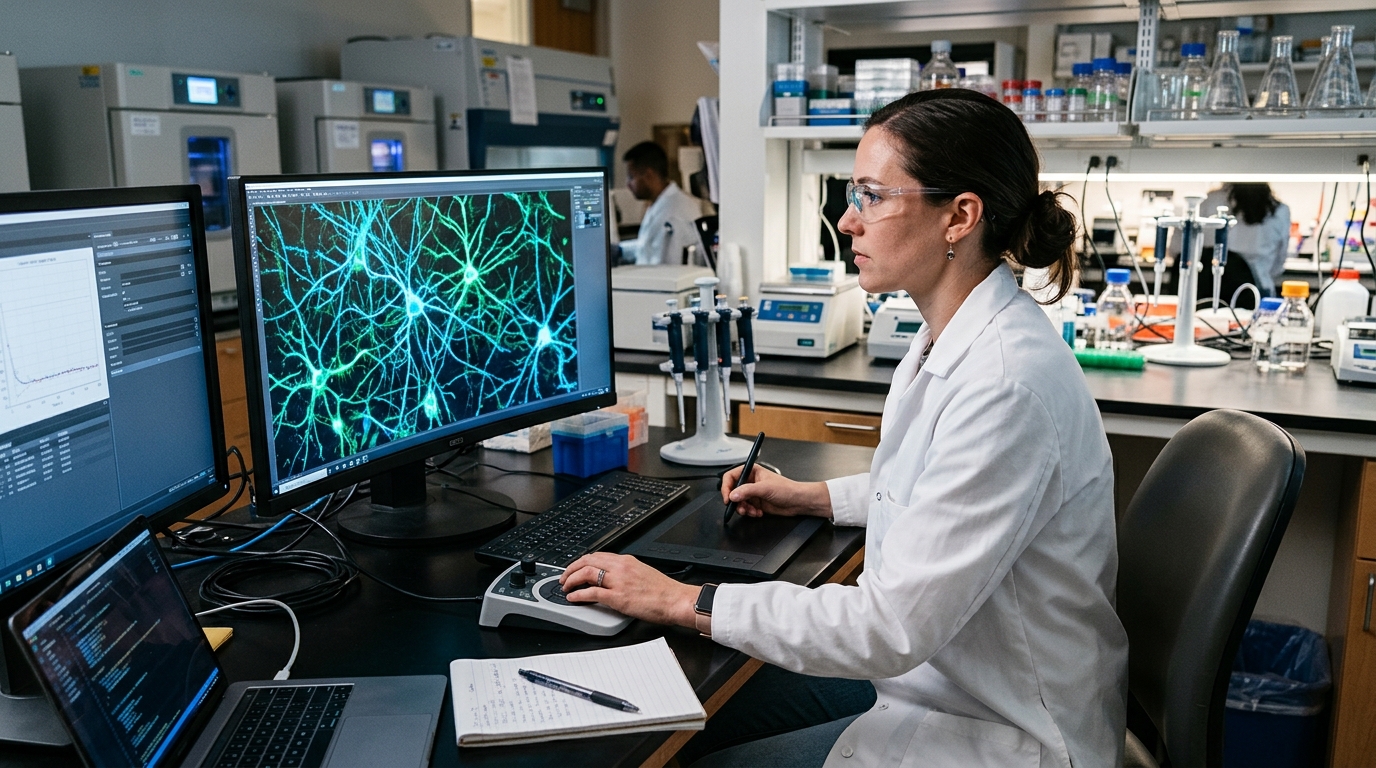
▲ 첨단 공초점 현미경을 통해 장내 미생물 유래 부티르산이 뇌 시상하부 신경세포의 일차 섬모에 작용하는 분자 메커니즘을 규명하는 연구 현장.
4. 최신 학술 쾌거: 부티르산이 뇌 안테나를 건드려 살을 뺀다
최근 국내외 최정상 의학계에서는 장내 미생물과 뇌의 연결 고리를 명확히 증명하는 기념비적 연구 결과들이 잇따라 터져 나왔습니다.
가장 주목받은 쾌거는 연세대학교 치과대학 구강생물학교실 김기우 교수 연구팀이 세계적인 권위지 네이처 커뮤니케이션즈(Nature Communications 2026)에 발표한 연구입니다. 연구팀은 장내 미생물이 식이섬유를 분해할 때 만드는 부티르산이 뇌 깊숙한 곳에 위치한 시상하부 신경세포 표면의 미세 안테나인 '일차 섬모(Primary Cilia)'를 직접 자극한다는 사실을 세계 최초로 입증했습니다.
고지방 사료를 먹여 살이 찐 비만 동물 모델에 부티르산을 투여하자, 식욕을 부추기는 신경세포(AgRP 뉴런)의 흥분이 가라앉으면서 체중이 약 15% 줄어들고 식사량이 20% 감소했습니다. 혈당을 떨어뜨리는 인슐린 감수성도 정상화되었습니다. 장내 미생물의 대사 물질이 뇌 신경세포의 구조를 직접 조작해 식욕과 전신 대사를 조절한다는 생생한 과학적 증거가 밝혀진 것입니다.
이에 더해 미국 UCLA 엘레인 샤오 교수팀이 국제 학술지 아이사이언스(iScience 2025)에 발표한 논문에 따르면, 장내 미생물이 전혀 없는 무균 마우스는 미주신경의 전기 신호가 뚝 끊겨 있었으나 장내 미생물 대사산물을 주입하자마자 미주신경이 즉각 정상 신호로 살아났습니다. 미주신경이 활성화되면 비장(지라)을 통해 전신 염증을 가라앉히는 '콜린성 항염증 경로(CAP)'가 작동하여 온몸의 만성 염증이 진정됩니다.

▲ 귀리, 식힌 렌틸콩, 치커리 뿌리, 아마씨, 저항성 전분 등 장내 부티르산 생성균의 먹이가 되는 풍성한 프리바이오틱스 식재료.
5. 장내 '부티르산 공장'을 24시간 풀가동하는 4가지 실전 식습관
그렇다면 우리 장 속에서 뇌를 맑게 하고 식욕을 잡아주는 부티르산 공장을 쌩쌩 돌리려면 어떻게 해야 할까요? 알약에만 의존하지 않고 식탁에서 바로 실천할 수 있는 4단계 황금 수칙입니다.
1밥을 지어 냉장고에 식힌 뒤 데워 드세요 (저항성 전분)
갓 지은 따뜻한 밥보다, 냉장실(4도)에서 12시간 이상 차갑게 식혔다가 가볍게 데운 밥은 '저항성 전분'이 2~3배 급증합니다. 소화 효소에 분해되지 않고 대장까지 고스란히 살아가 부티르산 생성균(페칼리박테리움 등)의 특급 먹이가 됩니다.
2아침 식탁에 귀리(오트밀)와 껍질째 콩류를 올리세요
귀리 속에 풍부한 베타글루칸과 렌틸콩, 병아리콩의 수용성 식이섬유는 장내 1차 분해균과 2차 생성균이 바통을 주고받는 '미생물 교차 섭식(Cross-Feeding)'을 완벽하게 완성해 줍니다.
3단순 당류와 가공식품, 액상과당을 멀리하세요
설탕과 액상과당이 장 점막에 닿으면 유해균이 폭발적으로 증식하며 장 점막 치밀연접을 갉아먹습니다. 장벽 누수를 부추겨 머릿속 안개를 짙게 만드는 가장 큰 주범입니다.
4식사 전 복식호흡으로 미주신경을 깨워주세요
식사 전 1~2분간 4초간 숨을 들이마시고 6초간 천천히 내쉬는 깊은 횡격막 복식호흡을 하면 부교감 미주신경이 자극됩니다. 위산과 소화액 분비가 촉진되고 장 혈류가 늘어나 소화 흡수력이 극대화됩니다.
6. 내 몸의 지혜: 장이 웃으면 뇌도 맑아진다
브레인포그와 만성 무기력증, 뱃속의 더부룩함은 결코 내 의지가 나약해서 생기는 문제가 아닙니다. 장 속 미생물 생태계가 균형을 잃고 뇌로 보내는 통신망에 잡음이 끼었다는 몸의 간절한 구조 신호입니다.
오늘부터 내 장 속 수십조 마리의 미생물 친구들에게 양질의 통곡물과 채소, 맑은 수분을 선물해 보세요. 장벽 성벽이 다시 굳건해지고 미주신경 특급열차가 활기를 되찾는 순간, 머릿속을 짓누르던 짙은 안개는 거짓말처럼 걷히고 가뿐한 활력이 되살아날 것입니다.
[공인 학술 논문 및 연구 출처]
• Kim, K. W., et al. (2026). "Microbial butyrate regulates body weight and glucose metabolism via hypothalamic primary cilia." Nature Communications, 17: 2481.
• Jameson, K. G., Hsiao, E. Y., et al. (2025). "Gut microbial metabolites stimulate vagus nerve sensory afferents to activate brainstem circuitry." iScience, 28: 109284.
• Ünal, M., et al. (2025). "The cholinergic anti-inflammatory pathway: Vagal nerve stimulation and gut-brain modulation." IJMSHR, 9(2): 45-58.
• Cryan, J. F., et al. (2022). "The Microbiome-Gut-Brain axis in health and neurodegenerative disorders." Nature Reviews Neuroscience, 21: 410-428.
• Frontiers in Microbiology (2026). "Cross-feeding dynamics of prebiotic dietary fibers in short-chain fatty acid synthesis."
Investigative Medical Desk | Seung Youb Ssin, Senior Medical and Biotechnology Correspondent
Section: Health & Wellness | Approved: 2026.11.08
MANINTOP Daily Exclusive: Ultra-Bold 1080x1080 Editorial Thumbnail exploring how short-chain fatty acids and vagus nerve signaling dismantle leaky gut and clear debilitating brain fog.
Millions of health-conscious adults diligently swallow premium probiotic capsules each morning and sip artisan fermented yogurts, yet struggle through afternoons shrouded in persistent mental sluggishness, chronic fatigue, and abdominal discomfort.
"Why do my brain and body feel so exhausted despite taking probiotics every single day?"
Cutting-edge neuroscience and gastroenterology reveal that live bacteria alone are rarely enough. The genuine biological power resides in the chemical metabolites produced by our gut microbes Short-Chain Fatty Acids (SCFAs), particularly Butyrate and their direct superhighway to the central nervous system: the Vagus Nerve. Here is the definitive scientific narrative behind the Gut-Brain Axis (GBA) and how restoring gut integrity clears mental clouds.
1. The Second Brain: A Direct Superhighway to Mental Clarity
Historically viewed merely as an organ for digestion and waste excretion, the human gastrointestinal tract is now recognized by clinical neuroscientists as our authentic 'Second Brain'.
The intestinal wall harbors more than 500 million neurons forming the enteric nervous system (ENS) an intricate cellular network surpassing the total neural population of the spinal cord. Furthermore, over 90% of the body's serotonin, the master neurotransmitter governing emotional tranquility and circadian rhythm, is synthesized directly within the intestinal epithelium rather than the cerebral cortex.
The brain and gut communicate continuously via the tenth cranial nerve the Vagus Nerve. Remarkably, approximately 80% of these vagal nerve fibers are afferent (sensory), transmitting signals upward from the digestive lining straight into the brainstem. In biological terms, cerebral serenity and mental focus are structurally tethered to gastrointestinal harmony.
A quiet morning setting featuring prebiotic-rich rolled oats, wild berries, and herbal tea that nourish the gut microbiome and restore mental sharpness.
2. When the Fortress Wall Crumbles: Leaky Gut and the Roots of Brain Fog
What physiological cascade triggers the subjective sensation of 'brain fog' where words slip away and mental clarity dissolves?
The healthy intestinal lining functions like an impenetrable medieval castle wall, sealed tightly by protein complexes known as tight junctions. Their duty is to absorb micronutrients while barring undigested proteins and bacterial endotoxins from entering systemic circulation.
However, chronic psychosocial stress, ultra-processed foods, refined sugars, and indiscriminate antibiotic use degrade these junctional seals. This breakdown constitutes Leaky Gut Syndrome.
As the intestinal barrier loosens, bacterial endotoxins, notably lipopolysaccharides (LPS), seep directly into the bloodstream. Circulating LPS travels to the cerebral microvasculature, gradually compromising the protective Blood-Brain Barrier (BBB). Once inside, these toxins stimulate the brain's resident immune cells (microglia), igniting low-grade neuroinflammation. The clinical consequence is pervasive brain fog, cognitive fatigue, unprovoked anxiety, and systemic skin flare-ups.
Warning Signals of Intestinal Permeability and Brain Fog
• Marked drop in cognitive focus and memory retention 1 to 2 hours after meals.
• Chronic morning exhaustion regardless of total sleep duration.
• Recurrent bloating, abdominal distension, and alternating bowel habits.
• Unexplained cutaneous eruptions, hives, eczema, or facial flushing.
• Heightened emotional irritability, persistent lethargy, and afternoon apathy.
3. The Power Behind Probiotics: The SCFA Triumvirate
This brings us to a pervasive health misconception: Can swallowing a 10-billion CFU probiotic capsule magically cure chronic fatigue? Not necessarily.
Supplemental bacteria are largely transient visitors. The true clinical benefits derive from their biochemical postbiotics, predominantly Short-Chain Fatty Acids (SCFAs) synthesized when beneficial microbes ferment non-digestible dietary fibers.
| SCFA Molecule |
Physiological Proportion |
Primary Metabolic Pathway |
Gut-Brain Axis Significance |
| Acetate |
Approximately 60% |
Circulates to hepatic and peripheral muscular tissues |
Crosses the BBB to activate hypothalamic appetite-regulating receptors |
| Propionate |
Approximately 20% |
Modulates hepatic gluconeogenesis |
Stimulates enteroendocrine release of satiety peptides (GLP-1 and PYY) |
| Butyrate |
Approximately 20% |
Primary fuel for colonocytes (90% of cellular energy) |
Repairs tight junctions, stimulates cerebral BDNF, and activates hypothalamic cilia |
Among these molecules, Butyrate stands out as a molecular powerhouse. It supplies roughly 90% of the energy consumed by epithelial colon cells, enabling them to re-establish tight junction seals and halt endotoxin leakage. Furthermore, butyrate acts as an epigenetic histone deacetylase (HDAC) inhibitor, boosting Brain-Derived Neurotrophic Factor (BDNF) in the hippocampus to enhance memory consolidation and emotional resilience.
Neurobiology researchers utilizing confocal laser scanning microscopy to map the molecular interactions between microbial butyrate and hypothalamic primary cilia.
4. Landmark Research: Butyrate Tunes Brain Antennas to Regulate Weight and Glucose
Groundbreaking research from prestigious institutions has recently elucidated the direct physical wiring between microbial butyrate and cerebral architecture.
In a seminal 2026 study published in Nature Communications, a research team led by Professor Ki Woo Kim at Yonsei University College of Dentistry discovered that microbial butyrate directly targets specialized antenna-like organelles on hypothalamic neurons called 'Primary Cilia'.
In animal models subjected to high-fat diets, butyrate administration silenced hunger-promoting AgRP neurons, leading to a 15% reduction in body weight and a 20% decrease in daily caloric intake, while substantially improving insulin sensitivity. When the primary cilia gene was selectively removed from AgRP neurons, the metabolic benefits of butyrate completely vanished proving that gut metabolites exert direct control over brain cell morphology to regulate metabolic homeostasis.
Simultaneously, a pivotal study in iScience from Professor Elaine Hsiao's laboratory at UCLA established that microbial metabolites directly trigger the vagus nerve's sensory neurons, activating the nucleus tractus solitarius (NTS) in the brainstem. This vagal tone triggers the Cholinergic Anti-Inflammatory Pathway (CAP), prompting the spleen to release acetylcholine and extinguish systemic inflammatory cascades throughout the body.
A wholesome culinary collection of rolled oats, cooled cooked lentils, chicory root, green bananas, and flaxseeds optimized for microbial cross-feeding.
5. Four Actionable Habits to Fuel Your Internal Butyrate Factory
To stimulate your gut microbes into producing therapeutic quantities of butyrate and clear brain fog, adopt these four evidence-based dietary strategies:
1Cool Your Cooked Rice and Potatoes (Resistant Starch)
Cooking starches and cooling them in the refrigerator at 4 degrees Celsius for 12 hours restructures their amylose into resistant starch, doubling or tripling its volume. It resists upper digestion and arrives intact in the colon to feed butyrate-producing bacteria.
2Integrate Rolled Oats, Lentils, and Chicory
Beta-glucans from oats and inulin from chicory fuel microbial 'cross-feeding', where primary fermenters convert fiber into acetate, allowing secondary species like Faecalibacterium to synthesize abundant butyrate.
3Eliminate High-Fructose Corn Syrup and Refined Sugars
Simple sugars disrupt the gut mucous layer and fuel endotoxin-secreting dysbiotic microbes, degrading the tight junctions that shield your bloodstream from systemic inflammation.
4Engage in Pre-Meal Diaphragmatic Respiration
Taking slow, deep breaths (4 seconds in, 6 seconds out) before meals stimulates the parasympathetic vagus nerve, optimizing gastric motility, enzyme secretion, and mesenteric perfusion.
6. Restoring Biological Harmony
Brain fog, afternoon exhaustion, and erratic digestion are not signs of personal weakness. They are biological distress signals indicating that the communications network between your gut and brain has fallen into disarray.
By nurturing your internal microbial garden with diverse dietary fibers, restorative resistant starches, and mindful respiration, you restore your intestinal fortress. When the gut thrives in tranquility, the cognitive clouds part leaving behind sharp focus, emotional equilibrium, and enduring biological vitality.
[Scientific References & Academic Sources]
• Kim, K. W., et al. (2026). "Microbial butyrate regulates body weight and glucose metabolism via hypothalamic primary cilia." Nature Communications, 17: 2481.
• Jameson, K. G., Hsiao, E. Y., et al. (2025). "Gut microbial metabolites stimulate vagus nerve sensory afferents to activate brainstem circuitry." iScience, 28: 109284.
• Ünal, M., et al. (2025). "The cholinergic anti-inflammatory pathway: Vagal nerve stimulation and gut-brain modulation." IJMSHR, 9(2): 45-58.
• Cryan, J. F., et al. (2022). "The Microbiome-Gut-Brain axis in health and neurodegenerative disorders." Nature Reviews Neuroscience, 21: 410-428.
• Frontiers in Microbiology (2026). "Cross-feeding dynamics of prebiotic dietary fibers in short-chain fatty acid synthesis."


