[단독] '트럼프-김정은 직거래'와 북핵 격변… 워싱턴 흔든 '차가운 평화'와 한국의 선택
만인의 탑 편집국11월 13, 2026
월드와이드 단독 심층취재 | 글로벌 안보·한반도 대전환
공식 정론 배포 | 만인의 탑 데스크
[단독] '트럼프-김정은 직거래'와 북핵 격변… 워싱턴 흔든 '차가운 평화'와 한국의 선택
▲ 한미 합동 전략 군사 지휘통제실에서 군 고위 지휘관들이 대륙간탄도미사일(ICBM) 궤적과 한반도 방공망 상황판을 점검하고 있다. 북핵 고도화와 외교적 격변 속에 확장억제 체제의 신뢰성이 시험대에 올랐다. / 한미 전략 방위 지휘 보도 사진 자료
한반도를 둘러싼 안보 지형이 냉전 종식 이후 가장 위태롭고 근본적인 전략적 변곡점을 통과하고 있습니다. 도널드 트럼프 미국 대통령의 백악관 귀환과 함께 워싱턴 싱크탱크와 조야에서는 지난 35년간 지켜온 '완전한 비핵화(CVID)'의 실패를 인정하고 현실적인 핵보유국 관리 체제로 전환하자는 이른바 '차가운 평화(Cold Peace)' 담론이 급부상하고 있습니다. 반면 북한 김정은 정권은 남북관계를 '적대적 두 국가'로 헌법에 못 박고 철도와 도로를 폭파하며 영구 분단을 선언하는 한편, 지도부 피습 판단 시 '자동 즉각 핵타격'을 가하는 극단적인 핵무력 법령을 완성했습니다. 만약 트럼프 행정부가 미국 본토를 겨냥한 대륙간탄도미사일(ICBM)의 동결만을 대가로 한국을 사정권에 둔 수십 기의 전술핵을 사실상 묵인하는 '스몰딜(Small Deal)'에 나설 경우, 미국의 핵우산(확장억제)에 대한 신뢰가 근본부터 붕괴하고 '코리아 패싱'과 주한미군 감축설, 나아가 남한 내 자체 핵무장론이 걷잡을 수 없이 분출하는 안보 대재앙이 초래될 수 있습니다. 북한의 실질적 핵능력 데이터와 미 본토 방어망의 한계, 그리고 트럼프의 거래적 동맹관 속에서 대한민국이 반드시 사수해야 할 생존 전략을 알기 쉽고 생생하게 긴급 해부합니다.
트럼프의 '피스메이커' 승부수와 직거래 재개… '스몰딜' 패키지의 실체
한반도 외교의 시계추가 2018년 싱가포르 북미정상회담 당시로 급격히 되돌아가고 있습니다. 도널드 트럼프 미국 대통령은 최근 김정은 국무위원장과의 단독 산책 사진을 소셜미디어에 전격 공개하며 북미 간 '톱다운(Top-down) 직거래'의 시동을 걸었습니다. 호르무즈 해협 등 중동 분쟁을 일단락한 뒤 '글로벌 피스메이커'라는 외교적 트로피를 과시하고, 의회 선거 승리와 여론 반전을 꾀하려는 트럼프 특유의 파격적 승부수입니다.
그러나 국내외 안보 전문가들이 진단하는 협상의 현실은 결코 장밋빛이 아닙니다. 지난 35년간 고수해 온 '완전한 비핵화(CVID)'라는 높은 이상 대신, 양측이 당장 눈앞의 이익만을 맞바꾸는 '스몰딜(Small Deal)' 타협안이 가장 유력한 시나리오로 떠오르고 있기 때문입니다. 이는 북한이 영변 핵시설 폐기와 미국 본토를 겨냥한 대륙간탄도미사일(ICBM) 시험 유예(모라토리엄)를 약속하는 대가로, 미국이 한미연합훈련을 축소하고 광물·에너지·노동력 송출 등 대북 경제 제재를 풀어주는 거래 방식입니다.
과거 문재인 정부 시절처럼 한국이 중재자로 나섰던 판과 달리, 트럼프 2기는 한국을 철저히 배제한 채 미북 간 1대 1 직거래만을 고집하고 있습니다. 이 경우 한국의 안보 주권이 협상 테이블에서 소외되는 '코리아 패싱'이 굳어지고, 종전 선언이라는 정치적 이벤트 뒤에 남한을 겨냥한 전술핵 위협은 고스란히 방치되는 최악의 외교적 참사로 이어질 수 있습니다.
'적대적 두 국가' 못 박은 평양… 동해선 폭파와 핵 선제타격 법제화의 속내
평양의 전략 역시 과거와는 판이하게 다릅니다. 김정은 총비서는 대남 관계를 더 이상 동족이나 통일의 대상이 아닌 '가장 적대적인 교전국 관계'로 규정하며 국가 노선을 180도 전환했습니다. 대남 대화 창구였던 조국평화통일위원회와 금강산국제관광국을 전격 폐지하고, 통일전선부를 대남 심리전과 공작을 총괄하는 '대적지도국(노동당 중앙위 10국)'으로 축소 개편했습니다. 헌법을 개정해 대한민국을 불변의 주적이자 제1적대국으로 명시한 데 이어, 동해선과 서해선 철도·도로를 다이너마이트로 폭파하고 비무장지대에 대전차 방벽과 지뢰를 매설해 물리적 요새화를 마쳤습니다.
더욱 치명적인 것은 북한 최고인민회의가 법제화한 11개 조항의 '핵무력 정책 법령'입니다. 김정은 위원장은 시정연설에서 "절대로 먼저 비핵화란 없으며, 맞바꿀 흥정물도 없다"고 공언했습니다. 이 법령에 따르면 김정은을 비롯한 최고 지도부와 핵 지휘통제체계가 공격 위험에 처했다고 주관적으로 판단되는 순간, 사전에 마련된 작전계획에 따라 도발 원점과 지휘부를 향해 '자동적으로 즉시에' 핵타격이 단행됩니다.
실제 폭격을 맞지 않더라도 지도부에 대한 재래식 정밀타격이 '임박했다고 판단'만 해도 핵을 선제 발사할 수 있도록 문턱을 극단적으로 낮췄습니다. 여기에 비핵국가라도 핵보유국과 동맹을 맺고 공격에 가담하면 핵 공격 대상이 된다는 단서 조항을 달아, 한미 연합방위체제를 유지하는 한국을 명백한 타격 표적으로 지목했습니다. 2026년 들어서만 21회 이상의 탄도미사일 도발을 감행하고 신형 고체연료 ICBM '화성-19형'을 시험 발사한 것은, 향후 정상회담이 열렸을 때 비핵화 논의를 원천 봉쇄하고 '핵보유국 간 군비통제'로 협상의 판을 끌고 가려는 고도의 사전 주도권 확보 전략입니다.
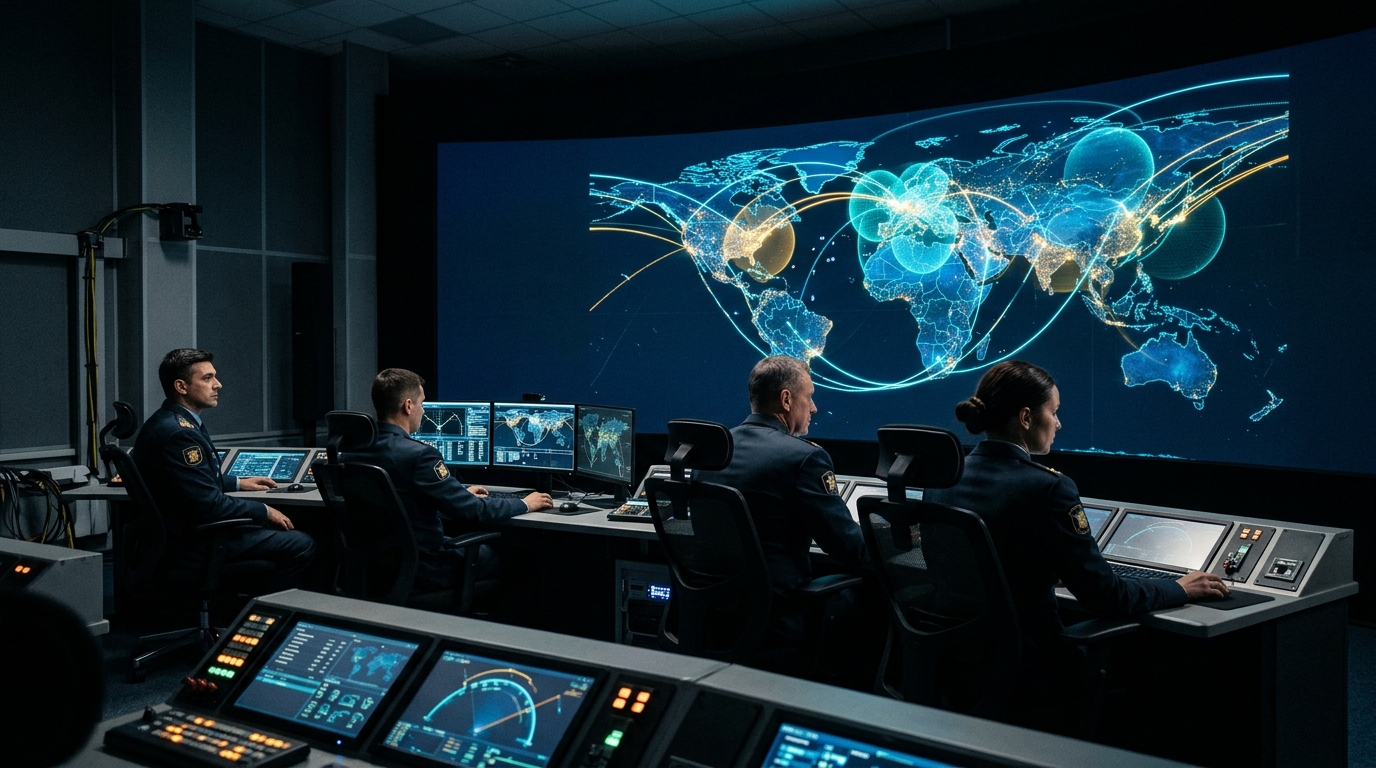
▲ 다자 전략 안보 지휘소의 통합 상황 모니터링 콘솔. 미국의 미사일 방어망 포화 한계와 워싱턴 조야의 현실주의적 대북 정책 전환 논의가 긴박하게 교차하고 있다. / 전략 안보 지휘 상황 보도 사진 자료
워싱턴 뒤흔든 빅터 차 교수의 경고… 35년 'CVID 파산'과 '차가운 평화'의 역설
워싱턴 정가의 심장부에서도 거대한 지각변동이 일어났습니다. 조지 W. 부시 백악관 국가안보회의(NSC) 아시아국장을 지낸 보수 성향의 대표적 한반도 권위자 빅터 차(CSIS 한국석좌) 교수가 미국 외교 전문지 '포린 어페어즈(Foreign Affairs)' 기고를 통해 충격적인 정책 전환을 촉구한 것입니다. 그는 "지난 35년간 미국 7개 행정부가 CVID에 기반해 추진해 온 북한 비핵화 전략은 실현 불가능하며 완전히 실패했다"고 공식 파산을 선언했습니다.
빅터 차 교수가 제시한 해법은 바로 '차가운 평화(Cold Peace)'입니다. 실현 불가능한 비핵화라는 이상적인 완벽함을 고집하다가 더 큰 핵 재앙을 부르지 말고, 비핵화는 먼 미래의 장기 과제로 미뤄둔 채 당면한 최우선 과제로 북한과의 군비통제 협정 체결, 추가 핵실험 및 미사일 생산 제한, 위기관리 핫라인 구축을 추진하자는 현실주의 노선입니다. 워싱턴과 서울의 고위 당국자들은 비핵화의 파산을 속으로 알면서도 '적에 대한 항복'이라는 비난이 두려워 진실을 말하지 못해 왔다는 통렬한 비판도 덧붙였습니다.
더욱이 2024년 북한과 러시아가 '포괄적인 전략적 동반자 관계 조약'을 비준하며 자동 군사개입 조항을 부활시킨 점은 과거와 차원이 다른 지정학적 방패막이를 제공하고 있습니다. 러시아가 유엔 안보리 대북제재 패널의 임기 연장에 거부권을 행사하며 국제 제재망은 사실상 붕괴했습니다. 북한은 우크라이나 전선에 포탄과 병력을 지원하는 대가로 대기권 재진입과 핵잠수함 첨단 기술, 식량과 원유를 안정적으로 공급받고 있어, 과거처럼 제재로 북한을 굴복시키는 것은 불가능해졌습니다.
안보 시나리오
비핵화 목표 수용 여부
북미 관계개선 및 교환 조건
대한민국 안보 파급효과 및 위험도
① 이상적 시나리오
완전한 비핵화(CVID) 전면 수용
북미 수교 및 대규모 대북 경제지원·평화체제 구축
실현 가능성 극히 희박, 북한의 핵무력 헌법화로 이상론에 불과
② 위험한 스몰딜
비핵화 포기, 현 상태 핵보유 사실상 용인
美 본토용 ICBM 동결 ↔ 한미훈련 축소 및 대북제재 완화
파멸적 안보 위기: 대남 전술핵 방치로 핵 인질화 및 독자 핵무장론 비등
③ 현상유지 외교
비핵화 미합의, 핵물질 증산 지속
상징적 서신 교환 및 이벤트성 정상회담으로 긴장 완화 착시
단기적 실현 가능성 최고, 북핵 고도화 방치로 장기 안보 불안 상존
④ 일방적 압박
비핵화 선결 절대 고수
관계개선 전면 거부 및 제재·군사 압박 지속
실현 불가능: 북·러 군사동맹 복원 및 중·러 밀착으로 제재 효력 상실
핵탄두 50개와 美 요격망 포화… '서울 대신 뉴욕 포기' 확장억제 신뢰의 균열
미국 조야가 이처럼 흔들리는 근본 원인은 북한 핵무력의 실측 데이터가 미국 안보 당국에 실질적인 공포를 안겨주고 있기 때문입니다. 군사 정보에 따르면 북한은 현재 50개의 핵탄두를 이미 조립 완료해 실전 배치한 상태이며, 40~50개를 추가 생산할 수 있는 고농축 우라늄과 플루토늄을 비축하고 있습니다. 10년 내에 영국이나 프랑스 수준인 200개 이상의 핵탄두를 확보한다는 목표입니다.
가장 섬뜩한 팩트는 미국 본토 미사일 방어망의 '물리적 포화(Saturation)' 한계입니다. 미 국방정보국(DIA)은 북한이 10년 내에 핵탄두 탑재 ICBM을 50기까지 확보할 것으로 추정합니다. 북한이 보유한 15~20대의 이동식 발사대(TEL)만으로도 알래스카와 캘리포니아에 배치된 미국의 지상 요격미사일(GBI) 44발을 완전히 소진시킬 수 있습니다. 통상 날아오는 탄도미사일 1발을 요격하기 위해 4발의 요격미사일이 필요한데, 북한 ICBM 50기를 막으려면 최소 200발의 요격기가 필요하지만 미국이 2035년까지 배치할 차세대 요격체계(NGI)는 64기에 불과합니다.
결국 미국 방어망에 필연적으로 구멍이 뚫릴 수밖에 없는 구조입니다. 이스라엘처럼 폭격으로 지도부를 제거하려 해도 북한의 핵시설은 지하 수백 미터 요새에 분산되어 있어 일격 제거가 불가능합니다. "과연 미국 대통령이 서울을 지키기 위해 뉴욕이나 로스앤젤레스가 북한의 핵미사일에 불타는 위험을 감수할 것인가"라는 냉전기 유럽의 샤를 드골식 의문이 2026년 한반도에서 적나라한 현실로 되살아나고 있습니다.
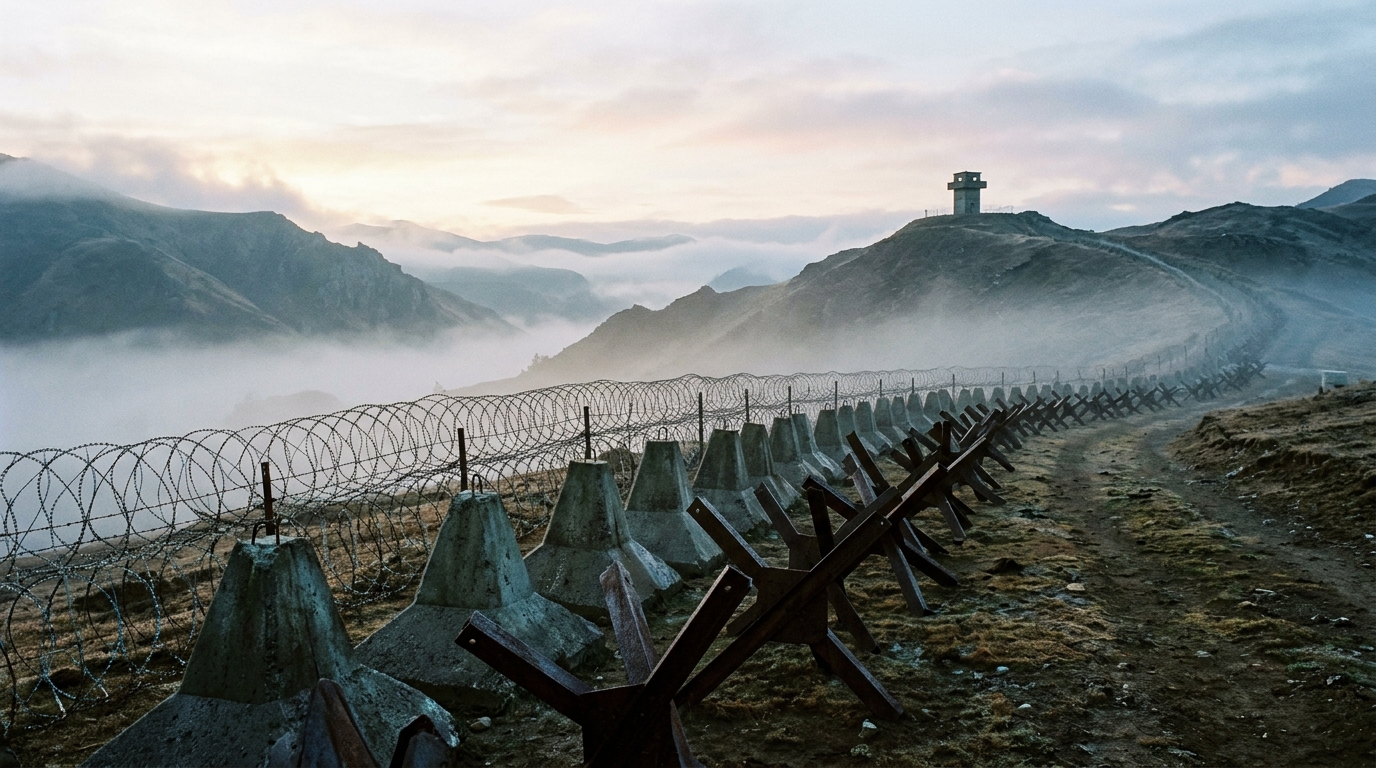
▲ 짙은 안개 속 비무장지대(DMZ)를 따라 끝없이 이어진 철책선과 콘크리트 대전차 방벽. 북한이 적대적 두 국가론을 내세워 육로를 폭파하고 요새화를 단행하면서 분단이 고착화되고 있다. / 한반도 군사 분계선 보도 사진 자료
주한미군 감축설과 '코리아 패싱'의 덫… 한미 핵협의그룹(NCG)과 국가 생존 전략
상황이 여기에 이르자 트럼프 2기 행정부의 '거래적 동맹관'이 한국 안보를 직접 압박하고 있습니다. 미 국방부 일각에서는 한국에 순환 배치된 3,500~4,500명 규모의 미 육군 순환여단을 영구 철수시키는 방안이 검토되고 있다는 관측이 파다합니다. 방위비 분담금 대폭 증액 압박과 함께, 주한미군 감축 카드가 북미 협상에서 비핵화 조치의 맞교환 상응물로 다뤄질 수 있다는 우려마저 제기됩니다.
미국의 확장억제 신뢰가 무너지고 한국이 북한의 전술핵 인질로 방치될 경우, 한국 사회 내부에서는 독자적 핵무장론이 폭풍처럼 비등할 수밖에 없습니다. 하지만 NPT(핵확산금지조약) 탈퇴와 핵개발은 국제 제재와 한미동맹 해체(디커플링)라는 엄청난 국가적 리스크를 수반합니다. 지금 한국에 필요한 것은 냉철하고 실질적인 '패키지 안보 외교'입니다.
첫째, 한미 핵협의그룹(NCG)을 확고히 가동해 미국의 핵 작전에 한국의 첨단 재래식 3축 체계를 완벽히 결합하는 '재래식-핵 통합(CNI)'을 조속히 완성해야 합니다. 둘째, '주한미군 감축 불가'와 '대남 전술핵 방치형 스몰딜 절대 수용 불가'라는 확고한 안보 레드라인을 한미 공동 가이드라인으로 사전에 못 박아야 합니다. 셋째, 한국 기업의 대미 반도체·배터리 투자와 미 해군 함정 유지·보수(MRO) 협력, K-방산 공동 생산을 하나로 묶어 미국의 전략적 이익과 연계하는 '종합 안보-경제 포괄 거래(Grand Bargain)'를 주도적으로 제안해야 합니다. 미북 직거래의 거대한 격랑 속에서 한국이 주도권을 잃지 않는 유일한 생존의 길입니다.
만인의 탑 데일리 뉴스룸 | 월드와이드 특별취재팀
발행·편집인: 신승엽 | 만인의 탑 데스크 (information.youngsdaily.com)
본 심층 분석 기사는 외교부 및 백악관 국가안보회의(NSC) 사료, 미국 전략국제문제연구소(CSIS) 및 포린 어페어즈 기고문, 한국국방연구원(KIDA) 안보전략 보고서, 한미 핵협의그룹(NCG) 공식 발표를 정밀 교차 검증하여 작성되었습니다.
WORLDWIDE SPECIAL INVESTIGATION | Global Security & Strategic Deterrence
Official Editorial Dispatch | Manintop World Desk
[EXCLUSIVE] Trump-Kim Direct Diplomacy and the Nuclear Shift: Washington's 'Cold Peace' and Seoul's Dilemma
▲ Senior military commanders monitor ballistic missile trajectories and situational displays inside a joint strategic defense operations center. The rapid expansion of North Korea's arsenal places the credibility of extended deterrence under unprecedented scrutiny. / Strategic Defense Operations Press Photo Archive
The strategic landscape encompassing the Korean Peninsula is navigating its most precarious structural inflection point since the end of the Cold War. Following Donald Trump's return to the White House, prominent foreign policy architects in Washington are openly conceding the structural failure of the 35-year Complete, Verifiable, and Irreversible Denuclearization (CVID) doctrine, accelerating discussions toward a pragmatic arms-control framework termed 'Cold Peace.' Concurrently, Kim Jong Un's regime in Pyongyang has formally enshrined a 'hostile two-state' doctrine into its constitution, physically demolishing inter-Korean transport corridors while enacting legislation that mandates automated, instantaneous nuclear counterstrikes upon perceived leadership decapitation. Should a revived top-down direct summit yield a truncated 'Small Deal'—freezing North Korean intercontinental ballistic missiles targeting the American homeland while de facto tolerating regional tactical warheads zeroed in on Seoul— the foundational credibility of the United States extended deterrence umbrella would face systemic fracture, unleashing acute risks of 'Korea Passing,' troop withdrawal debates, and unstoppable momentum toward an independent South Korean nuclear deterrent. This in-depth investigative report analyzes quantitative nuclear capabilities, the saturation thresholds of continental defense interceptors, and the indispensable Grand Bargain strategies required to secure national survival.
Trump's Peacemaker Ambitions and Direct Diplomacy: The Mechanics Behind the 'Small Deal'
Diplomatic pendulums across Northeast Asia are swinging rapidly toward the precedent established during the 2018 Singapore Summit. President Donald Trump publicly shared historic imagery of his private walk with Kim Jong Un, signaling renewed momentum for direct top-down engagement. Positioned to project global peacemaker credentials following diplomatic realignments in the Middle East, the initiative seeks high-visibility foreign policy triumphs ahead of key congressional cycles.
However, national security strategists caution that the realistic trajectory diverges sharply from historic ideals. Rather than pursuing the demanding benchmarks of Complete, Verifiable, and Irreversible Denuclearization (CVID), bilateral exchanges are gravitating toward a pragmatic Small Deal framework. Under such arrangements, Pyongyang would pledge the verified decommissioning of Yongbyon fissile facilities alongside a flight-test moratorium on Intercontinental Ballistic Missiles (ICBMs) targeting the continental United States, in exchange for scaled-back joint military exercises and selective sanctions relief covering minerals, textiles, and labor exports.
Unlike past frameworks where Seoul functioned as an active intermediary, the emerging posture prioritizes direct bilateral bargaining that sidelines South Korean representation. This dynamic introduces acute risks of structural marginalization, potentially leaving short-range tactical nuclear threats intact while formalizing political declarations of detente.
Pyongyang's 'Hostile Two States' Doctrine: Physical Rupture and Automated Nuclear Retaliation
Pyongyang has concurrently overhauled its core ideological doctrine. Kim Jong Un has formally abandoned longstanding principles of shared nationhood, redefining inter-Korean relations as interactions between hostile belligerent states. Key reunification bodies—including the Committee for the Peaceful Reunification of the Country—have been abolished, while administrative organs have been restructured into dedicated combat intelligence directorates. The regime codified South Korea as its primary adversary in its revised constitution, demolished cross-border road and rail links along the Gyeongui and Donghae corridors, and constructed concrete anti-tank barriers along the Demilitarized Zone.
Compounding this physical separation is an aggressive eleven-clause nuclear law that codifies hair-trigger launch doctrines. The statutes decree that should command leadership or strategic command-and-control apparatuses face imminent peril, operational strike plans mandate automated and instantaneous nuclear counterstrikes against opposing command centers.
Crucially, preemptive authorization does not require kinetic impact; subjective assessments of impending conventional precision strikes against leadership structures suffice. A specific clause explicitly conditions nuclear non-use toward non-nuclear states on non-participation in alliances with nuclear powers, confirming that South Korea remains an active target. Conducting over 21 ballistic missile tests in 2026—including the advanced solid-fuel Hwasong-19 ICBM—the regime is methodically establishing strategic leverage to ensure future negotiations proceed strictly on arms-control terms.
▲ Multilateral situational tracking displays at a strategic command installation. Discussions over the saturation thresholds of missile defenses and realistic arms control policies continue to roil international security circles. / Strategic Command Telemetry Press Photo Archive
Victor Cha's Warning Shakes Washington: The Bankruptcy of CVID and the 'Cold Peace' Paradox
A profound reassessment has surfaced within Washington's foreign policy establishment. Victor Cha, Korea Chair at the Center for Strategic and International Studies (CSIS) and former director for Asian affairs on the National Security Council, ignited debate through an essay in Foreign Affairs. Cha declared that the 35-year denuclearization strategy pursued across seven presidential administrations has proven unworkable and failed to arrest nuclear proliferation.
Cha advocates pivoting toward Cold Peace, prioritizing interim crisis stability, verified arms-limitation pacts, and communication hotlines to prevent accidental nuclear escalation, while deferring comprehensive disarmament to a distant horizon. The analysis highlighted that while policymakers privately recognize the collapse of traditional disarmament formulas, domestic political constraints have historically penalized public acknowledgments of strategic reality.
The revival of the Russia-DPRK comprehensive strategic partnership—restoring mutual defense commitments reminiscent of the Cold War—provides Pyongyang with powerful diplomatic insulation. Moscow's veto against the UN Panel of Experts dismantled multilateral monitoring regimes, while expanding bilateral trade delivers vital energy, food, and advanced aerospace technologies in exchange for conventional ammunition, neutralizing traditional coercive economic instruments.
Total denial of ties; maximal sanctions enforcement and military maneuvers
Structurally unviable: Revived Russia-DPRK mutual defense pact negates international sanctions
Fifty Warheads and Saturated Defenses: Structural Cracks in the Extended Deterrence Umbrella
The foundation of Washington's strategic dilemma rests on quantitative metrics. Intelligence assessments indicate that North Korea possesses approximately 50 assembled nuclear warheads, alongside fissile stockpiles sufficient to fabricate 40 to 50 additional devices, aiming for a modern arsenal exceeding 200 warheads within a decade.
The central vulnerability lies in the physical saturation of continental missile interceptors. Projections indicate that North Korea could field up to 50 ICBMs within ten years. Utilizing 15 to 20 transporter-erector-launchers, an operational salvo could exhaust the 44 Ground-Based Interceptors stationed across Alaska and California. Because interception doctrines assign up to four interceptors per incoming warhead, defeating 50 ICBMs requires at least 200 interceptors; however, planned deployments of Next Generation Interceptors will only reach 64 units by 2035.
Unlike counter-proliferation strikes executed against exposed facilities, North Korea's deeply buried underground infrastructure precludes decisive disarming strikes without triggering catastrophic nuclear retaliation. This reality revives the historic decoupling conundrum: whether an American administration would risk nuclear devastation against domestic metropolitan centers to honor defense commitments across the Pacific.
▲ Fortified anti-tank barriers and concertina wire barriers lining the mist-shrouded frontier along the Demilitarized Zone. Pyongyang's proclamation of a 'hostile two states' doctrine has accelerated the physical severance of cross-border linkages. / Frontier Border Security Press Photo Archive
Troop Drawdown Anxieties and 'Korea Passing': The Nuclear Consultative Group and Strategic Survival
These strategic calculations intersect directly with transactional alliance paradigms. Reports indicate that the withdrawal of rotational brigade combat teams stationed in South Korea—encompassing 3,500 to 4,500 personnel—is under examination, coupled with escalating cost-sharing demands. The hazard that troop presence could be leveraged as a bargaining chip during bilateral negotiations underscores the vulnerability of unilateral security dependencies.
Should extended deterrence assurances weaken while tactical nuclear systems remain unconstrained, domestic debate surrounding autonomous nuclear capabilities will intensify. Yet unilateral proliferation entails severe diplomatic sanctions and risks alliance dissolution. Consequently, Seoul must execute a proactive, multifaceted security strategy.
First, the bilateral Nuclear Consultative Group must finalize Conventional-Nuclear Integration, embedding advanced conventional precision assets directly into joint strategic nuclear planning. Second, redlines prohibiting troop drawdowns and rejecting truncated arms-control accords must be firmly institutionalized. Finally, South Korea must articulate a comprehensive Grand Bargain linking commercial semiconductor and battery investments, naval maintenance and repair partnerships, and co-production defense pacts with enduring security commitments, ensuring South Korea retains vital diplomatic leverage amidst shifting geopolitical currents.
MANINTOP DAILY NEWS ROOM | Worldwide Special Investigation Team
Publisher & Editor-in-Chief: Seung Youb Ssin
This investigative report was compiled through rigorous cross-examination of national security archives, Foreign Affairs policy essays, Korea Institute for Defense Analyses strategic studies, and official bilateral Nuclear Consultative Group communiqués.
PRO SOURCING ENGINE만인의 탑 빅데이터 솔루션
★ 가입 시 600 크레딧(120회) 전원 무료
내가 찾는 상품 키워드, 지금 얼마나 검색될까?
네이버 월간 검색량 + 구글 볼륨 + 아이템스카우트 실시간 상품수와 경쟁강도 배지를 0.5초 만에 무료로 확인하세요.
MANINTOP NEWSLETTER
📬 만인의 탑 뉴스레터 무료 구독
오늘 보신 정책·시사 뉴스가 유익하셨나요? 매일 엄선되는 알짜 복지 혜택과 국회 실시간 속보를 이메일로 가장 먼저 받아보세요. (평생 무료)
1월이 시작되면 감기는 이미 우리 곁에 와 있습니다. 2월, 3월, 4월까지 이어지는 추위와 건조함은 코와 목을 가장 먼저 공격합니다. 아침에 일어나자마자 막혀 있는 코. 계속 흐르는 콧물. 괜히 칼칼해지는 목. 이 증상은 “시작”일 뿐입니다. 한 번 무너지면 일주일, 길면 한 달까지 끌고 갑니다. 약을 먹으면 잠깐 괜찮아집니다. 하지만 며칠 뒤 또 반복됩니다. 왜일까요? 감기는 ‘치료’의 문제가 아니라 ‘관리’의 문제이기 때문입니다. 대부분은 감기가 오고 나서 약을 찾습니다. 하지만 진짜 중요한 건 감기가 오기 전에 코와 목을 지키는 것입니다. 건조한 실내 공기, 차가운 바깥 공기, 눈에 보이지 않는 세균. 코와 목은 매일 공격받고 있습니다. 지긋지긋하죠! 그런데도 우리는 아무 준비 없이 버티고 있습니다. 이번 겨울도 그렇게 보낼 건가요? 사실 방법은 어렵지 않습니다. 코를 깨끗하게 관리하고, 목을 따뜻하게 보호하고, 점막을 촉촉하게 유지하고, 기관지를 미리 관리하고, 외부 공기를 차단하는 것. 이 다섯 가지만 꾸준히 해도 감기약 없이 겨울을 보내는 것이 충분히 가능합니다. 🔥 이제부터 그 방법을 하나씩 살펴보겠습니다. 🔥 1. 코와 목을 먼저 관리해야 하는 과학적 이유 감기의 대부분은 코 점막에서 시작됩니다. 국제 학술지 Nature Reviews Microbiology 와 Journal of Allergy and Clinical Immunology 에 실린 호흡기 감염 관련 연구들에서는, 감기 바이러스가 비강 상피세포에 먼저 부착해 증식한다는 점을 설명하고 ...
리모델링사업이 진행 중인 아파트를 매매할 때 “계약금 10%를 언제까지 내야 하느냐”는 질문이 특히 많이 나옵니다. 이주공고(이주 안내)가 7~11월쯤이라고 들으면, 그 시점에 맞춰 계약금도 움직일 것 같아서 더 헷갈리기 쉽습니다. 하지만 실제 납부기한은 ‘이주공고가 언제냐’만으로 자동 결정되지 않는 경우가 많습니다. 1) 계약금 10% 납부기한: 결국 ‘문서에 적힌 일정’이 기준 계약금 10%를 언제까지 납부해야 하는지는, 내가 서명하는 매매계약서(특약 포함) 와 사업주체/조합이 제시한 공고·안내문 에 적힌 납부 일정이 기준이 됩니다. 실제 공고문에서는 분양대금 납부의 큰 틀(계약금→중도금→잔금)을 먼저 안내하고, 상세 일정은 별도 표나 유의사항으로 제시하는 방식이 흔합니다. 또, 계약서 문구에 따라 지급 시점이 조건부로 설정될 수도 있습니다. 예를 들어 한 사례 소개 자료에서는 용역계약서에 잔금(10%) 지급시기가 “사업승인 후”로 기재되어 있었다는 점이 언급됩니다. 이런 식으로 ‘사업 단계’와 지급을 연동하는 문구가 들어가면, 질문의 답은 계약서 문구를 확인해야만 확정됩니다. 관련 내용은 링크 에서 문구 사례를 확인할 수 있습니다. 2) 입주자모집공고에서 확인되는 ‘납부 순서’와 잔금 마감 시점 공고문에 적힌 문구를 보면, 납부 순서와 잔금 마감에 대한 기준이 비교적 명확하게 제시되는 경우가 있습니다. 예를 들어 한 입주자모집공고에는 “분양금액(주택가격)은 계약금, 중도금, 잔금의 순서로 납부”하며 “잔금은 입주(열쇠 수령일) 전에 완납”해야 한다고 안내되어 있습니다. (문구 확인: 링크 ) 이 문구가 의미하는 바는 최소 2가지입니다. 분양/공급 형태의 문서에서는 ‘계약금→중도금→잔금’ 흐름이 공식적으로 안내될 수 있습니다. 잔금은 “입주(열쇠 수령)” 이전에 완납해야 한다는 마감 기준이 문서에 적혀 있을 수 있습니다. 다만, 위 공고문 문구는 잔금 마감에 대한 기준을 보여주지만, 계약금 10%의...
윤석열 전 대통령 탄핵 인용 소식을 접하면, 가장 궁금한 지점은 ‘헌재가 정확히 무엇을 위헌·위법으로 봤는가’입니다. 또한 탄핵과 별개로 진행되는 형사재판(내란 우두머리 혐의 등)이 어디까지 왔는지도 함께 정리할 필요가 있습니다. 아래 내용은 제공된 기사/게시물 스니펫과 링크에서 확인되는 범위만 모아, 일반인이 흐름을 이해하기 쉽게 정리한 것입니다. 1) 탄핵 인용 관련: 스니펫에서 확인되는 ‘판단의 골격’ 제공된 근거 중 조국혁신당 사이트에는 헌법재판소가 윤석열 탄핵 심판에서 “피청구인의 위헌·위법행위는 국민 신임 …”이라는 취지로 판단했다는 문장이 인용돼 있습니다( 링크 ). 이 인용문만 놓고 보면, ‘위헌·위법행위’가 있었는지와 그로 인해 ‘국민의 신임’이 어떻게 평가됐는지가 핵심 축으로 소개됩니다. 다만 질문에서 요청하신 세부 항목, 즉 비상계엄 선포 자체를 문제 삼은 구체적 이유, 계엄 이후 조치(포고령, 국회 통제 등)의 어떤 지점이 헌법 위반인지, 국회의 권한행사 방해 및 정치활동 제약을 어떤 논리로 판단했는지 등은, 이번에 제공된 근거의 제목/스니펫만으로는 조항·사실관계·판단 구조가 그대로 제시돼 있지 않습니다. 따라서 이 글에서는 ‘헌재가 무엇을 문제 삼았다’는 세부 리스트를 단정적으로 재구성하기보다, 현재 확인 가능한 문구 수준의 요약(위헌·위법행위 → 국민 신임의 문제로 평가)까지만 적습니다. 만약 헌재 결정문 전문(주문 및 이유)이 추가로 확인되면, 그때는 문장 단위로 ‘어떤 행위’와 ‘어떤 헌법 원리/조항’이 연결되는지(예: 권력분립, 국회의 권한, 정치적 기본권 등) 구조화해 정리하는 것이 가장 정확합니다. 2) 형사 절차(내란 혐의) 관련: 체포영장과 1심 선고 언급 탄핵 심판과 별도로, 12·3 비상계엄 사태로 내란 혐의를 받는 윤석열 대통령에 대해 2024년 12월 31일 체포 영장이 발부됐다는 BBC 보도가 있습니다( 링크 ). 해당 보도는 ‘현직 대통령’에 대한 체포영장 발부라는 점을 함께 언급합니다. 또...