백내장 렌즈 상담에서 생활 거리와 야간 시야를 함께 고려한다. 지정 GPTs로 제작한 인공지능 설명 이미지이며 실제 현장 사진이 아닙니다.
만인의 탑 편집국
만인의 탑 편집국
핵심 요약
- 다초점 인공수정체는 안경 의존을 줄일 수 있지만 빛 번짐·달무리 등과의 균형을 따져야 한다.
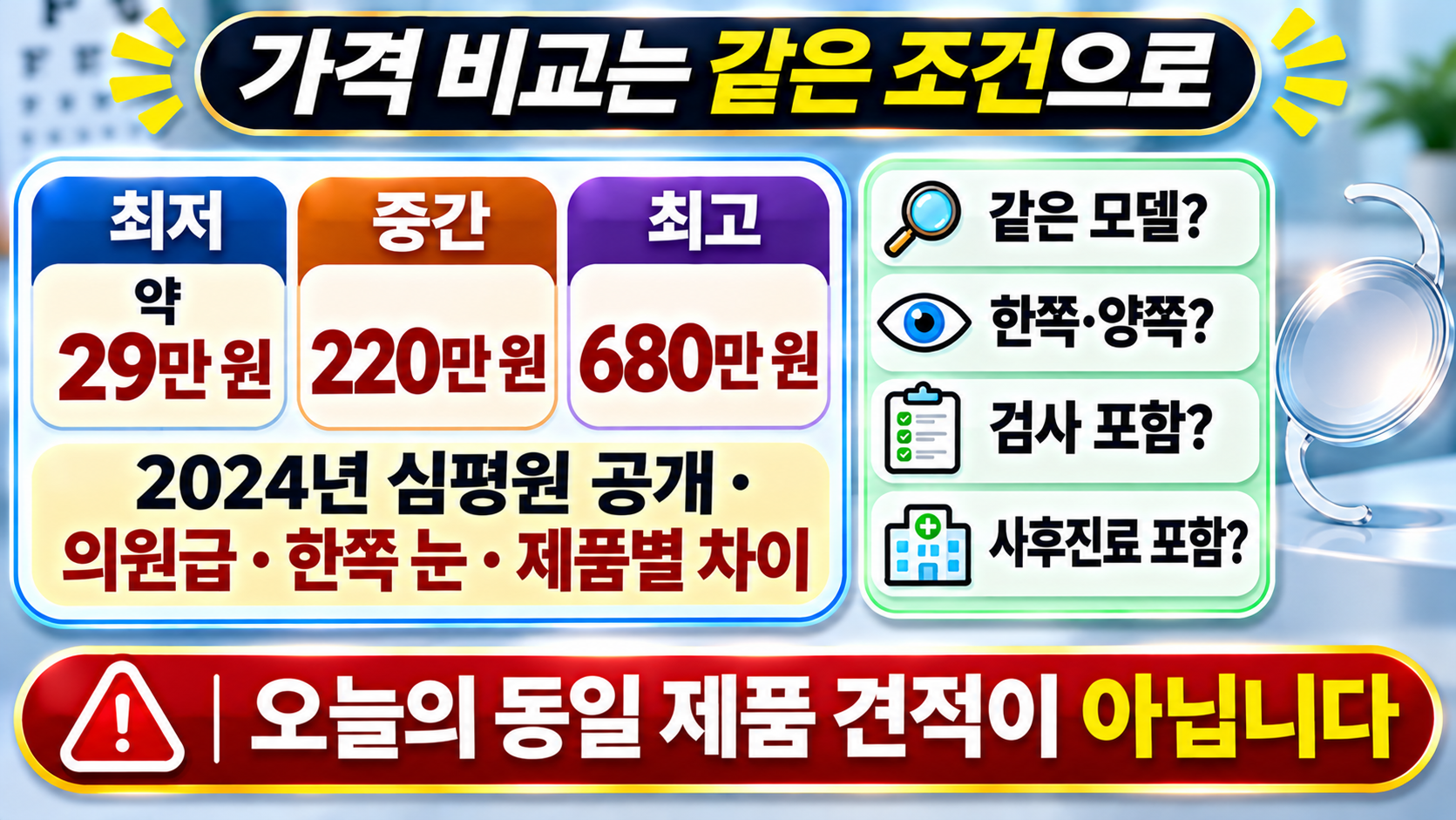
- 29만~680만 원은 심평원이 2024년 공개한 의원급 편측 가격 사례다. 오늘의 동일 제품 견적이 아니다.
- 작은 망막 수술 환자 연구의 결과를 모든 백내장 환자의 부작용 확률로 적용할 수 없다.
- 렌즈 모델, 목표 시력, 항목별 견적과 보험 조건을 확인한 뒤 결정해야 한다.
백내장 수술을 상담할 때 “어떤 렌즈가 가장 비싼가”보다 먼저 정해야 할 것은 수술 뒤 무엇을 편하게 보고 싶은가다. 야간 운전이 많은 사람과 책·휴대전화를 오래 보는 사람, 안경 착용을 크게 불편해하지 않는 사람의 우선순위는 다를 수 있다. 안경을 덜 쓰는 편의와 어두운 곳에서의 시각적 불편을 함께 설명받아야 비용을 들인 뒤 기대와 결과가 어긋나는 일을 줄일 수 있다.
백내장은 눈 안에서 빛을 모으는 수정체가 혼탁해지는 질환이다. 수술은 혼탁한 수정체를 제거하고 인공수정체로 바꾸는 치료다. 미국 국립안연구소는 독서·운전 등 일상생활의 지장과 수술의 이익·위험을 의사와 함께 판단하도록 안내한다. 진단을 받았다는 이유만으로 모든 사람이 곧바로 수술해야 하는 것은 아니다. 국립안연구소 수술 안내
단초점은 반드시 먼 거리, 다초점은 반드시 안경 탈출일까
단초점 렌즈는 주된 초점을 한 거리에 맞춘다. 먼 거리를 목표로 하면 가까운 글씨에 안경이 필요할 수 있다. 그러나 단초점을 선택하면 무조건 먼 거리만 목표로 해야 한다는 뜻은 아니다. 어떤 거리를 우선할지는 눈 상태와 생활 방식에 따라 상담할 문제다. 양쪽 눈의 목표 거리를 다르게 정하는 방식도 있으나 모든 사람에게 맞는 선택은 아니다.
다초점·삼중초점 렌즈는 여러 거리의 시야를 확보해 안경 의존을 줄이려는 선택지다. 동시에 빛 번짐, 불빛 주변에 둥근 띠가 보이는 달무리, 눈부심 등이 문제가 될 수 있다. 시력표의 작은 글자를 읽는 능력과 어두운 배경의 물체를 구별하는 능력은 같다 할 수 없다. 후자는 ‘대비감도’라고 부른다. 밝은 진료실에서 시력이 좋아졌더라도 밤길이 기대만큼 편하지 않을 수 있는 이유다.
상담에서는 ‘단초점·다초점’이라는 이름만 듣고 끝내지 말고 정확한 제품과 목표 거리를 적어 두는 것이 좋다. 같은 분류 안에서도 설계가 다르며, 더 비싸거나 더 많은 초점을 제공한다는 설명만으로 개인의 만족도를 보장할 수 없다. 유럽백내장굴절수술학회 권고도 동반 안질환과 안경 의존을 줄이려는 요구, 현실적인 기대를 함께 고려하도록 한다. 학회 권고
‘29만 원 대 680만 원’에는 조사연도와 제품 조건이 붙는다
건강보험심사평가원이 2024년 9월 5일 공개한 비급여 가격 자료에서는 의원급 백내장 다초점렌즈의 최저 금액이 약 29만 원, 최고 금액이 680만 원으로 제시됐다. 중간금액은 220만 원이며 최고 금액은 중간금액의 약 3.1배다. 평균 금액은 전년보다 4.5% 낮아졌다. 심평원 2024년 공개자료
이 수치는 한쪽 눈 기준이며 상품 종류에 따라 가격이 다르다는 조건이 붙는다. 따라서 동일한 렌즈를 어떤 병원은 29만 원, 다른 병원은 680만 원에 판다는 증거로 읽어서는 안 된다. 2026년 현재의 실시간 최저·최고가도 아니다. 두 금액의 차이만으로 어느 기관의 치료가 더 좋거나 부당하다고 판정할 수도 없다.
다만 독자가 배울 수 있는 점은 분명하다. 총액만 비교하면 렌즈 제품, 검사와 수술 관련 항목, 한쪽·양쪽 눈의 차이가 섞일 수 있다. 병원별 견적을 비교할 때에는 같은 기준으로 항목을 나누어야 한다.
견적에서 확인할 항목
상담 때 사용할 질문
렌즈의 정확한 제품명·모델
비교하는 두 견적이 같은 제품인가요?
한쪽 또는 양쪽 눈
이 금액은 어느 눈, 몇 번의 수술을 포함하나요?
검사·수술·재료 항목
각각 건강보험 적용과 비급여 항목은 무엇인가요?
수술 후 진료
안내한 금액에 포함되는 진료와 별도 비용은 무엇인가요?
예상 밖 경과
추가 처치가 필요하면 비용과 설명 절차는 어떻게 되나요?
이 표는 모든 기관이 같은 묶음 가격을 운영한다는 뜻이 아니다. 서로 다른 견적에서 빠진 항목을 찾기 위한 질문지다. 심평원 공개가격도 참고하되 최종 계약 전 해당 기관의 최신 세부 견적을 확인해야 한다.
2024년 공개된 제품별 비급여 가격 자료이며 오늘의 동일 제품 견적이 아니다. 지정 GPTs로 제작한 인공지능 설명 이미지이며 실제 현장 사진이 아닙니다.
망막 수술 환자 연구를 일반 환자 확률로 바꾸면 안 된다
2020년 학술지 《Journal of Retina》에 실린 연구는 유리체절제술을 먼저 받았거나 백내장 수술과 함께 받은 20명, 22안을 대상으로 했다. 유리체절제술은 눈 안의 유리체를 제거하는 망막 관련 수술이다. 연구 대상 중 13안은 이전에 수술을 받았고 9안은 함께 수술했다. 모두 같은 삼중초점 렌즈를 사용했다.
연구진은 수술 후 1주·1개월·3개월의 먼 거리·중간 거리·가까운 거리 나안시력, 즉 안경이나 콘택트렌즈 없이 잰 시력을 살폈고, 수술 전보다 통계적으로 유의한 개선을 보고했다. 심각하게 시력을 위협하는 합병증은 보고하지 않았으며, 1안에서 조기 후낭혼탁이 나타나 레이저 처치 뒤 시력이 회복됐다고 밝혔다. 후낭혼탁은 인공수정체 뒤쪽 막이 흐려지는 문제다. 논문 초록과 서지정보
이처럼 대상과 경과가 정해진 작은 연구는 모든 백내장 환자의 결과를 예측하는 도구가 아니다. 특히 망막 질환이 있는 특정 환자군의 설문 비율을 일반적인 다초점 렌즈 부작용 확률로 제시하면 안 된다. 반대로 이 연구 하나만으로 망막 수술 이력이 있는 모든 사람에게 다초점 렌즈가 안전하다고 보장할 수도 없다.
‘적응에는 최소 3개월이 필요하니 불편해도 기다리면 된다’는 식의 설명도 피해야 한다. 한 연구의 관찰 시점과 환자마다 필요한 회복·적응 기간은 다른 개념이다. 불편의 정도와 원인을 진료로 확인해야 하며, 새로운 증상을 단순 적응 문제로 넘겨서는 안 된다.
검사 결과는 렌즈를 고르는 조건으로 연결해야 한다
망막·황반 질환이나 녹내장, 각막 상태 등은 수술 뒤 기대할 수 있는 시야에 영향을 줄 수 있다. 황반은 망막 중심에서 세밀한 시야를 담당하는 부분이다. 백내장만 제거하면 동반 질환까지 없어지는 것은 아니므로, 시력이 흐린 원인을 나누어 설명받아야 한다.
빛간섭단층촬영은 눈 조직의 단면을 보는 검사다. 망막·황반 평가 등에 쓰이지만 이것 하나로 각막 질환과 모든 녹내장 문제까지 판정한다고 설명해서는 안 된다. 필요한 검사의 종류와 결과의 의미는 안과 전문의가 판단한다. 독자가 물어야 할 질문은 “검사를 했나요”에 그치지 않고 “제 검사 결과가 추천 렌즈와 기대 시력에 어떤 영향을 주나요”까지 이어져야 한다.
진료 전에는 운전하는 시간대, 주로 보는 글씨의 거리, 컴퓨터 사용 시간, 현재 안경의 불편, 과거 눈 수술과 질환을 메모해 갈 수 있다. 눈 상태가 비슷해도 생활 목표가 다르면 상담 내용이 달라질 수 있다. 인터넷에서 본 다른 사람의 만족도보다 자신의 우선순위를 의료진에게 전달하는 자료가 중요하다.
렌즈·목표 거리·비용·보험·연락처를 상담 때 기록한다. 지정 GPTs로 제작한 인공지능 설명 이미지이며 실제 현장 사진이 아닙니다.
실손보험과 회복 계획은 수술 결정 전에 확인한다
건강보험 적용 여부와 민간 실손보험 지급 여부는 같은 문제가 아니다. 비급여 항목이라는 이유만으로 실손보험이 전액 지급되는 것은 아니며, 개별 계약의 가입 시기·약관과 실제 치료·청구 조건을 확인해야 한다. 병원 설명만으로 보험금이 확정됐다고 생각하지 말고 보험사에 제품과 예상 진료내역을 제시해 확인할 수 있다. 사전 문의 답변도 최종 보험금 심사를 대신하지는 않는다.
수술 후 필요한 방문 일정과 연락할 의료기관도 미리 알아 두는 편이 좋다. 국립안연구소는 수술 뒤 시력 저하, 약을 써도 가라앉지 않는 심한 통증, 심한 충혈, 번쩍이는 빛이나 갑자기 많이 보이는 검은 점 등의 문제가 있으면 즉시 안과에 연락하도록 안내한다. 이런 신호를 렌즈 적응 과정이라고 스스로 판단해 기다리지 않아야 한다.
좋은 렌즈 선택은 가장 높은 가격표를 고르는 일이 아니다. 어떤 거리의 시야가 중요하고 어떤 불편을 감수할 수 있는지, 동반 질환과 비용 조건이 무엇인지 확인하는 과정이다. 상담 내용을 제품명·목표 거리·예상 비용·보험 확인·수술 후 연락처의 다섯 칸으로 정리해 두면 다음 진료에서도 같은 기준으로 질문할 수 있다.
자료 확인: 2026년 11월 20일. 가격 비교는 2024년 공개자료이며 개인의 치료 적합성과 보험금 지급은 이 기사로 판정할 수 없다.
Choosing a cataract lens: ask about viewing distance and night-time discomfort before price
Discuss everyday viewing distances and night vision when choosing a cataract lens. AI editorial illustration created with the designated GPT; not a photograph of an actual event.
MANINTOP Newsroom
MANINTOP Newsroom
Key points
- Multifocal intraocular lenses may reduce dependence on glasses, but glare and halos are part of the trade-off.
- The KRW 290,000–6.8 million range comes from HIRA’s 2024 clinic-level, one-eye price examples. It is not a current quotation for an identical product.
- Findings from a small retinal-surgery study cannot be applied as complication probabilities for all cataract patients.
- Confirm the lens model, visual target, itemized estimate and insurance conditions before deciding.
The first question in a cataract consultation should be what you want to see comfortably after surgery. A frequent night driver, someone who spends hours reading, and someone who does not mind wearing glasses may have different priorities. Discussing both reduced reliance on glasses and possible discomfort in dim conditions helps keep expectations aligned with the likely outcome.
A cataract is clouding of the eye’s natural focusing lens. Surgery removes that cloudy lens and replaces it with an artificial one. The US National Eye Institute advises discussing interference with everyday activities, such as reading and driving, alongside the benefits and risks of surgery. A diagnosis does not automatically mean everyone needs immediate surgery. NEI cataract surgery guidance
Does monofocal always mean distance—and multifocal always mean no glasses?
A monofocal lens has one main focal distance. If the target is distance vision, glasses may be needed for close reading. However, choosing a monofocal lens does not mean the target must always be distance. Eye condition and daily needs inform that decision. Different targets can also be chosen for the two eyes, although that approach is not suitable for everyone.
Multifocal and trifocal lenses aim to provide useful vision at several distances and reduce dependence on glasses. They can also involve glare, light spreading or halos—rings around lights. Reading small letters on a vision chart is different from distinguishing objects against a dim background. The latter involves contrast sensitivity. This helps explain why improved chart vision may not make night driving as comfortable as expected.
Ask for the exact product and intended viewing distance, rather than stopping at a category name. Designs differ within categories, and a higher price or more focal points cannot guarantee personal satisfaction. European Society of Cataract and Refractive Surgeons recommendations consider coexisting eye disease, the desire to reduce glasses use, and realistic expectations together. ESCRS recommendations
The KRW 290,000–6.8 million comparison has a year and product context
In non-covered treatment price information released on September 5, 2024, Korea’s Health Insurance Review and Assessment Service listed clinic-level multifocal cataract lens prices from approximately KRW 290,000 to KRW 6.8 million. The median was KRW 2.2 million; the highest price was about 3.1 times that median. The average fell 4.5% from the previous year. HIRA’s 2024 release
These are one-eye figures, with the qualification that prices vary by product. They do not establish that two hospitals charged KRW 290,000 and KRW 6.8 million for an identical lens. Nor are they real-time minimum and maximum prices for 2026. The gap alone cannot determine whether an institution offers better care or charges improperly.
The useful lesson is to separate the components of an estimate. Comparing totals can mix lens differences, testing and surgery items, and one-eye versus two-eye treatment. Use the same basis when comparing institutions.
Item to check
Question for the consultation
Exact lens name and model
Are these estimates for the same product?
One eye or both
Which eye and how many procedures does this amount cover?
Tests, surgery and materials
Which items are covered by national insurance, and which are not?
Follow-up
Which visits are included, and which cost extra?
Unexpected developments
How will additional treatment and costs be explained?
This checklist does not imply that all providers use the same package pricing. It helps identify missing components. Public HIRA prices are a reference; obtain the provider’s current detailed estimate before committing.
Historical 2024 non-covered prices across products, not current quotes for an identical product. AI editorial illustration created with the designated GPT; not a photograph of an actual event.
A retinal-surgery study is not a universal complication calculator
A study published in the Journal of Retina in 2020 examined 22 eyes in 20 patients that had undergone vitrectomy before, or together with, cataract surgery. Vitrectomy removes the vitreous gel and is used in retinal treatment. Thirteen eyes had previously undergone the procedure and nine underwent combined surgery. All received the same trifocal lens.
Researchers assessed uncorrected vision—measured without glasses or contact lenses—at distance, intermediate and near ranges at one week, one month and three months after surgery and reported statistically significant improvement from baseline. They reported no significant vision-threatening complications. One eye developed early posterior capsule opacity, with vision restored after laser treatment. This opacity involves the membrane behind the implanted lens becoming cloudy. Study abstract and bibliographic record
A small study with this particular population and follow-up cannot predict outcomes for every cataract patient. Survey percentages from a selected retinal-disease group must not become general multifocal-lens complication rates. Conversely, the study does not guarantee safety for every person with a history of retinal surgery.
It would also be wrong to say that adaptation requires at least three months and that patients should simply tolerate discomfort until then. A study’s observation schedule is different from an individual’s healing or adaptation time. Symptoms and their causes require assessment; new problems should not be dismissed as normal adaptation.
Connect examination findings to the lens recommendation
Retinal or macular disease, glaucoma and corneal conditions can affect the vision achievable after surgery. The macula is the central part of the retina responsible for detailed vision. Removing a cataract does not remove coexisting disease, so ask the clinician to distinguish the causes of blurred vision.
Optical coherence tomography produces cross-sectional images of eye tissue and can help assess the retina and macula. It is not a single test that establishes every corneal condition or glaucoma issue. The ophthalmologist determines which examinations are needed and what the findings mean. The useful question goes beyond whether a test was performed: how do its results affect the recommended lens and expected vision?
Before the visit, note when you drive, your usual reading distance, computer use, difficulties with current glasses, and previous eye surgery or disease. People with similar eye findings may have different goals. A clear account of those priorities is more useful for consultation than assuming another patient’s online satisfaction report predicts your result.
Record lens choice, target distance, costs, insurance conditions and postoperative contacts. AI editorial illustration created with the designated GPT; not a photograph of an actual event.
Check private insurance and recovery arrangements before deciding
National health insurance coverage and a private medical indemnity policy are separate matters. An item being outside national coverage does not mean private insurance pays it in full. The contract date, policy wording and actual treatment and claim conditions matter. Provide the insurer with the proposed product and treatment details rather than assuming the hospital’s explanation confirms payment. A preliminary response does not replace final claims assessment.
Also confirm follow-up arrangements and whom to contact after surgery. NEI advises immediate contact with an eye doctor for vision loss, severe pain that persists despite medication, marked redness, or flashes and many new dark spots or floating shapes. Do not decide on your own that these signs are simply lens adaptation.
The aim is not to select the most expensive option. It is to understand which viewing distances matter, which trade-offs are acceptable, and how coexisting disease and costs affect the choice. Keeping five headings—product, target distance, expected cost, insurance check and postoperative contact—provides a consistent basis for the next consultation.
Information checked November 20, 2026. Price comparisons refer to the 2024 release. This article cannot determine an individual’s treatment suitability or insurance entitlement.
PRO SOURCING ENGINE만인의 탑 빅데이터 솔루션
★ 가입 시 600 크레딧(120회) 전원 무료
내가 찾는 상품 키워드, 지금 얼마나 검색될까?
네이버 월간 검색량 + 구글 볼륨 + 아이템스카우트 실시간 상품수와 경쟁강도 배지를 0.5초 만에 무료로 확인하세요.
MANINTOP NEWSLETTER
📬 만인의 탑 뉴스레터 무료 구독
오늘 보신 정책·시사 뉴스가 유익하셨나요? 매일 엄선되는 알짜 복지 혜택과 국회 실시간 속보를 이메일로 가장 먼저 받아보세요. (평생 무료)
1월이 시작되면 감기는 이미 우리 곁에 와 있습니다. 2월, 3월, 4월까지 이어지는 추위와 건조함은 코와 목을 가장 먼저 공격합니다. 아침에 일어나자마자 막혀 있는 코. 계속 흐르는 콧물. 괜히 칼칼해지는 목. 이 증상은 “시작”일 뿐입니다. 한 번 무너지면 일주일, 길면 한 달까지 끌고 갑니다. 약을 먹으면 잠깐 괜찮아집니다. 하지만 며칠 뒤 또 반복됩니다. 왜일까요? 감기는 ‘치료’의 문제가 아니라 ‘관리’의 문제이기 때문입니다. 대부분은 감기가 오고 나서 약을 찾습니다. 하지만 진짜 중요한 건 감기가 오기 전에 코와 목을 지키는 것입니다. 건조한 실내 공기, 차가운 바깥 공기, 눈에 보이지 않는 세균. 코와 목은 매일 공격받고 있습니다. 지긋지긋하죠! 그런데도 우리는 아무 준비 없이 버티고 있습니다. 이번 겨울도 그렇게 보낼 건가요? 사실 방법은 어렵지 않습니다. 코를 깨끗하게 관리하고, 목을 따뜻하게 보호하고, 점막을 촉촉하게 유지하고, 기관지를 미리 관리하고, 외부 공기를 차단하는 것. 이 다섯 가지만 꾸준히 해도 감기약 없이 겨울을 보내는 것이 충분히 가능합니다. 🔥 이제부터 그 방법을 하나씩 살펴보겠습니다. 🔥 1. 코와 목을 먼저 관리해야 하는 과학적 이유 감기의 대부분은 코 점막에서 시작됩니다. 국제 학술지 Nature Reviews Microbiology 와 Journal of Allergy and Clinical Immunology 에 실린 호흡기 감염 관련 연구들에서는, 감기 바이러스가 비강 상피세포에 먼저 부착해 증식한다는 점을 설명하고 ...
리모델링사업이 진행 중인 아파트를 매매할 때 “계약금 10%를 언제까지 내야 하느냐”는 질문이 특히 많이 나옵니다. 이주공고(이주 안내)가 7~11월쯤이라고 들으면, 그 시점에 맞춰 계약금도 움직일 것 같아서 더 헷갈리기 쉽습니다. 하지만 실제 납부기한은 ‘이주공고가 언제냐’만으로 자동 결정되지 않는 경우가 많습니다. 1) 계약금 10% 납부기한: 결국 ‘문서에 적힌 일정’이 기준 계약금 10%를 언제까지 납부해야 하는지는, 내가 서명하는 매매계약서(특약 포함) 와 사업주체/조합이 제시한 공고·안내문 에 적힌 납부 일정이 기준이 됩니다. 실제 공고문에서는 분양대금 납부의 큰 틀(계약금→중도금→잔금)을 먼저 안내하고, 상세 일정은 별도 표나 유의사항으로 제시하는 방식이 흔합니다. 또, 계약서 문구에 따라 지급 시점이 조건부로 설정될 수도 있습니다. 예를 들어 한 사례 소개 자료에서는 용역계약서에 잔금(10%) 지급시기가 “사업승인 후”로 기재되어 있었다는 점이 언급됩니다. 이런 식으로 ‘사업 단계’와 지급을 연동하는 문구가 들어가면, 질문의 답은 계약서 문구를 확인해야만 확정됩니다. 관련 내용은 링크 에서 문구 사례를 확인할 수 있습니다. 2) 입주자모집공고에서 확인되는 ‘납부 순서’와 잔금 마감 시점 공고문에 적힌 문구를 보면, 납부 순서와 잔금 마감에 대한 기준이 비교적 명확하게 제시되는 경우가 있습니다. 예를 들어 한 입주자모집공고에는 “분양금액(주택가격)은 계약금, 중도금, 잔금의 순서로 납부”하며 “잔금은 입주(열쇠 수령일) 전에 완납”해야 한다고 안내되어 있습니다. (문구 확인: 링크 ) 이 문구가 의미하는 바는 최소 2가지입니다. 분양/공급 형태의 문서에서는 ‘계약금→중도금→잔금’ 흐름이 공식적으로 안내될 수 있습니다. 잔금은 “입주(열쇠 수령)” 이전에 완납해야 한다는 마감 기준이 문서에 적혀 있을 수 있습니다. 다만, 위 공고문 문구는 잔금 마감에 대한 기준을 보여주지만, 계약금 10%의...
윤석열 전 대통령 탄핵 인용 소식을 접하면, 가장 궁금한 지점은 ‘헌재가 정확히 무엇을 위헌·위법으로 봤는가’입니다. 또한 탄핵과 별개로 진행되는 형사재판(내란 우두머리 혐의 등)이 어디까지 왔는지도 함께 정리할 필요가 있습니다. 아래 내용은 제공된 기사/게시물 스니펫과 링크에서 확인되는 범위만 모아, 일반인이 흐름을 이해하기 쉽게 정리한 것입니다. 1) 탄핵 인용 관련: 스니펫에서 확인되는 ‘판단의 골격’ 제공된 근거 중 조국혁신당 사이트에는 헌법재판소가 윤석열 탄핵 심판에서 “피청구인의 위헌·위법행위는 국민 신임 …”이라는 취지로 판단했다는 문장이 인용돼 있습니다( 링크 ). 이 인용문만 놓고 보면, ‘위헌·위법행위’가 있었는지와 그로 인해 ‘국민의 신임’이 어떻게 평가됐는지가 핵심 축으로 소개됩니다. 다만 질문에서 요청하신 세부 항목, 즉 비상계엄 선포 자체를 문제 삼은 구체적 이유, 계엄 이후 조치(포고령, 국회 통제 등)의 어떤 지점이 헌법 위반인지, 국회의 권한행사 방해 및 정치활동 제약을 어떤 논리로 판단했는지 등은, 이번에 제공된 근거의 제목/스니펫만으로는 조항·사실관계·판단 구조가 그대로 제시돼 있지 않습니다. 따라서 이 글에서는 ‘헌재가 무엇을 문제 삼았다’는 세부 리스트를 단정적으로 재구성하기보다, 현재 확인 가능한 문구 수준의 요약(위헌·위법행위 → 국민 신임의 문제로 평가)까지만 적습니다. 만약 헌재 결정문 전문(주문 및 이유)이 추가로 확인되면, 그때는 문장 단위로 ‘어떤 행위’와 ‘어떤 헌법 원리/조항’이 연결되는지(예: 권력분립, 국회의 권한, 정치적 기본권 등) 구조화해 정리하는 것이 가장 정확합니다. 2) 형사 절차(내란 혐의) 관련: 체포영장과 1심 선고 언급 탄핵 심판과 별도로, 12·3 비상계엄 사태로 내란 혐의를 받는 윤석열 대통령에 대해 2024년 12월 31일 체포 영장이 발부됐다는 BBC 보도가 있습니다( 링크 ). 해당 보도는 ‘현직 대통령’에 대한 체포영장 발부라는 점을 함께 언급합니다. 또...