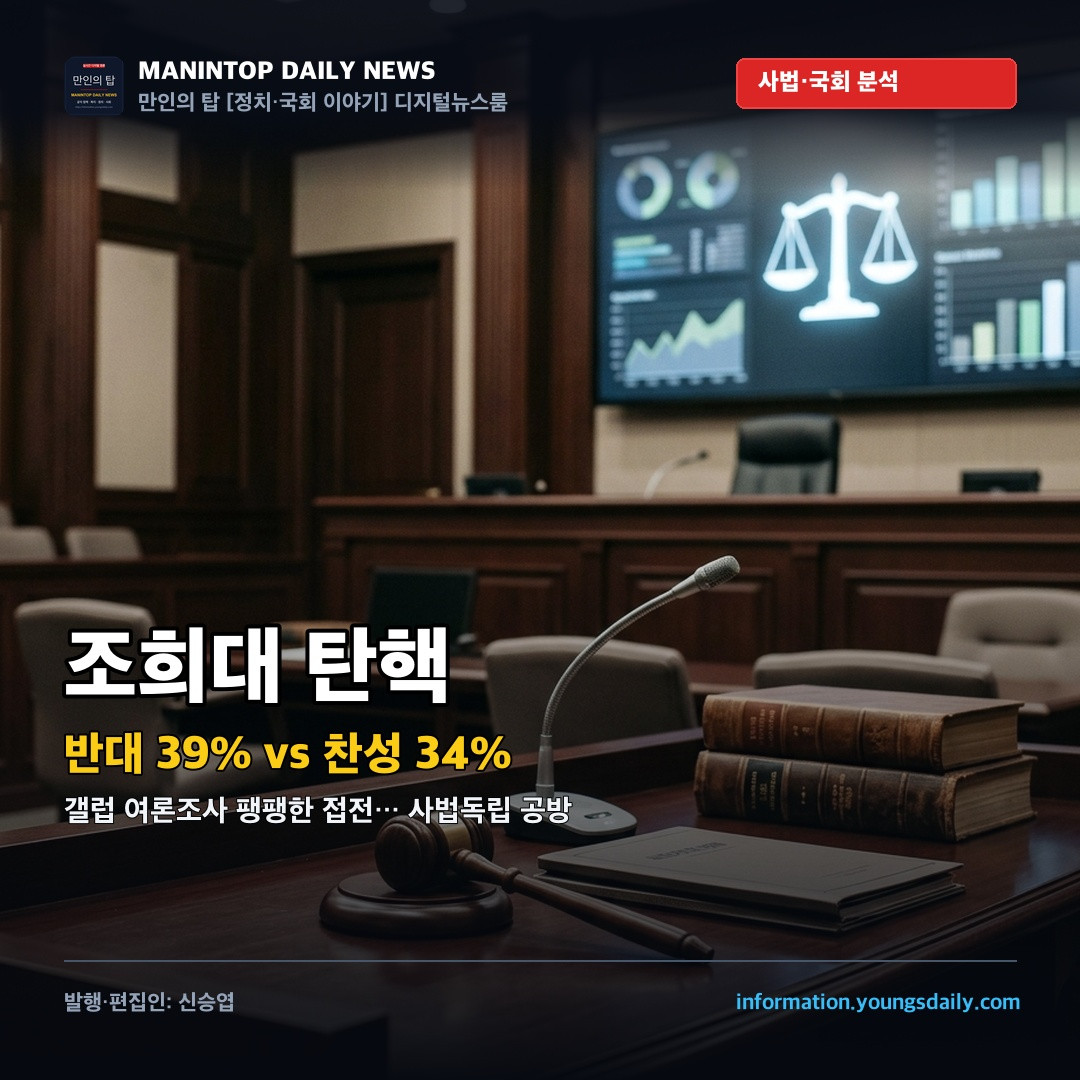
▲ 24일 한국갤럽이 발표한 여론조사에서 조희대 대법원장 탄핵에 대해 반대 39%, 찬성 34%로 오차범위 내 팽팽한 접전을 보인 가운데, 사법부 독립성과 재판 신뢰를 둘러싼 헌정적 논쟁이 국회와 법조계를 중심으로 확산되고 있다. ⓒ 만인의 탑
한국갤럽이 전국 성인 1,001명을 대상으로 실시한 정례 여론조사에서 조희대 대법원장에 대한 탄핵 추진 여부를 둘러싸고 찬반 여론이 오차범위 내에서 팽팽하게 맞서는 것으로 나타났다. 반대 39%, 찬성 34%로 반대 의견이 5%포인트 앞섰으나 격차는 표본오차(±3.1%포인트) 안쪽이었으며, 유보층이 28%에 달해 사법부 신뢰와 헌정 질서 안정을 둘러싼 국민적 신중론이 교차하고 있다.
1. 한국갤럽 조사 수치 심층 분석: 반대 39% vs 찬성 34% 접전
한국갤럽이 2026년 10월 20일부터 22일까지 사흘간 무선전화 가상번호 전화조사원 인터뷰 방식으로 진행한 조사(95% 신뢰수준에 표본오차 ±3.1%포인트, 응답률 11.8%) 결과에 따르면, 조희대 대법원장 탄핵에 대해 응답자의 39%가 '반대한다'고 답했고, 34%는 '찬성한다'고 응답했다. 의견을 밝히지 않거나 '모름·무응답'으로 남은 비율은 28%로 집계됐다.
통계학적으로 찬반 격차인 5%포인트는 오차범위 한계선(±3.1%포인트, 최대 6.2%포인트 변동폭) 내에 위치하여 여론의 명확한 우열을 단정할 수 없는 팽팽한 상태다. 특히 주목할 지점은 10명 중 3명에 가까운 28%의 국민이 최종적 판단을 유보하고 있다는 점으로, 이는 사법부 수장에 대한 헌정사상 초유의 탄핵 논란에 대해 국민 다수가 극단적 결론을 내리기보다 신중한 태도를 견지하고 있음을 보여준다.
2. 지지 정당 및 이념 성향별 극명한 양극화 현상
이번 조사의 세부 크로스탭(Cross-tabulation)을 살펴보면 지지 정당과 이념적 지향성에 따라 찬반 여론이 극단적으로 갈라지는 '정치적 진영화'가 뚜렷하게 관측되었다.
더불어민주당 지지층에서는 탄핵 '찬성' 응답이 61%로 압도적이었던 반면, '반대'는 16%에 그쳤다. 반대로 국민의힘 지지층에서는 '반대' 응답이 71%에 달해 찬성(11%)을 압도적인 격차로 따돌렸다. 이념 성향별로도 진보층에서는 66%가 찬성한 반면, 보수층에서는 61%가 반대를 표명하여 정파 간 간극이 50%포인트를 넘나들었다.
구분 (계층별)
탄핵 찬성 (%)
탄핵 반대 (%)
의견 유보 (%)
전체 응답자
34%
39%
28%
더불어민주당 지지층
61%
16%
23%
국민의힘 지지층
11%
71%
18%
무당층 (무소속)
19%
31%
50%
중도층 (이념 성향)
34%
34%
32%
40대 / 50대
47% / 47%
30% / 37%
23% / 16%
60대 / 70대 이상
27% / 18%
51% / 49%
22% / 33%
3. 승부의 분수령: 중도층 34% 동률과 무당층 유보 50%의 함의
선거와 정국의 균형추 역할을 하는 '중도층'에서는 찬성과 반대가 각각 34%로 정확하게 동률을 기록했다. 또한 중도층 내 의견 유보 응답 역시 32%에 달했다. 특정 정당을 지지하지 않는 무당층의 경우 반대(31%)가 찬성(19%)을 앞섰으나, 전체의 절반에 해당하는 50%가 의견을 유보했다.
이러한 데이터는 정치권 일각의 대법원장 탄핵 추진 주장에 대해 합리적 중도·무당층이 무조건적인 지지나 맹목적 반대를 보내지 않고 있음을 시사한다. 재판 지연 해소와 사법 개혁에 대한 대중적 요구가 존재하는 동시에, 사법부 수장을 정쟁의 수단으로 탄핵하는 것이 헌정 기본권과 법치주의 근간을 흔들 수 있다는 경계감이 공존하고 있는 형국이다.
4. 헌법적 쟁점과 사법 독립: 탄핵소추의 법적 요건과 향후 파장
대한민국 헌법 제65조 제1항은 "대통령, 국무총리, 국무위원, 행정각부의 장, 헌법재판소 재판관, 법관, 중앙선거관리위원회 위원... 기타 법률이 정한 공무원이 그 직무집행에 있어서 헌법이나 법률을 위배한 때에는 국회는 탄핵의 소추를 의결할 수 있다"고 규정하고 있다.
국회에서 대법원장에 대한 탄핵소추안을 발의하기 위해서는 국회재적의원 3분의 1 이상의 발의와 재적의원 과반수의 찬성이 필요하다. 그러나 헌법재판소의 탄핵 인용 기준은 엄격하다. 단순한 판결 내용에 대한 정치적 불만이나 재판 진행 속도에 대한 비판만으로는 성립하기 어려우며, '직무집행에 있어서 중대한 헌법·법률 위배'가 객관적 증거로 입증되어야 한다.
법조계 원로와 헌법학자들은 대법원장 탄핵 소추가 현실화될 경우 대법원 전원합의체 기능 마비, 법관 인사 정체, 사법부 독립성 훼손이라는 막대한 국가적 비용이 초래될 수 있다고 지적한다. 팽팽한 여론 지형 속에서 정치권이 사법부를 향한 공세를 어떻게 조율할 것인지가 향후 정국의 최대 뇌관으로 부상하고 있다.
만인의 탑 사법·정치 에디토리얼 데스크
발행·편집인: 신승엽 | 기사 등록: 2026년 10월 24일 | 출처: 한국갤럽 정례 여론조사 (중앙선거여론조사심의위원회 참조)
▲ According to a Gallup Korea poll released on October 24, 39% opposed and 34% supported the impeachment of Chief Justice Cho Hee-dae within the margin of error, intensifying constitutional debate over judicial independence and trial integrity. ⓒ Manintop Daily
A nationwide public opinion survey conducted by Gallup Korea on 1,001 South Korean adults revealed a tight standoff over the proposed impeachment of Supreme Court Chief Justice Cho Hee-dae. With 39% opposing and 34% supporting, opponents held a slight 5-percentage-point lead, but remained within the margin of error (±3.1%p), while 28% reserved judgment—reflecting deep public caution regarding judicial independence and constitutional stability.
1. Gallup Korea Data Analysis: Deadlocked 39% Oppose vs 34% Support
According to Gallup Korea's regular telephone interview survey conducted from October 20 to 22, 2026 (95% confidence level, margin of error ±3.1%p, response rate 11.8%), 39% of respondents answered that they oppose the impeachment of Chief Justice Cho Hee-dae, while 34% expressed support. The proportion of respondents who reserved their opinion or replied "don't know" stood at 28%.
Statistically, the 5-percentage-point gap falls within the survey's margin of error, indicating that neither side holds a clear majority. The fact that nearly three in ten citizens (28%) withheld judgment underscores public deliberation and reluctance to rush toward an unprecedented constitutional confrontation against the head of the judiciary.
2. Sharp Polarization by Political Affiliation and Ideology
Cross-tabulation of the survey reveals intense polarization along partisan and ideological lines.
Among supporters of the main opposition Democratic Party, 61% favored impeachment, while only 16% opposed it. In contrast, among supporters of the ruling People Power Party, 71% opposed impeachment, with only 11% in support. Ideologically, 66% of progressives supported impeachment, whereas 61% of conservatives opposed it, showing a deep partisan divide exceeding 50 percentage points.
Segment
Support (%)
Oppose (%)
Undecided (%)
All Respondents
34%
39%
28%
Democratic Party
61%
16%
23%
People Power Party
11%
71%
18%
Independents
19%
31%
50%
Political Moderates
34%
34%
32%
Age 40s / 50s
47% / 47%
30% / 37%
23% / 16%
Age 60s / 70+
27% / 18%
51% / 49%
22% / 33%
3. The Crucial Battleground: Moderates Tied at 34% and 50% Undecided Independents
Among political moderates—the decisive swing demographic in South Korean politics—support and opposition were exactly tied at 34% each, with 32% remaining undecided. Among non-partisan independents, opposition (31%) led support (19%), but a full 50% reserved judgment.
This data indicates that the general public refuses to adopt partisan extremes over the judiciary. While demands for judicial reform and the resolution of trial backlogs exist, there is simultaneously strong public awareness that weaponizing impeachment against the chief justice risks eroding the constitutional doctrine of the separation of powers.
4. Constitutional Thresholds and Judicial Independence
Under Article 65, Paragraph 1 of the Constitution of the Republic of Korea, the National Assembly may pass a motion for impeachment if judges violate the Constitution or other statutes in the execution of their official duties.
Introducing an impeachment motion against the Chief Justice requires the sponsorship of one-third of the members of the National Assembly and the concurrent vote of a majority of all members. However, the Constitutional Court applies a strict legal standard: impeachment cannot be justified merely by political dissatisfaction with court rulings or procedural speed; it requires clear and objective proof of a grave violation of constitutional or statutory obligations.
Constitutional scholars warn that pursuing impeachment against the head of the judiciary without decisive legal cause could paralyze the Supreme Court's En Banc bench and jeopardize judicial independence, representing an immense national and institutional cost.
Manintop Daily Judicial & Political Editorial Desk
Publisher & Editor-in-Chief: Seung Youb Ssin | Published: October 24, 2026 | Source: Gallup Korea Regular Opinion Poll (NESDC certified)
MANINTOP NEWSLETTER
📬 만인의 탑 뉴스레터 무료 구독
오늘 보신 정책·시사 뉴스가 유익하셨나요? 매일 엄선되는 알짜 복지 혜택과 국회 실시간 속보를 이메일로 가장 먼저 받아보세요. (평생 무료)


0 댓글