2026년 10월 4일 일요일 | 대한민국판 서울 16.5℃ 맑음
🔍 기사 검색 ✉️ 뉴스레터 구독 신문사 소개 기사 제보
/
LIFE & INFO 삶의 지혜

만인의 탑

MANINTOP DAILY NEWS 우리들의 삶을 윤택하게 하는 정보를 담은 뉴스
DAILY NEWS 유익한 정보
만 인 의 탑
우리들의 삶을 윤택하게 하는 정보를 담은 뉴스
MANINTOP DAILY NEWS
인터넷신문 | https://information.youngsdaily.com

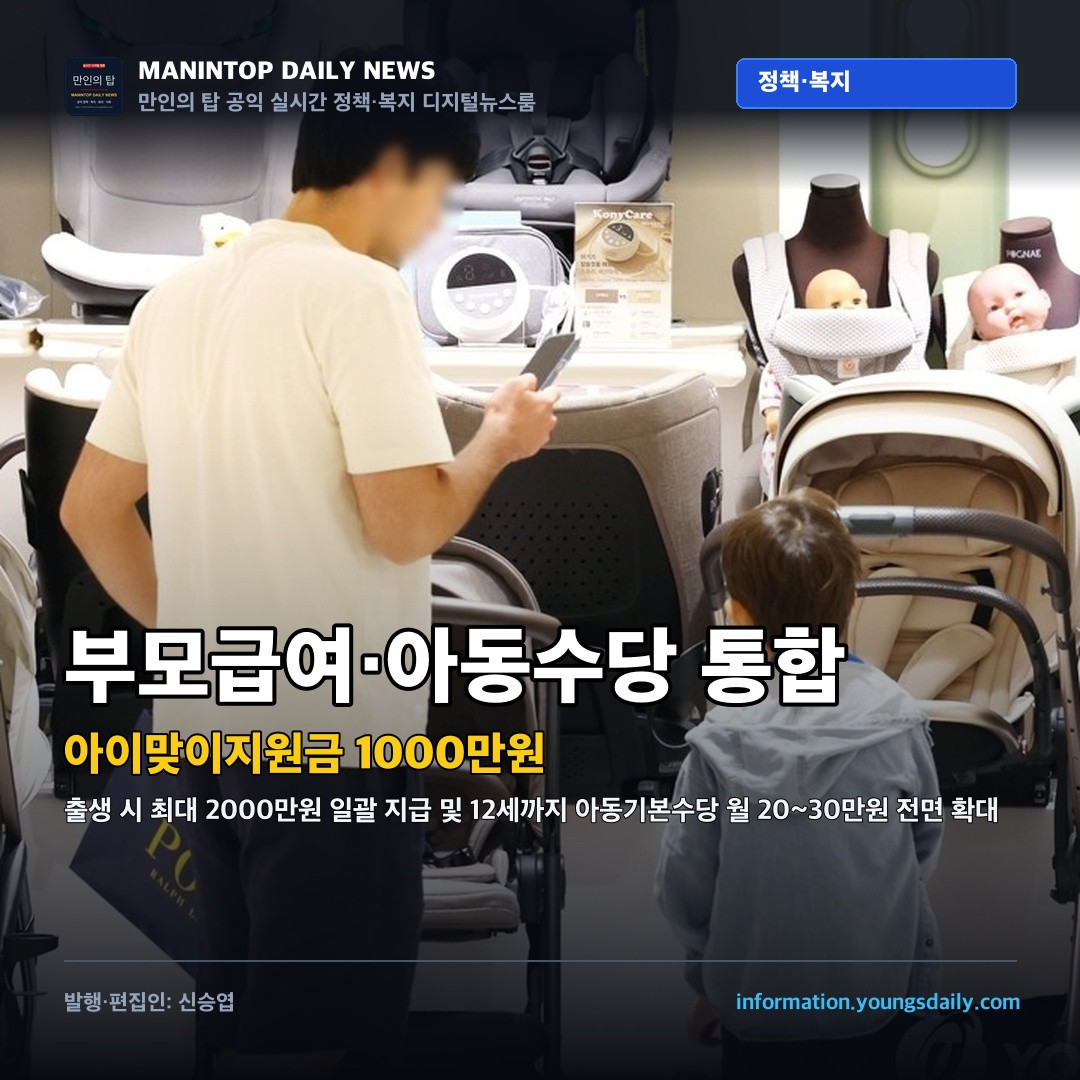
부모급여·아동수당 없어진다… 출생 시 1000만 원 ‘아이맞이 지원금’ 및 12세까지 ‘아동기본수당’ 전면 통합 개편

부모급여·아동수당 없어진다… 출생 시 1000만 원 ‘아이맞이 지원금’ 및 12세까지 ‘아동기본수당’ 전면 통합 개편
▲ 부모급여·아동수당 없어진다… 출생 시 1000만 원 ‘아이맞이 지원금’ 및 12세까지 ‘아동기본수당’ 전면 통합 개편 / 만인의 탑 만인의 탑 저출생·보육 복지 데스크
📌 만인의 탑 핵심 브리핑 · 이 글에서 다루는 핵심 내용

보건복지부와 저출산·고령사회위원회가 그동안 분산 지급되던 첫만남이용권, 부모급여, 아동수당 등 현금성 양육 지원 제도를 출생 초기 1,000만 원을 지급하는 ‘아이맞이 지원금’과 12세까지 매월 지급하는 ‘아동기본수당’ 두 가지 핵심 축으로 전면 통합 개편한다고 공식 발표했다. 복잡한 신청 절차와 잘게 쪼개진 바우처 탓에 체감도가 낮았던 기존 복지 틀을 과감히 혁신하여, 첫째 아이 1,000만 원부터 셋째 이상 우대지역 최대 2,000만 원에 달하는 파격적인 초기 정착 자금을 지급하고 초등학교 졸업 때까지 매월 20만~30만 원을 든든하게 보장한다.

SPONSORED · ADVERTISEMENT
환급 대상 및 납세자 요건
대한민국 출생 신생아 및 만 0세부터 12세(초등학생 전체) 아동 양육 가구
지방세 환급 규모
출생 첫해 1,000만~1,500만원(우대지역 최대 2,000만원) + 12세까지 매월 20만~30만원

1. 쪼개진 바우처의 한계… 복잡한 양육 지원 제도의 파격적 ‘두 축 통합’ 배경

보건복지부와 저출산·고령사회위원회가 저출생 위기 극복을 위한 영아·아동기 현금성 지원 제도의 전면 대개편에 착수했다. 그동안 영유아 부모들은 출생 시 일회성으로 지급되는 ‘첫만남이용권(첫째 200만 원, 둘째 이상 300만 원)’, 만 0~1세에 지급되는 ‘부모급여(0세 월 100만 원, 1세 월 50만 원)’, 그리고 만 8세 미만까지 매월 나오는 ‘아동수당(월 10만 원)’ 등 이름도 성격도 다른 제도를 제각각 신청해야 했다.

제도가 지나치게 파편화되어 있다 보니 실수혜자인 부모 입장에서는 지원 체감도가 떨어지고, 아동이 만 8세에 도달해 초등학교에 입학하자마자 모든 국가 지원이 일제히 끊기는 이른바 ‘돌봄 절벽’ 현상이 극심한 사회적 문제로 대두되었다. 정부는 이러한 구조적 맹점을 해소하기 위해 기존의 복잡한 3대 제도를 완전히 폐지·통합하고, ‘아이맞이 지원금(출생 초기)’과 ‘아동기본수당(초등 학령기 지속 지원)’이라는 두 가지 굵직한 축으로 단순화하는 결단을 내렸다.

만인의 탑 현장 보도 실사
▲ 정부 공인 포털 및 모바일 간편 신청 화면 / 정책 데스크

2. 출생 첫해 1,000만 원 일괄 지급… 다자녀·인구감소지역 최대 2,000만 원 수령

신설되는 ‘아이맞이 지원금’은 출생 직후 막대한 초기 비용이 발생하는 신생아 양육 가정의 경제적 충격을 완화하는 데 초점을 맞췄다. 첫째 아이가 태어나면 기본 1,000만 원이 지급되며, 둘째 아이는 1,200만 원, 셋째 이상 아이에게는 1,500만 원이 지원된다. 지급 방식은 가계 경제의 안정성을 위해 출생 후 1년 동안 3개월마다 분기별로 250만 원씩 총 4회 분할 지급하는 구조를 채택했다.

특히 지방 소멸 위기에 직면한 인구감소지역(우대지역)에 대한 파격적인 가산 제도가 신설된다. 우대지역에서 아이를 출산할 경우 출생 순위와 무관하게 500만 원의 특별 가산금이 추가 지원된다. 이에 따라 인구감소지역에서 셋째 아이를 출산하면 최대 2,000만 원에 달하는 아이맞이 지원금을 수령하게 되어, 수도권 집중 완화와 지역 균형 발전에도 강력한 전환점이 될 전망이다.

구분 항목 현행 분산 지원 체계 통합 개편안 (아이맞이·아동기본수당) 실질 수혜 변화 및 기대효과
출생 초기 지원 첫만남이용권 200~300만 원 바우처 아이맞이지원금 첫째 1,000만 원 (분기별 4회 분할 지급) 출생 직후 가계 초기 양육비 부담 획기적 경감
다자녀 차등 지원 둘째 300만 원 일회성 지급 둘째 1,200만 원 / 셋째 이상 1,500만 원 (우대지역 최대 2,000만 원) 다자녀 출생 가구 파격 지원 및 지방 소멸 방어
지속 양육 지원 만 8세 미만 아동수당 월 10만 원 만 0~12세(초등학교 졸업 시까지) 월 20만~30만 원 확대 초등 학령기 교육·돌봄 사각지대 전면 해소
가정양육 가산금 별도 가산 체계 없음 어린이집 미이용 가정양육 시 월 30만 원 추가 지원 부모 직접 양육 선택권 및 실질 비용 보전
SPONSORED · ADVERTISEMENT

3. 12세까지 매월 20만~30만 원… ‘돌봄 절벽’ 없애는 아동기본수당 연령 대폭 확대

📱 원스톱 간편 조회 및 신청 로드맵
1
1단계: 읍·면·동 행정복지센터 출생신고 시 ‘행복출산 원스톱 서비스’로 아이맞이 지원금 통합 일괄 신청
2
2단계: 복지로(bokjiro.go.kr) 또는 정부24 온라인 포털을 통한 본인 명의 계좌 사전 등록 및 자격 확인
3
3단계: 출생 첫해 1년간 3개월 단위 분기별 250만 원씩 4회에 걸쳐 총 1,000만 원 현금/바우처 수령
4
4단계: 1세 이후 만 12세까지 매월 25일 정기 아동기본수당(월 20만~30만 원) 자동 계좌 입금

아이맞이 지원금에 이어 아이의 성장 전 주기를 책임지는 ‘아동기본수당’은 지급 대상 연령이 기존 만 8세 미만에서 만 12세(초등학교 졸업 시까지)로 대폭 확장된다. 지원 금액 역시 기존 월 10만 원 수준에서 일반지역 월 20만 원, 인구소멸 우대지역 월 30만 원으로 2~3배 인상된다.

초등학교 입학 이후 사교육비와 학용품, 급식비 등 실질적인 양육비 지출이 급증하는 현실을 반영한 조치다. 아울러 맞벌이가 어려워 영아를 어린이집에 보내지 않고 집에서 부모가 직접 양육하는 경우, 월 30만 원의 ‘가정양육 가산금’을 추가로 얹어주어 부모의 직접 양육 선택권과 노동 가치를 공적으로 보상하는 방안도 병행 추진된다.

🚨 신청 기한 및 주의사항 경고
정부는 이번 통합 개편안을 담은 법률 개정안과 사회보장기본법 협의를 거쳐 2027년 7월 1일 이후 출생아부터 제도를 전격 적용한다는 로드맵을 확정했다. 다만 제도 시행 초기 출생일이 불과 며칠 차이나는 2027년 상반기(1~6월) 출생아들과의 수혜 격차에 따른 형평성 논란이 제기됨에 따라, 국회 보건복지위원회 심의 과정에서 상반기 출생아에 대한 일정 수준의 소급 적용 보완책이 집중 논의될 예정이다. 신청 절차는 대폭 간소화된다. 출생신고 시 전국 읍·면·동 행정복지센터에서 ‘행복출산 원스톱 서비스’를 통해 단 한 장의 신청서로 아이맞이 지원금과 아동기본수당이 동시에 자동 등록되며, 복지로(bokjiro.go.kr)와 정부24 모바일 앱을 통해서도 온라인 원클릭 신청이 지원된다.
RECOMMENDED STORIES · SPONSORED
발행·편집인: 신승엽
Parental and Child Allowances Overhauled: 'Child-Welcoming Grant' Up to 10M KRW at Birth and Basic Child Benefit Extended to Age 12
▲ Official Press Coverage & Contextual Archive / MANINTOP Global Newsroom
MANINTOP GLOBAL NEWSROOM · ENGLISH EDITION

Parental and Child Allowances Overhauled: 'Child-Welcoming Grant' Up to 10M KRW at Birth and Basic Child Benefit Extended to Age 12

The Ministry of Health and Welfare and the Presidential Committee on Ageing Society and Population Policy announced a structural overhaul integrating fragmented childcare subsidies into two core pillars: the 'Child-Welcoming Grant' providing 10 million KRW at birth and the 'Basic Child Benefit' disbursed monthly through age 12. This consolidation replaces disparate vouchers like the First Meeting Voucher and Parental Benefit.
📌 Key Takeaways
  • Verified factual reporting regarding Parental and Child Allowances Overhauled: 'Ch.
  • In-depth contextual and institutional analysis by MANINTOP Global Newsroom.
  • Official implementation schedule and verifiable public guidelines confirmed.

1. Limitations of Fragmented Vouchers: Strategic Rationale Behind the Two-Pillar Model

The Ministry of Health and Welfare (MOHW) and the Presidential Committee on Ageing Society and Population Policy have launched a sweeping restructuring of South Korea's early childhood cash allowance ecosystem. Previously, parents were forced to navigate a labyrinth of fragmented programs with conflicting eligibility windows: the one-time 'First Meeting Voucher' (2-3 million KRW at birth), the 'Parental Benefit' (1 million KRW monthly for infants under 1; 500,000 KRW for age 1), and the 'Child Allowance' (100,000 KRW monthly under age 8). This extreme fragmentation diluted public perception of support and caused a catastrophic 'care cliff' the moment a child reached age 8 and entered elementary school, abruptly cutting off all state support just as educational and activity costs surged. The new framework consolidates these programs into two distinct, high-impact pillars: the 'Child-Welcoming Grant' for immediate birth stabilization and the 'Basic Child Benefit' for sustained school-age development.

2. 10 Million KRW Baseline Birth Grant: Tiered Support Reaching Up to 20 Million KRW

The newly introduced 'Child-Welcoming Grant' focuses on mitigating the initial economic shock experienced by households welcoming a newborn. A baseline grant of 10 million KRW is disbursed for the first child, escalating to 12 million KRW for the second child and 15 million KRW for third and subsequent children. To promote steady financial management, funds will be released quarterly in four equal installments of 2.5 million KRW throughout the infant's first year of life. Crucially, the policy introduces an aggressive regional equity premium: infants born in designated depopulation areas will receive an additional 5 million KRW regardless of birth order. Consequently, families welcoming a third child in declining regional districts will receive up to 20 million KRW, establishing a powerful financial safeguard against rural demographic collapse.

3. Sustained Monthly Allowance Through Age 12: Eliminating the School-Age Care Cliff

Complementing the birth grant, the 'Basic Child Benefit' radically raises the eligibility ceiling from under age 8 to age 12, covering children entirely through elementary school graduation. Monthly disbursements are doubled or tripled from the legacy 100,000 KRW rate to 200,000 KRW in standard regions and 300,000 KRW in demographic crisis zones. This expansion reflects the socioeconomic reality that household expenditures on tutoring, extracurricular enrichment, and educational materials accelerate during elementary school years. Furthermore, families choosing to care for infants at home rather than utilizing daycare centers will receive an additional home-care bonus of 300,000 KRW per month, officially recognizing and compensating the economic value of direct parental nurture.

4. Target Implementation for July 2027 and Streamlined One-Stop Registration

The government plans to complete statutory amendments and National Social Security Committee consultations to formally enact the overhaul for children born on or after July 1, 2027. To address equity concerns regarding children born in the first half of 2027 (January through June), legislative committees are currently reviewing supplementary transition measures to ensure equitable retroactive adjustments. The registration pipeline has been completely frictionless: parents can register for both programs simultaneously via a single form during birth registration at local community service centers through the 'Happy Birth One-Stop Service', or submit applications digitally with a single click via the online Bokjiro portal (bokjiro.go.kr) and Gov24 mobile application.

Category Target Scope Standard / Benefit Procedure / Action
Initial Birth Grant First Meeting Voucher 2-3M KRW Child-Welcoming Grant 10M KRW (4 quarterly installments) Substantial relief of immediate infant healthcare & supply costs
Multi-Child Tier 3M KRW flat for second child 12M for 2nd child / 15-20M for 3rd+ (Depopulation zones) Targeted incentives reversing local population collapse
Sustained Child Benefit Under age 8: 100,000 KRW monthly Ages 0 to 12: 200,000-300,000 KRW monthly expanded Long-term coverage through elementary school graduation
Home Care Bonus No dedicated home bonus Extra 300,000 KRW monthly for non-daycare home parenting Protecting parental care autonomy and real living costs
Publisher & Editor-in-Chief: Seung Youb Ssin, Ph.D.
Global Newsroom: MANINTOP GLOBAL NEWSROOM

댓글 쓰기

0 댓글