자연 속에서 새를 관찰하는 단순한 취미가 노화로 굳어가는 뇌신경망을 다시 연결하고 치매 환자의 인지 기능을 극적으로 회복시킨다는 충격적인 최신 뇌과학 연구 결과가 영국 BBC 방송을 통해 집중 보도되었습니다. 캐나다와 독일의 유수 뇌과학·심리학 연구진이 fMRI 뇌 영상을 통해 실증한 바에 따르면, 탐조(Birdwatching)는 시각 피질과 기억 중추를 복합 자극하여 뇌의 신경 가소성(Neuroplasticity)을 깨우고 단 3~4주 만에 주의력과 언어 소통 능력을 획기적으로 개선하는 강력한 비약물성 의학 치료제로 부상하고 있습니다.
만인의 탑 뇌과학·인지의학 핵심 팩트 브리핑
fMRI 뇌 영상 실증: 새로운 조류 식별 과정에서 뇌 시각 피질과 기억 중추 간의 신경망 연결성과 조직화(Brain Organization)가 뚜렷하게 향상
요양원 임상 3주 만의 반전: 독일 65개 요양원 연구 결과, 창가 조류 관찰만으로 입소자들의 대화 참여도와 기억 인출 능력이 급격히 개선되어 400개 요양원으로 건강보험 지원 확대
도파민 촉진과 신경 항염 효과: 미지의 생명을 마주하는 호기심이 도파민과 노르에피네프린을 자극하여 뇌 속 만성 신경염증을 억제하고 심리적 회복 탄력성 부여
1. "그 순간만큼은 온전히 깨어있다"… 치매 환자가 되찾은 기억과 미소
영국의 한적한 시골 숲속, 나무로 지어진 작은 관찰 오두막(Hide) 안에는 매주 특별한 탐조단이 모여듭니다. 쌍안경을 든 채 숨을 죽이고 나뭇가지를 응시하는 이들은 대부분 오늘 아침에 일어난 일조차 기억하지 못하거나 가족과의 간단한 대화조차 이어가기 힘들어하는 중증 치매 환자들입니다.
하지만 울창한 나뭇잎 사이로 붉은가슴울새(Robin)나 푸른박새(Blue tit)가 날아드는 순간, 기적 같은 침묵의 변화가 시작됩니다. 78세의 치매 환자 해럴드(Harold)의 딸은 BBC 취재진에게 "치매 진단 이후 늘 불안해하고 세상과 단절되어 있던 아버지가 새를 관찰하는 순간만큼은 자신의 기억 상실에 대해 일체 두려워하지 않고 온전히 그 순간에 몰입해 있었다"며 "그것은 매우 조용하지만 영혼을 뒤흔드는 강력한 치유의 힘이었다"고 증언했습니다.
2. fMRI가 포착한 뇌신경망의 기적: 시각 피질과 해마의 재배열
이러한 임상적 경이로움의 배후에는 뇌과학의 정밀한 물리적 기전이 자리잡고 있습니다. 캐나다 토론토 베이크레스트 연구소(Baycrest Academy for Research and Education)의 에릭 윙(Erik Wing) 박사 연구팀은 조류 식별 전문가들과 초보자들의 뇌를 자기공명영상(fMRI)으로 정밀 스캔하여 뇌신경 활성도를 비교 분석했습니다.
연구 결과, 탐조 활동을 지속한 이들의 뇌는 깃털의 미세한 색상, 부리의 형태, 비행 궤적 등 복합적인 시각 정보를 처리하는 과정에서 고차원적 시각 피질과 기억을 주관하는 해마 네트워크가 일반인에 비해 압도적으로 강하게 활성화되었습니다. 통상적으로 인간의 뇌는 노화가 진행됨에 따라 신경망의 유기적 구조화(Brain Organization) 수준이 급격히 저하되지만, 탐조 활동은 이 조직화 수준을 젊은 층과 유사한 수준으로 팽팽하게 유지시키는 것으로 밝혀졌습니다.
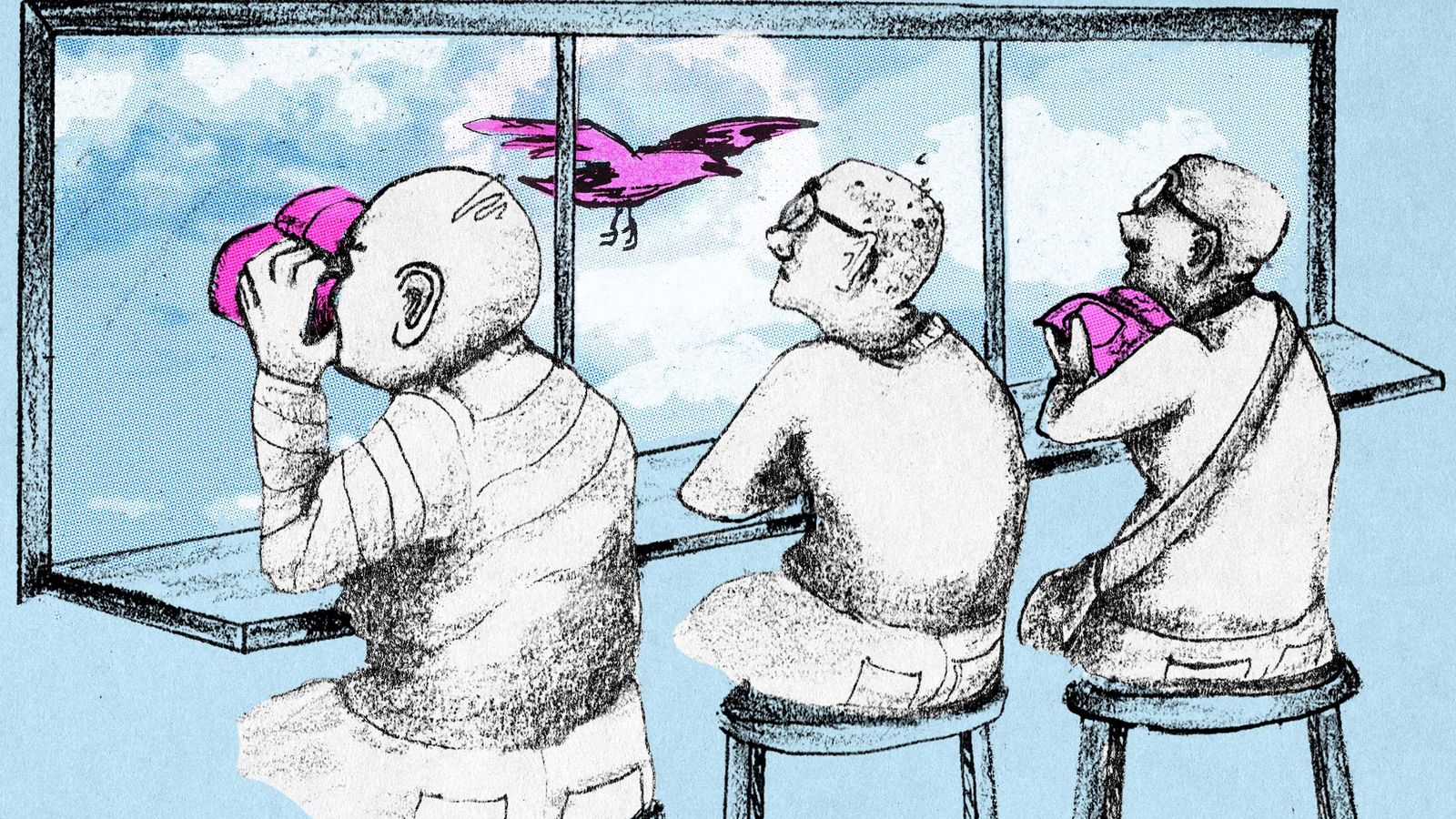
▲ 자연 속 조류 관찰과 새소리·시각 자극을 통한 뇌신경망 활성화 연구 현장 / 만인의 탑 DB·BBC Science
3. 독일 400개 요양원으로 번진 혁신: 단 3주 만에 나타난 인지 개선
탐조의 인지 회복 효과는 조류 전문가에게만 국한되지 않습니다. 독일 아이히슈테트-잉골슈타트 카톨릭 대학교의 엘리자베스 칼스(Elisabeth Kals) 심리학과 교수팀은 실제 요양 시설에 거주하는 시니어들을 대상으로 획기적인 임상 시험을 단행했습니다. 바이에른주 전역의 65개 요양원 야외 창가에 조류 모이통을 설치하고, 입소자들이 실내 거실에서 편안하게 새들을 바라볼 수 있도록 환경을 조성한 것입니다.
결과는 놀라웠습니다. 모이통 설치 후 불과 3~4주 만에 입소자들의 인지 민첩성(Cognitive Agility)이 급격히 향상되었습니다. 오랫동안 표정이 없던 환자들의 얼굴에 미소가 돌아왔고, 방문한 가족들과의 대화 맥락을 정확히 기억하며, 며칠 전 날아왔던 특정 새의 특징을 기억해내는 등 뚜렷한 주의력 회복을 보였습니다. 이 실증 결과에 고무된 독일 건강보험공단은 막대한 의료비 절감 효과를 인정하여 바이에른주 내 400여 개 요양원에 조류 관찰 구역 설치 비용을 전액 지원하기로 결정했습니다.
4. 호기심이 깨우는 도파민: 일상에서 실천하는 브레인 웰빙 처방
전문가들은 탐조가 단순한 시각적 감상을 넘어 인간 본연의 '호기심(Curiosity)'을 자극하는 최고의 신경학적 촉매제라고 강조합니다. 미지의 생명체가 나타날 것이라는 예측과 기대감은 뇌 속 도파민과 노르에피네프린 분비를 촉발하여 신경계의 만성 염증을 억제하고 신경세포 간 시냅스 형성을 촉진합니다.
미국에서는 이미 치매 환자를 위한 '버드 테일즈(Bird Tales)' 프로그램과 뇌졸중·실어증 환자를 위한 야생 조류 소리 식별 치료가 공인 임상 프로그램으로 자리잡았습니다. 고가의 장비나 거창한 숲 여행이 없더라도, 집 베란다나 주방 창가에 작은 모이통을 달아두거나 출퇴근길 가로수의 새소리에 귀를 기울이는 것만으로도 노화로 지친 우리의 뇌는 다시 젊고 유연하게 깨어날 수 있습니다.
영역 구분
생체·신경학적 반응 기전
인지 및 임상적 개선 효과
일상 실천 가이드
시각 피질 & 신경망
미세 깃털·형태 감별로 방추상회 및 고차원 시각 피질 활성화
노화에 따른 뇌 구조 조직화 저하 억제 및 신경 가소성 보존
창가 조류 관찰 및 사진·도감 비교
기억 중추 (해마)
이전 관찰 경험과의 대조 및 울음소리 음향 패턴 매핑
단기 기억 회상력 증진 및 대화 지속력·인지 민첩성 개선
방문 조류 날짜별 기록 및 특징 메모
신경화학 물질
자연스러운 호기심 발현으로 도파민·노르에피네프린 분비 촉진
만성 뇌신경 염증 완화, 불안감 해소 및 심리적 회복 탄력성
아침 산책 시 5분간 새소리 경청
만인의 탑 보건의학 특별취재팀발행인 겸 편집인: 신승엽 (Seung Youb Ssin)
MANINTOP MEDICAL & WELLNESS · GLOBAL EDITION
How Birdwatching Rewires the Aging Brain: BBC Reveals the Neurobiology Behind Cognitive Preservation and Dementia Therapy
Reported by Seung Youb Ssin, Ph.D. | Publisher & Editor-in-Chief
In a compelling scientific investigation, the BBC highlights groundbreaking neuroscience revealing that birdwatching can actively rewire aging neural circuits and decelerate cognitive decline. Brain-imaging research led by Canadian and German neuroscientists demonstrates that the multi-sensory engagement of observing wild birds activates complex neural networks across the visual cortex and hippocampus, bolstering cognitive reserve and offering a transformative non-pharmacological intervention for dementia care.
MANINTOP Neuroscience Fact Briefing
fMRI Evidence of Neuroplasticity: Brain imaging shows bird identification significantly strengthens structural organization and connectivity between visual and memory networks.
Clinical Transformation in Weeks: German nursing home studies revealed observable improvements in conversation agility, memory recall, and mood within just 3 to 4 weeks, prompting insurance expansion to 400 facilities.
Neurochemical Anti-Inflammatory Effects: Novelty and curiosity triggered by wild birds stimulate dopamine and norepinephrine, mitigating systemic neural inflammation and promoting deep psychological restoration.
1. "Present in the Moment": How Dementia Patients Reclaim Joy
Inside a rustic wooden observation hide nestled in the English countryside, a group of elderly birders gathers each week. Peering through binoculars, many of these participants struggle to recall what happened earlier that morning or follow basic conversations due to advanced dementia.
Yet, the moment a robin or blue tit perches nearby, an extraordinary stillness takes over. The daughter of Harold, a 78-year-old participant withdrawn by illness, recounted to the BBC: "For that moment in time he was present in the moment, unburdened by memory loss or lost confidence. That is very powerful, in a gentle way."
2. fMRI Insights: Remodeling the Visual Cortex and Hippocampus
Behind this clinical phenomenon lies profound neurobiological remodeling. Dr. Erik Wing and colleagues at the Baycrest Academy for Research and Education in Toronto utilized functional magnetic resonance imaging (fMRI) to compare the neural architectures of expert birdwatchers against novices.
The data revealed that during bird identification, expert brains demonstrated markedly heightened activation across the high-order visual cortex and hippocampal memory retrieval circuits. While structural organization in the brain typically degrades with advancing age, disciplined birding preserved youthful levels of neural organization, fortifying cognitive reserve against neurodegenerative decline.
3. Clinical Validation Across 400 Nursing Homes in Germany
Crucially, these cognitive benefits extend far beyond seasoned ornithologists. Professor Elisabeth Kals from the Catholic University of Eichstätt-Ingolstadt orchestrated an extensive trial installing bird feeders outside 65 German nursing homes, enabling residents to observe wildlife from indoor common spaces.
Within just three to four weeks, staff observed striking cognitive improvements. Long-dormant smiles reemerged, social engagement surged, and residents exhibited heightened alertness and recall of visiting species. Convinced by the tangible health outcomes and economic savings, Bavarian health insurance providers expanded funding to install viewing sanctuaries across more than 400 nursing facilities.
4. Curiosity and Dopamine: A Daily Prescription for Cognitive Longevity
Neuroscientists emphasize that birdwatching serves as an accessible gateway to novelty and curiosity. The anticipation of spotting an unfamiliar bird stimulates dopamine and norepinephrine synthesis, which exert potent anti-inflammatory effects in the central nervous system.
From the 'Bird Tales' dementia therapy program in the United States to intensive aphasia recovery at the University of Montana, bird observation is cementing its place in integrative cognitive medicine. Even placing a simple bird feeder outside a kitchen window or pausing to listen to birdsong during daily commutes can catalyze vital neural rewiring.
Domain
Neurological Mechanism
Cognitive & Clinical Outcome
Practical Prescription
Visual Networks
High-order visual cortex and fusiform activation via plumage identification
Preservation of neural organization and enhanced neuroplasticity
Window bird observation and field guide comparisons
Hippocampal Retrieval
Cross-referencing auditory vocalizations and past visual memories
Enhanced conversational agility and rapid short-term recall
Daily wildlife logging and identification notes
Neurotransmitters
Curiosity-driven release of dopamine and norepinephrine
Mitigation of neuroinflammation and heightened emotional restoration
5-minute attentive birdsong listening during walks
MANINTOP Medical News BureauPublisher & Editor-in-Chief: Dr. Seung Youb Ssin
MANINTOP NEWSLETTER
📬 만인의 탑 뉴스레터 무료 구독
오늘 보신 정책·시사 뉴스가 유익하셨나요? 매일 엄선되는 알짜 복지 혜택과 국회 실시간 속보를 이메일로 가장 먼저 받아보세요. (평생 무료)



0 댓글