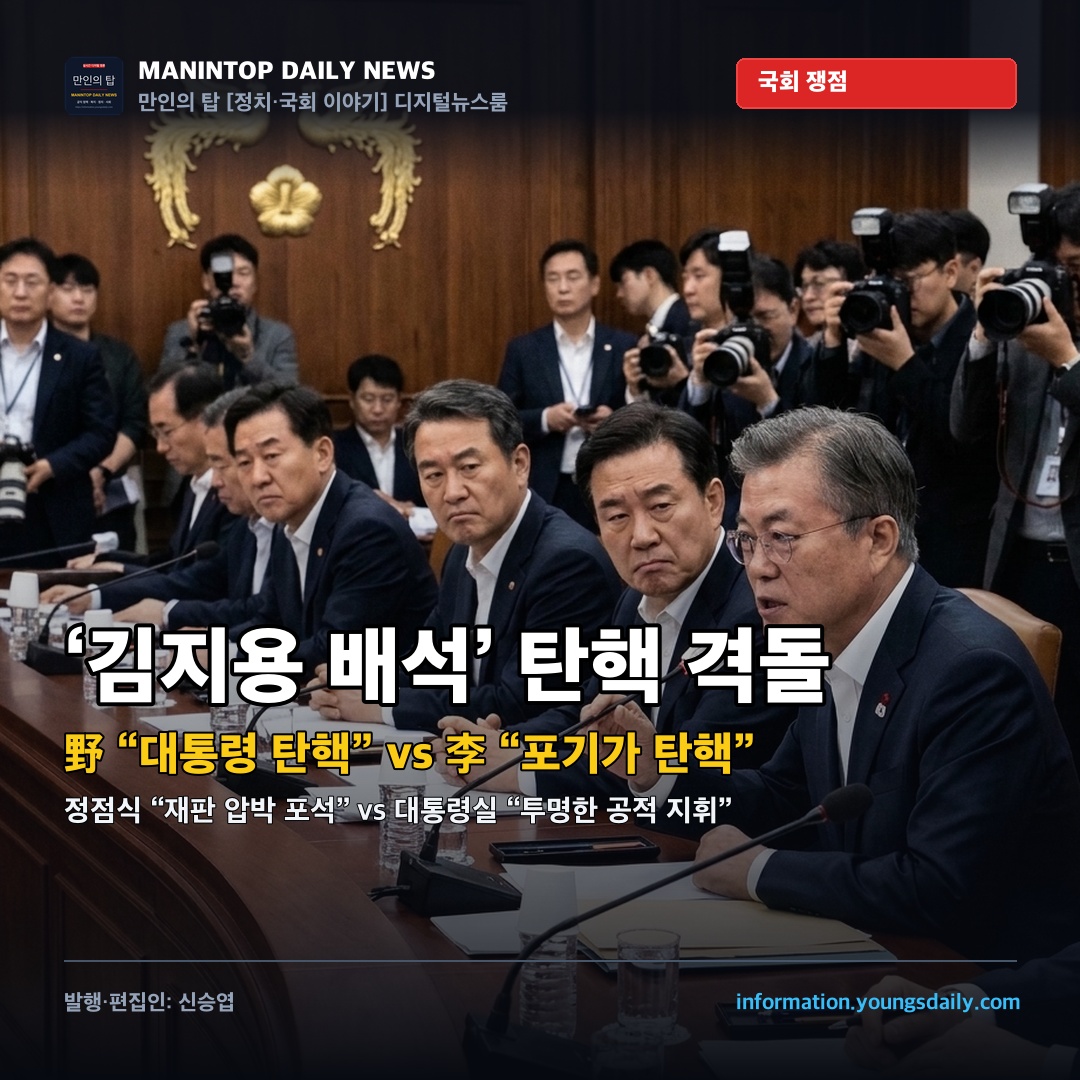
▲ 국무회의실 및 국회 회의장에서 이재명 대통령의 김지용 중대범죄수사청장 국무회의 배석 방침을 둘러싸고 여야 원내지도부가 격돌하고 있다. / 그래픽·보도사진=만인의 탑 디지털뉴스룸
📌 만인의 탑 핵심 브리핑 · 이 글에서 다루는 핵심 내용
검찰청 폐지 후 신설된 중대범죄수사청의 김지용 초대 청장과 공소청장을 국무회의에 정례 배석시키겠다는 이재명 대통령의 결정을 둘러싸고 정치권이 극한 대치에 돌입했다. 국민의힘 정점식 원내대표는 수사기관장을 불러 앉혀 대통령 본인의 재판에 직간접 압력을 가해 공소 취소를 유도하려는 명백한 탄핵 사유라 규정한 반면, 이 대통령은 행정부 수반으로서 수사기관에 대한 지휘·감독을 포기하는 것이야말로 직무유기 탄핵 사유라며 정면 반박했다.
🔍 3대 핵심 사실관계 요약 (Core Facts)
중수청장 국무회의 배석 방침 파문: 검찰청 폐지 후 출범한 중대범죄수사청의 김지용 초대 청장과 공소청장을 국무회의에 상시 배석시키겠다는 이재명 대통령의 결정에 정치권 격돌.
야당 “본인 재판 압박용 탄핵 사유” 총공세: 국민의힘 정점식 원내대표가 수사기관장 강제 배석은 이 대통령 본인의 사법 리스크 재판에 직간접 압력을 가해 공소 취소를 유도하려는 위헌적 폭거이자 명백한 탄핵 사유라 규정.
李 대통령 “수사기관 지휘 포기가 진짜 탄핵 사유” 맞불: 행정부 수반으로서 헌법에 따라 국가 수사기관을 투명하게 지휘·감독하는 것은 당연한 책무이며, 이를 방치하는 것이야말로 직무유기 탄핵 사유라고 정면 반박.
1. 국무회의실로 불러 앉힌 중수청장… 정국 뒤흔든 ‘사법 통제’ 논란
검찰청 폐지와 수사·기소 분리라는 헌정사 초유의 사법 개혁 이후 출범한 중대범죄수사청(중수청)이 정국의 핵으로 급부상했다. 이재명 대통령이 김지용 초대 중수청장과 공소청장을 국무회의에 정례적으로 배석시키겠다는 방침을 공식화하면서, 여야가 헌법상 권한과 수사의 정치적 중립성을 둘러싸고 극한의 정면충돌로 치닫고 있다.
과거 검찰청 체제에서는 수사의 독립성을 보장하기 위해 검찰총장이 국무회의에 참석하지 않는 것이 오랜 관행으로 자리 잡아 왔다. 그러나 이 대통령이 신설 중수청의 수장을 행정부 최고 심의기구인 국무회의 테이블에 직접 앉히겠다고 결정하면서, 야당은 이를 사법 수사기관을 정권의 직할 통제하에 두려는 초유의 사태로 규정하고 총공세에 나섰다.
2. 정점식 “대통령 본인 재판 압박 포석… 명백한 탄핵 사유”
국민의힘 정점식 원내대표는 23일 오전 국회에서 열린 국정감사 대책회의에서 이 대통령의 결정을 맹비난하며 ‘대통령 탄핵’이라는 초강경 카드를 꺼내 들었다. 정 원내대표는 “적법하고 상식적인 지휘·감독 수단이 법무부 장관 등을 통해 엄연히 존재함에도 불구하고, 굳이 국무회의에 중수청장과 공소청장을 강제로 배석시키려는 목적은 따로 있다”고 포문을 열었다.
정 원내대표는 “국무회의를 통해 대놓고 상시적으로 국가 수사기관을 압박하고, 현재 법원에서 진행 중인 이 대통령 본인의 재판에 직·간접적인 영향력을 행사해 공소 취소를 유도하려는 불순한 의도”라며 “이러한 위헌적 행태야말로 명백한 대통령 탄핵 사유에 해당한다”고 직격했다. 이어 “수사기관장을 국무회의에 배석시키지 않았던 역대 모든 대통령들을 그렇다면 다 직무유기로 탄핵했어야 했느냐”며 공세의 수위를 끌어올렸다.
3. 李 대통령 “수사기관 지휘·감독 포기가 진짜 탄핵 사유”
이재명 대통령과 여당인 더불어민주당은 야당의 탄핵 주장을 ‘정치 공세’로 일축하며 정면 반박에 나섰다. 이 대통령은 “검찰청이 폐지되고 신설된 중수청에 대해 행정부 수반인 대통령이 헌법과 법률에 따라 투명하게 지휘·감독하고 공적 통제를 행사하는 것은 헌법상 피할 수 없는 책무”라고 못 박았다.
이 대통령은 특히 “중수청을 통제 밖의 무소불위 성역으로 방치하고 행정부 수반의 지휘·감독 권한을 스스로 포기하는 것이야말로 진정한 직무유기이자 헌법상 탄핵 사유에 해당한다”며 맞받아쳤다. 대통령실 고위 관계자 역시 “과거 검찰총장을 청와대 밀실에서 독대하거나 비선 라인을 통해 음성적으로 수사를 직할하던 구태를 타파하고, 국무회의라는 가장 공개적이고 헌법적인 틀 안에서 국가 형사사법을 조율하려는 투명한 국정 운영”이라고 강조했다.
4. 헌법상 통할권 vs 수사 독립성… 10월 국감 최대 뇌관
이번 사태는 단순한 의전 배석 논란을 넘어 헌법상 행정부 수반의 통할권과 형사사법기관의 정치적 중립성이 정면으로 충돌하는 본질적 헌법 쟁점으로 비화하고 있다. 국민의힘은 국무회의 규정 개정 저지와 함께 권한쟁의심판 및 국정조사를 예고하며 공세의 고삐를 쥐고 있다. 반면 민주당은 중수청의 조기 안착과 공소청과의 업무 분장을 확립하기 위해 국무회의 연계가 필수적이라는 입장을 굽히지 않아, 10월 국정감사 종반부 여야의 극한 대치는 정점에 달할 전망이다.
구분
야당(국민의힘 비판론)
여당 및 대통령실(정부 방어론)
배석 조치 성격
수사기관 상시 압박 및 본인 재판 공소 취소 유도
행정부 수반의 헌법상 투명한 지휘·감독권 행사
탄핵 사유 공방
수사 독립성 훼손 및 사법 개입은 명백한 탄핵 사유
지휘·감독 포기하고 방치하는 것이 직무유기 탄핵 사유
지휘 통제 방식
법무부 장관을 통한 간접적·합법적 통제 준수 요구
밀실 독대 관행 타파, 국무회의라는 공개 기구서 조율
향후 대응 계획
국무회의 규정 개정 저지 및 권한쟁의심판 검토
중수청장 정례 배석 강행 및 형사사법체계 조기 안착
▲ An authoritative State Council assembly setting in Seoul as high-level political parties clash over presidential oversight and investigation agency independence. / MANINTOP Global Newsroom Press Photo
MANINTOP GLOBAL NEWSROOM · ENGLISH EDITION
State Council Attendance of SCIA Chief Ignites Clashes: Opposition Warns of Impeachment while President Counters Over Duty
A major constitutional conflict erupted in South Korea as President Lee Jae-myung ordered Kim Ji-yong, inaugural head of the newly established Serious Crimes Investigation Agency, to regularly attend State Council meetings. The conservative opposition denounced the directive as an unconstitutional attempt to pressure prosecutors over the President's personal trials, warning of impeachment, while President Lee forcefully countered that relinquishing executive supervision would constitute an authentic dereliction of duty.
📌 Key Strategic Takeaways
Presidential State Council Directive: President Lee Jae-myung mandated that Kim Ji-yong, inaugural chief of the newly established Serious Crimes Investigation Agency (SCIA), regularly attend Cabinet meetings.
Opposition Declares Impeachment Grounds: People Power Party Floor Leader Jeong Jeom-sig asserted that summoning the investigation chief aims to pressure prosecutors to dismiss pending criminal charges against the President.
Constitutional Counter-Argument: President Lee retorted that renouncing executive supervision over state investigative bodies would constitute an unconstitutional dereliction of duty justifying impeachment.
1. Investigation Chief Summoned to the Cabinet: A High-Stakes Governance Dispute
Following the historic dissolution of the Supreme Prosecutors' Office and the separation of indictment and investigative powers, the newly established Serious Crimes Investigation Agency (SCIA) has become the epicenter of a fierce political tempest. President Lee Jae-myung’s formal decision to require inaugural SCIA Chief Kim Ji-yong and the Head of Prosecution Services to regularly attend State Council meetings has ignited a profound constitutional showdown.
Historically, prosecutors general refrained from Cabinet participation to preserve investigative independence from executive influence. However, President Lee’s policy directly brings the leadership of the specialized investigative agency into the nation's highest executive deliberative body, prompting conservative lawmakers to condemn the move as an aggressive consolidation of direct presidential control.
2. Floor Leader Jeong Jeom-sig: "Coercive Pressure on Personal Trials Constitutes Impeachment Grounds"
People Power Party Floor Leader Jeong Jeom-sig launched an unyielding offensive during a parliamentary audit strategy assembly, openly raising the specter of presidential impeachment. Jeong stressed that lawful and established supervisory mechanisms already exist through the Minister of Justice, making the direct integration of law enforcement chiefs into Cabinet proceedings suspect.
Jeong stated that compelling investigative chiefs to attend State Council meetings is a calculated maneuver to exert continuous institutional pressure and influence ongoing criminal trials involving the President. He maintained that using Cabinet seating to induce indictment dismissals constitutes a flagrant breach of constitutional order, rhetorically asking whether all past presidents who respected prosecutorial detachment should have been impeached for neglect of duty.
3. President Lee Counterattacks: "Relinquishing Executive Oversight is the Real Dereliction"
President Lee and the ruling Democratic Party immediately dismissed the opposition's impeachment rhetoric as an inflammatory political offensive. President Lee asserted that as head of the executive branch, transparently directing and supervising the newly established SCIA in accordance with the Constitution is an indispensable constitutional mandate.
The President countered that leaving the investigation agency unmonitored as an unaccountable enclave and abdicating executive oversight would represent an authentic dereliction of duty warranting impeachment. Presidential aides further underscored that replacing secretive backroom briefings with transparent coordination inside the official constitutional framework of the State Council marks a progressive departure from covert past practices.
4. Executive Authority vs. Investigative Neutrality: The Decisive October Audit Flashpoint
The dispute transcends procedural protocol, tapping into fundamental tensions between executive comprehensive authority under the South Korean Constitution and the political neutrality demanded of criminal investigative agencies. The conservative opposition has pledged to challenge revisions to State Council decree rules and pursue parliamentary investigations. Meanwhile, the administration remains committed to stabilizing the SCIA, ensuring the controversy will dominate final parliamentary audit sessions.
Dimension
Opposition Critique (Conservative Position)
Administration & Ruling Party Defense
Cabinet Participation
Institutional pressure to dismiss presidential charges
Constitutional exercise of transparent executive governance


0 댓글