[심층기획] '마운자로 반값' 국산 1호 비만신약 '에페' 상용화... GLP-1 3강 대전과 시장 전략
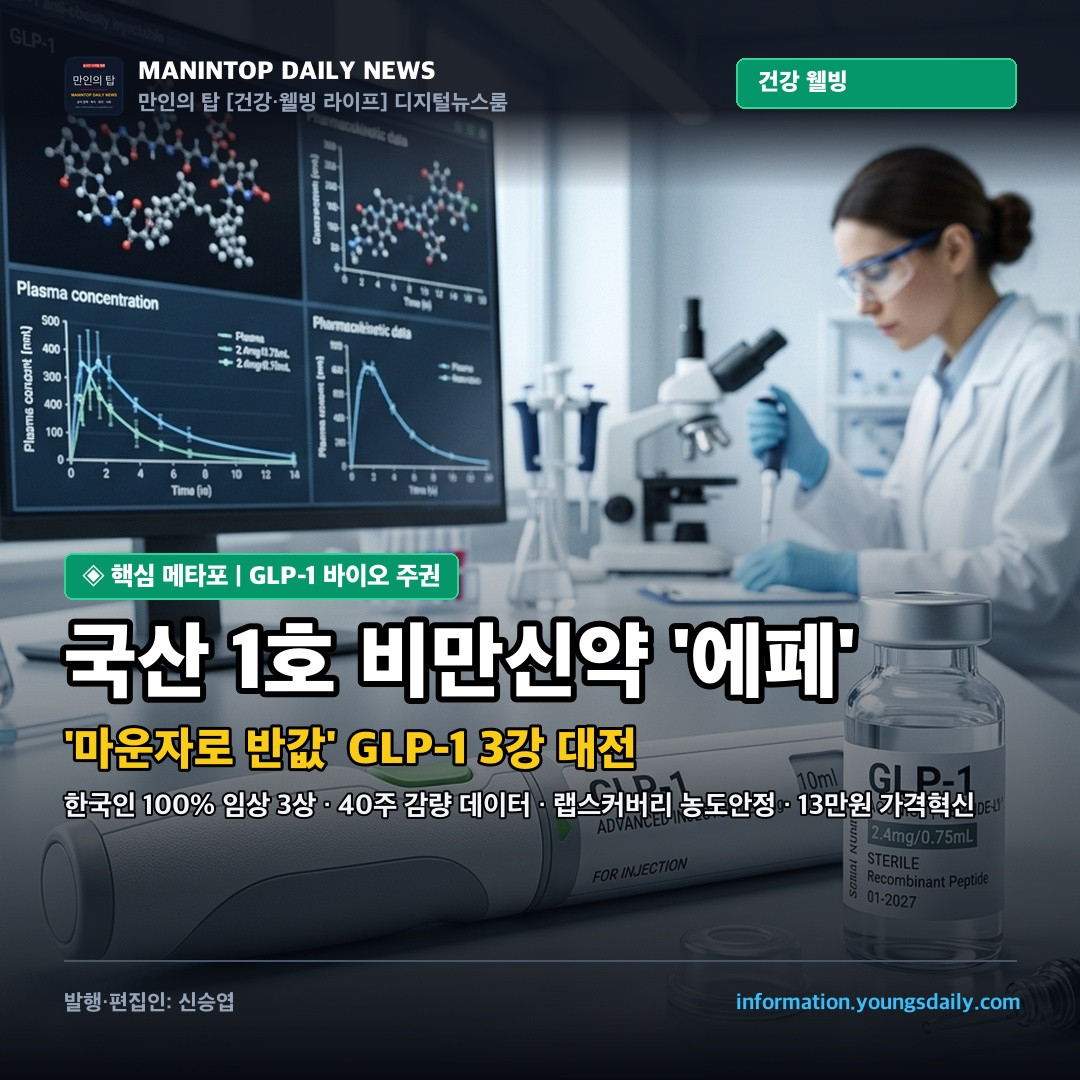
수입 의약품이 독점해 온 국내 글루카곤 유사 펩타이드-1(GLP-1) 계열 비만치료제 시장에 국산 신약이 처음으로 도전장을 내밀었다. 한미약품이 자체 기술로 개발한 비만신약 '에페(성분명 에페글레나타이드)'가 식품의약품안전처 품목허가를 획득한 데 이어 일선 의료기관에서 본격적인 처방이 개시되면서, 글로벌 제약사의 '위고비' 및 '마운자로'와 함께 국내 비만 치료 시장은 강력한 3파전 구도로 급격히 재편되고 있다.
이번 상용화는 단순히 국내 제약사가 개발한 45번째 신약이라는 상징적 수치를 넘어섭니다. 후보물질 발굴부터 임상개발, 인허가 승인, 원료 및 완제 생산, 상업화에 이르는 전 과정을 독자 기술로 완수한 최초의 국산 GLP-1 비만치료제라는 점에서 국내 바이오의약품 주권의 획기적 전환점으로 평가받습니다. 특히 한국인 100%를 대상으로 축적한 독보적인 임상 3상 데이터, 100% 국내 평택 바이오플랜트 생산 기반, 그리고 첫 4주 기준 12만 원대라는 파격적인 가격 경쟁력을 앞세워 비만 환자와 의료진에게 새로운 치료 패러다임을 제시하고 있습니다.

1. 한국인 100% 임상 데이터의 과학적 의미: 위고비·마운자로 수치 비교 너머
한미약품이 공개한 국내 임상 3상 결과에 따르면, 당뇨병을 동반하지 않은 성인 비만 및 과체중 한국인 환자 448명을 대상으로 에페를 40주간 매주 1회 투여한 결과, 평균 체중감소율은 회사 발표 톱라인(Top-line) 기준 9.75%, 식품의약품안전처 허가사항 다중 대체(Multiple Imputation) 분석 기준 9.02%로 최종 집계되었습니다. 개별 환자 가운데는 최대 30%에 달하는 극적인 체중 감량 반응이 확인되었으며, 전체 투여 환자의 79.42%가 기저 체중 대비 5% 이상, 49.46%가 10% 이상, 19.86%가 15% 이상의 체중 감량을 달성했습니다.
글로벌 대표 치료제인 노보 노디스크의 위고비(세마글루타이드)가 STEP 1 임상 3상(68주)에서 평균 14.9%, 일라이 릴리의 마운자로(터제파타이드)가 SURMOUNT-1 임상 3상(72주) 최고 용량(15mg) 기준 평균 20.9%의 감량률을 기록한 수치와 단순 평면 비교할 경우 에페의 감량 폭이 상대적으로 낮아 보일 수 있습니다. 그러나 내분비대사학 전문가들은 임상시험 설계 구조, 등록 환자군의 체질량지수(BMI), 그리고 관찰 기간이 근본적으로 상이하므로 단순 수치 대조는 의학적으로 부적절하다고 명확히 짚고 있습니다.
위고비와 마운자로의 글로벌 주요 임상은 백인을 중심으로 진행되었으며, 아시아인 참가자 비중은 10~13%에 불과했습니다. 또한 글로벌 임상 참여자의 기저 평균 체중은 약 105kg, 평균 체질량지수(BMI)는 38kg/m²에 달하는 고도 및 초고도 비만 환자가 대부분이었습니다. 반면 에페의 국내 임상 3상은 참여자의 83% 이상이 BMI 35kg/m² 미만인 한국인 환자로 구성되었으며, 기저 평균 체중은 88.6kg(평균 BMI 32kg/m²)이었습니다. 생리학적으로 기저 체중과 체지방량이 상대적으로 낮은 환자군일수록 동일한 치료제 투여 시 감량되는 체중의 백분율 수치가 보수적으로 도출되는 경향이 뚜렷합니다.
관찰 기간의 격차 또한 결정적인 분석 변수입니다. 위고비와 마운자로의 대표 공인 데이터가 68주에서 72주에 걸친 장기 추적 결과인 반면, 현재 공개된 에페의 핵심 지표는 총 64주 임상 프로토콜 중 40주 시점의 중간 분석 결과입니다. 통상 GLP-1 계열 제제는 투약 60주 안팎까지 점진적 체중 감소가 지속되는 궤적을 그리므로, 향후 완주 데이터에서는 추가적인 누적 감량률 상승이 확인될 개연성이 매우 높습니다.
| 치료제명 | 주성분 및 제조사 | 임상 코호트 및 인종 구성 | 관찰 시점 | 평균 체중감소율 | 기저 평균 체중 및 체질량지수 |
|---|---|---|---|---|---|
| 에페 (Efe) | 에페글레나타이드 (한미약품) |
국내 3상 (448명) 한국인 100% |
40주 (위약 대조) |
9.02% (식약처 허가) 9.75% (톱라인) |
88.6 kg (BMI 32 kg/m²) |
| 위고비 (Wegovy) | 세마글루타이드 (노보 노디스크) |
STEP 1 (1,961명) 아시아인 13.3% |
68주 | 14.9% | 약 105 kg (BMI 38 kg/m²) |
| 마운자로 (Mounjaro) | 터제파타이드 (일라이 릴리) |
SURMOUNT-1 (2,539명) 아시아인 10.9% |
72주 | 15.0% ~ 20.9% (용량별) |
약 105 kg (BMI 38 kg/m²) |

2. 랩스커버리 플랫폼과 완만한 혈중 농도: 체내 지속성의 약리학적 기전
에페의 약리학적 차별성은 한미약품이 자체 개발한 독자적 바이오 신약 플랫폼 기술인 '랩스커버리(LAPSCOVERY)'에 뿌리를 두고 있습니다. 기존 수입 치료제인 위고비는 펩타이드 사슬에 지방산 곁사슬을 부착하여 혈중 알부민과 결합함으로써 신장 배설을 지연시키는 기전을 활용합니다. 반면 에페는 인간 면역글로불린(IgG4)의 Fc 구조체에 GLP-1 수용체 결합 물질인 엑센딘 체인을 비펩타이드성 PEG 링커로 연결하는 고유한 바이오 융합 구조를 취하고 있습니다.
이 거대 단백질 복합체는 피하 투여 시 혈관 내피세포의 재활용 수용체(FcRn) 결합 경로를 경유하여 체내에서 분해되지 않고 지속적으로 순환계로 재방출됩니다. 그 결과 혈중 반감기가 대폭 연장될 뿐 아니라, 주사 투여 직후 약물이 혈류로 방출되는 속도가 극히 완만하게 통제됩니다.
특히 에페글레나타이드는 GLP-1 수용체에 대한 결합력(Affinity)이 지나치게 강하지 않아, 수용체에 결합하여 신호를 전달한 뒤 가역적으로 신속히 분리되는 고유한 수용체 동태학적 특징을 지닙니다. 약물이 수용체에 비가역적으로 과도하게 결합해 있을 경우 수용체가 세포 내부로 함입되어 파괴되는 '수용체 내제화(Receptor Internalization)'가 초래되어 장기 약물 반응성이 급격히 둔화됩니다. 에페는 수용체와의 유연한 결합과 해리를 반복함으로써 내제화를 원천 차단하고 지속적이고 안정적인 대사 신호 전달을 유지합니다.
약물동태학(Pharmacokinetics) 실측 데이터에 따르면, 에페의 최고 혈중 농도(Cmax)와 최저 농도(Cmin)의 격차인 '피크-트로프 비(Peak-to-Trough Ratio)'는 약 1.3배 이내로 수평에 가까운 평탄한 혈중 농도 곡선을 형성합니다. 이는 마운자로 등 기존 약제들의 최고-최저 농도 격차가 1.8배에서 2.4배 이상 널뛰는 것과 명확히 대비됩니다. 주사 직후 혈중 약물 농도가 급격히 치솟는 스파이크(Spike)가 억제됨으로써, GLP-1 약물의 가장 고질적인 장벽인 급성 오심, 구토, 어지럼증 위험을 근본적으로 상쇄시켰습니다.
에페의 전신 안전성과 장기 효능은 이미 글로벌 대규모 임상으로 탄탄히 입증된 바 있습니다. 과거 글로벌 파트너사 사노피(Sanofi) 주도로 전 세계 6,000여 명의 제2형 당뇨병 및 심혈관 고위험군 환자를 대상으로 진행된 AMPLITUDE-O 글로벌 임상 결과, 에페글레나타이드는 주요 심혈관 사건(MACE) 발생 위험을 위약 대비 27% 감소시켰으며, 신장 기능 악화 복합 위험 역시 38% 유의하게 감소시켜 강력한 심장·신장 보호 효능을 전 세계 의학계에 공인받았습니다.
3. 탁월한 내약성과 낮은 중단율: '치료 지속성'이 비만약 성패의 열쇠
GLP-1 비만치료제를 처방하는 일선 임상 현장에서 전문의들이 가장 심각하게 직면하는 임상적 난제는 바로 '환자의 투약 중단율'입니다. 최근 세계 최고 권위 의학 저널인 자마 네트워크 오픈(JAMA Network Open)에 게재된 대규모 코호트 연구에 따르면, GLP-1 계열 비만 치료제를 처방받은 실제 환자의 약 64.8%가 심각한 위장관계 부작용과 감당하기 힘든 비용 부담을 견디지 못하고 1년 이내에 투약을 중도 포기하는 것으로 조사되었습니다. 비만은 투약을 중단할 경우 체중이 원상 복구되는 요요 현상이 수반되는 만성 질환이므로, 조기 치료 탈락은 비만 치료의 가장 큰 실패 원인으로 지적되어 왔습니다.
에페의 식약처 공인 품목허가 사항에 수록된 40주 위약 대조 임상 안전성 지표를 살펴보면, 에페 투여군에서 관찰된 주요 위장관 이상반응 발생률은 설사 17.6%, 구역(메스꺼움) 16.6%, 소화불량 15.6%, 변비 14.6%, 구토 11.6% 수준에 그쳤습니다. 이는 위고비의 임상 보고치(구역 44%, 설사 30%, 구토 24%)나 마운자로(구역 25~29%, 설사 19~23%)와 비교했을 때 현저히 낮고 마일드한 수준입니다.
가장 결정적인 차이는 영구 중단율입니다. 위장관계 이상사례를 견디지 못해 에페 투약을 완전히 영구 중단한 환자 비율은 단 1.2%에 불과했습니다. 이는 위고비의 이상반응 중단율(4.3%) 및 마운자로(1.9~4.3%) 대비 압도적으로 낮은 수치로서, 환자가 일상생활을 유지하며 장기 투약을 지속할 수 있는 탁월한 약물 내약성을 결정적으로 증명합니다.
이러한 뛰어난 순응도는 한미약품의 단계적 용량 증량 프로토콜 덕분이기도 합니다. 에페는 첫 투여 시 2mg 극소 용량으로 시작하여 4mg, 6mg, 8mg을 거쳐 10mg 최종 유지 용량까지 환자의 적응 상태에 맞춰 2주에서 4주 간격으로 신중하게 용량을 증량하는 체계를 갖추고 있습니다. 완만한 혈중 농도 상승과 정밀한 증량 스케줄이 맞물려 치료 순응도를 극대화했습니다.
4. 가격 구조 심층 분석: 초회 '12만 원대' 전략과 누적 의료비 경제성
에페가 국내 시장 진입과 동시에 거센 돌풍을 일으키는 가장 강력한 실질적 동력은 공격적인 가격 정책입니다. 한미약품이 공식 확정한 에페의 용량별 1회 투여분 제약사 공급가는 2mg 2만 4,200원, 4mg 4만 700원, 6mg 5만 7,200원, 8mg 6만 9,300원, 10mg 7만 4,800원입니다.
환자가 치료를 시작하는 첫 4주 동안은 2mg 2회와 4mg 2회를 순차 투여받게 되므로, 첫 1개월(4주) 공급가는 정확히 12만 9,800원으로 산출됩니다. 이는 경쟁 약물인 마운자로 시작 용량(2.5mg 기준 4주 공급가 약 27만 8,000원)의 정확히 절반(반값) 수준이며, 위고비 시작 용량(0.25mg 기준 4주 공급가 약 21만 원)보다도 매달 8만 원 이상 저렴합니다.
치료 진행에 따라 용량이 증량되면서 4주당 제약사 공급가는 5~8주차(6mg) 22만 8,800원, 9~12주차(8mg) 27만 7,200원으로 올라가며, 13주차 이후 최고 유지 용량인 10mg에 안착하면 4주 공급가는 29만 9,200원이 됩니다.
| 치료 기간 | 주 1회 투여 용량 스케줄 | 4주당 제약사 공급가 | 경제성 및 글로벌 치료제 대조 |
|---|---|---|---|
| 1 ~ 4주차 | 2mg 2회 + 4mg 2회 (도입기) | 129,800원 | 마운자로 시작가의 절반(53% 할인), 위고비 대비 약 8만원 저렴. 환자 진입 장벽 최소화 |
| 5 ~ 8주차 | 6mg 4회 (중간 증량) | 228,800원 | 용량 적응 단계. 위고비·마운자로 중용량 대비 여전히 높은 가격 경쟁력 확보 |
| 9 ~ 12주차 | 8mg 4회 (고용량 적응) | 277,200원 | 대사 지표 개선 및 체중 감량 가속화 구간 |
| 13주차 이후 | 10mg 4회 (최종 유지 용량) | 299,200원 | 최고 유지 용량 기준 마운자로 대비 19%, 위고비 대비 17% 저렴. 고용량 마운자로(67만 5,000원) 대비 누적 비용 대폭 절감 |
비만치료제는 건강보험이 적용되지 않는 비급여 전문의약품이므로 일선 병·의원의 처방 수가와 약국 조제 마진에 따라 환자의 실제 본인부담금에는 편차가 존재할 수 있습니다. 그러나 제약사가 설정한 기준 공급가 자체가 마운자로의 절반, 위고비 대비 8만 원 저렴하다는 점은 의사의 처방 문턱과 환자의 치료 진입 장벽을 획기적으로 낮추는 결정적 게임 체인저로 작용하고 있습니다. 특히 수년간 지속 투약해야 하는 비만 치료의 특성상, 장기 누적 치료비 부담을 30~50% 이상 절감할 수 있다는 점은 치료 지속률을 높이는 핵심 촉매제가 될 전망입니다.
5. 국가 바이오 주권 확립과 차세대 비만 파이프라인의 글로벌 진화
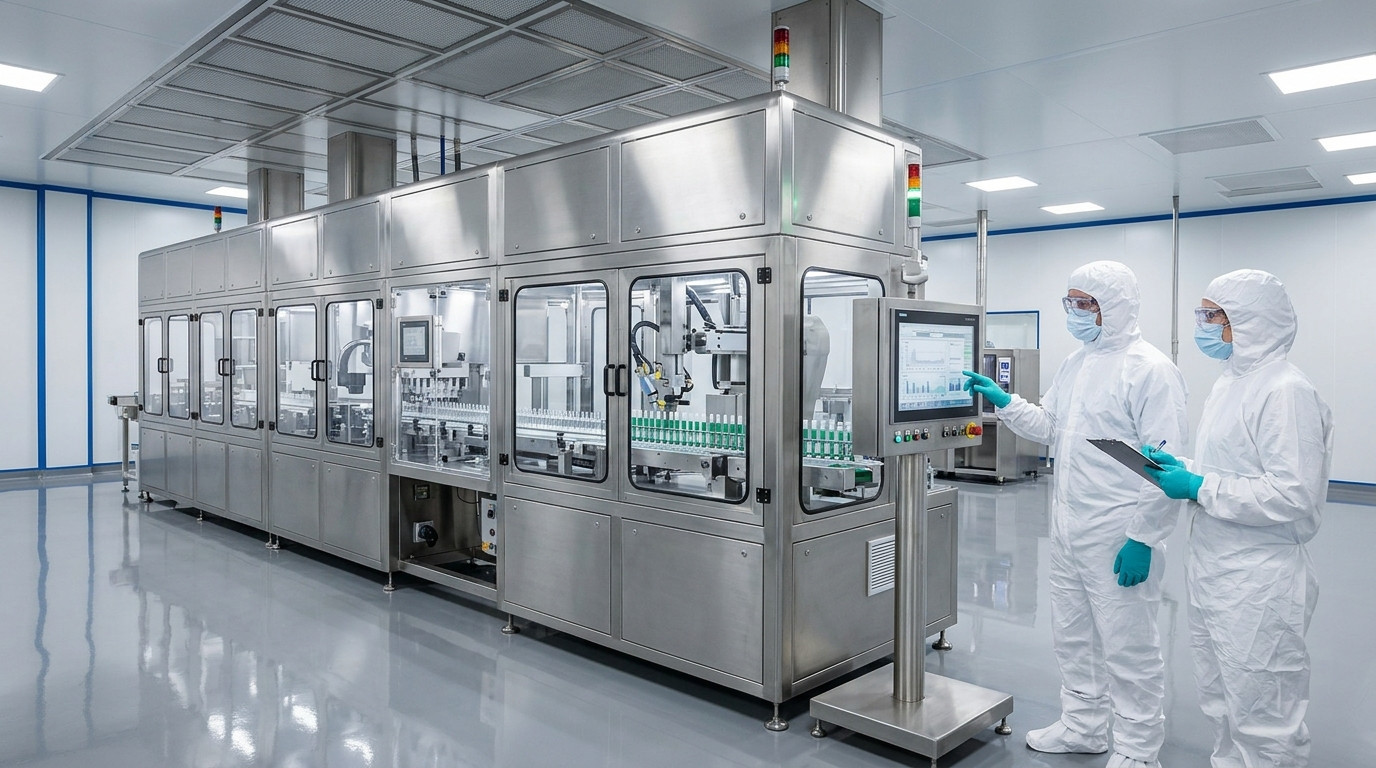
글로벌 GLP-1 비만치료제 시장 규모가 수십조 원 단위로 폭발적으로 팽창하면서 전 세계적인 공급 부족 사태(Shortage)가 만성화되었고, 완제품 100% 수입에 의존할 경우 막대한 외화 유출과 수급 불안정이 초래될 수 있다는 경고가 끊임없이 제기되어 왔습니다. 에페는 원료의약품 합성부터 바이오 공정 배양, 무균 주사제 충전, 펜 디바이스 조립 및 최종 포장에 이르는 전 공정이 경기도 한미약품 평택 바이오플랜트에서 100% 자체 생산됩니다. 이는 글로벌 공급망 대란 속에서도 국내 환자들에게 흔들림 없는 원활한 치료제 공급을 보장하는 보건 안보적 방파제이자, 대한민국 바이오의약품 기술 자립을 입증한 쾌거입니다.
한미약품은 에페를 단순한 주사 치료제에 한정하지 않고, 첨단 디지털 헬스케어 기기와 결합한 '디지털 융합 의약품 생태계'로 진화시키고 있습니다. 환자의 일일 식이, 활동량, 혈당 및 체성분 변화를 실시간 분석·코칭하는 'TLS(Total Lifestyle care) 플랫폼'을 연계하여, 주사제 치료 기간뿐 아니라 목표 체중 도달 후 약물을 중단하는 유지기에도 요요 현상을 방지하는 전주기 토털 솔루션을 완성한다는 복안입니다.
더욱 주목할 점은 차세대 비만 파이프라인으로 이어지는 강력한 연구개발 로드맵입니다. 에페가 GLP-1 단일 수용체 작용제로서 국산 신약의 물꼬를 텄다면, 후속 신약인 'HM15275'는 GLP-1, GIP, 글루카곤 수용체에 동시 작용하는 삼중작용제(Triple Agonist)로서 현재 미국 식품의약국(FDA) 임상 2상을 순항 중입니다. 아울러 체중 감량 과정에서 심각한 문제로 대두되는 근육 손실을 차단하고 오직 체지방만을 선택적으로 분해하는 혁신 기전의 비만신약 'HM17321'은 글로벌 제약사 로슈(Roche)의 자회사 제넨텍에 최대 23억 달러(약 3조 8,000억 원) 규모로 글로벌 판권이 기술 수출되는 기념비적 성과를 거두었습니다.
결국 대한민국 비만 치료 시장은 초고도 비만 환자 중심의 강력한 체중 감량을 전면에 내세운 마운자로·위고비와, 우수한 내약성, 한국인 최적화 임상 데이터, 파격적인 가격 경쟁력 및 안정적 국내 공급망을 완비한 국산 신약 에페가 상호 공존하며 시장을 재편해 나갈 것입니다. 비만 치료의 패러다임이 '단기적인 극한의 체중 감량 폭'에서 '안전하고 지속 가능한 심혈관-대사 건강의 총체적 개선'으로 전환되는 전환기 속에서, 국산 1호 비만신약 에페의 상용화는 한국 제약바이오 산업이 글로벌 스탠다드로 도약했음을 알리는 중대한 이정표입니다.
[취재 후기 및 안내]
본 심층 리포트는 식품의약품안전처 의약품 품목허가 상세 공보, 한미약품 임상 3상 학술 공시, STEP 1 및 SURMOUNT-1 임상 3상 원저 논문, 그리고 JAMA Network Open 게재 연구를 기반으로 객관적인 학술 팩트만을 정밀 취재·교차 검증하여 작성되었습니다. 비만치료제는 의사의 정확한 진단과 처방이 필요한 전문의약품이며, 개인의 대사 질환 병력 및 부작용 반응에 따라 적정 투여 용량이 달라질 수 있습니다.
[In-Depth] 'Half-Price Mounjaro' Korea's 1st Indigenous Obesity Drug 'Efe' Commercialized... GLP-1 Triad War and Market Strategy
South Korea's glucagon-like peptide-1 (GLP-1) anti-obesity therapeutic market, long dominated by imported foreign pharmaceuticals, has witnessed its first domestic contender. Following official marketing authorization from the Ministry of Food and Drug Safety (MFDS), Hanmi Pharmaceutical's proprietary obesity therapeutic 'Efe' (generic name: efpeglenatide) has entered clinical practice across hospitals and clinics nationwide, reshaping the therapeutic landscape into an intensive three-way competition alongside global blockbusters Wegovy and Mounjaro.
This commercialization marks far more than merely South Korea's 45th domestically developed novel therapeutic. It signifies the nation's very first GLP-1 anti-obesity agent developed entirely from de novo discovery through clinical trials, regulatory approval, biomanufacturing, and commercialization by a domestic biopharma leader. Backed by exclusive Phase 3 clinical data conducted on a 100% Korean cohort, complete domestic manufacturing self-reliance at the Pyeongtaek Bioplant, and an unprecedented introductory monthly cost in the 120,000 KRW range, Efe presents a brand-new therapeutic paradigm for clinicians and patients alike.
1. Scientific Implications of 100% Korean Clinical Trial Data: Beyond Superficial Numerical Contrast
According to the nationwide Phase 3 clinical trial released by Hanmi Pharmaceutical, once-weekly administration of efpeglenatide over 40 weeks in 448 non-diabetic obese and overweight Korean adults demonstrated a mean weight reduction of 9.75% by top-line company announcement and 9.02% under the MFDS regulatory multiple imputation analysis. Certain individual responders achieved substantial reductions of up to 30%. Crucially, 79.42% of treated patients achieved at least a 5% reduction, 49.46% achieved at least 10%, and 19.86% attained a 15% or greater reduction from baseline body weight.
When evaluated strictly against headline figures from Novo Nordisk's Wegovy (semaglutide, 14.9% mean weight loss at 68 weeks in the STEP 1 trial) and Eli Lilly's Mounjaro (tirzepatide, 20.9% mean loss at 72 weeks for the highest dose in SURMOUNT-1), Efe's weight loss percentage may appear numerically lower at first glance. However, clinical endocrinologists emphatically point out that direct unadjusted comparisons are scientifically flawed due to fundamental differences in trial design, enrolled demographic cohorts, baseline body mass indices (BMI), and treatment duration.
Wegovy and Mounjaro's pivotal registration trials were predominantly populated by Caucasian participants, with Asian enrollment hovering at merely 10% to 13%. Furthermore, global participants exhibited a baseline mean weight of approximately 105 kg and an average BMI of 38 kg/m², representing class II and class III severe obesity. In contrast, over 83% of participants in Efe's domestic Phase 3 trial had a baseline BMI below 35 kg/m², with an average baseline weight of 88.6 kg (mean BMI 32 kg/m²). It is an established physiological principle that cohorts with lower initial adipose volume exhibit smaller percentage weight drops under incretin pharmacotherapy.
Observation duration constitutes another pivotal variable. While headline data for Wegovy and Mounjaro reflect mature 68- to 72-week long-term observations, Efe's currently reported data represents an interim 40-week analysis within an ongoing 64-week full study protocol. Given that GLP-1 receptor agonists consistently demonstrate ongoing weight reduction curves up to week 60 and beyond, additional cumulative weight loss is anticipated upon final study completion.
| Therapeutic Agent | Active Molecule & Sponsor | Clinical Cohort & Ethnicity | Evaluation Timeline | Mean Body Weight Reduction | Baseline Body Weight & BMI |
|---|---|---|---|---|---|
| Efe | Efpeglenatide (Hanmi Pharm) |
Korea Phase 3 (N=448) 100% Korean |
40 Weeks (Placebo-Controlled) |
9.02% (MFDS Label) 9.75% (Top-line) |
88.6 kg (BMI 32 kg/m²) |
| Wegovy | Semaglutide (Novo Nordisk) |
STEP 1 (N=1,961) 13.3% Asian |
68 Weeks | 14.9% | ~105 kg (BMI 38 kg/m²) |
| Mounjaro | Tirzepatide (Eli Lilly) |
SURMOUNT-1 (N=2,539) 10.9% Asian |
72 Weeks | 15.0% ~ 20.9% (Dose-Dependent) |
~105 kg (BMI 38 kg/m²) |
2. LAPSCOVERY Bio-Platform & Attenuated Pharmacokinetics: The Secret of Systemic Longevity
Efe's pharmacological differentiation stems from Hanmi's proprietary biopharmaceutical platform, 'LAPSCOVERY' (Long Acting Protein/Peptide Discovery Platform Technology). While foreign therapeutic Wegovy utilizes a fatty acid diacid moiety that binds non-covalently to serum albumin to retard renal clearance, Efe fuses an exendin-4 peptide analogue to the constant region (Fc domain) of human immunoglobulin G4 (IgG4) via a flexible non-peptidyl polyethylene glycol (PEG) linker.
Upon subcutaneous delivery, this macro-molecular structure engages the neonatal Fc receptor (FcRn) cellular recycling pathway within vascular endothelial cells, protecting the molecule from intracellular lysosomal degradation and recycling it back into the bloodstream. This not only dramatically prolongs systemic circulation half-life, but also ensures a remarkably smooth and controlled absorption rate from the subcutaneous depot.
Crucially, efpeglenatide possesses a tuned binding affinity toward the human GLP-1 receptor, allowing it to engage the receptor, stimulate intracellular cyclic AMP cascades, and dissociate reversibly. Irreversible or hyper-potent receptor binding frequently triggers rapid receptor internalization, whereby surface receptors are engulfed into endosomes, desensitizing target cells to subsequent doses. By maintaining receptor availability and preventing receptor down-regulation, Efe sustains long-term metabolic signaling.
Pharmacokinetic profiling demonstrates that Efe exhibits a Peak-to-Trough (Cmax/Cmin) ratio of less than 1.3, producing a near-flat therapeutic serum concentration curve across the weekly dosing interval. This contrasts sharply with competitor therapeutics, where peak-to-trough concentrations fluctuate 1.8- to 2.4-fold. By blunting the sharp post-injection peak, Efe fundamentally suppresses the acute neuro-gastrointestinal adverse events—such as acute nausea and vomiting—that frequently plague high-peak GLP-1 therapies.
Furthermore, Efe's systemic organ-protective benefits have been rigorously documented on a global scale. In the AMPLITUDE-O cardiovascular outcomes trial conducted in partnership with Sanofi across more than 6,000 global type 2 diabetes patients with high cardiovascular risk, efpeglenatide demonstrated a 27% relative risk reduction in major adverse cardiovascular events (MACE) and a 38% reduction in composite kidney disease progression compared to placebo, certifying comprehensive cardioprotective and nephroprotective efficacy.
3. Superior Tolerability & Minimized Discontinuation: Treatment Adherence Decides Obesity Outcomes
In routine clinical practice, the most formidable barrier confronting clinicians prescribing incretin mimetics is patient treatment dropout. A landmark real-world cohort study recently published in the prestigious medical journal JAMA Network Open revealed that approximately 64.8% of patients prescribed GLP-1 anti-obesity medications abandon treatment within one year, driven primarily by intolerable gastrointestinal distress and exorbitant out-of-pocket expenses. Because obesity is a chronic metabolic disease prone to rapid weight rebound following pharmacotherapy cessation, premature treatment abandonment has emerged as the single greatest point of clinical failure.
Efe's official MFDS safety package from the 40-week placebo-controlled Phase 3 study documents notably mild gastrointestinal adverse events: diarrhea occurred in 17.6% of patients, nausea in 16.6%, dyspepsia in 15.6%, constipation in 14.6%, and vomiting in 11.6%. These incidence rates are substantially lower than those reported in pivotal trials for Wegovy (nausea 44%, diarrhea 30%, vomiting 24%) and Mounjaro (nausea 25%~29%, diarrhea 19%~23%).
The definitive safety metric lies in treatment persistence: only 1.2% of patients permanently discontinued Efe due to gastrointestinal adverse events throughout the 40-week trial. This stands in stark contrast to Wegovy's 4.3% gastrointestinal discontinuation rate and Mounjaro's 1.9% to 4.3%, conclusively validating Efe's superior gastrointestinal tolerability in daily life.
This clinical adherence is reinforced by Hanmi's deliberate titration protocol. Efe initiates therapy at a modest 2 mg dose, followed by 4 mg, 6 mg, and 8 mg titrations at 2- to 4-week intervals before reaching the 10 mg maintenance dose. The synergy of a flat pharmacokinetic curve and progressive physiological adaptation establishes a remarkably forgiving tolerability profile.
4. In-Depth Price Architecture: The '120,000 KRW' Entry Strategy & Cumulative Healthcare Economics
Efe's most immediate market disruptive force lies in its radical pricing strategy. Hanmi Pharmaceutical has established standard ex-manufacturer supply prices per single-dose injection across strength tiers: 2 mg at 24,200 KRW, 4 mg at 40,700 KRW, 6 mg at 57,200 KRW, 8 mg at 69,300 KRW, and 10 mg at 74,800 KRW.
During the initial 4-week onboarding phase, patients receive 2 mg twice followed by 4 mg twice, establishing a total first-month wholesale supply cost of exactly 129,800 KRW. This is precisely half (53% discount) the introductory cost of Mounjaro (2.5 mg 4-week supply priced at approximately 278,000 KRW) and over 80,000 KRW less than Wegovy's introductory 0.25 mg tier (approximately 210,000 KRW).
As dosage escalates, 4-week supply costs adjust to 228,800 KRW for weeks 5 to 8 (6 mg) and 277,200 KRW for weeks 9 to 12 (8 mg), culminating in a 4-week cost of 299,200 KRW once patients reach the final 10 mg maintenance dose from week 13 onward.
| Treatment Phase | Once-Weekly Dosing Schedule | 4-Week Ex-Factory Supply Cost | Economic Comparison vs. Imported Therapies |
|---|---|---|---|
| Weeks 1 to 4 | 2 mg × 2 + 4 mg × 2 (Initiation) | 129,800 KRW | Half the cost of Mounjaro starter (53% discount); ~80,000 KRW cheaper than Wegovy starter. Eliminates initial patient entry barriers |
| Weeks 5 to 8 | 6 mg × 4 (Intermediate Titration) | 228,800 KRW | Dose adaptation window; maintains clear economic superiority over imported medium-dose formulations |
| Weeks 9 to 12 | 8 mg × 4 (High-Dose Titration) | 277,200 KRW | Accelerated metabolic adaptation and weight reduction phase |
| Week 13 Onward | 10 mg × 4 (Final Maintenance) | 299,200 KRW | 19% below Mounjaro and 17% below Wegovy maintenance costs. Substantially lower cumulative cost than high-dose Mounjaro (675,000 KRW) |
Because weight management therapies are non-reimbursed self-pay prescription drugs in Korea, final retail out-of-pocket costs vary depending on institutional dispensing fees and retail pharmacy markups. Nevertheless, an ex-factory supply cost structured at half of Mounjaro and 80,000 KRW below Wegovy dramatically lowers clinical prescribing friction and patient adoption thresholds. In chronic weight management requiring multi-year pharmacotherapy, reducing cumulative financial burden by 30% to 50% serves as a primary determinant of long-term therapeutic adherence.
5. National Bio-Sovereignty & Global Evolution of Next-Generation Obesity Pipelines
As the global market for GLP-1 anti-obesity therapeutics balloons toward multi-billion-dollar scale, chronic worldwide supply bottlenecks have repeatedly threatened domestic patient access, highlighting the national healthcare vulnerability of complete import dependency. Efe is synthesized, formulated, filled, inspected, and packaged 100% in-house at Hanmi's Pyeongtaek Bioplant in Gyeonggi Province. This full domestic production capability provides a vital sovereign buffer against global supply chain shocks, guaranteeing steady uninterrupted clinical supply for Korean patients while solidifying national biomanufacturing independence.
Beyond drug delivery, Hanmi is evolving Efe into a connected digital healthcare solution. By integrating the therapeutic with its proprietary 'TLS' (Total Lifestyle Care) platform, the company combines real-time dietary logging, physical activity tracking, and glycemic bio-monitoring to preserve weight loss outcomes and prevent rebound weight regain even following drug discontinuation.
Hanmi's broader obesity research engine is equally noteworthy. While Efe establishes a commercial beachhead as a single GLP-1 receptor agonist, Hanmi's follow-on candidate 'HM15275' is a first-in-class triple agonist simultaneously activating GLP-1, GIP, and glucagon receptors, currently advancing through US FDA Phase 2 clinical trials. Furthermore, 'HM17321'—a pioneering UCN2-receptor agonist engineered to selectively burn fat while actively preserving functional skeletal muscle mass—achieved a landmark out-licensing deal with Roche subsidiary Genentech worth up to $2.3 billion (approx. 3.8 trillion KRW) in global rights.
South Korea's anti-obesity arena is destined to evolve into a complementary ecosystem: Mounjaro and Wegovy catering to high-BMI cohorts demanding maximum percentage weight reduction, balanced by domestic champion Efe delivering superior patient tolerability, population-matched clinical efficacy, aggressive price affordability, and supply chain security. As metabolic endocrinology shifts from chasing short-term cosmetic scale changes toward securing sustainable, long-term cardiovascular and metabolic health, the commercial debut of Korea's first domestic obesity drug Efe marks a defining watershed in Asian biopharmaceutical innovation.
[Editorial Transparency & Medical Disclaimer]
This in-depth scientific feature was reported, verified, and cross-referenced utilizing official Ministry of Food and Drug Safety (MFDS) product label disclosures, Hanmi Pharmaceutical Phase 3 regulatory filings, peer-reviewed STEP 1 and SURMOUNT-1 clinical publications, and JAMA Network Open epidemiological investigations. GLP-1 anti-obesity agents are prescription-only pharmaceuticals requiring formal medical evaluation, diagnostic staging, and individualized dosage titration by a licensed physician.
내가 찾는 상품 키워드, 지금 얼마나 검색될까?
네이버 월간 검색량 + 구글 볼륨 + 아이템스카우트 실시간 상품수와 경쟁강도 배지를 0.5초 만에 무료로 확인하세요.


