[심층기획] '방위비 100억 달러 청구서와 통미봉남 경고음' 전환기 한미동맹의 활로… 3,500억 달러 대미 투자와 조선·MRO 빅딜 전략
만인의 탑 편집국11월 16, 2026
[심층기획] '방위비 100억 달러 청구서와 통미봉남 경고음' 전환기 한미동맹의 활로… 3,500억 달러 대미 투자와 조선·MRO 빅딜 전략
월드와이드·외교안보 심층취재팀 | 한미동맹 및 글로벌 지정학 대전환 심층 분석2026. 11. 16 08:45 KST
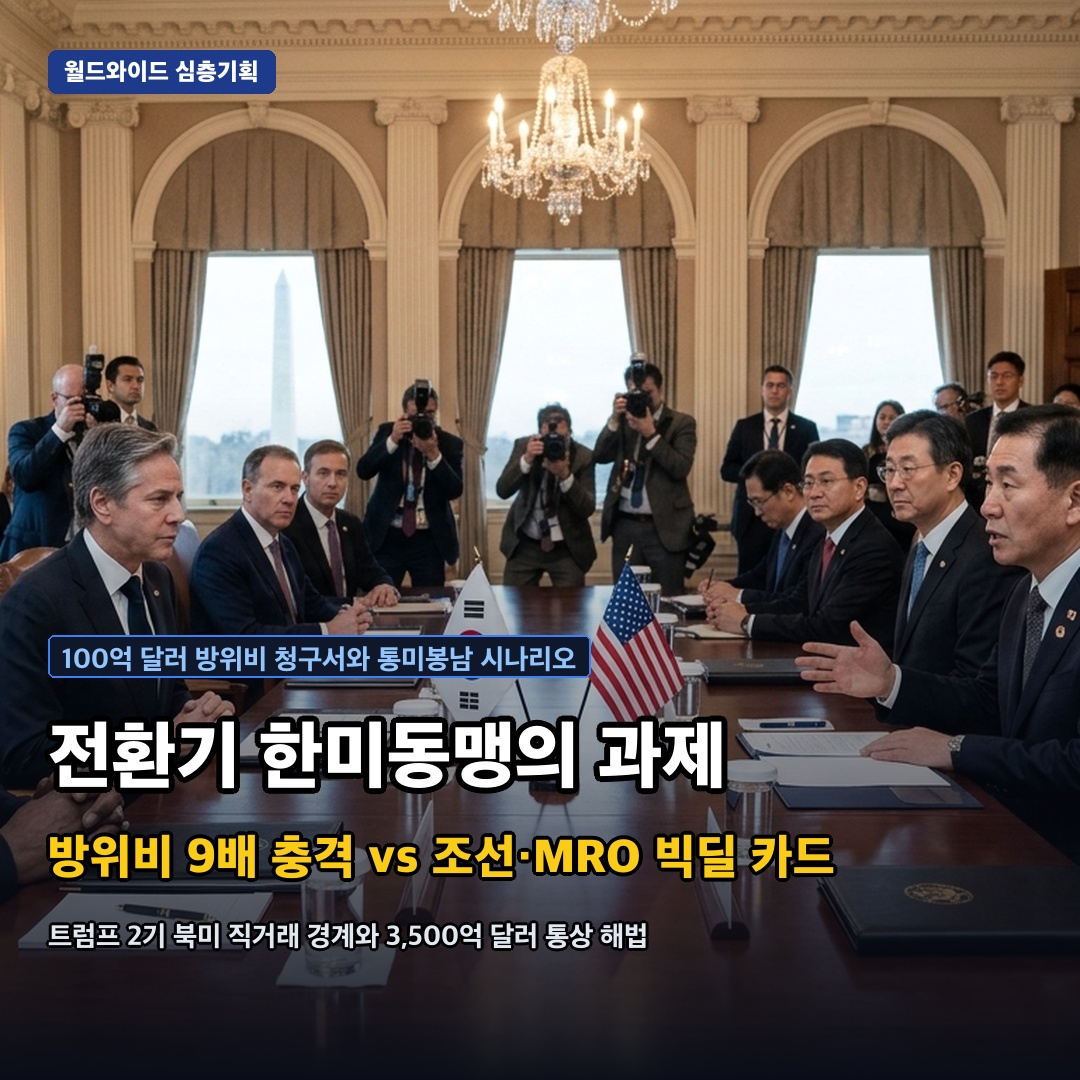
▲ 미국 워싱턴 D.C.에서 열린 한미 외교안보 고위급 전략 대화에서 양국 대표단이 마주 앉아 방위비 분담금과 주한미군 전력 구조 재편을 둘러싸고 팽팽한 논의를 이어가고 있다. [사진: 외교안보 프레스 풀]
핵심 쟁점 3줄 요약
트럼프 2기 행정부의 연간 100억 달러 방위비 요구와 2026 NDS 주한미군 재편 압박으로 한미동맹 중대 기로 직면
남북 단절 속 알렉스 웡·리처드 그리넬의 북미 직거래 추진 시 한국 안보가 소외되는 핵동결 스몰딜 위험 고조
미국의 해군 함정 MRO 인프라 붕괴를 기회 삼아 한국 조선·방산 역량과 3,500억 달러 투자를 묶는 패키지 빅딜 전략 부상
2026년 글로벌 국제 질서가 가치 기반의 다자주의에서 국익 중심의 냉혹한 거래주의로 급격히 재편되면서, 70여 년간 한반도 안보를 지탱해 온 한미동맹이 전례 없는 중대 기로에 섰습니다. 도널드 트럼프 미국 대통령이 취임 직후부터 한국을 '돈벌이 기계'로 지칭하며 기존 제12차 방위비 분담금 특별협정(SMA) 합의액의 9배에 달하는 연간 100억 달러(약 14조 원)를 요구하고 나선 데다, 미국의 새로운 국가방위전략(NDS)이 북한 억제에서 한국의 주도적 책임을 명시하며 주한미군 전력 구조 개편을 압박하고 있기 때문입니다. 설상가상으로 북한이 남북관계를 '적대적 두 국가'로 규정하고 대화 창구를 영구 폐쇄한 상태에서 워싱턴이 평양과 직거래에 나설 경우 한국의 국가이익이 배제되는 이른바 '통미봉남(通美封南)'의 악몽이 현실화될 수 있다는 우려가 커지고 있습니다. 여기에 국회 외교통일위원회에서 터져 나온 정부 요원 비자 거부 공방과 3,500억 달러에 달하는 대미 투자 기업들의 관세 불안까지 겹치면서 외교안보 전선이 복합 위기에 직면했습니다. 거센 외풍 속에서 한국이 미국의 아킬레스건인 조선·함정 정비(MRO) 역량을 지렛대 삼아 새로운 돌파구를 열 수 있을지 심층 취재했습니다.
1. 방위비 100억 달러 청구서와 주한미군 재편… '동맹의 비용인가 거래인가'
한미 안보 관계에서 대중적 폭발력이 가장 큰 사안은 주한미군 주둔 비용을 둘러싼 방위비 분담금 특별협정(SMA) 갈등입니다. 트럼프 대통령은 공개 유세와 언론 인터뷰를 통해 한국이 연간 100억 달러를 부담해야 마땅하다고 거듭 주장해 왔습니다. 이는 한미 양국이 진통 끝에 정식 타결했던 제12차 SMA 협정을 정면으로 부정하는 파격적 요구입니다. 제12차 협정에 따르면 2026년 한국 측 분담금은 전년 대비 소비자물가지수(CPI) 상승률을 반영한 1조 5,190억 원(약 10억 9,000만 달러) 수준으로 묶여 있었으나, 트럼프 행정부는 기존 합의 대비 9배가 넘는 천문학적인 청구서를 내밀며 조기 재협상을 압박하고 있습니다.
더욱 심각한 문제는 분담금의 규모뿐만 아니라 그 법적 성격에 있습니다. 현행 한미 주둔군지위협정(SOFA) 제5조는 한국이 기지와 시설을 무상 제공하고 미군은 주둔 경비를 전액 부담하는 것을 대원칙으로 규정하고 있습니다. 이에 대한 예외적 조치로 한국은 주한미군 한국인 근로자 인건비와 기지 시설 건설비, 군수지원비에 한해 비용을 분담해 왔습니다. 그러나 미국 측이 괌이나 오키나와에서 출격하는 전략폭격기와 정찰자산 전개 비용, 나아가 미군 순환배치 비용까지 한국에 떠넘기려 할 경우 이는 현행 조약상 법적 근거가 전혀 없는 위법적 요구가 됩니다. 동맹의 안보 공약을 상업적 용역 거래로 격하시킨다는 군 안팎의 비판이 거센 이유입니다.
방위비 압박은 주한미군 감축 및 전력 구조 조정 카드와도 정밀하게 맞물려 있습니다. 미국 의회가 국방수권법(NDAA)을 통해 주한미군 병력을 현행 2만 8,500명 미만으로 감축하는 데 예산을 사용하지 못하도록 하한선을 설정해 두었지만, 국방수권법은 매년 갱신되는 한시 입법에 불과합니다. 특히 미국의 2026년 국가방위전략(NDS)은 북한 억제 임무에서 한국군이 주도적 책임을 맡고 미군은 제한된 지원만 제공한다는 전략적 가이드라인을 명문화했습니다. 이는 주한미군을 대북 억제용 지상군에서 중국을 견제하고 인도태평양 지역으로 신속 전개할 수 있는 유연한 기동 전력으로 경량화하려는 미국의 글로벌 전략 변화를 명확히 보여줍니다. 이에 따라 한국 군 당국 역시 한미 연례안보협의회의(SCM)를 통한 전시작전통제권 전환 조율과 함께 독자적 수중 억제력 확보를 위한 핵추진잠수함 도입 당위성을 미국 측에 강력히 설득하고 있습니다.
구분
기체결된 제12차 한미 SMA 협정
트럼프 행정부 요구안 (공언 기준)
주요 쟁점 및 법적·전략적 충돌 지점
연간 총액
2026년 기준 약 10억 9,000만 달러 (1조 5,190억 원)
연간 100억 달러 (약 13조~14조 원 수준)
기존 합의 대비 약 9배에 달하는 파격적 증액 요구로 국방예산 압박
조정 방식
소비자물가지수(CPI) 연동 (연간 상한선 5% 설정)
미국 전략자산 전개비 및 연합 군사 훈련 비용 추가 청구
SOFA 제5조(한국 시설 무상제공, 미군 경비 부담 원칙) 정면 위배 논란
분담 항목
한국인 인건비, 군사건설비, 군수지원비 (직접 지원 중심)
전략폭격기 전개비, 정찰자산 운용비, 주한미군 순환이동비 포함 시도
작전운용비 항목 신설을 둘러싼 동맹 가치 훼손 및 용역화 반발
주한미군 연계
미 국방수권법(NDAA)상 2만 8,500명 하한선 유지
분담금 협상 지렛대로 주한미군 감축 및 전력 구조 조정 시사
2026 NDS의 한국 주도 억제 책임에 발맞춰 전작권 및 핵잠 도입 설득
2. '통미봉남' 공포의 재현… 알렉스 웡·리처드 그리넬과 북미 직거래 시나리오
외교가에서 가장 예민하게 주시하는 뇌관은 트럼프 2기 행정부와 북한 김정은 국무위원장 간의 직접 담판 재개 가능성입니다. 트럼프 대통령이 백악관 수석 국가안보 부보좌관에 알렉스 웡 전 대북 특별 부대표를 내정하고, 핵심 책사인 리처드 그리넬 전 주독일 대사를 대통령 특임 대사로 거론하면서 북미 직거래의 정지작업이 가시화되고 있습니다. 동시에 백악관 국가안보보좌관에 임명된 마이클 월츠와 국무장관 마르코 루비오 등 대북 강경 매파들이 내각 전면에 포진하면서, 트럼프 행정부는 힘에 의한 억제와 정상 간 톱다운 거래라는 투트랙 전략을 동시에 구사하고 있습니다.
문제는 현재 한반도를 둘러싼 환경이 2018년 싱가포르 정상회담 당시와는 근본적으로 단절되어 있다는 점입니다. 2018년 당시에는 남북 정상이 판문점에서 손을 맞잡으며 한국 정부가 미북 간 중재자이자 촉진자 역할을 주도했습니다. 그러나 현재 북한은 사회주의 헌법을 개정해 대한민국을 불변의 주적으로 명시하고 남북 연결 도로와 철길을 물리적으로 완전히 폭파 단절했습니다. 게다가 북한은 러시아와의 포괄적 전략적 동반자 조약을 통해 사실상의 군사동맹을 복원하며 외교적 몸값을 극대화했습니다. 한국이 소통의 끈을 완전히 상실한 상태에서 북미 양자 대화가 열릴 경우, 한국의 안보 이익이 협상 테이블에서 철저히 소외되는 치명적인 위험이 도사리고 있습니다.
가장 우려스러운 시나리오는 미국이 북한의 완전한 비핵화(CVID) 목표를 사실상 포기하고, 미국 본토를 위협하는 대륙간탄도미사일(ICBM) 동결과 핵실험 중단을 대가로 대북 제재를 완화해 주는 '핵동결 스몰딜'로 선회하는 경우입니다. 워싱턴 정책 서클 일각에서는 현실적으로 북한의 비핵화가 불가능해진 만큼 군축과 위협 감소에 집중하자는 타협론이 고개를 들고 있습니다. 만약 이러한 불완전한 합의가 이뤄진다면 미국 본토는 북한의 장거리 미사일 위협에서 벗어날지 모르지만, 대한민국 5,000만 국민은 북한의 단거리 탄도미사일과 전술핵 위협 아래 고스란히 방치되는 최악의 안보 독박을 쓰게 됩니다.
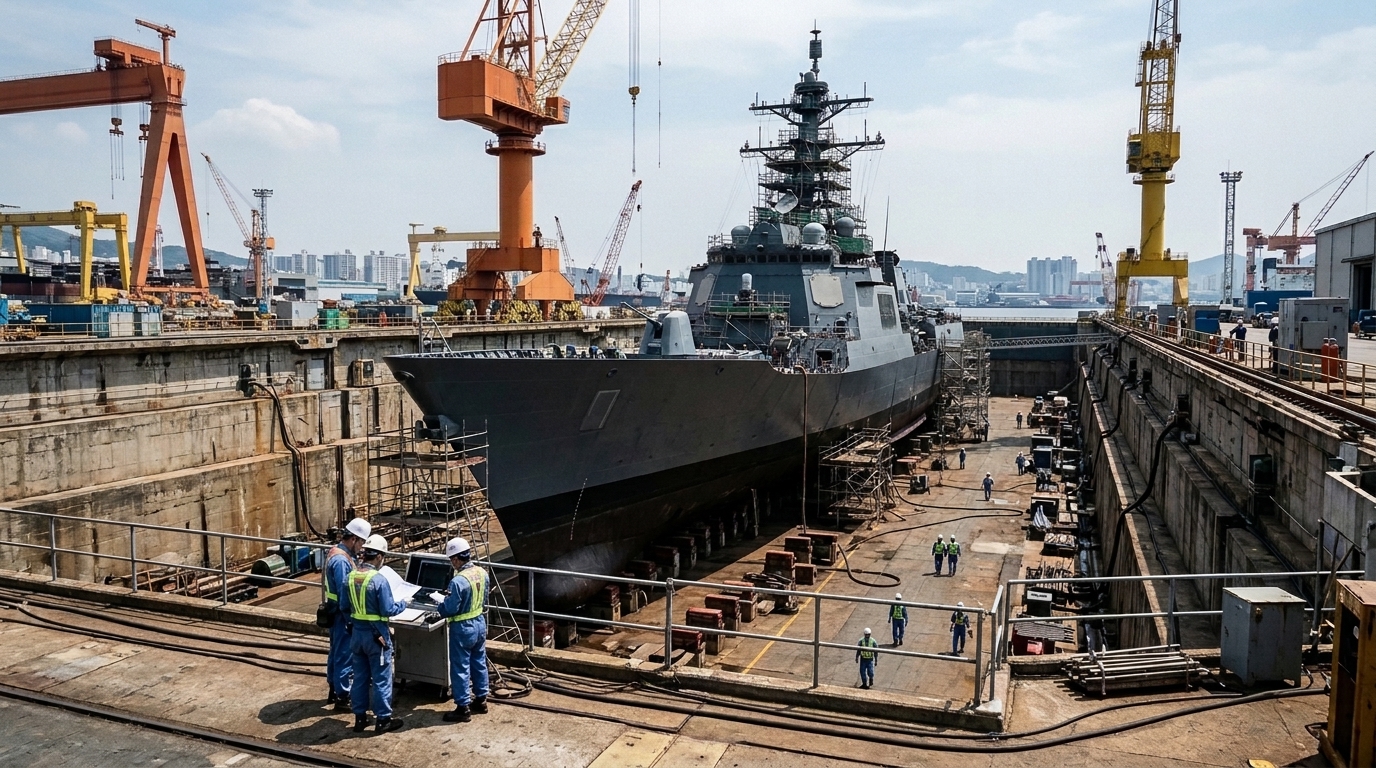
▲ 한국 조선소 드라이도크에서 해군 첨단 구축함에 대한 유지·보수·정비(MRO) 작업이 정밀하게 이뤄지고 있다. 미국의 조선 인프라 붕괴 속에서 한국의 독보적 함정 건조 및 MRO 역량은 통상·안보 협상의 강력한 전략 자산으로 부상했다. [사진: 방위산업 프레스 풀]
3. 국회 외통위 국감 폭발… '한미 외교 파탄' 공방과 비자 갈등의 전말
이러한 엄중한 대외 위기 속에서 국내 정치권은 한미동맹의 균열 조짐을 두고 극단적인 정쟁에 매몰되어 있습니다. 2026년 10월 28일 열린 국회 외교통일위원회 종합감사에서는 여야 지도부가 한미 관계의 이상 기류를 정면으로 거론하며 거친 설전을 벌였습니다. 야당인 국민의힘 정점식 원내대표와 박충권 의원은 주한 미국대사와 주미 한국대사가 동맹의 위기를 경고하는 초유의 사태를 지적하며 정부 여당이 외교관계를 파탄 냈다고 맹공을 퍼부었습니다.
반면 더불어민주당은 동맹 간에도 국익에 따른 이견은 존재할 수 있다고 맞서면서도, 차지호 의원이 한국 국가정보기관 요원들에 대한 미국 정부의 비자 발급 거부 사태를 폭로하며 외교적 저자세를 질타했습니다. 정청래 의원의 방미 비자 발급 지연 사태까지 불거지며 국회 차원의 대미 항의 서한 발송 여부를 두고 여야가 거칠게 충돌했습니다. 1989년 노태우 정부 시절 여소야대 국회에서도 여야 4당이 머리를 맞대고 '한민족공동체통일방안'이라는 초당적 외교 합의를 도출해 냈던 역사적 경험과 비교할 때, 오늘날의 극단적 진영 대립은 외교 협상 테이블에서 한국의 협상력을 스스로 무너뜨리는 자해 행위라는 비판을 피하기 어렵습니다.
4. 관세 폭탄과 3,500억 달러 대미 투자… 통상 압박 뚫을 '조선·반도체' 빅딜 카드
안보 위기와 더불어 통상 분야에서도 거대한 암초가 도사리고 있습니다. 미국의 2023년 기준 전체 무역 적자는 7,734억 달러에 달하며, 한국은 약 510억 달러의 대미 흑자를 기록해 전 세계 무역 적자국 순위에서 8위에 올랐습니다. 이에 따라 트럼프 2기 행정부의 보편 관세 사정권에 한국이 정조준되고 있습니다. 삼성전자, SK하이닉스, 현대자동차, LG에너지솔루션 등 한국 핵심 대기업들은 바이든 행정부 시절 약속받은 반도체 보조금과 세제 혜택을 믿고 총 3,500억 달러에 달하는 천문학적인 대미 직접 투자를 단행했습니다. 그러나 트럼프 신행정부는 기체결된 보조금 지급 계획을 전면 재검토하며 한국 기업들을 벼랑 끝으로 몰아세우고 있습니다.
하지만 위기 속에서도 한국에게는 미국을 압박할 확실한 전략적 지렛대가 존재합니다. 바로 세계 최고 경쟁력을 자랑하는 한국의 조선업과 해군 함정 정비(MRO) 역량입니다. 미국은 본토 내 조선 인프라가 붕괴되면서 해군 함정의 수리 및 건조가 수년씩 지연되는 치명적인 해군력 공백에 직면해 있습니다. 트럼프 대통령조차 당선 직후 한국 정상과의 첫 통화에서 한국의 세계적인 선박 건조 능력을 극찬하며 해군 함정 MRO 분야에서 긴밀한 협력을 요청한 바 있습니다. 조현 외교부 장관이 미국 워싱턴에서 로저 위커 상원 군사위원장과 짐 리쉬 상원 외교위원장을 만나 전통적 안보와 경제에 이어 차세대 반도체와 원전을 아우르는 '안보·경제·과학기술 3대 기둥' 체제를 합의한 것은 매우 전략적인 포석입니다. 한국의 첨단 조선·MRO 역량을 제공하는 대가로 대미 투자 기업들의 보조금을 수호하고 관세 충격을 완화하는 '패키지 빅딜' 협상력이 절실한 시점입니다.
한반도 정세 시나리오
발생 가능성 및 불확실성
핵심 특징 및 국제 역학 구도
한국 외교안보의 당면 과제
시나리오 1: 신냉전 (남북 대치 국면)
가능성: 중간 불확실성: 낮음
미국 주도 인태 연대와 북·중·러 권위주의 블록 간 대립 격화
블록화 속 한미동맹 결속 유지 및 확장억제 실행력 강화
시나리오 2: 미국 우위 (한국 주도 국면)
가능성: 높음 불확실성: 높음
미국의 대중 압박 성공 및 북·중·러 연대 균열로 단극 체제 복원
1990년대 탈냉전기처럼 남북관계 주도권 확보 및 북핵 돌발 위협 차단
시나리오 3: 중국 부상 (북한 공세 국면)
가능성: 낮음 불확실성: 높음
트럼프 고립주의로 동맹 결속 약화 및 중국 영향력 역내 팽창
북한 군사 도발 급증 대비 독자 방위역량 및 핵잠수함 조기 확보
시나리오 4: 다극화 (남북 긴장 국면)
가능성: 낮음 불확실성: 높음
미·중 모두 내부 갈등으로 리더십을 상실하며 국제질서 파편화
상위 동맹 통제력 약화 속 남북 오판 방지 및 자율 안보 연대 구축
5. 한미일 안보 공조와 TCOG·KEDO의 뼈아픈 교훈… 흔들리지 않는 연대의 길
한미동맹의 외연을 넓히고 대북 억제력을 고도화하기 위한 한미일 삼각 안보 협력 역시 중요한 시험대에 올랐습니다. 2023년 8월 캠프 데이비드 정상회의에 이어 2024년 11월 리마 APEC 정상회의를 통해 3국은 '한미일 사무국'을 공식 출범시키며 협력의 제도적 기반을 닦았습니다. 현재 3국은 북한 미사일 경보 정보의 실시간 공유, 동해 대잠수함 연합훈련, 북한 불법 암호화폐 탈취를 차단하는 사이버 워킹그룹, 그리고 유엔 전문가패널 해체에 대응한 11개국 '다국적 제재 모니터링 팀(MSMT)'을 가동하며 촘촘한 공조망을 유지하고 있습니다.
그러나 역사는 한미일 3국 협력이 미국의 전략적 우선순위 변화에 따라 얼마나 허망하게 좌초될 수 있는지를 냉정하게 증언합니다. 1994년 제네바 합의로 출범했던 한반도에너지개발기구(KEDO)와 1999년 페리 프로세스를 뒷받침했던 대북정책조정감독그룹(TCOG)이 대표적입니다. 한국은 KEDO 경수로 건설 사업에 총 11억 4,600만 달러(전체 투입 자금의 72.8%)라는 막대한 혈세를 쏟아부었습니다. 하지만 2002년 부시 행정부가 네오콘의 강경 노선에 따라 중유 공급을 전격 중단하고 강경책으로 돌아서자, 남북 화해를 이어가려던 한국과 일본의 의지와는 무관하게 KEDO는 공정률 34.5% 상태에서 멈춰 섰고 TCOG 역시 불과 수개월 만에 흔적도 없이 해체되었습니다.
KEDO와 TCOG의 역사가 던지는 뼈아픈 교훈은 다자간 협력 체계의 생사여탈권이 결국 가장 강한 힘을 지닌 미국의 정책 의지에 종속되어 있다는 현실입니다. 트럼프 행정부가 다자 안보 공조를 외면하고 양자 거래주의로 선회할 때 캠프 데이비드 체제 역시 흔들릴 수 있습니다. 따라서 대한민국은 정쟁을 멈추고 초당적 외교 역량을 복원해야 합니다. 일본과의 긴밀한 소통을 통해 워싱턴이 확장억제 공약에서 이탈하지 못하도록 견인하는 동시에, 세계 최강의 조선·MRO 기술을 협상 카드로 활용해 안보와 경제의 실익을 지켜내는 입체적인 복합 외교 전략을 구축해야만 전환기 한미동맹의 거친 파고를 당당히 넘어설 수 있을 것입니다.
[In-Depth Analysis] '$10B Defense Bill and 'Passing South Korea' Warnings': Realpolitik Across the ROK-US Alliance, $350B US Investments, and Shipbuilding MRO Breakthroughs
▲ Senior South Korean and American diplomatic and security delegations negotiate defense burden-sharing and USFK force structures during high-level strategic talks in Washington D.C. [Photo: Diplomatic & Defense Press Pool]
Key Takeaways
The Trump administration's $10B burden-sharing demand and 2026 NDS directives push the ROK-US alliance into a major crossroads
Potential US-North Korea bilateral bargaining raises risks of a small-deal freeze that sidelines South Korea's sovereign security
Exploiting US naval shipyard bottlenecks via Korean commercial shipbuilding and MRO capabilities creates vital leverage for a package deal
In 2026, as the international order rapidly shifts from values-based multilateralism to cold, interest-driven transactional realism, the 70-year-old ROK-US alliance confronts an unprecedented strategic inflection point. Immediately following his inauguration, US President Donald Trump labeled South Korea a 'money machine' and demanded an annual defense burden-sharing contribution of 10 billion dollars (approximately 14 trillion won)—nearly nine times the sum agreed upon under the freshly ratified 12th Special Measures Agreement (SMA). Concurrently, the newly released US National Defense Strategy (NDS) explicitly assigns primary responsibility for North Korean conventional deterrence to South Korea, driving structural force realignments of United States Forces Korea (USFK). Compounding these pressures, with Pyongyang officially designating inter-Korean ties as permanently hostile and demolishing border transit links, anxieties are mounting that direct bilateral bargaining between Washington and Pyongyang could leave Seoul sidelined—reviving the historic nightmare of 'passing South Korea.' Coupled with parliamentary clashes over US visa denials for South Korean intelligence personnel and trade anxieties surrounding 350 billion dollars in corporate manufacturing investments, Seoul's foreign policy apparatus faces compounding headwinds. This investigative report analyzes whether South Korea can leverage its advanced naval shipbuilding, maintenance, repair, and overhaul (MRO) capabilities to secure a decisive breakthrough.
1. The $10B Defense Cost-Sharing Bill and USFK Reorganization: Allied Duty vs. Commercial Deal
The most politically explosive flashpoint in bilateral security ties centers on the Special Measures Agreement governing the stationing costs of US troops. President Trump has repeatedly declared during campaign rallies and major media interviews that South Korea should contribute 10 billion dollars annually. This demand fundamentally repudiates the 12th SMA accord recently concluded between Seoul and Washington. Under that bilateral agreement, South Korea's contribution for 2026 was pegged to the consumer price index inflation rate, set at 1.519 trillion won (approximately 1.09 billion dollars) with a 5 percent annual ceiling. By demanding a ninefold hike, the Trump administration is exerting intense coercive leverage to force an immediate renegotiation.
Beyond the sheer monetary magnitude, the demand threatens foundational legal principles. Article 5 of the ROK-US Status of Forces Agreement (SOFA) establishes that South Korea furnishes operational facilities and designated areas free of charge, while the United States finances all personnel and maintenance expenditures. As an exceptional cost-sharing mechanism, South Korea has historically covered only Korean civilian labor payrolls, military construction on bases, and logistical support services. However, if Washington insists on billing Seoul for strategic bomber sorties and reconnaissance deployments originating from Guam or Okinawa, or for continental troop rotations, such demands possess zero legal grounding under governing treaties. Defense scholars warn that transforming allied security guarantees into commercial security services degrades the strategic integrity of the mutual defense pact.
This burden-sharing pressure is inextricably tied to potential force reductions and structural realignments of USFK. While the US Congress instituted a statutory budget floor under the National Defense Authorization Act (NDAA) barring funds from reducing USFK personnel below 28,500 troops, the NDAA remains annual legislation subject to legislative shifts. Crucially, the 2026 US National Defense Strategy stipulates that South Korea must assume primary responsibility for deterring North Korea, with US capabilities providing focused, complementary support. This reflects Washington's broader global posture: pivoting USFK from a static, ground-centric garrison into an expeditionary, agile force designed for regional Indo-Pacific contingencies and China deterrence. Consequently, South Korean defense officials are actively recalibrating the timeline for wartime operational control (OPCON) transfer through the Security Consultative Meeting (SCM), while pressing Washington on the necessity of acquiring conventionally armed, nuclear-powered attack submarines to secure sovereign maritime deterrence.
Billing for strategic assets sorties and joint operational exercises
Direct breach of SOFA Article 5 cost-sharing principles
Covered Categories
Civilian labor wages, base facilities construction, logistics
Attempts to include bomber deployments, ISR sorties, rotations
Severe friction over degrading alliance security into commercial security services
USFK Linkage
Statutory 28,500 troop floor under congressional NDAA
Threatening troop drawdowns and restructuring as negotiation leverage
Aligning with 2026 NDS to accelerate OPCON transfer and nuclear submarine procurement
2. Resurrecting the 'Passing South Korea' Dilemma: Alex Wong, Richard Grenell, and Direct Talks
In diplomatic circles, the most sensitive strategic wildcard is the potential resumption of top-down summitry between President Trump and North Korean leader Kim Jong Un. The appointment of Alex Wong, former special representative for North Korea who coordinated the Singapore and Hanoi summits, as principal deputy national security adviser, alongside backchannel deliberations involving Trump confidant Richard Grenell as a special envoy, signals preparatory moves toward direct Washington-Pyongyang engagement. Simultaneously, the installation of congressional China and North Korea hawks—including National Security Advisor Michael Waltz and Secretary of State Marco Rubio—demonstrates that the administration intends to combine robust military deterrence with personal leader-level transactional diplomacy.
However, the geopolitical architecture governing the Korean Peninsula has suffered an irreversible fracture since the 2018 Singapore summit. In 2018, South Korea served as the indispensable mediator and facilitator, leveraging inter-Korean summits to broker the top-down denuclearization track. Today, Pyongyang has amended its socialist constitution to define South Korea as its principal, immutable foreign enemy, physically detonating road and railway links across the border. Furthermore, North Korea codified a mutual defense alliance with Moscow under their comprehensive strategic partnership treaty, dramatically elevating its strategic leverage. Should direct bilateral talks commence while Seoul remains completely cut off from Pyongyang, South Korea risks total exclusion from negotiations directly affecting its sovereign survival.
The most catastrophic contingency involves Washington abandoning the complete, verifiable, and irreversible denuclearization (CVID) standard in favor of an arms control 'small deal'—exchanging relief from sanctions for an ICBM testing moratorium and a freeze on fissile material production. Influential policy voices in Washington increasingly suggest that because rolling back North Korea's nuclear arsenal is no longer feasible, the realistic objective should be risk reduction. While such an accord might insulate the American homeland from long-range strike capabilities, it would leave 50 million South Koreans permanently hostage to operational short-range ballistic missiles and tactical nuclear warheads.
▲ A modern guided missile destroyer undergoes maintenance, repair, and overhaul (MRO) inside a drydock at a South Korean shipyard. As domestic American shipyard capacity erodes, South Korea's maritime engineering prowess emerges as a critical strategic asset in allied negotiations. [Photo: Defense Industry Press Pool]
3. Parliamentary Clashes in the Foreign Affairs Committee: Diplomatic Friction and Visa Conflicts
Amid these severe external dilemmas, South Korea's domestic political establishment remains consumed by vitriolic polarization over the health of the alliance. During the comprehensive audit of the National Assembly Foreign Affairs and Unification Committee on October 28, 2026, ruling and opposition party leaders engaged in explosive shouting matches over diplomatic strains. Opposition People Power Party floor leader Jung Jeom-sik and lawmaker Park Choong-kwon condemned the government, pointing out that both the US ambassador in Seoul and the Korean ambassador in Washington had issued public warnings regarding alliance friction, accusing the administration of ruining bilateral ties.
In response, the Democratic Party argued that sovereign policy divergences are natural among allies, while lawmaker Cha Ji-ho revealed that the US government had systematically denied visas to South Korean national intelligence officers, criticizing excessive diplomatic deference. When visa delays affecting Representative Jung Chung-rae surfaced, lawmakers fiercely clashed over proposing an official parliamentary protest letter to Washington. Compared to 1989, when a divided National Assembly achieved historic four-party consensus on the Korean National Community Unification Formula under the Roh Tae-woo administration, current partisan warfare paralyzes strategic cohesion and severely undermines South Korea's bargaining posture abroad.
4. Tariff Threats and $350B in US Investments: Unlocking Breakthroughs via Naval MRO Leverage
Parallel to security tensions, major economic friction looms on the trade front. The US aggregate merchandise trade deficit stood at 773.4 billion dollars in 2023, with South Korea ranking eighth globally by contributing roughly 51.0 billion dollars to that imbalance. This deficit firmly places Seoul within the crosshairs of Trump's universal tariff policies. Enticed by federal subsidies and tax credits authorized under the CHIPS and Science Act and the Inflation Reduction Act, leading conglomerates including Samsung Electronics, SK Hynix, Hyundai Motor, and LG Energy Solution pledged an astronomical 350 billion dollars in US direct investments. However, the new administration's systematic review of promised federal grants and threats of punitive tariffs threaten to strand massive capital outlays.
Nevertheless, South Korea possesses a decisive strategic trump card: its world-class commercial shipbuilding capacity and advanced naval maintenance, repair, and overhaul (MRO) infrastructure. Decades of deindustrialization have crippled domestic American shipyards, creating multiyear maintenance backlogs that sideline warships and threaten naval readiness. In his very first post-election congratulatory phone call, President Trump singled out South Korea's legendary maritime engineering prowess, urgently requesting allied cooperation in naval vessel MRO and shipbuilding. Foreign Minister Cho Hyun capitalized on this vulnerability during high-level meetings in Washington with Senate Armed Services Committee Chairman Roger Wicker and Foreign Relations Committee Chairman Jim Risch, establishing a comprehensive 'Three Pillars' framework spanning defense, economics, and advanced science and technology. Offering top-tier naval MRO services in exchange for preserving corporate investment subsidies represents an indispensable package-deal negotiation strategy.
Geopolitical Scenario
Probability & Uncertainty
Key Characteristics & Dynamics
Strategic Priority for South Korea
Scenario 1: Neo-Cold War (Inter-Korean Confrontation)
Probability: Moderate Uncertainty: Low
Intensifying rivalry between US-led coalitions and the China-Russia-DPRK bloc
Reinforcing alliance cohesion while upgrading extended deterrence execution
Scenario 2: US Primacy (ROK-Led Architecture)
Probability: High Uncertainty: High
Restored unipolar stability as US Indo-Pacific strategy fragments rival alignments
Seizing strategic initiatives reminiscent of the post-Cold War 1990s
Scenario 3: China Ascendant (DPRK Offensive Posture)
Probability: Low Uncertainty: High
Alliances fray under transactional tariffs while Chinese influence expands
Accelerating sovereign deterrence assets and nuclear submarine acquisition
Scenario 4: Multipolarity (Autonomous Tensions)
Probability: Low Uncertainty: High
Fragmented international governance due to domestic political crises in Washington and Beijing
Preventing bilateral miscalculation and forming autonomous middle-power networks
5. Trilateral Security Coordination and the Lessons of KEDO: Safeguarding Enduring Partnerships
Expanding the alliance and institutionalizing regional deterrence, trilateral security cooperation among South Korea, the United States, and Japan faces a defining endurance test. Building on the historic August 2023 Camp David summit and the November 2024 Lima APEC summit, the three nations formally launched a permanent Trilateral Secretariat to lock in institutional continuity. Current operational cooperation includes real-time sharing of North Korean missile warning telemetry, trilateral anti-submarine warfare drills in the East Sea, cyber working groups disrupting illicit cryptocurrency theft, and the 11-nation Multilateral Sanctions Monitoring Team (MSMT) replacing the defunct UN panel of experts.
Yet diplomatic history provides a sobering reminder of how rapidly trilateral architectures unravel when American strategic priorities pivot. A prime example is the Korean Peninsula Energy Development Organization (KEDO) created under the 1994 Geneva Agreed Framework, and the Trilateral Coordination and Oversight Group (TCOG) launched under the 1999 Perry Process. South Korea financed 1.146 billion dollars—fully 72.8 percent of aggregate expenditures—to construct light-water reactors in Kumho. However, when the incoming Bush administration adopted a hardline neoconservative posture in 2002 and unilaterally halted heavy fuel oil shipments, KEDO was suspended at 34.5 percent construction and TCOG dissolved within months, regardless of Seoul's and Tokyo's commitment to diplomatic engagement.
The enduring lesson of KEDO and TCOG is that multilateral security architectures remain fundamentally vulnerable to ideological shifts in Washington. Should the Trump administration sideline multilateral frameworks in favor of bilateral transactional deals, the Camp David architecture could also face severe strain. To navigate these turbulent geopolitical currents, South Korea must transcend domestic partisan recriminations and restore bipartisan foreign policy unity. By synchronizing closely with Tokyo to anchor American extended deterrence commitments, while deploying world-class naval shipbuilding and MRO capabilities as core economic leverage, Seoul can successfully preserve its national sovereignty and security interests amid an era of intense transactional realpolitik.
PRO SOURCING ENGINE만인의 탑 빅데이터 솔루션
★ 가입 시 600 크레딧(120회) 전원 무료
내가 찾는 상품 키워드, 지금 얼마나 검색될까?
네이버 월간 검색량 + 구글 볼륨 + 아이템스카우트 실시간 상품수와 경쟁강도 배지를 0.5초 만에 무료로 확인하세요.
MANINTOP NEWSLETTER
📬 만인의 탑 뉴스레터 무료 구독
오늘 보신 정책·시사 뉴스가 유익하셨나요? 매일 엄선되는 알짜 복지 혜택과 국회 실시간 속보를 이메일로 가장 먼저 받아보세요. (평생 무료)
1월이 시작되면 감기는 이미 우리 곁에 와 있습니다. 2월, 3월, 4월까지 이어지는 추위와 건조함은 코와 목을 가장 먼저 공격합니다. 아침에 일어나자마자 막혀 있는 코. 계속 흐르는 콧물. 괜히 칼칼해지는 목. 이 증상은 “시작”일 뿐입니다. 한 번 무너지면 일주일, 길면 한 달까지 끌고 갑니다. 약을 먹으면 잠깐 괜찮아집니다. 하지만 며칠 뒤 또 반복됩니다. 왜일까요? 감기는 ‘치료’의 문제가 아니라 ‘관리’의 문제이기 때문입니다. 대부분은 감기가 오고 나서 약을 찾습니다. 하지만 진짜 중요한 건 감기가 오기 전에 코와 목을 지키는 것입니다. 건조한 실내 공기, 차가운 바깥 공기, 눈에 보이지 않는 세균. 코와 목은 매일 공격받고 있습니다. 지긋지긋하죠! 그런데도 우리는 아무 준비 없이 버티고 있습니다. 이번 겨울도 그렇게 보낼 건가요? 사실 방법은 어렵지 않습니다. 코를 깨끗하게 관리하고, 목을 따뜻하게 보호하고, 점막을 촉촉하게 유지하고, 기관지를 미리 관리하고, 외부 공기를 차단하는 것. 이 다섯 가지만 꾸준히 해도 감기약 없이 겨울을 보내는 것이 충분히 가능합니다. 🔥 이제부터 그 방법을 하나씩 살펴보겠습니다. 🔥 1. 코와 목을 먼저 관리해야 하는 과학적 이유 감기의 대부분은 코 점막에서 시작됩니다. 국제 학술지 Nature Reviews Microbiology 와 Journal of Allergy and Clinical Immunology 에 실린 호흡기 감염 관련 연구들에서는, 감기 바이러스가 비강 상피세포에 먼저 부착해 증식한다는 점을 설명하고 ...
리모델링사업이 진행 중인 아파트를 매매할 때 “계약금 10%를 언제까지 내야 하느냐”는 질문이 특히 많이 나옵니다. 이주공고(이주 안내)가 7~11월쯤이라고 들으면, 그 시점에 맞춰 계약금도 움직일 것 같아서 더 헷갈리기 쉽습니다. 하지만 실제 납부기한은 ‘이주공고가 언제냐’만으로 자동 결정되지 않는 경우가 많습니다. 1) 계약금 10% 납부기한: 결국 ‘문서에 적힌 일정’이 기준 계약금 10%를 언제까지 납부해야 하는지는, 내가 서명하는 매매계약서(특약 포함) 와 사업주체/조합이 제시한 공고·안내문 에 적힌 납부 일정이 기준이 됩니다. 실제 공고문에서는 분양대금 납부의 큰 틀(계약금→중도금→잔금)을 먼저 안내하고, 상세 일정은 별도 표나 유의사항으로 제시하는 방식이 흔합니다. 또, 계약서 문구에 따라 지급 시점이 조건부로 설정될 수도 있습니다. 예를 들어 한 사례 소개 자료에서는 용역계약서에 잔금(10%) 지급시기가 “사업승인 후”로 기재되어 있었다는 점이 언급됩니다. 이런 식으로 ‘사업 단계’와 지급을 연동하는 문구가 들어가면, 질문의 답은 계약서 문구를 확인해야만 확정됩니다. 관련 내용은 링크 에서 문구 사례를 확인할 수 있습니다. 2) 입주자모집공고에서 확인되는 ‘납부 순서’와 잔금 마감 시점 공고문에 적힌 문구를 보면, 납부 순서와 잔금 마감에 대한 기준이 비교적 명확하게 제시되는 경우가 있습니다. 예를 들어 한 입주자모집공고에는 “분양금액(주택가격)은 계약금, 중도금, 잔금의 순서로 납부”하며 “잔금은 입주(열쇠 수령일) 전에 완납”해야 한다고 안내되어 있습니다. (문구 확인: 링크 ) 이 문구가 의미하는 바는 최소 2가지입니다. 분양/공급 형태의 문서에서는 ‘계약금→중도금→잔금’ 흐름이 공식적으로 안내될 수 있습니다. 잔금은 “입주(열쇠 수령)” 이전에 완납해야 한다는 마감 기준이 문서에 적혀 있을 수 있습니다. 다만, 위 공고문 문구는 잔금 마감에 대한 기준을 보여주지만, 계약금 10%의...
윤석열 전 대통령 탄핵 인용 소식을 접하면, 가장 궁금한 지점은 ‘헌재가 정확히 무엇을 위헌·위법으로 봤는가’입니다. 또한 탄핵과 별개로 진행되는 형사재판(내란 우두머리 혐의 등)이 어디까지 왔는지도 함께 정리할 필요가 있습니다. 아래 내용은 제공된 기사/게시물 스니펫과 링크에서 확인되는 범위만 모아, 일반인이 흐름을 이해하기 쉽게 정리한 것입니다. 1) 탄핵 인용 관련: 스니펫에서 확인되는 ‘판단의 골격’ 제공된 근거 중 조국혁신당 사이트에는 헌법재판소가 윤석열 탄핵 심판에서 “피청구인의 위헌·위법행위는 국민 신임 …”이라는 취지로 판단했다는 문장이 인용돼 있습니다( 링크 ). 이 인용문만 놓고 보면, ‘위헌·위법행위’가 있었는지와 그로 인해 ‘국민의 신임’이 어떻게 평가됐는지가 핵심 축으로 소개됩니다. 다만 질문에서 요청하신 세부 항목, 즉 비상계엄 선포 자체를 문제 삼은 구체적 이유, 계엄 이후 조치(포고령, 국회 통제 등)의 어떤 지점이 헌법 위반인지, 국회의 권한행사 방해 및 정치활동 제약을 어떤 논리로 판단했는지 등은, 이번에 제공된 근거의 제목/스니펫만으로는 조항·사실관계·판단 구조가 그대로 제시돼 있지 않습니다. 따라서 이 글에서는 ‘헌재가 무엇을 문제 삼았다’는 세부 리스트를 단정적으로 재구성하기보다, 현재 확인 가능한 문구 수준의 요약(위헌·위법행위 → 국민 신임의 문제로 평가)까지만 적습니다. 만약 헌재 결정문 전문(주문 및 이유)이 추가로 확인되면, 그때는 문장 단위로 ‘어떤 행위’와 ‘어떤 헌법 원리/조항’이 연결되는지(예: 권력분립, 국회의 권한, 정치적 기본권 등) 구조화해 정리하는 것이 가장 정확합니다. 2) 형사 절차(내란 혐의) 관련: 체포영장과 1심 선고 언급 탄핵 심판과 별도로, 12·3 비상계엄 사태로 내란 혐의를 받는 윤석열 대통령에 대해 2024년 12월 31일 체포 영장이 발부됐다는 BBC 보도가 있습니다( 링크 ). 해당 보도는 ‘현직 대통령’에 대한 체포영장 발부라는 점을 함께 언급합니다. 또...