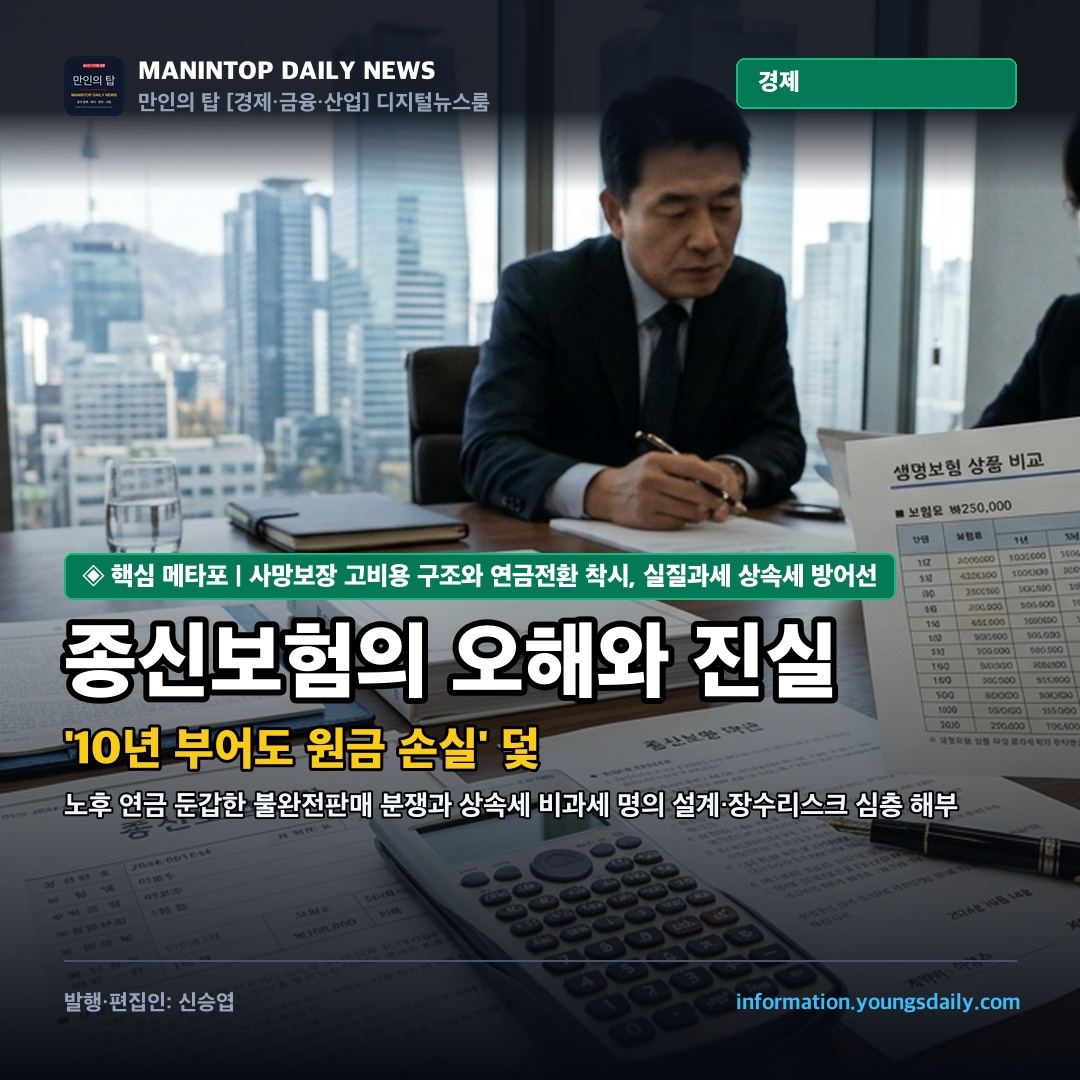
▲ 서울 시내 한 금융 상담 창구에서 소비자가 종신보험 청약서와 사업비 차감 내역을 면밀히 대조하고 있다. [사진=금융감독원 제공]
[핵심 보도 요약 : 3대 쟁점]
보장성 종신보험을 확정이율 저축이나 연금으로 오인해 가입한 금융감독원 민원 실태와 3대 불완전판매 덫
기본보험료의 막대한 위험보험료 및 사업비 차감 구조와 연금전환 특약의 치명적인 환급금 착시 분석
상속세 현금 납부 재원 마련을 위한 자녀 계약자 합법 명의 설계 원칙과 실질과세 세무조사 추징 방어법
"연금인 줄 알았는데 날벼락": 금융감독원 3,200건 민원과 3대 불완전판매 뇌관
사망 시 유족에게 보험금을 지급하는 보장성 보험의 대표 주자인 종신보험이 노후 자금 마련을 위한 재테크 상품이나 확정이율 연금으로 둔갑하여 판매되는 현상이 금융 시장의 뜨거운 뇌관으로 부상했습니다. 은행 예금 금리보다 높은 확정이율을 앞세운 영업에 속아 매월 거액의 보험료를 납입했다가, 10년이 지나서야 원금에도 미치지 못하는 해약환급금 명세서를 받아 들고 망연자실하는 금융 소비자가 속출하고 있습니다.
금융감독원이 공식 집계한 보험 모집 관련 민원 통계에 따르면, 상반기 기준 분쟁 접수 건수는 3,209건에 달합니다. 금융당국의 지속적인 관리 감독에도 불구하고 보장성 종신보험을 목돈 마련 저축이나 노후 연금 상품으로 잘못 알고 가입했다는 피해 호소는 여전히 사그라지지 않고 있습니다. 현장에서 적발된 불완전판매의 대표적인 3대 유형은 확정이율과 연금전환을 강조한 저축 오인 유도, 해피콜로 불리는 완전판매 모니터링의 형식적 답변 유도, 그리고 유니버셜 기능과 무분별한 리모델링 권유로 압축됩니다.
실제로 노후자금을 마련하려던 가입자가 수개월 뒤 종신 사망보장 상품임을 뒤늦게 깨닫고 청약 취소를 요구했으나, 자필 서명과 전화 모니터링 절차가 완료되었다는 이유로 계약 취소를 거절당한 분쟁이 빈번합니다. 특히 "본사 확인 전화가 오면 무조건 '예'라고 답해야 불이익이 없다"며 답변을 사전 조작한 설계사의 행태는 분쟁 발생 시 소비자의 정당한 피해 구제 권리를 가로막는 치명적인 족쇄로 작용하고 있습니다.
▲ 세무 법인 상담실에서 전문가들이 가계 자산 상속세 과세표준과 보험계약 명의 설계 구조를 분석하고 있다. [사진=국세청 제공]
숫자로 보는 종신보험의 구조적 실체: 사업비 차감과 연금전환의 치명적 착시
종신보험의 가장 중요한 본질은 가입자가 매달 성실히 납부하는 보험료 중 상당 부분이 저축이나 투자가 아닌 '사망보험금 지급 재원(위험보험료)'과 '보험사의 운영 비용(사업비 및 판매 수수료)'으로 즉시 차감된다는 점입니다. 아무리 복리 확정이율이 매력적으로 보이더라도 초기 투입 원금에서 20%에서 30%에 달하는 사업비가 먼저 떨어져 나가기 때문에 구조적으로 초기 원금 손실을 피할 수 없습니다.
이러한 고비용 구조 탓에 종신보험은 10년 이상 매월 수십만 원에서 수백만 원씩 납입하더라도 해약환급금이 납입 원금에 도달하지 못하는 경우가 태반입니다. 기본보험료의 2배까지 넣을 수 있는 '추가납입 기능'을 활용하더라도, 이미 기본보험료 자체에서 막대한 위험보험료가 빠져나가기 때문에 순수 저축성 연금보험의 수익률을 넘어서기란 계리적으로 불가능합니다.
소비자를 가장 크게 현혹하는 '연금전환 특약' 역시 차가운 진실을 숨기고 있습니다. 연금전환의 계리적 실체는 종신보험을 해지하고 남은 해약환급금으로 즉시연금을 새로 가입하는 것에 불과합니다. 연금 전환 신청 즉시 평생 유지되던 사망보장은 완전히 소멸하며, 연금액을 산정하는 재원 또한 지금까지 납부한 원금 총액이 아니라 사업비를 떼이고 쪼그라든 해약환급금을 기준으로 책정됩니다. 결과적으로 처음부터 연금 목적으로 저축성 연금보험에 가입했을 때보다 턱없이 적은 연금액을 받게 됩니다.
금융 상품 비교 기준
종신보험 (보장성)
저축성·연금보험
정기보험 (기간 한정)
핵심 가입 목적
평생 사망보장 및 유족 생활
목돈 마련 및 노후 연금 수령
자녀 독립기 조기 사망 집중 방어
위험보험료 및 사업비
매우 높음 (기본보험료서 즉시 차감)
상대적으로 낮음 (적립 비중 높음)
보장 기간 한정으로 가장 저렴
원금 도달 예상 기간
통상 10년 이상 소요 (원금 미달 빈번)
초기 차감 있으나 5~7년 내 원금 도달
순수보장형의 경우 만기환급금 전무
연금 전환 시 실수령액
해약환급금 기준 산정으로 매우 적음
납입 원금 및 운용 수익 기반 정상 지급
연금 전환 불가 (순수 위험보장 전용)
부유층의 상속세 치트키? 종신보험 명의 설정의 세법상 진실과 자금 출처
종신보험이 본래의 유족 보장 기능을 넘어 탁월한 금융 도구로 인정받는 유일한 합법적 영역은 바로 '상속세 납부 재원 마련'입니다. 대한민국 국민 가계 자산의 80% 이상이 부동산에 묶여 있다 보니, 피상속인의 갑작스러운 사망 시 상속인들은 수억 원에서 수십억 원에 달하는 상속세를 납부할 현금이 없어 큰 곤경에 처합니다.
상속세는 사망일이 속한 달의 말일로부터 6개월 이내에 현금으로 신고 및 납부해야 합니다. 부동산을 제값에 급매하기 어렵거나 거래가 얼어붙은 상황에서 종신보험의 사망보험금은 즉각적인 현금 유동성을 공급하여 급처분 손실이나 고금리 대출을 방어하는 방패 역할을 합니다. 그러나 종신보험이 실질적인 절세 혜택을 발휘하려면 계약 체결 시 계약자, 피보험자, 수익자의 명의 설정이 법률적으로 완벽해야 합니다.
부모가 스스로를 계약자와 피보험자로 지정하고 자녀를 수익자로 하면, 수령하는 사망보험금 전액이 상속재산에 합산되어 오히려 상속세 부담이 급증합니다. 반면 소득 능력이 있는 자녀가 계약자와 수익자가 되고 부모를 피보험자로 지정하여 자녀 자신의 돈으로 보험료를 성실히 납부했다면, 해당 보험금은 상속인의 고유재산으로 분류되어 상속세 과세 대상에서 완전히 제외됩니다. 다만 소득이 없는 미성년 자녀 이름으로 가입하거나 부모가 보험료를 대납한 정황이 확인될 경우, 세법상 실질과세 원칙에 따라 전액 상속재산으로 추징되거나 증여세가 부과되므로 객관적인 소득 증빙이 최우선 전제 조건입니다.
▲ 금융 중심지 여의도의 한 리서치 센터에서 연구원들이 한국인의 기대수명 추이와 연금 계리적 리스크 데이터를 검증하고 있다. [사진=보험연구원 제공]
기대수명 연장과 보험사의 '장수리스크': 왜 종신보험을 밀고 연금보험을 꺼리는가
보험사들이 유독 종신보험 판매에 거액의 인센티브를 부여하며 열을 올리고, 순수 종신연금 상품 판매를 축소하는 이면에는 바로 '장수리스크(Longevity Risk)'라는 거대한 계리적 딜레마가 자리 잡고 있습니다. 장수리스크란 가입자의 실제 수명이 예측 수명을 훌쩍 뛰어넘어 보험사가 평생 지급해야 할 연금 총액이 기하급수적으로 불어나는 손실 위험을 의미합니다.
의료 기술의 발전으로 가입자의 수명이 길어질수록 종신보험은 보험사에 엄청난 축복이 됩니다. 가입자가 늦게 사망할수록 매월 보험료를 더 오랫동안 납입받고 사망보험금 지급 시점은 뒤로 밀리기 때문에, 사망률 개선에 따른 막대한 '사차익'을 고스란히 누릴 수 있습니다. 반대로 생존을 조건으로 평생 연금을 주어야 하는 종신연금 상품에서는 기대수명 연장이 고스란히 천문학적인 '생존차손'으로 직결됩니다.
여기에 더해 연금 시장에는 건강하고 장수 유전자를 가진 소비자가 적극적으로 연금에 가입하는 '역선택'과, 연금에 가입한 후 더 많은 연금을 타내기 위해 정기검진과 금연 등으로 스스로 수명을 연장하려는 '사후적 행태변화'까지 겹칩니다. 이러한 이유로 보험사들은 장수리스크를 최소화하기 위해 종신연금의 문턱을 높이고, 소비자에게는 확정이율이라는 그럴듯한 포장지로 종신보험을 연금인 양 권유하는 위험한 마케팅을 지속하고 있는 것입니다.
[소비자 핵심 점검 : 종신보험 가입 전 던져야 할 5대 질문]
주계약의 목적이 사망인가, 저축인가: 상품명에 '종신'이 포함되어 있다면 아무리 이율이 높아도 1차 본질은 사망보험금입니다.
10년 후 해약환급금 예시표 상 환급률이 100%를 넘는가: 초기 사업비 차감률과 실질적인 원금 도달 시점을 명세서 수치로 직접 대조해야 합니다.
추가납입을 활용해도 순수 연금 상품보다 높은가: 기본보험료에서 빠지는 고비용 위험보험료를 상쇄하기 어렵다는 점을 유의해야 합니다.
상속세 절세 목적 시 계약자(자녀)의 국세청 소득 증빙이 가능한가: 자녀의 독자적인 자금 출처가 없다면 실질과세 원칙에 따라 상속세가 전액 추징됩니다.
완전판매 모니터링(해피콜)에서 무조건 '예'라고 답하지 않았는가: 설계사의 구두 약속과 서류 내용이 다르다면 해피콜에서 부인하고 즉시 청약철회를 행사해야 합니다.
발행·편집인: 신승엽 | information.youngsdaily.com.
[In-Depth Analysis] From Pension Illusion to Inheritance Tax Shield: The Bitter Truth Behind Whole Life Insurance and Actuarial Longevity Risks
▲ A consumer carefully cross-checks whole life insurance contract clauses and business expense deduction schedules at a Seoul financial consultation center. [Photo: Financial Supervisory Service]
[Executive Briefing : 3 Critical Takeaways]
Over 3,200 consumer disputes filed with the Financial Supervisory Service over whole life policies mis-sold as guaranteed savings or pensions.
High structural deductions for mortality risk and operational loading fees create severe surrender value deficits and pension conversion illusions.
Legitimate inheritance tax mitigation requires strict child-ownership structuring backed by verifiable income to withstand tax audit scrutiny.
"Thought It Was a Pension": 3,200 Disputes and the 3 Traps of Mis-Selling
Whole life insurance, originally designed to provide death benefits to bereaved families, has increasingly morphed into a hazardous flashpoint across the financial market as aggressive sales networks disguise it as high-yield retirement savings or tax-free wealth tools. Countless policyholders, lured by promises of compound guaranteed interest rates superior to commercial bank deposits, face crushing disappointment upon discovering that even after a decade of continuous premium payments, their surrender cash value remains deeply beneath the principal invested.
Official data released by the Financial Supervisory Service reveals that insurance solicitation complaints exceeded 3,200 cases in the first half of the year alone. Despite regulatory warnings, systemic disputes regarding whole life policies masqueraded as annuity products persist unabated. Regulatory investigations highlight three predominant mis-selling mechanisms: aggressive marketing of fixed interest rates and pension conversion riders, superficial verification protocols where agents coach clients to mechanically answer affirmative during compliance monitoring calls, and volatile universal payment pauses that silently drain cash reserves.
Victims frequently discover months into their contracts that their policies are death-contingent instruments rather than savings vehicles, only to find formal contract cancellation rejected because handwritten signatures and automated telephone verifications were executed. Coached affirmative answers during post-sale compliance surveys serve as legal tripwires against consumers seeking administrative dispute remedies, underscoring the urgent necessity of rigorous pre-signature scrutiny.
▲ Estate tax consultants analyze inheritance tax thresholds and insurance contract ownership configurations to establish legitimate estate liquidity. [Photo: National Tax Service]
Structural Reality in Numbers: Loading Charges and the Pension Conversion Myth
The fundamental economic reality of whole life insurance lies in its actuarial cost architecture: a massive portion of every premium installment is instantly deducted for death mortality risk pools and corporate administrative commissions. Regardless of how enticing headline interest rates appear, upfront expense deductions ranging between 20% and 30% inevitably inflict profound structural principal deficits throughout the contract's early decades.
Consequently, policyholders faithfully contributing substantial monthly premiums across ten years routinely find their accumulated cash surrender value falling far short of gross contributions. While supplemental deposit features offer marginally lower operational deductions, they cannot mathematically overcome the heavy baseline burden imposed by primary premiums, making whole life policies structurally incapable of matching dedicated savings instruments.
Furthermore, the widely heralded 'pension conversion rider' represents an expensive actuarial illusion. Converting a whole life policy into an annuity merely equates to surrendering the death contract and buying an immediate annuity with whatever reduced cash surrender value remains. The conversion instantly terminates lifetime mortality coverage, and future annuity distributions are calculated exclusively from depleted net surrender funds rather than cumulative paid-in capital, resulting in payout yields drastically inferior to pure annuity contracts.
Comparison Criteria
Whole Life Insurance
Pure Annuity / Savings
Term Life Insurance
Primary Policy Objective
Lifetime death coverage and estate protection
Wealth accumulation and retirement income
Targeted mortality shield until retirement
Mortality & Loading Fees
Extremely high (Upfront premium deductions)
Relatively low (Optimized for asset growth)
Lowest cost due to fixed coverage horizon
Principal Breakeven Horizon
Typically exceeds 10 years (Persistent deficits)
Breakeven achieved within 5 to 7 years
No cash value upon expiry (Pure protection)
Net Pension Conversion Yield
Severely curtailed due to surrender value basis
Fully maximized based on compound returns
Not applicable (Pure term risk instrument)
Wealth Planning Cheat Code? Estate Tax Realities and Independent Income Verification
The sole domain where whole life insurance legitimately proves indispensable beyond pure mortality protection is in securing cash liquidity for inheritance tax liabilities. In economies where household wealth is overwhelmingly concentrated in illiquid real estate, unexpected bereavements leave heirs exposed to immense estate tax obligations due in cash within six months of the decedent's passing.
Statutory deadlines force distressed asset liquidations or punitive emergency borrowings during property downturns. Whole life death benefits provide vital, prompt liquidity that insulates estates from fire-sale discounts. However, reaping non-taxable liquidity demands impeccable legal designation of policyholders, insured parties, and designated beneficiaries.
Designating parents as both policyholders and insured parties with children as beneficiaries causes death proceeds to be subsumed directly into the gross taxable estate, compounding tax liabilities. Conversely, when economically independent adult children act as policyholders and beneficiaries while parents are designated as the insured, death benefits represent the heir's proprietary asset, fully exempted from estate taxation. Crucially, tax authorities enforce substance-over-form doctrines: if children lack documented income and parents covertly fund premiums, the entire benefit is audited, clawed back into estate calculations, and penalized.
▲ Financial researchers and actuaries analyze demographic longevity projection curves and life expectancy models in Yeouido financial center. [Photo: Korea Insurance Research Institute]
Surging Longevity and Underwriting Risk: Why Insurers Favor Whole Life Over Annuities
The aggressive corporate promotion of whole life products contrasted with the quiet contraction of lifetime annuities stems from a formidable demographic challenge: actuarial longevity risk. This systemic risk manifests when policyholders' actual lifespans exceed underwriting projections, generating catastrophic cumulative pension payment deficits for insurance carriers.
Rapid medical advancements and rising lifespans represent an underwriting windfall for whole life portfolios. Prolonged survivorship extends premium collection horizons and delays ultimate death benefit claims, generating substantial mortality profit margins. In stark contrast, lifetime annuities turn rising life expectancies into devastating actuarial losses as insurers are compelled to disburse guaranteed income far beyond initial actuarial reserves.
This asymmetry is further exacerbated by adverse selection, where individuals with robust health and familial longevity disproportionately purchase annuities, followed by ex-post behavioral adjustments such as smoking cessation and preventive healthcare aimed at maximizing cumulative payouts. Consequently, commercial insurers strategically restrict pure annuity offerings while deploying deceptive 'pension-like' marketing wrappers around high-margin whole life insurance to insulate corporate balance sheets.
[Consumer Due Diligence : 5 Vital Questions Before Policy Execution]
Primary Contractual Purpose: Any product bearing the term 'Whole Life' is contractually designed for death benefit indemnification rather than wealth building.
Ten-Year Surrender Breakeven: Directly verify the official surrender cash value schedule to measure upfront loading fee deductions and breakeven horizons.
Verifiable Child Income for Estate Tax Exemption: Child-owned tax mitigation structures collapse into punitive estate audits without verifiable independent tax filings.
Strict Compliance Verification: Reject scripted coaching from sales agents during post-contract compliance surveys and immediately exercise statutory cancellation rights if misrepresentations occur.
1월이 시작되면 감기는 이미 우리 곁에 와 있습니다. 2월, 3월, 4월까지 이어지는 추위와 건조함은 코와 목을 가장 먼저 공격합니다. 아침에 일어나자마자 막혀 있는 코. 계속 흐르는 콧물. 괜히 칼칼해지는 목. 이 증상은 “시작”일 뿐입니다. 한 번 무너지면 일주일, 길면 한 달까지 끌고 갑니다. 약을 먹으면 잠깐 괜찮아집니다. 하지만 며칠 뒤 또 반복됩니다. 왜일까요? 감기는 ‘치료’의 문제가 아니라 ‘관리’의 문제이기 때문입니다. 대부분은 감기가 오고 나서 약을 찾습니다. 하지만 진짜 중요한 건 감기가 오기 전에 코와 목을 지키는 것입니다. 건조한 실내 공기, 차가운 바깥 공기, 눈에 보이지 않는 세균. 코와 목은 매일 공격받고 있습니다. 지긋지긋하죠! 그런데도 우리는 아무 준비 없이 버티고 있습니다. 이번 겨울도 그렇게 보낼 건가요? 사실 방법은 어렵지 않습니다. 코를 깨끗하게 관리하고, 목을 따뜻하게 보호하고, 점막을 촉촉하게 유지하고, 기관지를 미리 관리하고, 외부 공기를 차단하는 것. 이 다섯 가지만 꾸준히 해도 감기약 없이 겨울을 보내는 것이 충분히 가능합니다. 🔥 이제부터 그 방법을 하나씩 살펴보겠습니다. 🔥 1. 코와 목을 먼저 관리해야 하는 과학적 이유 감기의 대부분은 코 점막에서 시작됩니다. 국제 학술지 Nature Reviews Microbiology 와 Journal of Allergy and Clinical Immunology 에 실린 호흡기 감염 관련 연구들에서는, 감기 바이러스가 비강 상피세포에 먼저 부착해 증식한다는 점을 설명하고 ...
리모델링사업이 진행 중인 아파트를 매매할 때 “계약금 10%를 언제까지 내야 하느냐”는 질문이 특히 많이 나옵니다. 이주공고(이주 안내)가 7~11월쯤이라고 들으면, 그 시점에 맞춰 계약금도 움직일 것 같아서 더 헷갈리기 쉽습니다. 하지만 실제 납부기한은 ‘이주공고가 언제냐’만으로 자동 결정되지 않는 경우가 많습니다. 1) 계약금 10% 납부기한: 결국 ‘문서에 적힌 일정’이 기준 계약금 10%를 언제까지 납부해야 하는지는, 내가 서명하는 매매계약서(특약 포함) 와 사업주체/조합이 제시한 공고·안내문 에 적힌 납부 일정이 기준이 됩니다. 실제 공고문에서는 분양대금 납부의 큰 틀(계약금→중도금→잔금)을 먼저 안내하고, 상세 일정은 별도 표나 유의사항으로 제시하는 방식이 흔합니다. 또, 계약서 문구에 따라 지급 시점이 조건부로 설정될 수도 있습니다. 예를 들어 한 사례 소개 자료에서는 용역계약서에 잔금(10%) 지급시기가 “사업승인 후”로 기재되어 있었다는 점이 언급됩니다. 이런 식으로 ‘사업 단계’와 지급을 연동하는 문구가 들어가면, 질문의 답은 계약서 문구를 확인해야만 확정됩니다. 관련 내용은 링크 에서 문구 사례를 확인할 수 있습니다. 2) 입주자모집공고에서 확인되는 ‘납부 순서’와 잔금 마감 시점 공고문에 적힌 문구를 보면, 납부 순서와 잔금 마감에 대한 기준이 비교적 명확하게 제시되는 경우가 있습니다. 예를 들어 한 입주자모집공고에는 “분양금액(주택가격)은 계약금, 중도금, 잔금의 순서로 납부”하며 “잔금은 입주(열쇠 수령일) 전에 완납”해야 한다고 안내되어 있습니다. (문구 확인: 링크 ) 이 문구가 의미하는 바는 최소 2가지입니다. 분양/공급 형태의 문서에서는 ‘계약금→중도금→잔금’ 흐름이 공식적으로 안내될 수 있습니다. 잔금은 “입주(열쇠 수령)” 이전에 완납해야 한다는 마감 기준이 문서에 적혀 있을 수 있습니다. 다만, 위 공고문 문구는 잔금 마감에 대한 기준을 보여주지만, 계약금 10%의...
윤석열 전 대통령 탄핵 인용 소식을 접하면, 가장 궁금한 지점은 ‘헌재가 정확히 무엇을 위헌·위법으로 봤는가’입니다. 또한 탄핵과 별개로 진행되는 형사재판(내란 우두머리 혐의 등)이 어디까지 왔는지도 함께 정리할 필요가 있습니다. 아래 내용은 제공된 기사/게시물 스니펫과 링크에서 확인되는 범위만 모아, 일반인이 흐름을 이해하기 쉽게 정리한 것입니다. 1) 탄핵 인용 관련: 스니펫에서 확인되는 ‘판단의 골격’ 제공된 근거 중 조국혁신당 사이트에는 헌법재판소가 윤석열 탄핵 심판에서 “피청구인의 위헌·위법행위는 국민 신임 …”이라는 취지로 판단했다는 문장이 인용돼 있습니다( 링크 ). 이 인용문만 놓고 보면, ‘위헌·위법행위’가 있었는지와 그로 인해 ‘국민의 신임’이 어떻게 평가됐는지가 핵심 축으로 소개됩니다. 다만 질문에서 요청하신 세부 항목, 즉 비상계엄 선포 자체를 문제 삼은 구체적 이유, 계엄 이후 조치(포고령, 국회 통제 등)의 어떤 지점이 헌법 위반인지, 국회의 권한행사 방해 및 정치활동 제약을 어떤 논리로 판단했는지 등은, 이번에 제공된 근거의 제목/스니펫만으로는 조항·사실관계·판단 구조가 그대로 제시돼 있지 않습니다. 따라서 이 글에서는 ‘헌재가 무엇을 문제 삼았다’는 세부 리스트를 단정적으로 재구성하기보다, 현재 확인 가능한 문구 수준의 요약(위헌·위법행위 → 국민 신임의 문제로 평가)까지만 적습니다. 만약 헌재 결정문 전문(주문 및 이유)이 추가로 확인되면, 그때는 문장 단위로 ‘어떤 행위’와 ‘어떤 헌법 원리/조항’이 연결되는지(예: 권력분립, 국회의 권한, 정치적 기본권 등) 구조화해 정리하는 것이 가장 정확합니다. 2) 형사 절차(내란 혐의) 관련: 체포영장과 1심 선고 언급 탄핵 심판과 별도로, 12·3 비상계엄 사태로 내란 혐의를 받는 윤석열 대통령에 대해 2024년 12월 31일 체포 영장이 발부됐다는 BBC 보도가 있습니다( 링크 ). 해당 보도는 ‘현직 대통령’에 대한 체포영장 발부라는 점을 함께 언급합니다. 또...