11월 27일 '자원 킬스위치' 온다… 미국 전투기 멈춰 세우는 중국 핵심광물과 120억 달러 볼트
만인의 탑 편집국11월 09, 2026
월드와이드 심층분석 | 미중 자원전쟁·국가안보 공급망
공식 정론 배포 | 만인의 탑 데스크
11월 27일 '자원 킬스위치' 온다… 미국 전투기 멈춰 세우는 중국 핵심광물과 120억 달러 볼트
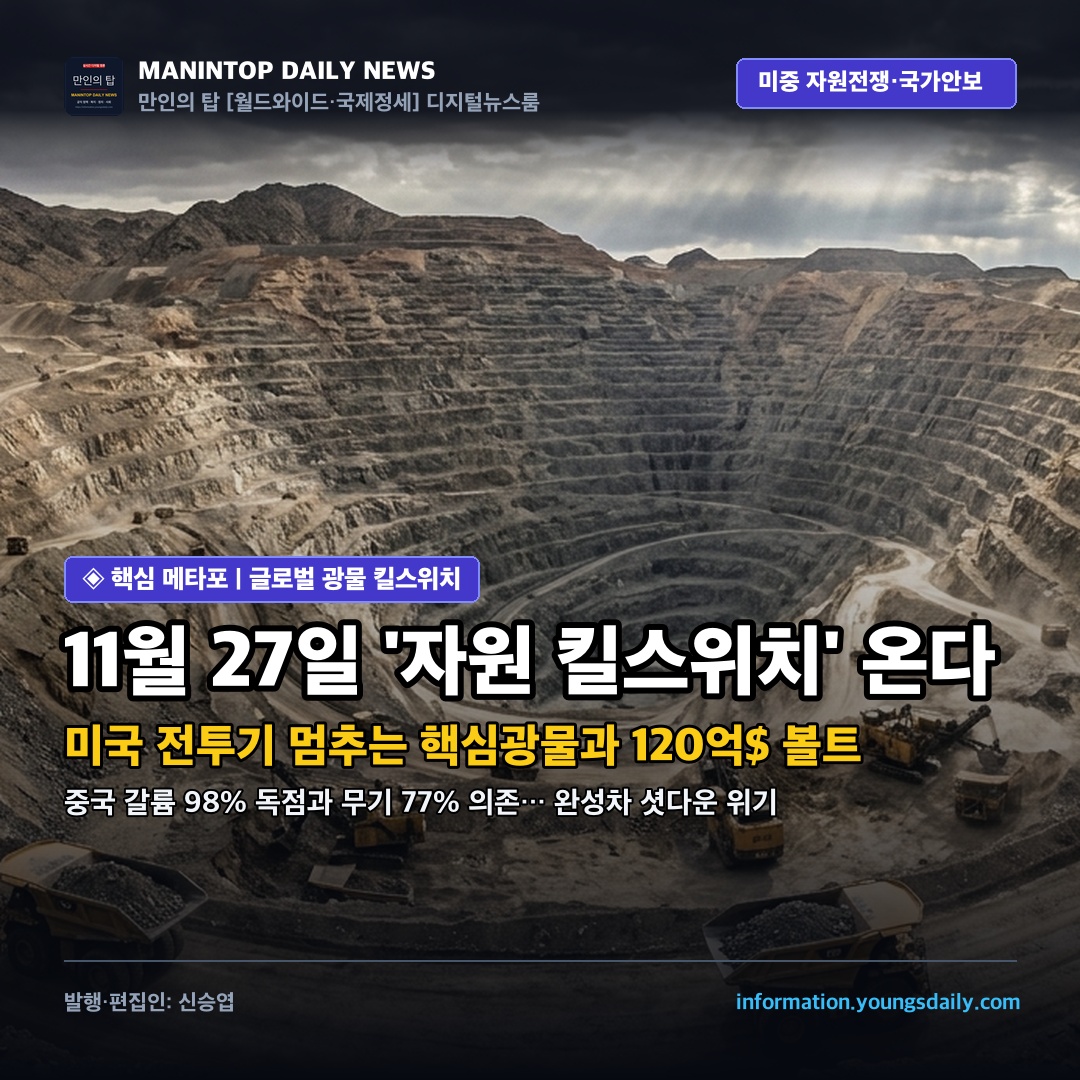
▲ 첨단 방위산업과 반도체의 필수 원료를 채굴하는 대규모 노천 광산 전경. 중국이 핵심광물 가공과 정련의 90% 이상을 장악한 가운데, 11월 27일 수출 통제 유예 만료를 앞두고 글로벌 공급망에 비상이 걸렸다. / 공식 자원 안보 보도 자료 사진
미국과 중국의 패권 경쟁이 반도체 장비 통제를 넘어 미사일과 전투기를 움직이는 '핵심광물 공급망' 전면전으로 번졌습니다. 전 세계 갈륨의 98%, 게르마늄과 희토류 정련의 90% 이상을 틀어쥔 중국이 대미 민수용 수출 제한 유예 시한을 2026년 11월 27일로 못 박으면서 글로벌 산업계의 긴장감이 최고조에 달했습니다. 미 해군 무기 체계의 91.6%, 공군 전력의 85.1%가 중국산 광물에 얽혀 있다는 충격적인 실태가 드러나자, 미국 정부는 120억 달러 규모의 민관 비축 회랑 '프로젝트 볼트'를 신설하고 방위산업기금을 쏟아부으며 사상 최대의 광물 독립 작전에 돌입했습니다.
'암석에서 로켓까지' 얽힌 치명적 약점… 중국의 독점과 11월 27일 유예 만료
미국과 중국의 패권 다툼이 첨단 반도체 칩 설계를 넘어 땅속에서 캐내는 광물 원자재로 급격히 남하하고 있습니다. 땅속의 바위(Rock)에서 출발해 최첨단 유도미사일과 우주발사체(Rocket)에 이르기까지, 현대 군사력과 첨단 제조업의 생명줄이 중국의 광물 가공 독점권에 얽혀 있다는 충격적인 사실이 수면 위로 드러났습니다. 중국은 전 세계 갈륨 생산의 98%를 틀어쥐고 있으며, 게르마늄과 안티몬, 희토류 정련 시장의 90% 이상을 사실상 홀로 지배하고 있습니다.
중국 상무부(MOFCOM)의 자원 무기화는 정밀하고 치밀했습니다. 2023년 7월 갈륨과 게르마늄에 대한 수출 허가제를 발동한 것을 시작으로, 2024년 12월 3일에는 공고 제46호를 통해 군사용과 민수용 모두에 쓰이는 이중용도 품목의 대미 수출을 원칙적으로 전면 불허했습니다. 이어 2025년 4월에는 전기차와 풍력발전에 필수적인 영구자석 수출을 가로막았고, 10월에는 중국산 원료가 단 1g이라도 들어간 제품은 제3국 간 거래 시에도 중국 정부 승인을 받도록 하는 '역외 적용권'까지 휘둘렀습니다.
가장 극적인 긴장은 2025년 11월 9일 발표된 상무부 공고 제72호에서 비롯되었습니다. 미중 정상회담 직후 중국은 대미 민수용 수출 불허 조치를 '2026년 11월 27일까지' 1년 동안 한시적으로 유예하겠다고 밝혔습니다. 하지만 '미군과 군사적 최종 용도로의 수출 전면 금지' 조치는 단 하루도 풀지 않고 엄격히 유지했습니다. 이제 그 시한부 유예 기간의 종료가 코앞으로 다가오면서, 전 세계 방위산업과 테크 기업들은 중국이 자원 킬스위치를 다시 내릴지 숨을 죽인 채 카운트다운을 지켜보고 있습니다.
구축함 레이더부터 F-35 스텔스기까지… 미군 1,908개 무기 체계의 사멸적 의존
미국 전략국제문제연구소(CSIS)의 심층 분석과 미 국방부(DoD) 조달 데이터가 폭로한 수치는 워싱턴 정가를 경악에 빠뜨렸습니다. 미 국방부가 실전 운용 중인 전체 무기 체계의 77.7%에 달하는 1,908개 무기 시스템과 8만 6개의 핵심 부품이 갈륨, 안티몬, 게르마늄, 텅스텐, 텔루륨 등 5대 핵심광물에 절대적으로 의존하고 있었습니다.
군별 노출도는 상상을 초월합니다. 미 해군의 경우 전체 무기 체계의 무려 91.6%(739개 체계, 5만 1,468개 부품)가 이들 광물 없이는 생산조차 불가능합니다. 공군은 85.1%(302개 체계), 육군은 70.3%(575개 체계), 해병대는 61.7%(292개 체계)에 달합니다. 미 해군의 주력인 알레이버크급 이지스 구축함에 장착된 AN/SPY-6 능동위상배열 레이더는 질화갈륨(GaN) 반도체로 기존 대비 탐지 거리를 2배 넓혔으나, 이 갈륨이 막히면 레이더 생산 라인이 멈춥니다.
F-35 스텔스 전투기의 미사일 접근 경보 시스템(AN/AAR-54)은 안티몬 결정체를 이용해 적외선을 감지하며, 우크라이나 전장에서 러시아 전차를 파괴한 재블린(Javelin) 대전차 미사일 조준경 렌즈에는 게르마늄이 필수적입니다. M1A2 에이브람스 전차의 120mm 날개안정분리철갑탄은 텅스텐 중합금 관통자가 적 장갑을 뚫고, 해병대 정찰 드론 RQ-21은 텔루륨 열전 발전기로 하늘을 납니다. CSIS 분석에 따르면 알레이버크 구축함과 미니트맨 III 대륙간탄도미사일(ICBM)에 들어가는 안티몬의 80% 이상이 중국 내 채굴 및 정련소를 거친 것으로 드러났습니다.
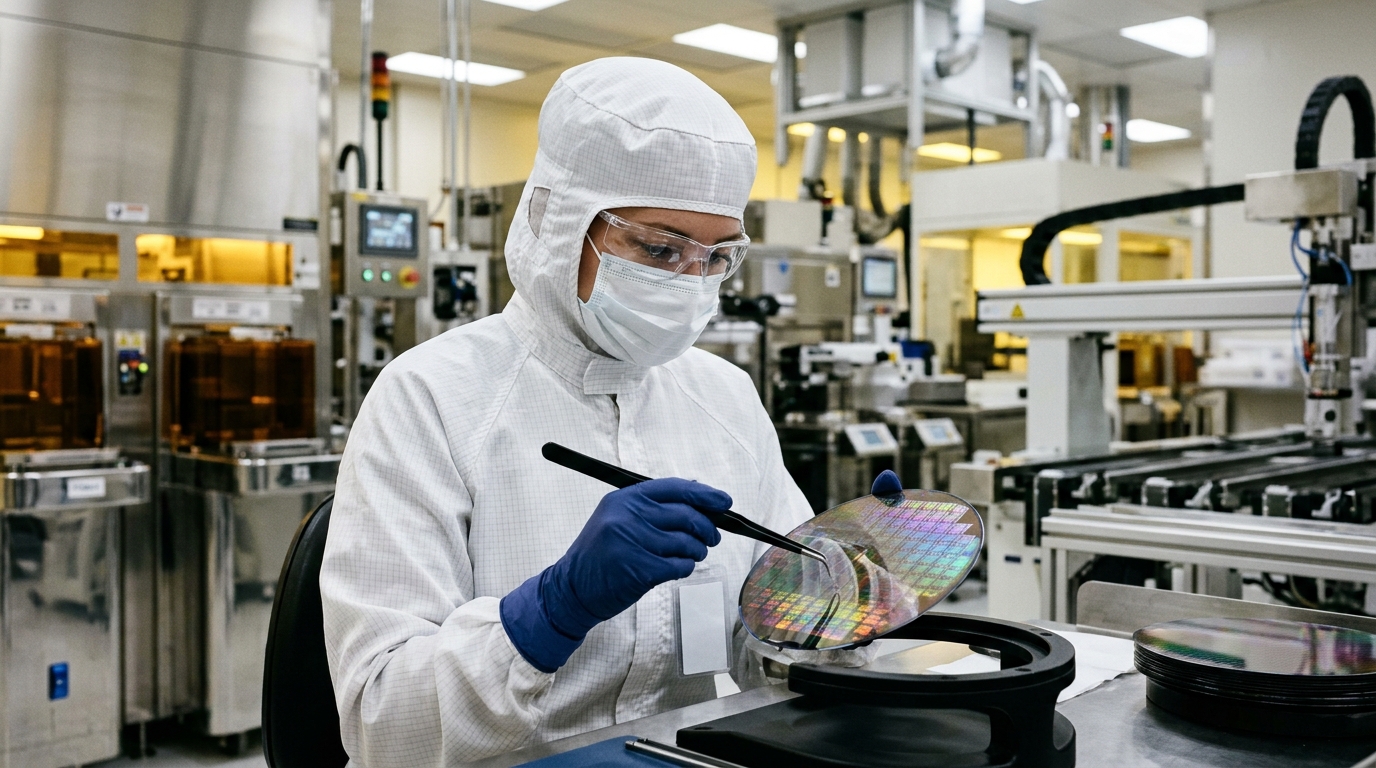
▲ 방위산업 클린룸 연구실에서 특수 보호복을 착용한 기술자가 최신 군용 레이더에 필수적인 질화갈륨(GaN) 반도체 웨이퍼를 정밀 검사하고 있다. 갈륨은 미 해군 레이시온 SPY-6 레이더의 핵심 소재다. / 공식 방산 기술 보도 사진
완성차 공장 멈추고 6,020억 달러 증발 경고… 글로벌 산업 공급망의 셧다운 충격
광물 무기화의 불길은 군수 공장에만 머물지 않고 민간 완성차와 전자 산업 전체로 번졌습니다. 미국 지질조사국(USGS)의 거시경제 시뮬레이션에 따르면, 갈륨 공급량이 단 30%만 차단되어도 미국 국내총생산(GDP)의 2.1%가 허공으로 사라지며 이는 약 6,020억 달러(한화 약 830조 원)의 경제적 파멸을 의미합니다.
실제 피해는 즉각적이었습니다. 2025년 4월 중국이 전기모터용 영구자석 수출을 틀어쥐자 미국 포드(Ford) 자동차는 주요 조립 공장 가동을 멈춰 세웠고, 일본 스즈키, 유럽의 스텔란티스와 세계 최대 자동차 부품사 보쉬(Bosch)가 줄줄이 조업 단축과 휴업에 들어갔습니다. 10월에는 중국 내 공장을 둔 차량용 반도체 기업 넥스페리아의 부품 수출이 묶이면서 혼다의 북미 완성차 공장이 멈춰 서고 스텔란티스가 최고경영진 비상대응실(War Room)을 24시간 가동하는 등 사상 초유의 부품 대란이 벌어졌습니다.
원자재 가격 폭등은 정부 재정을 갉아먹고 있습니다. 중국의 규제 발표 직후 단 3개월 만에 미 국방부의 갈륨 함유 부품 조달 단가는 6.0%, 안티몬 부품은 4.5%, 게르마늄 부품은 1.6% 급등했습니다. 일반 군수 부품 평균 상승률(1.4%)의 3~4배가 넘는 폭등세로, 중국의 손짓 하나에 서방 국방 예산이 통째로 흔들리고 있습니다.
5대 핵심광물
주 원 광물 및 동반성 비율
대표 군사 및 첨단 상용 용도
북미 대체 생산 및 정련 프로젝트
안티몬 (Antimony)
납 40%, 은 16%, 아연 12%, 금 4%, 비동반 20%
F-35 미사일 경보 적외선 센서(InSb), 전차 철갑탄 심재, 탄약 뇌관
아이다호 스티브나이트 금·안티몬 광산 (미 국방부 5,940만 달러 투입)
갈륨 (Gallium)
알루미늄(보크사이트) 60%, 아연 40%
해군 구축함 SPY-6 질화갈륨 레이더, 6세대 전투기 초고주파 통신
테네시 나이스타 아연 정련소 부산물 회수 설비 (연간 40톤 생산 목표)
게르마늄 (Germanium)
아연 60%, 석탄 재(Coal Ash) 40%
재블린 대전차 미사일 조준경 렌즈, 열상 야간투시경, 우주 태양전지
나이스타 아연 제련 잔재물 추출 (연 30톤) 및 칼코게나이드 대체재 개발
텔루륨 (Tellurium)
구리 90.5%, 납 4.75%, 비동반 4.75%
해병대 RQ-21 무인기 열전 발전기, 군용 차세대 박막 태양광 패널
유타 케네콧 동광산 부산물 회수 시설 (대외 수입 의존도 95%→25% 급감)
120억 달러 '프로젝트 볼트'와 3트랙 안보 총동원… 보잉·GM까지 뛰어든 비축 회랑
벼랑 끝에 몰린 미국은 정부 재정과 입법, 민간 자본을 총동원한 '3트랙 국가 안보 비상작전'에 돌입했습니다. 과거 석유 위기 시절 전략비축유(SPR)를 채우듯, 광물 비축고를 채우고 국내 정련 공장을 되살리겠다는 결사 항전입니다.
첫 번째 트랙은 국가 국방비축물량(NDS)의 대규모 확충입니다. 미국 의회는 특별법을 통해 국방물자비축거래기금에 20억 달러를 투입하고, 광물 가공 지원 기금에 50억 달러를 배정했습니다. 미 국방조달청(DLA)은 US 안티몬과 2억 4,500만 달러 규모의 장기 공급 계약을 맺고, 리오 틴토의 스칸듐(4,500만 달러), 코발트(최대 5억 달러)를 대량 사재기하고 있습니다. 두 번째 트랙은 120억 달러 규모의 민관 기축 회랑인 '프로젝트 볼트(Project Vault)'입니다. 미 수출입은행의 100억 달러 대출 보증과 민간 금융사의 20억 달러 자본을 결합해, 보잉과 제너럴모터스(GM), GE 버노바 등 핵심 기업들이 수수료를 내고 비상시 광물을 우선 공급받는 거대한 민간 비축 방파제를 세웠습니다.
세 번째 트랙은 의회의 'SECURE Minerals Act' 입법입니다. 25억 달러 규모의 독립 정부공사를 설립해 광물 가격 하한선(Price Floor)을 보장함으로써, 중국의 덤핑 공세로 서방 광산이 파산하는 것을 막는 안전장치를 마련했습니다. 여기에 2026년 국방권한법(NDAA)은 2030년까지 중국산 광학 유리의 조달을 전면 금지하고 게르마늄이 전혀 들어가지 않는 신소재인 '칼코게나이드 글래스'로의 전환을 강제했습니다. 특히 미 지질조사국(USGS)은 미국의 수입 의존도가 77%에 달하고 6년 연속 전 세계적인 공급 부족을 겪고 있는 '은(Silver)'을 사상 최초로 국가 핵심광물 리스트에 신규 등재하며 자원 안보의 전선을 확장했습니다.
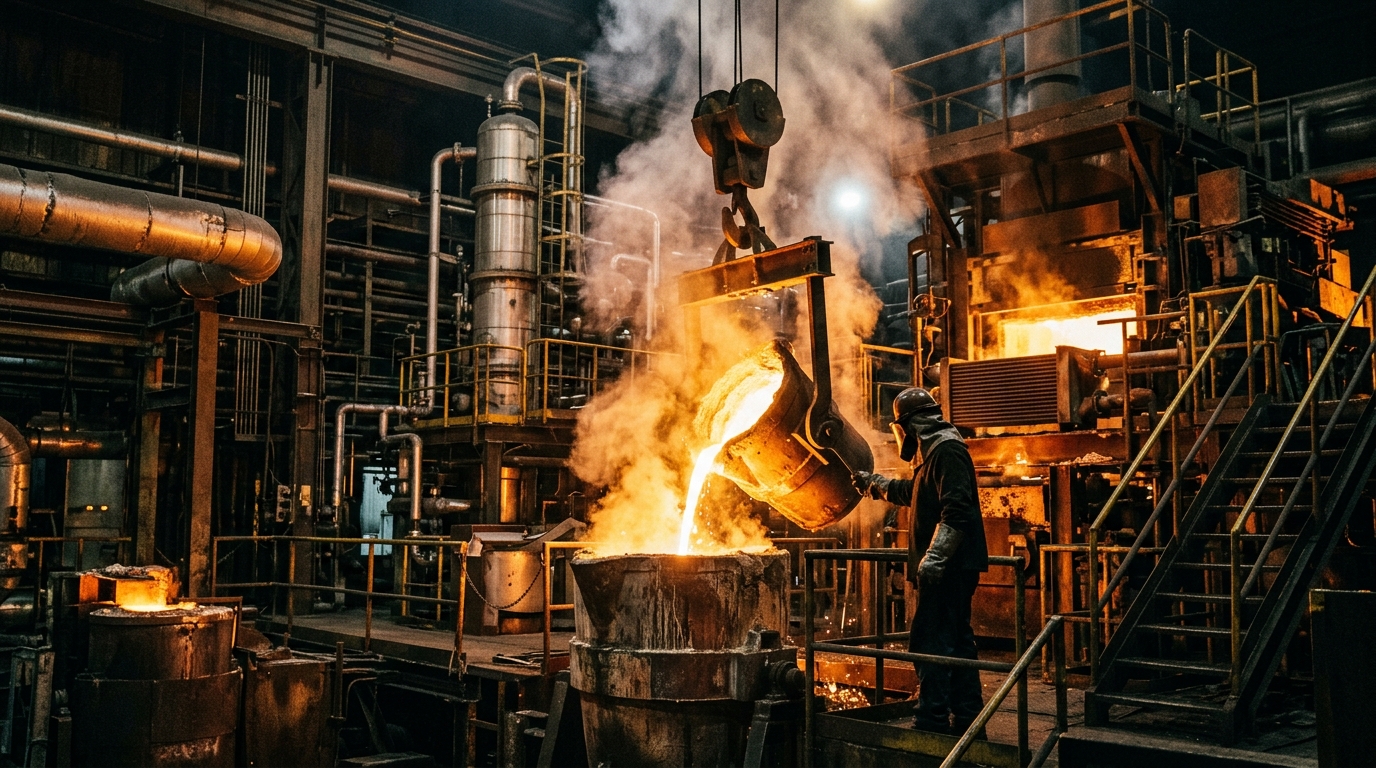
▲ 고온의 산업용 전기로에서 붉게 녹아내린 광물 슬래그가 주조 내화 용기로 쏟아져 내리고 있다. 핵심 광물의 90% 이상이 다른 주력 금속 제련 과정에서 극미량 추출되는 동반성 특성으로 인해 독자적 제련 인프라 확보가 공급망 독립의 핵심 승부처다. / 공식 중공업 제련 보도 사진
광물 동반성의 함정과 북미 제련소의 부활… 미중 자원 전쟁의 미래 시나리오
미국과 서방이 수백조 원을 쏟아부어도 탈중국화가 더딘 근본적인 이유는 '광물 동반성(Companionality)'이라는 자연의 법칙 때문입니다. 갈륨, 게르마늄, 텔루륨 같은 전략 광물은 단독으로 묻혀 있는 광산이 존재하지 않습니다. 알루미늄이나 아연, 구리를 수십만 톤 제련할 때 굴뚝 연기나 찌꺼기(슬래그)에서 겨우 몇 그램씩 얻어지는 극소량 부산물(By-product)입니다.
갈륨은 알루미늄 제련의 부산물인데, 전 세계 알루미늄 제련의 59%를 중국이 장악하고 있습니다. 서방이 환경오염과 높은 전기요금을 이유로 1980년대에 제련소를 모두 해외로 쫓아내는 동안, 중국은 대규모 전기 보조금과 환경 규제 완화로 전 세계 제련 설비를 독점했습니다. 화웨이가 2,000건이 넘는 GaN 특허를 쓸어 담을 수 있었던 배경도 중국 내 풍부한 정련 생태계 덕분이었습니다.
그러나 절체절명의 위기 속에서 북미 제련소들이 깨어나고 있습니다. 유타주 케네콧 동광산은 구리 제련 과정에서 텔루륨을 분리하는 설비를 갖춰 미국의 텔루륨 수입 의존도를 95%에서 25%로 단숨에 떨어뜨렸습니다. 테네시주 나이스타 아연 정련소는 연간 30톤의 게르마늄과 40톤의 갈륨을 회수하는 시설을 구축해 중국의 전 세계 수출량 절반을 혼자 대체하겠다는 야심 찬 프로젝트를 가동했습니다. 피터슨국제경제연구소(PIIE)의 채드 바운 수석연구원은 "미중 양국이 상호 파멸적인 전면 봉쇄를 피하려면 관세 협정처럼 첨단 칩과 희토류의 시장 점유율을 각각 40% 선으로 관리하며 점진적으로 낮추는 '관리된 디커플링'을 모색해야 한다"고 지적했습니다. 2026년 11월 27일 유예 만료 디데이를 앞두고, 지구촌 자원 안보의 거대한 지각변동이 시작되었습니다.
만인의 탑 정론 뉴스룸 | 월드와이드 특별취재팀
발행인 겸 편집인: 신승엽 (Seung Youb Ssin)
본 기사는 미국 전략국제문제연구소(CSIS) 'Rock to Rocket' 국가안보 보고서, 미 국방부(DoD) 조달청(DLA) 계약 공시, 중국 상무부(MOFCOM) 공고문 제46호·제18호·제72호, 미국 지질조사국(USGS) 2025 핵심광물 대장 및 피터슨국제경제연구소(PIIE) 정책 분석 자료를 기반으로 정밀 검증을 거쳐 편찬되었습니다.
The November 27 Resource Cliff: China's Mineral Kill-Switch, Pentagon Weapons, and the $12B Vault
▲ Industrial terraced open-pit mine extracting raw ores for critical defense and semiconductor applications. As China controls over 90 percent of strategic mineral refining, a looming November 27 export reprieve deadline rattles Western industrial supply chains. / Official Mining Press Archive
The geopolitical rivalry between Washington and Beijing has escalated beyond advanced chip embargoes into a full-scale confrontation over critical mineral supply chains that fuel modern military supremacy. Controlling 98 percent of global gallium refining and over 90 percent of processed rare earths, China has placed a hard November 27 deadline on its temporary export reprieve for civilian supplies, threatening an unprecedented chokehold on Western industry. As defense analyses reveal that 91.6 percent of US Navy systems and 85.1 percent of Air Force platforms depend directly on minerals processed in China, the United States has mobilized a $12 billion public-private reserve titled Project Vault alongside massive defense appropriations to engineer mineral independence.
From Rock to Rocket: Western Weapons' Fatal Exposure and the November 27 Deadline
The geopolitical contest between Washington and Beijing has migrated from microchip software tools into the raw geological strata beneath the earth. Spanning the entire continuum from raw mined rock to precision rockets and fifth-generation fighter airframes, modern Western military power and commercial manufacturing remain tightly tethered to Chinese processing monopolies. China commands 98 percent of primary gallium production and over 90 percent of refined germanium, antimony, and heavy rare earth elements.
Beijing's resource statecraft has followed a meticulously calculated sequence. Beginning with export licensing mandates on gallium and germanium in July 2023, China’s Ministry of Commerce escalated measures on December 3, 2024, through Announcement No. 46, imposing a presumptive denial on dual-use exports to the United States. In April 2025, Beijing restricted shipments of critical permanent magnets, and in October 2025 enacted extraterritorial trade rules subjecting any foreign manufactured goods containing Chinese rare earths to mandatory government authorization.
The crux of the current crisis hinges on Announcement No. 72 issued on November 9, 2025. Following bilateral diplomatic summits, Beijing granted a temporary one-year reprieve suspending export bans on civilian applications until November 27, 2026. However, absolute prohibitions on military end-uses and defense end-users remained strictly enforced. As that one-year clock nears its expiration, allied aerospace conglomerates face a volatile reckoning over whether Beijing will pull the resource kill-switch.
From Aegis Radars to F-35 Jets: The Pentagon’s 1,908 Weapon Systems Trapped in the Chokehold
Exhaustive empirical findings compiled by the Center for Strategic and International Studies (CSIS) and Defense Department procurement registries have alarmed national security planners. A staggering 77.7 percent of major Department of Defense programs—encompassing 1,908 distinct weapons systems and 80,006 individual components—rely directly on five strategic minerals: gallium, antimony, germanium, tungsten, and tellurium.
Branch-by-branch vulnerabilities reveal severe structural exposure. The US Navy exhibits the highest dependence, with 91.6 percent of its naval platforms (739 systems and 51,468 components) tied to these minerals. The US Air Force stands at 85.1 percent (302 systems), the Army at 70.3 percent (575 systems), and the Marine Corps at 61.7 percent. Arleigh Burke-class destroyers depend on gallium nitride (GaN) microelectronics within Raytheon's AN/SPY-6 radar to double operational search distance, leaving fleet air defense vulnerable if gallium flows freeze.
The F-35 stealth fighter integrates indium antimonide crystals within its AN/AAR-54 missile warning sensors, while Javelin anti-tank missiles depend on high-purity germanium lenses for thermal targeting. M1A2 Abrams tanks rely on heavy tungsten penetrators to defeat advanced reactive armor, and Marine Corps RQ-21 Blackjack drones utilize tellurium thermoelectric arrays. Over 80 percent of the antimony deployed across Arleigh Burke destroyers and Minuteman III intercontinental ballistic missiles flows through extraction and refining facilities within mainland China.
▲ Cleanroom aerospace technician inspecting an advanced gallium nitride (GaN) radar semiconductor wafer under sterile laboratory lighting. Gallium forms the foundational hardware for naval active phased array radar systems. / Official Defense Technology Press Archive
Assembly Lines Paralyzed and a $602B Threat: The Global Industrial Shockwave
The fallout from mineral embargoes has cascaded rapidly into global civilian industrial networks. Macroeconomic modeling by the United States Geological Survey (USGS) demonstrates that a 30 percent disruption in gallium imports would shrink United States gross domestic product by 2.1 percent, wiping out approximately $602 billion in economic output.
Real-world industrial disruptions have been severe. In April 2025, Chinese restrictions on rare earth permanent magnets compelled Ford Motor Company to idle major North American assembly plants, while Suzuki, Stellantis, and Tier-1 automotive supplier Bosch faced sharp production halts. In October 2025, sudden export friction surrounding automotive microchips manufactured by Nexperia in China halted Honda assembly lines in North America, forcing Stellantis to activate round-the-clock supply chain war rooms.
Defense acquisition budgets have absorbed immediate inflationary shocks. Within three months of Beijing's export notices, Department of Defense procurement prices jumped 6.0 percent for gallium components, 4.5 percent for antimony assemblies, and 1.6 percent for germanium products, vastly outstripping the standard 1.4 percent defense baseline inflation rate.
Strategic Mineral
Host Material & By-Product Share
Core Military & Commercial Uses
North American Refining Projects
Antimony (Sb)
Lead 40%, Silver 16%, Zinc 12%, Gold 4%, Unaccompanied 20%
Javelin missile thermal optics, night vision goggles, space-grade solar cells
Nyrstar zinc byproduct recovery (30 tons/yr) and chalcogenide glass substitution
Tellurium (Te)
Copper 90.5%, Lead 4.75%, Unaccompanied 4.75%
Marine Corps RQ-21 drone thermoelectric generators, military thin-film solar
Utah Kennecott copper refinery extraction, slashing import reliance from 95% to 25%
Project Vault’s $12 Billion Arsenal: How Washington Mobilized Capital, Mining, and Reserves
In response to acute supply chain vulnerabilities, the United States has mobilized a sweeping three-track national strategy uniting defense appropriations, legislative reforms, and private equity capital to replicate strategic petroleum reserves across critical minerals.
Track One injects direct funding into the National Defense Stockpile (NDS). The One Big Beautiful Bill Act allocated $2 billion to the National Defense Stockpile Transaction Fund and $5 billion to the Industrial Base Fund. The Defense Logistics Agency executed long-term contracts, including a $245 million antimony award to US Antimony alongside aggressive purchases of cobalt ($500M) and tantalum ($100M). Track Two launched Project Vault, a $12 billion public-private reserve created via presidential executive order. Supported by a $10 billion loan facility from the Export-Import Bank of the United States and $2 billion in institutional equity, Project Vault enables industrial giants like Boeing, GM, and GE Vernova to pay carrying fees for guaranteed priority mineral access.
Track Three establishes statutory protections through the bipartisan SECURE Minerals Act, authorizing a $2.5 billion independent government corporation to enforce price floors against foreign dumping. Concurrently, the FY26 National Defense Authorization Act mandates phasing out Chinese optical glass by 2030 in favor of domestic chalcogenide alternatives. Crucially, the USGS designated silver as an official critical mineral for the first time, reflecting a 77 percent import reliance and six consecutive years of structural deficits.
▲ Glowing molten mineral slag pouring into industrial crucibles within a specialized metallurgy refinery. Because over 90 percent of critical minerals exist strictly as byproducts of primary smelting, refining capacity is the ultimate linchpin of resource sovereignty. / Official Metallurgy Industry Documentation
Breaking the Companionality Trap: North American Smelters and the Future of Resource Security
The fundamental barrier delaying Western supply chain independence is the geological reality of mineral companionality. Rare elements such as gallium, germanium, and tellurium almost never occur in independent ore bodies; they exist as microscopic byproducts generated during the high-volume smelting of host commodities like bauxite, zinc, and copper.
Because China operates 59 percent of the world’s primary aluminum smelting capacity, it naturally captures 98 percent of global byproduct gallium. Decades of Western outsourcing driven by environmental compliance costs hollowed out domestic smelting infrastructure. State-backed subsidies enabled Chinese champions like Innoscience and Huawei—the latter possessing over 2,000 GaN patents—to establish commanding commercial leads in third-generation semiconductors.
Yet domestic processing capacity is reviving across North America. Rio Tinto’s Kennecott operation in Utah commissioned tellurium extraction circuits that lowered national import reliance from 95 percent to 25 percent. In Tennessee, Nyrstar is constructing circuits to extract 30 metric tons of germanium and 40 tons of gallium annually from zinc tailings, replacing half of China's baseline exports. Peterson Institute for International Economics senior fellow Chad Bown argues that avoiding ruinous embargoes requires a reciprocal de-escalation framework, targeting mutually managed 40 percent market shares. As the November 27 deadline nears, the architectural redesign of global mineral security stands at an irreversible crossroads.
MANINTOP NEWSROOM | Worldwide Investigative Desk
Publisher & Editor: Seung Youb Ssin
This investigative analysis is corroborated using official documentation from the Center for Strategic and International Studies 'Rock to Rocket' reports, Defense Logistics Agency contracts, China's Ministry of Commerce Announcements No. 46, 18, and 72, the USGS 2025 Critical Minerals List, and the Peterson Institute for International Economics.
PRO SOURCING ENGINE만인의 탑 빅데이터 솔루션
★ 가입 시 600 크레딧(120회) 전원 무료
내가 찾는 상품 키워드, 지금 얼마나 검색될까?
네이버 월간 검색량 + 구글 볼륨 + 아이템스카우트 실시간 상품수와 경쟁강도 배지를 0.5초 만에 무료로 확인하세요.
MANINTOP NEWSLETTER
📬 만인의 탑 뉴스레터 무료 구독
오늘 보신 정책·시사 뉴스가 유익하셨나요? 매일 엄선되는 알짜 복지 혜택과 국회 실시간 속보를 이메일로 가장 먼저 받아보세요. (평생 무료)
1월이 시작되면 감기는 이미 우리 곁에 와 있습니다. 2월, 3월, 4월까지 이어지는 추위와 건조함은 코와 목을 가장 먼저 공격합니다. 아침에 일어나자마자 막혀 있는 코. 계속 흐르는 콧물. 괜히 칼칼해지는 목. 이 증상은 “시작”일 뿐입니다. 한 번 무너지면 일주일, 길면 한 달까지 끌고 갑니다. 약을 먹으면 잠깐 괜찮아집니다. 하지만 며칠 뒤 또 반복됩니다. 왜일까요? 감기는 ‘치료’의 문제가 아니라 ‘관리’의 문제이기 때문입니다. 대부분은 감기가 오고 나서 약을 찾습니다. 하지만 진짜 중요한 건 감기가 오기 전에 코와 목을 지키는 것입니다. 건조한 실내 공기, 차가운 바깥 공기, 눈에 보이지 않는 세균. 코와 목은 매일 공격받고 있습니다. 지긋지긋하죠! 그런데도 우리는 아무 준비 없이 버티고 있습니다. 이번 겨울도 그렇게 보낼 건가요? 사실 방법은 어렵지 않습니다. 코를 깨끗하게 관리하고, 목을 따뜻하게 보호하고, 점막을 촉촉하게 유지하고, 기관지를 미리 관리하고, 외부 공기를 차단하는 것. 이 다섯 가지만 꾸준히 해도 감기약 없이 겨울을 보내는 것이 충분히 가능합니다. 🔥 이제부터 그 방법을 하나씩 살펴보겠습니다. 🔥 1. 코와 목을 먼저 관리해야 하는 과학적 이유 감기의 대부분은 코 점막에서 시작됩니다. 국제 학술지 Nature Reviews Microbiology 와 Journal of Allergy and Clinical Immunology 에 실린 호흡기 감염 관련 연구들에서는, 감기 바이러스가 비강 상피세포에 먼저 부착해 증식한다는 점을 설명하고 ...
리모델링사업이 진행 중인 아파트를 매매할 때 “계약금 10%를 언제까지 내야 하느냐”는 질문이 특히 많이 나옵니다. 이주공고(이주 안내)가 7~11월쯤이라고 들으면, 그 시점에 맞춰 계약금도 움직일 것 같아서 더 헷갈리기 쉽습니다. 하지만 실제 납부기한은 ‘이주공고가 언제냐’만으로 자동 결정되지 않는 경우가 많습니다. 1) 계약금 10% 납부기한: 결국 ‘문서에 적힌 일정’이 기준 계약금 10%를 언제까지 납부해야 하는지는, 내가 서명하는 매매계약서(특약 포함) 와 사업주체/조합이 제시한 공고·안내문 에 적힌 납부 일정이 기준이 됩니다. 실제 공고문에서는 분양대금 납부의 큰 틀(계약금→중도금→잔금)을 먼저 안내하고, 상세 일정은 별도 표나 유의사항으로 제시하는 방식이 흔합니다. 또, 계약서 문구에 따라 지급 시점이 조건부로 설정될 수도 있습니다. 예를 들어 한 사례 소개 자료에서는 용역계약서에 잔금(10%) 지급시기가 “사업승인 후”로 기재되어 있었다는 점이 언급됩니다. 이런 식으로 ‘사업 단계’와 지급을 연동하는 문구가 들어가면, 질문의 답은 계약서 문구를 확인해야만 확정됩니다. 관련 내용은 링크 에서 문구 사례를 확인할 수 있습니다. 2) 입주자모집공고에서 확인되는 ‘납부 순서’와 잔금 마감 시점 공고문에 적힌 문구를 보면, 납부 순서와 잔금 마감에 대한 기준이 비교적 명확하게 제시되는 경우가 있습니다. 예를 들어 한 입주자모집공고에는 “분양금액(주택가격)은 계약금, 중도금, 잔금의 순서로 납부”하며 “잔금은 입주(열쇠 수령일) 전에 완납”해야 한다고 안내되어 있습니다. (문구 확인: 링크 ) 이 문구가 의미하는 바는 최소 2가지입니다. 분양/공급 형태의 문서에서는 ‘계약금→중도금→잔금’ 흐름이 공식적으로 안내될 수 있습니다. 잔금은 “입주(열쇠 수령)” 이전에 완납해야 한다는 마감 기준이 문서에 적혀 있을 수 있습니다. 다만, 위 공고문 문구는 잔금 마감에 대한 기준을 보여주지만, 계약금 10%의...
윤석열 전 대통령 탄핵 인용 소식을 접하면, 가장 궁금한 지점은 ‘헌재가 정확히 무엇을 위헌·위법으로 봤는가’입니다. 또한 탄핵과 별개로 진행되는 형사재판(내란 우두머리 혐의 등)이 어디까지 왔는지도 함께 정리할 필요가 있습니다. 아래 내용은 제공된 기사/게시물 스니펫과 링크에서 확인되는 범위만 모아, 일반인이 흐름을 이해하기 쉽게 정리한 것입니다. 1) 탄핵 인용 관련: 스니펫에서 확인되는 ‘판단의 골격’ 제공된 근거 중 조국혁신당 사이트에는 헌법재판소가 윤석열 탄핵 심판에서 “피청구인의 위헌·위법행위는 국민 신임 …”이라는 취지로 판단했다는 문장이 인용돼 있습니다( 링크 ). 이 인용문만 놓고 보면, ‘위헌·위법행위’가 있었는지와 그로 인해 ‘국민의 신임’이 어떻게 평가됐는지가 핵심 축으로 소개됩니다. 다만 질문에서 요청하신 세부 항목, 즉 비상계엄 선포 자체를 문제 삼은 구체적 이유, 계엄 이후 조치(포고령, 국회 통제 등)의 어떤 지점이 헌법 위반인지, 국회의 권한행사 방해 및 정치활동 제약을 어떤 논리로 판단했는지 등은, 이번에 제공된 근거의 제목/스니펫만으로는 조항·사실관계·판단 구조가 그대로 제시돼 있지 않습니다. 따라서 이 글에서는 ‘헌재가 무엇을 문제 삼았다’는 세부 리스트를 단정적으로 재구성하기보다, 현재 확인 가능한 문구 수준의 요약(위헌·위법행위 → 국민 신임의 문제로 평가)까지만 적습니다. 만약 헌재 결정문 전문(주문 및 이유)이 추가로 확인되면, 그때는 문장 단위로 ‘어떤 행위’와 ‘어떤 헌법 원리/조항’이 연결되는지(예: 권력분립, 국회의 권한, 정치적 기본권 등) 구조화해 정리하는 것이 가장 정확합니다. 2) 형사 절차(내란 혐의) 관련: 체포영장과 1심 선고 언급 탄핵 심판과 별도로, 12·3 비상계엄 사태로 내란 혐의를 받는 윤석열 대통령에 대해 2024년 12월 31일 체포 영장이 발부됐다는 BBC 보도가 있습니다( 링크 ). 해당 보도는 ‘현직 대통령’에 대한 체포영장 발부라는 점을 함께 언급합니다. 또...