[기획] 토허제 규제 확대와 전세 시장 '11억 이중가격'의 덫… 거래 절벽 속 상급지 신고가 쏠림 심층 해부
만인의 탑 편집국11월 06, 2026
정론 심층기획경제·부동산
[기획] 토허제 규제 확대와 전세 시장 '11억 이중가격'의 덫… 거래 절벽 속 상급지 신고가 쏠림 심층 해부
정부의 토지거래허가구역 확대와 규제지역 전면 재지정 조치가 수도권 부동산 시장을 강타하면서 극단적인 시장 왜곡이 나타나고 있습니다. 갭투자를 차단하기 위한 2년 실거주 강제와 LTV 40% 축소로 서울 전체 매매 거래량은 58.1% 급감하며 빙하기에 진입했습니다. 그러나 임대차 2법 시행 5년 차를 맞아 서울 서초구 반포자이에서는 동일 평형 전세 보증금이 무려 11억 1,659만 원이나 벌어지는 이중가격 왜곡이 고착화되었고, 현금 자산가들은 강남 3구와 용산구로 집결하며 신고가를 경신하는 양극화의 덫이 깊어지고 있습니다.
신승엽 경제·부동산 전문기자|2026. 11. 06. 07:15 송고
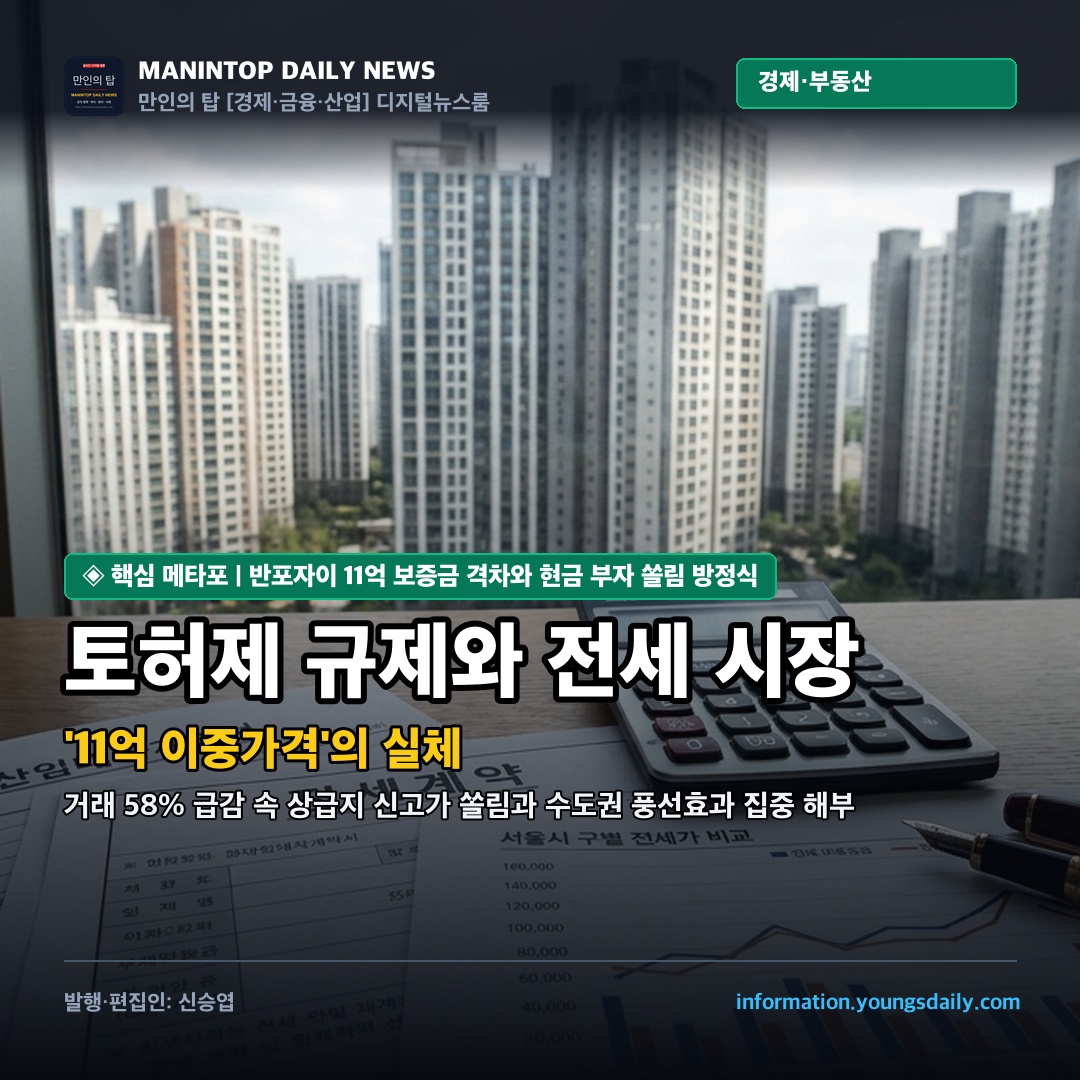
▲ 보도자료사진 — 서울 서초구 반포동 고급 아파트 단지가 내려다보이는 부동산 집무실에서 공인중개사와 매수인이 토지거래허가 신청서류 및 전세 이중가격 대조표를 정밀 검토하고 있다.
1. 토지거래허가구역 및 규제지역 실거주 의무 체계
정부는 주택시장 불안을 원천 차단하기 위해 조정대상지역, 투기과열지구, 토지거래허가구역을 전면 연장 및 대폭 확대했습니다. 과거 서울 강남 3구(강남·서초·송파)와 용산구에 국한되었던 규제지역은 서울 25개 자치구 전역과 경기도 12개 핵심 시·구(과천, 광명, 성남 분당·수정·중원, 수원 영통·장안·팔달, 안양 동안, 용인 수지, 의왕, 하남)로 확장되었습니다.
서울시는 강남구 대치동(개포우성1·2차, 선경, 미도, 쌍용1·2차, 은마), 삼성·청담동 진흥, 청담 현대1차, 송파구 잠실동(주공5단지, 아시아선수촌) 등 강남권 핵심 재건축 단지 14곳(총 1.43㎢)을 토지거래허가구역으로 재지정했습니다. 또한 신속통합기획 재개발 후보지 11곳을 토허구역으로 신규 지정하여 투기성 갭투자 유입을 물리적으로 차단했습니다.
토허구역 내 주택을 취득하는 매수자는 허가일로부터 4개월 이내에 잔금을 완납하고 소유권 이전 등기를 마쳐야 하며, 취득 즉시 2년간 실거주 의무를 완수해야 합니다. 2년 동안 전세나 월세 임대, 전매 및 제3자 매도는 전면 금지됩니다. 규제지역 내 LTV는 40%로 대폭 축소되고 유주택자의 신규 주담대는 전면 금지되며, 1억 원 이상의 신용대출을 보유한 차주는 규제지역 주택 취득이 1년간 금지됩니다.
제도 세부 항목
기존 법령 규정
개정 특례 규정 (2026. 10. 1. 시행)
실수요자 핵심 체크포인트
유예 신청 기한
2026년 12월 31일 접수 마감
2027년 12월 31일까지 1년 연장
기한 내 관할 구청에 서면 신청 필수
인정 임대차 범위
기존 임대차 계약 잔여 기간만 인정
기존 계약 + 갱신계약 (1회, 최대 2년) 인정
세입자의 계약갱신청구권 행사 계약 포함
최대 입주 유예 기간
잔여 임대차 계약 만료 시까지
최장 3년 3개월 (2029년 내 최종 입주)
유예 기간 종료 즉시 2년 실거주 착수
매수자 자격 요건
무주택 세대주
2026년 5월 12일부터 계속 무주택 유지 필수
세대원 전원 무주택 자격 사전 심사
실거주 의무를 위반할 경우 관할 구청장이 3개월 이내의 이행명령을 발동하며, 미이행 시 취득가액을 기준으로 이행강제금이 매년 반복 부과됩니다. 부과율은 목적 외 사용 5%, 미거주 및 임대 7%, 공실 방치 10%에 달합니다. 2026년 10월 1일부터는 세입자가 있는 주택을 매수하는 무주택자를 대상으로 최장 3년 3개월까지 입주를 늦춰주는 실거주 유예 특례가 시행되지만, 이는 입주 시기만 유예할 뿐 2년 실거주 의무 자체는 결코 면제되지 않습니다.
2. 2026년 개정 자금조달계획서 작성 및 세무 입증 가이드
2026년 2월 10일부터 개정 시행된 '주택취득자금 조달 및 입주계획서' 양식은 부동산 거래 시 자금 출처에 대한 세무 당국의 정밀 타깃 검증을 의무화하고 있습니다. 규제지역 내 모든 거래, 비규제지역 6억 원 초과 거래, 토지거래허가구역 내 거래 시 계획서와 항목별 객관적 증빙서류를 계약 체결 30일 이내에 제출해야 합니다.
이번 개정 서식의 가장 결정적인 변화는 사업자대출 항목의 독립 분리와 대출 실행 금융기관명(예: KB국민은행, 신한은행) 직접 기재 의무화입니다. 과거 개인사업자 대출을 주택 구입 자금으로 전용하던 편법 대출 통로가 금융기관 전산 대조를 통해 완벽히 봉쇄되었습니다.
가상자산 매각대금 독립 항목 신설: 암호화폐 매각 자금이 독립 항목으로 분리되어 거래소명, 매각 시점, 원화 환전 내역을 시간대별로 기재하고 거래소 잔고·거래 증명서를 의무 첨부
자산 매각대금 및 임대보증금 세분화: 부동산 매각대금과 주식·채권 처분대금이 분리되며, 전세를 끼고 매수할 때는 취득주택의 임대보증금과 타 주택 보증금을 별도 구분 기재
직계존비속 차용 세무 검증 강화: 부모나 친척으로부터 빌린 돈은 단순 차용 주장이 불인정되며, 차용증 원본, 법정이자율(연 4.6%) 정기 계좌이체 내역, 상환 계획서가 완비되어야 증여세 추징을 회피
3. 핀셋 규제의 역설: 수도권 풍선효과와 수요 재배치 구조
특정 지역만을 정밀 타깃으로 묶는 핀셋 규제는 대상 지역의 가격을 일시 억누르지만, 억눌린 유동성을 인접 비규제지역으로 밀어내는 '풍선효과'를 필연적으로 유발합니다. 신한 프리미어 패스파인더 양지영 전문위원(강원대 부동산학 박사)이 합성대조군법(SCM)으로 실증 분석한 결과에 따르면, 토허구역 지정 지역은 규제가 없었을 가상 가격 대비 평균 9.6% 낮게 형성되어 단기 억제 효과를 나타냈습니다.
그러나 규제를 피한 서울 내 인접 핵심 대체지는 반작용으로 폭등했습니다. 성수동1가는 규제가 없었을 가상 가격 대비 무려 26.86%나 높게 치솟았으며, 반포동(+8.92%)과 신사동(+5.92%) 역시 강남 토허구역의 매수세를 흡수하며 폭등세를 기록했습니다.
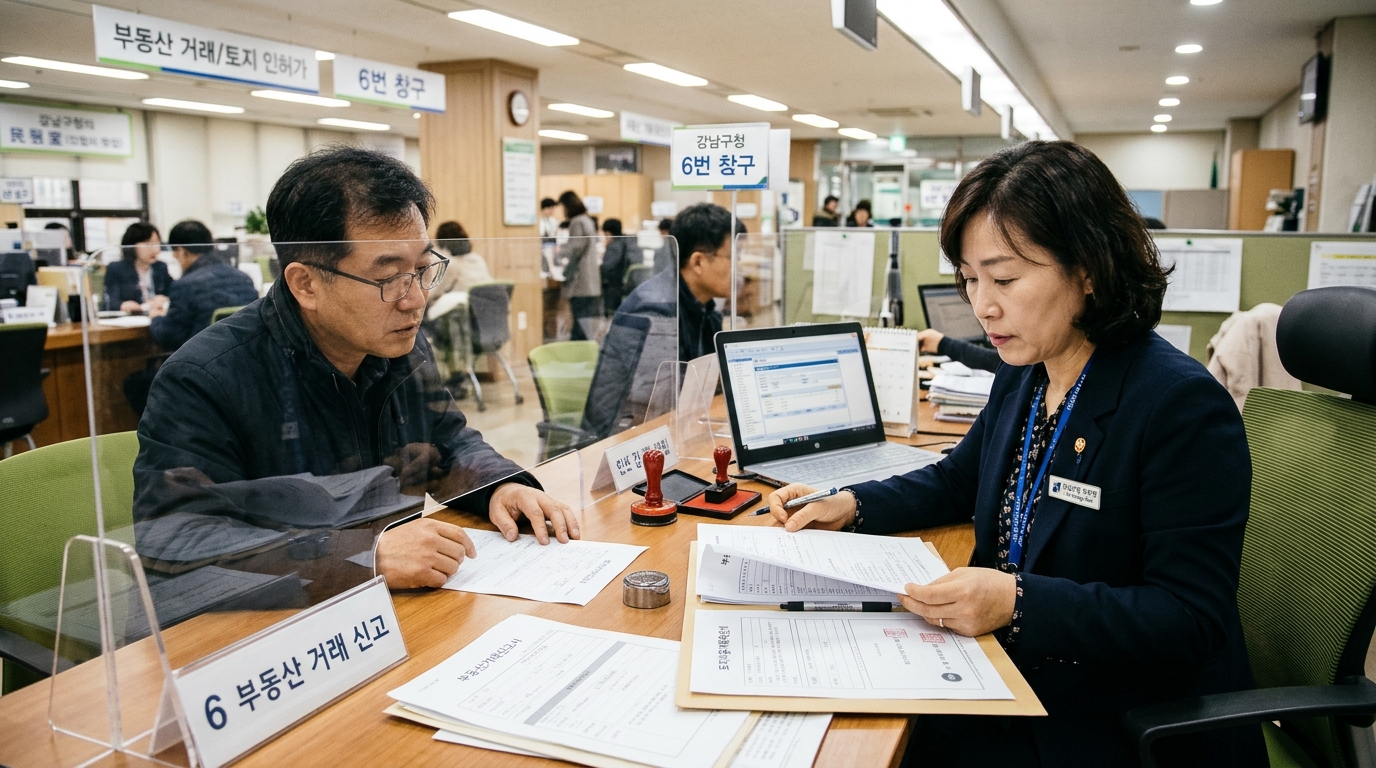
▲ 공식 보도사진 — 서울 시내 자치구청 부동산정보과 토지거래허가 민원 창구에서 공무원이 제출된 토지거래허가 신청서와 자금조달 증빙 서류를 정밀 검토하고 있다.
이러한 풍선효과는 수도권 비규제지역으로 빠르게 남진·북상하고 있습니다. 경기 부천시 원미구는 상반기 2.63% 상승에서 규제 이후 3개월간 3.37% 올랐고, 화성시 병점구는 상반기 2.30%에서 7월 이후 4.60%로 상승폭이 2배로 폭증했습니다. 의정부시에서도 '의정부역센트럴자이앤위브캐슬' 전용 98㎡가 10억 5,000만 원, '더샵의정부역링크시티' 전용 112㎡ 분양권이 10억 6,844만 원에 실거래되며 경기 북부 최초로 10억 클럽에 안착했습니다.
양지영 박사의 분석에 따르면 토지거래허가제의 가격 억제 효과는 약 2~4년이 경과하면 시장 면역력 형성으로 인해 급격히 약화되는 '유통기한'을 갖습니다. 서울과 수도권이 단일 생활·투자권역으로 묶인 상황에서 국지적 핀셋 규제는 시장을 왜곡할 뿐이며, 광역적 규제 재편과 실질적인 도심 공급 확대가 유일한 해법으로 제시됩니다.
4. 임대차 2법 5년 차: 전세 시장 '이중가격' 고착화 실태
임대차 2법(계약갱신청구권·전월세상한제 5%) 시행 5년 차를 맞아 서울 아파트 전세 시장은 동일 단지, 동일 면적 내에서 보증금이 두 갈래로 찢어지는 이중가격 현상이 극에 달했습니다. 국토교통부 실거래가 시스템에 따르면 서울 아파트 전세 신규 계약 중위 보증금은 5억 8,500만 원으로 갱신 계약 중위 보증금(5억 3,000만 원)보다 5,500만 원 높았으며, 서초구의 격차는 2억 원으로 서울 최고치를 기록했습니다.
고가 아파트가 밀집한 강남권의 실거래 격차는 상상을 초월합니다. 서초구 반포동 반포자이 전용 85㎡(84.94㎡)는 신규 계약 최고가가 19억 원(3월 13일, 2층)에 달한 반면, 5% 상한제에 묶인 갱신 계약 최저가는 7억 8,341만 원(1월 15일, 4층)에 불과해 한 단지 안에서 무려 11억 1,659만 원의 보증금 격차가 발생했습니다.
자치구 및 단지명
전용면적
신규 계약 최고가 (체결일)
갱신 계약 최저가 (체결일)
보증금 이중가격 격차
서초구 반포동 반포자이
85㎡ (전용 84.94㎡)
19억 0,000만 원 (3월 13일)
7억 8,341만 원 (1월 15일)
11억 1,659만 원 격차
서초구 반포동 래미안퍼스티지
60㎡ (전용 59.89㎡)
16억 0,000만 원 (1월 14일)
7억 0,336만 원 (3월 13일)
8억 9,664만 원 격차
송파구 잠실동 리센츠
124㎡ (전용 124.22㎡)
20억 5,000만 원 (4월 17일)
13억 6,600만 원 (1월 12일)
6억 8,400만 원 격차
마포구 대흥동 마포그랑자이
85㎡ (전용 84.85㎡)
12억 3,000만 원 (1분기 체결)
7억 3,000만 원 (1분기 체결)
5억 0,000만 원 격차
인근 래미안퍼스티지 60㎡ 역시 신규 최고가(16억 원)와 갱신 최저가(7억 336만 원)의 차이가 8억 9,664만 원에 달했습니다. 송파구 잠실동 리센츠 124㎡도 6억 8,400만 원의 보증금 격차를 보였습니다. 다주택자 양도세 중과와 실거주 의무로 신규 전세 매물이 마른 데다, 2024~2025년 입주한 서울 신축 단지 임대차 거래의 70.6%가 월세로 전환되면서 전세 품귀가 가격 왜곡을 부추겼습니다. 갱신권을 소진한 세입자들이 시장 자율가 충격을 마주하는 2026~2027년부터 전세 대란이 재연될 것이라는 경고가 쏟아집니다.
5. 거래 절벽 속 상급지 신고가 쏠림 및 양극화 심화
10·15 부동산 대책으로 대출 규제와 토허제가 강화되면서 서울 아파트 시장은 거래 절벽과 상급지 신고가 쏠림이라는 기형적 구조로 재편되었습니다. 국토부 실거래가 분석에 따르면 대책 발표 후 60일간 서울 아파트 매매량은 7,219건으로 대책 전 60일간(1만 7,224건) 대비 58.1% 급감했습니다.
그러나 전체 거래 중 강남 3구와 용산구가 차지하는 비중은 규제 전 7.5%에서 규제 후 23.5%로 3배 이상 폭증했습니다. 신한투자증권의 신고가 비율 분석에서도 강남 3구 및 용산구의 신고가 거래 비율은 규제 전 42.5%에서 규제 후 51.5%로 9.0%p 상승했습니다. 특히 용산구는 신고가 비율이 10.8%p 급증하며 서울 최고 상승폭을 기록했습니다. 반면 나머지 21개 자치구의 신고가 비율은 36.6%에서 33.3%로 하락했습니다.
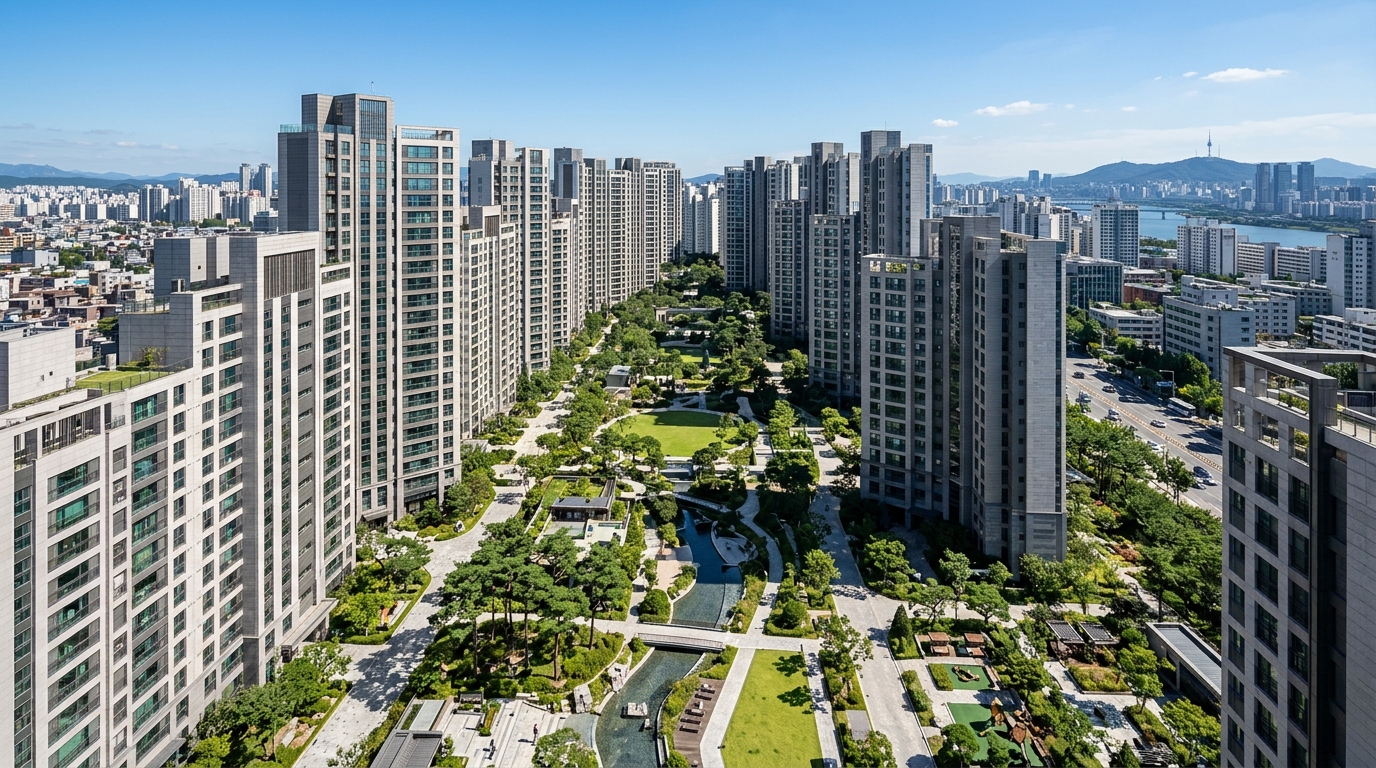
▲ 공식 보도사진 — 서울 서초구 반포동 일대 최고급 대단지 아파트 전경. 대출 규제 속에서도 자금력을 갖춘 현금 자산가들이 상급지 랜드마크로 집중되고 있다.
이는 대출 한도 축소로 차입에 의존하던 서민과 중산층의 중저가 매수세는 완전히 꺾인 반면, 대출 규제에 구애받지 않는 슈퍼 현금 자산가들만 시장에 남아 핵심 상급지의 똘똘한 한 채를 사들이고 있음을 실증합니다. 거래량 빙하기 속에서 부의 쏠림이 주택 자산의 초양극화를 가속화하고 있습니다.
6. 실수요자와 임차인을 위한 실전 취재 및 대응 가이드
강화된 토허제 규제와 전세 이중가격 시장에서 자산을 지키려는 실수요자와 세입자는 다음 3대 실행 수칙을 반드시 점검해야 합니다. 첫째, 토허구역 주택 매수 시 단기 유동성 점검입니다. 허가 후 4개월 내에 잔금을 전액 납부해야 하므로, 기존 보유 주택 처분이나 금융 조달 일정이 조금이라도 어긋나면 계약 파기와 함께 계약금을 몰취당할 수 있습니다.
둘째, 자금조달계획서 소명 리스크의 사전 차단입니다. 개정된 서식에 따라 가상자산 환전 내역, 사업자대출 사용처, 직계존비속 차용증(연 4.6% 이자 계좌이체 증빙)을 계약 체결 전에 국세청 기준에 맞춰 완벽히 구비해야 세무조사 칼날을 피할 수 있습니다.
셋째, 전세 세입자의 만기 대응 전략입니다. 갱신 계약을 체결해 거주 중인 세입자는 2026~2027년 갱신권 소진 시점에 단번에 수억 원의 보증금 인상 요구를 마주하게 됩니다. 주변 시세와 갱신가 격차를 상시 모니터링하고, 반전세 전환율 및 월세 주거비 포트폴리오를 사전에 재설계하는 정밀한 가계 재무 관리가 필수적입니다.
토지거래허가구역 및 전세 이중가격 핵심 Q&A
Q1. 토지거래허가구역 내 주택을 전세를 끼고 매수할 수 있나요?
원칙적으로 불가능합니다. 4개월 내 잔금을 완납하고 취득 즉시 2년간 실거주해야 하므로 갭투자는 원천 차단됩니다. 다만 2026년 10월 1일 시행 특례에 따라 계속 무주택을 유지한 매수자는 최장 3년 3개월간 입주를 유예받을 수 있으나 입주 후 2년 실거주는 필수입니다.
Q2. 부모에게 2억 원을 빌려 주택 잔금을 치를 때 증여세를 피하려면 어떻게 해야 하나요?
법적으로 유효한 차용증을 작성하고 확정일자나 공증을 받아야 하며, 세법상 법정이자율인 연 4.6%의 이자를 부모 통장으로 매월 계좌이체한 실질 금융 내역과 구체적 원금 상환 계획서를 자금조달계획서 증빙으로 제출해야 합니다.
Q3. 반포자이에서 동일 평형 전세 보증금이 11억 원이나 차이 나는 근본 원인은 무엇인가요?
임대차 2법에 따라 5% 상한을 적용받은 갱신 계약(7억 8,000만 원대)과, 실거주 의무 및 월세 전환으로 극심해진 전세 품귀 속에서 시장 자율가로 체결된 신규 계약(19억 원)이 한 단지 내에서 공존하면서 발생한 제도적 가격 왜곡 현상입니다.
Exclusive In-Depth AnalysisEconomy & Real Estate
[In-Depth Analysis] Expansion of Land Permit Zones and the KRW 1.1B Dual-Pricing Trap in Jeonse: Market Polarization and Record Highs Amid Transaction Freezes
The sweeping expansion of Land Transaction Permit Zones and designation of stringent speculative control districts have triggered structural distortions across South Korea metropolitan housing markets. As mandatory two-year physical residency requirements and slashed 40 percent mortgage limits drove Seoul transaction volumes down by 58.1 percent into a deep freeze, year five of the revised lease acts has entrenched an unprecedented rental dual-pricing gap exceeding KRW 1.1 billion at premier complexes like Banpo Xi. Simultaneously, ultra-wealthy cash buyers are converging on prime Gangnam and Yongsan enclaves, driving select luxury valuations to record highs amidst severe market polarization.
By Seung Youb Ssin, Senior Real Estate Correspondent|Published Nov. 06, 2026, 07:15 KST
▲ Editorial Documentary Photo — A real estate broker and homebuyer review land transaction permit paperwork and jeonse dual-pricing comparison schedules in an office overlooking luxury high-rise complexes in Banpo, Seocho-gu, Seoul. (Press Archive)
1. Regulatory Framework and Mandatory Physical Residency in Land Permit Zones
To curtail escalating speculative overheating, administrative authorities have extended and expanded designated Adjustment Areas, Speculative Overheating Zones, and Land Transaction Permit Zones. Previously confined to Seoul three Gangnam districts (Gangnam, Seocho, Songpa) and Yongsan-gu, regulatory zones now encompass all 25 autonomous districts of Seoul alongside 12 key municipal zones in Gyeonggi Province, including Gwacheon, Gwangmyeong, Seongnam (Bundang, Sujeong, Jungwon), Suwon (Yeongtong, Jangan, Paldal), Anyang Dongan, Yongin Suji, Uiwang, and Hanam.
The Seoul Metropolitan Government re-designated 14 landmark reconstruction complexes spanning 1.43 square kilometers as Land Transaction Permit Zones, including Daechi-dong (Gaepo Woosung 1 and 2, Seongyeong, Mido, Ssangyong 1 and 2, Eunma), Samseong and Cheongdam Jinheung, Cheongdam Hyundai 1, and Jamsil Jugong 5 and Asia Athletes Village. Furthermore, 11 Rapid Integrated Planning redevelopment candidate sites were newly designated to physically shut down leveraged gap investments.
Under these regulations, purchasers acquiring residential assets within permit zones must settle all final balances and complete ownership registration within four months of municipal permit issuance, followed immediately by two years of mandatory physical residency. During this statutory period, leasing via jeonse or monthly rent, resale, or transfer is strictly prohibited. Within regulatory zones, mortgage LTV limits are slashed to 40 percent, new mortgages for multi-homeowners are banned, and credit loan borrowers holding debt over KRW 100 million face a one-year ban on acquiring restricted homes.
Regulatory Parameter
Previous Statutory Rule
Revised Exemption Scheme (Effective Oct 1, 2026)
Key End-User Checklist Point
Application Window
Filing deadline Dec 31, 2026
Extended by 1 year to Dec 31, 2027
Written application required at district office
Permitted Lease Scope
Only remaining term of existing tenant lease
Existing lease + renewed term (1 time, max 2 years)
Must maintain unhoused status continuously from May 12, 2026
Comprehensive background verification across dependents
Breaching physical residency obligations triggers municipal corrective orders within three months, and non-compliance results in recurring annual enforcement penalties assessed against acquisition values: 5 percent for unauthorized use, 7 percent for non-occupancy or leasing, and 10 percent for vacancy. From October 1, 2026, an entry deferral exemption grants qualifying unhoused buyers acquiring tenanted homes up to three years and three months to take occupancy, though the statutory two-year physical residency requirement remains non-negotiable.
2. 2026 Revised Financing and Acquisition Plan: Documentation and Tax Verification Guidelines
The revised Housing Acquisition Funding and Occupancy Plan implemented on February 10, 2026, mandates rigorous tax audits on capital origins for all property transactions. All transactions within regulatory zones, transactions surpassing KRW 600 million in non-regulated areas, and all transactions in permit zones require submission of the plan alongside exhaustive evidentiary documentation within 30 days of contract execution.
The most decisive update is the structural separation of business commercial loans and the mandatory disclosure of lending financial institutions, such as KB Kookmin Bank or Shinhan Bank. Previously exploited loopholes where personal enterprise credit was funneled into residential acquisitions have been completely blocked through automated inter-institutional cross-checks.
Cryptocurrency Liquidation as Independent Item: Digital asset proceeds now form a discrete line item requiring chronological records of crypto exchanges, conversion timing, KRW deposits, and authenticated exchange verification certificates
Asset Liquidation and Lease Deposit Segmentation: Capital generated from real estate divestments and equities or bonds must be filed separately, while rental deposit liabilities are divided into acquired homes versus external properties
Intensified Audit of Inter-Family Borrowing: Funds borrowed from parents or relatives cannot rest on simple promissory claims; formal promissory notes, statutory annual interest (4.6%) bank transfer logs, and concrete amortization schedules are required to avoid punitive gift tax assessments
3. The Paradox of Pinpoint Regulations: Balloon Effects and Inter-Regional Spillover
Pinpoint regulations targeting isolated districts suppress local price inflation temporarily, but inevitably trigger balloon effects that redirect suppressed liquidity into adjacent non-regulated neighborhoods. Empirical research utilizing the Synthetic Control Method (SCM) by Senior Researcher Yang Ji-young of Shinhan Premier Pathfinder (Ph.D. in Real Estate, Kangwon National University) reveals that permit zones traded on average 9.6 percent below simulated non-regulatory benchmark pricing.
However, adjacent prime districts exempt from restrictions experienced violent upward surges. Seongsu-dong 1-ga recorded pricing 26.86 percent above simulated benchmarks, while Banpo-dong (+8.92%) and Sinsa-dong (+5.92%) absorbed substantial displaced capital from restricted Gangnam areas as premier substitutes.
▲ Editorial Documentary Photo — Municipal real estate desk officers at a Seoul district office review submitted Land Transaction Permit filings and capital funding documentation across a public service counter. (Press Archive)
This spillover has rippled outward into broader metropolitan non-regulated areas. In Bucheon Wonmi-gu, appreciation jumped from 2.63 percent in the first half to 3.37 percent over subsequent months, while Hwaseong Byeongjeom recorded 4.60 percent gains compared to 2.30 percent previously. In northern Gyeonggi, Uijeongbu Central Xi and Weve Castle (98㎡) traded at KRW 1.05 billion and The Sharp Uijeongbu Link City (112㎡) presale rights closed at KRW 1.068 billion, establishing landmark KRW 1 billion contracts.
Dr. Yang analysis highlights that the price-dampening efficacy of permit zones faces an operational expiration window of roughly two to four years, after which market adaptation erodes regulatory resistance. Because Seoul and surrounding metropolitan networks operate as an integrated ecosystem, localized pinpoint curbs merely distort distribution; broad regional policy restructuring and substantive urban supply expansion represent the only sustainable solutions.
4. Year Five of Rental Acts: Entrenched Dual-Pricing and the KRW 1.1B Spread
Reaching the five-year milestone of the twin rental regulations—statutory contract renewal claims and the 5 percent rent ceiling—the Seoul apartment rental landscape has bifurcated into a distorted dual-pricing reality. Disclosures from the real estate transaction registry show median new jeonse deposits reached KRW 585 million, standing KRW 55 million above renewal contracts (KRW 530 million), with Seocho-gu displaying Seoul widest gap at KRW 200 million.
Across high-end Gangnam complexes, this divergence reaches staggering dimensions. At Banpo Xi in Seocho-gu, an 85-square-meter unit (84.94㎡) secured a new contract peak at KRW 1.90 billion on March 13, whereas a renewal contract capped under the 5 percent ceiling executed at just KRW 783.41 million on January 15, exposing an astonishing KRW 1.116 billion spread within the same complex.
District & Complex Name
Unit Area
New Contract Peak (Date)
Renewal Contract Floor (Date)
Dual-Pricing Spread
Banpo Xi, Seocho-gu
85㎡ (Net 84.94㎡)
KRW 1.900 Billion (Mar 13)
KRW 783.41 Million (Jan 15)
KRW 1.116 Billion Spread
Raemian Firstige, Seocho-gu
60㎡ (Net 59.89㎡)
KRW 1.600 Billion (Jan 14)
KRW 703.36 Million (Mar 13)
KRW 896.64 Million Spread
Ricenz, Songpa-gu
124㎡ (Net 124.22㎡)
KRW 2.050 Billion (Apr 17)
KRW 1.366 Billion (Jan 12)
KRW 684.00 Million Spread
Mapo Grand Xi, Mapo-gu
85㎡ (Net 84.85㎡)
KRW 1.230 Billion (Q1)
KRW 730.00 Million (Q1)
KRW 500.00 Million Spread
Similarly, nearby Raemian Firstige (60㎡) registered an KRW 896.64 million gap between its new peak (KRW 1.6 billion) and renewal floor (KRW 703.36 million). Jamsil Ricenz (124㎡) posted an KRW 684 million divergence. Restrictive multi-homeowner taxes and physical residency mandates locked up secondary supply, while 70.6 percent of leases across newly occupied 2024-2025 Seoul complexes shifted toward monthly rent, exacerbating jeonse scarcity. As renewal claims expire across major cohorts between 2026 and 2027, displaced tenants face violent pricing adjustments.
5. Transaction Collapse vs. Flight to Prime Assets: Widening Wealth Divergence
Following the October 15 policy package, stringent credit caps and permit zone expansions forced Seoul housing markets into transaction paralysis while driving wealthy buyers toward elite enclaves. Over the 60 days following the announcement, Seoul apartment transactions plunged 58.1 percent to 7,219 contracts, down from 17,224 transactions during the preceding period.
Nevertheless, the market share commanded by Gangnam, Seocho, Songpa, and Yongsan surged more than threefold from 7.5 percent prior to restrictions up to 23.5 percent. Analysis by Shinhan Securities reveals that record-high price ratios across these four districts climbed from 42.5 percent to 51.5 percent (+9.0%p), with Yongsan jumping 10.8 percentage points. Conversely, record-high transaction ratios across the remaining 21 districts contracted from 36.6 percent to 33.3 percent.
▲ Editorial Documentary Photo — Modern residential high-rise towers in Banpo, Seocho-gu, Seoul, where well-capitalized cash buyers continue setting record transactions despite macro lending curbs. (Press Archive)
This empirical divergence demonstrates that while middle-class credit-reliant demand has collapsed, liquid cash buyers face no debt limitations and are aggressively consolidating wealth into top-tier prime assets. Amidst a broader market freeze, this concentration of purchasing power is widening asset disparity across demographic and geographic lines.
6. Practical Advisory and Execution Checklist for End-Users and Tenants
End-users and tenants seeking to protect household balance sheets amid tightening regulations must execute three defensive protocols. First, buyers in permit zones must audit short-term cash flow with extreme precision. Because complete balances must be settled within four months of permit clearance, delays in selling existing properties or acquiring credit can trigger forfeiture of deposits and contractual cancellation.
Second, audit risks under the revised financing plan must be pre-empted. Crypto conversion logs, business loan receipts, and familial promissory notes carrying the statutory 4.6 percent annual interest must be meticulously documented prior to contract execution to withstand rigorous National Tax Service scrutiny.
Third, tenants currently residing under renewal contracts must prepare contingency financing. When renewal options expire during the 2026-2027 cycle, landlords will seek market adjustments amounting to hundreds of millions of won. Continually monitoring the dual-pricing spread and restructuring household debt toward hybrid rent portfolios will be vital to navigating upcoming lease shocks.
Land Transaction Permit Zones & Dual-Pricing FAQ
Q1. Can a buyer purchase a home in a permit zone with an existing jeonse tenant?
Under standard rules, leveraged gap purchases are banned because full payment and immediate two-year physical occupancy are required within four months. However, under the October 2026 exemption, continuous unhoused buyers may defer move-in for up to three years and three months, though the two-year occupancy requirement remains mandatory.
Q2. How can a buyer avoid gift taxes when borrowing KRW 200 million from parents?
The borrower must draft a notarized promissory note, make regular monthly bank transfers paying the statutory 4.6 percent annual interest rate, and submit bank transfer logs and an amortization plan as documentation for the official acquisition funding plan.
Q3. What is the fundamental cause of the KRW 1.1 billion jeonse spread at Banpo Xi?
It is an institutional distortion caused by the coexistence of renewal leases capped under the 5 percent ceiling (KRW 780 million range) alongside new leases negotiated at full market value (KRW 1.9 billion) amid acute supply shortages driven by physical occupancy rules and monthly rent conversions.
1월이 시작되면 감기는 이미 우리 곁에 와 있습니다. 2월, 3월, 4월까지 이어지는 추위와 건조함은 코와 목을 가장 먼저 공격합니다. 아침에 일어나자마자 막혀 있는 코. 계속 흐르는 콧물. 괜히 칼칼해지는 목. 이 증상은 “시작”일 뿐입니다. 한 번 무너지면 일주일, 길면 한 달까지 끌고 갑니다. 약을 먹으면 잠깐 괜찮아집니다. 하지만 며칠 뒤 또 반복됩니다. 왜일까요? 감기는 ‘치료’의 문제가 아니라 ‘관리’의 문제이기 때문입니다. 대부분은 감기가 오고 나서 약을 찾습니다. 하지만 진짜 중요한 건 감기가 오기 전에 코와 목을 지키는 것입니다. 건조한 실내 공기, 차가운 바깥 공기, 눈에 보이지 않는 세균. 코와 목은 매일 공격받고 있습니다. 지긋지긋하죠! 그런데도 우리는 아무 준비 없이 버티고 있습니다. 이번 겨울도 그렇게 보낼 건가요? 사실 방법은 어렵지 않습니다. 코를 깨끗하게 관리하고, 목을 따뜻하게 보호하고, 점막을 촉촉하게 유지하고, 기관지를 미리 관리하고, 외부 공기를 차단하는 것. 이 다섯 가지만 꾸준히 해도 감기약 없이 겨울을 보내는 것이 충분히 가능합니다. 🔥 이제부터 그 방법을 하나씩 살펴보겠습니다. 🔥 1. 코와 목을 먼저 관리해야 하는 과학적 이유 감기의 대부분은 코 점막에서 시작됩니다. 국제 학술지 Nature Reviews Microbiology 와 Journal of Allergy and Clinical Immunology 에 실린 호흡기 감염 관련 연구들에서는, 감기 바이러스가 비강 상피세포에 먼저 부착해 증식한다는 점을 설명하고 ...
리모델링사업이 진행 중인 아파트를 매매할 때 “계약금 10%를 언제까지 내야 하느냐”는 질문이 특히 많이 나옵니다. 이주공고(이주 안내)가 7~11월쯤이라고 들으면, 그 시점에 맞춰 계약금도 움직일 것 같아서 더 헷갈리기 쉽습니다. 하지만 실제 납부기한은 ‘이주공고가 언제냐’만으로 자동 결정되지 않는 경우가 많습니다. 1) 계약금 10% 납부기한: 결국 ‘문서에 적힌 일정’이 기준 계약금 10%를 언제까지 납부해야 하는지는, 내가 서명하는 매매계약서(특약 포함) 와 사업주체/조합이 제시한 공고·안내문 에 적힌 납부 일정이 기준이 됩니다. 실제 공고문에서는 분양대금 납부의 큰 틀(계약금→중도금→잔금)을 먼저 안내하고, 상세 일정은 별도 표나 유의사항으로 제시하는 방식이 흔합니다. 또, 계약서 문구에 따라 지급 시점이 조건부로 설정될 수도 있습니다. 예를 들어 한 사례 소개 자료에서는 용역계약서에 잔금(10%) 지급시기가 “사업승인 후”로 기재되어 있었다는 점이 언급됩니다. 이런 식으로 ‘사업 단계’와 지급을 연동하는 문구가 들어가면, 질문의 답은 계약서 문구를 확인해야만 확정됩니다. 관련 내용은 링크 에서 문구 사례를 확인할 수 있습니다. 2) 입주자모집공고에서 확인되는 ‘납부 순서’와 잔금 마감 시점 공고문에 적힌 문구를 보면, 납부 순서와 잔금 마감에 대한 기준이 비교적 명확하게 제시되는 경우가 있습니다. 예를 들어 한 입주자모집공고에는 “분양금액(주택가격)은 계약금, 중도금, 잔금의 순서로 납부”하며 “잔금은 입주(열쇠 수령일) 전에 완납”해야 한다고 안내되어 있습니다. (문구 확인: 링크 ) 이 문구가 의미하는 바는 최소 2가지입니다. 분양/공급 형태의 문서에서는 ‘계약금→중도금→잔금’ 흐름이 공식적으로 안내될 수 있습니다. 잔금은 “입주(열쇠 수령)” 이전에 완납해야 한다는 마감 기준이 문서에 적혀 있을 수 있습니다. 다만, 위 공고문 문구는 잔금 마감에 대한 기준을 보여주지만, 계약금 10%의...
윤석열 전 대통령 탄핵 인용 소식을 접하면, 가장 궁금한 지점은 ‘헌재가 정확히 무엇을 위헌·위법으로 봤는가’입니다. 또한 탄핵과 별개로 진행되는 형사재판(내란 우두머리 혐의 등)이 어디까지 왔는지도 함께 정리할 필요가 있습니다. 아래 내용은 제공된 기사/게시물 스니펫과 링크에서 확인되는 범위만 모아, 일반인이 흐름을 이해하기 쉽게 정리한 것입니다. 1) 탄핵 인용 관련: 스니펫에서 확인되는 ‘판단의 골격’ 제공된 근거 중 조국혁신당 사이트에는 헌법재판소가 윤석열 탄핵 심판에서 “피청구인의 위헌·위법행위는 국민 신임 …”이라는 취지로 판단했다는 문장이 인용돼 있습니다( 링크 ). 이 인용문만 놓고 보면, ‘위헌·위법행위’가 있었는지와 그로 인해 ‘국민의 신임’이 어떻게 평가됐는지가 핵심 축으로 소개됩니다. 다만 질문에서 요청하신 세부 항목, 즉 비상계엄 선포 자체를 문제 삼은 구체적 이유, 계엄 이후 조치(포고령, 국회 통제 등)의 어떤 지점이 헌법 위반인지, 국회의 권한행사 방해 및 정치활동 제약을 어떤 논리로 판단했는지 등은, 이번에 제공된 근거의 제목/스니펫만으로는 조항·사실관계·판단 구조가 그대로 제시돼 있지 않습니다. 따라서 이 글에서는 ‘헌재가 무엇을 문제 삼았다’는 세부 리스트를 단정적으로 재구성하기보다, 현재 확인 가능한 문구 수준의 요약(위헌·위법행위 → 국민 신임의 문제로 평가)까지만 적습니다. 만약 헌재 결정문 전문(주문 및 이유)이 추가로 확인되면, 그때는 문장 단위로 ‘어떤 행위’와 ‘어떤 헌법 원리/조항’이 연결되는지(예: 권력분립, 국회의 권한, 정치적 기본권 등) 구조화해 정리하는 것이 가장 정확합니다. 2) 형사 절차(내란 혐의) 관련: 체포영장과 1심 선고 언급 탄핵 심판과 별도로, 12·3 비상계엄 사태로 내란 혐의를 받는 윤석열 대통령에 대해 2024년 12월 31일 체포 영장이 발부됐다는 BBC 보도가 있습니다( 링크 ). 해당 보도는 ‘현직 대통령’에 대한 체포영장 발부라는 점을 함께 언급합니다. 또...