2026 근로·자녀장려금 기한 후 신청 총정리: 12월 1일 마감과 26만 가구 수급 가이드
만인의 탑 편집국11월 06, 2026
▲ 2026 근로·자녀장려금 기한 후 신청 총정리: 12월 1일 마감과 26만 가구 수급 가이드 (공식 보도 자료)
📌 핵심 브리핑 · 주요 쟁점 및 핵심 요약
국세청이 2025년 귀속 소득에 대해 5월 정기신청을 놓친 26만 가구를 대상으로 근로·자녀장려금 기한 후 신청을 접수 중인 가운데, 오는 12월 1일 최종 마감에 따른 가구 유형별 최대 313만 원 수급 요건과 실수 방지 가이드를 심층 분석합니다.
SPONSORED · ADVERTISEMENT
1. 12월 1일 최종 마감과 26만 가구 대상 95% 지급 구조
국세청은 정기신청 이후 사업주가 뒤늦게 제출한 소득 자료를 정밀 재분석하여 장려금 수급 가능성이 높은 1만 가구를 신규 발굴해 안내 대상에 포함했습니다. 정기신청 때 안내문을 받지 못했던 저소득 가구도 자격 요건을 갖췄다면 이번 기회를 통해 수급할 수 있습니다. 기한 후 신청 시 감액률은 과거 10%에서 세법 개정을 통해 5%로 경감되어 산정액의 95%를 수령하게 됩니다. 심사는 접수일로부터 최대 4개월이 소요되며 2027년 1월 15일에 집중 지급됩니다.
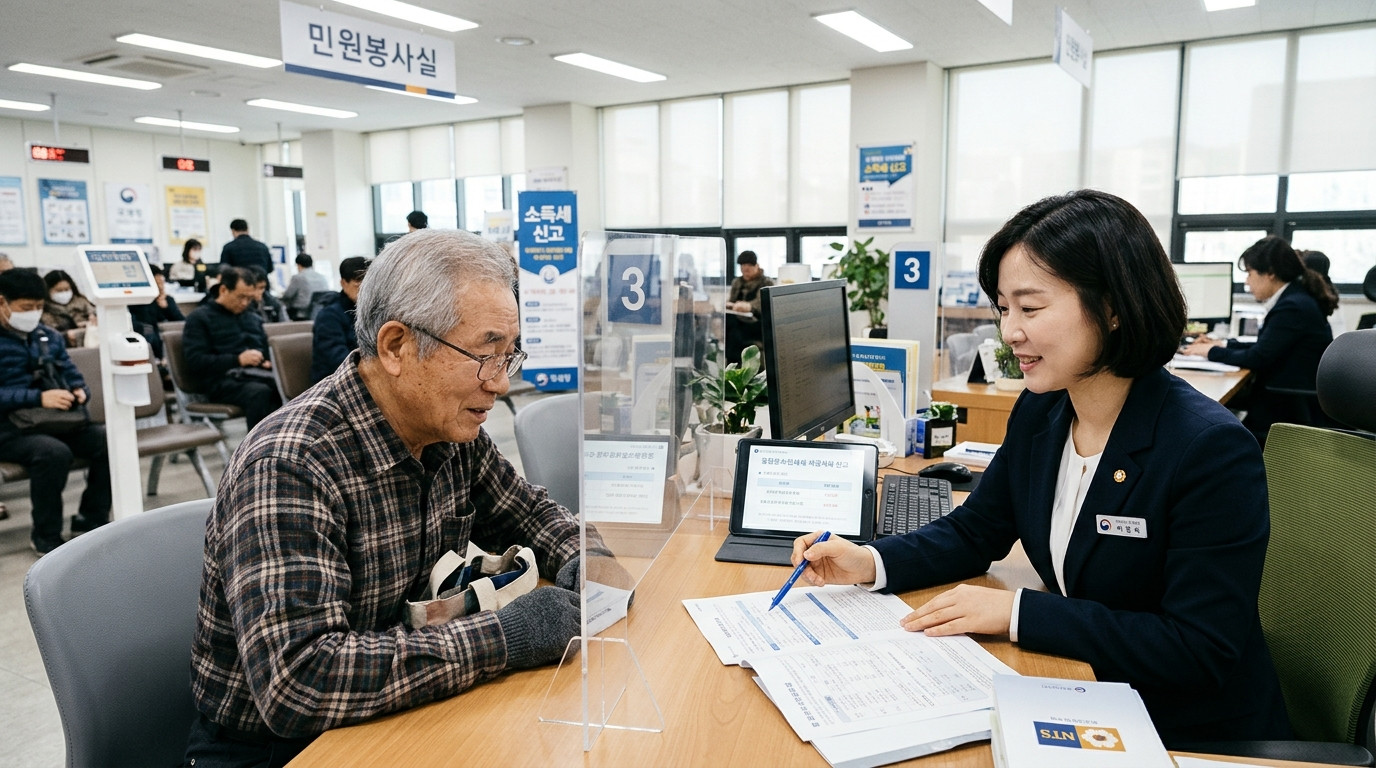
▲ 일선 세무서 민원봉사실 창구에서 담당 세무 공무원이 근로·자녀장려금 기한 후 신청 절차를 안내하는 모습 / 국세청 공식 자료
2. 가구 유형별 소득·재산 요건과 1억 7천만 원 감액선
근로장려금의 연간 총소득 기준은 단독 가구 2,200만 원 미만(최대 156.7만 원), 홑벌이 가구 3,200만 원 미만(최대 270.7만 원), 맞벌이 가구 4,400만 원 미만(최대 313.5만 원)입니다. 18세 미만 부양자녀를 둔 가구 대상의 자녀장려금은 부부합산 7,000만 원 미만일 때 자녀 1인당 최대 95만 원(정기 100만 원)이 지급됩니다. 재산 기준은 전년도 과세기준일(6월 1일) 기준 가구원 전체 재산 2억 4,000만 원 미만이어야 하며, 금융 부채는 차감되지 않습니다. 특히 재산 합계액이 1억 7,000만 원 이상 2억 4,000만 원 미만인 경우 산정액의 50%가 추가 감액되어 최종 47.5%만 지급됩니다.
가구 구분 및 유형
연간 총소득 기준
정기 최대 지급액
기한 후 신청 지급액 (95%)
단독 가구
2,200만 원 미만 (배우자·부양자녀 없음)
최대 165만 원
최대 약 156.7만 원 (5% 감액)
홑벌이 가구
3,200만 원 미만 (배우자 총급여 300만 미만)
최대 285만 원
최대 약 270.7만 원 (5% 감액)
맞벌이 가구
4,400만 원 미만 (부부 각각 300만 원 이상)
최대 330만 원
최대 약 313.5만 원 (5% 감액)
자녀장려금 (1인당)
부부합산 7,000만 원 미만 (18세 미만 부양자녀)
자녀 1인당 최대 100만 원
자녀 1인당 최대 95만 원
재산 요건 및 감액선
가구원 전체 재산 2억 4,000만 원 미만
1.7억~2.4억 미만 시 50% 추가 감액
최종 47.5% 지급·부채 차감 불가·2027.1.15 지급
SPONSORED · ADVERTISEMENT
3. 알바·프리랜서 종소세 필수 체크와 현장 3대 탈락 주의사항
고용 형태에 따른 신청 절차 확인도 필수적입니다. 4대 보험에 가입된 근로자는 원천징수 내역이 국세청에 자동 등록되어 별도 증빙 없이 신청할 수 있습니다. 반면 3.3% 원천징수 사업소득자인 프리랜서, 배달 라이더, 학원 강사는 종합소득세 신고가 완료되어야 정상 지급됩니다. 일용직 근로자는 지급명세서 제출 여부를 확인해야 하며, 현금 수령 등으로 전산상 소득이 누락된 경우 급여 통장 내역과 근로계약서를 직접 제출해야 합니다. 아울러 부모와 동거 중인 청년층은 부모의 재산이 전액 합산되므로 2억 4,000만 원 초과 시 탈락할 수 있습니다.
▲ 휴식 시간 스마트폰과 태블릿으로 월별 근로 정산 명세서와 장려금 지급 내역을 확인하는 청년 근로자 / 민생경제 정책 자료
4. 모바일·ARS 원스톱 접수와 KISA 안심마크 사칭 스미싱 차단
신청은 카카오톡·국민비서 모바일 안내문 링크 본인인증, 자동응답전화 ARS(1544-9944), 홈택스 및 손택스 앱 직접 입력, 장려금 전담 상담센터(1566-3636)를 통해 진행됩니다. 국세청은 장려금 신청과 관련해 어떠한 경우에도 계좌 비밀번호나 현금 인출기 조작, 수수료 입금을 요구하지 않습니다. 발송되는 문자 메시지에는 KISA 안심마크가 부착되어 있으므로 출처가 불분명한 URL 링크나 가짜 안내 문자에 각별히 유의해야 합니다. 향후 2027년 과세분부터는 단독 2,600만 원(180만 원), 맞벌이 5,200만 원(360만 원)으로 소득 요건과 최대 지급액이 대폭 상향 조정될 예정입니다.
Summary of Late Applications for the 2026 Earned Income Tax Credit and Child Tax Credit: Deadline on December 1 and Guidelines for 260,000 Households.
The National Tax Service is currently accepting late applications for the Earned Income Tax Credit and Child Tax Credit from 260,000 households that missed the regular application deadline in May for income attributable to 2025. As the final deadline approaches on December 1, we will conduct an in-depth analysis of the eligibility requirements for different household types, which can amount to a maximum of 3.13 million won, along with guidelines to prevent errors in the application process.
📌 Key Takeaways
Last chance to apply for the 2025 tax year; entitlement rights will permanently expire after the deadline.
Dual-income households with a maximum income of 3.135 million won, 950,000 won per child, and assets exceeding 170 million won will face a 50% reduction.
A 3.3% freelance income tax is mandatory; applications can be submitted via ARS and mobile for payment in January.
1. Final deadline on December 1 with a 95% payment structure for 260,000 households.
The National Tax Service has conducted a detailed re-analysis of income data submitted late by business owners after the regular application period, identifying an additional 10,000 households likely eligible for the subsidy. Low-income households that did not receive a notification during the regular application period can also qualify for assistance if they meet the eligibility criteria. The reduction rate for late applications has been lowered from 10% to 5% through tax law amendments, allowing recipients to receive 95% of the calculated amount. The review process may take up to four months from the date of application, with payments concentrated on January 15, 2027.
▲ National Tax Service officer guiding an applicant through the earned income tax credit post-deadline filing process at a local district office / National Tax Service Archive
2. Income and asset requirements by household type and the 170 million won reduction threshold.
The annual total income criteria for the Earned Income Tax Credit are set at below 22 million won for single households (maximum 1.567 million won), below 32 million won for single-income households (maximum 2.707 million won), and below 44 million won for dual-income households (maximum 3.135 million won). For households with dependents under 18 years old, a child subsidy of up to 950,000 won (1 million won regularly) is provided if the combined income of the couple is below 70 million won. The asset threshold is set at below 240 million won for the entire household as of the previous year's tax assessment date (June 1), and financial liabilities are not deducted. Notably, if the total assets are between 170 million won and 240 million won, 50% of the calculated amount will be additionally reduced, resulting in a final payment of only 47.5%.
Category
Target Scope
Standard / Benefit
Procedure / Action
Single-person households
Under 22 million won (no spouse or dependent children)
Maximum 1.65 million won
Maximum approximately 1.567 million won (5% reduction)
Single-income households
Under 32 million won (spouse's total salary under 3 million won)
Maximum 2.85 million won
Maximum approximately 2.707 million won (5% reduction)
Dual-income households
Under 44 million won (each spouse earning over 3 million won)
Maximum 3.3 million won
Maximum approximately 3.135 million won (5% reduction)
Child tax credit (per child)
Combined household income under 70 million won (dependent children under 18)
Up to 1 million won per child
Up to 950,000 won per child
Asset requirements and reduction thresholds
Total household assets under 240 million won
If assets are between 170 million and 240 million won, an additional 50% reduction applies
Final payment of 47.5%, debts cannot be deducted, payment scheduled for January 15, 2027
3. Essential checks for part-time and freelance income tax and three major disqualification warnings.
It is essential to verify the application procedures based on employment type. Workers enrolled in the four major social insurances can apply without separate documentation as their withholding details are automatically registered with the National Tax Service. In contrast, freelancers, delivery riders, and academy instructors who are subject to a 3.3% withholding tax must complete their comprehensive income tax filings to receive their payments. Casual workers need to confirm whether they have submitted payment statements, and if income is missing from the system due to cash payments, they must submit their salary account statements and employment contracts directly. Additionally, young individuals living with their parents should be aware that their parents' assets are fully combined, which may lead to disqualification if they exceed 240 million won.
▲ Young Korean freelance worker reviewing monthly earnings settlement and tax credit verification on a mobile screen / Public Economic Policy Archive
4. One-stop application via mobile and ARS, and blocking smishing scams impersonating KISA.
Applications can be made through KakaoTalk, the National Secretary's mobile notification link for identity verification, the automated response service ARS (1544-9944), direct input via the Home Tax and Smart Tax apps, or through the dedicated subsidy consultation center (1566-3636). The National Tax Service does not request account passwords, ATM manipulations, or deposit of fees under any circumstances related to subsidy applications. Messages sent will include the KISA safety mark, so recipients should be particularly cautious of unclear URL links or fake notification messages. Starting from the 2027 tax year, income requirements and maximum payment amounts are expected to be significantly increased to 26 million won (1.8 million won) for singles and 52 million won (3.6 million won) for dual-income households.
Recommended Deep-Dive Investigations TOP 3
GLOBAL REPORT
1월이 시작되면 감기는 이미 우리 곁에 와 있습니다. 2월, 3월, 4월까지 이어지는 추위와 건조함은 코와 목을 가장 먼저 공격합니다. 아침에 일어나자마자 막혀 있는 코. 계속 흐르는 콧물. 괜히 칼칼해지는 목. 이 증상은 “시작”일 뿐입니다. 한 번 무너지면 일주일, 길면 한 달까지 끌고 갑니다. 약을 먹으면 잠깐 괜찮아집니다. 하지만 며칠 뒤 또 반복됩니다. 왜일까요? 감기는 ‘치료’의 문제가 아니라 ‘관리’의 문제이기 때문입니다. 대부분은 감기가 오고 나서 약을 찾습니다. 하지만 진짜 중요한 건 감기가 오기 전에 코와 목을 지키는 것입니다. 건조한 실내 공기, 차가운 바깥 공기, 눈에 보이지 않는 세균. 코와 목은 매일 공격받고 있습니다. 지긋지긋하죠! 그런데도 우리는 아무 준비 없이 버티고 있습니다. 이번 겨울도 그렇게 보낼 건가요? 사실 방법은 어렵지 않습니다. 코를 깨끗하게 관리하고, 목을 따뜻하게 보호하고, 점막을 촉촉하게 유지하고, 기관지를 미리 관리하고, 외부 공기를 차단하는 것. 이 다섯 가지만 꾸준히 해도 감기약 없이 겨울을 보내는 것이 충분히 가능합니다. 🔥 이제부터 그 방법을 하나씩 살펴보겠습니다. 🔥 1. 코와 목을 먼저 관리해야 하는 과학적 이유 감기의 대부분은 코 점막에서 시작됩니다. 국제 학술지 Nature Reviews Microbiology 와 Journal of Allergy and Clinical Immunology 에 실린 호흡기 감염 관련 연구들에서는, 감기 바이러스가 비강 상피세포에 먼저 부착해 증식한다는 점을 설명하고 ...
리모델링사업이 진행 중인 아파트를 매매할 때 “계약금 10%를 언제까지 내야 하느냐”는 질문이 특히 많이 나옵니다. 이주공고(이주 안내)가 7~11월쯤이라고 들으면, 그 시점에 맞춰 계약금도 움직일 것 같아서 더 헷갈리기 쉽습니다. 하지만 실제 납부기한은 ‘이주공고가 언제냐’만으로 자동 결정되지 않는 경우가 많습니다. 1) 계약금 10% 납부기한: 결국 ‘문서에 적힌 일정’이 기준 계약금 10%를 언제까지 납부해야 하는지는, 내가 서명하는 매매계약서(특약 포함) 와 사업주체/조합이 제시한 공고·안내문 에 적힌 납부 일정이 기준이 됩니다. 실제 공고문에서는 분양대금 납부의 큰 틀(계약금→중도금→잔금)을 먼저 안내하고, 상세 일정은 별도 표나 유의사항으로 제시하는 방식이 흔합니다. 또, 계약서 문구에 따라 지급 시점이 조건부로 설정될 수도 있습니다. 예를 들어 한 사례 소개 자료에서는 용역계약서에 잔금(10%) 지급시기가 “사업승인 후”로 기재되어 있었다는 점이 언급됩니다. 이런 식으로 ‘사업 단계’와 지급을 연동하는 문구가 들어가면, 질문의 답은 계약서 문구를 확인해야만 확정됩니다. 관련 내용은 링크 에서 문구 사례를 확인할 수 있습니다. 2) 입주자모집공고에서 확인되는 ‘납부 순서’와 잔금 마감 시점 공고문에 적힌 문구를 보면, 납부 순서와 잔금 마감에 대한 기준이 비교적 명확하게 제시되는 경우가 있습니다. 예를 들어 한 입주자모집공고에는 “분양금액(주택가격)은 계약금, 중도금, 잔금의 순서로 납부”하며 “잔금은 입주(열쇠 수령일) 전에 완납”해야 한다고 안내되어 있습니다. (문구 확인: 링크 ) 이 문구가 의미하는 바는 최소 2가지입니다. 분양/공급 형태의 문서에서는 ‘계약금→중도금→잔금’ 흐름이 공식적으로 안내될 수 있습니다. 잔금은 “입주(열쇠 수령)” 이전에 완납해야 한다는 마감 기준이 문서에 적혀 있을 수 있습니다. 다만, 위 공고문 문구는 잔금 마감에 대한 기준을 보여주지만, 계약금 10%의...
윤석열 전 대통령 탄핵 인용 소식을 접하면, 가장 궁금한 지점은 ‘헌재가 정확히 무엇을 위헌·위법으로 봤는가’입니다. 또한 탄핵과 별개로 진행되는 형사재판(내란 우두머리 혐의 등)이 어디까지 왔는지도 함께 정리할 필요가 있습니다. 아래 내용은 제공된 기사/게시물 스니펫과 링크에서 확인되는 범위만 모아, 일반인이 흐름을 이해하기 쉽게 정리한 것입니다. 1) 탄핵 인용 관련: 스니펫에서 확인되는 ‘판단의 골격’ 제공된 근거 중 조국혁신당 사이트에는 헌법재판소가 윤석열 탄핵 심판에서 “피청구인의 위헌·위법행위는 국민 신임 …”이라는 취지로 판단했다는 문장이 인용돼 있습니다( 링크 ). 이 인용문만 놓고 보면, ‘위헌·위법행위’가 있었는지와 그로 인해 ‘국민의 신임’이 어떻게 평가됐는지가 핵심 축으로 소개됩니다. 다만 질문에서 요청하신 세부 항목, 즉 비상계엄 선포 자체를 문제 삼은 구체적 이유, 계엄 이후 조치(포고령, 국회 통제 등)의 어떤 지점이 헌법 위반인지, 국회의 권한행사 방해 및 정치활동 제약을 어떤 논리로 판단했는지 등은, 이번에 제공된 근거의 제목/스니펫만으로는 조항·사실관계·판단 구조가 그대로 제시돼 있지 않습니다. 따라서 이 글에서는 ‘헌재가 무엇을 문제 삼았다’는 세부 리스트를 단정적으로 재구성하기보다, 현재 확인 가능한 문구 수준의 요약(위헌·위법행위 → 국민 신임의 문제로 평가)까지만 적습니다. 만약 헌재 결정문 전문(주문 및 이유)이 추가로 확인되면, 그때는 문장 단위로 ‘어떤 행위’와 ‘어떤 헌법 원리/조항’이 연결되는지(예: 권력분립, 국회의 권한, 정치적 기본권 등) 구조화해 정리하는 것이 가장 정확합니다. 2) 형사 절차(내란 혐의) 관련: 체포영장과 1심 선고 언급 탄핵 심판과 별도로, 12·3 비상계엄 사태로 내란 혐의를 받는 윤석열 대통령에 대해 2024년 12월 31일 체포 영장이 발부됐다는 BBC 보도가 있습니다( 링크 ). 해당 보도는 ‘현직 대통령’에 대한 체포영장 발부라는 점을 함께 언급합니다. 또...