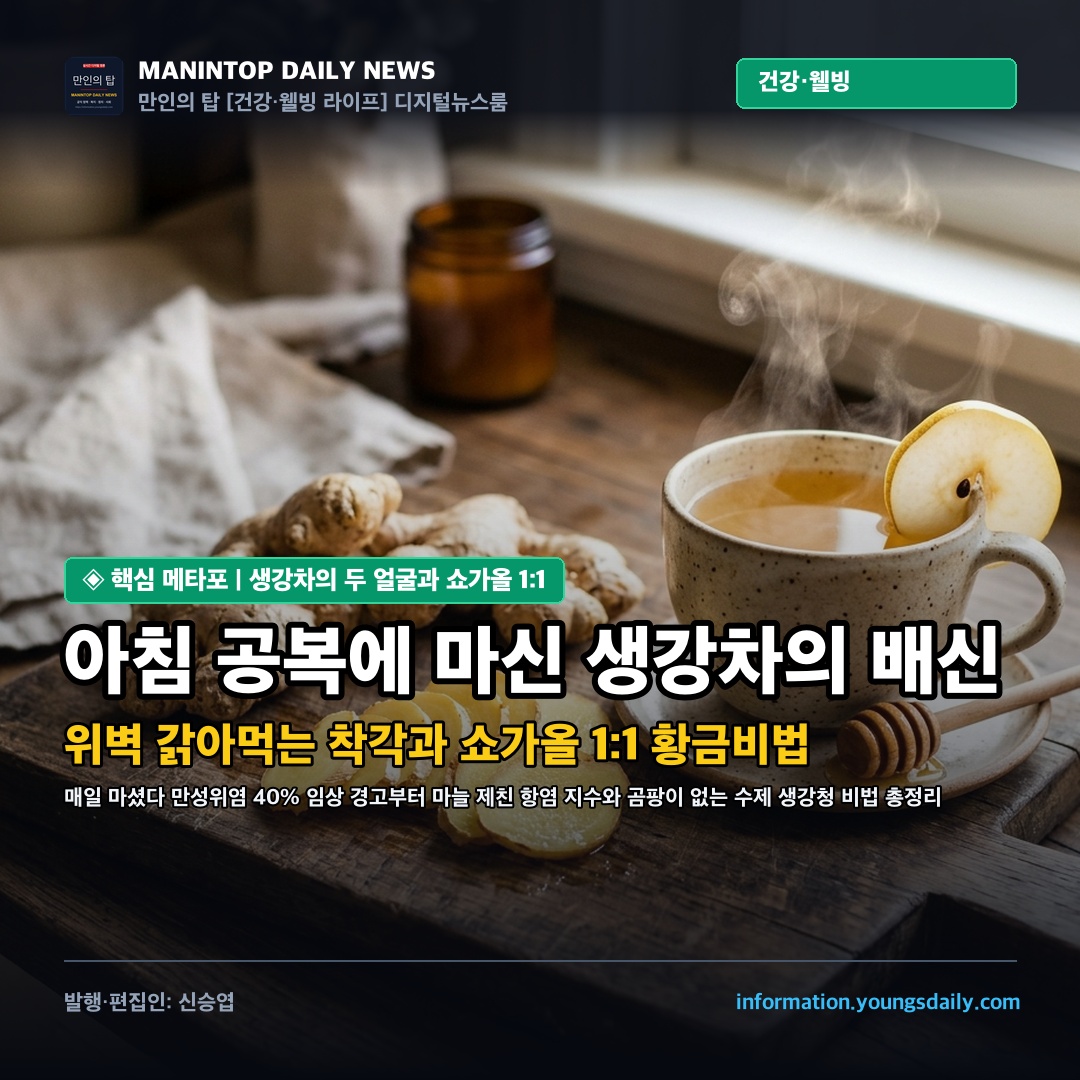
쌀쌀한 바람이 불어오는 계절, 면역력을 챙긴다며 아침 눈을 뜨자마자 김이 모락모락 나는 진한 생강차를 들이켜는 분들이 많습니다. 고려시대 이전부터 '신이 내린 영약'으로 칭송받던 생강이지만, 최근 병원 소화기내과에서는 정반대의 경고음이 울리고 있습니다. 매일 아침 빈속에 생강차를 마셔온 이들의 40%가 만성 위염 판정을 받았다는 충격적인 임상 통계가 나온 것입니다. 마늘과 양파를 훌쩍 제친 강력한 항염증 선물인 생강이 왜 어떤 이에게는 위벽을 갉아먹는 '독'이 되는지, 그리고 떫은맛과 곰팡이를 완벽히 잡는 수제 생강청의 1:1 황금비법을 알기 쉽게 짚어봅니다.
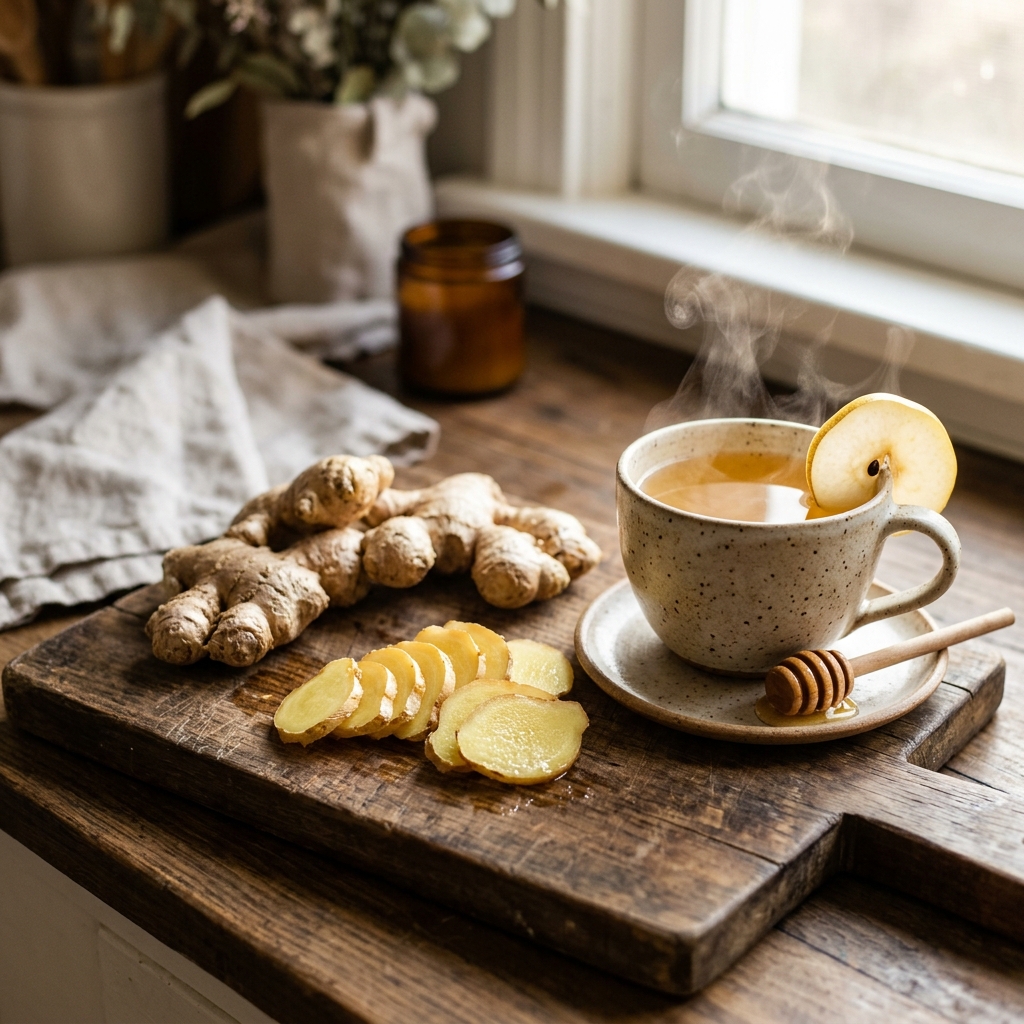
천연 면역 식재료로 사랑받는 생강과 따뜻한 전통 생강차. 강력한 생리활성 물질인 진저롤과 쇼가올을 품고 있어 섭취 방법과 음용 시간에 따라 약이 되기도 하고 독이 되기도 합니다.
1. 아침 공복 생강차의 배신: 병원 찾은 이들의 40%가 '만성 위염'
겨울철 감기를 예방하고 손발을 따뜻하게 하겠다는 생각으로 매일 아침 빈속에 생강차를 챙겨 마시는 중장년층이 적지 않습니다. 처음 1~2주는 몸이 따뜻해지고 속이 개운한 듯 느껴지지만, 시간이 흐를수록 명치 끝이 타는 듯이 쓰리고 잦은 트림과 설사가 시작됩니다.
의료 현장의 데이터는 경고를 넘어 섬뜩하기까지 합니다. 건강 매체 조사에 따르면, 생강차를 매일 장기 음용한 환자 중 무려 40%가 '만성 위염' 진단을 받았습니다. 하루 3잔 이상 진하게 달인 생강차를 장기간 마실 경우 위점막이 얇아져 위궤양 발병 위험이 정상인의 2배로 치솟는 것으로 나타났습니다.
소화기 임상 데이터로 본 공복 생강차의 위험 신호
- 매일 생강차 음용 환자 중 40%: 만성 위염 판정
- 하루 3잔 이상 진한 생강차 장기 복용 시: 위궤양 발병 위험 2배 급증
- 50대 이상 여성: 위 점막 부식 및 출혈성 위염 발생률 집중 증가
- 꿀을 듬뿍 넣는 습관: 위산 역류를 가속해 역류성 식도염 악화 유발 (꿀은 반 스푼 이하로 제한)
원인은 생강의 핵심 매운맛 성분인 '진저롤'에 있습니다. 진저롤은 적정량 섭취하면 위액 분비를 도와 소화를 촉진하지만, 음식물이 전혀 없는 빈속에 들어가면 이야기가 완전히 달라집니다. 보호막이 없는 위벽에 진저롤이 닿으면 위산이 폭포수처럼 쏟아져 나와 스스로의 위벽을 갉아먹는 급성 출혈성 위염과 궤양을 일으킵니다. 특히 위벽이 얇아진 60대 이상 고령층은 미세혈관 손상으로 위출혈이나 혈압 급변으로 응급실을 찾는 일까지 벌어집니다.
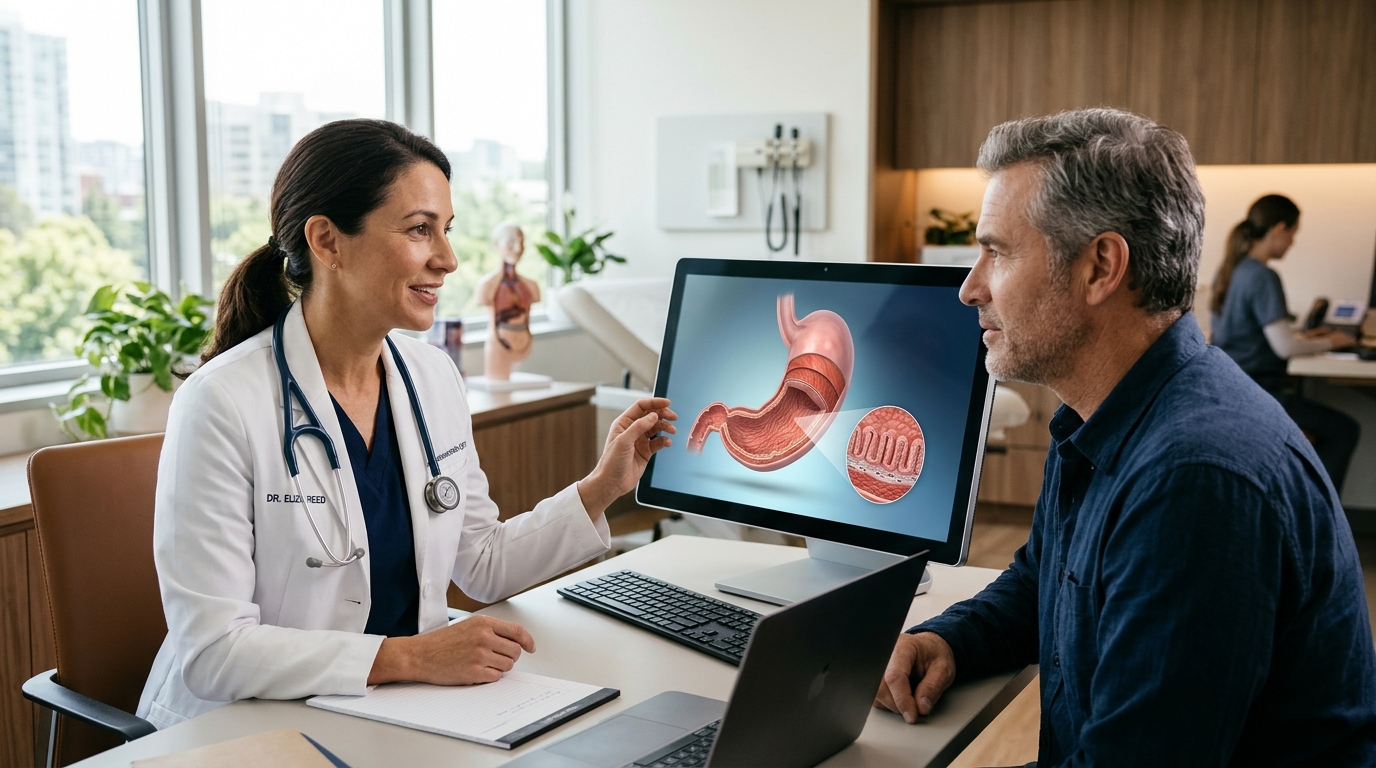
소화기내과 진료실에서 전문의가 디지털 화면을 통해 위점막과 위산 분비 메커니즘을 설명하는 모습. 빈속에 마시는 매운 성분은 위벽을 보호하는 점액층을 파괴하여 궤양을 유발합니다.
2. "이런 분은 절대 드시지 마세요": 생강차 섭취 금기 대상과 약물 충돌
생강은 혈관을 넓히고 피를 굳지 않게 하는 '혈액 희석' 효과가 탁월합니다. 하지만 이 강력한 효능이 누군가에게는 치명적인 칼날이 됩니다. 국내 1,000만 명에 달하는 고혈압 환자 중 아스피린이나 와파린 같은 항응고제·혈전용해제를 복용 중인 분들이 생강차를 함께 마시면 출혈 위험이 무려 3배 이상 폭증합니다.
| 섭취 대상 및 방식 |
체내 작용 기전 |
잠재적 위험 및 부작용 |
의학적 권고 수칙 |
| 아침 공복 음용군 |
빈속 위점막에 진저롤 직접 접촉, 위산 과다 분비 |
위벽 부식, 속 쓰림, 만성 위염, 위궤양 위험 2배 |
공복 음용 즉시 중단, 반드시 식후 30분 뒤 따뜻하게 음용 |
| 혈압약·혈전약 복용자 |
아스피린·와파린 등 항혈소판 약효 과도 증폭 |
체내 출혈 위험 3배 증가, 지혈 지연, 멍·뇌출혈 위험 |
약 복용 전후 최소 2시간 생강 섭취 엄금, 치질 환자 섭취 금기 |
| 담석증 및 열성 체질 |
담즙 분비 과다 촉진 및 온성(따뜻한 성질) 체열 가중 |
담석 이동으로 극심한 산통, 안면홍조, 불면증, 가슴 답답함 |
담석증 환자 섭취 금기, 열 많은 체질은 유자차·보리차로 대체 |
| 식후 30분 적정 음용군 |
음식물과 융합하여 위 배출 시간 단축, 라피노스 항균 |
부작용 없이 소화 촉진, 가래 해소, 혈류 개선, 면역 증강 |
하루 1~2잔, 1회 생강 3~5g(엄지손가락 한 마디) 이내 준수 |
담석증 환자 역시 생강을 멀리해야 합니다. 생강이 담즙 분비를 갑작스럽게 촉진하면서 담낭 속에 가만히 있던 돌(담석)을 건드려 극심한 산통을 일으킬 수 있기 때문입니다. 평소 몸에 열이 많아 얼굴이 붉어지고 가슴이 답답한 체질이라면 생강차 대신 은은한 보리차나 유자차, 연잎차로 온기를 채우는 것이 훨씬 안전합니다.
3. 마늘과 양파를 제쳤다: 생강 속 '진저롤'과 '쇼가올'의 분자과학
그렇다면 생강은 어떻게 먹어야 진짜 보약이 될까요? 미국 사우스캐롤라이나 대학교 연구진이 식품별 염증유발지수(DII)를 측정한 결과, 생강은 -0.453을 기록해 대표적인 항암·항염 식재료인 마늘(-0.412)과 양파(-0.301)를 모두 제치고 최고 수준의 염증 억제력을 인정받았습니다. 지수 숫자가 음수로 낮을수록 체내 염증을 꺼뜨리는 힘이 강하다는 뜻입니다.
여기서 생강의 숨은 비밀은 '조리 방식'에 있습니다. 날생강에 풍부한 진저롤은 몸 안의 염증 유발 효소(COX-2)를 차단해 관절통과 근육통을 완화합니다. 그런데 이 생강을 찌거나 말려 열을 가하면 분자 내 수분이 빠져나가며 '쇼가올'이라는 새로운 물질로 탈바꿈합니다. 놀랍게도 쇼가올은 세포를 보호하는 항암·항산화 활성이 날생강의 진저롤보다 무려 10배나 강력합니다.
한국과학기술연구원(KIST)의 특허 기술에 따르면, 단순히 냄비에 끓이거나 볕에 말리는 재래식 방식으로는 쇼가올 함량을 크게 늘리기 어렵습니다. 하지만 고온·고압 환경(180도, 14기압)에서 가공할 경우 쇼가올 비율이 120%까지 치솟아 진저롤을 완전히 역전하며, 루신 등 천연 아미노산을 소량 더하면 쇼가올 전환율이 최대 476.2%까지 폭증하는 것으로 규명되었습니다. 생강을 정성껏 우려내고 숙성시킬수록 몸에 이로운 보약 성분이 극대화되는 원리입니다.
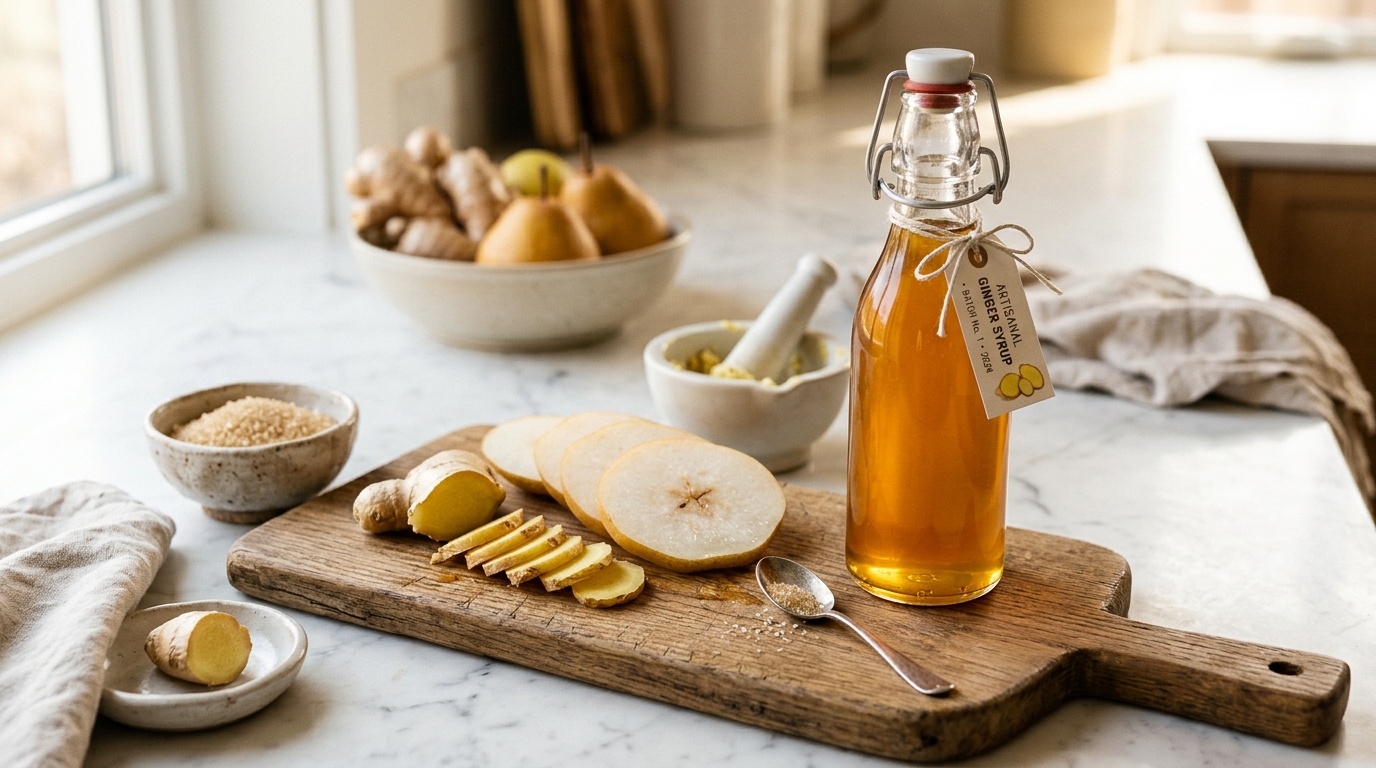
배 1개와 설탕 1:1 황금비율로 완성하는 수제 생강청 제조 과정. 생강의 아린 맛을 부드럽게 중화하고 삼투압을 통해 곰팡이 번식을 원천 차단하는 과학적 비법입니다.
4. 실패 없는 명품 수제 생강청: '배 1개'의 기적과 1:1 보존 과학
환절기마다 집에서 야심 차게 생강청을 담갔다가 혀가 얼얼할 정도로 떫고 써서 버리거나, 며칠 만에 하얀 곰팡이가 피어 낭패를 본 경험이 있으실 겁니다. 푸드 전문가들이 귀띔하는 실패 없는 황금 제조법은 '배 1개'와 '설탕 2단계 분할'에 있습니다.
비법 1: 배 1개로 아린 맛을 부드럽게 감싸안기
생강 1kg에 배 1개를 껍질 벗겨 함께 준비합니다. 배의 풍부한 천연 과당과 수분이 생강 진저롤의 사나운 매운맛을 화학적으로 감싸주어 목 넘김이 놀랍도록 부드러워집니다. 배의 루테올린 성분이 기관지 점막을 촉촉하게 감싸주어 감기 예방 시너지도 두 배가 됩니다.
비법 2: 설탕 200g으로 먼저 1시간 재우는 '무수(無水) 착즙'
껍질을 긁어낸 생강에 전체 설탕 1kg 중 20%(1컵, 200g)를 먼저 버무려 실온에 1시간 둡니다. 삼투압으로 생강 자체의 즙이 흥건하게 배어 나옵니다. 이때 물을 단 한 방울도 붓지 않고 배와 함께 믹서에 넣고 갈아줍니다. 그 후 남은 설탕 800g을 섞어 녹이면 떫은맛 없는 진한 원액이 완성됩니다.
비법 3: 곰팡이 원천 차단하는 '설탕 5스푼 덮개'
생강청에 설탕을 덜 넣으면(1:0.6 비율) 곰팡이가 번식하기 십상입니다. 안전한 장기 보관을 위해 반드시 생강과 설탕을 1:1로 맞추고, 열탕 소독해 바싹 말린 유리병에 청을 담은 뒤 맨 윗부분에 설탕 5스푼을 두툼하게 펴 발라 공기를 차단해 줍니다. 덜어 먹을 때는 물기 없는 마른 숟가락만 사용해야 합니다.
만약 생강청 표면에 하얀 솜털 곰팡이가 피었다면 아까워도 절대 걷어내고 드시면 안 됩니다. 눈에 보이지 않는 유해 균사와 독소가 이미 병 전체에 퍼져 있기 때문입니다. 올바른 방법으로 정성스레 담근 생강청을 '식후 30분 뒤 따뜻한 물에 한 잔'씩 곁들여 마실 때, 비로소 위장도 편안하고 면역력도 단단해지는 겨울철 진짜 건강을 누릴 수 있습니다.
만인의 탑 보건의료 및 식품과학 전문 데스크 | 취재 및 집필: 신승엽 기자 (Seung Youb Ssin)
본 기사는 미국 사우스캐롤라이나 대학교 식품 염증 지표 연구, 한국과학기술연구원(KIST) 기능성 지질 특허 데이터, 대한소화기학회 임상 가이드라인을 바탕으로 교차 검증을 거쳐 작성되었습니다.
As temperatures drop, millions reach for a steaming mug of hot ginger tea first thing in the morning, trusting it as a time-tested immunity elixir. Yet in modern gastroenterology clinics, specialists are sounding an urgent alarm: approximately 40% of patients who routinely drink ginger tea on an empty stomach have been diagnosed with chronic gastritis. While scientific evaluations reveal ginger possesses an anti-inflammatory index superior to both garlic and onions, drinking concentrated ginger tea without food strips the stomach of its protective mucus shield. Here is the clinical evidence, drug interaction warnings, and the molecular science behind homemade ginger syrup.
Celebrated as a botanical powerhouse, ginger harbors biologically active gingerols and shogaols. Depending on the timing and mode of consumption, it can serve as a potent anti-inflammatory or an aggressive gastric irritant.
1. The Morning Tea Trap: 40% of Daily Drinkers Diagnosed with Gastritis
To fight off seasonal chills and enhance circulation, many individuals cultivate a morning ritual of drinking potent ginger tea before breakfast. While the initial two weeks often produce a sensation of bodily warmth and systemic alertness, this is frequently followed by burning epigastric pain, acid reflux, frequent belching, and intestinal cramping.
Clinical audits by health institutions indicate that roughly 40% of individuals who drink ginger tea every morning have developed chronic gastritis. Regularly consuming three or more concentrated cups daily thins the gastric mucosa, doubling the clinical risk of peptic ulcer formation compared to non-drinkers.
Clinical Gastroenterological Findings on Fasting Ginger Tea
- 40% of daily empty-stomach ginger tea drinkers present with chronic gastritis
- Drinking 3+ concentrated cups daily doubles gastric ulcer incidence
- Women aged 50 and above exhibit elevated susceptibility to hemorrhagic mucosal erosion
- Adding excessive honey aggravates gastroesophageal reflux disease (limit honey to half a spoonful)
The physiological culprit is gingerol, the primary pungent constituent of fresh ginger. Under fed conditions, gingerol gently stimulates gastric juice secretion to aid nutrient breakdown. However, when ingested on a completely empty stomach, gingerol makes direct contact with unshielded epithelial cells, triggering an intense surge of hydrochloric acid that corrodes the gastric wall. In seniors over 60, fragile submucosal capillaries can rupture, leading to gastrointestinal bleeding and abrupt blood pressure drops that necessitate emergency intervention.
In a gastroenterology clinic, a physician illustrates the stomach lining and gastric acid secretion dynamics. Ingesting spicy gingerol on a fasting stomach degrades protective mucus layers and triggers ulceration.
2. Who Must Avoid Ginger: Dangerous Drug Interactions and Contraindications
Beyond its digestive actions, ginger naturally expands blood vessels and inhibits platelet aggregation. While beneficial for general cardiovascular flow, this natural blood-thinning property poses severe risks for millions taking prescription anticoagulants, such as aspirin or warfarin. In these patients, concurrent ginger consumption can amplify antiplatelet activity, tripling the risk of internal hemorrhage.
| Target Group & Intake Mode |
Physiological Mechanism |
Clinical Risks & Adverse Effects |
Medical Guidance Protocol |
| Fasting Morning Drinkers |
Direct mucosal contact of gingerol; surges acid output |
Gastric erosion, burning reflux, doubles ulcer risks |
Discontinue fasting intake; consume warm tea 30 min post-meal |
| Patients on Blood Thinners |
Synergistic amplification of aspirin and warfarin activity |
Triples internal bleeding risk; impairs hemostasis |
Enforce 2-hour buffer between medications; avoid if hemorrhoids exist |
| Gallstone & Heat Phenotypes |
Spurs bile discharge; adds thermogenic body heat |
Severe biliary colic from stone shifting; facial flushing and insomnia |
Strictly contraindicated with gallstones; switch to barley or citron tea |
| Post-Meal Moderate Users |
Accelerates gastric emptying; raffinose blocks biofilms |
Relieves bloating, dissolves phlegm, enhances peripheral flow |
Limit to 1-2 cups daily; raw ginger dose capped at 3-5g per day |
Individuals with gallstones (cholelithiasis) must strictly avoid concentrated ginger. Ginger powerfully stimulates gallbladder contractions, which can dislodge stones into bile ducts and trigger agonizing biliary colic. Furthermore, individuals with excess constitutional internal heat—marked by persistent facial redness, fever above 37°C, and night sweats—should replace ginger with soothing alternatives like roasted barley, lotus leaf, or mild citron infusions.
3. Surpassing Garlic and Onions: The Molecular Science of Shogaol
When properly utilized, ginger remains one of nature's greatest biological defenders. In Dietary Inflammatory Index (DII) evaluations performed by the University of South Carolina, ginger attained a score of -0.453, decisively outperforming renowned therapeutic foods like garlic (-0.412) and onions (-0.301). Lower negative numbers indicate substantially greater anti-inflammatory potential.
The transformative secret of ginger lies in its culinary biochemistry. Raw ginger is dominated by gingerols, which suppress the inflammatory COX-2 pathway to relieve joint stiffness and muscle fatigue. However, when ginger is steamed, dried, or cooked under heat, dehydration eliminates a hydroxyl group, converting gingerols into shogaols. Remarkable biochemical assays prove that shogaol exhibits ten times greater cellular antioxidant and anti-cancer defense capabilities than native [6]-gingerol.
According to patented functional extraction research, traditional sun-drying or microwave heating fails to elevate shogaol levels, often causing degradative loss. In contrast, pressurized processing at 180°C and 14 atmospheres surges shogaol concentration to 120%, overtaking gingerol entirely. Introducing acidic amino acid catalysts such as leucine further accelerates shogaol yield by up to 476.2%, unlocking extraordinary neuroprotective and metabolic efficacy.
Crafting artisanal homemade ginger syrup with a 1:1 sugar ratio and one sweet pear. The natural fructose softens acrid pungency while high osmotic pressure permanently locks out fungal spoilage.
4. The Foolproof Artisanal Ginger Syrup: The One-Pear Miracle & Mold Defense
Many home cooks who attempt to brew artisanal ginger syrup encounter bitter disappointment: the syrup tastes overwhelmingly harsh and astringent, or white mold fuzz appears within days. Food scientists highlight that two culinary secrets ensure flawless flavor and long-term shelf stability:
Secret 1: Neutralize Harshness with One Ripe Korean Pear
Combine 1kg of peeled ginger with one peeled, sliced sweet pear. The rich natural fructose and pure moisture of the pear chemically cloak the harsh bite of raw gingerol, yielding an exceptionally smooth texture while delivering soothing bronchial moisture.
Secret 2: Pre-Toss with 20% Sugar for Waterless Extraction
Toss peeled ginger in 200g of sugar (one cup, 20% of total 1kg sugar) and rest at room temperature for one hour. Osmotic pressure draws out rich natural ginger juice. Blend the soaked ginger and pear together without adding a single drop of water, then stir in the remaining 800g of sugar until fully dissolved.
Secret 3: Seal with a 5-Spoon Sugar Barrier
Reducing sugar below a 1:1 ratio drastically elevates fungal spoilage. Maintain a strict 1:1 weight ratio, pack the syrup into boiling-water sterilized, bone-dry jars, and spread five tablespoons of dry sugar across the top surface to block ambient oxygen. Always use dry utensils. If mold ever appears, discard the entire jar immediately as invisible mycotoxins permeate the syrup.
By savoring a warm cup of this artisanal brew thirty minutes after meals, you protect your delicate stomach lining while reaping the full spectrum of ginger's profound anti-inflammatory, digestive, and warming benefits all season long.
MANINTOP Medical & Nutritional Science Editorial Desk | Reporting & Writing: Seung Youb Ssin, Senior Reporter
This investigative report was cross-verified using Dietary Inflammatory Index studies from the University of South Carolina, functional lipid patents from KIST, and clinical guidelines from gastroenterological societies.