| 대한민국판 서울 16.5℃ 맑음
🔍 기사 검색 🔑 로그인 · 구독 신문사 소개 기사 제보
/
LIFE & INFO 삶의 지혜

만인의 탑

MANINTOP DAILY NEWS 우리들의 삶을 윤택하게 하는 정보를 담은 뉴스
DAILY NEWS 유익한 정보
만 인 의 탑
우리들의 삶을 윤택하게 하는 정보를 담은 뉴스
MANINTOP DAILY NEWS
인터넷신문 | https://information.youngsdaily.com

[기획] 반토막 주가에 목표가는 60% 괴리율… 모건스탠리 '실적 절벽' vs 700조 슈퍼사이클 반도체주 대격돌
기획 심층취재 경제·부동산

[기획] 반토막 주가에 목표가는 60% 괴리율… 모건스탠리 '실적 절벽' vs 700조 슈퍼사이클 반도체주 대격돌

"사상 최대 분기 실적의 환호 뒤에 찾아온 주가 급락과 마이너스 60% 괴리율의 충격파가 증시를 뒤흔들었습니다. 2028년 실적 절벽을 경고하는 외국계 투자은행의 칼날과 700조 원 슈퍼사이클을 자신하는 국내 리서치센터의 반박 속에서, 롤러코스터 장세를 돌파할 투자자 생존 해법을 집중 조명합니다."
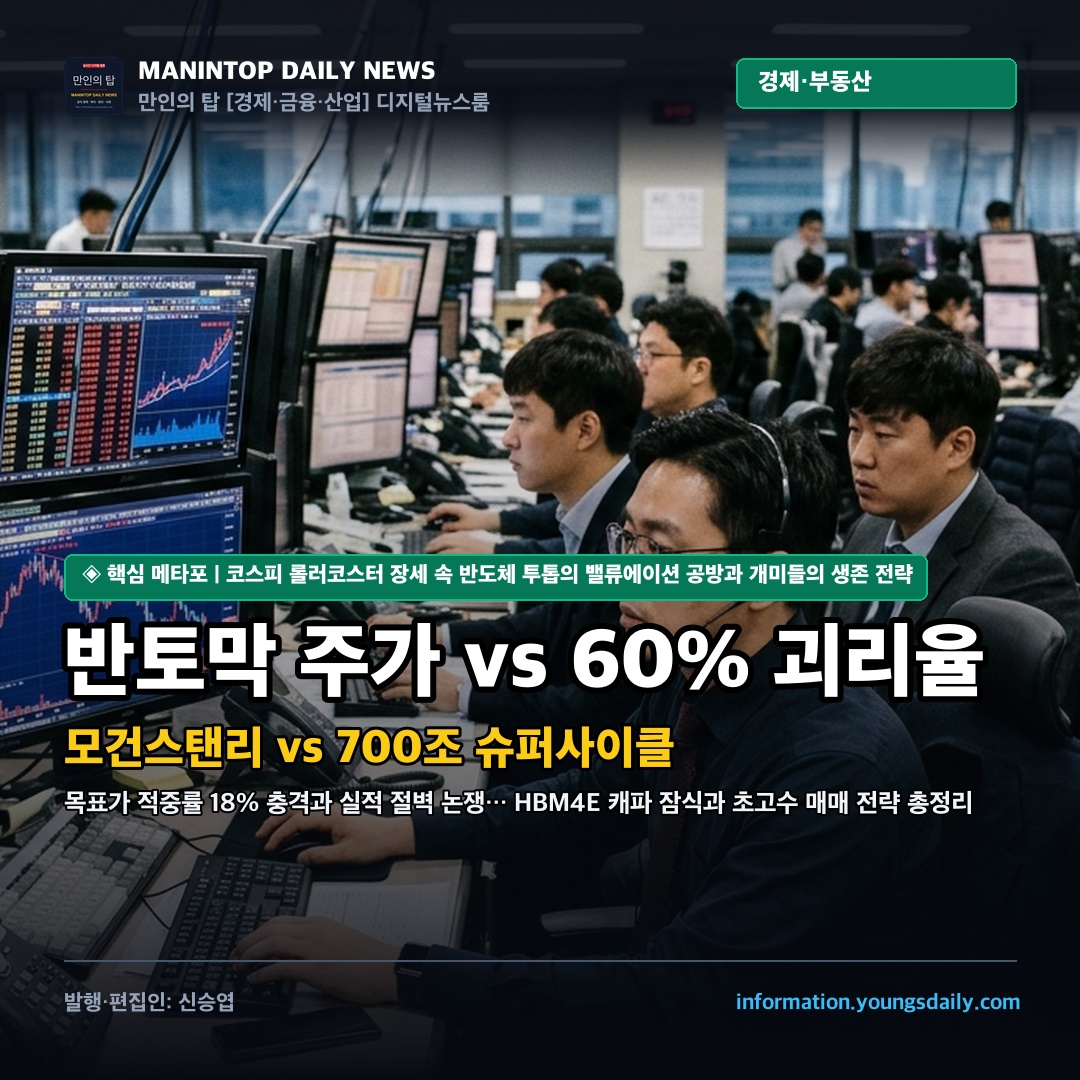
서울 여의도 증권가 트레이딩 룸에서 딜러들이 코스피 반도체 지수 급등락 캔들 차트를 모니터링하며 매매 전략을 논의하는 모습
▲ 공식 보도사진 — 서울 여의도 증권사 딜링룸에서 기관 트레이더들이 삼성전자와 SK하이닉스의 실시간 호가 창과 롤러코스터 주가 변동성 차트를 긴장 속에 주시하고 있다. 역대급 실적 발표 직후 미국 중간선거 규제 불안과 급반등 장세가 이어지며 목표주가 괴리율 논란이 거세지고 있다.

핵심 취재 팩트 요약

  • 미국 중간선거 발 규제 공포로 이틀 만에 13~18% 폭락했던 삼성전자와 SK하이닉스가 매수 사이드카 발동과 함께 급반등했으나, 주가와 애널리스트 목표가 사이의 괴리율은 -60%를 넘어섰습니다.
  • 모건스탠리는 2028년 미국 5GW 데이터센터 지연과 증설 공급 과잉으로 인한 '실적 절벽'을 경고하며 목표가를 최대 38.5% 내렸지만, 국내 증권가는 HBM4E 캐파 잠식과 사전계약금 장기계약을 근거로 2027년 742조 원 영업이익 슈퍼사이클을 반박했습니다.
  • 자본시장연구원 25년치 74만 건 전수 조사 결과 목표주가의 1년 뒤 실제 도달률은 18.54%에 불과한 것으로 확인되어, 투자자들은 목표가 숫자만 믿기보다 분할 매수와 밸류에이션 점검 중심의 현실적 리스크 관리가 필요합니다.

국내 증시의 핵심 대장주인 반도체주가 최근 롤러코스터 장세를 연출하며 반토막 난 주가와 증권가 목표가 사이의 60% 괴리율 논란에 휩싸인 가운데, 모건스탠리의 실적 절벽 경고와 700조 슈퍼사이클 전망이 정면으로 충돌하고 있습니다.

동학개미들의 가슴을 철렁하게 만든 드라마는 지난 11월 초 미국 중간선거 직후 시작되었습니다. 미 의회 권력이 교체되면서 인공지능(AI) 데이터센터에 대한 전력망 규제와 인허가 중단 우려가 번지자, 외국인 투자자들은 코스피 시장에서 단 이틀 만에 6조 원이 넘는 주식을 내던졌습니다. 그 여파로 삼성전자 주가는 13.44%, SK하이닉스는 무려 18.91%나 수직 낙하하며 코스피 시장 전체에 거래를 강제로 멈추는 서킷브레이커가 발동되었습니다. 하지만 공포도 잠시, 11월 10일에는 장 시작과 동시에 지수가 5% 넘게 폭등하며 주식을 사려는 프로그램 매수 호가를 일시 정지시키는 매수 사이드카가 터져 나오는 극단적인 널뛰기 장세가 연출되었습니다.

하지만 폭풍 같은 장세 속에서 투자자들의 혼란은 더욱 깊어지고 있습니다. 주가는 고점 대비 뚝 떨어졌는데도 여의도 증권사 보고서의 목표주가는 여전히 하늘 높은 곳에 머물러 있어 괴리율이 마이너스 60%를 넘어섰기 때문입니다. 글로벌 투자은행 모건스탠리가 2028년이면 반도체 시장이 절벽 아래로 떨어질 것이라며 목표가를 대폭 깎아내린 반면, 국내 증권사들은 영업이익 700조 원을 돌파할 역사상 최대 슈퍼사이클이 이어질 것이라며 맞서고 있습니다. 천당과 지옥을 오가는 반도체주를 둘러싼 시장의 복잡한 셈법을 누구나 알기 쉽게 짚어보겠습니다.

1. '반토막 난 주가 vs 요지부동 목표가'… 마이너스 60% 괴리율과 신뢰의 위기

주가가 급락했을 때 증권 시장에서 가장 기이한 현상은 바로 '목표주가의 침묵'입니다. 금융정보업체 에프앤가이드 집계에 따르면, 주가 폭락이 절정에 달했던 11월 6일 기준 국내 증권사들이 제시한 삼성전자의 평균 목표주가는 47만 2,381원이었고, SK하이닉스는 305만 4,286원이었습니다. 하지만 이날 실제 시장 종가는 삼성전자가 18만 8,700원, SK하이닉스는 113만 2,000원에 그쳤습니다.

단순 계산으로도 증권사 목표가와 실제 주가의 차이인 괴리율이 삼성전자는 마이너스 60.1%, SK하이닉스는 마이너스 62.9%에 달했습니다. 증권사들이 장담한 목표가에 도달하려면 삼성전자는 현재 주가에서 150%, SK하이닉스는 170% 이상 폭등해야 한다는 황당한 계산이 나옵니다. 3분기 역대급 실적 발표 직후 국내 21개 증권사가 앞다퉈 '적극 매수' 보고서를 쏟아냈지만, 정작 시장에 쏟아지는 매물 폭탄 앞에서는 아무런 길잡이 역할을 하지 못한 것입니다.

투자자들 사이에서는 "주가가 반토막이 났는데도 증권사들은 여전히 장밋빛 목표가만 외치고 있다"는 불만이 터져 나옵니다. 같은 반도체 종목을 두고도 IBK투자증권은 삼성전자 목표가를 35만 원으로 잡은 반면 유안타증권은 69만 원을 제시해 증권사 간 편차만 2배에 달했습니다. 시장의 불안감을 제때 반영하지 못한 채 높은 목표가를 고집하는 리서치센터의 관행이 개인 투자자들에게 엉뚱한 착시를 심어주고 있다는 지적입니다.

거래 일자 주요 시장 이벤트 및 수급 동향 삼성전자 종가 및 등락률 SK하이닉스 종가 및 등락률 코스피 지수 및 시장 조치
11월 5~6일 미국 블루웨이브 확정, AI 데이터센터 규제 공포 확산 이틀간 13.44% 급락 (188,700원) 이틀간 18.91% 폭락 (1,132,000원) 장중 8% 폭락(서킷브레이커), 외인 6조 원 순매도
11월 9일 반도체 저가 매수세 유입, 상위 1% 초고수 삼성전자 매수 189,900원 (+0.64%) 1,136,000원 (+0.35%) 코스피 5,018선 지지 공방, 기술적 반등 모색
11월 10일 뉴욕 증시 필라델피아반도체(+6.9%) 연동 급반등 랠리 200,250원 (+5.45%) 1,220,000원 (+7.39%) 코스피 5,272.20 (+5.05%), 09:06 매수 사이드카 발동

2. 1년 뒤 적중률 고작 18.5%… 25년간 74만 건 리포트가 밝힌 낙관 편향의 실체

증권사들의 목표주가가 왜 이토록 현실과 동떨어져 있는지는 공인 연구기관의 방대한 빅데이터 조사를 통해 낱낱이 드러났습니다. 국책 연구기관인 자본시장연구원의 김준석 선임연구위원이 2000년부터 2024년까지 국내 42개 증권사가 발행한 애널리스트 보고서 약 74만 건을 전수 조사한 결과는 충격적이었습니다.

분석에 따르면 2015년 이후 증권사 보고서가 제시한 목표주가에 1년 뒤 실제 주가가 단 한 번이라도 도달한 비율은 겨우 18.54%에 불과했습니다. 리포트 5건 중 4건 이상은 목표가 달성에 실패했다는 뜻입니다. 1년이라는 긴 기간 동안 장중에 딱 한 번이라도 목표가를 건드린 비율 역시 36.01%에 그쳤습니다. 보고서가 약속했던 평균 기대수익률은 33.91%였지만, 1년 뒤 투자자들이 손에 쥔 실제 수익률은 4.07%로 은행 예금 금리 수준에 머물렀습니다.

더 심각한 것은 지난 25년 동안 증권사들이 낸 74만 건의 보고서 중 '매수'나 '적극 매수' 의견이 무려 91.17%를 차지했다는 점입니다. 반면 주식을 팔라고 조언하는 '적극 매도' 의견은 단 한 건도 발행되지 않았습니다. 대기업 눈치를 보느라 매도 보고서를 쓰지 못하고, 법인 고객 유치를 위해 늘 주가가 오를 것이라는 낙관적 전망만 내놓는 증권업계의 고질적인 구조가 마이너스 60% 괴리율이라는 기형적 결과물을 낳은 것입니다.
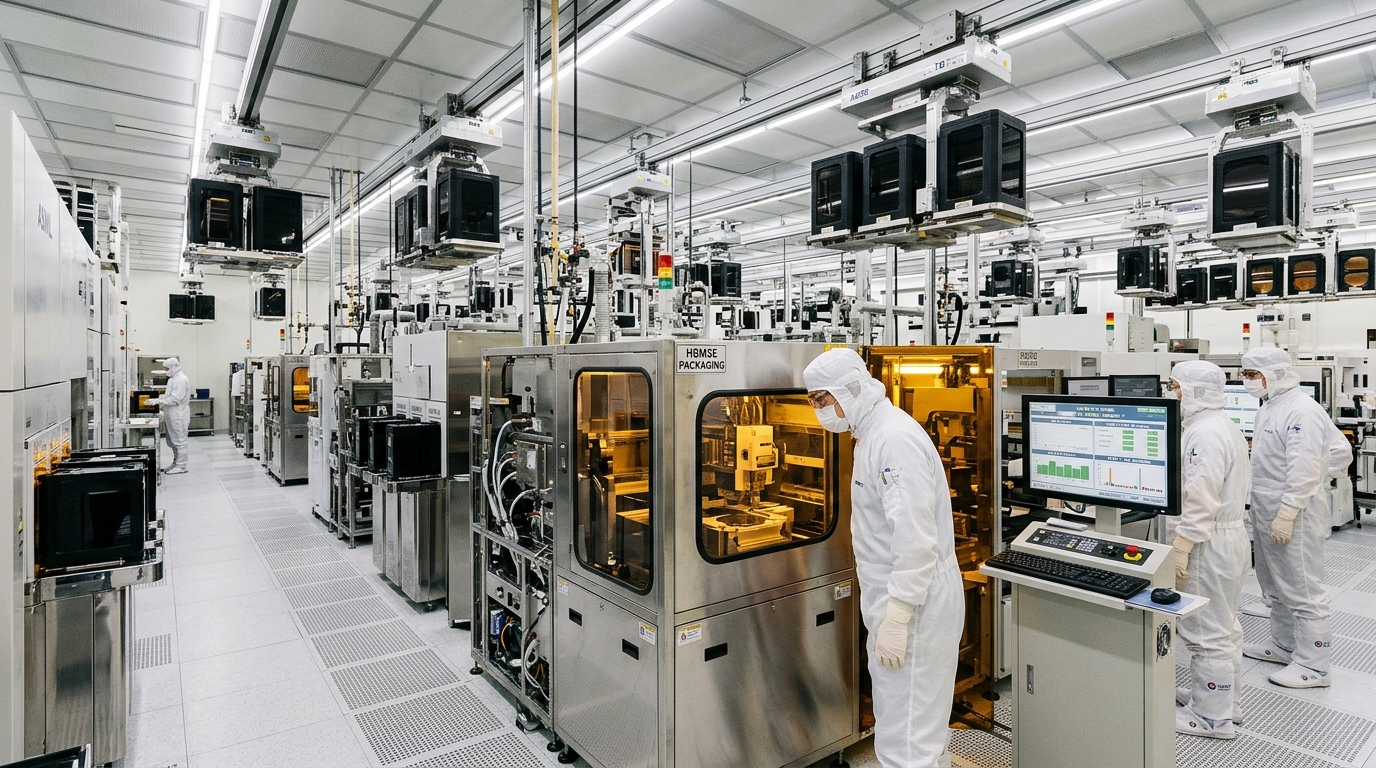
초정밀 반도체 웨이퍼 팹 클린룸 내부에서 방진복을 착용한 엔지니어들이 HBM 첨단 패키징 라인을 점검하는 모습
▲ 기술 현장 보도사진 — 최첨단 반도체 제조 공장의 클린룸 내부에서 엔지니어들이 고대역폭 메모리(HBM) 적층 패키징 공정 장비를 점검하고 있다. 공정 난이도가 치솟는 HBM4E 전환 과정에서 범용 D램 생산 능력이 급격히 잠식되면서 글로벌 메모리 공급 부족 현상이 심화되고 있다.

3. '저승사자' 모건스탠리의 2028 실적 절벽 경고… 5GW 데이터센터 지연의 충격

주가 급락에 불을 지핀 도화선은 글로벌 투자은행 모건스탠리의 보고서였습니다. 반도체 업계에서 '저승사자'로 불리는 모건스탠리의 숀 킴 연구원은 삼성전자의 목표주가를 30만 9,000원으로 18.9% 깎고, SK하이닉스는 260만 원에서 160만 원으로 38.5%나 대폭 하향 조정했습니다. 비록 당장 내년까지의 호실적은 인정했지만, 목표가를 대폭 깎은 배경에는 '2028년 실적 절벽'이라는 무시무시한 경고가 자리 잡고 있었습니다.

모건스탠리의 핵심 논리는 '데이터센터 건설 지연'과 '반도체 공장 증설'의 타이밍 미스입니다. 미국 중간선거 이후 전력망 부족과 환경 규제로 인해 2028년 가동 예정이던 5기가와트(GW) 규모의 초대형 데이터센터 프로젝트들이 2029년 이후로 줄줄이 밀릴 것으로 내다봤습니다. 이로 인해 2028년 전 세계 데이터센터 설비 증가율 전망치를 기존 21%에서 9%로 반토막 이하로 낮췄습니다.

문제는 반도체 제조사들이 지어놓은 신규 공장들이 2027년 말부터 쏟아져 나온다는 점입니다. 수요는 꺾이는데 공장 증설로 메모리 칩 공급이 넘쳐나면서 2028년부터 반도체 가격이 폭락할 것이라는 설명입니다. 모건스탠리는 이 여파로 50%를 넘나들던 SK하이닉스의 장기 영업이익률이 2029년 이후에는 28% 수준으로 주저앉을 것이라며 비관적 전망을 쏟아냈습니다.

4. "과거 사이클과 질적으로 다르다"… 국내 증권가가 제시한 700조 슈퍼사이클 근거

하지만 국내 증권가의 시각은 완전히 다릅니다. 대신증권과 DS투자증권 등 여의도 리서치센터들은 모건스탠리의 비관론이 "오지도 않은 2028년 걱정을 미리 당겨서 주가를 짓누르는 과도한 공포"라고 강력히 반박합니다. 이번 AI 반도체 호황은 과거 PC나 스마트폰 시절의 단기 사이클과 질적으로 다른 '역대 최대 규모의 슈퍼사이클'이라는 주장입니다.

대신증권 분석에 따르면 전 세계 메모리 반도체 시장 규모는 2026년에 7,974억 달러(약 1,100조 원)로 전년 대비 264% 폭증하고, 2027년에는 1조 달러(약 1,440조 원) 시대를 열 것으로 전망됩니다. 이에 따라 삼성전자와 SK하이닉스의 합산 영업이익 역시 2025년 90조 원 수준에서 2026년 605조 원, 2027년에는 무려 742조 원까지 치솟을 것으로 추산했습니다.

실제 데이터센터 투자 수요도 여전히 견고합니다. 글로벌 시장조사업체 트렌드포스에 따르면 마이크로소프트, 구글, 아마존 등 9대 글로벌 클라우드 기업들의 내년도 설비투자 증가율은 기존 50%에서 60%로 오히려 상향 조정되었습니다. AI 서버 출하량 역시 올해 32%, 내년 36% 증가가 예상되어 실수요 둔화 조짐은 어디에서도 찾아볼 수 없다는 것이 국내 전문가들의 일치된 분석입니다.

비교 분석 핵심 항목 모건스탠리 (숀 킴 연구원) 비관론 국내 증권가 (대신증권·DS투자증권) 낙관론 시장 파급효과 및 평가
기본 시장 진단 호황기 후반부 진입, '2028년 실적 절벽' 경고 AI 수요 폭발과 공급 병목 기반 '슈퍼사이클 지속' 다운사이클 진입 시점을 둘러싼 첨예한 대립
목표주가 조정 내역 삼성전자 30.9만(-19%), SK하닉 160만(-39%) 하향 삼성전자 33만~69만, SK하닉 170만~400만 유지 글로벌 IB와 국내 증권사 간 시각차 극대화
중장기 실적 전망 2029년 이후 SK하이닉스 이익률 28%로 급락 2026년 합산 영업익 605조, 2027년 742조 폭증 단기 실적은 모두 호조 인정, 2028년 이후 엇갈림
데이터센터 투자 환경 미국 내 5GW 지연, 2028년 설비 증가율 9% 급락 글로벌 9대 빅테크 내년 설비투자 60% 상향 조정 실제 AI 서버 출하량 견조, 단기 수요 둔화 전무
공급망 방어 요인 신규 팹 증설 물량 유입으로 가격 결정력 상실 HBM4E 생산 잠식 5:1 및 사전계약금 LTA 방어 구조적 공급 부족으로 높은 가격 하방 경직성 형성
야간에 컴퓨터 모니터 앞에서 반도체 주가 차트와 증권사 밸류에이션 리포트를 정밀 분석하는 투자자의 모습
▲ 심층 분석 보도사진 — 서울 시내 한 금융 리서치 사무실에서 시장 분석가가 다중 모니터에 띄워진 반도체 수급 지표와 밸류에이션 차트를 면밀히 검토하고 있다. 최근 주가 급락 국면에서 개인 투자자들의 저가 매수세와 상위 1% 초고수들의 종목 교체 매매가 교차하고 있다.

5. HBM4E 캐파 잠식 5대 1과 사전계약금 LTA… 흔들리지 않는 이익 방어막

국내 증권사들이 2028년 공급 과잉론을 일축하는 가장 결정적인 기술적 무기는 바로 'HBM의 생산 라인 잠식 효과'입니다. 삼성전자의 평택 공장이나 SK하이닉스의 청주·용인 공장이 아무리 증설된다 해도, 차세대 HBM을 만드는 데 웨이퍼가 상상을 초월할 정도로 많이 들어가기 때문에 시중에 풀릴 수 있는 칩의 총량은 제한적일 수밖에 없습니다.

이를 숫자로 보여주는 것이 '교환비율(Trade Ratio)'입니다. 기존 HBM4 세대에서는 HBM 1개를 만들려면 일반 D램 3개를 포기해야 했습니다(교환비율 3대 1). 하지만 속도가 초당 16기가비트(Gbps)로 치솟는 차세대 HBM4E부터는 회로 패턴을 새기는 마스크 수가 대폭 늘어나면서 교환비율이 4대 1에서 최대 5대 1까지 치솟습니다. 즉 고부가가치 HBM을 만들기 위해 공장을 돌릴수록 일반 PC나 서버에 들어가는 범용 D램 생산량은 오히려 5분의 1로 급감하게 됩니다. HBM과 범용 D램이 서로의 공급을 갉아먹는 병목 현상이 발생해 가격이 떨어질 틈이 없는 것입니다.

여기에 또 하나의 든든한 방어막은 빅테크들과 맺은 '사전 계약금(Prepayment) 기반 다년 장기계약(LTA)'입니다. 2018년 호황기 때는 말로만 계약을 맺어 불황이 오자마자 고객사들이 계약을 일방적으로 취소했지만, 지금은 마이크로소프트나 엔비디아 같은 고객사들이 거액의 계약금을 먼저 내고 물량을 선점해 가고 있습니다. 설령 경기가 꺾이더라도 고객사가 일방적으로 주문을 취소할 수 없기 때문에, 기업들이 거둬들이는 최저 이익의 바닥이 과거 호황기 대비 80% 수준으로 탄탄하게 지지되는 구조가 완성된 것입니다.

6. 물린 개미의 8조 사투 vs 상위 1% 초고수의 종목 교체… 전문가 현실 조언 총정리

폭락과 폭등이 엇갈리는 장세 속에서 시장 참여자들의 대응은 극명하게 갈렸습니다. 한국거래소 데이터에 따르면 코스피가 폭락했던 11월 초, 개인 투자자들은 외국인이 쏟아낸 10조 원대의 매물 폭탄을 온몸으로 받아냈습니다. 개미들은 SK하이닉스를 4조 4,937억 원어치 사들이며 순매수 1위에 올렸고, 삼성전자도 3조 8,023억 원을 쓸어 담았습니다. "결국 우상향할 것"이라는 믿음으로 8조 원이 넘는 자금을 쏟아부은 것입니다.

반면 미래에셋증권 데이터에 나타난 수익률 상위 1%의 이른바 '주식 초고수'들은 사뭇 다른 전략을 펼쳤습니다. 코스피 5000선이 흔들리던 혼란 속에서 초고수들이 집중적으로 사들인 종목은 SK하이닉스가 아니라 삼성전자였습니다. 오히려 SK하이닉스는 순매도 상위에 이름을 올렸습니다. 삼성전자 주가가 20만 원 선 아래로 밀려나며 주가수익비율(PER)이 3배 수준까지 떨어지자, 역사적으로 과도한 낙폭에 따른 반등 확률이 97% 이상이라는 데이터에 기반해 '비싼 하이닉스를 팔고 싼 삼성전자로 갈아타는' 영리한 종목 교체(Switching)를 단행한 것입니다.

그렇다면 지금 일반 투자자들은 어떻게 대응해야 할까요? 금융 전문가들은 최근 반도체 기업들의 강력한 실적과 조 단위 자사주 매입 정책을 감안할 때 현재 주가는 지나치게 억울한 저평가 구간이라고 입을 모읍니다. 다만 주가가 곧바로 전고점을 뚫고 날아가기보다는 당분간 박스권 횡보를 거칠 가능성이 높으므로 자금의 성격에 맞춘 차별화된 전략이 필요합니다.

내년 하반기까지 버틸 수 있는 여유 자금이라면 섣부른 투매를 멈추고 보유(Hold)를 유지하는 것이 현명합니다. 신규 진입을 노리는 투자자라면 8~9개월의 기간을 염두에 두고 매달 적립식으로 분할 매수(Dollar-Cost Averaging)하는 것이 안전합니다. 반면 빚을 내어 투자했거나 당장 만기가 돌아오는 긴급 자금이라면, 반등 국면이 올 때마다 비중을 줄여 현금을 확보하는 철저한 리스크 관리가 요구됩니다. 눈앞의 화려한 목표가 숫자에 현혹되지 않고 기업의 실질 이익과 수급의 실체를 들여다보는 냉철한 안목이 그 어느 때보다 절실한 시점입니다.

조사 및 분석 지표 구분 실측 수치 및 통계 데이터 시장 시사점 및 투자자 해석 포인트
11월 6일 기준 목표주가 괴리율 삼성전자 -60.1% / SK하이닉스 -62.9% 주가는 반토막 났으나 증권사 목표가는 유지되어 괴리 극대화
목표가 달성을 위한 필요 주가 상승률 삼성전자 +150% / SK하이닉스 +170% 단기 내 도달이 현실적으로 불가능한 수치로 적시성 결여 증명
1년 뒤 실제 주가의 목표가 도달률 18.54% (74만 건 전수 조사 결과) 증권사 리포트 5건 중 4건 이상이 목표주가 미달성
목표가 제시 1년 내 장중 도달률 36.01% 장중 일시적 터치 확률도 3분의 1 수준에 불과
보고서 예상수익률 vs 실제 실현수익률 예상 33.91% vs 실제 실현 4.07% 기대수익률과 실제 투자 성과 간의 극심한 괴리 확인
25년간 투자의견 분포 (2000~2024) 매수 91.17% / 적극 매도 0건 기업 눈치 보기와 영업 구조로 인한 고질적 낙관 편향 입증
In-Depth Investigation Economy & Real Estate

[In-Depth Analysis] The 60% Target Price Chasm: Morgan Stanley's 2028 Earnings Cliff vs The 700 Trillion Won Semiconductor Supercycle

"Following record quarterly earnings, an abrupt market sell-off triggered an unprecedented negative 60 percent gap between target prices and reality. As Morgan Stanley's 2028 earnings cliff clashes with domestic forecasts of a 700 trillion won supercycle, this investigation decodes the technical and market dynamics driving Korea's semiconductor leaders."
Traders monitoring semiconductor candlestick swings and ticker movements inside an institutional dealing floor in Yeouido, Seoul
▲ Official News Photo — Institutional traders in Yeouido, Seoul closely watch real-time order books and sharp candlestick fluctuations for Samsung Electronics and SK Hynix. Following historic quarterly earnings, post-election regulatory concerns in the United States and sudden index rebounds have intensified debate over extreme target price discrepancies.

Executive Fact Briefing

  • Following a sharp two-day plunge of 13 to 18 percent triggered by United States legislative fears, Samsung Electronics and SK Hynix staged a massive rebound that halted program selling, yet target price divergence exceeded negative 60 percent.
  • Morgan Stanley downgraded price targets by up to 38.5 percent citing a 2028 earnings cliff from delayed data centers and fab overcapacity, whereas domestic brokerages defended an ongoing supercycle backed by prepaid long-term supply agreements.
  • An exhaustive empirical study of 740,000 equity research reports over 25 years revealed that only 18.54 percent of target prices were reached within one year, demonstrating a systemic bullish bias that necessitates disciplined risk management.

Across South Korea's financial markets, premier semiconductor leaders experienced extreme volatility, creating a startling 60 percent divergence between market prices and equity analyst targets as Morgan Stanley's 2028 earnings cliff projection collided with domestic supercycle forecasts.

The market turbulence unfolded immediately after the United States midterm elections. As shifts in congressional power stoked fears over power grid regulations and project freezes for artificial intelligence data centers, foreign institutional investors liquidated over 6 trillion won in domestic equities across two sessions. Samsung Electronics tumbled 13.44 percent and SK Hynix plummeted 18.91 percent, triggering market-wide circuit breakers. However, on November 10, trading sentiment reversed violently as the benchmark index surged over 5 percent at the open, triggering programmatic buy-sidecar curbs.

Despite this dynamic rebound, retail and institutional participants face profound analytical divergence. While equity values declined steeply from recent peaks, published price targets from major research houses remained largely elevated, pushing discrepancies past negative 60 percent. While global investment bank Morgan Stanley cut price targets sharply on warnings of an impending 2028 demand plateau, domestic equity desks maintained that structural memory shortages would generate upwards of 700 trillion won in operating income. Here is an objective analysis of the competing theses defining the semiconductor landscape.

1. Half-Price Shares vs Unmoved Targets: The Negative 60% Gap and Research Credibility

The most striking market phenomenon during the recent correction was the complete inertia of equity research price targets. According to market consensus data from FnGuide, as shares bottomed on November 6, average target prices stood at 472,381 won for Samsung Electronics and 3,054,286 won for SK Hynix. Meanwhile, cash market closing prices stood at 188,700 won and 1,132,000 won, respectively.

This dynamic produced a target price gap of negative 60.1 percent for Samsung Electronics and negative 62.9 percent for SK Hynix. Achieving these stated price targets would require immediate share appreciation of 150 percent and 170 percent, an unrealistic short-term proposition. While 21 research reports issued across major brokerages following third-quarter earnings unanimously maintained buy ratings, they provided zero downward price protection during institutional liquidation.

Market observers note that wide internal dispersion further complicates investment assessment. Target prices for Samsung Electronics ranged from 350,000 won by conservative brokerages to 690,000 won by aggressive institutions, reflecting an almost two-fold gap. The persistence of elevated targets during severe sell-offs has generated growing skepticism regarding the timeliness and independence of equity research.

Trading Session Market Catalyst and Flow Dynamics Samsung Electronics Close & Change SK Hynix Close & Change KOSPI Index & Institutional Mechanisms
Nov 5-6 United States legislative shift, AI data center regulatory concerns Down 13.44% across two sessions (188,700 won) Down 18.91% across two sessions (1,132,000 won) Intraday 8% drop (Circuit Breaker), Foreigners net sold 6T won
Nov 9 Bargain buying emerges, top 1% wealth accounts buy Samsung 189,900 won (+0.64%) 1,136,000 won (+0.35%) Index defends 5,018 level, technical stabilization observed
Nov 10 Global semiconductor rally (+6.9% SOX Index) drives surge 200,250 won (+5.45%) 1,220,000 won (+7.39%) KOSPI at 5,272.20 (+5.05%), 09:06 Buy Sidecar Activated

2. Only 18.5% Reached Target in One Year: The Structural Optimism Bias Across 740,000 Reports

The structural roots of this persistent divergence were quantitatively verified through an exhaustive academic study conducted by the Korea Capital Market Institute. A research team led by Senior Research Fellow Kim Jun-seok scrutinized approximately 740,000 analyst reports published by 42 securities firms between 2000 and 2024.

The findings revealed that among equity targets issued since 2015, only 18.54 percent of target prices were successfully reached by the underlying share price after one full year. More than four out of five published targets failed to materialize. Even the probability of a stock merely touching its stated target price during intraday trade over a twelve-month horizon stood at just 36.01 percent. While the mean projected return in published reports averaged 33.91 percent, the actual realized return realized by investors after one year was limited to 4.07 percent.

Furthermore, across the entire 25-year sample, buy and strong buy recommendations accounted for 91.17 percent of all issued opinions, whereas explicit strong sell ratings totaled exactly zero. Driven by corporate client relationships, underwriting mandates, and institutional sales arrangements, research divisions have historically exhibited a pronounced bullish bias, resulting in systemic target price distortions during cyclical corrections.

Semiconductor cleanroom technicians inspecting high-bandwidth memory packaging machinery inside an advanced fabrication plant
▲ Industrial Technology Photo — Cleanroom engineers inspect advanced 3D packaging and material transport systems inside an advanced fabrication plant. The technological transition toward HBM4E substantially increases processing cycle times, structurally restricting the available wafer volume for conventional commodity DRAM.

3. Morgan Stanley's 2028 Earnings Cliff Warning: The Repercussions of Delayed 5GW Data Centers

The primary catalyst behind the autumn market reassessment was an influential strategic brief from Morgan Stanley. Research analyst Shawn Kim slashed target valuations for Samsung Electronics to 309,000 won (down 18.9 percent) and SK Hynix to 1.6 million won (down 38.5 percent). While acknowledging robust earnings through 2027, the bank anchored its downgrade on an impending structural downturn termed the 2028 earnings cliff.

The core premise rests on mismatched timelines between hyperscale infrastructure deployment and semiconductor fab commissioning. In the wake of political shifts in the United States, power grid bottlenecks and regulatory permitting hurdles are projected to delay approximately 5 gigawatts of planned data center projects from 2028 into 2029. Consequently, Morgan Stanley lowered its 2028 global data center capacity expansion forecast from 21 percent to just 9 percent.

Simultaneously, massive greenfield fab projects initiated by leading chipmakers are scheduled to begin commercial output in late 2027. The convergence of decelerating hyperscale installations and expanded manufacturing capacity is projected to erode pricing power. Under this scenario, SK Hynix's long-term operating margins are projected to retreat from recent highs above 50 percent to approximately 28 percent after 2029.

4. "Fundamentally Different From Past Cycles": Domestic Analysts Defend the 700T Won Supercycle

Domestic equity research institutions, including Daishin Securities and DS Investment & Securities, present a diametrically opposed assessment. They argue that foreign investment banks are discounting premature 2028 headwinds while ignoring unprecedented demand realities. In their view, the artificial intelligence expansion represents an enduring structural supercycle that transcends past personal computer and mobile handset cycles.

According to projections from Daishin Securities, the global memory semiconductor market will expand to 797.4 billion dollars in 2026, marking a 264 percent surge, before crossing the one trillion dollar threshold in 2027. Under these projections, combined operating income for Samsung Electronics and SK Hynix is forecast to climb from approximately 90.8 trillion won in 2025 to 605 trillion won in 2026, reaching 742 trillion won in 2027.

Current cloud spending figures reinforce this perspective. Industry data from TrendForce indicates that aggregate capital expenditures for the top nine global cloud service providers were revised upward from 50 percent to 60 percent growth for the upcoming fiscal year. Projected shipments of AI servers are expected to rise 32.2 percent this year and 36 percent next year, indicating that underlying commercial demand remains exceptionally solid.

Analytical Dimension Morgan Stanley (Shawn Kim) Conservative Case Domestic Equity Desks (Daishin / DS) Bull Case Strategic Market Implications
Primary Market Assessment Late-cycle maturity, 2028 Earnings Cliff warning AI demand explosion, Sustained Structural Supercycle Fundamental dispute over cyclical duration and peak timing
Price Target Adjustments Samsung 309,000 won (-19%), SK Hynix 1.6M won (-39%) Samsung 330,000-690,000, SK Hynix 1.7M-4.0M maintained Widest valuation gap between foreign and local institutions
Long-Term Profitability SK Hynix operating margin declines to 28% post-2029 Combined operating profit reaches 605T (2026) and 742T (2027) Near-term profit recognized by all; divergence begins post-2027
Data Center Infrastructure 5GW capacity delayed, 2028 growth slows to 9% Top 9 cloud providers raise 2027 capex expansion to 60% Shipments remain robust with zero verifiable cancellation orders
Supply Defense Architecture Fab additions dilute pricing leverage across memory types HBM4E 5-to-1 wafer cannibalization and prepaid LTAs Structural production bottlenecks establish high pricing floor
Financial analyst evaluating multi-screen equity charts and semiconductor valuation spreads during evening hours
▲ Market Research Photo — A financial market analyst evaluates equity candlestick movements and semiconductor valuation models across multiple screens. During the recent market pullback, aggressive retail buying contrasted with calculated portfolio reallocation by premier high-net-worth investors.

5. HBM4E 5-to-1 Capa Cannibalization and Prepaid LTAs: The Structural Floor on Memory Profits

The primary technical reason domestic analysts reject forecasts of severe oversupply lies in the wafer cannibalization dynamic inherent in High Bandwidth Memory manufacturing. Regardless of nominal cleanroom expansions across Korean fabrication hubs, the physical allocation of wafers required to produce advanced HBM inherently starves the commodity memory market.

This dynamic is governed by the production trade ratio. In the HBM4 generation, producing one HBM unit consumed the wafer equivalent of three conventional DRAM dies. In the forthcoming HBM4E generation, where input-output speeds reach 15 to 16 gigabits per second, lithography mask counts and thermal packaging steps multiply significantly, expanding the trade ratio to between four and five to one. Consequently, expanding HBM production by one unit curtails commodity DRAM output by five units, locking the broader memory market into persistent supply deficits.

Simultaneously, multi-year supply structures have evolved. Unlike the informal verbal commitments of the 2018 cycle that were vulnerable to abrupt customer cancellation, major North American technology enterprises are securing guaranteed capacity allocations through non-refundable prepayment structures. This advance capital commitment prevents unilateral contract cancellations and establishes a durable profit floor even during macro pullbacks.

6. Retail Borrowers Absorb Trillions vs Top 1% Switching Plays: Practical Strategic Guidelines

During the market turbulence, participant behavior revealed stark strategic divergences. Exchange settlement records indicate that individual retail investors absorbed the brunt of foreign institutional selling, net purchasing 4.49 trillion won of SK Hynix and 3.80 trillion won of Samsung Electronics across the correction period. Operating on convictions of eventual secular growth, individual accounts committed over 8 trillion won in aggregate dip purchases.

Conversely, portfolio analytics tracking the top one percent of retail wealth accounts at major brokerage firms revealed a tactical rotation. Rather than expanding SK Hynix exposure, these high-performing accounts systematically rotated capital into Samsung Electronics, establishing it as their top net buy. As Samsung Electronics traded below 200,000 won and touched a price-to-earnings ratio near three times, tactical investors leveraged historical probabilities indicating a 97 percent chance of sharp mean reversion following extreme valuation contractions.

For market participants navigating this environment, industry experts emphasize that while current enterprise valuations remain depressed relative to projected cash generation, shares are likely to consolidate within a broad trading band rather than immediately resuming a vertical ascent. Consequently, strategic positioning should align with capital structure and investment duration.

Investors operating with unencumbered long-term capital should maintain core holdings through next year's operational verification cycle. Prospective entrants are advised to adopt disciplined dollar-cost averaging over an eight-to-nine-month accumulation window to mitigate short-term volatility. Conversely, accounts utilizing financial leverage or facing near-term repayment deadlines must utilize cyclical price recoveries to trim exposure and preserve liquidity, prioritizing fundamental balance sheet health over speculative price targets.

Empirical Research Metric Quantitative Findings and Ratios Strategic Takeaway for Market Participants
November 6 Target Price Discrepancy Samsung -60.1% / SK Hynix -62.9% Severe price decline contrasted with rigid published targets
Required Return to Reach Target Samsung +150% / SK Hynix +170% Demonstrates unrealistic nature of short-term target milestones
Twelve-Month Target Achievement Rate 18.54% (Study of 740,000 Reports) More than 80 percent of published price targets fail to materialize
Twelve-Month Intraday Touch Rate 36.01% Even temporary target contact occurs in only one-third of instances
Projected vs Realized Returns Expected 33.91% vs Realized 4.07% Reveals dramatic divergence between equity thesis and actual gain
Twenty-Five Year Rating Distribution Buy 91.17% / Strong Sell 0 Cases Proves structural institutional reluctance to issue negative opinions
PRO SOURCING ENGINE 만인의 탑 빅데이터 솔루션
★ 가입 시 600 크레딧(120회) 전원 무료

내가 찾는 상품 키워드, 지금 얼마나 검색될까?

네이버 월간 검색량 + 구글 볼륨 + 아이템스카우트 실시간 상품수와 경쟁강도 배지를 0.5초 만에 무료로 확인하세요.

신고하기

이 블로그 검색

환절기 감기 예방법 찐실천 후기와 전문가 조언으로 완성한 코와 목 관리 99% 방어 루틴

리모델링 아파트 계약금 10%는 언제 내나요? 계약서·공고문으로 확인하는 납부 시점

윤석열 탄핵·12·3 비상계엄·내란 혐의 재판까지: 근거로 확인되는 범위만 한 번에 정리