극장의 15세 등급 동반 예외와 청소년관람불가 제한은 다르다. 지정 GPTs로 제작한 인공지능 설명 이미지이며 실제 현장 사진이 아닙니다.
만인의 탑 편집국
만 13세 자녀와 15세 이상 관람가 영화를 예매하려면 무엇을 확인해야 할까. 국내 극장에서는 부모 등 보호자가 함께 관람하면 15세 미만도 해당 영화를 볼 수 있다. 그러나 청소년관람불가는 같은 방식으로 해결되지 않는다. 보호자가 표를 사거나 동행해도 법에서 정한 청소년을 입장시킬 수 없다.
두 규칙의 근거는 영화 및 비디오물의 진흥에 관한 법률 제29조다. 12세·15세 등급에는 보호자 동반 예외가 있지만, 청소년관람불가와 제한상영가에는 청소년 입장 금지가 적용된다. 예매 결제에 성공했다는 사실과 실제 관람 자격은 구별해야 한다. 현행 영화비디오법 제29조
12세·15세는 동반 예외, 청불은 청소년 여부부터
극장 영화 등급
기본 대상
기준 미달 관객의 보호자 동반
전체관람가
모든 연령
별도 연령 예외가 필요하지 않음
12세 이상 관람가
만 12세 이상
만 12세 미만도 부모 등 보호자와 함께 관람 가능
15세 이상 관람가
만 15세 이상
만 15세 미만도 부모 등 보호자와 함께 관람 가능
청소년관람불가
법상 청소년에 해당하지 않는 관객
청소년은 동반해도 입장 불가
제한상영가
상영·광고 등에 별도 제한 적용
청소년 입장 불가
예를 들어 만 13세 관객이 혼자 15세 영화를 보려는 경우와 보호자와 함께 보려는 경우는 결과가 다르다. 보호자가 예매만 해주고 자녀만 입장시키는 것은 ‘동반하여 관람’하는 상황이 아니다. 단순한 동의나 전화 확인을 실제 동반과 같은 것으로 생각하지 않아야 한다.
연령을 증명하는 자료는 예매 계정의 이름과도 별개다. 가족 계정으로 표를 샀더라도 입장하는 사람의 자격을 확인할 수 있어야 한다. 방문할 극장이 인정하는 신분 확인 수단과 보호자 확인 방법을 예매 전에 알아두는 편이 안전하다. 모든 극장이 동일한 모바일 화면이나 서류 사본을 인정한다고 단정할 수는 없다.
‘18세라도 고등학생이면 불가’는 과거 기준
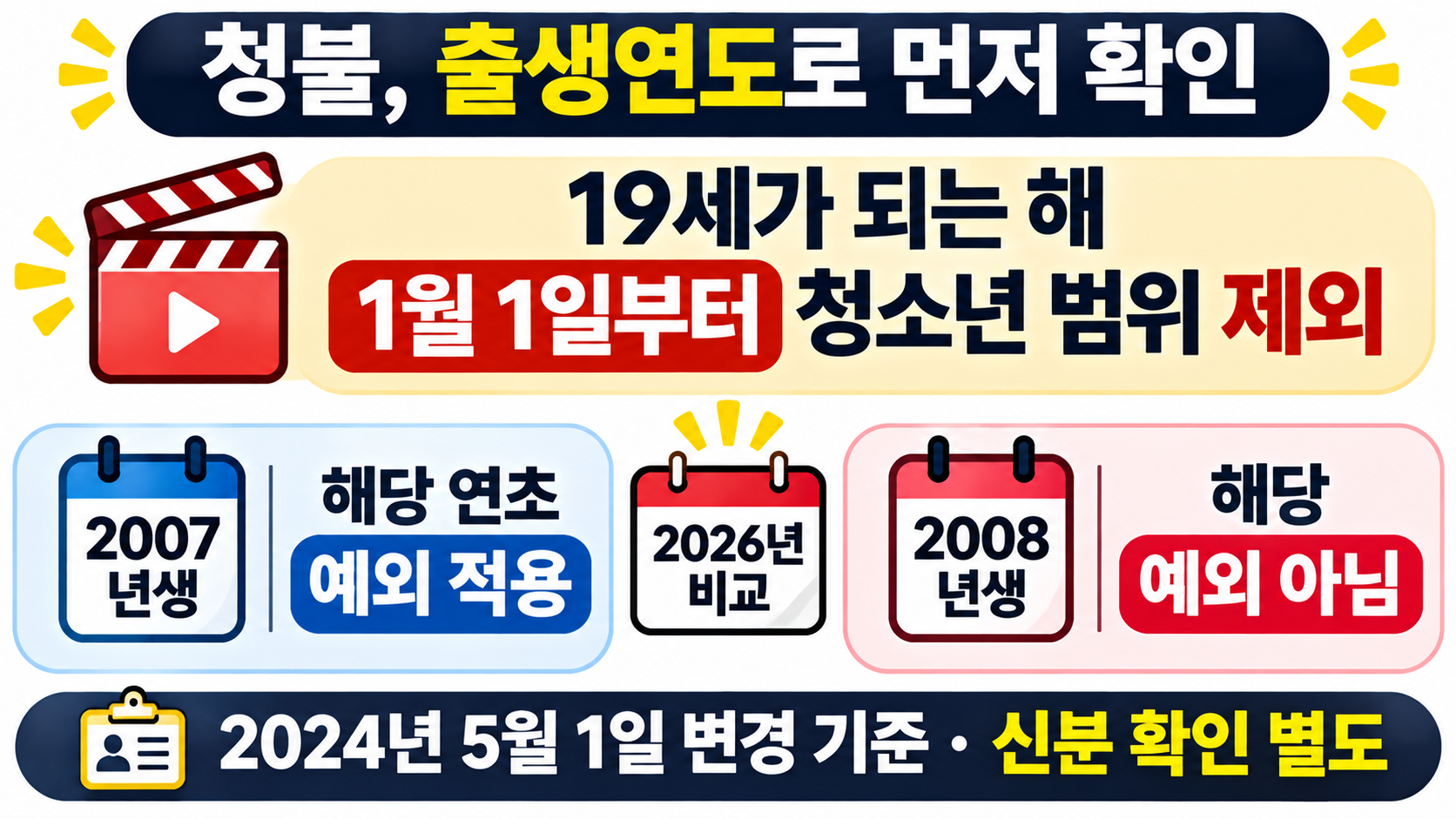
청소년관람불가를 판단할 때 오래된 안내를 그대로 적용하면 혼선이 생긴다. 영화비디오법의 청소년 기준은 2024년 5월 1일부터 바뀌었다. 현재는 19세 미만을 청소년으로 보되, 19세가 되는 해의 1월 1일을 맞은 사람은 제외한다. 과거의 ‘18세 미만, 고등학교 재학생 포함’ 기준과 다르다. 영상물등급위원회 연령 기준 변경 안내
이 규정을 2026년에 적용하면 2007년생은 그해 19세가 되므로 1월 1일부터 해당 청소년 범위에서 제외된다. 생일이 아직 지나지 않았다는 이유만으로 다시 청소년으로 분류하지 않는다. 반면 2008년생은 2026년에 그 예외에 해당하지 않는다. 이는 출생연도에 법 규정을 적용한 설명이며, 극장의 본인 확인 절차까지 생략한다는 뜻은 아니다.
학년이나 수능 응시 여부만으로 결정할 문제도 아니다. ‘고등학생이니 무조건 안 된다’는 과거 설명과 ‘수능이 끝났으니 누구나 된다’는 추측을 모두 피해야 한다. 본인의 출생연도와 현재 법 기준을 함께 확인하면 된다. 12세·15세 등급의 만 나이 기준과 청소년 정의에 있는 연초 예외를 하나로 섞어서 계산하지 않는 것이 중요하다.
2026년 출생연도 비교로 청소년 범위 예외를 확인한다. 지정 GPTs로 제작한 인공지능 설명 이미지이며 실제 현장 사진이 아닙니다.
숫자 하나 뒤에 일곱 가지 내용정보가 있다
관람등급은 작품의 재미나 완성도를 평가한 점수가 아니다. 같은 15세 영화라도 폭력 장면이 중심인 작품과 긴장·공포가 중심인 작품은 관객에게 다른 경험을 줄 수 있다. 연령 요건을 충족했다는 사실만으로 자녀가 모든 장면을 편안하게 받아들인다고 볼 수 없다.
영상물등급위원회는 주제, 선정성, 폭력성, 대사, 공포, 약물, 모방위험을 고려한다. 주제는 이야기와 맥락을 해당 연령층이 받아들일 수 있는지, 대사는 거친 말 등의 표현을 살펴보는 항목이다. 공포는 불안과 충격을 주는 표현을, 모방위험은 위험한 행동이나 범죄 방법을 따라 하도록 자극하는 표현을 다룬다.
중요한 것은 일곱 점수를 더해 평균을 내는 방식이 아니라는 점이다. 위원회는 전체 맥락과 사회통념을 고려하되, 일곱 항목 중 가장 높은 등급을 최종 등급으로 정한다고 안내한다. ‘폭력 장면은 있지만 다른 항목이 낮으니 평균으로 낮은 등급을 받았다’고 설명하면 제도의 취지를 잘못 전달할 수 있다. 등급분류 고려요소와 결정 방식
관객은 예매 화면의 숫자에서 한 걸음 더 들어가 등급 사유와 내용정보를 읽을 수 있다. 자녀가 큰 소리나 위협적인 분위기에 민감하다면 공포 관련 정보를, 거친 표현에 대한 가족의 기준이 있다면 대사 정보를 먼저 살펴보는 방식이다. 이는 등급을 임의로 바꾸는 일이 아니라, 법적으로 가능한 작품 가운데 가족에게 맞는 선택을 하는 과정이다.
관람등급은 일곱 가지 내용정보와 함께 확인한다. 지정 GPTs로 제작한 인공지능 설명 이미지이며 실제 현장 사진이 아닙니다.
해외의 ‘15’와 한국의 ‘15’도 입장 규칙은 다르다
해외 포스터에 적힌 숫자를 국내 관람 규칙으로 번역하면 안 된다. 영국 BBFC의 15등급은 15세 미만의 극장 관람을 허용하지 않는다. 한국의 15세 이상 관람가처럼 보호자 동반 예외가 있다고 가정해서는 안 된다. 미국 R등급은 17세 미만에게 부모 또는 성인 보호자 동반을 요구하는 체계다. 따라서 R을 단순히 ‘17세 미만 절대 금지’라고 옮기는 것도 부정확하다. BBFC 15등급 · 미국 R등급
작품별 설명도 비교해 볼 수 있다. BBFC는 영화 ‘기생충’에 강한 유혈 폭력, 대사, 성적 장면·언급 등 내용정보를 제공한다. 호주 분류기관은 같은 제목의 작품을 MA15+로 표시하고 강한 폭력을 주요 내용정보로 제시한다. 같은 작품명이어도 국가별 분류체계와 판본, 분류일을 함께 읽어야 한다. BBFC 기생충 · 호주 기생충 분류
이런 차이를 근거 없이 ‘어느 나라는 폭력에 관대하다’는 한 문장으로 설명할 필요는 없다. 개별 심의 사유를 확인하지 않고 문화적 성향을 단정하면 사실과 해석이 뒤섞인다. 여행지에서 영화를 보거나 해외 자료를 읽을 때는 현지 등급의 이름과 실제 입장 조건을 따로 확인하는 것이 더 유용하다.
온라인 영상의 자체등급, 기준이 사라졌다는 뜻은 아니다
온라인동영상서비스에서는 지정 사업자가 자체적으로 등급을 분류하는 제도도 운영된다. 모든 영상을 영상물등급위원회가 사전에 직접 분류한 것이라고 생각해서는 안 된다. 반대로 사업자가 마음대로 아무 기준 없이 등급을 붙이는 제도로 이해해도 안 된다.
위원회의 자체등급분류 안내에 따르면 지정 사업자는 정해진 기준을 적용하고 등급과 내용정보를 표시하며 세부사항을 위원회에 통보해야 한다. 책임자를 두고 교육을 받는 등 의무도 있다. 공식 안내의 사업자 현황은 2026년 6월 기준으로 표시돼 있다. 그 날짜의 명단을 11월 현재 실시간 전체 명단이라고 바꾸어 소개할 수는 없다. 자체등급분류제도와 사업자 준수사항
집에서 볼 때는 서비스의 작품 상세 화면과 재생 초기의 내용정보를 먼저 읽는다. 가족용 프로필이나 연령 설정을 사용하더라도 어떤 내용 때문에 그 등급을 받았는지까지 대신 설명해주지는 않는다. 극장 입장 규칙, 온라인 계정의 보호 설정, 개별 작품의 내용정보는 서로 다른 확인 항목이다.
영상물등급위원회는 온라인 영상 시작 화면의 등급·내용정보 표시 예시를 공식 영상으로 제공한다. 실제 특정 작품의 판정 결과가 아니라 표시 방법을 설명하는 예시라는 점을 구분해 볼 수 있다. 영등위 공식 ‘15세이상관람가’ 표시 안내 영상
예매 전에는 작품·나이·동반·내용을 차례로 확인
먼저 정확한 작품과 판본을 고른다. 감독판이나 재편집본 등 제목이 비슷한 다른 판본의 등급을 대신 보지 않는다. 다음으로 관객의 나이와 청소년 해당 여부를 확인하고, 12세·15세 기준에 못 미친다면 보호자가 실제로 함께 관람할 수 있는지 정한다.
그다음 작품의 내용정보와 상영시간을 읽고 입장 때 필요한 신분 확인 수단을 준비한다. 모션 좌석 등 특별관을 선택했다면 해당 상영관의 별도 이용 조건도 확인한다. 연령등급을 충족하는 것과 좌석·시설의 이용 조건을 충족하는 것은 별개일 수 있다.
가족 관람에서 필요한 답은 ‘볼 수 있나’와 ‘함께 보기 적절한가’ 두 가지다. 전자는 현재 법과 극장 규칙으로, 후자는 내용정보와 가족의 판단으로 살필 수 있다. 보호자 동반 예외를 정확히 아는 것만큼, 관람 가능한 영화의 내용까지 읽는 일이 중요하다.
자료 확인: 2026년 11월 20일. 영화비디오법의 청소년 정의는 2024년 5월 1일 변경된 기준을 적용했다.
A 13-year-old can see a Korean 15-rated film with a guardian—but adult-only films follow a different rule
Cinema rules differ between accompanying an under-15 viewer and restrictions on youth in adult-rated screenings. AI editorial illustration created with the designated GPT; not a photograph of an actual event.
MANINTOP Newsroom
What should a family check before booking a Korean 15-rated film for a 13-year-old? In Korean cinemas, children below 15 may attend that category with a parent or guardian. That exception does not extend to films classified as unavailable to youths. Buying their ticket or accompanying them does not override the prohibition on admitting a person defined as a youth by law.
Article 29 of the Promotion of the Motion Pictures and Video Products Act establishes the distinction. Ratings 12 and 15 allow accompanied attendance below the threshold; adult-only and restricted-screening films prohibit youth admission. Successfully paying for a ticket and being eligible to enter are separate matters. Current Article 29
Accompaniment can resolve a 12 or 15 threshold, but not adult-only eligibility
Korean cinema classification
Basic audience
Guardian exception below the threshold
All ages
Every age
No age exception required
12 and over
People aged at least 12
Under-12s may attend with a parent or guardian
15 and over
People aged at least 15
Under-15s may attend with a parent or guardian
Unavailable to youths
People outside the statutory definition of youth
Accompaniment does not permit youth admission
Restricted screening
Separate screening and advertising restrictions apply
Youth admission prohibited
A 13-year-old attending a 15-rated film alone is different from attending with a guardian. A parent booking the ticket but sending the child in alone is not accompanying the child to watch it. A consent message or telephone confirmation should not be assumed equivalent to actual attendance together.
Age evidence is also separate from the name on a booking account. Even if a family account was used, the person entering must be able to establish eligibility. Before booking, check the cinema's accepted identification and guardian-verification procedures. It cannot be assumed that every cinema accepts the same mobile display or document copy.
The rule including high-school students regardless of age is outdated
Old explanations can mislead people assessing adult-only admission. The Act's youth definition changed on May 1, 2024. It now covers people under 19, excluding anyone who has reached January 1 of the year in which they turn 19. This replaced the former under-18 definition that also included high-school students. Korea Media Rating Board explanation of the change
Applied to 2026, people born in 2007 fall outside that youth definition from January 1 because they turn 19 that year. Having a birthday later in the year does not place them back in the category. People born in 2008 do not qualify for that exception during 2026. This is an application of the birth-year rule, not an exemption from identity checks.
School grade or whether someone has taken the university entrance examination does not settle the issue. Both the old claim that all high-school students are barred and the assumption that everyone may enter after the examination should be avoided. Check the birth year against the current rule. The ordinary age thresholds for 12 and 15 ratings must not be confused with the calendar-year exception within the statutory youth definition.
Birth-year examples explain the exclusion from the youth definition in 2026. AI editorial illustration created with the designated GPT; not a photograph of an actual event.
Seven content factors sit behind the rating
A rating is not a score for entertainment value or artistic quality. Two films classified 15 may offer very different experiences if one centres on violence and the other on threat or horror. Meeting the admission requirement does not mean a child will be comfortable with every scene.
The Korea Media Rating Board considers theme, sexuality, violence, language, horror, drugs and imitation risk. Theme concerns how an age group may understand and receive the story and its context; language includes coarse expressions. Horror concerns frightening or shocking presentation, while imitation risk addresses depictions that may encourage copying dangerous behaviour or criminal techniques.
These factors are not simply averaged. The board explains that overall context and social norms are considered, with the highest classification among the seven factors determining the final rating. Saying that strong violence was offset by lower scores elsewhere could therefore misrepresent the system. Classification factors and decision method
Viewers can look beyond the number on a booking screen to the reasons and content information. A family whose child is sensitive to loud sounds or threatening atmospheres can focus on horror-related information; one concerned about coarse expressions can examine language information. This does not change a legal classification. It helps a family choose among films they are permitted to attend.
Check the age rating together with seven content descriptors. AI editorial illustration created with the designated GPT; not a photograph of an actual event.
A British 15 and a Korean 15 do not have identical admission rules
A number on an overseas poster should not be translated directly into Korean admission rules. The British BBFC's 15 classification does not permit under-15s to watch the content in a cinema. The Korean guardian exception should not be assumed to apply. In the United States, an R rating requires under-17s to be accompanied by a parent or adult guardian; translating it as an absolute ban on everyone under 17 is also inaccurate. BBFC 15 · US R rating
Individual film records also provide useful comparisons. For Parasite, the BBFC lists content information covering strong bloody violence, language, sex and sexual references. Australia's classification authority records the film as MA15+, identifying strong violence in its consumer advice. The classification system, version and decision date should be read alongside the title. BBFC Parasite record · Australian Parasite record
These differences need not be reduced to unsupported claims that a country is generally more tolerant of violence. Describing cultural attitudes without examining the individual decision mixes facts with interpretation. For travellers attending cinemas or readers consulting foreign sources, checking both the rating label and its actual admission conditions is more useful.
Online self-classification does not remove standards
Designated providers may classify online video content themselves. It is incorrect to assume that the Korea Media Rating Board has individually classified every online title in advance. It is equally incorrect to assume providers may assign labels without rules.
The board's guidance requires designated providers to apply the classification standards, display ratings and content information, and notify it of the details. Obligations also include appointing a responsible officer and receiving training. The provider list on the official guidance is marked June 2026. That dated list should not be presented as a live, comprehensive November list. Self-classification system and provider obligations
At home, read the title's detail page and the information shown when playback begins. A family profile or age setting does not itself explain why a particular film received its classification. Cinema admission, account protection settings and title-specific content information are different checks.
The board provides an official video illustrating the display of online ratings and content information. It demonstrates the format, rather than reporting a classification decision for a particular film. Official KMRB 15-rating display example
Before booking, check the title, age, accompaniment and content
First identify the exact film and version. Do not substitute the classification of a similarly named director's cut or re-edited version. Next check the viewer's age and statutory youth status. If the viewer is below the 12 or 15 threshold, establish whether a guardian can actually attend with them.
Then read the content information and running time and prepare the identification accepted at admission. For special formats such as motion seats, also check the auditorium's separate conditions. Meeting a film's age classification may not settle the conditions for using a particular seat or facility.
Families need answers to two questions: whether they may attend and whether the film is suitable to watch together. The first depends on current law and cinema rules; the second draws on content information and family judgement. Understanding the guardian exception matters, but so does reading about the content of a legally accessible film.
Sources checked November 20, 2026. The youth definition reflects the change effective May 1, 2024.
PRO SOURCING ENGINE만인의 탑 빅데이터 솔루션
★ 가입 시 600 크레딧(120회) 전원 무료
내가 찾는 상품 키워드, 지금 얼마나 검색될까?
네이버 월간 검색량 + 구글 볼륨 + 아이템스카우트 실시간 상품수와 경쟁강도 배지를 0.5초 만에 무료로 확인하세요.
MANINTOP NEWSLETTER
📬 만인의 탑 뉴스레터 무료 구독
오늘 보신 정책·시사 뉴스가 유익하셨나요? 매일 엄선되는 알짜 복지 혜택과 국회 실시간 속보를 이메일로 가장 먼저 받아보세요. (평생 무료)
1월이 시작되면 감기는 이미 우리 곁에 와 있습니다. 2월, 3월, 4월까지 이어지는 추위와 건조함은 코와 목을 가장 먼저 공격합니다. 아침에 일어나자마자 막혀 있는 코. 계속 흐르는 콧물. 괜히 칼칼해지는 목. 이 증상은 “시작”일 뿐입니다. 한 번 무너지면 일주일, 길면 한 달까지 끌고 갑니다. 약을 먹으면 잠깐 괜찮아집니다. 하지만 며칠 뒤 또 반복됩니다. 왜일까요? 감기는 ‘치료’의 문제가 아니라 ‘관리’의 문제이기 때문입니다. 대부분은 감기가 오고 나서 약을 찾습니다. 하지만 진짜 중요한 건 감기가 오기 전에 코와 목을 지키는 것입니다. 건조한 실내 공기, 차가운 바깥 공기, 눈에 보이지 않는 세균. 코와 목은 매일 공격받고 있습니다. 지긋지긋하죠! 그런데도 우리는 아무 준비 없이 버티고 있습니다. 이번 겨울도 그렇게 보낼 건가요? 사실 방법은 어렵지 않습니다. 코를 깨끗하게 관리하고, 목을 따뜻하게 보호하고, 점막을 촉촉하게 유지하고, 기관지를 미리 관리하고, 외부 공기를 차단하는 것. 이 다섯 가지만 꾸준히 해도 감기약 없이 겨울을 보내는 것이 충분히 가능합니다. 🔥 이제부터 그 방법을 하나씩 살펴보겠습니다. 🔥 1. 코와 목을 먼저 관리해야 하는 과학적 이유 감기의 대부분은 코 점막에서 시작됩니다. 국제 학술지 Nature Reviews Microbiology 와 Journal of Allergy and Clinical Immunology 에 실린 호흡기 감염 관련 연구들에서는, 감기 바이러스가 비강 상피세포에 먼저 부착해 증식한다는 점을 설명하고 ...
리모델링사업이 진행 중인 아파트를 매매할 때 “계약금 10%를 언제까지 내야 하느냐”는 질문이 특히 많이 나옵니다. 이주공고(이주 안내)가 7~11월쯤이라고 들으면, 그 시점에 맞춰 계약금도 움직일 것 같아서 더 헷갈리기 쉽습니다. 하지만 실제 납부기한은 ‘이주공고가 언제냐’만으로 자동 결정되지 않는 경우가 많습니다. 1) 계약금 10% 납부기한: 결국 ‘문서에 적힌 일정’이 기준 계약금 10%를 언제까지 납부해야 하는지는, 내가 서명하는 매매계약서(특약 포함) 와 사업주체/조합이 제시한 공고·안내문 에 적힌 납부 일정이 기준이 됩니다. 실제 공고문에서는 분양대금 납부의 큰 틀(계약금→중도금→잔금)을 먼저 안내하고, 상세 일정은 별도 표나 유의사항으로 제시하는 방식이 흔합니다. 또, 계약서 문구에 따라 지급 시점이 조건부로 설정될 수도 있습니다. 예를 들어 한 사례 소개 자료에서는 용역계약서에 잔금(10%) 지급시기가 “사업승인 후”로 기재되어 있었다는 점이 언급됩니다. 이런 식으로 ‘사업 단계’와 지급을 연동하는 문구가 들어가면, 질문의 답은 계약서 문구를 확인해야만 확정됩니다. 관련 내용은 링크 에서 문구 사례를 확인할 수 있습니다. 2) 입주자모집공고에서 확인되는 ‘납부 순서’와 잔금 마감 시점 공고문에 적힌 문구를 보면, 납부 순서와 잔금 마감에 대한 기준이 비교적 명확하게 제시되는 경우가 있습니다. 예를 들어 한 입주자모집공고에는 “분양금액(주택가격)은 계약금, 중도금, 잔금의 순서로 납부”하며 “잔금은 입주(열쇠 수령일) 전에 완납”해야 한다고 안내되어 있습니다. (문구 확인: 링크 ) 이 문구가 의미하는 바는 최소 2가지입니다. 분양/공급 형태의 문서에서는 ‘계약금→중도금→잔금’ 흐름이 공식적으로 안내될 수 있습니다. 잔금은 “입주(열쇠 수령)” 이전에 완납해야 한다는 마감 기준이 문서에 적혀 있을 수 있습니다. 다만, 위 공고문 문구는 잔금 마감에 대한 기준을 보여주지만, 계약금 10%의...
윤석열 전 대통령 탄핵 인용 소식을 접하면, 가장 궁금한 지점은 ‘헌재가 정확히 무엇을 위헌·위법으로 봤는가’입니다. 또한 탄핵과 별개로 진행되는 형사재판(내란 우두머리 혐의 등)이 어디까지 왔는지도 함께 정리할 필요가 있습니다. 아래 내용은 제공된 기사/게시물 스니펫과 링크에서 확인되는 범위만 모아, 일반인이 흐름을 이해하기 쉽게 정리한 것입니다. 1) 탄핵 인용 관련: 스니펫에서 확인되는 ‘판단의 골격’ 제공된 근거 중 조국혁신당 사이트에는 헌법재판소가 윤석열 탄핵 심판에서 “피청구인의 위헌·위법행위는 국민 신임 …”이라는 취지로 판단했다는 문장이 인용돼 있습니다( 링크 ). 이 인용문만 놓고 보면, ‘위헌·위법행위’가 있었는지와 그로 인해 ‘국민의 신임’이 어떻게 평가됐는지가 핵심 축으로 소개됩니다. 다만 질문에서 요청하신 세부 항목, 즉 비상계엄 선포 자체를 문제 삼은 구체적 이유, 계엄 이후 조치(포고령, 국회 통제 등)의 어떤 지점이 헌법 위반인지, 국회의 권한행사 방해 및 정치활동 제약을 어떤 논리로 판단했는지 등은, 이번에 제공된 근거의 제목/스니펫만으로는 조항·사실관계·판단 구조가 그대로 제시돼 있지 않습니다. 따라서 이 글에서는 ‘헌재가 무엇을 문제 삼았다’는 세부 리스트를 단정적으로 재구성하기보다, 현재 확인 가능한 문구 수준의 요약(위헌·위법행위 → 국민 신임의 문제로 평가)까지만 적습니다. 만약 헌재 결정문 전문(주문 및 이유)이 추가로 확인되면, 그때는 문장 단위로 ‘어떤 행위’와 ‘어떤 헌법 원리/조항’이 연결되는지(예: 권력분립, 국회의 권한, 정치적 기본권 등) 구조화해 정리하는 것이 가장 정확합니다. 2) 형사 절차(내란 혐의) 관련: 체포영장과 1심 선고 언급 탄핵 심판과 별도로, 12·3 비상계엄 사태로 내란 혐의를 받는 윤석열 대통령에 대해 2024년 12월 31일 체포 영장이 발부됐다는 BBC 보도가 있습니다( 링크 ). 해당 보도는 ‘현직 대통령’에 대한 체포영장 발부라는 점을 함께 언급합니다. 또...