▲ 서울 여의도 증권가 외환 딜링룸에서 트레이더들이 원·달러 환율 1,400원대 상향 고착화 흐름과 글로벌 금리 동향을 모니터링하고 있다. [사진=기획재정부 제공]
[핵심 보도 요약 : 3대 쟁점]
원·달러 환율 1,400원~1,520원 밴드 안착과 대미 직접투자·해외투자 급증에 따른 구조적 수급 불균형 심층 해부
5대 시중은행 달러예금 70억 달러 차익실현 속 연 4.2~4.65% 확정금리 외화RP와 달러 ETF 투자 전략 정밀 비교
국내 거래세 0.15% 대비 해외 22% 양도소득세를 완벽 방어하는 신규 자금 투입 '노셀(No-Sell) 리밸런싱' 실전 해법
1,400원대 환율 고착화 메커니즘과 외환시장 구조적 약세 쟁점
원·달러 환율이 일시적 충격을 넘어 1,400원선 위에서 강력한 지지선을 구축함에 따라 개인 투자자들의 숨은 거래비용 관리와 포트폴리오 리밸런싱 전략이 금융시장의 핵심 과제로 떠올랐습니다. 과거 1,550원선까지 치솟았던 환율은 외환당국의 개입으로 일시 하락했으나 다시 1,460원에서 1,470원대 사이에서 하방경직성을 굳혔습니다. 주요 금융연구기관들은 2026년 외환시장의 예상 변동 밴드로 1,400원에서 1,520원을 제시하며 고환율의 장기화를 경고하고 있습니다.
이번 원화 약세의 근본 원인은 글로벌 달러 강세뿐만 아니라 국내 자금의 구조적 달러 유출 우위 체질에 있습니다. 배터리와 반도체 등 국내 대기업의 대미 직접투자가 다년간 추세적으로 이어지면서 막대한 달러 환전 수요가 외환시장을 압박하고 있습니다. 여기에 국민연금과 서학개미의 해외 증권투자가 일상화되어 무역흑자로 유입된 달러를 금융계정이 그대로 흡수해 유출하는 구조가 고착화되었습니다.
수출기업들 역시 수출 대금을 원화로 환전하지 않고 글로벌 결제와 부채 상환을 위해 외화 계좌에 예치하면서 현물환 시장의 달러 공급이 크게 위축되었습니다. 외환당국이 한국은행과 국민연금 간 650억 달러 외환스왑을 연장하고 외환건전성 부담금을 면제하는 등 대책을 내놓았으나, 이는 단기적인 쏠림 완화책일 뿐 구조적 달러 유출을 되돌리기에는 역부족이라는 평가가 지배적입니다.
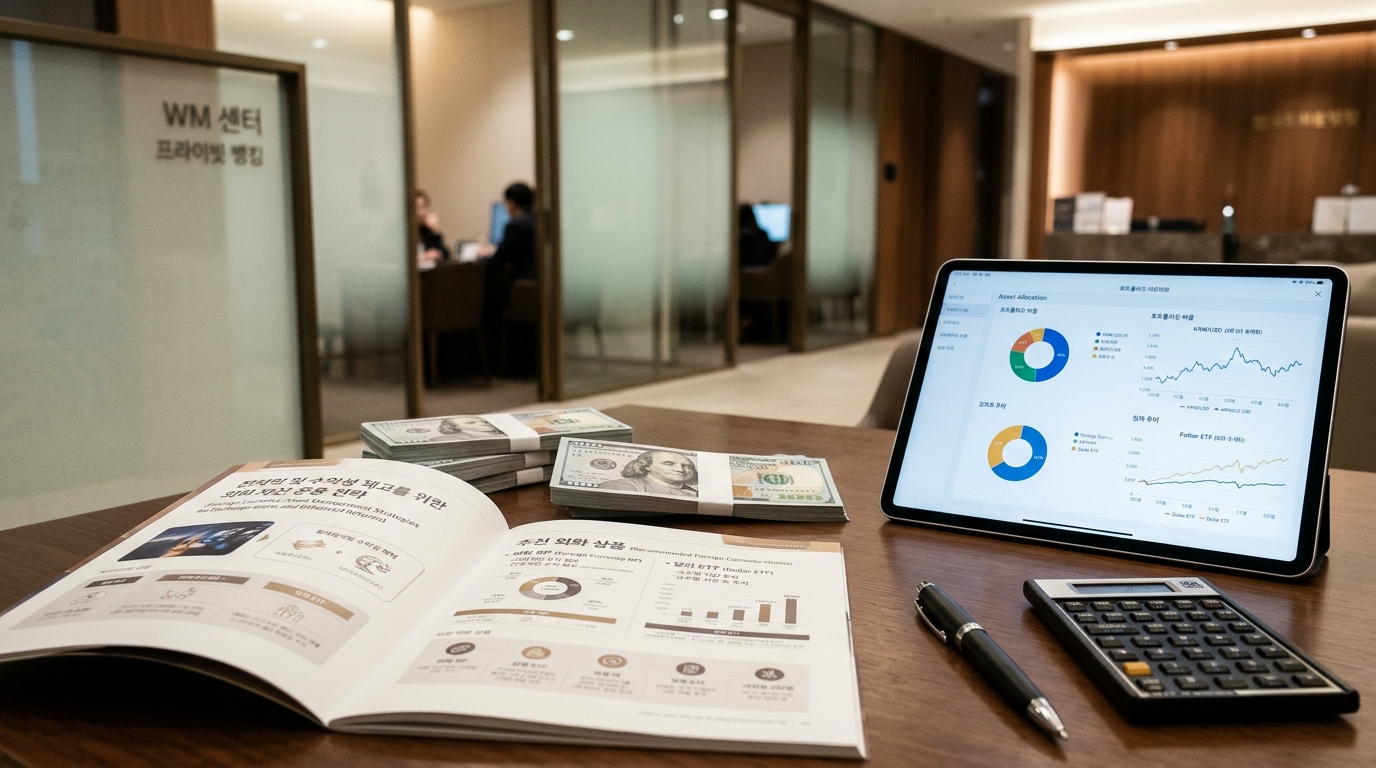
▲ 시중 금융기관 자산관리 창구에 외화RP 및 달러 상품 안내 자료와 달러 지폐가 놓여 있다. [사진=한국은행 제공]
강달러 환테크 삼각 구도 해부: 외화예금 vs 외화RP vs 달러 ETF
고환율 환경이 이어지자 달러를 활용한 자산 증식 수단에 투자자들의 이목이 쏠리고 있습니다. 대표적인 세 가지 수단인 외화예금, 외화RP, 달러 선물 ETF는 원금 보호와 수수료, 세금 체계에서 명확한 차이를 보입니다.
외화예금은 최고 5,000만 원까지 예금자보호가 적용되고 환차익이 비과세되지만, 수시입출금 통장의 금리가 사실상 0%에 가깝고 2% 안팎의 매매 환전 수수료가 발생합니다. 실제로 환율이 1,400원대를 넘어서자 고점 인식에 따른 차익 실현이 쏟아져 5대 시중은행의 달러예금 잔액은 전년 말 대비 70억 달러 이상 급감했습니다. 반면 증권사 외화RP는 하루만 맡겨도 연 4.20%에서 4.65%의 확정금리를 제공해 해외주식 대기 자금 파킹 통장으로 폭발적인 인기를 끌고 있습니다.
원화로 즉시 실시간 거래가 가능한 미국 달러 선물 ETF는 환전 절차가 필요 없어 퇴직연금 계좌에서 포트폴리오 헷지용으로 활용됩니다. 다만 외화예금 및 외화RP와 달리 매매차익에 대해 15.4%의 배당소득세가 과세되고 연 0.2~0.4%의 운용보수가 차감되므로 상품별 특성을 면밀히 따져야 합니다.
비교 분석 항목
외화예금 (정기/수시)
외화RP (수시자유형)
달러 선물 레버리지 ETF
기본 수익률 구조
정기 연 4~5%, 수시 0%
연 4.20% ~ 4.65% 확정
기초지수 2배 추종 (변동성)
환차익 및 매매차익 세금
환차익 전액 비과세
환차익 전액 비과세
매매차익 배당소득세 15.4%
예금자보호 및 안전장치
최고 5,000만 원 보호
비대상 (우량 국채 담보)
비대상 (시장 상장 증권)
환전 수수료 발생 여부
매수·매도 스프레드 부과
외화 보유 시 비용 제로
원화 즉시 매매 (환전 불필요)
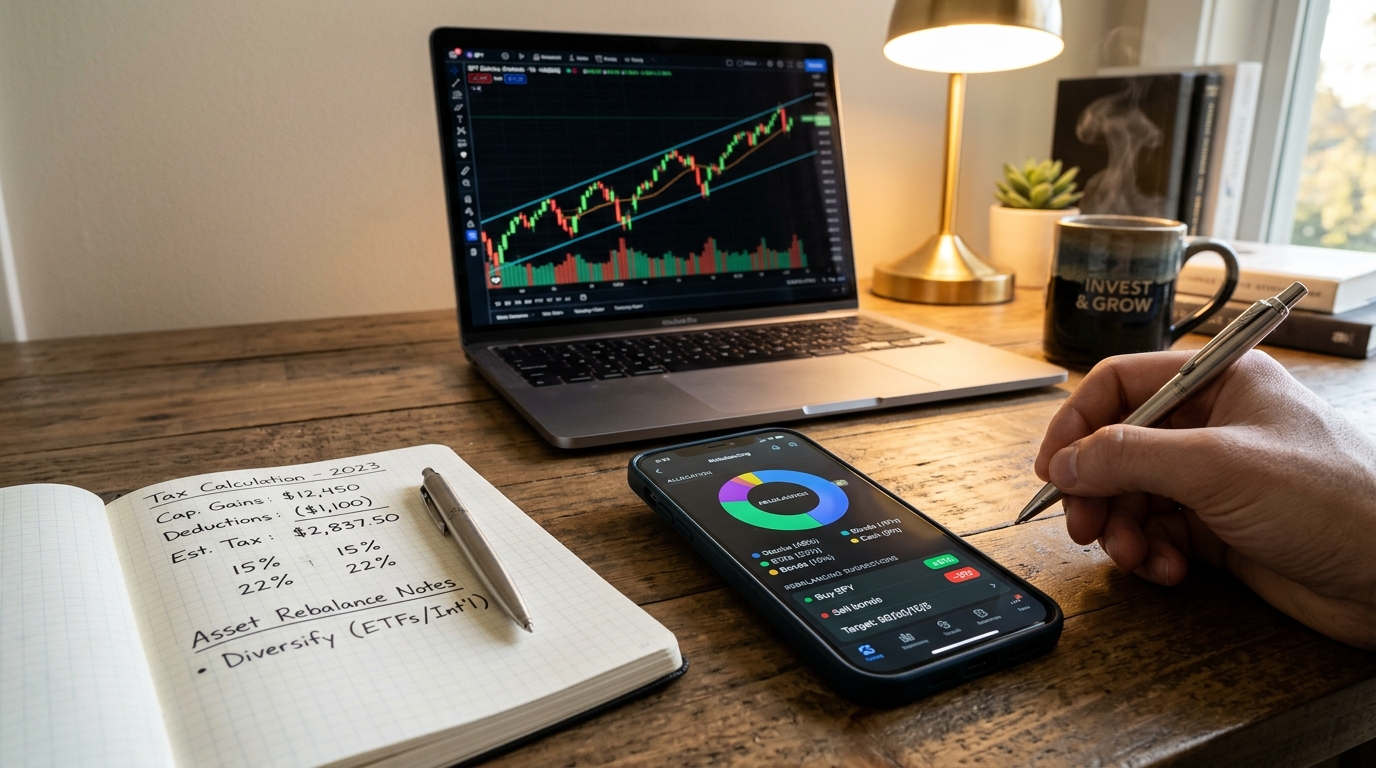
▲ 투자자가 모바일 트레이딩 앱의 자산 배분 비중과 세후 수익률 노트를 대조하며 포트폴리오를 점검하고 있다. [사진=금융투자협회 제공]
수수료 착시와 0.15% 거래세 및 22% 해외주식 세금 체계 비교
주식 거래에서 투자자들이 흔히 빠지는 함정은 증권사의 '수수료 평생 무료' 마케팅에 매몰되는 것입니다. 실제 거래 비용의 대다수는 증권사 수수료가 아닌 국가 세금과 숨은 환전 스프레드에서 발생합니다.
국내 주식의 경우 1,000만 원 매매 시 증권사 온라인 수수료는 1,000원에서 1,500원 수준에 불과하지만, 매도 시 부과되는 세금(코스피 농특세 0.15%, 코스닥 거래세 0.15%)은 15,000원으로 수수료의 10배에서 15배에 달합니다. 잦은 단기 매매를 반복할수록 세금 누적으로 계좌 수익률이 갉아먹히게 됩니다.
미국 주식은 거래세가 없는 대신 환전 스프레드와 SEC Fee 등 규제비용이 발생하며, 무엇보다 연간 순이익 250만 원 공제 후 초과분에 대해 22%의 양도소득세가 과세됩니다. 1,000만 원 왕복 거래 시 국내 주식은 총 18,000원의 비용이 들지만, 미국 주식은 증권사 요율과 환전 비용에 따라 기본 2만 원에서 5만 원 이상의 비용이 즉각 청구됩니다.
22% 양도세 막는 '노셀(No-Sell) 리밸런싱'과 장기 복리 방정식
미국 주식 시장에서 수익을 낸 투자자들이 가장 흔하게 저지르는 실수는 기계적인 매도로 비중을 조절하다가 22%의 양도소득세를 발생시켜 복리 효과를 깨뜨리는 것입니다. 이를 극복하는 핵심 전략이 바로 '신규 자금을 활용한 노셀 리밸런싱'입니다.
노셀 리밸런싱은 기존에 평가수익이 난 주식을 단 1주도 팔지 않고, 매월 투입되는 신규 월급이나 여유 자금을 목표 비중보다 낮아진 저평가 자산(또는 채권, 현금성 자산)에만 집중 매수하는 기법입니다. 이 방식을 적용하면 양도소득세를 전혀 내지 않으면서도 포트폴리오의 비중을 원칙대로 정상화할 수 있습니다.
자산 규모가 커져 신규 적립금만으로 비중 조절이 어려울 때에만 연간 250만 원 기본공제 범위 내에서 제한적으로 분할 매도하는 것이 정석입니다. 상관계수가 낮은 자산 배분과 절세 중심의 노셀 리밸런싱을 철저히 결합할 때 고환율과 글로벌 변동성 속에서도 흔들리지 않는 자산 성장을 이뤄낼 수 있습니다.
발행·편집인: 신승엽 | information.youngsdaily.com.
[In-Depth Analysis] Navigating 1,400-Won FX Entrenchment: From 4% Foreign Currency RPs to No-Sell Rebalancing Shielding 22% Tax
▲ Financial market traders monitor USD to KRW exchange rate movements and global liquidity conditions on dealing desks in Yeouido. [Photo: Ministry of Economy and Finance]
[Key Editorial Takeaways]
Exchange rate establishes persistent floor within 1,400 to 1,520 won band amid corporate outbound direct investment
Comparative dissection of Foreign Currency RPs yielding over 4 percent versus Dollar ETFs following 7 billion dollar profit-taking
Strategic deployment of No-Sell Rebalancing utilizing monthly cash flows to neutralize 22 percent capital gains tax
Structural Drivers of 1,400-Won FX Entrenchment and Dollar Outflows
As the dollar-won exchange rate establishes structural support above the 1,400-won threshold, managing transaction frictions and executing disciplined portfolio rebalancing have emerged as vital imperatives for individual investors. While state intervention briefly curbed surges toward 1,550 won, the currency settled into resilient downside support between 1,460 and 1,470 won. Leading economic research institutes forecast a persistent fluctuation band of 1,400 to 1,520 won, confirming higher long-term equilibrium levels.
The fundamental driver behind won depreciation lies not merely in broad dollar strength, but in domestic structural dollar outflow dynamics. Sustained foreign direct investment by Korean battery and semiconductor conglomerates constructing manufacturing facilities across North America generates relentless conversion demand. Concurrently, routine overseas equity acquisitions by institutional pension funds and retail investors channel trade surpluses directly back abroad through financial accounts.
Furthermore, domestic exporters increasingly retain trade receivables in foreign currency deposits to service external obligations rather than converting funds into local currency, severely constraining spot market liquidity. Although authorities extended the 65-billion-dollar currency swap between the central bank and the national pension service, analysts emphasize these measures represent temporary shock absorbers incapable of reversing structural capital imbalances.
▲ Stacks of hundred-dollar banknotes alongside advisory brochures for foreign currency repurchase agreements and dollar assets. [Photo: Bank of Korea]
Triangular FX Strategy: Foreign Currency Deposits, RPs, and Dollar ETFs
The prolonged high-exchange-rate environment has heightened demand for optimized dollar cash-management vehicles. Foreign currency deposits, repurchase agreements, and exchange-traded funds exhibit pronounced divergences across principal protection, fee overhead, and tax exposure.
While foreign currency bank deposits offer statutory insurance up to 50 million won and exempt currency gains, demand deposit yields hover near zero while currency spreads impose roughly 2 percent in round-trip friction. As the won breached 1,400, aggressive profit-taking prompted over 7 billion dollars in deposit liquidations across major commercial lenders. In contrast, broker-dealer Foreign Currency RPs deliver contractual annualized yields between 4.20 and 4.65 percent on daily balances, serving as premier liquidity parking hubs.
Exchange-traded dollar futures ETFs enable immediate intraday execution in local currency without physical exchange fees, making them suitable for retirement accounts. However, unlike deposits and RPs where currency gains remain exempt, ETF trading gains incur a 15.4 percent dividend income tax alongside recurring management fees, requiring rigorous structural evaluation before capital allocation.
Evaluation Criteria
Foreign Currency Deposit
Foreign Currency RP
Dollar Futures Leveraged ETF
Underlying Yield Framework
Term 4-5 percent, Demand 0 percent
Fixed 4.20 to 4.65 percent
Tracks 2x daily futures return
Capital and FX Gains Taxation
Fully tax-exempt currency gains
Fully tax-exempt currency gains
15.4 percent dividend tax on gains
Statutory Depositor Insurance
Protected up to 50M KRW
Excluded (High-grade collateral)
Excluded (Exchange investment)
Currency Conversion Friction
Bid-ask bank spread applies
Zero fee on held foreign balances
Zero conversion (Local currency)
▲ Retail investor evaluating asset allocation weights and after-tax return calculations on a dedicated workspace. [Photo: Korea Financial Investment Association]
Evaluating 0.15% Transaction Taxes and Overseas Capital Gains Rates
A recurring pitfall confronting stock market participants is fixation on promotional zero-commission brokerage campaigns while overlooking statutory levies and execution spreads. The true friction in trading stems predominantly from state taxes rather than nominal brokerage fees.
In domestic equities, executing a 10-million-won trade incurs online brokerage commissions of roughly 1,000 to 1,500 won, whereas statutory transaction taxes of 0.15 percent levy 15,000 won upon sale, surpassing brokerage fees by ten to fifteen times. High-frequency turnover steadily erodes portfolio capital through cumulative taxation.
For United States equities, transaction taxes are absent, but currency conversion markups and regulatory charges apply, accompanied by a 22 percent capital gains tax on net profits exceeding the annual 2.5-million-won exemption. A round-trip 10-million-won transaction generates 18,000 won in domestic costs versus 20,000 to 50,000 won or more in foreign markets depending on brokerage tiers and currency spreads.
Deploying 'No-Sell Rebalancing' to Neutralize 22% Capital Gains Tax
In overseas stock portfolios, mechanically selling appreciated holdings to realign target weights triggers immediate 22 percent capital gains taxation, severely disrupting compound wealth accumulation. The optimal institutional resolution is deploying fresh savings through No-Sell Rebalancing.
Under this framework, appreciated equities are held without executing a single sale, while recurring monthly savings are directed exclusively into underweight asset classes such as fixed-income securities or cash equivalents. This strategy completely eliminates taxable realization events while systematically restoring intended asset weight distributions.
Only when overall portfolio scale precludes rebalancing via new contributions alone should investors execute partial liquidations within the annual 2.5-million-won basic deduction limit. Pairing low-correlation asset allocation with disciplined tax-deferred rebalancing ensures durable capital preservation through elevated currency volatility and shifting global cycles.
1월이 시작되면 감기는 이미 우리 곁에 와 있습니다. 2월, 3월, 4월까지 이어지는 추위와 건조함은 코와 목을 가장 먼저 공격합니다. 아침에 일어나자마자 막혀 있는 코. 계속 흐르는 콧물. 괜히 칼칼해지는 목. 이 증상은 “시작”일 뿐입니다. 한 번 무너지면 일주일, 길면 한 달까지 끌고 갑니다. 약을 먹으면 잠깐 괜찮아집니다. 하지만 며칠 뒤 또 반복됩니다. 왜일까요? 감기는 ‘치료’의 문제가 아니라 ‘관리’의 문제이기 때문입니다. 대부분은 감기가 오고 나서 약을 찾습니다. 하지만 진짜 중요한 건 감기가 오기 전에 코와 목을 지키는 것입니다. 건조한 실내 공기, 차가운 바깥 공기, 눈에 보이지 않는 세균. 코와 목은 매일 공격받고 있습니다. 지긋지긋하죠! 그런데도 우리는 아무 준비 없이 버티고 있습니다. 이번 겨울도 그렇게 보낼 건가요? 사실 방법은 어렵지 않습니다. 코를 깨끗하게 관리하고, 목을 따뜻하게 보호하고, 점막을 촉촉하게 유지하고, 기관지를 미리 관리하고, 외부 공기를 차단하는 것. 이 다섯 가지만 꾸준히 해도 감기약 없이 겨울을 보내는 것이 충분히 가능합니다. 🔥 이제부터 그 방법을 하나씩 살펴보겠습니다. 🔥 1. 코와 목을 먼저 관리해야 하는 과학적 이유 감기의 대부분은 코 점막에서 시작됩니다. 국제 학술지 Nature Reviews Microbiology 와 Journal of Allergy and Clinical Immunology 에 실린 호흡기 감염 관련 연구들에서는, 감기 바이러스가 비강 상피세포에 먼저 부착해 증식한다는 점을 설명하고 ...
리모델링사업이 진행 중인 아파트를 매매할 때 “계약금 10%를 언제까지 내야 하느냐”는 질문이 특히 많이 나옵니다. 이주공고(이주 안내)가 7~11월쯤이라고 들으면, 그 시점에 맞춰 계약금도 움직일 것 같아서 더 헷갈리기 쉽습니다. 하지만 실제 납부기한은 ‘이주공고가 언제냐’만으로 자동 결정되지 않는 경우가 많습니다. 1) 계약금 10% 납부기한: 결국 ‘문서에 적힌 일정’이 기준 계약금 10%를 언제까지 납부해야 하는지는, 내가 서명하는 매매계약서(특약 포함) 와 사업주체/조합이 제시한 공고·안내문 에 적힌 납부 일정이 기준이 됩니다. 실제 공고문에서는 분양대금 납부의 큰 틀(계약금→중도금→잔금)을 먼저 안내하고, 상세 일정은 별도 표나 유의사항으로 제시하는 방식이 흔합니다. 또, 계약서 문구에 따라 지급 시점이 조건부로 설정될 수도 있습니다. 예를 들어 한 사례 소개 자료에서는 용역계약서에 잔금(10%) 지급시기가 “사업승인 후”로 기재되어 있었다는 점이 언급됩니다. 이런 식으로 ‘사업 단계’와 지급을 연동하는 문구가 들어가면, 질문의 답은 계약서 문구를 확인해야만 확정됩니다. 관련 내용은 링크 에서 문구 사례를 확인할 수 있습니다. 2) 입주자모집공고에서 확인되는 ‘납부 순서’와 잔금 마감 시점 공고문에 적힌 문구를 보면, 납부 순서와 잔금 마감에 대한 기준이 비교적 명확하게 제시되는 경우가 있습니다. 예를 들어 한 입주자모집공고에는 “분양금액(주택가격)은 계약금, 중도금, 잔금의 순서로 납부”하며 “잔금은 입주(열쇠 수령일) 전에 완납”해야 한다고 안내되어 있습니다. (문구 확인: 링크 ) 이 문구가 의미하는 바는 최소 2가지입니다. 분양/공급 형태의 문서에서는 ‘계약금→중도금→잔금’ 흐름이 공식적으로 안내될 수 있습니다. 잔금은 “입주(열쇠 수령)” 이전에 완납해야 한다는 마감 기준이 문서에 적혀 있을 수 있습니다. 다만, 위 공고문 문구는 잔금 마감에 대한 기준을 보여주지만, 계약금 10%의...
윤석열 전 대통령 탄핵 인용 소식을 접하면, 가장 궁금한 지점은 ‘헌재가 정확히 무엇을 위헌·위법으로 봤는가’입니다. 또한 탄핵과 별개로 진행되는 형사재판(내란 우두머리 혐의 등)이 어디까지 왔는지도 함께 정리할 필요가 있습니다. 아래 내용은 제공된 기사/게시물 스니펫과 링크에서 확인되는 범위만 모아, 일반인이 흐름을 이해하기 쉽게 정리한 것입니다. 1) 탄핵 인용 관련: 스니펫에서 확인되는 ‘판단의 골격’ 제공된 근거 중 조국혁신당 사이트에는 헌법재판소가 윤석열 탄핵 심판에서 “피청구인의 위헌·위법행위는 국민 신임 …”이라는 취지로 판단했다는 문장이 인용돼 있습니다( 링크 ). 이 인용문만 놓고 보면, ‘위헌·위법행위’가 있었는지와 그로 인해 ‘국민의 신임’이 어떻게 평가됐는지가 핵심 축으로 소개됩니다. 다만 질문에서 요청하신 세부 항목, 즉 비상계엄 선포 자체를 문제 삼은 구체적 이유, 계엄 이후 조치(포고령, 국회 통제 등)의 어떤 지점이 헌법 위반인지, 국회의 권한행사 방해 및 정치활동 제약을 어떤 논리로 판단했는지 등은, 이번에 제공된 근거의 제목/스니펫만으로는 조항·사실관계·판단 구조가 그대로 제시돼 있지 않습니다. 따라서 이 글에서는 ‘헌재가 무엇을 문제 삼았다’는 세부 리스트를 단정적으로 재구성하기보다, 현재 확인 가능한 문구 수준의 요약(위헌·위법행위 → 국민 신임의 문제로 평가)까지만 적습니다. 만약 헌재 결정문 전문(주문 및 이유)이 추가로 확인되면, 그때는 문장 단위로 ‘어떤 행위’와 ‘어떤 헌법 원리/조항’이 연결되는지(예: 권력분립, 국회의 권한, 정치적 기본권 등) 구조화해 정리하는 것이 가장 정확합니다. 2) 형사 절차(내란 혐의) 관련: 체포영장과 1심 선고 언급 탄핵 심판과 별도로, 12·3 비상계엄 사태로 내란 혐의를 받는 윤석열 대통령에 대해 2024년 12월 31일 체포 영장이 발부됐다는 BBC 보도가 있습니다( 링크 ). 해당 보도는 ‘현직 대통령’에 대한 체포영장 발부라는 점을 함께 언급합니다. 또...