“장난으로 올린 살인예고에 징역형과 1,484만 원 청구서… 흉기난동 공포 속 ‘정당방위’의 진실”
1. 입법 사각지대 메운 ‘위험형법’… 공중협박죄와 공공장소흉기소지죄 신설
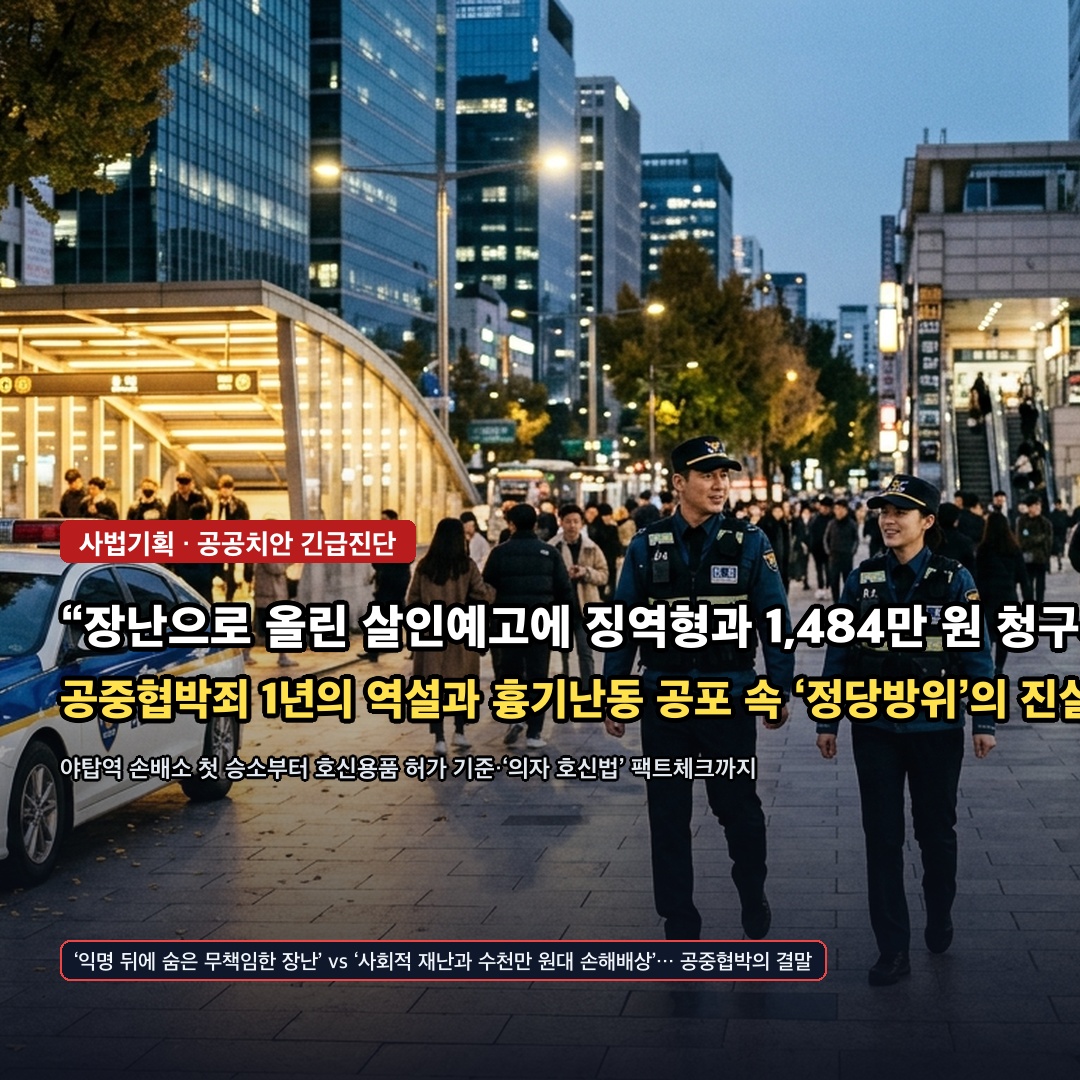
서울 신림역과 분당 서현역 등 평범한 일상의 공간에서 잇따라 발생한 무차별 흉기난동 사건은 대한민국 사회 전반에 깊은 트라우마를 남겼습니다. 이후 인터넷 커뮤니티에는 수백 건의 무책임한 살인 예고글이 쏟아졌고, 소지 허가를 받은 장검으로 아파트 이웃 주민을 살해하거나 대낮 길거리에서 여학생에게 흉기를 휘두르는 이상동기 범죄가 끊이지 않았습니다.
하지만 과거 형법 체계는 명백한 사각지대를 지니고 있었습니다. 종전 협박죄(형법 제283조)나 특수협박죄(형법 제284조)는 피해자가 명확히 특정되어야 하고, 공포심을 일으킬 해악의 고지가 피해자에게 도달해야 성립했습니다. 불특정 다수를 상대로 한 인터넷 살인 예고는 피해자가 특정되지 않아 법적 처벌에 공백이 생겼습니다. 또한 경범죄처벌법의 흉기 은닉 휴대는 숨겨 다닌 경우에만 10만 원 이하의 경미한 벌금에 그쳤고, 총포화약법상 행정 허가를 받은 도검이라면 흉기를 들고 거리를 활보하더라도 범행 착수 전까지는 강제 제압이 어려운 모순이 있었습니다.
이에 따라 대검찰청 건의와 입법 논의를 거쳐 범죄 착수 이전 단계에서 위험을 선제 차단하는 위험형법 체계가 전격 도입되었습니다. 형법 제116조의2(공중협박죄)와 형법 제116조의3(공공장소흉기소지죄)이 바로 그 핵심입니다.
| 구분 | 공중협박죄 (형법 제116조의2) | 공공장소흉기소지죄 (형법 제116조의3) |
|---|---|---|
| 시행 일자 | 2025년 3월 18일 전격 시행 | 2025년 4월 8일 전격 시행 |
| 구성 요건 | 불특정 또는 다수인의 생명·신체에 위해를 가할 것을 공연히 공중에게 협박하는 행위 | 정당한 이유 없이 도로·공원·대중교통 등 공공장소에서 흉기를 소지하고 노출해 불안감·공포심을 유발하는 행위 |
| 법정형 | 5년 이하의 징역 또는 2천만 원 이하의 벌금 | 3년 이하의 징역 또는 1천만 원 이하의 벌금 |
| 특수 조항 | 미수범 처벌 및 상습범 가중처벌 규정, 피해자 처벌불원의사와 무관한 기소(반의사불벌죄 배제) | 적법 허가 도검도 정당한 사유 없는 공공 노출 시 처벌, 현행범 즉시 체포 및 흉기 압수권 발동 |
| 주요 적용 사례 | 온라인 게시판 살인 예고글 게시, 다중이용시설 폭파 협박 허위 신고 및 테러 예고 | 도심 길거리, 공원, 환승역사 등에서 식칼이나 도검 등을 꺼내 들고 행인을 위협하는 행위 |
새로 도입된 법안의 핵심은 피해자가 특정되지 않아도 공연히 공중을 위협했다면 즉시 처벌된다는 점입니다. 특히 피해자의 합의나 처벌 불원의사와 관계없이 국가가 기소할 수 있도록 반의사불벌죄 조항을 배제했습니다. 또한 공공장소에서 흉기를 노출한 피의자는 주거가 일정하더라도 현행범 체포와 긴급체포, 압수가 가능하도록 강제수사 요건이 대폭 강화되었습니다.
2. 사법부의 철퇴… 징역 8월 실형 선고와 첫 ‘1,484만 원’ 치안비용 배상
법 신설 이후 법원은 장난이나 과시욕으로 치부되던 위협 행위에 대해 잇따라 엄격한 판결을 내놓고 있습니다. 특히 형사 책임뿐만 아니라 천문학적인 경찰력 낭비에 대해 민사적 금전 배상 책임을 인정한 판결이 나와 주목받고 있습니다.
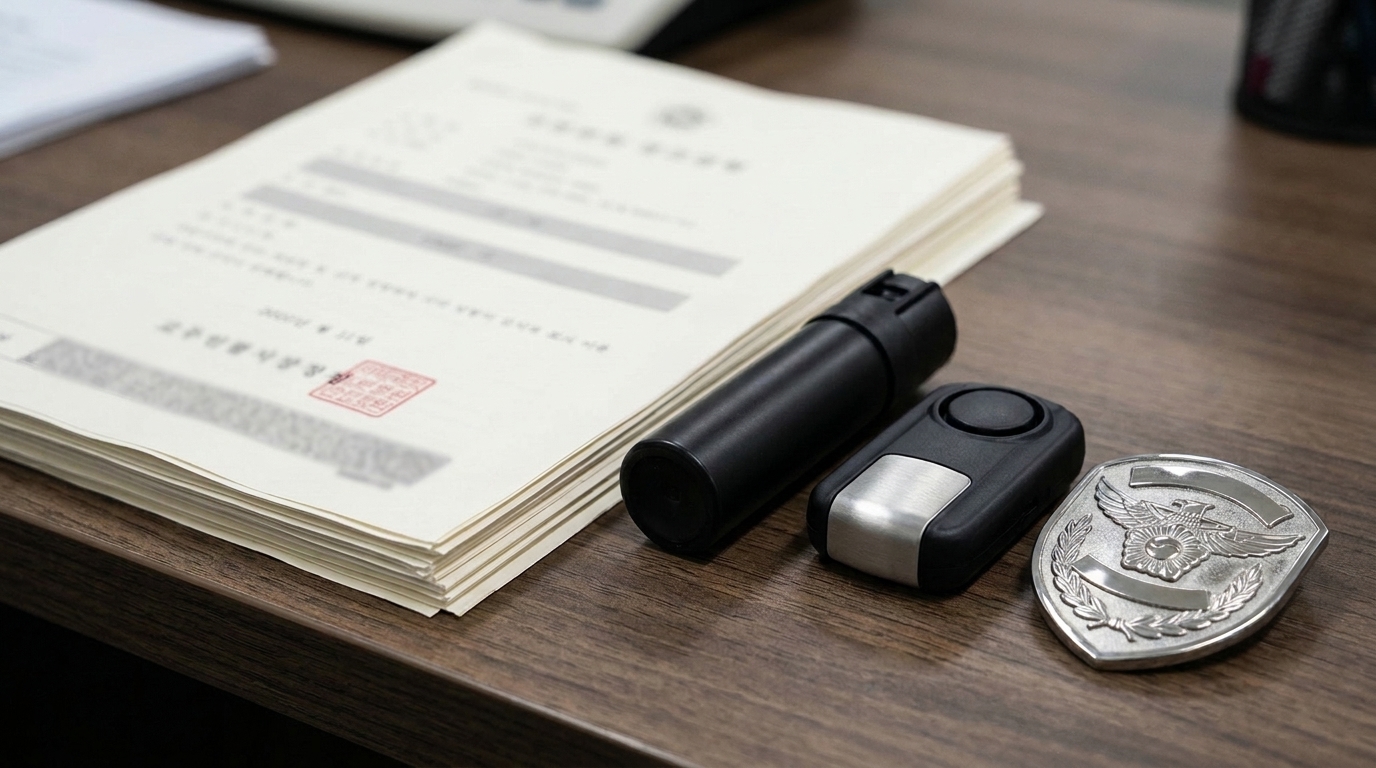
• 영등포 사제폭탄 1호 판결: 2025년 5월 서울 영등포 상점가에서 부탄가스 등으로 만든 사제 폭탄을 들고 행인들을 위협한 30대 남성에게 법원은 벌금 600만 원을 선고했습니다. 지적장애와 폭탄의 조악함이 참작되었으나, 잇따르는 테러 위협에 경종을 울리기에는 솜방망이 처벌이라는 사회적 비판이 제기되었습니다.
• 수원지법 징역 8월 실형 선고 (2026고단100180): 온라인 게시판에 특정 단체와 경찰관을 상대로 신체에 위해를 가하겠다는 글을 올린 피고인에게 법원은 징역 8월의 실형을 선고하고 법정 구속했습니다. 재판부는 불특정 다수를 향한 협박이 대중에게 극심한 공포를 심고 막대한 사회적 비용을 유발한다는 점을 실형 선고의 근거로 못 박았습니다.
더욱 결정적인 사법적 경고는 민사 법정에서 나왔습니다. 수원지방법원 민사22단독 재판부는 국가가 ‘야탑역 30명 살인예고범’ A씨(20대)를 상대로 제기한 손해배상 청구 소송에서 사상 처음으로 국가 일부 승소 판결을 내렸습니다.
A씨는 2024년 9월 자신이 운영하던 커뮤니티 사이트를 홍보하고 방문자를 늘리기 위해 성남시 야탑역에서 30명을 찌르겠다는 글을 게시했습니다. 이에 경찰은 특공대와 장갑차를 전진 배치하고 18일간 연인원 529명의 경찰관을 동원해 삼엄한 집중 순찰을 벌였습니다. 범행 56일 만에 검거된 A씨는 형사 재판에서 징역형의 집행유예를 선고받았으나, 국가는 총 5,505만 1,000원의 출동 비용에 대해 민사 소송을 제기했습니다.
재판부는 국가의 청구액 중 1,484만 7,000원(청구액의 약 27%)을 A씨가 직접 국가에 배상하라고 판결했습니다. 재판부는 현장에 긴급 투입된 경찰관들의 초과근무 수당과 순찰차 유류비 등 실제로 추가 지출된 실손해를 인용했습니다. 다만 평상시 정규 근무시간에 지급되는 기본급(약 4,020만 원)은 범행과 상관없이 지급되었을 고정비용으로 보아 제외했습니다. 이는 익명 게시판에 올린 허위 글 한 줄로 인해 수천만 원대의 빚더미에 앉을 수 있다는 강력한 선례를 남겼습니다.
3. 처벌 강화에도 늘어나는 범죄… 치안 공권력 마비의 역설
이러한 사법부의 강력한 제재에도 불구하고 현장에서는 범죄 억제 효과가 뚜렷하게 체감되지 않는 역설이 발생하고 있습니다. 경기남부경찰청의 공식 통계에 따르면, 공중협박죄가 신설된 2025년 3월부터 연말까지 입건된 사건은 36건이었으나, 2026년 들어 상반기(1월~6월)에만 이미 40건이 수사 선상에 올랐습니다. 불과 반년 만에 전년도 전체 발생 건수를 훌쩍 뛰어넘은 것입니다.
성남시 분당구 카카오 판교아지트 폭파 협박 사건, 경기남부경찰청 우편물 폭탄 위협에 따른 최상위 비상단계 ‘코드 제로’ 발령, 수원지방법원 폭발물 허위 예고 등 무분별한 허위 신고는 일선 경찰관들의 치안 역량을 마비시키고 있습니다. 정작 1분 1초가 시급한 살인·강도·화재 등 실제 강력범죄 현장으로 향해야 할 순찰차와 경찰특공대가 헛걸음을 하면서 시민들의 안전 골든타임이 갉아먹히고 있습니다.
경기대학교 경찰행정학과 황의갑 교수는 “영국, 프랑스, 독일 등 주요 선진국은 테러방지법을 통해 대중을 위협하는 허위 협박을 중대 테러 행위로 간주해 엄벌한다”며 “한국 역시 처벌 선례를 엄격히 축적하여 익명성에 숨은 협박이 결코 가벼운 장난이나 표현의 자유가 될 수 없다는 사회적 인식을 확고히 해야 한다”고 조언했습니다. 동국대학교 경찰행정학과 이윤호 교수 또한 “온라인 공간에서의 과시욕과 영웅심리가 빚어낸 무책임한 행동에 대해 사회 전체가 준엄한 법적 대가를 치르게 해야 한다”고 덧붙였습니다.
4. 불안한 시민들의 호신 열풍… 경찰 허가 기준과 ‘의자 호신법’의 한계
반복되는 흉기난동 소식에 시민들의 불안감은 극에 달했습니다. 지난 10월 인천 남동구 구월동 대형 상업시설에서 대낮 흉기난동이 발생하자, 네이버 데이터랩 기준 ‘호신용품’ 검색 지수가 단숨에 100(최고치)까지 치솟았으며 호신용 호루라기와 스프레이는 일시 품절 사태를 빚었습니다. 그러나 시중의 호신용품을 일반 공산품으로 생각하고 무턱대고 소지했다가는 형사처벌을 받을 수 있습니다.
| 호신용품 분류 | 경찰 소지 허가 여부 | 세부 기준 및 소지 시 필수 법적 주의사항 |
|---|---|---|
| 일반 스프레이 | 허가 불필요 | 손가락 펌프 압력으로 캡사이신 등 최루액을 단순 분사하는 방식으로 누구나 자유 소지 가능 |
| 압축가스식 분사기 | 경찰서장 허가 필수 | 고압 가스의 압력으로 분사되는 기기로 주소지 관할 경찰서 허가 필요, 3년마다 허가 갱신 의무 |
| 가스발사총 | 일반 시민 소지 불가 | 실제 총기 형태로 화약이나 고압 분사되는 장비로 청원경찰 등 법령상 지정 직군만 휴대 가능 |
| 전자충격기 (저전류) | 허가 불필요 | 체내에 흐르는 실제 전류인 실효전류가 9밀리암페어(mA) 이하인 호신용 제품 |
| 전자충격기 (고전류) | 경찰서장 허가 필수 | 실효전류가 10밀리암페어(mA) 이상인 위력 제품, 관할 경찰서 허가 및 3년마다 갱신 필수 |
| 기타 호신 소품 | 허가 불필요 | 삼단봉, 비상경보기, 호루라기, 쿠보탄 등 물리적 도구 (휴대 자유) |
| 최루가스 분사기 | 전면 사용 금지 | 치명적인 군용 최루가스를 사용하는 제품은 허가 여부와 상관없이 민간 사용 일체 금지 |
백석예술대학교 경찰경호학과 곽선조 교수는 “호신용품을 갖추는 것보다 중요한 것은 올바른 사용법과 신뢰성”이라며 “저가형 삼단봉은 상대의 가격 시 쉽게 꺾이거나 접혀버려 위험을 키우며, 스프레이는 맞바람이 불 때 분사하면 본인의 눈에 들어가 치명적인 무방비 상태에 놓일 수 있다”고 경고했습니다.
한편 인천 구월동 사건 당시 시민들이 식당 의자를 방패 삼아 범인을 저지하는 CCTV 영상이 공개되면서 유튜브와 SNS에는 ‘의자 호신법’ 영상이 선풍적인 인기를 끌었습니다. 의자의 네 다리가 상대를 향하도록 수평으로 들어 상대의 몸통 접근을 차단하는 기술입니다.
그러나 경찰 전문가들은 무리한 제압 시도에 대해 깊은 우려를 표합니다. 동국대학교 경찰사법대학 임준태 교수는 “의자는 흉기범과의 안전거리를 유지하고 방어막을 형성하는 데는 탁월한 임시 도구이지만, 괴한의 완력을 버티지 못하는 일반 시민이 직접 제압에 나섰다가는 의자를 빼앗겨 2차 공격을 당할 수 있다”며 “주변 도구는 도주할 시간을 벌기 위한 방어용일 뿐, 최선의 생존 전략은 즉각적인 현장 이탈”이라고 강조했습니다. 경찰행정 및 범죄심리 학계 관계자들 역시 개별 시민의 영웅적 용기에 기대기보다는 이상 징후를 보이는 고위험 인물을 유관기관이 연계해 사전 차단하는 공적 안전망이 급선무라고 지적합니다.
5. ‘정당방위’의 높은 사법 문턱… 쌍방폭행과 과잉방위의 덫
흉기난동범에게 맞서 호신용품을 쓰거나 반격을 가했을 때, 법적으로 정당방위를 인정받을 수 있을 것이라는 일반의 믿음과 달리 현행 사법부의 잣대는 매우 가혹합니다. 한국형사법무정책연구원 승재현 박사는 형법 제21조가 규정한 정당방위 요건이 실무상 지나치게 좁게 해석되어 피해자가 한순간에 폭행 피의자로 뒤바뀌는 구조적 한계가 존재한다고 지적합니다.
1. 현재의 부당한 침해 (현재성): 법익 침해가 바로 눈앞에서 발생하고 있어야 합니다. ‘상대가 나를 해칠 것 같다’는 주관적 위험에 따른 ‘예방적 방위’는 절대 인정되지 않습니다. 특히 괴한이 칼을 떨어뜨리거나 넘어진 이후 추가로 가격하는 행위는 이미 현재성이 소멸되어 폭행 및 상해죄로 처벌받습니다.
2. 방위의 의사 (방위성): 행동의 목적이 순수하게 방어에 국한되어야 합니다. 공격에 맞서 반격을 가하는 순간 사법당국은 이를 서로 공격하려 한 ‘싸움’으로 해석하여 쌍방폭행으로 입건하는 경우가 흔합니다. 법원은 소극적 저항에 한해 형법 제20조 정당행위로 위법성을 조각할 뿐, 적극적인 반격은 방위 의사를 부정하는 경향이 짙습니다.
3. 상당한 이유 (상당성): 방어를 위해 선택한 수단과 지키려는 법익 사이에 균형이 있어야 합니다. 도둑을 제압해 기절시킨 뒤 재차 타격한 사건에서 과잉방위 유죄가 확정된 판례처럼, 범인이 가한 공격보다 과도한 위력의 무기를 사용해 심각한 상해를 입히면 과잉방위로 형사처벌을 면치 못합니다.
법원이 요구하는 상당성의 기준은 위급한 흉기난동 현장의 일반 시민이 침착하게 계산하기란 불가능에 가깝습니다. 태연 법률사무소 김태연 변호사는 “피할 수 있는 공간이 있었음에도 불구하고 맞서 싸워 상대를 다치게 한 경우, 위협을 받았다는 사정만으로 정당방위가 온전히 인정되지는 않는다”고 설명했습니다.
전문가들이 제시하는 유일무이한 생존 수칙은 명확합니다. 승재현 박사는 “흉기난동범과 시선이 마주쳤다면 맞서 싸우려 하지 말고 무조건 뒤돌아 신속히 현장을 벗어나는 것이 최우선”이라며 “대부분의 이상동기 범죄는 후방 기습으로 발생하므로 골목길이나 야간 보행 시 노이즈 캔슬링 이어폰 착용을 자제하고 주변 소음에 항상 귀를 기울여야 한다”고 강조했습니다.
“Prison Sentences and a $11,000 Bill for ‘Prank’ Murder Threats: The Hard Truth About Self-Defense Amid Knife Attack Fears”
1. Closing the Statutory Void: Public Intimidation and Public Weapon Possession Acts
The horrific knife rampages in busy subway stations such as Sillim and Seohyeon shattered South Korea's sense of public safety. In their aftermath, hundreds of anonymous murder threats flooded internet forums, while tragedies involving licensed Japanese swords in residential complexes highlighted persistent threats to innocent lives.
Under previous legal frameworks, severe loopholes prevented proactive law enforcement. Traditional intimidation laws (Article 283 and 284 of the Criminal Act) required a specifically identified victim who directly received the threat. Anonymous posts targeting unspecified crowds fell through statutory cracks. Furthermore, the Minor Offenses Act punished carrying concealed weapons with a trivial fine of under 100,000 KRW, while administrative sword permits failed to authorize pre-emptive arrests of individuals brandishing swords in parks before an assault commenced.
To address these gaps, the Supreme Prosecutors' Office recommended introducing a 'danger-based criminal law' framework that intervenes before an attack is executed. The National Assembly enacted Article 116-2 (Crime of Public Intimidation) and Article 116-3 (Crime of Carrying Weapons in Public Places).
| Category | Public Intimidation (Article 116-2) | Public Weapon Possession (Article 116-3) |
|---|---|---|
| Effective Date | Enacted March 18, 2025 | Enacted April 8, 2025 |
| Constituent Elements | Publicly intimidating the public by threatening harm to the life or bodily integrity of unspecified persons | Carrying and exposing lethal weapons in public places (streets, parks, transit) without legitimate reason to cause panic |
| Statutory Penalty | Imprisonment for up to 5 years or fine up to 20 million KRW | Imprisonment for up to 3 years or fine up to 10 million KRW |
| Special Provisions | Penalizes attempts and habitual offenders; excludes non-punishment against will (prosecuted regardless of victim consent) | Applies even to licensed swords exposed publicly without justification; authorizes immediate on-site arrest and weapon seizure |
| Typical Case Examples | Posting murder threats on message boards; false bomb hoax reports targeting mass transit or public facilities | Brandishing kitchen knives or swords in city streets, public squares, or amusement areas to terrify pedestrians |
Under these new provisions, criminal charges apply even when no specific victim is identified. Crucially, prosecution proceeds regardless of victim forgiveness, eliminating backdoor settlements. Police are also empowered to immediately arrest suspects on sight and confiscate weapons without cumbersome warrants.
2. Judicial Enforcement: Prison Sentences and the Landmark $11,000 Policing Cost Verdict
South Korean courts have swiftly enforced these new provisions, rejecting arguments that online threats were mere pranks or harmless boasting. A pivotal civil decision has established financial liability for police deployments caused by hoax threats.
• Yeongdeungpo Homemade Bomb Case: In May 2025, a man who threatened pedestrians with a makeshift butane-gas bomb in Seoul was fined 6 million KRW. While mental disability and the crude nature of the explosive were considered mitigating factors, the verdict faced criticism for being overly lenient.
• Suwon District Court 8-Month Prison Sentence (2026-Go-Dan-100180): In a sharp contrast, the court sentenced an online offender to 8 months in prison with immediate detention for threatening police officers and community members online. The bench underscored that public intimidation inflicts immense public terror and squanders critical state resources.
Even more historic was a civil damages judgment handed down by the Suwon District Court Civil Division 22. The state filed a civil lawsuit against Mr. A, a man in his 20s who posted that he would murder 30 people at Yatap Station in Seongnam.
Mr. A admitted he made the post to draw web traffic and promote his anonymous site. In response, police mobilized special tactical SWAT units and armored vehicles, deploying an aggregate of 529 police officers over 18 days. The Ministry of Justice sued Mr. A for 55.05 million KRW in operational costs.
The court ordered Mr. A to pay 14.84 million KRW (approximately $11,000, or 27% of the claim). The ruling established that the defendant must reimburse actual out-of-pocket expenses, including police overtime pay and patrol fuel costs. The court excluded regular police base salaries (around 40.2 million KRW), ruling that fixed administrative salaries would have been paid regardless of the incident. This precedent firmly establishes that online hoaxes bring devastating financial liabilities.
3. The Paradox of Growing Threat Numbers: Crippling Emergency Response
Despite severe penalties, statistical data reveals a disturbing paradox. According to Gyeonggi Nambu Provincial Police Agency, 36 public intimidation cases were booked between March 2025 and the end of that year. Yet in just the first six months of 2026, 40 cases were booked—exceeding the previous year's total in half the time.
High-profile false threats—including bomb scares targeting Kakao’s Pangyo headquarters, postal bomb threats prompting top-tier ‘Code Zero’ emergency alerts, and false bomb reports at the Suwon District Court—regularly paralyze emergency services. Every squad car and tactical team dispatched on a wild goose chase deprives genuine victims of life-saving interventions during critical golden hours.
Criminology scholars emphasize that legal deterrence must be paired with cultural shifts. Prof. Hwang Eui-gap of Kyonggi University noted that nations like the UK, France, and Germany prosecute public threat hoaxes as serious acts of terror. Prof. Lee Yoon-ho of Dongguk University warned that vanity and attention-seeking behavior on social media must be met with uncompromising judicial accountability.
4. Citizen Self-Defense Boom: Permit Regulations and Chair Tactics Fact-Checked
Widespread anxiety has fueled unprecedented demand for personal defense gear. Following an October stabbing incident at a commercial complex in Incheon, search queries for self-defense gear surged to an index of 100 on Naver DataLab, causing personal alarms and sprays to sell out. However, carrying unauthorized protective gear can violate firearm and weapon control statutes.
| Category | Police Permit Requirement | Technical Standards & Legal Mandates |
|---|---|---|
| Standard Pepper Spray | No Permit Required | Manual finger-pump spray dispensing liquid capsaicin solution; freely carried by citizens |
| Compressed Gas Projector | Police Chief Permit Required | High-pressure gas propellant units; requires local police station permit and renewal every 3 years |
| Gas Guns / Launchers | Prohibited for Civilians | Restricted strictly to authorized security professionals, guards, and law enforcement |
| Stun Guns (Low-Current) | No Permit Required | Personal electric defense units with effective current rated at 9 milliamperes (mA) or less |
| Stun Guns (High-Current) | Police Chief Permit Required | High-output devices exceeding 10 milliamperes (mA); requires permit and renewal every 3 years |
| Baton & Safety Alarms | No Permit Required | Telescopic batons, whistles, keychains, and personal audible alarms; freely carried |
| Tear Gas Canisters | Strictly Prohibited | Military-grade chemical agents are completely barred from civilian use under any circumstance |
Prof. Kwak Seon-jo of Paekche Institute of the Arts highlighted that improper tools can backfire: "Cheap collapsible batons often bend on first impact, and pepper sprays deployed into headwind will blind the defender, leaving them defenseless."
Meanwhile, footage of citizens using restaurant chairs to ward off the Incheon attacker sparked a viral craze for chair-defense tactics. While holding four chair legs outward creates effective physical standoff distance, experts caution against trying to overpower attackers. Prof. Lim Jun-tae of Dongguk University warned: "A chair is purely an improvised barrier to buy escape time. If an untrained civilian attempts to pin down an armed assailant, losing grip of the chair invites deadly retaliatory strikes. Immediate evacuation is the only guaranteed defense."
5. The Narrow Needle of Legal Self-Defense: Mutual Assault and Excessive Force Pitfalls
Many assume that striking back against an attacker is automatically protected under law. In reality, South Korean courts interpret Article 21 of the Criminal Act with extreme conservatism. Dr. Seung Jae-hyun of the Korea Institute of Criminology and Justice pointed out that victims who fight back frequently find themselves booked as assault suspects.
1. Immediacy of Unlawful Infringement (Current Danger): The danger must be directly in progress. Speculative fears that someone might attack never justify pre-emptive strikes. Once an assailant drops their weapon or falls down, the immediacy ceases; striking them again constitutes criminal assault.
2. Intent to Defend (Defensive Purpose): The action must be solely defensive. If a defender engages in offensive retaliation, prosecutors treat the altercation as mutual brawling, charging both sides with mutual assault. Courts rarely grant self-defense status to aggressive counter-strikes.
3. Proportionality of Means (Reasonable Measure): The force used must not disproportionately exceed the threat. Using an excessively dangerous weapon or inflicting grievous bodily harm on a subdued intruder will be classified as excessive defense, resulting in criminal conviction.
Attorney Kim Tae-yeon of Taeyeon Law Firm warned that where an escape route exists, choosing to stand and fight severely weakens self-defense claims in court.
Experts concur on the primary rule of survival: immediate retreat. Dr. Seung advised: "The moment you sense danger or lock eyes with an armed individual, run immediately without hesitation. Because most unprovoked attacks strike from behind, avoid wearing noise-canceling headphones when walking at night, and stay acutely aware of your surroundings."
내가 찾는 상품 키워드, 지금 얼마나 검색될까?
네이버 월간 검색량 + 구글 볼륨 + 아이템스카우트 실시간 상품수와 경쟁강도 배지를 0.5초 만에 무료로 확인하세요.


