[심층기획] '162조 미래기금과 63조 지방재정 증발의 역설' 2027 예산안 대해부… 35.5조 R&D 복원과 AI 사업 팩트체크
만인의 탑 편집국11월 15, 2026
[심층기획] '162조 미래기금과 63조 지방재정 증발의 역설' 2027 예산안 대해부… 35.5조 R&D 복원과 AI 사업 팩트체크
정책·재정 심층취재팀 | 대한민국 국가 예산 및 R&D 정책 구조 분석2026. 11. 15 08:00 KST
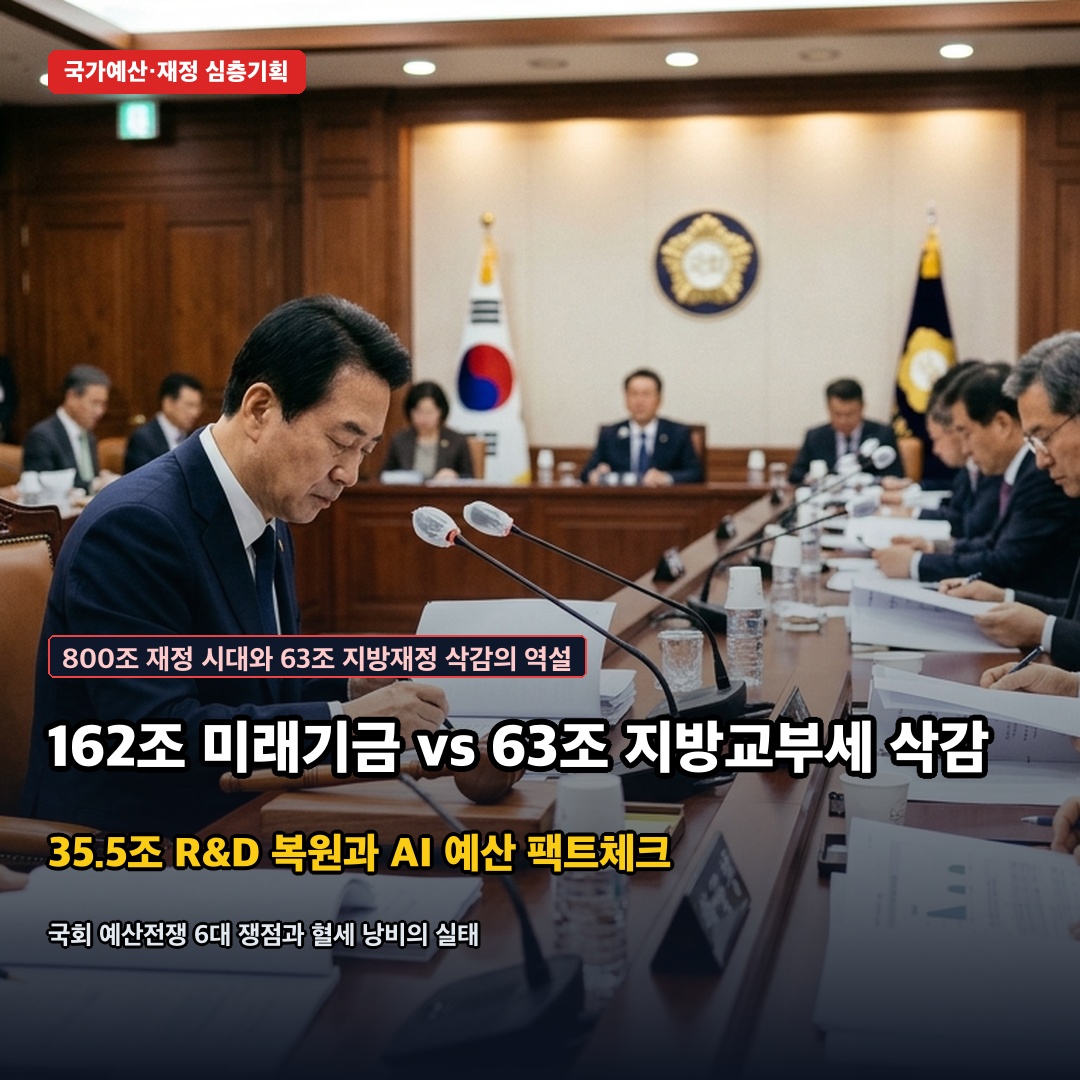
▲ 국회 예산결산특별위원회 회의실에서 여야 의원들과 정부 고위 관료들이 2027년도 국가 예산안과 미래대응기금 편성을 둘러싸고 심도 있는 정책 질의를 벌이고 있다. [사진: 국회 프레스 풀]
대한민국의 국가 재정이 유례없는 대전환기를 맞이하고 있습니다. 2026년도 국회 본회의에서 확정된 727조 8,791억 원 규모의 본예산에 이어, 정부가 제출한 2027년도 예산안은 총지출 820조 9,000억 원으로 전년 대비 증가율이 12.8%로 치솟으며 본격적인 '800조 원 재정 시대'의 개막을 알렸습니다. 반도체 수출 호황에 힘입어 국세수입이 전년 본예산 대비 194조 2,000억 원(49.8%) 급증한 584조 4,000억 원에 달하자, 정부는 158조 5,000억 원의 초과 세수를 주 재원으로 사상 최대인 162조 3,000억 원 규모의 '미래대응기금'을 신설했습니다. 아울러 지난 정부에서 대규모 삭감 홍역을 치렀던 국가 연구개발(R&D) 예산은 35조 5,000억 원으로 대폭 복원되어 인공지능(AI)과 3대 게임체인저 기술 중심으로 전면 재편되었습니다. 그러나 화려한 거시 지표 이면에서는 기금 조성으로 인해 지방교부세와 교육교부금 63조 원이 허공으로 사라지고, 행정 혁신을 표방한 AI 예산의 83%가 민간 포털 메신저 구독료로 흘러들어가는 등 왜곡된 자원 배분의 그늘이 짙게 드리워져 있습니다.
1. 800조 원 재정 시대 개막과 162조 원 미래대응기금 공방
국회 예산결산특별위원회가 본격 가동되면서 162조 3,000억 원 규모의 미래대응기금은 2026년 정기국회 예산 심의의 최대 뇌관으로 부상했습니다. 정부와 더불어민주당은 기금 가운데 45조 4,000억 원을 청년, 성장동력, 지방, 인재 등 4대 핵심 분야에 투자하고, 나머지 104조 3,614억 원을 여유자금으로 적립해 향후 경기 침체에 대비할 '재정 저수지'로 삼겠다는 구상입니다. 반면 국민의힘은 미래대응기금을 '미래파탄기금'이자 '2028년 총선용 쌈짓돈'으로 규정하며 27조 원 규모의 대대적인 순삭감 공세에 착수했습니다. 야당은 법률과 헌법이 정한 국회의 재정 통제를 회피하기 위해 별도 기금으로 우회했다고 비판하며, 삭감한 재원으로 사립대 반값 등록금 등 5대 민생 해결 예산 11조 5,000억 원을 증액하겠다는 맞불을 놓았습니다.
미래대응기금 신설이 몰고 온 가장 파괴적인 역설은 지방재정의 고사 위기입니다. 현행 지방교부세법은 내국세 총액의 19.24%를 보통교부세와 특별교부세로 지자체에 법정 배분하도록 명시하고 있습니다. 하지만 정부 개편안은 내국세의 '10년 이동평균 추세치'를 초과하는 세수 증가분을 교부세 산정 대상에서 원천 배제하여 미래대응기금으로 우선 전입시키는 방식을 채택했습니다. 국회예산정책처 분석에 따르면, 이 산식이 적용될 경우 2027년도 지방교부세 정률분은 현행 기준(100조 1,554억 원) 대비 무려 30조 4,900억 원이 깎인 69조 6,654억 원으로 쪼그라듭니다. 여기에 교육교부금 감소분 32조 5,000억 원까지 더해지면, 총 62조 9,900억 원(약 63조 원)에 달하는 법정 이전재원이 지방에서 일거에 증발하게 됩니다.
정부는 미래대응기금 지방계정을 통해 15조 2,662억 원을 지방에 되돌려주겠다고 해명하지만, 국회예산정책처의 정밀 검증 결과 지자체가 용도 제한 없이 자율적으로 쓸 수 있는 '지방미래성장지원금'은 3조 5,000억 원에 불과했습니다. 이는 증발한 교부세 감소분의 11.5% 수준에 그칩니다. 나머지 5조 원은 결손 대비 예치금이고 6조 7,662억 원은 중앙부처가 지정한 특정 사업비로 묶여 있습니다. 이로 인해 반도체 대기업 사업장이 있어 법인지방소득세가 급증하는 화성·평택·용인 등 소수 수도권 지자체를 제외하고, 자체 세원이 취약해 보통교부세에 70~80%를 의존하는 비수도권 군 단위 지자체들은 사상 최대 국세 풍년 속에서 필수 복지와 공공 서비스를 중단해야 하는 극단적 재정 파탄에 직면했습니다.
구분
현행 법정 산정 방식
정부 개편안 (미래기금 전입)
격차 및 지방재정 영향 평가
세수 호황기 (추세 상회)
내국세 증가분의 19.24% 자동 배분
10년 추세 초과분을 산정서 제외 (기금 전입)
지방교부세 30조 4,900억 원 미배분
2027년 보통교부세
97조 1,508억 원 편성 기준
67조 5,754억 원으로 축소
29조 5,754억 원 순감 (지자체 타격)
교육교부금 및 총결손
내국세 연동 정상 배분
교육재정교부금 32조 5,000억 원 삭감
총 62조 9,900억 원(약 63조 원) 증발
지방 자율재원 비중
용도 제한 없는 일반재원 (자주권 보장)
기금 내 자율재원 3.5조 원(11.5%)에 불과
지자체 자주재정권 훼손 및 중앙 종속
2. 35조 5천억 R&D 예산의 극적 복원과 '무늬만 AI' 국회 칼질
연구 현장의 거센 반발을 초래했던 R&D 예산 삭감 사태를 딛고, 국회는 2026년도 정부 R&D 예산을 35조 5,000억 원으로 최종 확정했습니다. 이는 2025년도(29조 6,000억 원) 대비 5조 9,000억 원(19.9%) 대폭 늘어난 규모이며, 정부 총지출 대비 R&D 비중도 4.9%로 정상 궤도를 회복했습니다. 과학기술정보통신부 예산은 23조 7,417억 원으로 확정되었고, 우주항공청 예산 역시 1조 1,201억 원으로 공식 1조 원 시대를 열었습니다. 과기정통부는 AI 대전환 인프라 구축에 5조 1,000억 원, 반도체·첨단바이오·양자 등 3대 게임체인저 분야에 5조 9,000억 원, 기초연구 및 스타이펜드(연구생활장려금) 등 인재 육성에 4조 5,000억 원을 집중 투입하기로 했습니다.
그러나 35조 5,000억 원의 화려한 외형 이면에서는 각 부처가 'AI'라는 간판만 붙여 마구잡이로 끼워 넣은 부실 사업들이 국회 심의 과정에서 무더기로 칼질을 당했습니다. 대표적으로 10개 부처에 분산 편성되었던 'AX-Sprint 300(AI 응용제품 신속상용화 지원)' 사업은 총 8,920억 원 중 무려 2,785억 원이 삭감되었습니다. 과기정통부의 '공공AX 프로젝트' 역시 1,000억 원 중 400억 원이 잘려 나갔고, 1,000억 원 규모의 'AI혁신펀드'는 다른 정책펀드와의 중복성이 드러나 1,000억 원 전액이 삭감되었습니다. 중소벤처기업부의 모태조합출자 예산 역시 2,800억 원이 깎이는 등 부처들의 눈먼 예산 따내기에 국회가 제동을 걸었습니다.
3. 민생·소비 쿠폰 공방과 지역사랑상품권 1.45조원의 역설
민생 안정과 지역 경제 활성화를 내세운 지역사랑상품권(지역화폐) 발행지원 예산은 2027년도 예산안에서 전년 대비 3,000억 원(26.1%) 늘어난 1조 4,500억 원으로 편성되었습니다. 정부는 취약지역을 더 두텁게 지원하겠다며 국비 지원율을 3%에서 9%까지 차등 지원하는 지방우대지수를 도입했습니다. 그러나 상품권 할인액에 대한 지자체의 지방비 매칭 부담률은 5%로 모든 지역에 일률 적용되면서 치명적인 정책 왜곡이 발생했습니다.
국회예산정책처의 실제 집행 데이터에 따르면, 재정자립도가 10~20%에 불과한 농어촌 지자체들은 5%의 지방비 매칭 예산을 마련하지 못해 상품권 발행 자체를 대거 포기했습니다. 2025년도 집행 결과, 가장 큰 혜택을 받아야 할 인구감소지역 지자체들은 당초 배정 계획보다 727억 3,400만 원(24.4%)이나 적은 국비를 교부받았으며, 참여 지자체 4곳 중 1곳(26%)이 예산 부족으로 사업을 중단했습니다. 반면 재정이 넉넉해 지원 배제 대상이어야 할 서울 등 불교부단체들은 당초 계획보다 75억 4,600만 원(69.3%)이나 많은 국비를 챙겨갔습니다. 서민 골목상권을 살리겠다는 1조 4,500억 원의 혈세가 수도권 부유한 상권의 할인 쿠폰으로 변질되고 지방 소멸 위기 지역은 철저히 소외되는 모순이 입증된 셈입니다.
4. 'AI 행정 혁신'의 민낯… 541억 온AI 사업과 450억 민간 포털 구독료 쏠림
행정안전부가 범정부 인공지능 업무 혁신을 내걸고 추진하는 '온AI 지능형 업무관리 플랫폼' 사업은 예산 낭비의 전형으로 지목되었습니다. 행안부는 온AI 사업 예산을 2026년 187억 900만 원에서 2027년 541억 6,100만 원으로 무려 189.5%(354억 5,200만 원) 폭증시켰습니다. 그러나 사업 세부 내역을 뜯어보면 AI 원천기술 개발이나 지능형 프로세스 혁신과는 거리가 멀었습니다. 전체 541억 원 중 네이버웍스와 삼성SDS 브리티웍스 등 민간 서비스형 소프트웨어(SaaS)에 지불하는 메일·메신저 구독료가 무려 450억 6,300만 원으로 전체의 83.2%를 차지했습니다. 순증액 354억 원 중 283억 원(79.7%)이 오로지 민간 메신저 사용료 인상분이었던 것입니다.
더욱 심각한 문제는 실제 이용 여부와 상관없이 중앙행정기관 공무원 30만 명 전원에게 1인당 월 2만 원씩 정액 구독료를 산정해 혈세를 퍼주고 있다는 점입니다. 행안부와 과기부 등 시범운영 기관을 분석한 결과, 가입 공무원의 20% 이상이 한 달 동안 단 한 번도 시스템에 접속하지 않았으며, 일부 기관은 미접속률이 50%를 웃돌았습니다. 전체 공무원으로 사업이 확대될 경우 로그인조차 하지 않는 '유령 계정'에 지출되는 세금만 연간 90억 원에 달합니다.
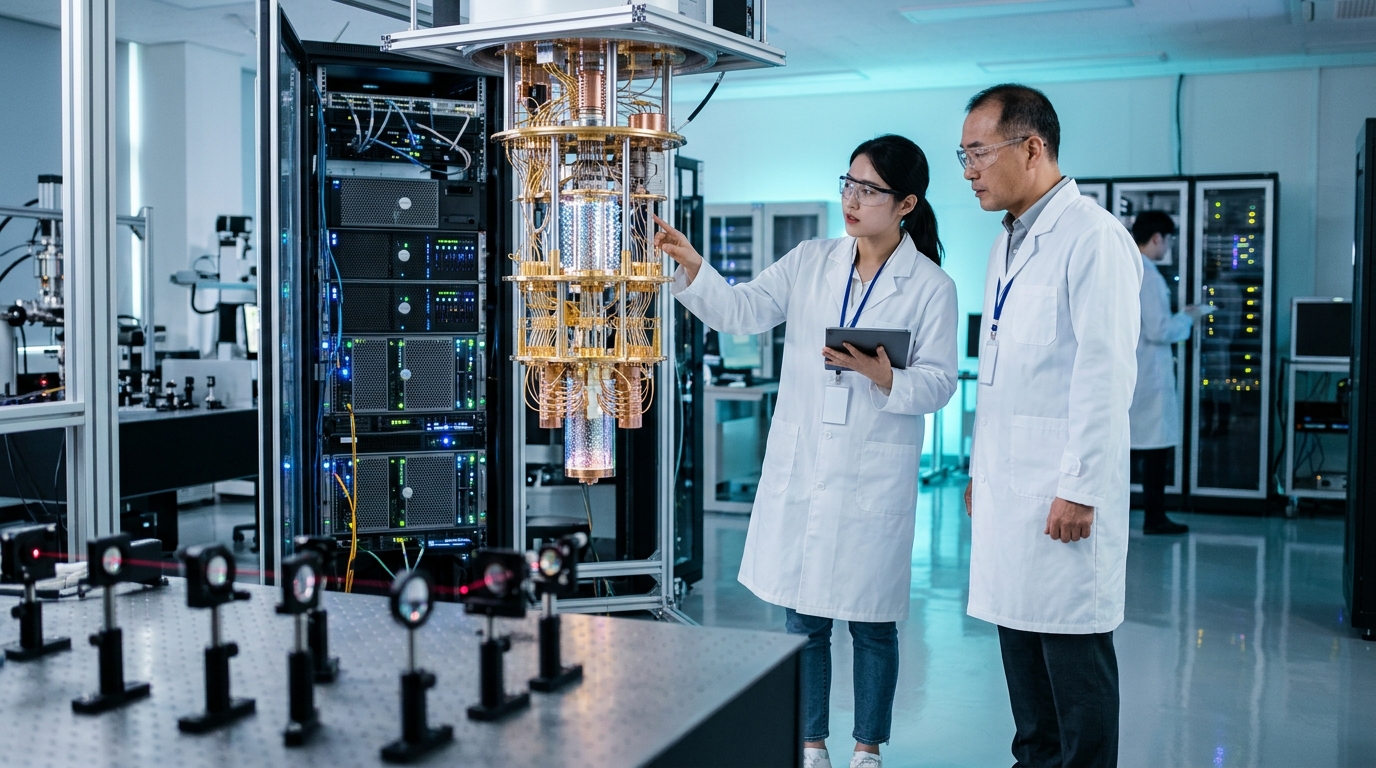
▲ 대덕연구개발특구의 한 정부출연연구기관 슈퍼컴퓨팅 센터에서 연구원들이 양자 컴퓨팅 및 차세대 AI 원천기술 실험 데이터를 분석하고 있다. 35조 5,000억 원으로 복원된 국가 R&D 예산은 전략 기술 주권 확보에 집중 투입된다. [사진: 대덕 사이언스 프레스 풀]
현장 공무원들의 평가도 냉혹했습니다. 설문조사 결과 온AI 행정지원의 만족도는 3.36점으로 전체 서비스 가운데 꼴찌를 기록했습니다. 공무원들은 민간 상용 AI에 비해 답변 품질과 정확도가 현저히 떨어져 실무에 쓸 수 없다고 토로하며 웹 브라우저의 일반 생성 AI를 찾아 쓰고 있습니다. 여기에 정부의 공문서와 핵심 행정 데이터가 특정 민간 플랫폼에 영구 종속됨에 따라 향후 데이터 이전 비용과 단가 인상 압박에 국가 행정망이 무방비로 노출되고 있습니다. 향후 4년간 2,413억 원이 소요되는 막대한 경직성 경비임에도 중기재정계획에조차 반영되지 않았습니다.
국회 입법 절차를 무시하고 대통령령과 예비비로 급조된 위원회들의 예산 낭비도 도마 위에 올랐습니다. 행안부는 법적 근거도 없이 예비비로 기본사회위원회, 빛의위원회, 국민생명안전위원회 등 3개 위원회를 신설해 97명 규모의 사무국을 차린 뒤, 2027년도 본예산에 총 148억 2,500만 원을 편성했습니다. 이들 위원회의 2026년 예산 집행률은 9.8%에서 35.9%로 극히 저조함에도 예산안을 대폭 증액했습니다. 특히 빛의위원회는 기념일 규정도 개정되지 않았는데 10억 8,000만 원의 행사비를 일괄 편성했고, 국민생명안전위원회는 사업비의 절반에 가까운 46.1%(6억 7,000만 원)를 홍보비로 독식하며 재정 규율을 훼손했습니다.
사업명
2027년 예산 규모
핵심 집행 내역 및 주요 문제점
국회 및 전문가 평가
온AI 업무관리 플랫폼
541억 6,100만 원 (+189.5%)
네이버웍스 등 민간 메신저 구독료 450.6억(83.2%) 독식
미접속 유령계정 연 90억 낭비, 만족도 꼴찌
AX-Sprint 300 지원
8,920억 원 편성안
10개 부처 분산 편성, 사업 간 중복성 및 과다 책정
국회 심의서 2,785억 원 대규모 감액
대통령령 3대 위원회
총 148억 2,500만 원
기본사회·빛의·생명안전위 예비비 설치, 집행률 9~35%
입법 통제 회피, 홍보비·행사비 편중 편성
치안현장 순찰로봇
대당 1억 5,000만 원 책정
경찰청 자체 시중 견적가(4천만~1억 원) 대비 과다 편성
대당 5,000만~1억 1,000만 원 단가 부풀리기
국민생활편의 복합센터
2년간 3조 원 (180개소)
기존 유휴시설 전수조사 없이 개소당 200억 이하 쪼개기
500억 이상 법정 예비타당성조사 편법 회피
5. 부처별 숨은 복병 예산과 국가 재정 민주주의의 과제
각 정부 부처의 숨은 복병 예산들 역시 국회의 철저한 현미경 검증을 기다리고 있습니다. 경찰청은 순찰로봇 도입 단가를 대당 1억 5,000만 원으로 책정했으나, 시중 업체 견적가는 4,000만~1억 원 수준으로 드러나 대당 최대 1억 1,000만 원의 '단가 뻥튀기' 의혹이 확인되었습니다. 소방청 역시 시범운영 단계인 재난 현장용 4족보행로봇 40대를 성능 검증도 없이 287억 8,500만 원(3,223% 증액)을 들여 묻지마 일괄 구매하도록 편성했습니다. 행안부는 3조 원을 투입해 전국 180곳에 복합센터를 짓는 대형 토목 사업을 추진하면서, 개소당 사업비를 200억 원 이하로 쪼개어 국가재정법상 500억 원 이상 사업에 적용되는 예비타당성조사를 편법 회피했습니다.
반도체 호황이 가져다준 사상 최대의 세수 풍년은 역설적으로 대한민국 재정 운용의 민낯을 적나라하게 드러내고 있습니다. 추가 세수로 중앙정부는 162조 원의 거대한 기금을 쌓아 올렸지만, 정작 풀뿌리 민생을 지탱해야 할 지방정부는 63조 원의 법정 교부세를 빼앗겨 파산 위기로 내몰리고 있습니다. 겉으로는 AI 혁신과 민생 안정을 외치면서 속으로는 민간 대기업의 구독료를 대주고 단가를 부풀려 토목 사업을 쪼개는 구태가 반복되고 있습니다. 800조 원 재정 시대를 맞이한 대한민국이 진정한 선진 강국으로 도약하기 위해서는, 맹목적인 기금 적립과 전시성 예산을 과감히 걷어내고 국회의 헌법적 예산 심의권과 재정 민주주의를 바로 세워야 합니다.
[In-Depth Analysis] The Paradox of the 162 Trillion Won Future Fund and 63 Trillion Won Local Fiscal Deficit: Auditing the 2027 National Budget, 35.5 Trillion Won R&D Restoration, and AI Spending
Policy & Fiscal Investigative Desk | National Budget and R&D Policy Analysis2026. 11. 15 08:00 KST
▲ Lawmakers and senior government ministers review the 2027 national fiscal proposal and sovereign fund allocations inside the National Assembly Budget and Accounts Committee chamber in Seoul. [Photo: National Assembly Press Pool]
South Korea's public finances are entering an unprecedented structural transformation. Following the 727.88 trillion won main budget enacted for fiscal year 2026, the government submitted an 820.90 trillion won budget proposal for 2027, marking an accelerated 12.8 percent expenditure expansion and inaugurating an era of 800 trillion won sovereign spending. Propelled by an unprecedented semiconductor export boom, national tax revenues are projected to surge by 194.20 trillion won (49.8 percent) to 584.40 trillion won compared to the previous year's base budget. Leveraging 158.50 trillion won in windfall tax receipts, the administration established a monumental 162.30 trillion won Future Response Fund. Concurrently, national research and development (R&D) investments, which suffered severe contractions in preceding fiscal cycles, were dramatically restored to 35.50 trillion won, reorganized around artificial intelligence and three major game-changing strategic technologies. However, beneath these impressive macroeconomic aggregates lies a severe structural paradox: statutory transfers to provincial governments are set to plummet by 63 trillion won, while 83 percent of public AI innovation spending is absorbed by commercial IT messenger subscription fees.
1. The 800 Trillion Won Fiscal Era and Clashes Over the 162 Trillion Won Future Fund
As the National Assembly Special Committee on Budgets and Accounts commenced deliberations, the 162.30 trillion won Future Response Fund emerged as the primary flashpoint of the 2026 legislative session. The administration and the ruling Democratic Party plan to deploy 45.40 trillion won across four designated priority sectors—youth initiatives, growth drivers, regional development, and human capital—while reserving 104.36 trillion won as surplus liquidity to serve as a counter-cyclical fiscal reservoir during economic downturns. Conversely, the opposition People Power Party condemned the structure as a Future Destruction Fund and an unconstitutional slush fund engineered for the 2028 general elections, launching an aggressive campaign to eliminate 27 trillion won in spending. The opposition contends that circumventing the general budget through an autonomous fund undermines constitutional parliamentary oversight, proposing to reallocate 11.50 trillion won toward five essential public livelihood priorities, including subsidized private university tuitions.
The most acute fallout of establishing the Future Response Fund is the impending insolvency of local government finances. Under the Local Allocation Tax Act, the central government is statutorily mandated to allocate 19.24 percent of total internal tax receipts directly to municipalities. However, the government's revised statutory formula excludes internal tax gains exceeding a ten-year moving average trendline from allocation baselines, channeling those windfall revenues directly into the central Future Response Fund. Rigorous evaluations by the National Assembly Budget Office reveal that statutory local allocation taxes for 2027 will plunge by 30.49 trillion won, dropping from 100.16 trillion won under the existing formula to merely 69.67 trillion won. Coupled with a 32.50 trillion won reduction in local education subsidies, an astounding 62.99 trillion won (approximately 63 trillion won) in guaranteed provincial transfers will effectively vanish.
While the central government asserts that it will redistribute 15.27 trillion won through the fund's regional account, detailed scrutiny by the National Assembly Budget Office demonstrates that general-purpose grants provided to municipalities total only 3.50 trillion won—representing a meager 11.5 percent of the 30.49 trillion won allocation tax deficit. The remaining balance consists of 5.00 trillion won in reserve deposits and 6.77 trillion won earmarked for centrally dictated programs. Consequently, outside of select metropolitan industrial hubs such as Hwaseong, Pyeongtaek, and Yongin that benefit from surging corporate local income taxes, provincial rural counties dependent on ordinary allocation taxes for 70 to 80 percent of their revenue face catastrophic fiscal crunches, forcing the suspension of essential community welfare services despite historic national tax windfalls.
Category
Statutory Baseline Formula
Government Revision (Fund Transfer)
Deficit and Regional Impact Assessment
Revenue Boom Periods
Automatic 19.24% transfer of tax gains
Gains above 10-yr trend excluded from formula
30.49 Trillion Won Allocation Tax Deficit
2027 Ordinary Allocation Tax
97.15 Trillion Won Statutory Target
Compressed to 67.58 Trillion Won
29.58 Trillion Won Net Deficit for Municipalities
Education Subsidies & Total Deficit
Standard statutory internal tax indexation
Education grants reduced by 32.50 Trillion Won
62.99 Trillion Won Total Transfer Vanishes
Discretionary Fiscal Autonomy
General unconditional revenue for local discretion
Autonomous grants restricted to 3.50T won (11.5%)
Erosion of Local Autonomy and Central Dependency
2. Dramatic Restoration of the 35.5 Trillion Won R&D Budget and Pruning AI Hype
Overcoming intense domestic scientific opposition provoked by past funding retrenchments, the National Assembly finalized the 2026 national R&D budget at 35.50 trillion won. This represents a robust 5.90 trillion won (19.9 percent) increase over 2025 allocations (29.60 trillion won), restoring the national R&D expenditure ratio to 4.9 percent of total government spending. Appropriations for the Ministry of Science and ICT rose to 23.74 trillion won, while the Korea AeroSpace Administration crossed the milestone threshold with an operating budget of 1.12 trillion won. Priority funding envelopes include 5.10 trillion won for foundational AI infrastructure, 5.90 trillion won across the three game-changer sectors of semiconductors, advanced biotechnology, and quantum computing, alongside 4.50 trillion won dedicated to basic research and student stipend programs.
Notwithstanding the headline funding expansion, parliamentary committees aggressively excised superficial AI projects hastily assembled across ministries. Foremost among these reductions was the AX-Sprint 300 commercialization program dispersed across ten government bodies, where lawmakers eliminated 278.50 billion won out of an initial 892.00 billion won request. The Ministry of Science and ICT suffered a 40.00 billion won reduction from its 100.00 billion won Public AX Project, while its 100.00 billion won AI Innovation Fund was completely eliminated due to operational duplication with broader sovereign venture initiatives. Additionally, 280.00 billion won was excised from fund-of-funds allocations under the Ministry of SMEs and Startups, demonstrating strict legislative pruning of opportunistic tech-hype budget padding.
3. Livelihood Voucher Debates and the Paradox of 1.45 Trillion Won in Regional Currency
Central government support for local community gift certificates (local currency) expanded by 300.00 billion won (26.1 percent) to 1.45 trillion won in the 2027 fiscal proposal, framed as an intervention to stimulate grassroots small-business sales. The Ministry of the Interior and Safety introduced a regional priority index providing differentiated national subsidy ratios ranging from 3 to 9 percent. However, the ministry retained a uniform 5 percent co-financing requirement across all participating local authorities, instigating acute administrative distortions.
Empirical audit data compiled by the National Assembly Budget Office demonstrates that rural counties with fiscal self-reliance ratios below 20 percent were unable to secure the required 5 percent matching funds, forcing widespread abandonment of the program. During fiscal year 2025, designated population-decline municipalities received 72.73 billion won (24.4 percent) less in national subsidies than planned, with one out of every four participating rural jurisdictions (26 percent) terminating issuance entirely. In stark contrast, wealthy metropolitan administrations including Seoul received 7.55 billion won (69.3 percent) above their planned allocations. A 1.45 trillion won public initiative designed to shield struggling commercial districts was thus subverted into retail discounts for affluent metropolitan centers while bypassing vulnerable rural jurisdictions.
4. The Reality of Public AI Innovation: 54.1 Billion Won in On-AI and Private SaaS Skew
Promoted as an administrative revolution in digital governance, the Ministry of the Interior and Safety's On-AI Intelligent Operations Platform exemplifies severe procurement misallocation. Program funding surged by 189.5 percent from 18.71 billion won in 2026 to 54.16 billion won in 2027. However, program line items reveal negligible allocations for proprietary AI modeling or structural workflow innovation. Commercial Software-as-a-Service (SaaS) fees paid to private portal operators—principally Naver Works and Samsung SDS Brity Works—accounted for 45.06 billion won, or an overwhelming 83.2 percent of the aggregate budget. Of the 35.45 billion won net budget expansion, 28.25 billion won (79.7 percent) was dedicated exclusively to escalated corporate software licensing rates.
Compounding this fiscal leakage is the administrative decision to levy flat monthly subscription fees of 20,000 won across 300,000 central government civil servants regardless of actual platform utilization. Empirical reviews of pilot deployments across participating ministries revealed that over 20 percent of enrolled personnel failed to log in even once during a 30-day window, with non-access rates exceeding 50 percent in select agencies. Scaling this procurement model across 300,000 personnel commits an estimated 9.00 billion won annually to ghost accounts that record zero platform engagement.
▲ Research scientists evaluate quantum computing and AI supercomputing infrastructure inside a national laboratory in Daedeok Innopolis. National R&D investments restored to 35.50 trillion won are strategically allocated to secure core technology sovereignty. [Photo: Daedeok Science Press Pool]
Feedback from civil servants operating within the pilot framework proved overwhelmingly negative, with AI administrative support recording the lowest overall satisfaction score at 3.36 out of 5 points. Survey respondents cited inferior output quality and factual inaccuracy compared to public commercial models, routinely prompting staff to bypass internal portals in favor of open-web AI services. Furthermore, anchoring sovereign administrative workflows and core governmental communications within dual commercial ecosystems creates severe long-term institutional lock-in, exposing the state to exorbitant migration costs and pricing power. Despite committing 241.30 billion won over a four-year horizon, this inflexible operating expenditure was entirely omitted from official medium-term national fiscal management plans.
Fiscal discipline was further compromised by the proliferation of ad-hoc commissions established via presidential decree and contingency reserve funds without parliamentary statutory authorization. The Ministry of the Interior and Safety utilized reserve funds to establish secretariats encompassing 97 personnel for three entities—the Basic Society Commission, the Commission of Light, and the National Life Safety Commission—subsequently requesting 14.83 billion won in the 2027 main budget. Despite dismal 2026 budget execution rates hovering between 9.8 and 35.9 percent, funding requests increased markedly. Notably, the Commission of Light sought 1.08 billion won for commemorations lacking statutory designation, while the National Life Safety Commission allocated 46.1 percent of its operating budget exclusively to public relations campaigns.
Program Name
2027 Proposed Budget
Execution Details and Operational Flaws
Parliamentary & Audit Assessment
On-AI Operations Platform
54.16 Billion Won (+189.5%)
Commercial SaaS subscriptions consume 45.06B won (83.2%)
9.00B won annual ghost account waste; lowest satisfaction
AX-Sprint 300 Program
892.00 Billion Won Request
Dispersed across 10 ministries with severe overlap
National Assembly excised 278.50 Billion Won
3 Presidential Decree Commissions
14.83 Billion Won Combined
Established via reserves without statute; 9-35% execution
Evasion of legislative checks; excessive PR spending
Autonomous Patrol Robots
150.00 Million Won per Unit
Internal market quotes surveyed at 40M-100M won
50M to 110M won unit cost padding per robot
Community Lifestyle Complexes
3.00 Trillion Won (180 Sites)
Budget fragmented under 20B won per site without audit
Circumvention of statutory 50B won feasibility review
5. Departmental Procurement Anomalies and the Imperative of Fiscal Democracy
Hidden procurement anomalies across line ministries demand rigorous legislative audit scrutiny. The National Police Agency budgeted 150.00 million won per autonomous patrol robot despite internal market price surveys identifying commercial equivalents priced between 40.00 million and 100.00 million won, inflating per-unit costs by up to 110.00 million won. Concurrently, the National Fire Agency requested 28.78 billion won—a 3,223.9 percent increase—to purchase 40 quadruped disaster-response robots en masse without prior operational validation or phased deployment frameworks. Furthermore, the Ministry of the Interior and Safety allocated 3.00 trillion won to construct 180 community lifestyle complexes nationwide, artificially capping individual facility costs below 20.00 billion won to bypass mandatory preliminary feasibility reviews statutorily required for public projects exceeding 50.00 billion won.
The historic tax windfall generated by the semiconductor export boom has laid bare structural fissures across South Korea's fiscal architecture. While the central executive amasses an unprecedented 162 trillion won reserve fund, regional municipalities anchoring grassroots social safety nets face fiscal paralysis due to the unilateral deprivation of 63 trillion won in statutory allocation taxes. Pervasive practices of subsidizing commercial tech conglomerates under the guise of AI innovation, inflating defense procurement unit costs, and fragmenting public works to circumvent statutory audits undermine public trust. As South Korea navigates an era of 800 trillion won national budgets, genuine democratic governance demands eliminating superficial spending padding, restoring constitutional legislative oversight, and revitalizing balanced regional fiscal autonomy.
1월이 시작되면 감기는 이미 우리 곁에 와 있습니다. 2월, 3월, 4월까지 이어지는 추위와 건조함은 코와 목을 가장 먼저 공격합니다. 아침에 일어나자마자 막혀 있는 코. 계속 흐르는 콧물. 괜히 칼칼해지는 목. 이 증상은 “시작”일 뿐입니다. 한 번 무너지면 일주일, 길면 한 달까지 끌고 갑니다. 약을 먹으면 잠깐 괜찮아집니다. 하지만 며칠 뒤 또 반복됩니다. 왜일까요? 감기는 ‘치료’의 문제가 아니라 ‘관리’의 문제이기 때문입니다. 대부분은 감기가 오고 나서 약을 찾습니다. 하지만 진짜 중요한 건 감기가 오기 전에 코와 목을 지키는 것입니다. 건조한 실내 공기, 차가운 바깥 공기, 눈에 보이지 않는 세균. 코와 목은 매일 공격받고 있습니다. 지긋지긋하죠! 그런데도 우리는 아무 준비 없이 버티고 있습니다. 이번 겨울도 그렇게 보낼 건가요? 사실 방법은 어렵지 않습니다. 코를 깨끗하게 관리하고, 목을 따뜻하게 보호하고, 점막을 촉촉하게 유지하고, 기관지를 미리 관리하고, 외부 공기를 차단하는 것. 이 다섯 가지만 꾸준히 해도 감기약 없이 겨울을 보내는 것이 충분히 가능합니다. 🔥 이제부터 그 방법을 하나씩 살펴보겠습니다. 🔥 1. 코와 목을 먼저 관리해야 하는 과학적 이유 감기의 대부분은 코 점막에서 시작됩니다. 국제 학술지 Nature Reviews Microbiology 와 Journal of Allergy and Clinical Immunology 에 실린 호흡기 감염 관련 연구들에서는, 감기 바이러스가 비강 상피세포에 먼저 부착해 증식한다는 점을 설명하고 ...
리모델링사업이 진행 중인 아파트를 매매할 때 “계약금 10%를 언제까지 내야 하느냐”는 질문이 특히 많이 나옵니다. 이주공고(이주 안내)가 7~11월쯤이라고 들으면, 그 시점에 맞춰 계약금도 움직일 것 같아서 더 헷갈리기 쉽습니다. 하지만 실제 납부기한은 ‘이주공고가 언제냐’만으로 자동 결정되지 않는 경우가 많습니다. 1) 계약금 10% 납부기한: 결국 ‘문서에 적힌 일정’이 기준 계약금 10%를 언제까지 납부해야 하는지는, 내가 서명하는 매매계약서(특약 포함) 와 사업주체/조합이 제시한 공고·안내문 에 적힌 납부 일정이 기준이 됩니다. 실제 공고문에서는 분양대금 납부의 큰 틀(계약금→중도금→잔금)을 먼저 안내하고, 상세 일정은 별도 표나 유의사항으로 제시하는 방식이 흔합니다. 또, 계약서 문구에 따라 지급 시점이 조건부로 설정될 수도 있습니다. 예를 들어 한 사례 소개 자료에서는 용역계약서에 잔금(10%) 지급시기가 “사업승인 후”로 기재되어 있었다는 점이 언급됩니다. 이런 식으로 ‘사업 단계’와 지급을 연동하는 문구가 들어가면, 질문의 답은 계약서 문구를 확인해야만 확정됩니다. 관련 내용은 링크 에서 문구 사례를 확인할 수 있습니다. 2) 입주자모집공고에서 확인되는 ‘납부 순서’와 잔금 마감 시점 공고문에 적힌 문구를 보면, 납부 순서와 잔금 마감에 대한 기준이 비교적 명확하게 제시되는 경우가 있습니다. 예를 들어 한 입주자모집공고에는 “분양금액(주택가격)은 계약금, 중도금, 잔금의 순서로 납부”하며 “잔금은 입주(열쇠 수령일) 전에 완납”해야 한다고 안내되어 있습니다. (문구 확인: 링크 ) 이 문구가 의미하는 바는 최소 2가지입니다. 분양/공급 형태의 문서에서는 ‘계약금→중도금→잔금’ 흐름이 공식적으로 안내될 수 있습니다. 잔금은 “입주(열쇠 수령)” 이전에 완납해야 한다는 마감 기준이 문서에 적혀 있을 수 있습니다. 다만, 위 공고문 문구는 잔금 마감에 대한 기준을 보여주지만, 계약금 10%의...
윤석열 전 대통령 탄핵 인용 소식을 접하면, 가장 궁금한 지점은 ‘헌재가 정확히 무엇을 위헌·위법으로 봤는가’입니다. 또한 탄핵과 별개로 진행되는 형사재판(내란 우두머리 혐의 등)이 어디까지 왔는지도 함께 정리할 필요가 있습니다. 아래 내용은 제공된 기사/게시물 스니펫과 링크에서 확인되는 범위만 모아, 일반인이 흐름을 이해하기 쉽게 정리한 것입니다. 1) 탄핵 인용 관련: 스니펫에서 확인되는 ‘판단의 골격’ 제공된 근거 중 조국혁신당 사이트에는 헌법재판소가 윤석열 탄핵 심판에서 “피청구인의 위헌·위법행위는 국민 신임 …”이라는 취지로 판단했다는 문장이 인용돼 있습니다( 링크 ). 이 인용문만 놓고 보면, ‘위헌·위법행위’가 있었는지와 그로 인해 ‘국민의 신임’이 어떻게 평가됐는지가 핵심 축으로 소개됩니다. 다만 질문에서 요청하신 세부 항목, 즉 비상계엄 선포 자체를 문제 삼은 구체적 이유, 계엄 이후 조치(포고령, 국회 통제 등)의 어떤 지점이 헌법 위반인지, 국회의 권한행사 방해 및 정치활동 제약을 어떤 논리로 판단했는지 등은, 이번에 제공된 근거의 제목/스니펫만으로는 조항·사실관계·판단 구조가 그대로 제시돼 있지 않습니다. 따라서 이 글에서는 ‘헌재가 무엇을 문제 삼았다’는 세부 리스트를 단정적으로 재구성하기보다, 현재 확인 가능한 문구 수준의 요약(위헌·위법행위 → 국민 신임의 문제로 평가)까지만 적습니다. 만약 헌재 결정문 전문(주문 및 이유)이 추가로 확인되면, 그때는 문장 단위로 ‘어떤 행위’와 ‘어떤 헌법 원리/조항’이 연결되는지(예: 권력분립, 국회의 권한, 정치적 기본권 등) 구조화해 정리하는 것이 가장 정확합니다. 2) 형사 절차(내란 혐의) 관련: 체포영장과 1심 선고 언급 탄핵 심판과 별도로, 12·3 비상계엄 사태로 내란 혐의를 받는 윤석열 대통령에 대해 2024년 12월 31일 체포 영장이 발부됐다는 BBC 보도가 있습니다( 링크 ). 해당 보도는 ‘현직 대통령’에 대한 체포영장 발부라는 점을 함께 언급합니다. 또...