[단독] 180조 수주 뒤에 숨은 70조 빚더미… 엔비디아 사태 속 '코어위브의 두 얼굴'
만인의 탑 편집국11월 13, 2026
월드와이드 심층취재 | 글로벌 테크 인프라·금융 리스크 분석
공식 정론 배포 | 글로벌 뉴스 데스크
[단독] 180조 수주 뒤에 숨은 70조 빚더미… 엔비디아 사태 속 '코어위브의 두 얼굴'
▲ 고속 광섬유 케이블과 수랭식 냉각 장치로 무장한 인공지능 전용 클라우드 데이터센터 서버 랙 내부. 180조 원 규모의 수주 폭발과 70조 원에 달하는 부채 부담이 동시에 교차하고 있다. / 글로벌 클라우드 인프라 보도 사진 자료
글로벌 인공지능(AI) 반도체의 절대 군주 엔비디아의 창업자 젠슨 황이 전격 사임하며 워싱턴 정가와 월스트리트에 거대한 충격파가 몰아치는 가운데, 그 생태계의 최대 수혜자로 꼽히던 특화 클라우드 선두주자 코어위브(CoreWeave)가 극단적인 두 얼굴로 시장을 뒤흔들고 있습니다. 한쪽에서는 1,330억 달러, 우리 돈 약 185조 원에 달하는 천문학적인 수주잔고를 터뜨리며 주가가 하루 만에 25% 가까이 폭등하는 화려한 축포를 쏘아 올렸습니다. 하지만 화려한 외형 이면에는 500억 달러(약 70조 원)에 달하는 천문학적인 사모 대출과 고금리 채무, 8억 달러를 넘어선 분기 이자 비용, 그리고 금융권 추정 63%에 달하는 5년 내 부도 위험이라는 살얼음판 신용 리스크가 도사리고 있습니다. 인공지능 모델 호출 비용이 80% 폭락하는 출혈경쟁 속에서도 하드웨어 대여료는 요지부동인 기이한 가격 왜곡, 마이크로소프트와 메타가 자체 데이터센터를 두고도 코어위브로 몰려드는 구조적 배경, 그리고 전력 생산보다 심각한 송전망 병목 현상까지, 글로벌 클라우드 인프라의 빛과 그림자를 현장 팩트 데이터를 바탕으로 알기 쉽고 생생하게 긴급 해부합니다.
180조 수주잔고와 25% 주가 폭등… 코어위브가 쏘아 올린 'AI 인프라 특수'
180조 원에 달하는 천문학적인 수주잔고를 쌓아 올린 인공지능 전문 클라우드 대표주자 코어위브가 70조 원이 넘는 막대한 빚더미와 엔비디아 리더십 교체 사태의 소용돌이 속에서 글로벌 금융 및 테크 시장의 최대 뇌관으로 부상하고 있습니다. 2017년 작은 암호화폐 채굴장으로 출발해 인공지능 전용 클라우드로 업종을 전환한 코어위브는 2026년 3분기 실적 발표에서 시장을 아연실색하게 만들었습니다. 분기 매출액이 전년 동기 대비 168% 폭증한 36억 6,100만 달러(약 5조 1,000억 원)를 기록했고, 조정 영업이익도 계획보다 한 분기 앞서 10% 이익률을 달성하며 주가가 하루 만에 24.71% 폭등했습니다.
더욱 놀라운 것은 수주고의 규모입니다. 확인된 계약 잔고만 1,325억 달러에서 1,330억 달러, 우리 돈으로 약 185조 원에 달합니다. 마이클 인트레이터 최고경영자는 "2027년까지 고객에게 공급할 수 있는 가용 인프라가 사실상 전량 완판되었다"고 공언했습니다. 수주잔고의 절반 이상이 올해 연말부터 본격적으로 가동되어 매출로 잡힐 예정이며, 연간 가동 전력도 1.85기가와트 이상으로 늘어나게 됩니다.
엔비디아의 창업자 젠슨 황이 사임하며 촉발된 백악관과 상무부 간의 권력 갈등, 그리고 의회 청문회 소환이라는 정치적 외풍 속에서도, 엔비디아의 핵심 지분 투자사이자 우군인 코어위브는 차세대 아키텍처 베라 루빈까지 선제적으로 가동하며 인프라 독점력을 과시하고 있습니다. 한국 정부 역시 젠슨 황 사임과 무관하게 국내 배정된 엔비디아 GPU 26만 장 공급은 한 치의 오차 없이 정상 집행된다고 공식 발표했습니다.
빅테크는 왜 자체 데이터센터 대신 코어위브로 몰려드는가
천문학적인 자금력을 자랑하는 마이크로소프트와 메타 같은 거대 기술 기업들이 왜 자체 데이터센터를 두고 코어위브에 수십조 원의 계약을 몰아주는지는 업계의 오랜 의문이었습니다. 그 해답은 세 가지 치명적인 구조적 요인에 있습니다. 첫째는 뼈를 깎는 시간 싸움, 즉 시장 진입 속도(Time-to-Market)입니다. 초대형 데이터센터를 직접 부지를 사고 인허가를 받아 짓는 데는 최소 1년에서 2년이 걸립니다. 하지만 엔비디아 칩을 최우선으로 선점해 둔 코어위브를 통하면 수주 만에 수만 장의 그래픽처리장치 클러스터를 즉각 가동할 수 있습니다. 6개월의 모델 출시 지연이 생사를 가르는 생성형 AI 전쟁에서 속도는 그 무엇과도 바꿀 수 없는 가치입니다.
둘째는 연산 수요의 극심한 널뛰기입니다. 초거대 모델을 훈련할 때는 수만 장의 칩이 24시간 풀가동되지만, 훈련이 끝나고 서비스 추론 단계로 넘어가면 연산 패턴이 급격히 줄어듭니다. 피크 수요에 맞춰 자체 시설을 무작정 늘렸다가는 유휴 장비의 막대한 감가상각비를 감당할 수 없습니다. 따라서 고정비 위험을 털어내고 필요할 때만 빌려 쓰는 외부 전문 인프라가 자본 효율성 면에서 압도적으로 유리합니다.
셋째는 네트워크 설계의 차이입니다. 아마존웹서비스나 구글클라우드 같은 전통적 하이퍼스케일러는 일반 웹 서버와 데이터베이스에 맞춘 범용 이더넷 환경을 기반으로 합니다. 반면 대형 모델 학습은 수만 장의 칩이 지연 없이 하나의 거대한 뇌처럼 맞물려 돌아가야 합니다. 코어위브는 400Gbps 대역폭의 인피니밴드와 베어메탈 쿠버네티스를 구축해 분산 학습 시간을 획기적으로 줄였습니다. 이 때문에 마이크로소프트는 매출의 60% 이상을 맡기고 있으며, 오픈AI는 224억 달러, 메타는 210억 달러에 달하는 초대형 장기 계약을 체결했습니다.
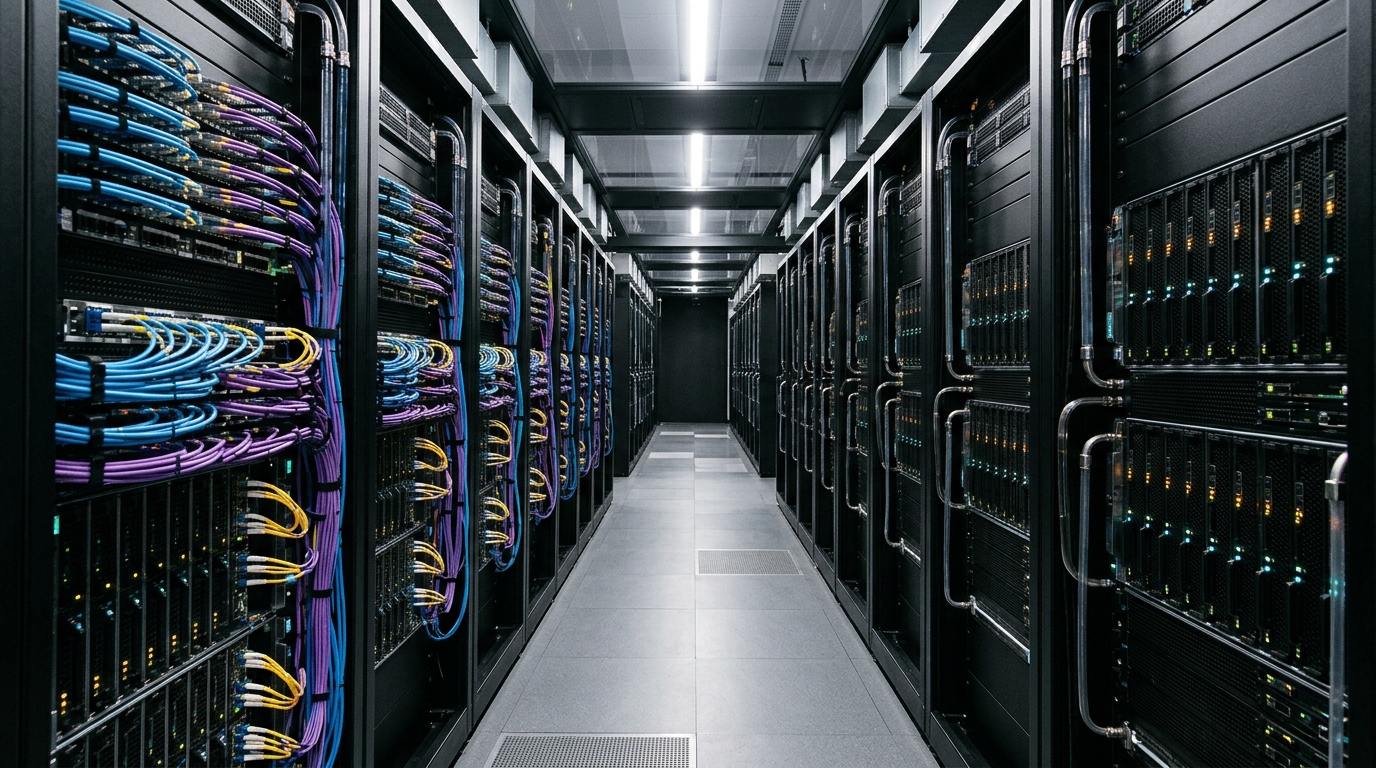
▲ 인공지능 슈퍼컴퓨터 데이터센터 내부의 정밀 배선 통로. 400Gbps 인피니밴드 고속 네트워크와 액체 냉각 장치가 결합하여 수만 개의 가속기를 하나로 묶어낸다. / AI 하드웨어 인프라 보도 사진 자료
API 가격은 80% 폭락했는데 GPU 대여료는 불변… 기형적 시장의 실체
현재 클라우드 시장에서는 전례 없는 기이한 디커플링 현상이 벌어지고 있습니다. 완성된 인공지능 모델을 호출하는 API 가격은 개발사들 간의 출혈경쟁으로 지난여름 최대 80%나 폭락했습니다. 하지만 그 기반이 되는 물리적 하드웨어인 GPU 렌탈 가격은 지난 12개월간 오히려 1.7% 상승했습니다. 차세대 블랙웰 공급이 지연되면서 기존 하드웨어 수요가 전혀 꺾이지 않았기 때문입니다.
제공자별 가격 격차도 극단적입니다. 동일한 H100 80GB 칩을 쓰더라도 유휴 장비를 연결해 주는 Vast.ai 같은 마켓플레이스는 시간당 1달러대에 불과하지만, 코어위브 같은 전용 클라우드는 4달러대, 그리고 마이크로소프트 애저나 AWS 같은 빅테크 하이퍼스케일러는 7달러대에 육박해 무려 88%의 프리미엄이 붙습니다. 차세대 B200의 경우 하이퍼스케일러 요율이 전용 클라우드 대비 93%, H200은 무려 132%나 비쌉니다.
빅테크 클라우드가 두 배 가까운 가격을 받을 수 있는 이유는 기업의 기존 보안 계정과 결제 시스템을 그대로 쓸 수 있는 편의성을 팔기 때문입니다. 하지만 여기에는 숨겨진 함정이 도사리고 있습니다. 대규모 학습 데이터를 클라우드 밖으로 꺼낼 때 청구되는 데이터 송출료(Egress Fee)는 자칫 GPU 연산 비용보다 더 많이 나올 수 있습니다. 데이터 송출료를 전면 무료화한 람다랩스가 시장에서 급부상하는 이유입니다. 아울러 70억 개 매개변수 수준의 가벼운 모델 추론에 비싼 A100을 투입하는 낭비를 줄이고 시간당 0.7달러 수준의 저비용 L4 칩을 활용하는 등 최적화 역량이 기업의 비용 생존을 좌우하고 있습니다.
공급사 분류 및 주요 업체
H100 (80GB) 시간당 요율
차세대 B200 / H200 요율
아키텍처 및 비용 구조 특징
P2P 마켓플레이스 (Vast.ai)
$1.49 ~ $2.27
별도 협의 (POA)
유휴 장비 집합, 최저가이나 신뢰성 및 가동률 가변적
전용 네오클라우드 (CoreWeave)
$4.25 ~ $6.16 (노드당 $49.24)
B200 약 $5.50
400Gbps 인피니밴드 및 베어메탈, 빅테크 대형 계약 집중
특화 클라우드 (Lambda Labs)
$3.29 ~ $3.99
B200 $4.99
데이터 송출료(Egress Fee) 무료 정책, 단일 노드 강세
빅테크 하이퍼스케일러 (AWS/GCP/MS)
$6.88 ~ $6.98 (스팟 제외)
최대 $15.18 ~ $16.11
엔터프라이즈 보안 거버넌스 프리미엄, 데이터 송출료 별도
시장 중간값 (GetDeploying 집계)
전용 $4.19 / 대형 $7.89
전용 $7.88 / 대형 $15.18
하이퍼스케일러가 H100 88%, B200 93% 프리미엄 형성
70조 부채와 63% 부도 위험 경고등… 12조 선수금 유입으로 버틸까
빛이 강한 만큼 드리운 그림자도 짙습니다. 코어위브의 눈부신 성장은 월가의 대형 사모펀드와 투자은행에서 끌어다 쓴 천문학적인 부채에 기반하고 있습니다. 로이터와 런던증권거래소그룹 집계에 따르면 코어위브의 총부채는 약 500억 달러, 우리 돈으로 70조 원에 달합니다. 3분기 순손실만 7억 900만 달러로 적자가 대폭 확대되었고, 분기 순이자비용으로만 8억 4,600만 달러가 빠져나갔습니다. 4분기 이자비용은 최대 11억 5,000만 달러까지 불어날 전망입니다.
금융 시장의 신용 경고등은 이미 붉은빛을 뿜어내고 있습니다. 부도 위험을 회피하는 파생상품인 신용부도스왑(CDS) 프리미엄이 1,000bp(10%포인트)까지 치솟았고, 5년 내 부도 확률 추정치는 63%로 치솟았습니다. 블랙스톤, 칼라일, 골드만삭스, JP모건 등 월가 컨소시엄이 칩과 계약서를 담보로 빌려준 수십조 원의 부채 만기가 다가오면서 잠재적 금융 리스크가 수면 위로 부상했습니다.
이에 대해 코어위브 경영진은 정밀한 수주 기반 지출 모델을 가동하고 있어 안전하다고 반박합니다. 향후 3개월간 고객 계약에 따라 약 90억 달러(약 12조 5,000억 원)의 선수금이 현금으로 유입되며, 메가와트당 연간 2,000만 달러에서 4,000만 달러에 달하는 강력한 가격 결정력을 바탕으로 단기 계약은 6개월에서 18개월, 장기 계약은 1~2년 만에 하드웨어 투자비를 전액 회수할 수 있다는 설명입니다. 특히 2027년 13만 장, 2028년 17만 장의 칩이 투자 원금을 100% 털어낸 상태로 복귀해 순수 고마진 현금을 창출할 것이라고 강조했습니다.
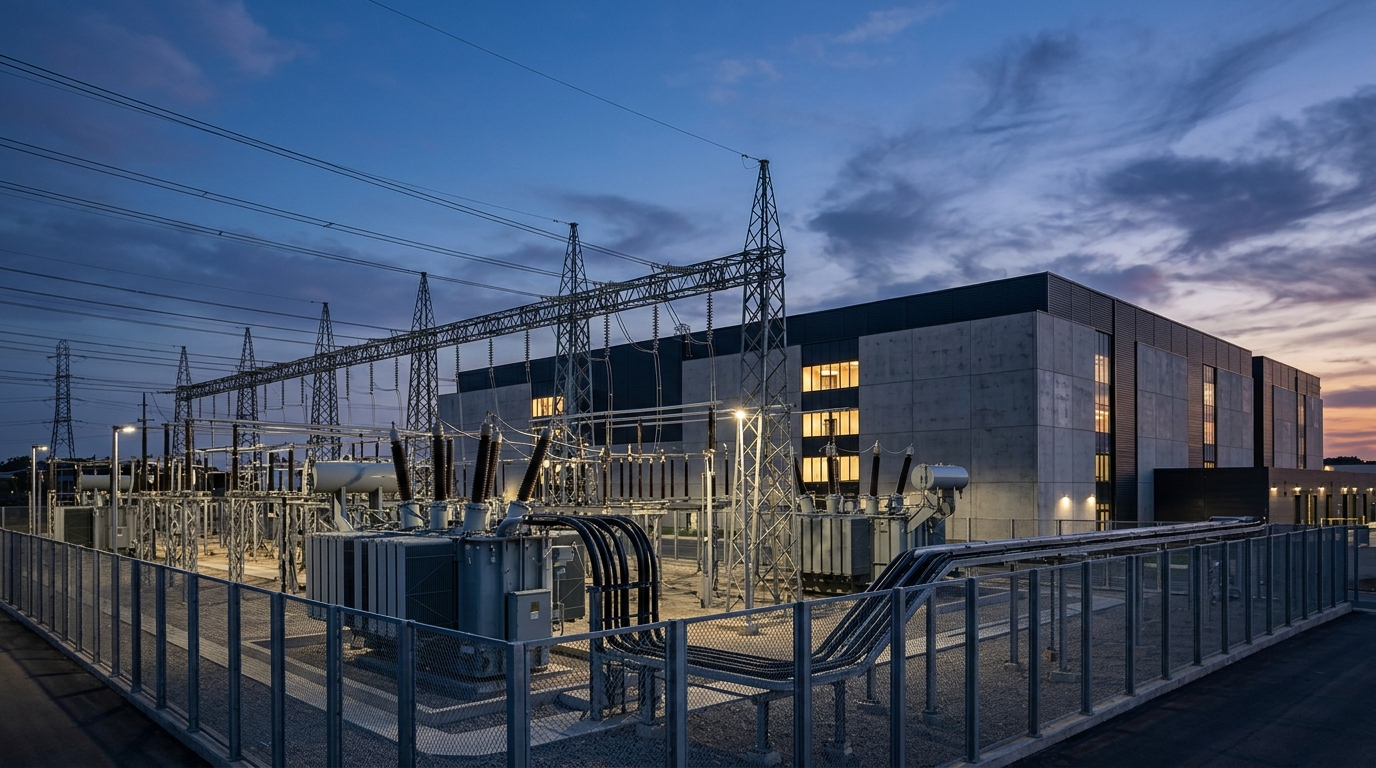
▲ 황혼 무렵 초대형 데이터센터 단지로 기가와트급 전력을 공급하는 초고압 송전 변전소와 변압기 설비. 전력망 직결과 송전 장비 확보가 데이터센터 확장의 절대적인 성패를 가르고 있다. / 전력 계통 인프라 보도 사진 자료
전력 생산보다 무서운 '송전망 병목'… 자가발전 대신 전력망 직결 승부수
자금 조달과 함께 데이터센터 업계의 최대 격전지로 떠오른 것은 바로 전력 인프라입니다. 코어위브는 자체 발전기를 돌려 전기를 조달하는 이른바 비하인드 더 미터(Behind-the-Meter) 방식이 자본 낭비라고 일축했습니다. 100메가와트의 연산 전력을 공급하기 위해 잉여 예비력 목적으로 180~200메가와트 규모의 발전소를 과도하게 지어야 하기 때문입니다. 대신 가동 신뢰성이 검증된 공공 전력망에 시설을 직결하는 방식을 채택해 자본 지출을 크게 줄이고 있습니다.
업계가 직면한 전력 병목의 본질은 전력 생산량 자체가 아니라, 전기를 대규모 캠퍼스로 끌어오는 초고압 변압기와 송전선로 등 계통 연계 장비의 극심한 공급 부족에 있습니다. 코어위브는 확보된 전력의 대다수가 이미 전력망에 직결되어 인허가를 마쳤으며, 전체 4.6기가와트 계약 용량 중 1.3기가와트 이상을 캐나다, 영국, 스페인, 북유럽 등 해외에 분산 배치해 지정학적 소버린 AI 수요를 흡수하고 있습니다.
나아가 코어위브는 수백억 달러의 시설을 직접 짓는 무거운 모델에서 벗어나, 자체 쿠버네티스 소프트웨어 포지(Forge)를 글로벌 파트너들에게 라이선싱하는 자산 경량화(Asset-Light) 전략을 펼치고 있습니다. 남의 데이터센터에서 남이 산 칩을 구동시키며 소프트웨어 마진을 수취하는 영리한 전략입니다. 전 세계 IT 지출이 6조 3,700억 달러로 커지고 인프라 투자가 폭증하는 가운데, 180조 수주와 70조 부채라는 외줄을 타는 코어위브의 도박이 성공적인 연착륙을 이뤄낼지 전 세계 금융과 테크 시장이 숨을 죽이고 주시하고 있습니다.
만인의 탑 데일리 뉴스룸 | 테크·금융 인프라 특별취재팀
발행·편집인: 신승엽 | 만인의 탑 데스크 (information.youngsdaily.com)
본 심층 분석 기사는 코어위브 미국 증권거래위원회 공식 공시(10-Q), 런던증권거래소그룹 신용 데이터, 겟디플로잉 클라우드 가격 지수, 로이터 및 가트너 시장 조사 보고서를 정밀 교차 검증하여 작성되었습니다.
WORLDWIDE IN-DEPTH REPORT | AI Cloud Infrastructure and Credit Risk Analysis
Official Editorial Dispatch | Global News Desk
[EXCLUSIVE] Behind the $133 Billion Backlog: Inside CoreWeave's $50 Billion Debt Engine and the Cloud GPU Reckoning
Photo: High-density artificial intelligence cloud supercomputer server corridor with advanced liquid-cooling piping and high-throughput optical cabling. The sector confronts a stark dichotomy between a 133-billion-dollar backlog and 50 billion dollars in leveraged debt. / Cloud Computing Infrastructure Press Archives
As the abrupt ouster of Nvidia founder Jensen Huang sends seismic shocks through Capitol Hill and Wall Street, the premier beneficiary of the specialized computing boom—neo-cloud leader CoreWeave—is destabilizing global markets with a perilous financial dichotomy. On one front, the specialized provider ignited a 24.7 percent stock surge by disclosing an astounding 133-billion-dollar revenue backlog, confirming its available infrastructure is effectively sold out through 2027 to hyperscale titans. Yet behind this commercial triumph lies a leveraged debt engine totaling 50 billion dollars, quarterly net interest expenses exceeding 846 million dollars, and quantitative debt-market models pricing a 63 percent probability of default within five years. From the bizarre divergence between an 80 percent plunge in language model API pricing and rigidly frozen physical GPU rents, to the operational constraints forcing Microsoft and Meta to lease external capacity, and the transmission grid bottlenecks choking hyperscale campuses, this comprehensive investigation unpacks the anatomy of the AI credit frontier.
A $133 Billion Backlog and a 25% Stock Surge: Inside CoreWeave's AI Infrastructure Boom
In one of the most remarkable corporate evolutions in modern finance, specialized cloud provider CoreWeave—founded in 2017 as an Atlantic cryptocurrency mining operation before pivoting to dedicated GPU infrastructure—has delivered a third-quarter performance that electrified Wall Street. Operating revenues surged 168 percent year-over-year to 3.661 billion dollars, with adjusted operating income reaching 379 million dollars, surpassing profitability targets a full quarter ahead of internal projections. The announcement propelled CoreWeave shares upward by 24.71 percent in a single trading session.
The primary engine driving this market valuation is an unprecedented forward revenue backlog standing between 132.5 billion and 133.0 billion dollars. Chief Executive Officer Michael Intrader confirmed that available compute allocations are functionally sold out through 2027, with more than half of the backlogged capacity scheduled to commence delivery and revenue recognition before the close of 2026. The firm projects total active power to exceed 1.85 gigawatts by year-end, pointing toward sustained GAAP profitability by the first half of 2028.
This expansion unfolds against the backdrop of executive upheaval at Nvidia, where founder Jensen Huang resigned amid federal security scrutiny and internal governance controversies. Despite leadership realignments in Santa Clara, CoreWeave continues to enjoy privileged access to cutting-edge silicon, having recently activated the industry's first Vera Rubin systems for commercial deployment. Governmental authorities in South Korea similarly reassured markets that domestic allocations of 260,000 accelerators remain entirely insulated from political turbulence.
Why Hyperscalers Bypass Their Own Campuses to Lease from Specialized Neo-Clouds
The decision by tech conglomerates like Microsoft and Meta to funnel tens of billions of dollars into external infrastructure rather than relying solely on self-built data centers is dictated by three structural imperatives. The foremost constraint is time-to-market. Securing land, power interconnects, and municipal permits to construct a proprietary hyperscale campus requires between one and two years. In stark contrast, leasing dedicated clusters from CoreWeave enables technology companies to mobilize tens of thousands of accelerators within weeks, preserving decisive competitive momentum in foundation model deployment.
The second factor centers on workload volatility. Large frontier model training produces massive surges in compute demand, requiring tens of thousands of chips operating in unbroken parallel synchronization. Once training concludes, operational workloads shift toward inference, drastically altering infrastructure requirements. Scaling internal physical capacity to meet peak training demands would burden balance sheets with catastrophic depreciation charges during fallow periods, rendering external capacity contracts far superior in capital efficiency.
Finally, network fabric engineering establishes an insurmountable performance barrier. Traditional cloud hyperscalers constructed global networks around commoditized Ethernet environments optimized for web hosting and relational databases. In contrast, distributed model training requires thousands of interconnected processors operating with near-zero latency. CoreWeave engineered dedicated 400Gbps InfiniBand networks over bare-metal Kubernetes architectures, drastically reducing distributed training completion times. Consequently, Microsoft channels significant workloads to the platform, while OpenAI maintains 22.4 billion dollars and Meta preserves 21.0 billion dollars in long-term infrastructure commitments.
Photo: High-density server corridors engineered with high-throughput 400Gbps InfiniBand switching and closed-loop liquid cooling. Purpose-built architectures dramatically accelerate distributed artificial intelligence model training. / Enterprise Computing Technology Archives
API Prices Plummeted 80% Yet GPU Rents Remain Frozen: The Economics of Scarcity
A structural pricing anomaly has emerged across the computing landscape. While token pricing for commercial model APIs plunged by up to eighty percent during aggressive provider price wars, rental rates for foundational physical accelerators rose by 1.7 percent over the past twelve months. Anticipation surrounding next-generation Blackwell systems absorbed legacy hardware capacity, insulating physical computing hosts from wholesale discounting pressures.
Pricing structures demonstrate severe divergence based on provider category. Peer-to-peer compute aggregators like Vast.ai offer idle H100 capacity between one and two dollars per hour, whereas specialized neo-clouds command median rates of 4.19 dollars. Hyperscalers such as AWS and Microsoft Azure anchor the market ceiling with median rates reaching 7.89 dollars—commanding an eighty-eight percent premium over dedicated providers. This premium widens to ninety-three percent for B200 systems and 132 percent for H200 allocations.
Legacy cloud conglomerates command these premiums by bundling infrastructure into established enterprise security, identity management, and compliance frameworks. However, hidden total cost of ownership factors complicate nominal pricing tables. Network data egress charges levied by hyperscalers can easily surpass direct compute fees when migrating large datasets, explaining the growing adoption of zero-egress providers like Lambda Labs. Furthermore, deploying high-end A100 clusters for lightweight inference workloads incurs immense economic waste compared to cost-effective alternatives like the L4, reinforcing the primacy of workload matching over brute silicon allocation.
Provider Category & Platform
H100 (80GB) Hourly Rate
Next-Gen B200 / H200 Rates
Core Architecture & Cost Characteristics
P2P Marketplace (Vast.ai)
$1.49 to $2.27
Price on Application (POA)
Aggregated consumer and enterprise hardware, variable reliability
Zero network data egress fees, high single-node performance
Hyperscalers (AWS / GCP / Azure)
$6.88 to $6.98 (On-Demand)
Up to $15.18 to $16.11
Enterprise IAM and security governance premium, separate egress
Market Median (GetDeploying)
Dedicated $4.19 / Mega $7.89
Dedicated $7.88 / Mega $15.18
Hyperscalers command 88% H100 and 93% B200 price premiums
A $50 Billion Debt Burden and a 63% Default Alarm: Can a $9 Billion Cash Infusion Soften the Landing?
Behind CoreWeave's operational ascendancy lies an unprecedented accumulation of private credit debt. According to compilations by Reuters and the London Stock Exchange Group, total debt liabilities have swelled to approximately 50 billion dollars. Net quarterly GAAP losses deepened to 709 million dollars, while net interest payments consumed 846 million dollars in the third quarter alone, with projections indicating interest obligations could reach 1.15 billion dollars in the subsequent quarter.
Credit default swap spreads have widened to approximately 1,000 basis points, with quantitative fixed-income metrics establishing a sixty-three percent cumulative default probability over a five-year horizon. A syndicate of Wall Street asset managers—including Blackstone, Magnetar Capital, Carlyle, Goldman Sachs, and Morgan Stanley—has underwritten successive tranches of delayed-draw term loans secured directly against silicon assets and customer contracts, creating an intricate web of counterparty exposures.
CoreWeave executive leadership disputes the severity of these solvency concerns, pointing to disciplined success-based capital expenditure models. Management announced that contract terms will inject approximately nine billion dollars in customer prepayments and cash deposits within the next ninety days. With annual revenues generating between twenty million and forty million dollars per megawatt, short-term hardware investments are amortized within six to eighteen months. Crucially, roughly 130,000 GPUs in 2027 and 170,000 GPUs in 2028 will conclude their initial contract lifecycles completely unencumbered, returning to the firm as fully paid-off assets capable of generating pure operating cash flow.
Photo: Heavy industrial high-voltage step-down transformers and transmission line gantries powering a hyperscale computing campus at dusk. Grid interconnection availability has emerged as the defining physical ceiling on infrastructure expansion. / Power Infrastructure Press Archives
The Transmission Grid Chokepoint: Why Grid Power Eclipses Behind-the-Meter Generation
Alongside leveraged balance sheets, electrical interconnect availability has become the definitive physical bottleneck governing enterprise computing. CoreWeave leadership explicitly rejected behind-the-meter generation strategies, noting that delivering 100 megawatts of reliable computing power via isolated on-site generators requires overbuilding 180 to 200 megawatts of generation capacity to preserve redundant margins. Direct interconnection with established public utility grids provides superior operational reliability while substantially curbing capital outlays.
The primary obstacle confronting campus construction is not an aggregate deficit of electrons, but acute supply chain shortages across substation equipment, specifically high-voltage transformers and transmission lines. CoreWeave confirmed that the vast majority of its energized capacity is already grid-interconnected, with 1.3 gigawatts of its 4.6-gigawatt contracted capacity distributed internationally across Canada, the United Kingdom, Spain, and Scandinavia to capture burgeoning sovereign AI demands.
To mitigate physical construction burdens, CoreWeave is executing an asset-light operating strategy, licensing its proprietary Kubernetes platform, Forge, across global cloud partners and sovereign facilities. By operating customer-owned hardware in third-party campuses, the company extracts high-margin software revenues without absorbing balance sheet capital debt. As total worldwide IT spending approaches 6.37 trillion dollars, the global financial and technology sectors remain acutely watchful as to whether CoreWeave's leveraged infrastructure gamble achieves an enduring soft landing.
MANINTOP DAILY NEWSROOM | Technology & Capital Markets Desk
This investigative dispatch was compiled in strict accordance with standard news verification protocols utilizing certified corporate filings from the United States Securities and Exchange Commission, debt data from the London Stock Exchange Group, and pricing indices from GetDeploying and Gartner.
PRO SOURCING ENGINE만인의 탑 빅데이터 솔루션
★ 가입 시 600 크레딧(120회) 전원 무료
내가 찾는 상품 키워드, 지금 얼마나 검색될까?
네이버 월간 검색량 + 구글 볼륨 + 아이템스카우트 실시간 상품수와 경쟁강도 배지를 0.5초 만에 무료로 확인하세요.
MANINTOP NEWSLETTER
📬 만인의 탑 뉴스레터 무료 구독
오늘 보신 정책·시사 뉴스가 유익하셨나요? 매일 엄선되는 알짜 복지 혜택과 국회 실시간 속보를 이메일로 가장 먼저 받아보세요. (평생 무료)
1월이 시작되면 감기는 이미 우리 곁에 와 있습니다. 2월, 3월, 4월까지 이어지는 추위와 건조함은 코와 목을 가장 먼저 공격합니다. 아침에 일어나자마자 막혀 있는 코. 계속 흐르는 콧물. 괜히 칼칼해지는 목. 이 증상은 “시작”일 뿐입니다. 한 번 무너지면 일주일, 길면 한 달까지 끌고 갑니다. 약을 먹으면 잠깐 괜찮아집니다. 하지만 며칠 뒤 또 반복됩니다. 왜일까요? 감기는 ‘치료’의 문제가 아니라 ‘관리’의 문제이기 때문입니다. 대부분은 감기가 오고 나서 약을 찾습니다. 하지만 진짜 중요한 건 감기가 오기 전에 코와 목을 지키는 것입니다. 건조한 실내 공기, 차가운 바깥 공기, 눈에 보이지 않는 세균. 코와 목은 매일 공격받고 있습니다. 지긋지긋하죠! 그런데도 우리는 아무 준비 없이 버티고 있습니다. 이번 겨울도 그렇게 보낼 건가요? 사실 방법은 어렵지 않습니다. 코를 깨끗하게 관리하고, 목을 따뜻하게 보호하고, 점막을 촉촉하게 유지하고, 기관지를 미리 관리하고, 외부 공기를 차단하는 것. 이 다섯 가지만 꾸준히 해도 감기약 없이 겨울을 보내는 것이 충분히 가능합니다. 🔥 이제부터 그 방법을 하나씩 살펴보겠습니다. 🔥 1. 코와 목을 먼저 관리해야 하는 과학적 이유 감기의 대부분은 코 점막에서 시작됩니다. 국제 학술지 Nature Reviews Microbiology 와 Journal of Allergy and Clinical Immunology 에 실린 호흡기 감염 관련 연구들에서는, 감기 바이러스가 비강 상피세포에 먼저 부착해 증식한다는 점을 설명하고 ...
리모델링사업이 진행 중인 아파트를 매매할 때 “계약금 10%를 언제까지 내야 하느냐”는 질문이 특히 많이 나옵니다. 이주공고(이주 안내)가 7~11월쯤이라고 들으면, 그 시점에 맞춰 계약금도 움직일 것 같아서 더 헷갈리기 쉽습니다. 하지만 실제 납부기한은 ‘이주공고가 언제냐’만으로 자동 결정되지 않는 경우가 많습니다. 1) 계약금 10% 납부기한: 결국 ‘문서에 적힌 일정’이 기준 계약금 10%를 언제까지 납부해야 하는지는, 내가 서명하는 매매계약서(특약 포함) 와 사업주체/조합이 제시한 공고·안내문 에 적힌 납부 일정이 기준이 됩니다. 실제 공고문에서는 분양대금 납부의 큰 틀(계약금→중도금→잔금)을 먼저 안내하고, 상세 일정은 별도 표나 유의사항으로 제시하는 방식이 흔합니다. 또, 계약서 문구에 따라 지급 시점이 조건부로 설정될 수도 있습니다. 예를 들어 한 사례 소개 자료에서는 용역계약서에 잔금(10%) 지급시기가 “사업승인 후”로 기재되어 있었다는 점이 언급됩니다. 이런 식으로 ‘사업 단계’와 지급을 연동하는 문구가 들어가면, 질문의 답은 계약서 문구를 확인해야만 확정됩니다. 관련 내용은 링크 에서 문구 사례를 확인할 수 있습니다. 2) 입주자모집공고에서 확인되는 ‘납부 순서’와 잔금 마감 시점 공고문에 적힌 문구를 보면, 납부 순서와 잔금 마감에 대한 기준이 비교적 명확하게 제시되는 경우가 있습니다. 예를 들어 한 입주자모집공고에는 “분양금액(주택가격)은 계약금, 중도금, 잔금의 순서로 납부”하며 “잔금은 입주(열쇠 수령일) 전에 완납”해야 한다고 안내되어 있습니다. (문구 확인: 링크 ) 이 문구가 의미하는 바는 최소 2가지입니다. 분양/공급 형태의 문서에서는 ‘계약금→중도금→잔금’ 흐름이 공식적으로 안내될 수 있습니다. 잔금은 “입주(열쇠 수령)” 이전에 완납해야 한다는 마감 기준이 문서에 적혀 있을 수 있습니다. 다만, 위 공고문 문구는 잔금 마감에 대한 기준을 보여주지만, 계약금 10%의...
윤석열 전 대통령 탄핵 인용 소식을 접하면, 가장 궁금한 지점은 ‘헌재가 정확히 무엇을 위헌·위법으로 봤는가’입니다. 또한 탄핵과 별개로 진행되는 형사재판(내란 우두머리 혐의 등)이 어디까지 왔는지도 함께 정리할 필요가 있습니다. 아래 내용은 제공된 기사/게시물 스니펫과 링크에서 확인되는 범위만 모아, 일반인이 흐름을 이해하기 쉽게 정리한 것입니다. 1) 탄핵 인용 관련: 스니펫에서 확인되는 ‘판단의 골격’ 제공된 근거 중 조국혁신당 사이트에는 헌법재판소가 윤석열 탄핵 심판에서 “피청구인의 위헌·위법행위는 국민 신임 …”이라는 취지로 판단했다는 문장이 인용돼 있습니다( 링크 ). 이 인용문만 놓고 보면, ‘위헌·위법행위’가 있었는지와 그로 인해 ‘국민의 신임’이 어떻게 평가됐는지가 핵심 축으로 소개됩니다. 다만 질문에서 요청하신 세부 항목, 즉 비상계엄 선포 자체를 문제 삼은 구체적 이유, 계엄 이후 조치(포고령, 국회 통제 등)의 어떤 지점이 헌법 위반인지, 국회의 권한행사 방해 및 정치활동 제약을 어떤 논리로 판단했는지 등은, 이번에 제공된 근거의 제목/스니펫만으로는 조항·사실관계·판단 구조가 그대로 제시돼 있지 않습니다. 따라서 이 글에서는 ‘헌재가 무엇을 문제 삼았다’는 세부 리스트를 단정적으로 재구성하기보다, 현재 확인 가능한 문구 수준의 요약(위헌·위법행위 → 국민 신임의 문제로 평가)까지만 적습니다. 만약 헌재 결정문 전문(주문 및 이유)이 추가로 확인되면, 그때는 문장 단위로 ‘어떤 행위’와 ‘어떤 헌법 원리/조항’이 연결되는지(예: 권력분립, 국회의 권한, 정치적 기본권 등) 구조화해 정리하는 것이 가장 정확합니다. 2) 형사 절차(내란 혐의) 관련: 체포영장과 1심 선고 언급 탄핵 심판과 별도로, 12·3 비상계엄 사태로 내란 혐의를 받는 윤석열 대통령에 대해 2024년 12월 31일 체포 영장이 발부됐다는 BBC 보도가 있습니다( 링크 ). 해당 보도는 ‘현직 대통령’에 대한 체포영장 발부라는 점을 함께 언급합니다. 또...