▲ 2026 국세청 연말정산 미리보기 오픈과 13월의 월급 극대화 5대 절세 전략 (공식 보도 자료)
📌 핵심 브리핑 · 주요 쟁점 및 핵심 요약
국세청 홈택스의 연말정산 미리보기 서비스가 본격 개시된 가운데, 월세 세액공제 8,000만 원 확대와 연금저축·IRP 900만 원 납입 및 신용카드 25% 문턱 넘기기 등 13월의 보너스를 극대화할 5대 절세 전략을 심층 분석합니다.
SPONSORED · ADVERTISEMENT
1. 2026년 달라진 연말정산 핵심 개정안과 4대 핫이슈
2026년 연말정산은 중산층의 주거비 부담을 덜어주고, 자녀를 양육하거나 결혼하는 가구에 세제 혜택을 집중하는 방향으로 개정되었습니다. 가장 눈에 띄는 변화는 월세 세액공제의 대폭 확대입니다. 종전에는 총급여 5,500만 원(한도 750만 원) 이하 근로자만 대상이었으나, 2026년부터는 총급여 8,000만 원 이하(종합소득 7,000만 원 이하)까지 대상이 넓어졌고 공제 한도 역시 연 1,000만 원으로 상향되었습니다. 이에 따라 연봉 7,000만 원대 중산층 직장인도 1년에 최대 150만 원에서 170만 원까지 월세 세액공제 혜택을 돌려받을 수 있게 되었습니다.
아이를 키우는 가정에 대한 신용카드 공제 문턱도 낮아졌습니다. 자녀가 있는 근로자는 자녀 1인당 50만 원(최대 100만 원)의 신용카드 기본공제 한도가 추가되어, 자녀가 2명 이상인 총급여 7천만 원 이하 근로자는 기본 한도가 종전 300만 원에서 최대 400만 원까지 늘어납니다.
새롭게 가정을 꾸린 신혼부부를 위한 '결혼세액공제'도 본격 시행됩니다. 2024년부터 2026년 사이에 혼인신고를 한 맞벌이 부부는 생애 1회에 한해 신랑과 신부가 각각 50만 원씩, 부부 합산 최대 100만 원의 세금을 결정세액에서 직접 깎아줍니다.
아울러 고향사랑기부금은 10만 원까지 전액 100% 세액공제와 3만 원 답례품(총 13만 원 혜택)이 유지되는 동시에, 10만 원 초과 20만 원 이하 구간의 공제율이 44%로 대폭 상향되어 20만 원 기부 시 14만 4,000원의 세액공제를 받게 됩니다. 대학생 자녀의 교육비 세액공제 역시 자녀의 소득 요건이 폐지되어, 아르바이트 소득이 있는 자녀의 등록금을 부모가 대신 냈더라도 공제를 정상 적용받을 수 있습니다.
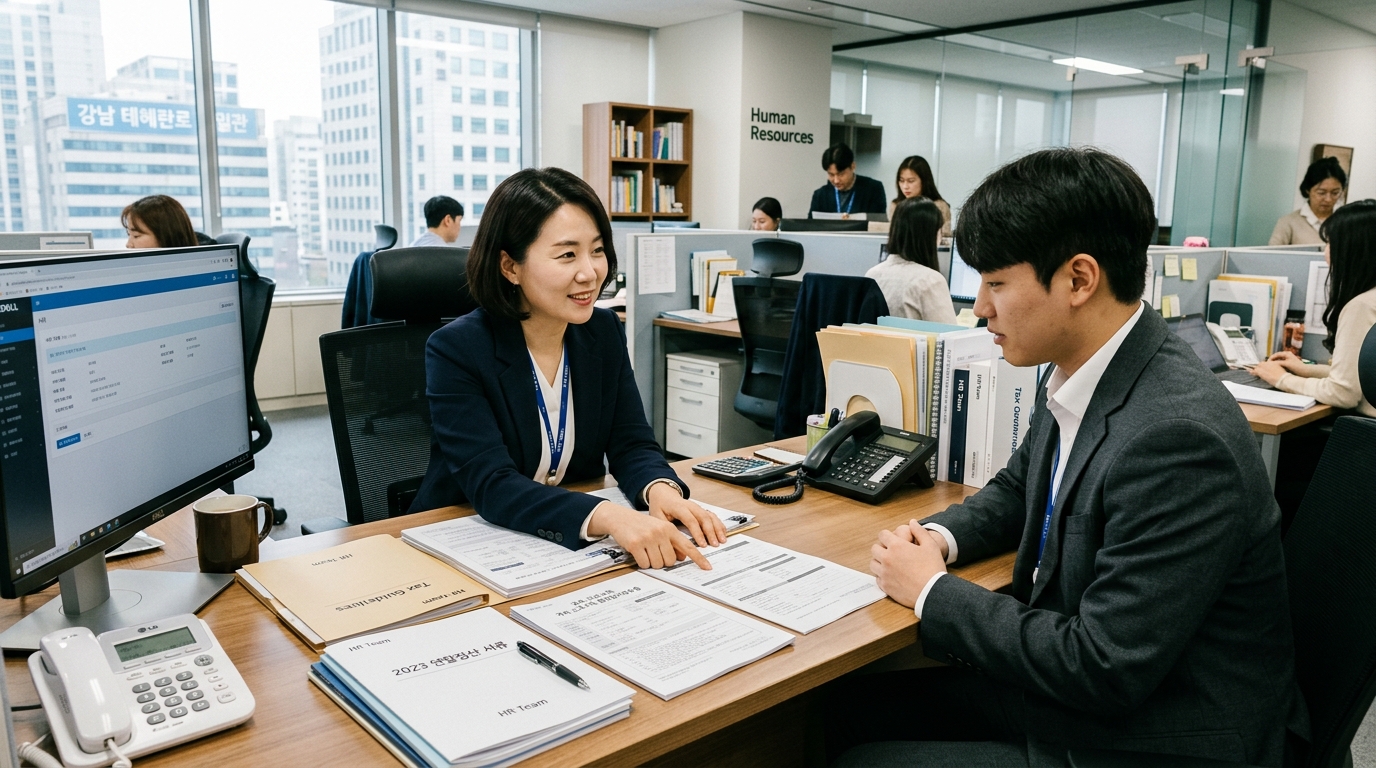
▲ 기업 인사·회계팀 상담 데스크에서 직원이 근로자에게 2026년 귀속 연말정산 소득·세액공제 제출 서류와 변경된 요건을 안내하는 모습 / 국세청 공식 자료
2. 연금저축·IRP 900만 원 공식과 최대 148만 원 환급 비결
연말정산에서 가장 확실하고 강력한 환급 무기는 바로 연금저축과 IRP(개인형 퇴직연금)를 활용한 연금계좌 납입입니다. 단순히 돈을 소비하여 공제를 받는 것이 아니라, 내 노후 자금을 모으면서 낸 세금을 고스란히 현금으로 돌려받는 일석이조의 절세 상품입니다.
연금계좌의 세액공제 대상 한도는 연금저축과 IRP를 합쳐 연간 최대 900만 원까지입니다. 이때 환급받는 세금은 근로자의 총급여 수준에 따라 두 단계로 나뉩니다. 총급여가 5,500만 원 이하인 근로자는 16.5%의 공제율이 적용되어 900만 원을 꽉 채워 납입할 경우 최대 148만 5,000원을 돌려받습니다. 총급여가 5,500만 원을 넘는 근로자도 13.2%가 적용되어 최대 118만 8,000원의 세금을 환급받게 됩니다.
가장 지혜로운 실전 납입 공식은 '연금저축 600만 원 먼저, IRP 300만 원 나중에'입니다. 연금저축은 단독으로 연간 600만 원까지만 공제 혜택이 주어지지만 운용 수수료가 저렴하고 중도 관리가 비교적 수월합니다. 따라서 연금저축 계좌에 먼저 600만 원을 채운 뒤, 나머지 300만 원을 IRP 계좌에 넣어 900만 원 한도를 완성하는 조합이 가장 유리합니다.
단, 연금계좌는 만 55세 이후 연금으로 수령하는 것이 원칙이므로, 중도에 무턱대고 해지하면 그동안 감면받았던 세금과 운용 수익에 대해 16.5%의 기타소득세가 추징된다는 점을 명심해야 합니다. 2026년 귀속 혜택을 받기 위해서는 반드시 12월 31일까지 계좌 입금이 완료되어야 합니다.
공제 항목 및 영역
기존(전년도) 기준선
2026년 개정·확대 기준
환급금 극대화 실전 전략
월세 세액공제
총급여 5,500만 원 (750만 한도)
총급여 8,000만 원 이하 (1,000만 한도)
연 최대 150만~170만 원 환급 (전입신고 필수)
연금저축·IRP
연금저축 600만 + IRP 300만
합산 연 900만 원 세액공제 유지
총급여 5.5천 이하 최대 148.5만 원 환급
신용카드 소득공제
총급여별 기본한도 250만~300만 원
자녀 1인당 50만 원 추가 (최대 100만 원)
총급여 25% 초과 후 체크카드·현금(30%) 집중
고향사랑기부금
10만 원 이하 100%, 초과분 16.5%
10만~20만 원 구간 공제율 44% 상향
10만 원 기부 시 10만 원 전액 환급 + 3만 원 답례품
결혼세액공제
신설 항목 (2024~2026 혼인신고)
신랑·신부 각각 50만 원 (합산 100만 원)
생애 1회 결정세액 직접 차감 혜택
SPONSORED · ADVERTISEMENT
3. 카드 소득공제 25% 문턱 넘기기와 맞벌이 몰아주기 전략
신용카드와 체크카드 소득공제는 직장인들이 가장 많이 챙기는 항목이지만, '총급여의 25%'라는 최소 소비 문턱을 이해하지 못하면 노력에 비해 환급금이 턱없이 적을 수 있습니다. 국세청 홈택스 '연말정산 미리보기'를 켜고 1월부터 9월까지의 카드 지출 합계가 본인 총급여의 25%를 넘었는지 먼저 확인해야 합니다. 총급여가 4,000만 원이라면 25%인 1,000만 원까지 쓴 돈은 공제 대상에서 아예 제외되기 때문입니다. 9월까지 이미 총급여의 25%를 채웠다면 남은 11월과 12월에는 공제율이 15%에 불과한 신용카드 사용을 멈추고, 공제율이 2배인 체크카드, 직불카드, 현금영수증(30%)이나 전통시장·대중교통(40%)으로 결제 수단을 즉시 전환해야 공제 한도를 빠르게 채울 수 있습니다.
맞벌이 부부라면 공제 항목을 누구에게 몰아주느냐에 따라 가구 전체의 환급액이 수십만 원 이상 차이 납니다. 기본 원칙은 소득세율이 높은 '고소득 배우자'에게 공제율이 큰 항목을 몰아주는 것입니다. 부양가족 1인당 150만 원이 주어지는 인적공제와 자녀세액공제(1명 25만 원, 2명 55만 원, 3명 95만 원), 교육비 공제는 연봉이 더 높은 배우자 명의로 신청해야 높은 세율 구간에서 세금이 차감되어 절세 효과가 극대화됩니다.
반대로 최저 지출 문턱이 있는 신용카드와 의료비는 '소득이 낮은 배우자'에게 몰아주는 것이 유리합니다. 신용카드는 총급여의 25%, 의료비는 총급여의 3%를 넘겨야 공제가 시작되므로, 연봉이 낮은 배우자 명의로 카드를 쓰고 병원비를 지출해야 공제 기준선을 훨씬 수월하게 넘겨 알뜰하게 환급을 챙길 수 있습니다. 특히 의료비는 신용카드로 결제하더라도 의료비 세액공제와 신용카드 소득공제를 동시에 누릴 수 있는 유일한 중복 공제 항목이므로 적극 활용해야 합니다.
▲ 책상 위에서 계산기와 연금저축·IRP 납입 내역서 및 국세청 공제 신고서를 대조하며 13월의 보너스 환급액을 계산하는 모습 / 민생 세무 정책 현장 자료
4. 월세·청약·고향사랑기부금 효자 공제와 과다공제 주의사항
월세와 주택청약, 고향사랑기부금은 정해진 요건만 맞추면 사실상 100%에 가까운 환급 효과를 내는 대표적인 효자 공제 항목입니다. 월세 세액공제는 무주택 세대주로서 국민주택규모(전용 85㎡ 이하) 또는 기준시가 4억 원 이하 주택에 살면서 주민등록등본상 전입신고를 마쳤다면 누구나 신청할 수 있습니다. 집주인의 동의는 전혀 필요 없으며, 계좌이체 영수증과 임대차계약서만 챙기면 됩니다. 만약 올해 회사에 알리기 곤란하다면 향후 5년 이내에 관할 세무서에 경정청구를 넣어 언제든 전액 환급받을 수 있습니다. 무주택 세대주라면 주택청약종합저축 납입액도 연간 300만 원 한도 내에서 40%(최대 120만 원)를 소득공제 받을 수 있으므로, 매월 25만 원씩 부어 한도를 꽉 채우는 것이 유리합니다.
12월 31일이 지나기 전에 꼭 챙겨야 할 최고의 꿀팁은 고향사랑기부금입니다. 본인의 주민등록상 거주지가 아닌 다른 지자체에 10만 원을 기부하면 10만 원 전액이 세액공제되어 연말정산 때 10만 원을 그대로 돌려받습니다. 여기에 기부 금액의 30%인 3만 원 상당의 지역 특산물(쌀, 한우, 과일, 지역사랑상품권 등)을 답례품으로 받으므로, 내 돈 1원도 들이지 않고 13만 원의 실질 혜택을 챙길 수 있습니다. 정부 공식 포털인 '고향사랑e음'에서 10분 만에 간편하게 납부할 수 있습니다.
마지막으로 과다공제에 따른 가산세 폭탄을 주의해야 합니다. 연간 소득금액이 100만 원(근로소득만 있는 경우 총급여 500만 원)을 초과하는 부모님이나 아르바이트 자녀를 부양가족 기본공제에 잘못 올리면, 공제 취소는 물론 과소신고 가산세(10%)와 납부지연 가산세가 매일 가산됩니다. 또한 실손보험사로부터 돌려받은 실손의료비는 반드시 의료비 총액에서 차감하고 신고해야 세무서의 사후 검증을 피할 수 있습니다. 국세청 미리보기 서비스를 통해 남은 두 달간 부족한 공제액을 점검하고 차분하게 대비하여 풍성한 13월의 보너스를 챙기시기 바랍니다.
Preview of the 2026 National Tax Service Year-End Settlement and Five Key Tax-Saving Strategies to Maximize Your 13th Month Salary
As the National Tax Service's Home Tax year-end settlement preview service officially begins, we conduct an in-depth analysis of five key tax-saving strategies to maximize the 13th-month bonus. These strategies include an expansion of the monthly rent tax deduction to 80 million won, contributions of 9 million won to pension savings and Individual Retirement Plans (IRP), and surpassing the 25% threshold for credit card spending.
📌 Key Takeaways
Credit card payments can be made up to 25% of total salary (15%), with any excess being concentrated on debit cards and cash (30%).
When contributing 6 million won to a pension savings plan and 3 million won to an Individual Retirement Pension (IRP), taxpayers can receive a maximum tax refund of 1.485 million won.
The income requirement for monthly rent has been raised to 80 million won, and there is a full refund benefit for hometown love donation contributions of 100,000 won.
1. Key revisions and four hot issues for year-end tax settlement in 2026
The 2026 year-end tax settlement was revised to ease the burden of housing costs on the middle class and focus tax benefits on households raising children or getting married.
The most notable change is the significant expansion of the monthly rent tax credit. Previously, only workers with a total salary of 55 million won or less (limit 7.5 million won) were eligible, but from 2026, the target has been expanded to include a total salary of 80 million won or less (comprehensive income of 70 million won or less), and the deduction limit has also been raised to 10 million won per year. Accordingly, middle-class office workers with an annual salary of 70 million won can now receive a monthly rent tax credit of up to 1.5 million won to 1.7 million won per year.
The credit card deduction threshold for families raising children has also been lowered. For workers with children, the basic credit card deduction limit of 500,000 won (maximum 1 million won) per child will be added, and for workers with two or more children with a total salary of 70 million won or less, the basic limit will be increased from the previous 3 million won to a maximum of 4 million won.
The ‘marriage tax credit’ for newlyweds who have started a new family will also be implemented in earnest. Dual-income couples who registered their marriage between 2024 and 2026 will receive a tax deduction of 500,000 won each for the bride and groom, and a maximum of 1 million won for the couple, directly from the determined tax amount once in their lives.
In addition, a 100% tax deduction for hometown love donations up to 100,000 won and a 30,000 won return gift (total benefit of 130,000 won) are maintained, while the deduction rate for donations exceeding 100,000 won and below 200,000 won has been significantly increased to 44%, so a donation of 200,000 won will receive a tax deduction of 144,000 won. The income requirement for children has also been abolished for the tax credit for education expenses for children of college students, so even if parents pay tuition for children with part-time income, they can still receive the deduction.
▲ Corporate HR tax specialist explaining year-end tax deduction procedures and documentation to an employee at a consultation desk / National Tax Service Archive
2. Pension savings/IRP 9 million won formula and secret to refund up to 1.48 million won
The most certain and powerful refund weapon in year-end tax settlement is pension savings and pension account payments using IRP (Individual Retirement Pension). This is a tax-saving product that kills two birds with one stone by not simply spending money and getting a deduction, but by saving money for retirement and getting the taxes paid back in cash.
The tax deduction limit for pension accounts is up to 9 million won per year, including pension savings and IRP. At this time, the tax refund is divided into two stages depending on the worker's total salary level. Workers whose total salary is 55 million won or less are subject to a 16.5% deduction rate, so if they pay the full 9 million won, they will receive up to 1.485 million won back. Employees whose total salary exceeds 55 million won will also be subject to the 13.2% tax refund, up to 1.188 million won.
The wisest actual payment formula is ‘Pension savings 6 million won first, IRP 3 million won later.’ Pension savings are only eligible for deductions of up to 6 million won per year, but management fees are low and mid-term management is relatively easy. Therefore, the most advantageous combination is to first fill the pension savings account with 6 million won and then put the remaining 3 million won into the IRP account to complete the 9 million won limit.
However, it is important to keep in mind that since the pension account is in principle to be received as a pension after the age of 55, if you cancel it prematurely, a 16.5% other income tax will be levied on the taxes and management profits that have been exempted so far. To receive the 2026 vesting benefit, account deposit must be completed by December 31.
Category
Target Scope
Standard / Benefit
Procedure / Action
Monthly Rent Tax Deduction
Total Income of 55 million won (limit of 7.5 million won)
Total Income of 80 million won or less (limit of 10 million won)
Annual refund of up to 1.5 to 1.7 million won (registration of residence required)
Pension Savings and IRP
Pension savings of 6 million + IRP of 3 million
Combined annual tax deduction of 9 million won maintained
Total Income of 55 million won or less, maximum refund of 1.485 million won
Credit Card Income Deduction
Basic limit by total income of 2.5 to 3 million won
Additional 500,000 won per child (maximum of 1 million won)
Focus on check cards and cash (30%) after exceeding 25% of total income
Hometown Love Donation
100% refund for donations of 100,000 won or less, 16.5% for amounts exceeding that
Deduction rate increased to 44% for the 100,000 to 200,000 won range
For a donation of 100,000 won, a full refund of 100,000 won + a gift worth 30,000 won
Marriage Tax Deduction
New item (for marriage registration from 2024 to 2026)
500,000 won for each groom and bride (total of 1 million won)
One-time benefit of direct deduction from the determined tax amount
3. Overcoming the 25% credit card income deduction threshold and dual income promotion strategy
Credit card and check card income deductions are the most important items for office workers, but if you do not understand the minimum consumption threshold of '25% of total salary', the refund may be far too small compared to the effort.
You must first turn on the National Tax Service's Hometax 'Year-end Tax Settlement Preview' and check whether the total card spending from January to September exceeds 25% of your total salary. If your total salary is 40 million won, money spent up to 25%, or 10 million won, is completely excluded from deductions. If you have already met 25% of your total salary by September, you must stop using credit cards with a deduction rate of only 15% for the remaining months of November and December, and immediately switch payment methods to check cards, debit cards, cash receipts (30%) or traditional markets and public transportation (40%) with double the deduction rate to quickly reach the deduction limit.
If you are a dual-income couple, the refund amount for the entire household can vary by hundreds of thousands of won or more depending on who gets the deductions. The basic principle is to give items with large deductions to the ‘higher income spouse’ who has a higher income tax rate. The personal deduction of 1.5 million won per dependent, the child tax credit (250,000 won for one person, 550,000 won for two people, and 950,000 won for three people), and the education expense deduction must be applied for in the name of the spouse with a higher annual salary to maximize tax savings by deducting taxes in the higher tax bracket.
Conversely, it is advantageous to shift credit card and medical expenses, which have a minimum spending threshold, to the ‘low-income spouse.’ For credit cards, deductions begin only when the amount exceeds 25% of total salary, and for medical expenses exceed 3% of total salary. Therefore, if you use a card in the name of your spouse with a lower salary and pay hospital expenses, you can exceed the deduction threshold much more easily and receive a frugal refund. In particular, even if you pay for medical expenses with a credit card, you should actively take advantage of this as it is the only duplicate deduction item that allows you to enjoy both a medical expense tax deduction and a credit card income deduction at the same time.
▲ Reviewing pension savings passbook, tax deduction forms, and calculating expected refund on a desktop calculator / Public Tax Policy Archive
4. Precautions regarding deductions and excessive deductions for monthly rent, subscription, and hometown love donations.
Monthly rent, housing subscription, and hometown love donation are representative deduction items for filial sons that provide virtually a 100% refund effect as long as the specified requirements are met.
Anyone can apply for the monthly rent tax credit if they are the head of a household without a house and live in a house with a national housing size (exclusively 85㎡ or less) or a house with a standard price of 400 million won or less and have completed a move-in report on their resident registration certificate. There is no need for the landlord's consent at all, and all you need to do is bring the bank transfer receipt and the rental agreement. If you find it difficult to notify the company this year, you can receive a full refund at any time by submitting a request for correction to your local tax office within the next five years. If you are the head of a household without a home, you can receive an income tax deduction of 40% (maximum 1.2 million won) of the annual housing subscription savings payment within the annual limit of 3 million won, so it is advantageous to fill the limit by pouring in 250,000 won every month.
The best tip you must take care of before December 31st is the hometown love donation. If you donate 100,000 won to a local government other than your residence according to your resident registration, the entire 100,000 won will be tax deducted and you will receive 100,000 won back at year-end tax settlement. In addition, you receive 30,000 won worth of local specialties (rice, Korean beef, fruit, local love gift certificates, etc.), which is 30% of the donation amount, as a return gift, so you can receive a real benefit of 130,000 won without spending a single won of your own money. You can easily pay in 10 minutes through the government's official portal, 'Hometown Love eum'.
Lastly, you must be careful of additional tax penalties due to excessive deductions. If you mistakenly include a parent or part-time child with an annual income exceeding 1 million won (5 million won in total salary if you only have earned income) in the basic deduction for dependents, the deduction will not only be cancelled, but an under-reporting penalty (10%) and a late payment penalty will be added every day. In addition, actual medical expenses refunded from actual expense insurance companies must be deducted from the total medical expenses and reported to avoid post-verification by the tax office. Through the National Tax Service's preview service, check your insufficient deduction amount for the remaining two months and prepare calmly to receive a bountiful bonus for the 13th month.
Recommended Deep-Dive Investigations TOP 3
GLOBAL REPORT
1월이 시작되면 감기는 이미 우리 곁에 와 있습니다. 2월, 3월, 4월까지 이어지는 추위와 건조함은 코와 목을 가장 먼저 공격합니다. 아침에 일어나자마자 막혀 있는 코. 계속 흐르는 콧물. 괜히 칼칼해지는 목. 이 증상은 “시작”일 뿐입니다. 한 번 무너지면 일주일, 길면 한 달까지 끌고 갑니다. 약을 먹으면 잠깐 괜찮아집니다. 하지만 며칠 뒤 또 반복됩니다. 왜일까요? 감기는 ‘치료’의 문제가 아니라 ‘관리’의 문제이기 때문입니다. 대부분은 감기가 오고 나서 약을 찾습니다. 하지만 진짜 중요한 건 감기가 오기 전에 코와 목을 지키는 것입니다. 건조한 실내 공기, 차가운 바깥 공기, 눈에 보이지 않는 세균. 코와 목은 매일 공격받고 있습니다. 지긋지긋하죠! 그런데도 우리는 아무 준비 없이 버티고 있습니다. 이번 겨울도 그렇게 보낼 건가요? 사실 방법은 어렵지 않습니다. 코를 깨끗하게 관리하고, 목을 따뜻하게 보호하고, 점막을 촉촉하게 유지하고, 기관지를 미리 관리하고, 외부 공기를 차단하는 것. 이 다섯 가지만 꾸준히 해도 감기약 없이 겨울을 보내는 것이 충분히 가능합니다. 🔥 이제부터 그 방법을 하나씩 살펴보겠습니다. 🔥 1. 코와 목을 먼저 관리해야 하는 과학적 이유 감기의 대부분은 코 점막에서 시작됩니다. 국제 학술지 Nature Reviews Microbiology 와 Journal of Allergy and Clinical Immunology 에 실린 호흡기 감염 관련 연구들에서는, 감기 바이러스가 비강 상피세포에 먼저 부착해 증식한다는 점을 설명하고 ...
리모델링사업이 진행 중인 아파트를 매매할 때 “계약금 10%를 언제까지 내야 하느냐”는 질문이 특히 많이 나옵니다. 이주공고(이주 안내)가 7~11월쯤이라고 들으면, 그 시점에 맞춰 계약금도 움직일 것 같아서 더 헷갈리기 쉽습니다. 하지만 실제 납부기한은 ‘이주공고가 언제냐’만으로 자동 결정되지 않는 경우가 많습니다. 1) 계약금 10% 납부기한: 결국 ‘문서에 적힌 일정’이 기준 계약금 10%를 언제까지 납부해야 하는지는, 내가 서명하는 매매계약서(특약 포함) 와 사업주체/조합이 제시한 공고·안내문 에 적힌 납부 일정이 기준이 됩니다. 실제 공고문에서는 분양대금 납부의 큰 틀(계약금→중도금→잔금)을 먼저 안내하고, 상세 일정은 별도 표나 유의사항으로 제시하는 방식이 흔합니다. 또, 계약서 문구에 따라 지급 시점이 조건부로 설정될 수도 있습니다. 예를 들어 한 사례 소개 자료에서는 용역계약서에 잔금(10%) 지급시기가 “사업승인 후”로 기재되어 있었다는 점이 언급됩니다. 이런 식으로 ‘사업 단계’와 지급을 연동하는 문구가 들어가면, 질문의 답은 계약서 문구를 확인해야만 확정됩니다. 관련 내용은 링크 에서 문구 사례를 확인할 수 있습니다. 2) 입주자모집공고에서 확인되는 ‘납부 순서’와 잔금 마감 시점 공고문에 적힌 문구를 보면, 납부 순서와 잔금 마감에 대한 기준이 비교적 명확하게 제시되는 경우가 있습니다. 예를 들어 한 입주자모집공고에는 “분양금액(주택가격)은 계약금, 중도금, 잔금의 순서로 납부”하며 “잔금은 입주(열쇠 수령일) 전에 완납”해야 한다고 안내되어 있습니다. (문구 확인: 링크 ) 이 문구가 의미하는 바는 최소 2가지입니다. 분양/공급 형태의 문서에서는 ‘계약금→중도금→잔금’ 흐름이 공식적으로 안내될 수 있습니다. 잔금은 “입주(열쇠 수령)” 이전에 완납해야 한다는 마감 기준이 문서에 적혀 있을 수 있습니다. 다만, 위 공고문 문구는 잔금 마감에 대한 기준을 보여주지만, 계약금 10%의...
윤석열 전 대통령 탄핵 인용 소식을 접하면, 가장 궁금한 지점은 ‘헌재가 정확히 무엇을 위헌·위법으로 봤는가’입니다. 또한 탄핵과 별개로 진행되는 형사재판(내란 우두머리 혐의 등)이 어디까지 왔는지도 함께 정리할 필요가 있습니다. 아래 내용은 제공된 기사/게시물 스니펫과 링크에서 확인되는 범위만 모아, 일반인이 흐름을 이해하기 쉽게 정리한 것입니다. 1) 탄핵 인용 관련: 스니펫에서 확인되는 ‘판단의 골격’ 제공된 근거 중 조국혁신당 사이트에는 헌법재판소가 윤석열 탄핵 심판에서 “피청구인의 위헌·위법행위는 국민 신임 …”이라는 취지로 판단했다는 문장이 인용돼 있습니다( 링크 ). 이 인용문만 놓고 보면, ‘위헌·위법행위’가 있었는지와 그로 인해 ‘국민의 신임’이 어떻게 평가됐는지가 핵심 축으로 소개됩니다. 다만 질문에서 요청하신 세부 항목, 즉 비상계엄 선포 자체를 문제 삼은 구체적 이유, 계엄 이후 조치(포고령, 국회 통제 등)의 어떤 지점이 헌법 위반인지, 국회의 권한행사 방해 및 정치활동 제약을 어떤 논리로 판단했는지 등은, 이번에 제공된 근거의 제목/스니펫만으로는 조항·사실관계·판단 구조가 그대로 제시돼 있지 않습니다. 따라서 이 글에서는 ‘헌재가 무엇을 문제 삼았다’는 세부 리스트를 단정적으로 재구성하기보다, 현재 확인 가능한 문구 수준의 요약(위헌·위법행위 → 국민 신임의 문제로 평가)까지만 적습니다. 만약 헌재 결정문 전문(주문 및 이유)이 추가로 확인되면, 그때는 문장 단위로 ‘어떤 행위’와 ‘어떤 헌법 원리/조항’이 연결되는지(예: 권력분립, 국회의 권한, 정치적 기본권 등) 구조화해 정리하는 것이 가장 정확합니다. 2) 형사 절차(내란 혐의) 관련: 체포영장과 1심 선고 언급 탄핵 심판과 별도로, 12·3 비상계엄 사태로 내란 혐의를 받는 윤석열 대통령에 대해 2024년 12월 31일 체포 영장이 발부됐다는 BBC 보도가 있습니다( 링크 ). 해당 보도는 ‘현직 대통령’에 대한 체포영장 발부라는 점을 함께 언급합니다. 또...