3040 비만 당뇨 대란과 35세 검진 혁명: 연속혈당기·식사 순서·신약 치료 총정리
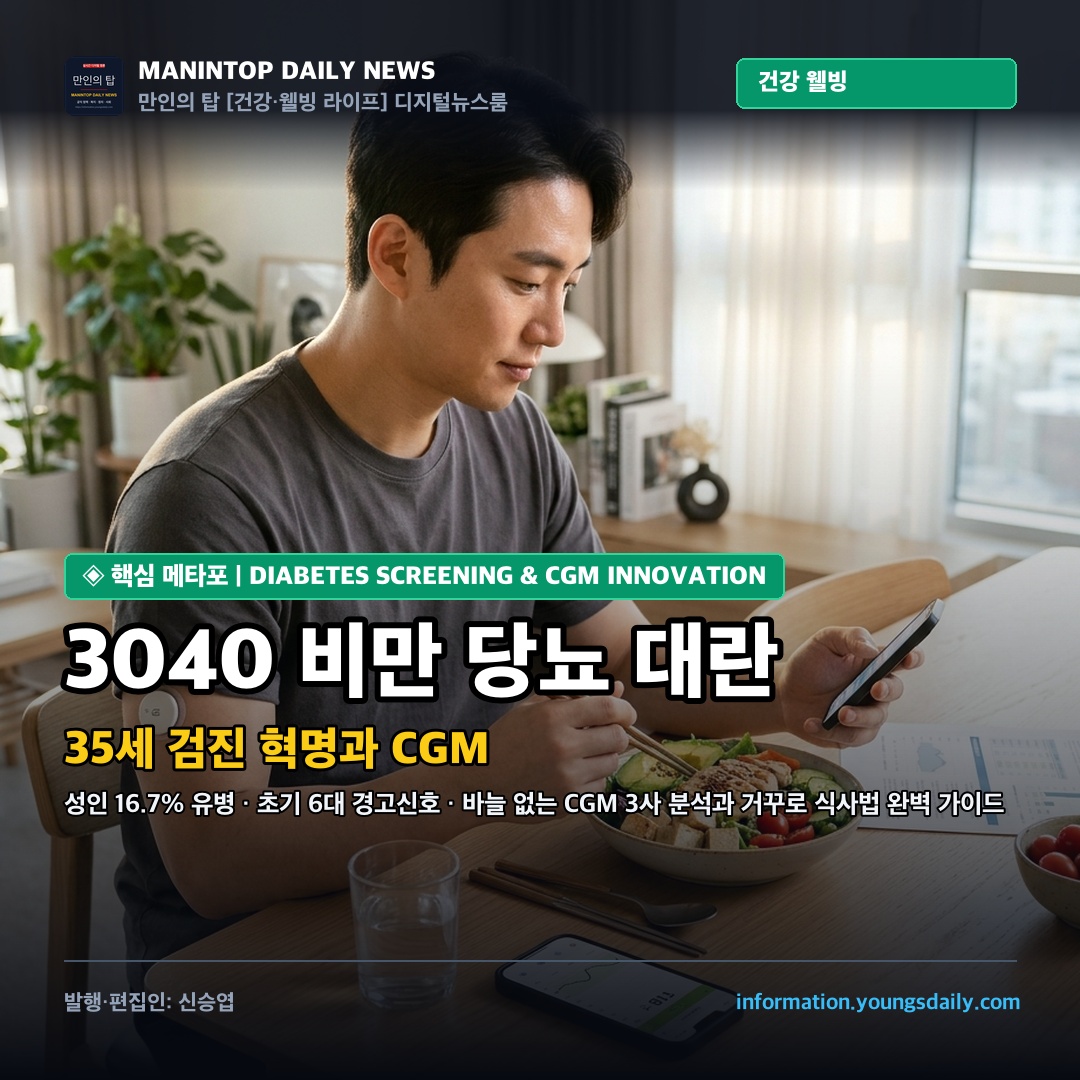
▲ 팔에 부착한 연속혈당측정기(CGM) 센서와 연동된 스마트폰으로 실시간 혈당 곡선을 확인하며 건강한 식사를 즐기는 모습. 청장년층 비만 당뇨가 급증하면서 디지털 헬스케어 기반의 조기 진단과 생활 관리가 핵심 과제로 떠올랐다. [사진=만인의 탑 보건의학DB]
1. 3040 세대를 덮친 비만 당뇨 대란… 치료율·조절률 쇼크
대한민국 당뇨병 지형도가 완전히 바뀌었습니다. 과거에는 노화로 인해 췌장 기능이 서서히 떨어지는 퇴행성 질환이었다면, 지금은 서구화된 배달 음식과 액상과당, 운동 부족이 결합된 '청년 비만형 당뇨'가 폭발적으로 늘고 있습니다.
강북삼성병원 내분비내과 박세은 교수팀이 대한당뇨병학회 공식 학술지(Diabetes & Metabolism Journal)에 발표한 역학 연구에 따르면, 국내 30대 당뇨병 환자의 81.3%, 40대 환자의 76.7%가 체질량지수(BMI) 25 이상의 비만을 동반하고 있습니다. 이는 65세 이상 노년층 환자의 비만율(38.3%)보다 두 배 이상 높은 수치입니다. 특히 내장지방의 척도인 복부비만율은 30대 환자의 78.4%, 40대 환자의 73.1%에 달해 젊은 당뇨 환자 대부분이 두꺼운 허리둘레와 극심한 인슐린 저항성을 안고 살아갑니다.
더 심각한 것은 통계 뒤에 숨겨진 '관리 절벽'입니다. 대한당뇨병학회 팩트시트에 따르면 국내 30세 이상 성인의 당뇨병 유병률은 16.7%로 성인 6명 중 1명이 환자입니다. 하지만 진단을 받고도 실제 약물 치료를 받는 비율은 10명 중 6명(약 60%)에 불과합니다. 심지어 약을 먹는 환자 중에서도 당화혈색소 6.5% 미만으로 혈당을 철저히 조절하는 환자는 4명 중 1명(25%)에 그칩니다.
젊은 나이에 발병한 당뇨병은 기대수명이 긴 만큼 고혈당에 노출되는 기간이 수십 년에 이릅니다. 조기에 잡지 못하면 40~50대에 실명(당뇨망막병증), 발가락 괴사(족부 절단), 투석 환자의 40%를 차지하는 만성 신부전 등 치명적인 합병증이 한꺼번에 덮쳐 삶의 질을 송두리째 무너뜨립니다.
2. 2023 진료지침 대개정… 무증상도 35세부터 매년 피검사 의무화
청년 당뇨의 위험성이 임계점을 넘어서자, 대한당뇨병학회는 2023 당뇨병 진료지침(제8판)을 통해 임상 선별검사 기준을 획기적으로 낮췄습니다. 기존에는 40세 이상이거나 위험인자가 있는 30세 이상에게 권고하던 당뇨병 선별검사를, 이제는 아무런 증상이 없는 건강한 성인이라도 35세가 되면 매년 정기 혈액검사를 받도록 못 박았습니다.
특히 복부비만(허리둘레 남성 90cm, 여성 85cm 이상)이나 고혈압, 이상지질혈증 등 위험인자를 하나라도 가지고 있다면 19세 이상 모든 성인이 매년 혈당 검사를 받아야 합니다.
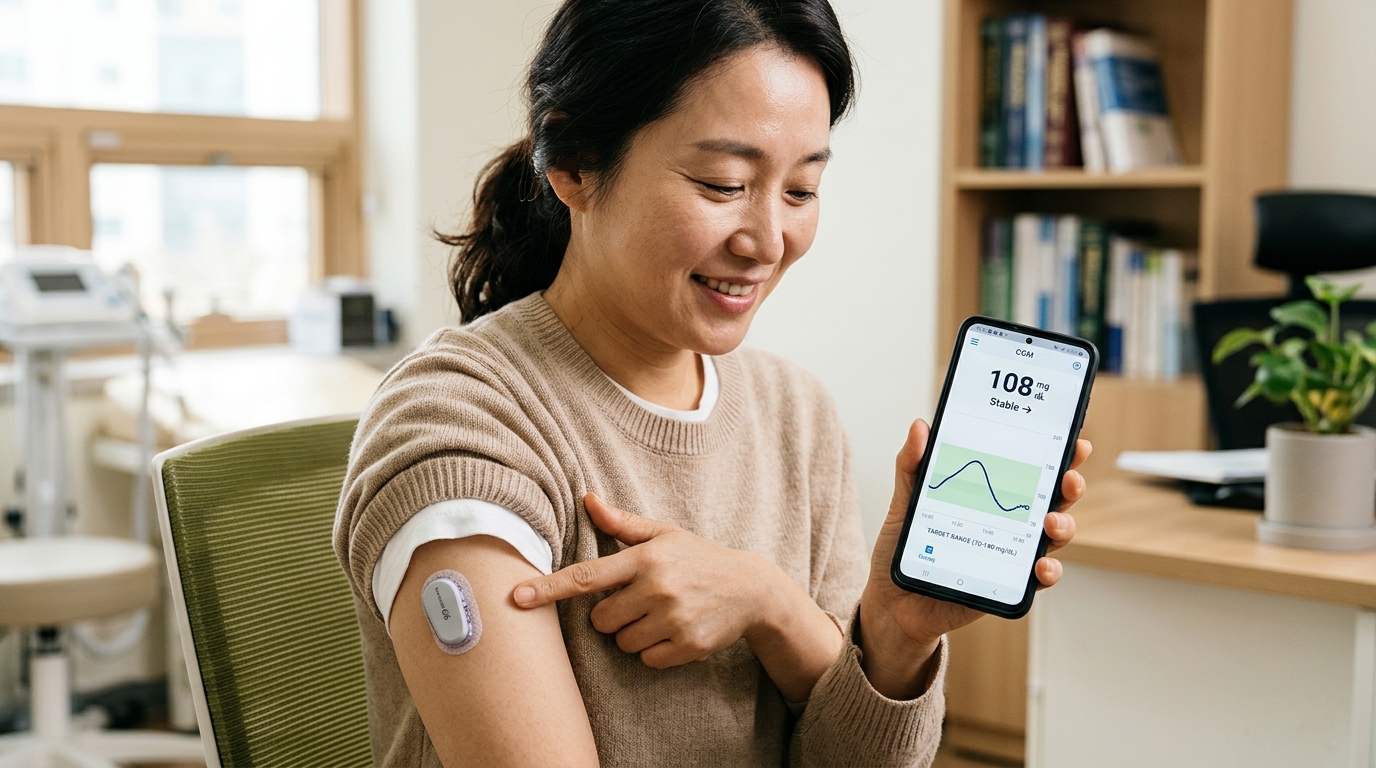
▲ 병원 진료실에서 환자가 상완에 부착된 초소형 웨어러블 혈당 센서를 가리키며 실시간 혈당 수치와 목표 범위 내 시간(TIR)을 점검하고 있다. [사진=만인의 탑 보건의학DB]
3. 침묵의 살인자가 보내는 초기 경고 신호 6가지 자가진단
당뇨병은 혈당이 300~400mg/dL 이상 치솟기 전까지는 뚜렷한 통증이 없습니다. 하지만 체내 인슐린 저항성이 심해지면 몸은 이미 다음과 같은 6가지 미세한 구조 신호를 보내고 있습니다.
4. 바늘 없는 스마트 헬스케어… 연속혈당측정기(CGM) 3사 대해부
매일 손가락 끝을 바늘로 찔러 피를 내던 자가혈당측정(SMBG)의 시대가 저물고 있습니다. 피부 밑 피하지방에 머리카락보다 가는 미세 센서를 부착해 세포간질액의 포도당 농도를 1~5분 간격으로 스마트폰에 실시간 전송하는 연속혈당측정기(CGM)가 대세로 자리 잡았습니다.
국내에서 가장 널리 사용되는 대표 3사 제품(덱스콤, 케어센스 에어, 프리스타일 리브레2)의 특성을 객관적으로 분석하면 명확한 차이가 드러납니다.
| 비교 항목 | 덱스콤 (Dexcom G6 / G7) | 케어센스 에어 (CareSens Air) | 프리스타일 리브레 2 (FreeStyle Libre 2) |
|---|---|---|---|
| 센서 유지 기간 | 10일 (교체 주기가 가장 짧음) | 15일 (국내 3사 중 최장 수명) | 14일 (표준적인 2주 주기) |
| 가격 및 경제성 | 가장 고가 (유지 비용 부담 높음) | 합리적 가격 (가성비 최고) | 중간 가격대 형성 |
| 측정 정확도·안정성 | 최상급 정밀도 (임상 표준 수준) | 우수 (생활 혈당 추적 신뢰성 높음) | 양호 (간헐적 센서 튐 보고) |
| 블루투스 앱 연동 | 실시간 자동 수신 최적화 | 앱 연결 수월, 식단·운동 직관 매칭 | NFC 태그 및 블루투스 알람 지원 |
| 추천 사용자층 | 정밀 인슐린 투여가 필수인 1형 당뇨 환자 | 2형 당뇨 환자, 혈당 다이어터 | 기존 리브레 사용자, 단순 혈당 관찰자 |
연속혈당측정기를 사용할 때 가장 중요한 핵심 지표는 당화혈색소뿐만 아니라 '목표혈당범위 내 시간(TIR, Time In Range)'입니다. 하루 24시간 중 혈당이 정상 목표치(70~180 mg/dL) 안에 머무는 시간이 70% 초과(하루 17시간 이상)를 달성해야 합병증 위험을 차단할 수 있습니다. 반면 70mg/dL 미만의 저혈당은 하루 4% 미만, 54mg/dL 미만의 중증 저혈당은 1% 미만으로 엄격히 통제해야 합니다.
5. 치료 약물의 대변혁… 메트포민과 심장·신장 보호 신약
당뇨병 약물 치료의 패러다임도 완전히 바뀌었습니다. 과거 2002년 국내 처방의 85.8%를 차지했던 설포닐유레아(SU) 계열은 췌장을 억지로 자극해 저혈당과 췌장 피로를 유발한다는 한계로 인해 처방률이 41.7%까지 반토막 났습니다. 그 자리를 간에서 포도당 생성을 억제하는 메트포민(처방률 87.5%)과 혈당 의존적으로 인슐린을 분비시키는 DPP-4 억제제(63.9%)가 채웠습니다.
특히 2023 진료지침이 가장 강력하게 권고하는 게임체인저는 SGLT2 억제제와 GLP-1 수용체 작용제입니다.
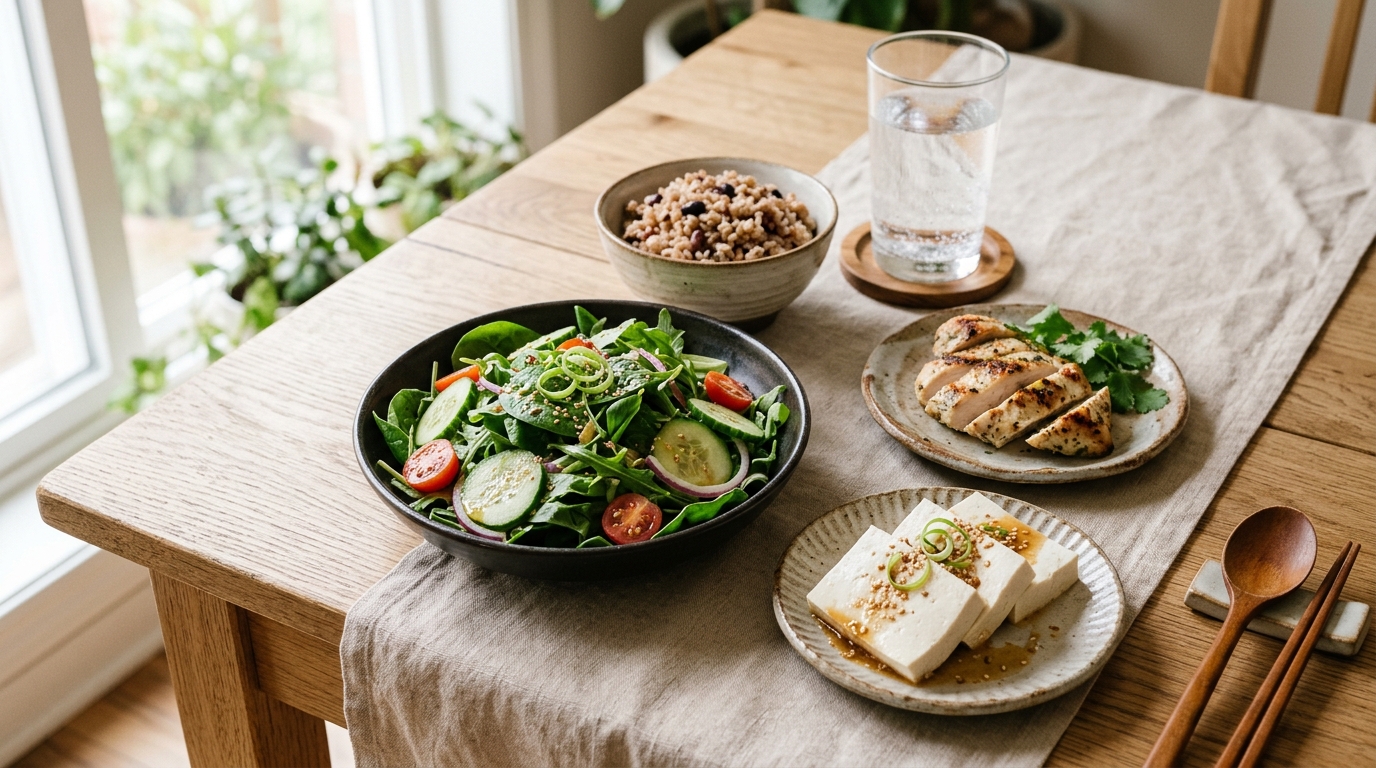
▲ 신선한 채소 샐러드, 부드러운 찐 두부, 저지방 닭가슴살, 잡곡밥으로 정갈하게 차려진 식탁. 채소-단백질-탄수화물 순서로 식사하는 거꾸로 식사법은 식후 혈당 급등을 막는 가장 강력한 무기다. [사진=만인의 탑 보건의학DB]
6. 일상 속 혈당 잡는 과학: 거꾸로 식사법·바나바잎·신장 보호 식단
아무리 좋은 약을 먹어도 매일 세 끼 식사와 운동을 잡지 못하면 혈당 관리는 모래성입니다. 임상에서 입증된 가장 쉽고 효과적인 일상 실천법 세 가지를 소개합니다.
첫째, '거꾸로 식사법(식사 순서 혁명)'입니다. 음식을 먹는 순서를 '채소(식이섬유) → 단백질·지방(고기·생선·두부) → 탄수화물(밥·빵·면)'으로 바꾸기만 해도 식후 혈당 피크가 절반 가까이 줄어듭니다. 먼저 들어간 식이섬유가 위장관 벽을 젤처럼 감싸주어 탄수화물이 포도당으로 분해되어 혈액으로 흡수되는 속도를 드라마틱하게 늦춰주기 때문입니다. 식사를 마치고 바로 눕지 않고 10~15분간 가볍게 산책하거나 계단을 걸으면, 허벅지 골격근이 인슐린 도움 없이도 혈관 속 포도당을 쏙쏙 흡수해 식후 혈당 스파이크를 깨끗하게 지워줍니다.
둘째, 혈당 건기식 '바나바잎 추출물(코로솔산)'의 팩트체크입니다. '식물 인슐린'으로 불리는 바나바잎의 핵심 성분은 코로솔산(Corosolic acid)입니다. 코로솔산은 세포막의 포도당 수송체(GLUT4)를 자극해 혈액 속 당을 세포 안으로 밀어 넣어 연소시킵니다. 식품의약품안전처로부터 '식후 혈당 상승 억제에 도움을 줄 수 있음' 기능성을 인정받았으며, 인체적용시험에서 식후 혈당을 약 30% 낮추는 효과가 확인되었습니다. 다만 보충제는 어디까지나 식습관 교정의 보조 수단일 뿐 처방 약물을 대체할 수 없습니다.
셋째, 투석을 막는 당뇨병성 신장합병증 식사법입니다. 콩팥 손상이 시작된 환자는 일반 당뇨 식단과 달라야 합니다. 사구체 과여과를 막기 위해 단백질 섭취량을 체중 1kg당 0.8~1.0g 수준으로 조절하고 붉은 고기 대신 두부나 닭고기를 선택해야 합니다. 하루 나트륨은 2,400mg(소금 6g) 이하로 제한해야 합니다. 특히 칼륨 배설 능력이 떨어진 환자가 채소를 생으로 많이 먹으면 심장마비를 부르는 고칼륨혈증에 빠질 수 있습니다. 채소는 잘게 썰어 물에 2시간 이상 담가둔 뒤 끓는 물에 데쳐서 국물을 버리고 건더기만 조리해 먹어야 안전합니다.
Youth Diabetes Epidemic and the 35-Year Screening Revolution: Comprehensive CGM, Diet Sequence, and Breakthrough Therapies Guide
▲ A young professional monitors real-time glucose variability on a smartphone paired with an upper-arm continuous glucose monitoring (CGM) patch over a nutrient-dense lunch. Early diagnosis and digital health tracking have become indispensable tools against surging early-onset metabolic disease. [Photo: MANINTOP Medical DB]
1. The Obesity-Driven Young Diabetes Crisis and the Clinical Treatment Cliff
The epidemiological landscape of diabetes mellitus in South Korea has undergone a tectonic shift. Rather than a degenerative disease of progressive pancreatic decline in elderly populations, the medical community is witnessing a dramatic surge in obesity-driven early-onset diabetes among young adults, fueled by ultra-processed food deliveries, high-fructose corn syrup, and sedentary lifestyles.
According to landmark epidemiological research conducted by Professor Se-Eun Park's team at Kangbuk Samsung Hospital and published in the Diabetes and Metabolism Journal, 81.3% of diabetic patients in their 30s and 76.7% of those in their 40s present with clinical obesity (BMI 25 kg/m2 or higher). This represents more than double the obesity rate observed in geriatric cohorts aged 65 and older (38.3%). Furthermore, abdominal obesity rates reach an astonishing 78.4% in their 30s and 73.1% in their 40s (waist circumference exceeding 90 cm for men and 85 cm for women), driving severe systemic insulin resistance.
Compounding this biological threat is an alarming 'treatment cliff.' While nationwide adult prevalence has climbed to 16.7% (affecting one out of every six Korean adults over 30), only 60% of diagnosed individuals receive pharmacological therapy. Even more disquieting, merely 25% of treated patients achieve the stringent clinical glycemic target of HbA1c below 6.5%.
Because patients diagnosed in their 30s have decades of prospective life ahead, chronic glycemic exposure leads to premature microvascular and macrovascular devastation. Without aggressive early intervention, complications such as proliferative diabetic retinopathy, lower-extremity amputations, and end-stage renal disease (ESRD, where diabetes accounts for 40% of all hemodialysis cases) strike during what should be their peak productive working years.
2. Clinical Guideline Overhaul: Universal Annual Screening from Age 35
Recognizing the silent hazard of early-onset disease, the Korean Diabetes Association enacted decisive revisions in its 2023 Clinical Practice Guidelines (8th Edition). The universal threshold for annual screening was lowered from age 40 to age 35 for all asymptomatic adults.
Furthermore, for any individual presenting with risk factors such as abdominal obesity, hypertension, or dyslipidemia, annual diagnostic blood screening is now mandatory starting from age 19.
▲ A clinical demonstration of an upper-arm continuous glucose monitoring (CGM) sensor patch paired with mobile software tracking real-time metrics and target glycemic range (TIR). [Photo: MANINTOP Medical DB]
3. Self-Assessment: Six Subtle Early Warning Signs of Hyperglycemia
Because diabetes rarely induces acute physical distress during early progression, high glucose levels frequently escape detection. However, persistent insulin resistance generates distinct systemic warning signs that warrant immediate clinical attention:
4. Needle-Free Digital Healthcare: Evaluating Three Leading CGM Systems
The era of painful multiple daily fingerstick capillary checks is rapidly yielding to continuous glucose monitoring (CGM). Wearable biosensors measure interstitial fluid glucose concentrations every 1 to 5 minutes, streaming dynamic trend arrows directly to user smartphones.
A head-to-head clinical evaluation of the three dominant systems available on the Korean market highlights distinct operational strengths:
| Parameter | Dexcom (G6 / G7) | CareSens Air | FreeStyle Libre 2 |
|---|---|---|---|
| Sensor Wear Duration | 10 Days (Shortest wear cycle) | 15 Days (Longest lifespan on market) | 14 Days (Standard 2-week cycle) |
| Cost & Accessibility | Highest price tier (Substantial upkeep) | Cost-effective (Optimal value) | Moderate pricing tier |
| Analytical Accuracy | Gold-standard clinical precision | High accuracy (Reliable daily tracking) | Solid clinical reliability |
| Bluetooth Connectivity | Flawless automated telemetry | Seamless syncing, food/exercise logs | NFC scan and real-time alert sync |
| Target Patient Group | Type 1 diabetes requiring intensive insulin titration | Type 2 diabetes and lifestyle dieters | General routine monitoring cohorts |
When interpreting CGM metrics, endocrinologists prioritize Time in Range (TIR, 70 to 180 mg/dL). Maintaining TIR above 70% (equivalent to at least 17 hours per day) correlates directly with vascular protection, while time below range (hypoglycemia under 70 mg/dL) must strictly remain below 4%, and severe hypoglycemia (under 54 mg/dL) below 1%.
5. Pharmacological Paradigm: Metformin Foundations and Organ-Sparing Therapeutics
Pharmacotherapy for Type 2 diabetes has transformed remarkably. Older sulfonylureas (SU), which accounted for 85.8% of prescriptions in 2002, dropped to 41.7% due to risks of beta-cell exhaustion and recurrent hypoglycemia. Metformin now commands 87.5% of first-line prescriptions, followed by DPP-4 inhibitors at 63.9%, with multi-agent combination regimens reaching 77.8%.
The most impactful development in modern diabetes pharmacology is the preferential placement of SGLT2 inhibitors and GLP-1 receptor agonists:
▲ A culinary layout illustrating the 'reverse-eating' strategy: fresh leafy salad, steamed low-sodium tofu, grilled skinless chicken, and modest brown rice. Eating vegetables and proteins before complex carbohydrates dramatically blunts postprandial glucose surges. [Photo: MANINTOP Medical DB]
6. Practical Glycemic Mastery: Reverse Eating, Banaba Leaf, and Renal Nutrition
Pharmacotherapy must be grounded in daily nutritional and physical discipline. Clinical literature demonstrates three practical interventions that yield profound glycemic stability:
First, the 'Reverse Eating Sequence'. Consuming meals in the sequence of Vegetables (fiber) → Proteins & Lipids (tofu, fish, poultry) → Carbohydrates (rice, noodles, bread) cuts postprandial glucose surges by up to 50%. Soluble fiber coats the duodenal epithelium, mechanically delaying enzymatic carbohydrate digestion. Engaging in a brisk 10 to 15-minute walk immediately following meals prompts skeletal muscle contraction to absorb circulating glucose independent of insulin action.
Second, evidence-based assessment of Banaba Leaf Extract (Corosolic Acid). Regarded as botanical insulin, corosolic acid stimulates glucose transporter type 4 (GLUT4) translocation to peripheral cell membranes. Certified by regulatory health authorities for mitigating postprandial glucose elevations, human clinical trials have documented an approximate 30% reduction in post-meal spikes. However, dietary supplements must never replace physician-prescribed therapeutics.
Third, Renal-Protective Dietary Protocols for diabetic kidney disease. When microalbuminuria appears, dietary protein should be moderately restricted to 0.8 to 1.0 grams per kilogram of body weight per day, favoring plant-based proteins like soy or lean poultry over red meat. Sodium intake must remain strictly under 2,400 mg daily. To avert lethal hyperkalemia in patients with reduced renal excretion, vegetables must be chopped, soaked in water for over two hours, and thoroughly boiled with cooking broth discarded before consumption.
내가 찾는 상품 키워드, 지금 얼마나 검색될까?
네이버 월간 검색량 + 구글 볼륨 + 아이템스카우트 실시간 상품수와 경쟁강도 배지를 0.5초 만에 무료로 확인하세요.