[심층기획] 청년 '쉬었음' 50만 시대와 직종 미스매치 실업… AI 사다리 붕괴 속 국회·정부 입법 과제
만인의 탑 편집국11월 01, 2026
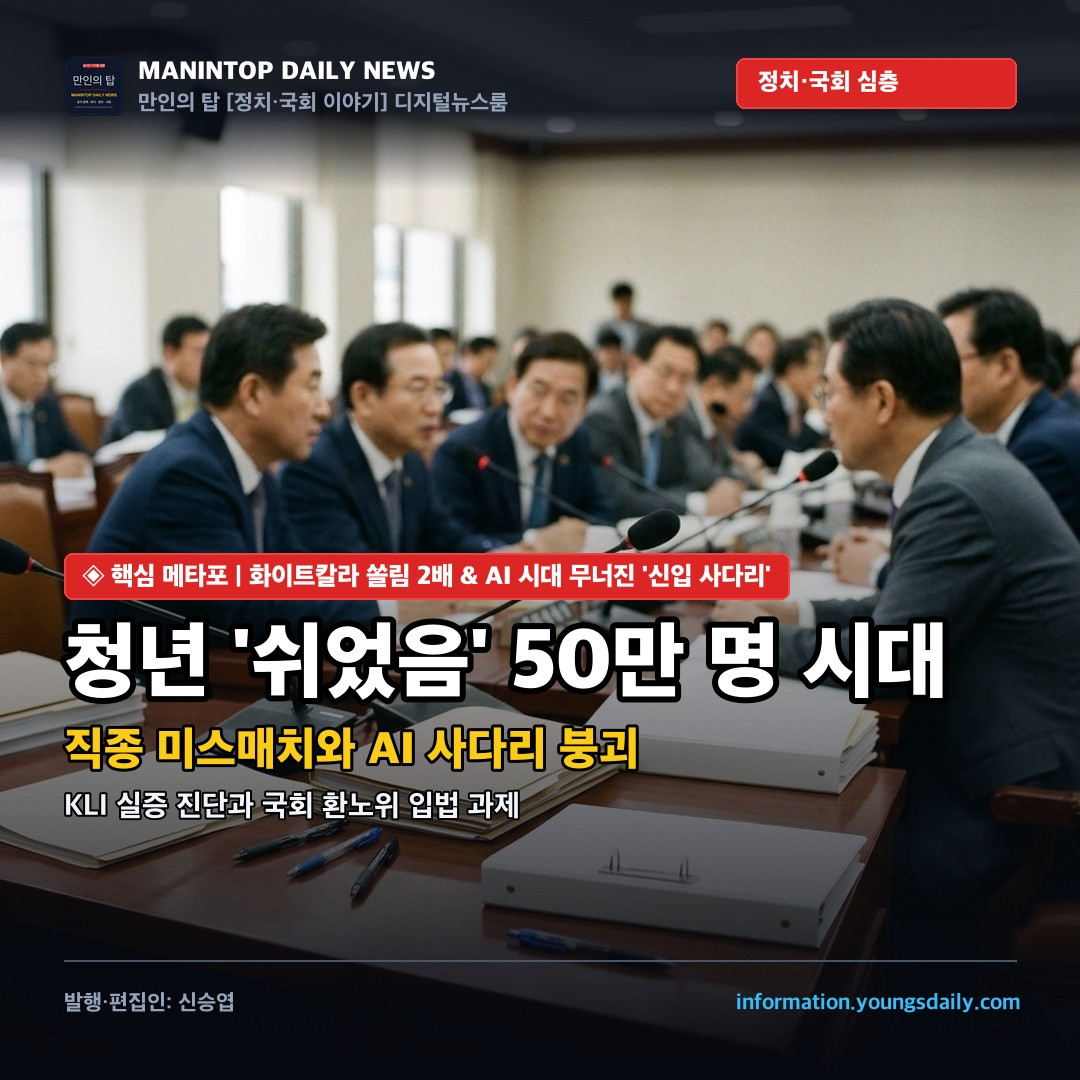
▲ 국회 환경노동위원회 회의실에서 여야 의원들과 노동 경제학 전문가들이 청년 고용 절벽 및 직종 미스매치 실태 보고서를 검토하고 있다. / 보도자료사진
◈ 핵심 팩트 브리핑 (Key Fact Briefing)
청년 실업률 4.9%와 '쉬었음' 청년 50.4만 명 돌파: 전체 실업률(2.0%)의 2.4배에 달하는 청년 고용 한파 속에서 구직을 중단한 비경제활동 청년이 역대 최대치를 경신
한국노동연구원(KLI) 직종 미스매치 지수 5.2% 실측: 경영·사무·금융직 구직자가 최적 수치의 2배 이상 과다한 반면, 보건의료·건설·생산 현장은 심각한 구인난 직면
앤트로픽 사태와 주니어 일자리 사다리 붕괴: AI 자율 에이전트 도입으로 주니어 기술직 채용 비중이 27%에서 9%로 폭락하고 국내 감소 일자리의 98.6%가 AI 노출 업종에 집중
국회 환경노동위원회 입법 대안: 독일 '역량강화기회보장법' 및 싱가포르형 사전 예방 고용안정망을 벤치마킹한 직무 전환 훈련 및 중소기업 황금티켓 격차 해소 입법 추진
대한민국 청년층 노동시장이 전체 취업자 증가세 속에서도 홀로 한파를 겪으며 '쉬었음' 인구 50만 명을 돌파한 가운데, 일자리 수급 불균형에 따른 청년 직종 미스매치 실업의 장기화와 생성형 인공지능(AI) 확산으로 인한 신입 채용 사다리 붕괴를 해결하기 위해 국회와 정부의 전면적인 입법 및 고용안정망 개편이 시급한 과제로 떠올랐다. 단순히 일자리 총량 부족이 아니라 화이트칼라 쏠림과 급변하는 기업 채용 생태계가 맞물린 구조적 복합 위기에 대응하여 국회 환경노동위원회 중심의 제도적 대안 마련이 본격화되고 있다.
1. 전체 고용 회복 속 청년 노동시장의 나홀로 한파와 50만 '쉬었음'의 진실
국가데이터처의 최신 고용동향에 따르면 15세 이상 전체 취업자 수는 전년 대비 18만 4천 명 증가했으나, 청년층(15~29세) 취업자는 14만 3천 명 감소하며 46개월 연속 감소세를 이어갔다. 전체 실업률이 2.0%로 안정세를 보이는 반면 청년 실업률은 4.9%로 2.4배에 달하며, 청년 고용률은 45.1%까지 떨어져 16개월 연속 하락했다.
특히 구직 활동을 완전히 멈춘 '쉬었음' 청년이 2025년 3월 기준 50.4만 명으로 역대 최대치를 기록했다. 일각에서는 청년들의 과도한 취업 눈높이를 원인으로 지목하지만, 한국은행 분석 결과 쉬었음 청년의 평균 희망 임금은 연 3,100만 원으로 일반 구직자와 동일했으며, 절반에 가까운 48%가 중소기업 취업을 희망한 것으로 나타나 통념과 달랐다. 결국 졸업 후 첫 취업까지 11.5개월이 소요되고 3년 이상 미취업자가 23.8만 명에 이르는 등 진입 장벽의 고착화가 핵심 요인으로 확인된다.
2. 한국노동연구원(KLI) 분석: 3대 미스매치와 화이트칼라 쏠림의 구조적 덫
한국노동연구원(KLI)의 실증 분석 보고서에 따르면, 청년 실업을 심화시키는 가장 치명적인 축은 '직종 미스매치'로 실측 지수가 5.2%에 달했다. 경영·사무·금융직(코드 0)의 경우 실제 구직자 수가 시장의 최적 수요보다 2배 이상 초과 밀집되어 극심한 채용 병목을 유발하고 있다.
반면 건설·채굴직(코드 7), 보건·의료직(코드 3), 설치·정비·생산직(코드 8)은 구직자 1인당 빈 일자리 수가 크게 웃돌아 극심한 구인난을 겪고 있다. 학력 측면에서도 학사 이상 고학력 청년 구직자는 5만 4천여 명 과다한 반면 전문학사급 기술 인력은 4만 2천여 명 부족해, 일자리 조건과 인력 공급 간의 구조적 괴리가 국가적 청년 실업을 고착화시키는 것으로 분석되었다.
▲ 첨단 AI 인력 양성 훈련 센터에서 청년 구직자들과 전문 멘토들이 실무 데이터 분석 및 AI 협업 워크플로우를 실습하고 있다. / 보도자료사진
노동시장 분석 지표
전체 취업 지표
청년층 실측 통계 (15~29세)
구조적 격차 및 정책적 시사점
실업률
2.0%
4.9%
전체 실업률의 2.4배 수준 고착화
고용률
63.3%
45.1%
16개월 연속 하락세, 전체와 18.2%p 격차
직종 미스매치 지수
3.06% (전 연령)
5.2% (최대 7.8%)
경영사무 구직자 최적의 2배 초과 vs 보건·건설 부족
'쉬었음' 비경제활동 인구
-
50.4만 명
20~34세 미취업 쉬었음 청년 6년 새 16만 명 급증
3. AI 혁명과 기술 전환의 역습: 앤트로픽 사태와 주니어 일자리 사다리의 붕괴
여기에 생성형 AI와 자율 에이전트의 급속한 산업 도입은 청년들의 초급 직무 진입로를 근본적으로 파괴하고 있다. 글로벌 AI 선도기업 앤트로픽(Anthropic)의 내부 운영 데이터 분석에 따르면, 사내 클로드 AI 에이전트의 작업 시간이 인간 관리자의 6배에 달하면서 기술 부서 내 주니어(신입) 채용 비중은 2025년 초 27%에서 2026년 8월 9%로 수직 낙하했다.
국내 고용시장에서도 이러한 충격이 가시화되고 있다. 한국은행과 KDI 진단 결과, 최근 3년간 감소한 국내 청년 일자리 21만 1천 개 중 무려 98.6%(20만 8천 개)가 AI 노출도가 높은 직종군에 집중되었다. 과거 임시직(2차 시장)에서 상용직(1차 시장)으로 올라서던 청년 이동 비율도 3.5%에서 1.6%로 반토막 나며, 신입으로서 경력을 쌓아 성장할 수 있는 '직무 사다리' 자체가 사라지고 있다.
4. 정기 공채 종말과 88% '중고신입' 선호: '모티베이션 핏' 중심 채용 재편
기업들의 채용 전략 역시 대규모 정기 공채 중심에서 직무 중심 수시 채용으로 완전히 재편되었다. HR 플랫폼 사람인이 기업 662개사를 설문 조사한 결과, 기업의 87.9%가 신입 채용 시 실무에 즉시 투입 가능한 '중고신입'을 선호한다고 응답했다. 실제로 최근 입사한 신입사원 3명 중 1명 이상(35.9%)이 평균 1.9년의 실무 경력을 보유한 중고신입으로 채워졌다.
기업들은 단순한 자격증 스펙이나 조직 순응도(Culture Fit)를 넘어, 생성형 AI를 능동적으로 도구화하고 직무에 대한 진정성 있는 몰입을 증명하는 '모티베이션 핏(Motivation Fit)'을 핵심 채용 평가 기준으로 내세우고 있다. 이는 첫 직무 경험을 갖지 못한 대다수 졸업 예정자들에게 가혹한 진입 장벽으로 작용하고 있다.
채용 환경 변화 항목
실측 데이터 및 통계
기업 현장 세부 사유
청년 노동시장 파급 영향
기업 '중고신입' 선호도
87.9% 선호
즉시 실무 투입(79.0%), 교육비·시간 절감(48.5%)
신입 중 35.9%가 경력자, 평균 선호 연차 1.9년
앤트로픽 주니어 채용
27% ➔ 9% 폭락
AI 에이전트 작업 시간이 인간의 6배 초과
코딩 등 초급 공고 소멸, 메타 작업 비중 22% 급증
국내 청년 일자리 감소
98.6% AI 노출 직종
감소 일자리 21.1만 개 중 20.8만 개 집중
2차 노동시장에서 상용직 이동 확률 1.6%로 반토막
평가 기준 패러다임
모티베이션 핏(Fit)
단순 스펙 벗어나 직무 몰입 및 자율성 중시
직무 미경험 대학 졸업생 진입 난이도 가중
5. 국회 환경노동위원회의 입법 과제: 독일·싱가포르형 사전 예방 고용안정망 구축
이에 따라 국회 환경노동위원회는 청년 미스매치 해소와 AI 시대 노동시장 전환을 뒷받침할 5대 입법 패키지 구축에 착수했다. 독일의 '역량강화기회보장법'을 벤치마킹하여 실업 후 사후 지원이 아닌 재직 및 구직 단계에서 AI 직무 전환 교육비와 훈련 수당을 최대 100% 보장하는 사전 예방적 고용안정망 법제화가 핵심이다.
아울러 싱가포르의 4,600억 원 규모 인력 전환 패키지와 같이 기업이 인력을 감원하는 대신 AI 직무에 맞춰 내부 재배치하도록 세제 혜택과 인센티브를 부여하는 법안이 논의되고 있다. 고용노동부가 추진 중인 '한국형 카나리아 대시보드'와 2030년까지 100만 명 AI 직업훈련 계획을 법률적으로 뒷받침하는 입법 절차도 병행된다.
나아가 대기업과 중소기업 간 원하청 차별을 철폐하고 블루칼라·현장 일자리의 안전과 정당한 보상 체계를 보장함으로써 청년층의 자발적 직무 이동을 유도해야 한다는 목소리가 높다. 국회가 정쟁을 넘어 청년 고용의 구조적 난맥상을 끊어내고 유연하면서도 두터운 노동 전환 안전망을 신속히 입법화할 때 비로소 50만 쉬었음 청년들이 미래 산업의 핵심 주역으로 다시 설 수 있을 것이다.
신승엽 (Seung Youb Ssin, Ph.D.) 정치·국회 전문기자 / 공학박사 무단 전재 및 재배포 금지
[In-Depth Policy Analysis] 500,000 Inactive Youths and Occupational Mismatch: Legislative Priorities for the National Assembly Amid the AI Transition
▲ Lawmakers and labor economics researchers review statistical dossiers on youth workforce detachment and occupational mismatch at the National Assembly. / Press Documentation
◈ Core Fact Briefing
Youth Unemployment at 4.9% and 504,000 Inactive Youth: Running 2.4 times higher than the nationwide aggregate, youth detachment reaches historic peaks amidst sustained labor market headwinds.
KLI Occupational Mismatch Quantified at 5.2%: White-collar administrative and financial candidates exceed optimal benchmarks by over twofold, while healthcare, construction, and technical fields suffer acute shortages.
The Anthropic Paradigm and Vanishing Junior Entry Points: Autonomous AI workflows trigger a plunge in junior engineering hiring from 27% to 9%, with 98.6% of lost domestic youth jobs concentrated in high-exposure roles.
Parliamentary Environment and Labor Committee Legislative Reforms: Advancing proactive safety nets modeled on German and Singaporean retraining frameworks alongside statutory interventions targeting labor market dualism.
Amidst an uneven recovery where aggregate domestic employment figures rise while the youth labor market confronts a deep freeze driving over 500,000 young Koreans into inactive detachment, the structural entrenchment of youth occupational mismatch unemployment coupled with the rapid collapse of entry-level ladders caused by generative artificial intelligence has elevated comprehensive parliamentary legislative reforms and social safety net restructuring to urgent national imperatives. Addressing not mere job quantity shortages but severe white-collar overconcentration alongside mutating corporate hiring architectures, the National Assembly Environment and Labor Committee is actively formulating statutory frameworks to revitalize youth workforce integration.
1. The Solitary Chill in Youth Employment and the Reality of 500,000 Inactive Youth
According to comprehensive workforce data released by the national statistical agency, total domestic employment increased by 184,000 year-on-year, yet youth employment between ages 15 and 29 contracted by 143,000, extending an uninterrupted contraction trajectory spanning 46 consecutive months. While the nationwide unemployment rate stabilized at 2.0 percent, youth unemployment climbed to 4.9 percent—more than 2.4 times the national average—pulling youth employment rates down to 45.1 percent across 16 months of sustained decline.
Crucially, the population of inactive youth who have entirely halted job-seeking activities surpassed 504,000 in March 2025, reaching an all-time statistical peak. Countering conventional narratives attributing this phenomenon to inflated job expectations, empirical research by the Bank of Korea revealed that the average desired annual compensation of inactive youth stood at 31 million KRW—identical to actively seeking peers—while nearly 48 percent explicitly expressed a willingness to work for small-and-medium enterprises. With the transition from graduation to initial employment lengthening to an unprecedented 11.5 months and over 238,000 youth remaining unplaced after three years, systemic institutional hurdles represent the decisive barrier.
2. KLI Empirical Analysis: Three Mismatch Axes and the White-Collar Structural Trap
Empirical investigations conducted by the Korea Labor Institute (KLI) establish that the most damaging structural axis remains occupational mismatch, yielding a calculated displacement index of 5.2 percent. Within corporate management, administration, and finance occupations (Classification Code 0), active job seekers outnumber optimal market demand by more than twofold, precipitating acute labor supply bottlenecks.
Conversely, critical vocations such as construction (Code 7), healthcare and social welfare (Code 3), and industrial equipment manufacturing (Code 8) experience severe shortages where available vacancies dramatically outpace labor supply. Compounding this dynamic, educational mismatch data demonstrates an oversupply of 54,000 university graduates contrasted against an acute deficit of 42,000 technical college graduates, reinforcing deep structural imbalances that perpetuate systemic youth unemployment.
▲ Young job candidates and industry mentors analyze workflow telemetry and human-AI supervision frameworks at an enterprise vocational training center. / Press Documentation
Labor Market Indicator
National Aggregate Benchmark
Youth Demographic (Ages 15-29)
Structural Divergence & Policy Implications
Unemployment Rate
2.0%
4.9%
Sustained disparity exceeding 2.4 times national levels
Employment Ratio
63.3%
45.1%
Down across 16 consecutive months, trailing by 18.2%p
Occupational Mismatch Index
3.06% (All Ages)
5.2% (Peak 7.8%)
Administrative supply doubles optimal demand vs blue-collar deficits
Inactive Unemployed Youth
-
504,000 Persons
Ages 20-34 inactive without job search expanded by 160k in 6 years
3. The Backlash of the AI Revolution: The Anthropic Paradigm and Collapsing Junior Entry Ladders
Simultaneously, the aggressive enterprise deployment of generative AI agents is systematically dismantling entry-level professional pathways. Disclosed operating analytics from leading AI research firm Anthropic demonstrate that as autonomous Claude workflows scaled to six times the operational hours of human technical managers, the proportion of junior engineering hires within technical divisions plummeted from 27 percent in early 2025 to just 9 percent by August 2026, leading to a complete elimination of entry-level job requisitions.
Similar technological displacement reverberates across South Korea's domestic labor landscape. Joint analyses from the Bank of Korea and the Korea Development Institute indicate that of the 211,000 youth positions lost over the past three years, 98.6 percent (208,000 roles) were concentrated in occupations with high AI exposure. Concurrently, upward transitions from temporary positions to permanent primary labor markets halved from 3.5 percent to 1.6 percent, eliminating foundational corporate training grounds where early-career talent once acquired requisite competencies.
4. The Demise of Open Recruitment and 88% Preference for Experienced Rookies
Concurrently, corporate recruiting methodologies have permanently shifted away from standardized biannual open hiring rounds toward fragmented, just-in-time lateral recruitment. A nationwide survey of 662 employers conducted by HR platform Saramin found that 87.9 percent of enterprises decisively prefer hiring 'experienced rookies'—early-career professionals possessing an average of 1.9 years of prior domain exposure who require minimal onboarding investments. In practice, over 35.9 percent of recent entry-level recruits were filled by seasoned talent rather than university graduates.
Modern recruitment rubrics have evolved beyond credential inflation and generic cultural alignment toward evaluating 'Motivation Fit'—scrutinizing whether applicants possess genuine technical intentionality and autonomous problem-solving capabilities to effectively supervise AI co-pilots. This elevated operational threshold poses formidable entry barriers for unseasoned graduates lacking prior professional tenure.
Hiring Transformation Vector
Empirical Metric & Scale
Underlying Corporate Determinants
Youth Labor Market Repercussions
Experienced Rookie Preference
87.9% of Employers
Immediate deployment (79.0%), training expense cuts (48.5%)
35.9% of hires hold experience; average preferred tenure 1.9 years
Anthropic Junior Intake
Plunged from 27% to 9%
AI agents operational time exceeds human managers by 6x
Entry coding postings vanished; meta-work jumped to 22%
Domestic Youth Job Contraction
98.6% in AI-Exposed Roles
208,000 of 211,000 lost positions concentrated in high exposure
Upward mobility into permanent primary labor halved to 1.6%
Evaluative Criteria Shift
Motivation Fit Paradigm
Focus on intentional technical depth and autonomy
Heightened entry thresholds for unseasoned university graduates
5. Parliamentary Legislative Mandates: Structuring Preventive Safety Nets Modeled on Germany and Singapore
In response, the National Assembly Environment and Labor Committee has initiated legislative packaging centered on five institutional pillars designed to resolve labor mismatches and cushion AI technological transitions. Benchmarking Germany's Qualification Opportunities Act, lawmakers are prioritizing statutory frameworks that guarantee up to 100 percent of educational costs and substantial wage subsidies during proactive AI reskilling periods prior to unemployment onset.
Furthermore, statutory provisions mirroring Singapore's 460-billion-won Workforce Transformation Package are under active consideration, offering tax credits and wage incentives for enterprises that structurally redesign operational workflows to internally redeploy staff into AI orchestration roles rather than executing layoffs. These initiatives legally anchor the Ministry of Employment and Labor's Korean Canary Dashboard monitoring system and its roadmap to deliver AI vocational training to 1 million workers by 2030.
Ultimately, breaking structural labor dualism demands dismantling tiered subcontractor discrimination, enhancing safety standards, and ensuring equitable compensation across essential industrial and blue-collar sectors to foster organic workforce reallocation. By setting aside partisan division to swiftly enact flexible yet protective labor transition architectures, the National Assembly can dismantle the systemic bottlenecks trapping 500,000 inactive youth and restore sustainable employment pathways in the artificial intelligence era.
Dr. Seung Youb Ssin (Seung Youb Ssin, Ph.D.) Senior Political & Parliamentary Correspondent All Rights Reserved. Unauthorized duplication prohibited.
PRO SOURCING ENGINE만인의 탑 빅데이터 솔루션
★ 가입 시 600 크레딧(120회) 전원 무료
내가 찾는 상품 키워드, 지금 얼마나 검색될까?
네이버 월간 검색량 + 구글 볼륨 + 아이템스카우트 실시간 상품수와 경쟁강도 배지를 0.5초 만에 무료로 확인하세요.
MANINTOP NEWSLETTER
📬 만인의 탑 뉴스레터 무료 구독
오늘 보신 정책·시사 뉴스가 유익하셨나요? 매일 엄선되는 알짜 복지 혜택과 국회 실시간 속보를 이메일로 가장 먼저 받아보세요. (평생 무료)
1월이 시작되면 감기는 이미 우리 곁에 와 있습니다. 2월, 3월, 4월까지 이어지는 추위와 건조함은 코와 목을 가장 먼저 공격합니다. 아침에 일어나자마자 막혀 있는 코. 계속 흐르는 콧물. 괜히 칼칼해지는 목. 이 증상은 “시작”일 뿐입니다. 한 번 무너지면 일주일, 길면 한 달까지 끌고 갑니다. 약을 먹으면 잠깐 괜찮아집니다. 하지만 며칠 뒤 또 반복됩니다. 왜일까요? 감기는 ‘치료’의 문제가 아니라 ‘관리’의 문제이기 때문입니다. 대부분은 감기가 오고 나서 약을 찾습니다. 하지만 진짜 중요한 건 감기가 오기 전에 코와 목을 지키는 것입니다. 건조한 실내 공기, 차가운 바깥 공기, 눈에 보이지 않는 세균. 코와 목은 매일 공격받고 있습니다. 지긋지긋하죠! 그런데도 우리는 아무 준비 없이 버티고 있습니다. 이번 겨울도 그렇게 보낼 건가요? 사실 방법은 어렵지 않습니다. 코를 깨끗하게 관리하고, 목을 따뜻하게 보호하고, 점막을 촉촉하게 유지하고, 기관지를 미리 관리하고, 외부 공기를 차단하는 것. 이 다섯 가지만 꾸준히 해도 감기약 없이 겨울을 보내는 것이 충분히 가능합니다. 🔥 이제부터 그 방법을 하나씩 살펴보겠습니다. 🔥 1. 코와 목을 먼저 관리해야 하는 과학적 이유 감기의 대부분은 코 점막에서 시작됩니다. 국제 학술지 Nature Reviews Microbiology 와 Journal of Allergy and Clinical Immunology 에 실린 호흡기 감염 관련 연구들에서는, 감기 바이러스가 비강 상피세포에 먼저 부착해 증식한다는 점을 설명하고 ...
리모델링사업이 진행 중인 아파트를 매매할 때 “계약금 10%를 언제까지 내야 하느냐”는 질문이 특히 많이 나옵니다. 이주공고(이주 안내)가 7~11월쯤이라고 들으면, 그 시점에 맞춰 계약금도 움직일 것 같아서 더 헷갈리기 쉽습니다. 하지만 실제 납부기한은 ‘이주공고가 언제냐’만으로 자동 결정되지 않는 경우가 많습니다. 1) 계약금 10% 납부기한: 결국 ‘문서에 적힌 일정’이 기준 계약금 10%를 언제까지 납부해야 하는지는, 내가 서명하는 매매계약서(특약 포함) 와 사업주체/조합이 제시한 공고·안내문 에 적힌 납부 일정이 기준이 됩니다. 실제 공고문에서는 분양대금 납부의 큰 틀(계약금→중도금→잔금)을 먼저 안내하고, 상세 일정은 별도 표나 유의사항으로 제시하는 방식이 흔합니다. 또, 계약서 문구에 따라 지급 시점이 조건부로 설정될 수도 있습니다. 예를 들어 한 사례 소개 자료에서는 용역계약서에 잔금(10%) 지급시기가 “사업승인 후”로 기재되어 있었다는 점이 언급됩니다. 이런 식으로 ‘사업 단계’와 지급을 연동하는 문구가 들어가면, 질문의 답은 계약서 문구를 확인해야만 확정됩니다. 관련 내용은 링크 에서 문구 사례를 확인할 수 있습니다. 2) 입주자모집공고에서 확인되는 ‘납부 순서’와 잔금 마감 시점 공고문에 적힌 문구를 보면, 납부 순서와 잔금 마감에 대한 기준이 비교적 명확하게 제시되는 경우가 있습니다. 예를 들어 한 입주자모집공고에는 “분양금액(주택가격)은 계약금, 중도금, 잔금의 순서로 납부”하며 “잔금은 입주(열쇠 수령일) 전에 완납”해야 한다고 안내되어 있습니다. (문구 확인: 링크 ) 이 문구가 의미하는 바는 최소 2가지입니다. 분양/공급 형태의 문서에서는 ‘계약금→중도금→잔금’ 흐름이 공식적으로 안내될 수 있습니다. 잔금은 “입주(열쇠 수령)” 이전에 완납해야 한다는 마감 기준이 문서에 적혀 있을 수 있습니다. 다만, 위 공고문 문구는 잔금 마감에 대한 기준을 보여주지만, 계약금 10%의...
윤석열 전 대통령 탄핵 인용 소식을 접하면, 가장 궁금한 지점은 ‘헌재가 정확히 무엇을 위헌·위법으로 봤는가’입니다. 또한 탄핵과 별개로 진행되는 형사재판(내란 우두머리 혐의 등)이 어디까지 왔는지도 함께 정리할 필요가 있습니다. 아래 내용은 제공된 기사/게시물 스니펫과 링크에서 확인되는 범위만 모아, 일반인이 흐름을 이해하기 쉽게 정리한 것입니다. 1) 탄핵 인용 관련: 스니펫에서 확인되는 ‘판단의 골격’ 제공된 근거 중 조국혁신당 사이트에는 헌법재판소가 윤석열 탄핵 심판에서 “피청구인의 위헌·위법행위는 국민 신임 …”이라는 취지로 판단했다는 문장이 인용돼 있습니다( 링크 ). 이 인용문만 놓고 보면, ‘위헌·위법행위’가 있었는지와 그로 인해 ‘국민의 신임’이 어떻게 평가됐는지가 핵심 축으로 소개됩니다. 다만 질문에서 요청하신 세부 항목, 즉 비상계엄 선포 자체를 문제 삼은 구체적 이유, 계엄 이후 조치(포고령, 국회 통제 등)의 어떤 지점이 헌법 위반인지, 국회의 권한행사 방해 및 정치활동 제약을 어떤 논리로 판단했는지 등은, 이번에 제공된 근거의 제목/스니펫만으로는 조항·사실관계·판단 구조가 그대로 제시돼 있지 않습니다. 따라서 이 글에서는 ‘헌재가 무엇을 문제 삼았다’는 세부 리스트를 단정적으로 재구성하기보다, 현재 확인 가능한 문구 수준의 요약(위헌·위법행위 → 국민 신임의 문제로 평가)까지만 적습니다. 만약 헌재 결정문 전문(주문 및 이유)이 추가로 확인되면, 그때는 문장 단위로 ‘어떤 행위’와 ‘어떤 헌법 원리/조항’이 연결되는지(예: 권력분립, 국회의 권한, 정치적 기본권 등) 구조화해 정리하는 것이 가장 정확합니다. 2) 형사 절차(내란 혐의) 관련: 체포영장과 1심 선고 언급 탄핵 심판과 별도로, 12·3 비상계엄 사태로 내란 혐의를 받는 윤석열 대통령에 대해 2024년 12월 31일 체포 영장이 발부됐다는 BBC 보도가 있습니다( 링크 ). 해당 보도는 ‘현직 대통령’에 대한 체포영장 발부라는 점을 함께 언급합니다. 또...