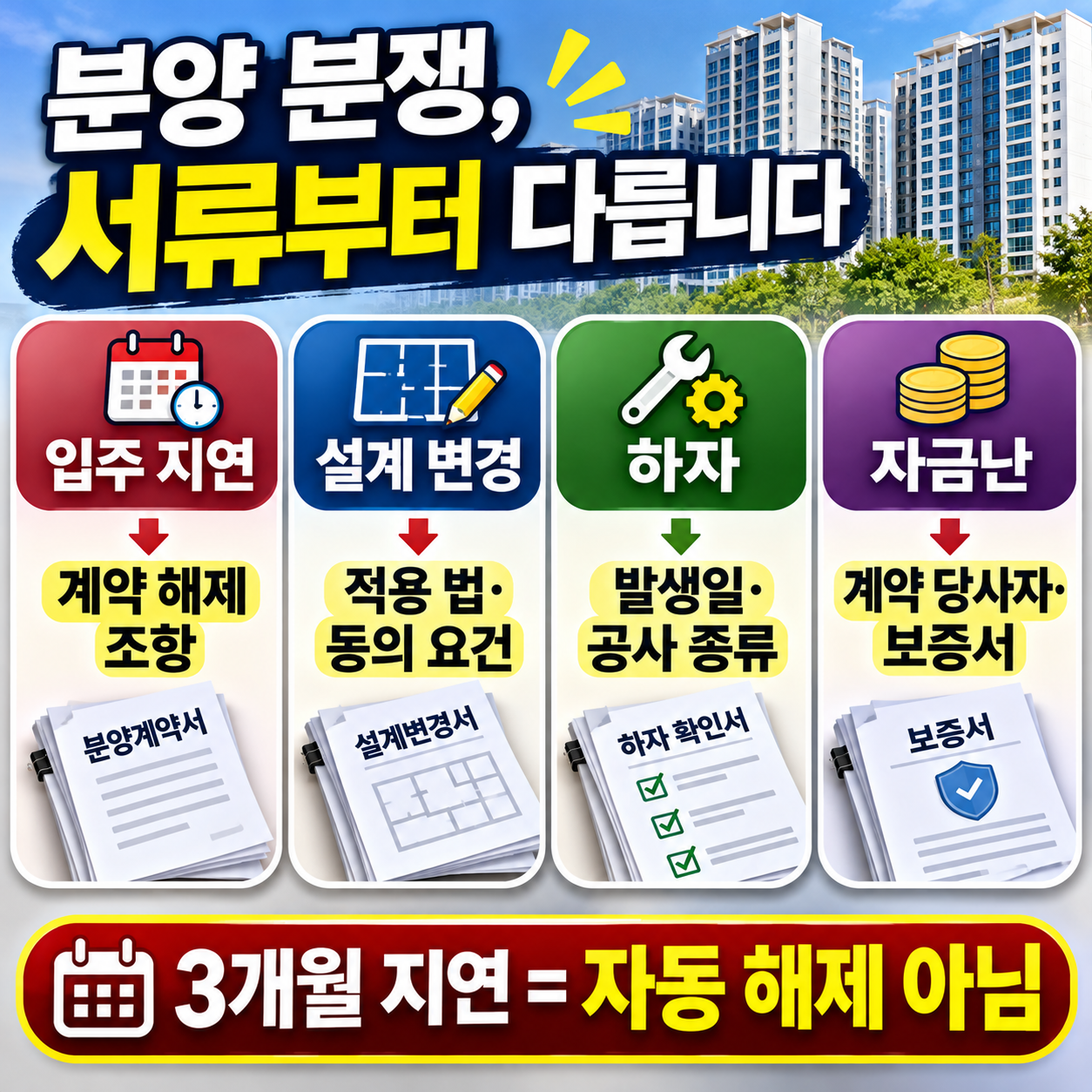
분양 분쟁의 네 가지 쟁점과 확인할 문서. 지정 GPTs로 제작한 인공지능 설명 이미지이며 실제 현장 사진이 아닙니다.
만인의 탑 편집국
새 아파트나 오피스텔에 문제가 생겼다고 해서 모든 분쟁을 같은 방법으로 해결할 수는 없다. 입주 지연은 계약상 약속한 날짜와 해제 조건, 설계 변경은 적용 법률과 변경 내용, 입주 후 하자는 발생 시점과 공사 종류가 핵심이다. 시행사의 자금난이 겹쳤다면 분양보증의 가입 내용도 따로 확인해야 한다.
‘3개월만 늦으면 무조건 계약 해제’, ‘하자는 모두 10년’, ‘신탁사가 있으니 전액 안전’이라는 짧은 설명만 믿고 움직이면 중요한 조건을 놓칠 수 있다. 계약서와 모집공고, 변경 통지, 납부 내역, 하자 기록을 쟁점별로 나눠 살피는 것이 출발점이다.
입주 지연: 날짜를 세기 전에 해제 조항부터
계약에 입주 지연을 이유로 한 해제 조항이 있다면 먼저 그 문장을 그대로 읽어야 한다. 계약을 맺을 때 정한 해제권을 약정해제권이라고 한다. 어느 날짜부터 지연을 계산하는지, 어느 정도의 지연을 요구하는지, 예외나 통지 절차가 있는지가 계약마다 쟁점이 된다.
인터넷에서 본 ‘3개월’이나 ‘위약금 10%’를 모든 계약에 적용되는 법정 기준으로 옮겨 적어서는 안 된다. 지연이 사실인지와 계약을 해제할 수 있는지, 이미 낸 돈을 돌려받는 범위와 추가 배상을 받을 수 있는지도 각각의 문제다. 사용승인 여부만으로 모든 계약의 해제 가능성을 일률적으로 결론 내리기도 어렵다.
실무적으로는 원래 계약서의 입주예정일, 이후 변경 합의, 사업자가 보낸 입주 안내, 실제 이행 상태와 자신의 통지 내역을 시간순으로 묶어두면 쟁점이 선명해진다. 지연 동의서를 받았다면 바뀌는 날짜뿐 아니라 지체보상과 해제권에 관한 문구도 함께 살핀다. 서명했다는 사실만으로 모든 권리가 사라진다고 단정하지도, 작은 혜택만 보고 영향이 없다고 판단하지도 않아야 한다.
계약 조항의 중요성을 보여주는 사례가 대법원 2025년 12월 24일 선고 2025다215248 판결이다. 오피스텔 분양계약에서 매도인이 건축물분양법상 시정명령을 받은 경우 계약을 해제할 수 있도록 정한 조항이 문제 됐다. 대법원은 해당 문언에 없는 ‘중대한 위반이어야 한다’는 조건을 덧붙여 해제권을 부정한 원심을 파기환송했다. 모든 지연 사건에서 해제를 인정했다는 판결이 아니라, 그 계약의 구체적 해제 조항을 해석한 사건이다. 대법원 판결 원문
설계 변경: ‘아파트 80%, 오피스텔 전원’으로 외우면 놓치는 개정
설계 변경 동의율은 건물의 이름만 보고 결정할 수 없다. 어떤 법의 적용을 받는 사업인지, 모집공고 이후인지, 변경 내용이 법에서 정한 대상인지부터 봐야 한다.
주택법 시행규칙 제13조는 모집공고 후 일정한 사업계획 변경의 승인을 제한하면서, 입주예정자에게 미리 알리고 80% 이상 동의를 받으면 예외를 인정한다. 대상에는 계약된 주택의 공급가격 변경을 일으키는 사업비 증액, 세대당 공급면적·대지지분 변경 등이 있다. 다만 공용면적·대지지분의 일정 범위 변경 등 법문에 예외가 있으므로 ‘어떤 변경이든 80%’라는 규칙은 아니다. 변경승인을 받은 뒤에는 14일 이내 문서 통보 규정도 있다. 주택법 시행규칙 제13조
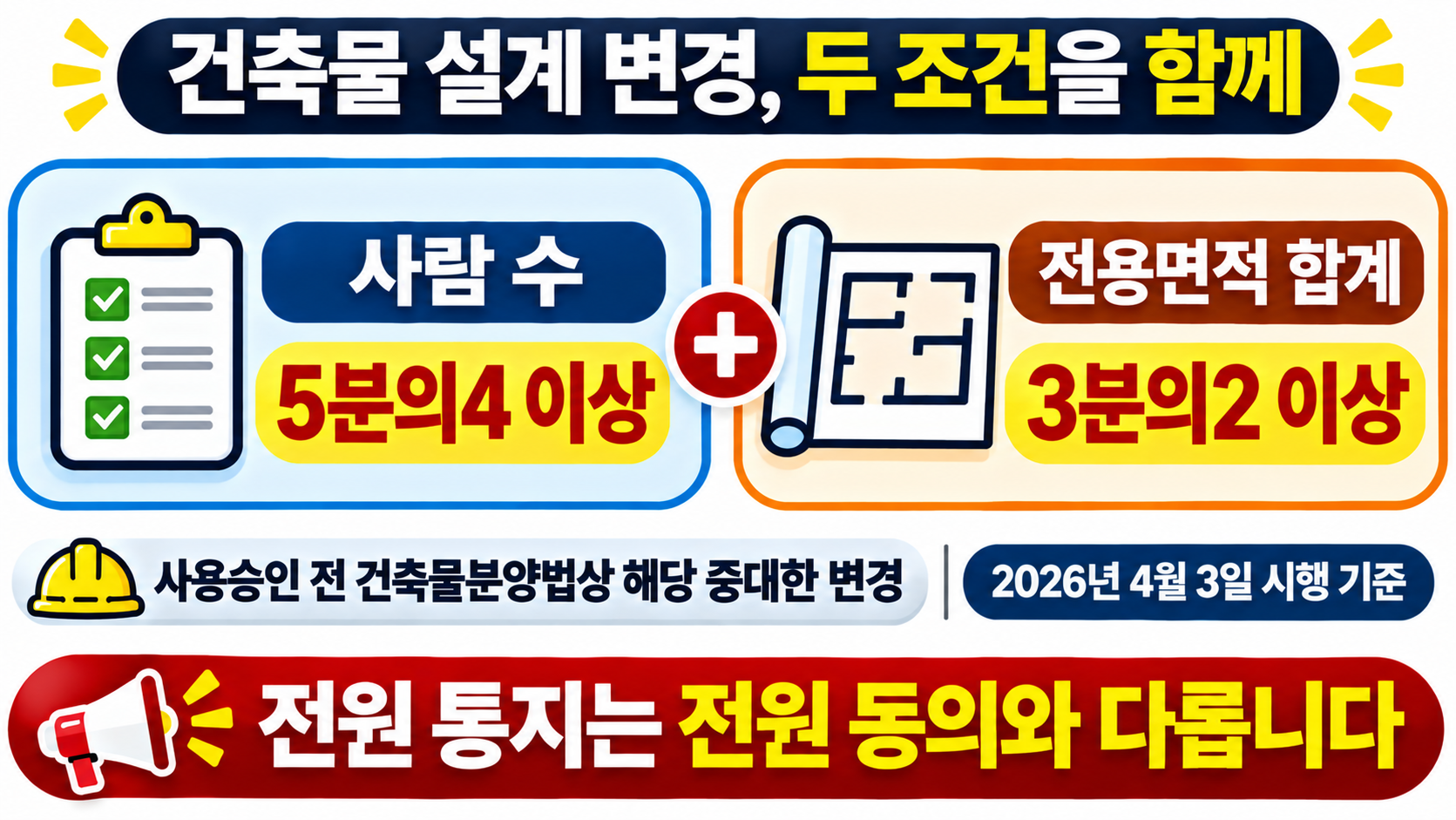
건축물분양법은 2026년 4월 3일 시행된 개정 내용을 확인해야 한다. 제7조는 사용승인 전에 이루어지는 법정 중대한 설계 변경에 대해 현재 분양받은 사람의 5분의 4 이상 동의를 요구한다. 동시에 동의한 사람들이 분양받은 전용면적 합계가 전체 분양 전용면적의 3분의 2 이상이어야 한다. 사람 수와 면적이라는 두 조건을 모두 보는 것이다. 과거의 전원 동의 설명을 현재 규정으로 쓰면 맞지 않는다. 건축물분양법 제7조
예를 들어 분양받은 사람이 100명이고 전체 분양 전용면적이 9,000㎡라고 가정하면, 사람 수 기준은 최소 80명, 면적 기준은 최소 6,000㎡다. 80명이 동의했더라도 그들의 면적 합계가 5,500㎡라면 두 번째 기준은 충족하지 못한다. 이는 계산을 설명하는 가정이며 실제 단지의 동의 집계 결과가 아니다.
중대한 변경에 해당하지 않는 변경 중 국토교통부령이 정한 것은 미리 전원에게 알리는 규정이 별도로 있다. ‘전원에게 통지’와 ‘전원 동의’는 다르다. 개정법에는 변경에 동의하지 않았고 그 변경 때문에 필요한 인허가 등을 받지 못해 분양광고의 용도로 사용할 수 없게 된 사람의 해제 규정도 신설됐다. 단순히 반대했다는 사실만으로 모두 해제할 수 있다는 뜻은 아니다. 과거 변경을 다투는 사건이라면 변경 시점의 법과 계약까지 함께 검토해야 한다. 개정 내용과 부칙
건축물분양법상 해당 중대한 설계 변경의 인원·전용면적 동의 조건. 지정 GPTs로 제작한 인공지능 설명 이미지이며 실제 현장 사진이 아닙니다.
하자: 어디에, 언제, 어떤 공사에서 생겼는가
하자를 기록할 때는 ‘집에 문제가 있다’보다 위치와 증상을 나누는 편이 유용하다. 방·벽·창호·배관 등 위치, 발견 날짜, 비가 올 때인지 평소에도 생기는지, 수리 후 다시 발생했는지를 남긴다. 사진은 전체 위치를 보여주는 컷과 가까이서 상태를 보여주는 컷을 함께 보존한다. 보수 요청 날짜와 접수 번호, 답변도 같은 목록에 붙인다.
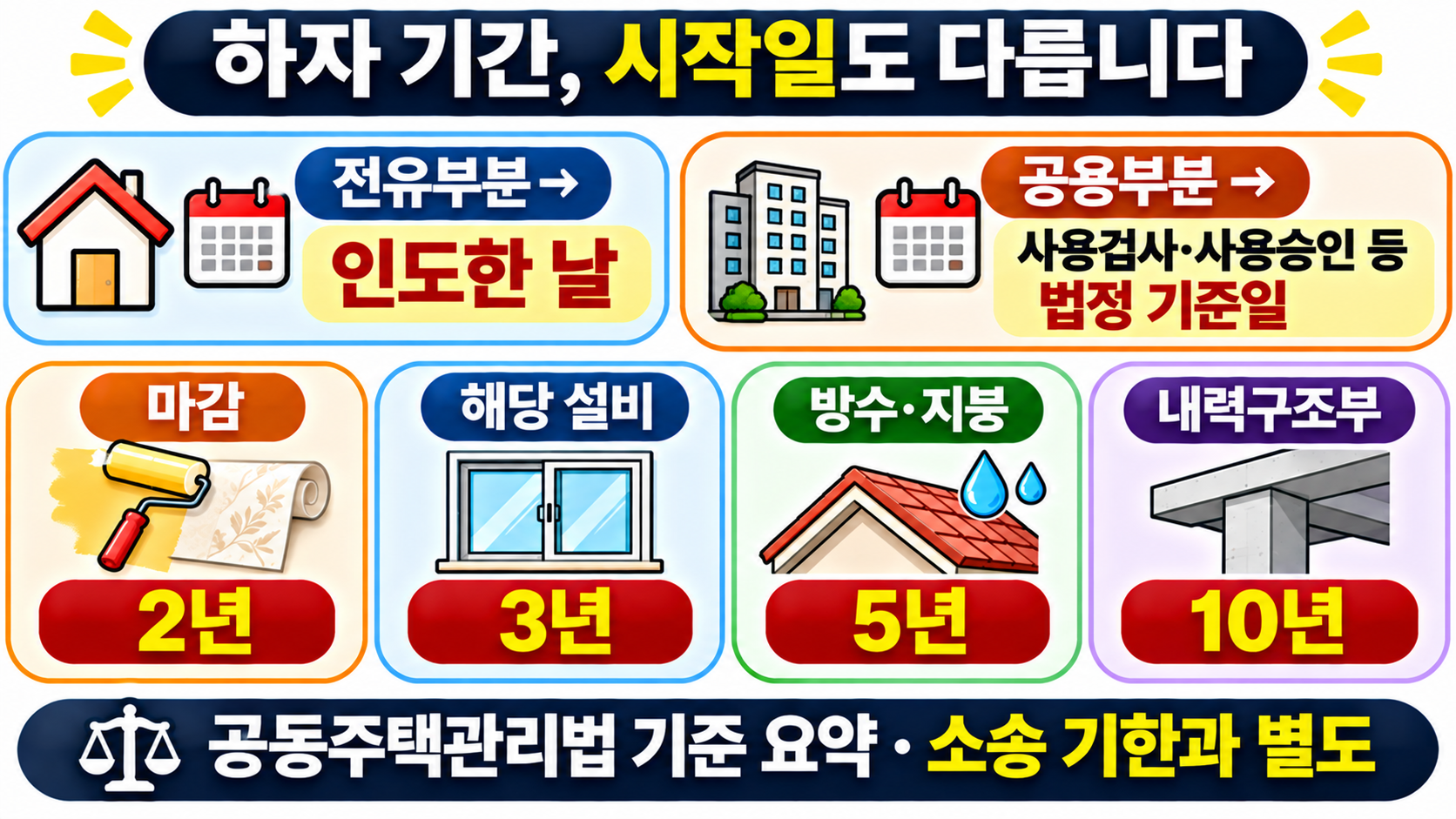
공동주택관리법상 담보책임기간은 전유부분과 공용부분의 시작일이 다르다. 전유부분은 입주자에게 인도한 날, 공용부분은 사용검사일이나 사용승인일 등 법에서 정한 날을 기준으로 한다. 계약 체결일이나 잔금 납부일을 무조건 시작일로 잡으면 안 된다. 공동주택관리법 제36조
공사·부위의 구분
담보책임기간 예시
확인할 점
도배·도장·타일 등 마감공사
2년
어떤 마감공사에서 생긴 하자인지
급배수·난방·창호 등 해당 시설공사
3년
별표의 세부 공종과 일치하는지
방수·지붕 등 해당 시설공사
5년
누수 증상과 원인 공종을 구분
법령상 내력구조부 하자
10년
단순 표면 균열과 구조안전상 하자를 구분
표는 공동주택관리법 시행령 제36조와 별표4의 구분을 요약한 것으로, 모든 건물·모든 계약의 소송 기한을 정한 표가 아니다. 담보책임기간과 손해배상청구권의 소멸시효 등은 따로 검토해야 한다. 오래된 공동주택에는 당시 법령과 경과 규정의 확인도 필요하다. 시행령 제36조 · 시설공사별 기간 원문
공동주택 하자의 기산점과 공종별 기간을 구분한다. 지정 GPTs로 제작한 인공지능 설명 이미지이며 실제 현장 사진이 아닙니다.
입주자대표회의가 보수를 요구하는 것과 배상을 청구하는 것은 다르다
입주자대표회의가 건설사에 수리를 요청하는 절차와, 구분소유자가 가진 손해배상채권을 양도받아 금전을 청구하는 소송은 구별해야 한다. 구분소유자는 아파트 각 세대처럼 건물의 구분된 부분을 소유한 사람이다.
대법원 판례는 입주자대표회의의 하자보수청구권이 곧바로 보수 대신 돈을 받을 권리까지 뜻하는 것은 아니라고 설명한다. 소유자들의 손해배상채권을 양도받아 청구하는 구조라면 누가 어떤 채권을 넘겼는지, 양도와 통지가 적절히 이뤄졌는지를 확인해야 한다. 단지 대표회의가 소송을 냈다는 사실만으로 모든 세대의 권리가 같은 날 행사된다고 볼 수 없다.
실제로 대법원은 권리가 없는 상태에서 낸 소송의 최초 제기일이 아니라, 채권을 양수해 청구원인을 변경한 시점을 시효 중단과 관련해 판단한 바 있다. 따라서 ‘먼저 소장만 내면 모든 기한이 해결된다’는 접근은 피해야 한다. 보수 요청 기록, 소유권 변동, 채권양도 서류와 소송상 청구 내용을 함께 검토할 필요가 있다. 관련 대법원 하자 손해배상 판결
시행사 자금난: 브랜드보다 계약 당사자와 보증서를
시행사·시공사·신탁사의 역할을 구분하는 것은 필요하지만, 명칭만으로 책임을 확정할 수는 없다. 실제 매도인과 계약 당사자가 누구인지 계약서 서명란을 확인해야 한다. 앞서 소개한 오피스텔 판례에도 신탁회사가 매도인으로 등장한다. ‘분양계약 상대방은 언제나 시행사뿐’이라고 정리할 수 없는 이유다.
주택도시보증공사 HUG의 주택분양보증은 보증 대상과 조건에 따라 분양 이행 또는 납부한 계약금·중도금의 환급을 책임지는 상품이다. 시행사의 부도 소식만으로 모든 계약이 자동 해제되고 그날 돈이 돌아오는 구조는 아니다. 보증번호, 대상 사업장, 본인이 납부한 계좌와 금액, 해당 보증의 약관을 묶어 확인해야 한다. HUG 주택분양보증 개요
HUG의 공식 절차 안내는 고객 3분의 2 이상이 환급을 선택하면 환급이행으로 결정하고, 그 밖에는 공사가 이행 방법을 결정하는 구조를 설명한다. 계속사업 등 세부 조건도 있으므로 개인이 원할 때마다 환급과 공사 완공을 자유롭게 바꾸는 제도로 이해하면 안 된다. 환급 대상에서 제외되는 채무도 약관에 따라 따로 판단한다. HUG 분양보증 이행절차
상담에 가져갈 자료를 네 묶음으로 정리한다
첫 묶음은 계약서·모집공고·특약·변경 합의다. 두 번째는 납부 영수증·계좌 내역·보증서다. 세 번째는 입주 안내·설계 변경 통지·관청 처분 등 날짜가 있는 문서다. 네 번째는 하자 사진·발견일·보수 요청과 답변이다.
이 자료를 갖추면 ‘무조건 돌려받을 수 있나요’라는 질문을 ‘어떤 조항을 근거로 누구에게 무엇을 청구할 수 있나요’라는 구체적인 검토로 바꿀 수 있다. 분양 분쟁은 불편의 크기만으로 결론이 정해지지 않는다. 적용 법과 계약, 발생 시점, 권리를 가진 사람과 상대방을 정확히 연결하는 일이 권리 보전의 출발점이다.
자료 확인: 2026년 11월 20일. 개별 사건의 해제·배상 가능성을 확정하는 법률 자문은 아니다.
Delayed move-in, design changes and defects: different property disputes require different documents
Four types of property-sale dispute and the documents to check. AI editorial illustration created with the designated GPT; not a photograph of an actual event.
MANINTOP Newsroom
Problems with a new apartment or officetel cannot all be resolved in the same way. Delayed occupancy turns on the promised date and termination terms; design changes depend on the applicable law and the alteration; post-handover defects require evidence of when they arose and the type of work involved. If the developer faces financial trouble, the sales guarantee must be examined separately.
Short rules such as “three months late means automatic termination,” “all defects are covered for ten years” or “a trustee guarantees full protection” can conceal decisive conditions. Start by separating the sale contract, recruitment notice, change notifications, payment records and defect evidence according to the issue.
Delayed occupancy: read the termination clause before counting days
If the contract contains a delay-related termination clause, read its actual wording. A contractual right to terminate is a right the parties agreed when contracting. The starting date, required length of delay, exceptions and notice procedures may each matter.
Figures found online, such as three months or a 10% penalty, should not be treated as statutory rules applying to every contract. Whether delay occurred, whether termination is available, what money must be returned and whether additional damages are payable are separate questions. Occupancy approval alone does not settle termination rights in every contract either.
Arrange the original promised date, later amendments, move-in notices, actual performance and your own notices chronologically. If asked to sign a delay agreement, examine compensation and termination wording as well as the new date. Neither assume that a signature destroys every right nor focus on a small benefit while dismissing its legal effect.
Supreme Court decision 2025Da215248, delivered on December 24, 2025, illustrates why wording matters. An officetel contract allowed termination where the seller received a corrective order under the building-sale legislation. The Supreme Court reversed and remanded a decision that had added a requirement for a “serious” violation not present in the clause. This interpreted the particular contractual termination provision; it did not establish a right to terminate every delayed development. Official judgment
Design changes: the old “80% for apartments, unanimity for officetels” shortcut misses an amendment
A building's label alone does not determine the consent requirement. Identify the governing legislation, whether the recruitment notice has been issued and whether the proposed alteration falls within the regulated category.
Article 13 of the Enforcement Rule of the Housing Act restricts approval of specified changes after the notice, allowing an exception following advance notification and consent from at least 80% of prospective occupants. Covered changes include increased project costs that change the price of contracted homes and changes to per-unit supply area or land shares. The text contains exceptions, including specified changes within limits to common area or land shares; it is not a rule requiring 80% consent for every alteration. Approved plan changes must also be notified in writing within 14 days. Article 13
For the Act on Sale of Building Units, check the amendment effective April 3, 2026. Its Article 7 now requires consent from at least four-fifths of buyers for the specified significant design changes made before approval for use. The exclusive-use area purchased by those consenting must also total at least two-thirds of all exclusive-use area sold. Both the headcount and area tests apply. Presenting the previous unanimity requirement as the current rule would be inaccurate. Article 7
For an illustrative project with 100 buyers and 9,000 square metres of sold exclusive-use area, the thresholds would be at least 80 buyers and 6,000 square metres. Consent from 80 buyers holding only 5,500 square metres would fail the second test. These are hypothetical calculations, not actual voting results from a development.
For certain other alterations specified by ministerial rule, there is a separate duty to notify every buyer in advance. Notifying everyone and obtaining everyone's consent are different. The amendment also introduced termination rights for a non-consenting buyer who, because of the change, cannot obtain required approvals or registrations and consequently cannot use the building for the advertised purpose. Opposition alone does not satisfy that rule. Disputes about past alterations require examination of the law and contract applicable at the relevant time. Amendment and supplementary provision
Headcount and exclusive-floor-area consent conditions for applicable major changes under the building-sale statute. AI editorial illustration created with the designated GPT; not a photograph of an actual event.
Defects: establish the location, date and type of work
A record saying only “there is a problem with the home” is less useful than one identifying the room, wall, window or pipe, discovery date, whether it occurs during rain or ordinary conditions, and whether it returned after repair. Keep photographs showing both the overall location and close-up condition. Add repair-request dates, reference numbers and responses to the same list.
Under the Multi-Family Housing Management Act, liability periods start differently for exclusive-use and common parts. For exclusive-use parts, the reference is handover to the resident; for common parts, it is the relevant use inspection or approval date specified by law. Neither the sale-contract date nor the final-payment date is automatically the starting point. Article 36
Work or component
Examples of liability periods
What to establish
Finishing, such as wallpapering, painting or tiling
Two years
The particular finishing work involved
Specified water, heating or window-related work
Three years
The matching category in the statutory table
Specified waterproofing and roof work
Five years
Distinguish a leak's symptoms from the work causing it
Defects in statutory load-bearing structural parts
Ten years
Distinguish surface cracking from structural-safety defects
This summarises Article 36 of the Enforcement Decree and its attached Table 4. It does not prescribe litigation deadlines for every building or contract. Defect-liability periods and limitation periods for damages claims require separate assessment. Older developments may also need the legislation and transitional provisions applicable at the time. Decree Article 36 · Official work-category table
Distinguish starting dates and statutory periods by defect category. AI editorial illustration created with the designated GPT; not a photograph of an actual event.
A residents' council demanding repairs is different from suing for damages
A council requesting repairs from a construction company is not the same as suing for money after receiving assigned damages claims from individual unit owners. A unit owner owns a separately defined part of the building, such as an apartment.
Supreme Court case law explains that the council's right to request repairs does not automatically include a right to receive damages instead. Where the action relies on assignments from owners, establish who assigned which claim and whether assignment and notification were properly completed. The fact that a council filed a lawsuit does not mean every household's rights were exercised on the same date.
In one case, the Court considered the point when the council amended its claim after acquiring the relevant rights, rather than its original filing while it lacked those rights, in determining interruption of limitation. Merely filing a complaint first should therefore not be assumed to resolve every deadline. Repair requests, ownership changes, assignment documents and the actual pleaded claims must be examined together. Related Supreme Court defect-damages decision
Financial trouble: examine the parties and guarantee, not only the brand
Distinguishing the developer, builder and trustee is useful, but their labels alone do not establish liability. Check the actual seller and contracting parties in the signature section. The officetel case discussed above included a trust company as seller. The contractual counterparty cannot invariably be described as only the developer.
HUG's housing-sale guarantee covers performance of the sale or repayment of paid deposits and interim payments, subject to its scope and conditions. News of a developer's insolvency does not automatically terminate every contract or produce a same-day refund. Assemble the guarantee number, covered development, payment accounts and amounts, and the applicable terms. HUG housing-sale guarantee overview
HUG's official process guidance describes refund performance where at least two-thirds of customers select it, with HUG determining the performance method otherwise. Further conditions, including continued-project arrangements, apply. Individuals should not assume they can freely switch between repayment and completion whenever they wish. Liabilities excluded from repayment must also be assessed under the terms. HUG performance procedure
Prepare four groups of documents for consultation
The first group is the contract, recruitment notice, special terms and amendments. The second contains payment receipts, account records and guarantee documents. The third contains dated move-in notices, design-change notifications and administrative decisions. The fourth contains defect photographs, discovery dates, repair requests and responses.
These records turn a vague question about guaranteed repayment into a concrete examination of which provision supports which claim against which party. Property disputes are not decided solely by the severity of inconvenience. Connecting the applicable law and contract with dates, rights holders and counterparties is the starting point for protecting a claim.
Sources checked November 20, 2026. This article does not determine termination or compensation rights in an individual case.
PRO SOURCING ENGINE만인의 탑 빅데이터 솔루션
★ 가입 시 600 크레딧(120회) 전원 무료
내가 찾는 상품 키워드, 지금 얼마나 검색될까?
네이버 월간 검색량 + 구글 볼륨 + 아이템스카우트 실시간 상품수와 경쟁강도 배지를 0.5초 만에 무료로 확인하세요.
MANINTOP NEWSLETTER
📬 만인의 탑 뉴스레터 무료 구독
오늘 보신 정책·시사 뉴스가 유익하셨나요? 매일 엄선되는 알짜 복지 혜택과 국회 실시간 속보를 이메일로 가장 먼저 받아보세요. (평생 무료)
1월이 시작되면 감기는 이미 우리 곁에 와 있습니다. 2월, 3월, 4월까지 이어지는 추위와 건조함은 코와 목을 가장 먼저 공격합니다. 아침에 일어나자마자 막혀 있는 코. 계속 흐르는 콧물. 괜히 칼칼해지는 목. 이 증상은 “시작”일 뿐입니다. 한 번 무너지면 일주일, 길면 한 달까지 끌고 갑니다. 약을 먹으면 잠깐 괜찮아집니다. 하지만 며칠 뒤 또 반복됩니다. 왜일까요? 감기는 ‘치료’의 문제가 아니라 ‘관리’의 문제이기 때문입니다. 대부분은 감기가 오고 나서 약을 찾습니다. 하지만 진짜 중요한 건 감기가 오기 전에 코와 목을 지키는 것입니다. 건조한 실내 공기, 차가운 바깥 공기, 눈에 보이지 않는 세균. 코와 목은 매일 공격받고 있습니다. 지긋지긋하죠! 그런데도 우리는 아무 준비 없이 버티고 있습니다. 이번 겨울도 그렇게 보낼 건가요? 사실 방법은 어렵지 않습니다. 코를 깨끗하게 관리하고, 목을 따뜻하게 보호하고, 점막을 촉촉하게 유지하고, 기관지를 미리 관리하고, 외부 공기를 차단하는 것. 이 다섯 가지만 꾸준히 해도 감기약 없이 겨울을 보내는 것이 충분히 가능합니다. 🔥 이제부터 그 방법을 하나씩 살펴보겠습니다. 🔥 1. 코와 목을 먼저 관리해야 하는 과학적 이유 감기의 대부분은 코 점막에서 시작됩니다. 국제 학술지 Nature Reviews Microbiology 와 Journal of Allergy and Clinical Immunology 에 실린 호흡기 감염 관련 연구들에서는, 감기 바이러스가 비강 상피세포에 먼저 부착해 증식한다는 점을 설명하고 ...
리모델링사업이 진행 중인 아파트를 매매할 때 “계약금 10%를 언제까지 내야 하느냐”는 질문이 특히 많이 나옵니다. 이주공고(이주 안내)가 7~11월쯤이라고 들으면, 그 시점에 맞춰 계약금도 움직일 것 같아서 더 헷갈리기 쉽습니다. 하지만 실제 납부기한은 ‘이주공고가 언제냐’만으로 자동 결정되지 않는 경우가 많습니다. 1) 계약금 10% 납부기한: 결국 ‘문서에 적힌 일정’이 기준 계약금 10%를 언제까지 납부해야 하는지는, 내가 서명하는 매매계약서(특약 포함) 와 사업주체/조합이 제시한 공고·안내문 에 적힌 납부 일정이 기준이 됩니다. 실제 공고문에서는 분양대금 납부의 큰 틀(계약금→중도금→잔금)을 먼저 안내하고, 상세 일정은 별도 표나 유의사항으로 제시하는 방식이 흔합니다. 또, 계약서 문구에 따라 지급 시점이 조건부로 설정될 수도 있습니다. 예를 들어 한 사례 소개 자료에서는 용역계약서에 잔금(10%) 지급시기가 “사업승인 후”로 기재되어 있었다는 점이 언급됩니다. 이런 식으로 ‘사업 단계’와 지급을 연동하는 문구가 들어가면, 질문의 답은 계약서 문구를 확인해야만 확정됩니다. 관련 내용은 링크 에서 문구 사례를 확인할 수 있습니다. 2) 입주자모집공고에서 확인되는 ‘납부 순서’와 잔금 마감 시점 공고문에 적힌 문구를 보면, 납부 순서와 잔금 마감에 대한 기준이 비교적 명확하게 제시되는 경우가 있습니다. 예를 들어 한 입주자모집공고에는 “분양금액(주택가격)은 계약금, 중도금, 잔금의 순서로 납부”하며 “잔금은 입주(열쇠 수령일) 전에 완납”해야 한다고 안내되어 있습니다. (문구 확인: 링크 ) 이 문구가 의미하는 바는 최소 2가지입니다. 분양/공급 형태의 문서에서는 ‘계약금→중도금→잔금’ 흐름이 공식적으로 안내될 수 있습니다. 잔금은 “입주(열쇠 수령)” 이전에 완납해야 한다는 마감 기준이 문서에 적혀 있을 수 있습니다. 다만, 위 공고문 문구는 잔금 마감에 대한 기준을 보여주지만, 계약금 10%의...
윤석열 전 대통령 탄핵 인용 소식을 접하면, 가장 궁금한 지점은 ‘헌재가 정확히 무엇을 위헌·위법으로 봤는가’입니다. 또한 탄핵과 별개로 진행되는 형사재판(내란 우두머리 혐의 등)이 어디까지 왔는지도 함께 정리할 필요가 있습니다. 아래 내용은 제공된 기사/게시물 스니펫과 링크에서 확인되는 범위만 모아, 일반인이 흐름을 이해하기 쉽게 정리한 것입니다. 1) 탄핵 인용 관련: 스니펫에서 확인되는 ‘판단의 골격’ 제공된 근거 중 조국혁신당 사이트에는 헌법재판소가 윤석열 탄핵 심판에서 “피청구인의 위헌·위법행위는 국민 신임 …”이라는 취지로 판단했다는 문장이 인용돼 있습니다( 링크 ). 이 인용문만 놓고 보면, ‘위헌·위법행위’가 있었는지와 그로 인해 ‘국민의 신임’이 어떻게 평가됐는지가 핵심 축으로 소개됩니다. 다만 질문에서 요청하신 세부 항목, 즉 비상계엄 선포 자체를 문제 삼은 구체적 이유, 계엄 이후 조치(포고령, 국회 통제 등)의 어떤 지점이 헌법 위반인지, 국회의 권한행사 방해 및 정치활동 제약을 어떤 논리로 판단했는지 등은, 이번에 제공된 근거의 제목/스니펫만으로는 조항·사실관계·판단 구조가 그대로 제시돼 있지 않습니다. 따라서 이 글에서는 ‘헌재가 무엇을 문제 삼았다’는 세부 리스트를 단정적으로 재구성하기보다, 현재 확인 가능한 문구 수준의 요약(위헌·위법행위 → 국민 신임의 문제로 평가)까지만 적습니다. 만약 헌재 결정문 전문(주문 및 이유)이 추가로 확인되면, 그때는 문장 단위로 ‘어떤 행위’와 ‘어떤 헌법 원리/조항’이 연결되는지(예: 권력분립, 국회의 권한, 정치적 기본권 등) 구조화해 정리하는 것이 가장 정확합니다. 2) 형사 절차(내란 혐의) 관련: 체포영장과 1심 선고 언급 탄핵 심판과 별도로, 12·3 비상계엄 사태로 내란 혐의를 받는 윤석열 대통령에 대해 2024년 12월 31일 체포 영장이 발부됐다는 BBC 보도가 있습니다( 링크 ). 해당 보도는 ‘현직 대통령’에 대한 체포영장 발부라는 점을 함께 언급합니다. 또...