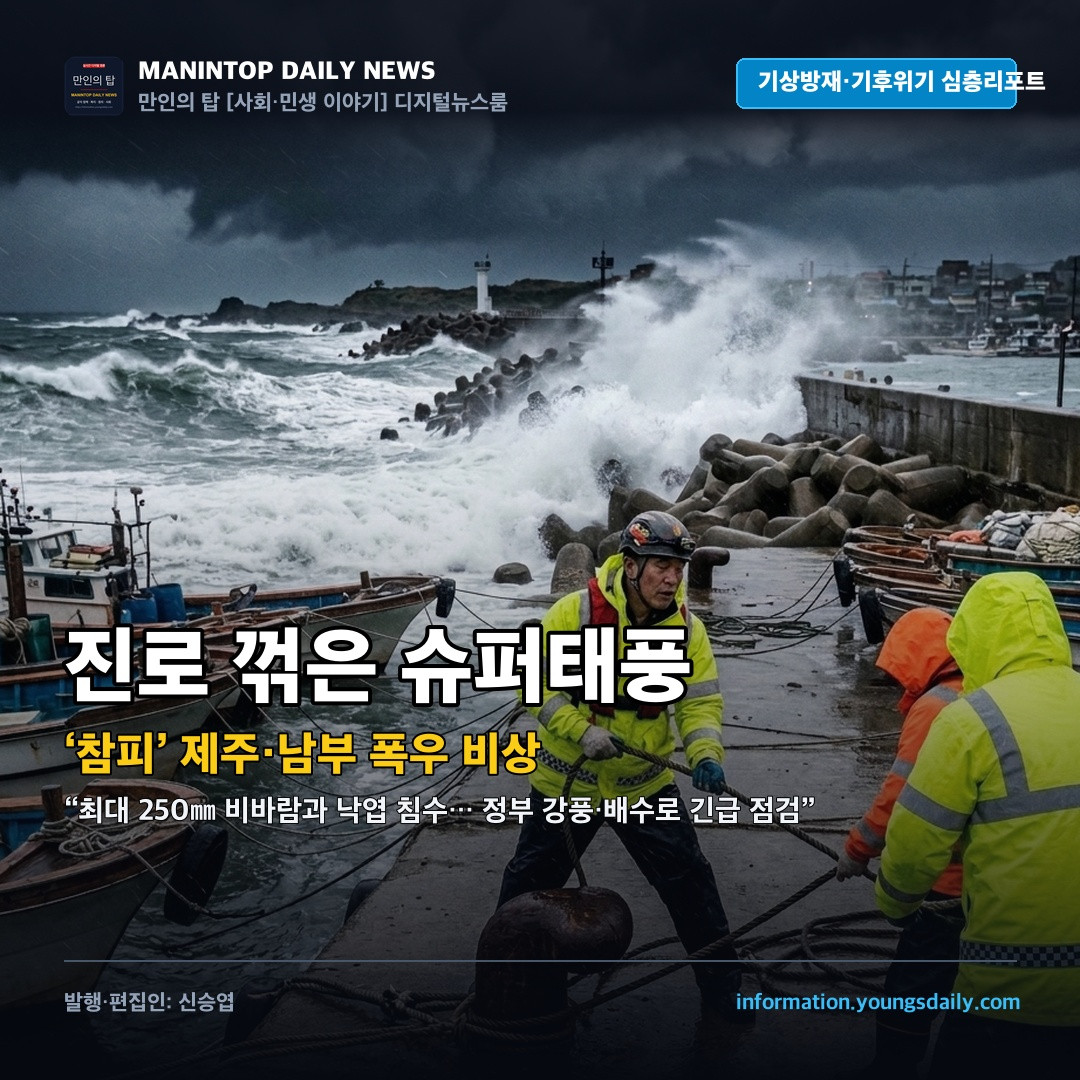
▲ 제30호 슈퍼태풍 ‘참피’가 북동쪽으로 급격히 진로를 틀면서 제주도와 남해안에 강한 비바람이 예보된 가운데, 제주 해안가 방파제와 포구에서 선박 결박 및 안전 조치가 긴급하게 진행되고 있다. [만인의 탑 포토DB]
당초 중국 대륙으로 향할 것으로 관측되던 제30호 슈퍼태풍 ‘참피(CHAMPI)’가 한반도와 일본 방향으로 급격히 진로를 꺾어 북상하면서, 주말 동안 제주도와 남부 지방에 최대 250㎜가 넘는 폭우와 강풍을 동반한 간접 영향권에 들어갔습니다. 행정안전부는 관계 중앙부처와 지자체, 공공기관이 참여하는 긴급 대책회의를 열고, 늦가을 낙엽으로 인한 도심 배수구 막힘과 해안가 강풍 취약시설에 대한 선제적 안전 점검에 돌입했습니다.
기상청과 국가태풍센터에 따르면 태풍 참피는 대만 동쪽 해상에서 북동쪽으로 방향을 틀어 일본 규슈 서쪽 해상을 향해 이동하고 있습니다. 한반도에 직접 상륙하지는 않으나, 태풍 전면에서 밀려오는 막대한 양의 열대 수증기가 북쪽에서 남하하는 찬 공기와 강하게 충돌하면서 제주 산지와 남해안 일대에 기록적인 가을 폭우 구름대를 형성하고 있습니다.
진로 꺾은 제30호 태풍 ‘참피’의 북상 경로와 제주·남부 폭우 영향
태풍 참피의 진로 변경은 북태평양고기압의 가장자리 기압 배치와 상층 편서풍 파동이 맞물리면서 발생했습니다. 기상청 예보에 따르면 제주도 산지에는 150~250㎜ 이상, 제주도 중산간과 남부 해안에는 50~100㎜의 집중호우가 쏟아질 것으로 전망됩니다. 특히 순간최대풍속 초속 20~25m에 달하는 태풍급 돌풍이 해안가를 강타하고 바다에는 최고 4~5m 이상의 높은 너울성 파도가 밀려들 것으로 관측되어 각별한 경계가 요구됩니다.
제주특별자치도는 재난안전대책본부를 비상 가동하고 방파제, 갯바위, 해안산책로 등 위험 구역 300여 곳에 대한 주민 및 관광객 출입을 전면 통제했습니다. 아울러 해상에서는 조업 중인 어선들을 조기 귀항시키고 포구 결박 조치를 완료했으며, 강풍으로 인한 제주국제공항 항공편 결항 및 지연에 대비해 공항 체류객 지원 대책을 긴급 점검하고 있습니다.
가을 낙엽 퇴적 배수로와 강풍 취약시설… 정부·지자체 비상 점검 총력
이번 태풍 간접 영향에서 가장 우려되는 복합 위험 요인은 바로 '가을철 낙엽에 의한 도심 침수'입니다. 10월 하순은 전국적으로 가을 단풍이 절정에 달하며 도심 가로수에서 대량의 낙엽이 떨어지는 시기입니다. 빗물과 함께 젖은 낙엽이 도로변 빗물받이와 하수관 덮개를 뒤덮으면 물빠짐이 완전히 차단되어, 통상적인 배수 설계 용량에도 불구하고 순식간에 도로와 저지대 상가가 침수되는 피해가 발생할 수 있습니다.
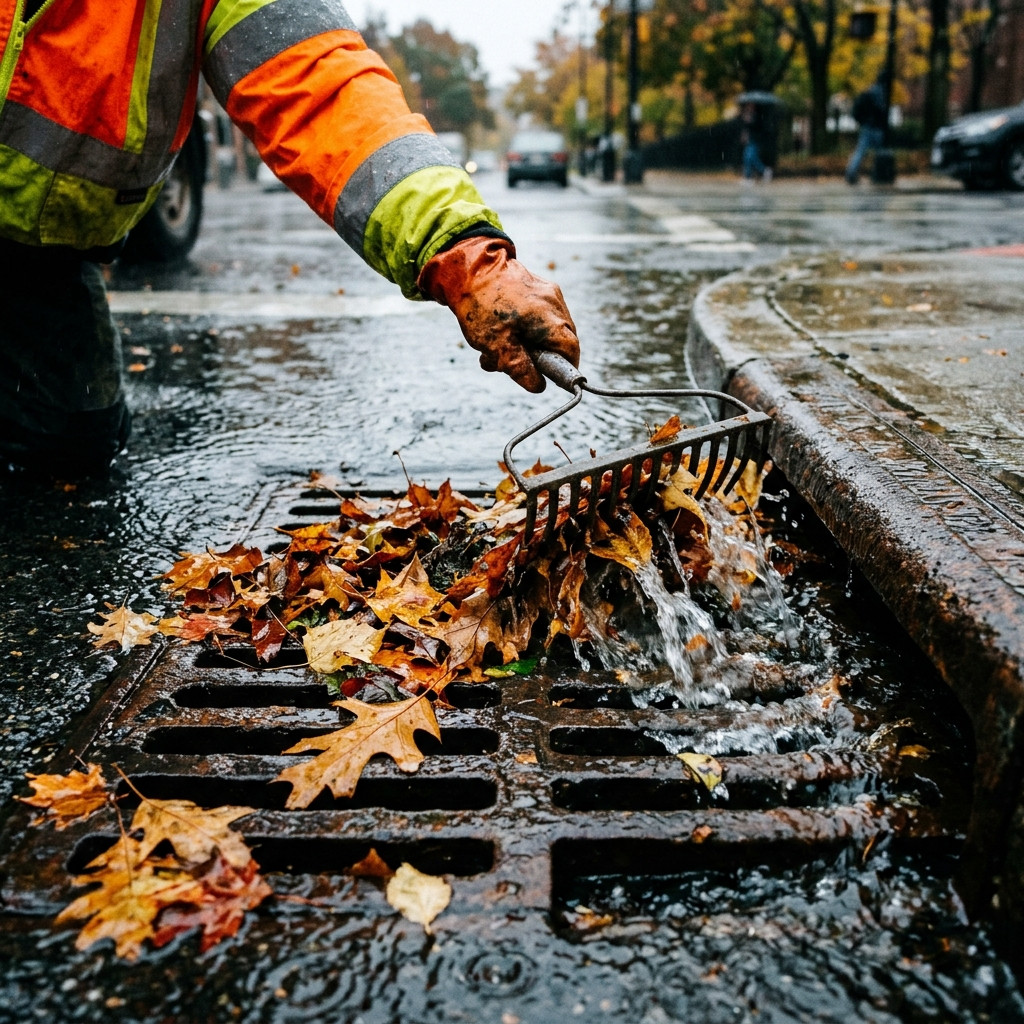
▲ 가을철 폭우 시 빗물받이를 가로막는 젖은 낙엽을 긴급 준설하는 현장. 10월 하순 태풍은 대량의 낙엽 퇴적물과 폭우가 결합하여 도심 저지대 침수를 유발하는 전형적인 복합 재난의 양상을 띤다. [만인의 탑 포토DB]
행정안전부는 전국 지자체에 빗물받이와 배수로 퇴적 낙엽을 사전에 집중 수거할 것을 긴급 지시했습니다. 또한 강풍에 취약한 비닐하우스와 축사 시설, 옥외 대형 간판, 건설 현장의 가설 펜스와 타워크레인에 대한 사전 결속 및 안전 조치를 의무화하고, 인명 피해 우려 지역에 대한 예찰 활동을 대폭 강화했습니다.
재난 요인 및 단계
기상 조건 및 현장 상황
정부·지자체 긴급 조치
방재 인프라 및 기후 시사점
진로 급변 및 북동진
대만 동쪽에서 북동쪽(일본 규슈 서해상)으로 방향 급전환 북상
태풍 북쪽 열대 수증기와 가을 찬 기압골의 격렬한 충돌 발생
10월 하순 슈퍼태풍의 세력 유지를 촉진하는 해양 고수온 현상 확인
제주·남해안 호우·강풍
제주 산지 최대 150~250mm, 남부 해안가 50~100mm 비바람 예보
순간최대풍속 20~25m/s 이상의 강풍 및 너울성 높은 파도 유입
항만 방파제·해안산책로 출입 사전 차단 및 선박 결박 표준화
가을철 낙엽 침수 위기
가을 단풍 낙엽과 우수가 도심 빗물받이와 배수로 격자 전면 폐쇄
배수 용량 급감에 따른 도심 저지대 및 상가 침수 위험 급증
계절별 퇴적 특성을 반영한 도심 배수시설 사전 준설 의무화
중대본 및 지자체 총력
행안부 자연재난실 긴급 회의 주재, 비닐하우스·타워크레인 점검
공항 체류객 지원 및 취약계층 침수·강풍 피해 제로화 추진
기후위기 시대 늦가을 복합 재난에 대응하는 종합 방재 체계 구축
10월 하순 슈퍼태풍의 이례적 북상과 해수면 고수온 현상의 기후 경고
기상학자들은 10월 말에 이처럼 강력한 세력을 유지하는 태풍이 한반도 인근까지 올라오는 현상을 지구 온난화의 뚜렷한 증거로 지목합니다. 과거에는 가을철 대륙의 찬 공기가 내려오면서 해수면 온도가 급격히 식어 태풍의 발달과 북상이 억제되었으나, 최근 북서태평양의 해양 열용량(Ocean Heat Content)이 역대 최고 수준을 유지하면서 늦가을에도 슈퍼태풍이 소멸하지 않고 에너지를 보존하고 있는 것입니다.
이러한 해양 고수온 현상은 태풍의 발생 시기를 10월과 11월까지 연장시키는 이른바 '태풍 시즌의 장기화'를 고착화하고 있습니다. 여름철 방재에만 집중되었던 기존의 재난 대비 주기를 연중 상시 체계로 전환하지 않으면, 예상치 못한 늦가을 폭우와 돌풍으로 인한 농작물 피해 및 시설물 파손이 매년 되풀이될 수밖에 없습니다.
가을철 돌발성 복합재해 대응을 위한 도시 방재 시스템 혁신 과제
이번 태풍 참피의 간접 영향은 우리 사회의 도시 방재 인프라에 중대한 과제를 안겨주고 있습니다. 첫째, 도심 가로수 낙엽과 강우량이 결합할 때 배수 용량을 실시간으로 예측하고 경보를 발령하는 '스마트 우수관 모니터링 시스템' 도입이 필수적입니다. 도로변 빗물받이에 센서를 부착하여 낙엽 폐색 여부를 원격 감시하는 기술적 혁신이 필요합니다.
둘째, 수확기를 맞은 농가와 수산업계의 풍수해 보험 보장 범위를 늦가을 태풍까지 현실적으로 확대하고, 해안가 취약 시설물의 내풍 설계 기준을 강화해야 합니다. 기후변화는 이미 계절의 경계를 허물고 있습니다. 10월의 슈퍼태풍 참피가 몰고 온 비바람은, 계절에 안주하던 과거의 방재 패러다임을 근본적으로 혁신해야 한다는 엄중한 자연의 경고입니다.
[만인의 탑 취재수첩] 10월 말 찾아온 태풍의 비바람은 기후위기가 더 이상 미래의 담론이 아닌 오늘의 일상적 위협임을 보여줍니다. 낙엽 하나, 배수로 한 칸을 미리 점검하는 작은 현장의 실천이 대형 도시 재난을 막는 가장 강력한 방패입니다.
▲ As Super Typhoon Champi curves northeastward toward the waters near Korea and Japan, emergency crews at coastal harbors across Jeju Island inspect vessel mooring cables and tetrapod breakwaters under heavy gale warnings. [Manintop Photo DB]
Super Typhoon Champi, initially projected to track toward mainland China, has made an abrupt northeastward pivot toward the vicinity of the Korean Peninsula and southwestern Japan, placing Jeju Island and southern coastal regions under an indirect storm alert with over 250 millimeters of torrential rain and gale-force gusts forecast through the weekend. The Ministry of the Interior and Safety convened an emergency multi-agency response conference, launching proactive inspections across wind-vulnerable facilities and urban storm drain networks susceptible to autumn leaf litter blockages.
According to the Korea Meteorological Administration and the National Typhoon Center, Champi is advancing northeastward through waters east of Taiwan toward the seas west of Kyushu, Japan. While a direct inland landfall on the Korean mainland will be avoided, a massive plume of tropical moisture streaming off the cyclone front is colliding aggressively with cold continental air descending from the north, creating an intense, stationary frontal rainband across southern maritime territories.
Abrupt Track Shift of Super Typhoon Champi and Gale Impacts on Southern Regions
Champi course deviation was triggered by the interaction between the steering ridge of the North Pacific Subtropical High and mid-latitude westerly jet fluctuations. Meteorological models project between 150 to over 250 mm of precipitation over the elevated mountainous terrain of Hallasan on Jeju Island, alongside 50 to 100 mm along southern coastal shorelines. Concurrently, maximum instantaneous gusts reaching 20 to 25 meters per second and ocean swells exceeding four to five meters have prompted immediate maritime alerts.
The Jeju Special Self-Governing Province activated its Disaster and Safety Countermeasures Headquarters, enforcing strict access bans across more than 300 hazardous coastal spots, including seawalls, tidal rocks, and shoreline walking trails. In offshore zones, fishing fleets were ordered back to safe anchorage with reinforced mooring ties, while airport authorities mobilized support programs for transit passengers facing prospective flight delays or cancellations at Jeju International Airport.
Autumn Foliage Drain Blockages and Municipal Flood Prevention Priorities
A salient vulnerability distinguishing late-autumn typhoons is the compounding risk of urban street flooding caused by saturated fallen leaves. In late October, deciduous trees across Korean metropolitan centers shed peak volumes of foliage. When heavy squalls sweep wet leaves across streets, they rapidly adhere to stormwater inlet grates and catch basins, forming an impermeable organic mat that chokes drainage capacity and triggers flash ponding across low-lying commercial corridors.
▲ Municipal emergency crews clearing wet fallen leaf litter from street storm drain grates ahead of intense downpours. Late-autumn storms illustrate classic compound hazards where botanical debris converges with torrential precipitation to disrupt urban hydrology. [Manintop Photo DB]
Responding to this danger, the Interior Ministry instructed local governments nationwide to conduct immediate pre-emptive dredging of street grates and municipal gutters. Authorities also mandated structural securement for agricultural vinyl greenhouses, construction tower cranes, and exterior commercial billboards, alongside intensified patrols around hillside landslide warning zones.
Disaster Stage & Threat
Meteorological Conditions
Government & Municipal Actions
Infrastructure & Climate Insights
Abrupt Track Shift
Shifting northeastward toward western Kyushu from east of Taiwan
Clash between intense tropical moisture and northern cold continental troughs
Attributable to elevated ocean heat content sustaining late-October super typhoons
Gales & Heavy Rain
150-250mm forecast for Jeju peaks and 50-100mm along southern coastlines
Gusts exceeding 20-25m/s paired with hazardous swell waves along shores
Immediate access bans on breakwaters and coastal trails with vessel securement
Autumn Foliage Flooding
Wet autumn leaf litter clogging municipal storm drains and catch basins
Drastic drop in urban drainage capacity threatening low-lying neighborhoods
Mandating seasonal debris clearing tailored to autumn leaf accumulation
Emergency Mobilization
Ministry of the Interior coordinating joint checks on cranes and greenhouses
Preventing casualties and supporting delayed travelers at Jeju International Airport
Upgrading civic disaster architecture against compound late-autumn hazards
Unprecedented Late-October Super Typhoons and Ocean Warming Warnings
Climatologists emphasize that the persistence of such formidable cyclones in late October serves as an unambiguous signature of planetary climate heating. Historically, autumn continental cooling lowered sea surface temperatures, rapidly dissipating northward-moving tropical storms. Today, anomalous Ocean Heat Content throughout the western North Pacific enables late-season typhoons to retain destructive super-category intensity as they approach temperate latitudes.
This thermodynamic baseline shift effectively elongates the East Asian typhoon season well into November. Unless national emergency planning transitions from summer-exclusive protocols toward an agile, year-round readiness stance, agricultural harvest losses and infrastructure damage from late-autumn gales will become recurrent annual realities.
Re-engineering Resilient Urban Drainage for Compound Seasonal Hazards
The peripheral assault of Typhoon Champi outlines vital imperatives for civil engineering and urban planning. First, municipal stormwater grids require intelligent sensory integration, incorporating optical or ultrasonic blockage sensors along catch basins to trigger autonomous maintenance alerts before ponding reaches roadway levels.
Second, national disaster insurance architectures must be updated to cover late-autumn compound climate events, alongside stringent building codes for coastal wind resistance. The arrival of Typhoon Champi demonstrates that seasonal boundaries have permanently blurred, demanding that modern cities cultivate proactive, resilient defenses against the volatile dynamics of a changing climate.
[Manintop Editorial Note] The late-autumn arrival of Typhoon Champi reminds us that climate change is no longer an abstract horizon, but an immediate daily reality. Meticulous local vigilance, clearing a single leaf-choked drain, remains the most powerful defense against massive urban catastrophes.
MANINTOP NEWSLETTER
📬 만인의 탑 뉴스레터 무료 구독
오늘 보신 정책·시사 뉴스가 유익하셨나요? 매일 엄선되는 알짜 복지 혜택과 국회 실시간 속보를 이메일로 가장 먼저 받아보세요. (평생 무료)
Computer Programmer who love programming.
Computer Programmer Who love Riding Bicycle.
Computer Programmer who love trip in abroad.
Computer Programmer who love studying about programming
- even if sometimes it's very boring.
Computer Programmer who love talking with person.
- I love communication with person.
1월이 시작되면 감기는 이미 우리 곁에 와 있습니다. 2월, 3월, 4월까지 이어지는 추위와 건조함은 코와 목을 가장 먼저 공격합니다. 아침에 일어나자마자 막혀 있는 코. 계속 흐르는 콧물. 괜히 칼칼해지는 목. 이 증상은 “시작”일 뿐입니다. 한 번 무너지면 일주일, 길면 한 달까지 끌고 갑니다. 약을 먹으면 잠깐 괜찮아집니다. 하지만 며칠 뒤 또 반복됩니다. 왜일까요? 감기는 ‘치료’의 문제가 아니라 ‘관리’의 문제이기 때문입니다. 대부분은 감기가 오고 나서 약을 찾습니다. 하지만 진짜 중요한 건 감기가 오기 전에 코와 목을 지키는 것입니다. 건조한 실내 공기, 차가운 바깥 공기, 눈에 보이지 않는 세균. 코와 목은 매일 공격받고 있습니다. 지긋지긋하죠! 그런데도 우리는 아무 준비 없이 버티고 있습니다. 이번 겨울도 그렇게 보낼 건가요? 사실 방법은 어렵지 않습니다. 코를 깨끗하게 관리하고, 목을 따뜻하게 보호하고, 점막을 촉촉하게 유지하고, 기관지를 미리 관리하고, 외부 공기를 차단하는 것. 이 다섯 가지만 꾸준히 해도 감기약 없이 겨울을 보내는 것이 충분히 가능합니다. 🔥 이제부터 그 방법을 하나씩 살펴보겠습니다. 🔥 1. 코와 목을 먼저 관리해야 하는 과학적 이유 감기의 대부분은 코 점막에서 시작됩니다. 국제 학술지 Nature Reviews Microbiology 와 Journal of Allergy and Clinical Immunology 에 실린 호흡기 감염 관련 연구들에서는, 감기 바이러스가 비강 상피세포에 먼저 부착해 증식한다는 점을 설명하고 ...
리모델링사업이 진행 중인 아파트를 매매할 때 “계약금 10%를 언제까지 내야 하느냐”는 질문이 특히 많이 나옵니다. 이주공고(이주 안내)가 7~11월쯤이라고 들으면, 그 시점에 맞춰 계약금도 움직일 것 같아서 더 헷갈리기 쉽습니다. 하지만 실제 납부기한은 ‘이주공고가 언제냐’만으로 자동 결정되지 않는 경우가 많습니다. 1) 계약금 10% 납부기한: 결국 ‘문서에 적힌 일정’이 기준 계약금 10%를 언제까지 납부해야 하는지는, 내가 서명하는 매매계약서(특약 포함) 와 사업주체/조합이 제시한 공고·안내문 에 적힌 납부 일정이 기준이 됩니다. 실제 공고문에서는 분양대금 납부의 큰 틀(계약금→중도금→잔금)을 먼저 안내하고, 상세 일정은 별도 표나 유의사항으로 제시하는 방식이 흔합니다. 또, 계약서 문구에 따라 지급 시점이 조건부로 설정될 수도 있습니다. 예를 들어 한 사례 소개 자료에서는 용역계약서에 잔금(10%) 지급시기가 “사업승인 후”로 기재되어 있었다는 점이 언급됩니다. 이런 식으로 ‘사업 단계’와 지급을 연동하는 문구가 들어가면, 질문의 답은 계약서 문구를 확인해야만 확정됩니다. 관련 내용은 링크 에서 문구 사례를 확인할 수 있습니다. 2) 입주자모집공고에서 확인되는 ‘납부 순서’와 잔금 마감 시점 공고문에 적힌 문구를 보면, 납부 순서와 잔금 마감에 대한 기준이 비교적 명확하게 제시되는 경우가 있습니다. 예를 들어 한 입주자모집공고에는 “분양금액(주택가격)은 계약금, 중도금, 잔금의 순서로 납부”하며 “잔금은 입주(열쇠 수령일) 전에 완납”해야 한다고 안내되어 있습니다. (문구 확인: 링크 ) 이 문구가 의미하는 바는 최소 2가지입니다. 분양/공급 형태의 문서에서는 ‘계약금→중도금→잔금’ 흐름이 공식적으로 안내될 수 있습니다. 잔금은 “입주(열쇠 수령)” 이전에 완납해야 한다는 마감 기준이 문서에 적혀 있을 수 있습니다. 다만, 위 공고문 문구는 잔금 마감에 대한 기준을 보여주지만, 계약금 10%의...
윤석열 전 대통령 탄핵 인용 소식을 접하면, 가장 궁금한 지점은 ‘헌재가 정확히 무엇을 위헌·위법으로 봤는가’입니다. 또한 탄핵과 별개로 진행되는 형사재판(내란 우두머리 혐의 등)이 어디까지 왔는지도 함께 정리할 필요가 있습니다. 아래 내용은 제공된 기사/게시물 스니펫과 링크에서 확인되는 범위만 모아, 일반인이 흐름을 이해하기 쉽게 정리한 것입니다. 1) 탄핵 인용 관련: 스니펫에서 확인되는 ‘판단의 골격’ 제공된 근거 중 조국혁신당 사이트에는 헌법재판소가 윤석열 탄핵 심판에서 “피청구인의 위헌·위법행위는 국민 신임 …”이라는 취지로 판단했다는 문장이 인용돼 있습니다( 링크 ). 이 인용문만 놓고 보면, ‘위헌·위법행위’가 있었는지와 그로 인해 ‘국민의 신임’이 어떻게 평가됐는지가 핵심 축으로 소개됩니다. 다만 질문에서 요청하신 세부 항목, 즉 비상계엄 선포 자체를 문제 삼은 구체적 이유, 계엄 이후 조치(포고령, 국회 통제 등)의 어떤 지점이 헌법 위반인지, 국회의 권한행사 방해 및 정치활동 제약을 어떤 논리로 판단했는지 등은, 이번에 제공된 근거의 제목/스니펫만으로는 조항·사실관계·판단 구조가 그대로 제시돼 있지 않습니다. 따라서 이 글에서는 ‘헌재가 무엇을 문제 삼았다’는 세부 리스트를 단정적으로 재구성하기보다, 현재 확인 가능한 문구 수준의 요약(위헌·위법행위 → 국민 신임의 문제로 평가)까지만 적습니다. 만약 헌재 결정문 전문(주문 및 이유)이 추가로 확인되면, 그때는 문장 단위로 ‘어떤 행위’와 ‘어떤 헌법 원리/조항’이 연결되는지(예: 권력분립, 국회의 권한, 정치적 기본권 등) 구조화해 정리하는 것이 가장 정확합니다. 2) 형사 절차(내란 혐의) 관련: 체포영장과 1심 선고 언급 탄핵 심판과 별도로, 12·3 비상계엄 사태로 내란 혐의를 받는 윤석열 대통령에 대해 2024년 12월 31일 체포 영장이 발부됐다는 BBC 보도가 있습니다( 링크 ). 해당 보도는 ‘현직 대통령’에 대한 체포영장 발부라는 점을 함께 언급합니다. 또...




0 댓글