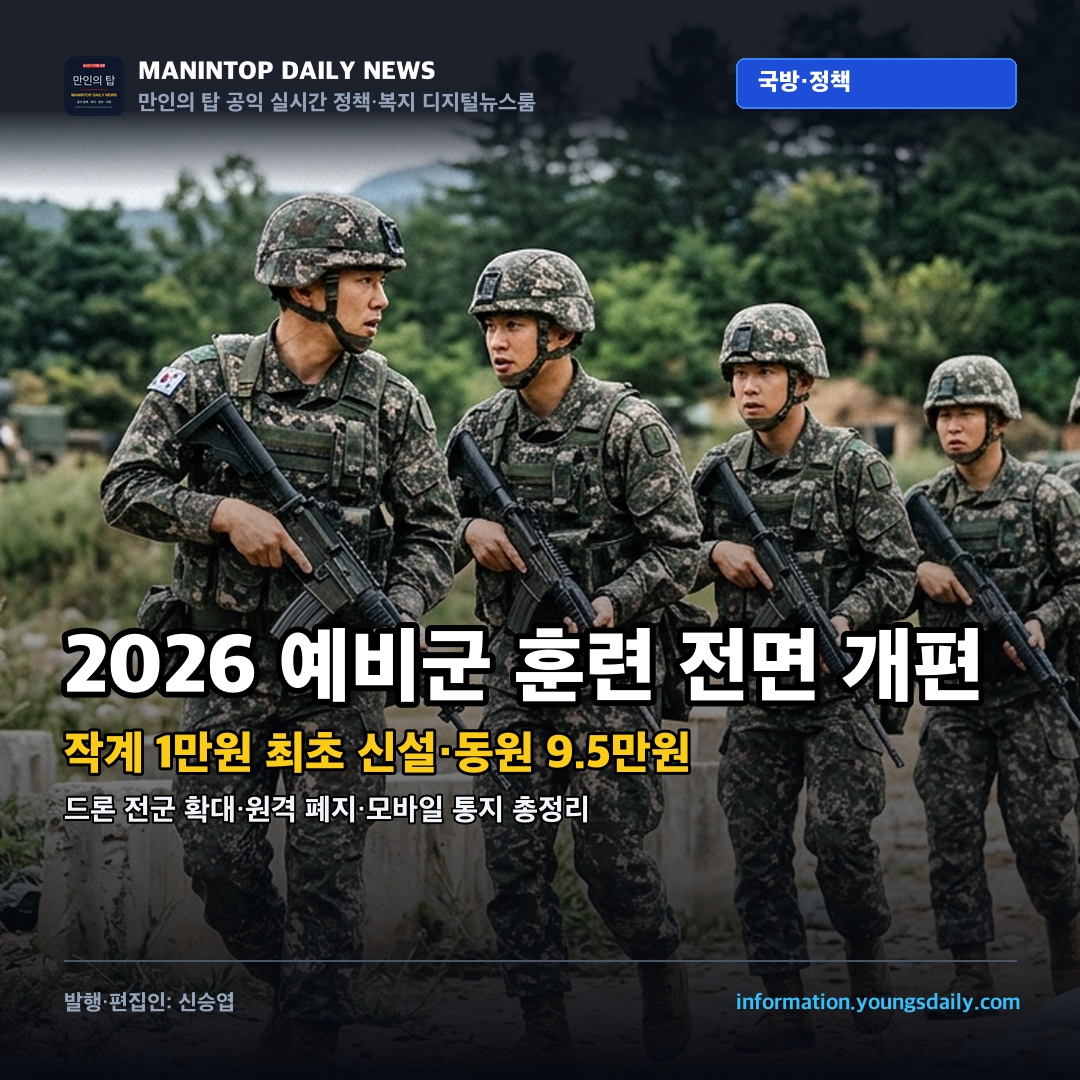
2026년 예비군 훈련 전면 개편: 작계 1만 원 최초 신설과 동원훈련 9.5만 원 인상·드론 전군 확대 및 모바일 통지서 완전 가이드
만인의 탑 편집국11월 14, 2026
▲ 2026년 예비군 훈련 전면 개편: 작계 1만 원 최초 신설과 동원훈련 9.5만 원 인상·드론 전군 확대 및 모바일 통지서 완전 가이드 (공식 보도 자료)
📌 핵심 브리핑 · 주요 쟁점 및 핵심 요약
2026년 3월 3일부터 전국 143개 훈련장에서 본격 시행되는 대한민국 예비군 훈련이 '애국페이' 논란을 종식하기 위한 전면적인 보상비 인상과 참가비 신설로 대전환을 맞이했습니다. 동네 작계훈련과 대학생 기본훈련에 사상 최초로 회당 1만 원의 참가비가 신설되고 동원훈련 보상비가 9만 5,000원으로 인상된 배경부터, 6년차 온라인 원격교육 전면 폐지 및 현장 소집훈련 100% 환원, 해군·공군·해병대까지 확대된 드론 운용 훈련, 5대 민간 플랫폼 순차 모바일 통지서 수신법, 그리고 출산·난임·대체불가 업무 연기 혜택까지 청년 예비군이 꼭 알아야 할 핵심 팩트를 알기 쉽고 흥미롭게 총정리합니다.
SPONSORED · ADVERTISEMENT
1. 개요 및 정책 추진 배경
- 시행 일자: 2026년 3월 3일(화)부터 전국 143개 예비군 훈련장에서 본격 실시 - 핵심 비전: '즉각 전투력 발휘 보장'과 '예비군이 체감할 수 있는 훈련 여건 개선'의 결합 - 시대적 전환: 수십 년간 지속된 이른바 '애국페이' 무보수 의무 복무 논란을 종식하고 정당한 보상과 사회적 예우 체계 확립.
- 현대전 교훈: 우크라이나 전쟁과 중동 분쟁을 통해 확인된 첨단 비대칭 전력(드론) 운용 능력과 현장 행동화 숙달의 중요성 반영.
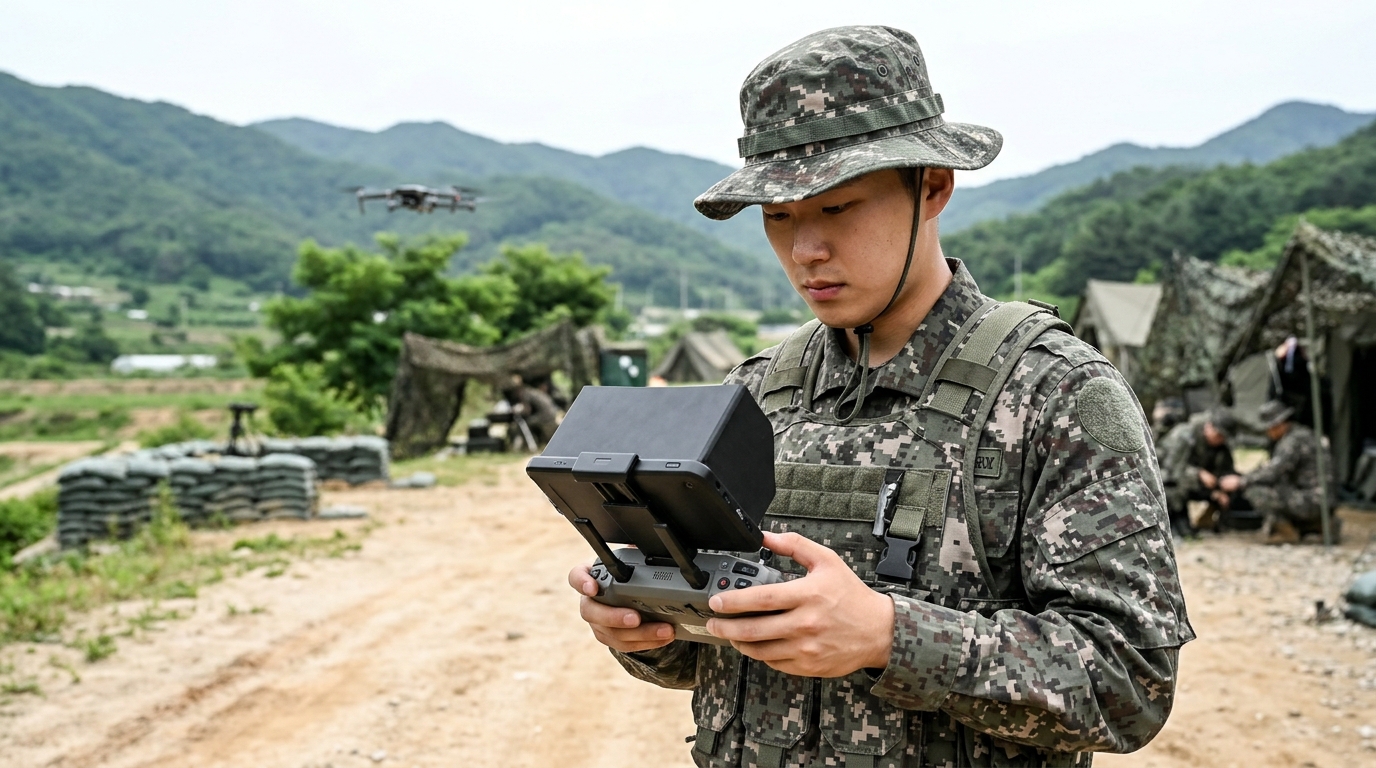
▲ 야외 전술 훈련장에서 예비군 대원이 감시 정찰 및 방호 훈련을 위해 정밀 드론 조종 콘솔을 운용하는 모습 / 국방 첨단 훈련 현장 포커스
2. 훈련비 인상 및 훈련 참가비 전면 신설 세부 데이터
- 동원훈련 Ⅰ형 (구 동원훈련, 1~4년차 2박 3일 28시간 합숙): 8만 2,000원에서 9만 5,000원으로 1만 3,000원(약 15%) 인상 - 동원훈련 Ⅱ형 (구 동미참훈련, 1~4년차 4일 32시간 통학): 4만 원에서 5만 원으로 1만 원 인상.
- 지역예비군 기본훈련 (5~6년차 1일 8시간 소집): 기존 미지급(실비만 지원)에서 1만 원 훈련비 공식 신설 - 지역예비군 작계훈련 (5~6년차 연 2일 12시간 소집): 기존 무보수 미지급에서 회당 1만 원 참가비 최초 신설 (연 2회 이수 시 총 2만 원 지급).
- 대학생(학생) 예비군 (대학·대학원 재학생 기본훈련): 기존 미지급에서 1만 원 기본 훈련비 신설 - 훈련 급식비 단가: 8,000원에서 9,000원으로 1,000원 인상 (1일 작계훈련 참가 시 훈련비 1만 원과 합산하여 실질 1만 9,000원 수혜).
- 국방 중기 계획: 2030년까지 예비군 훈련 보상비를 최저임금 수준으로 단계적 인상하는 로드맵 가동 - 연계 국방 처우 개선: 2026년 현역 장병 기본급식비 1만 3,000원 -> 1만 4,000원 인상, 초급 간부 '장기간부 도약적금' 신설 (월 최대 30만 원, 3년 만기 약 2,300만 원 형성).
훈련 유형 및 명칭
대상 연차 및 운영 방식
2025년 종전 보상비
2026년 확정 보상비
동원훈련 Ⅰ형 (舊 동원훈련)
1~4년차 / 2박 3일(28시간) 합숙
8만 2,000원
9만 5,000원
동원훈련 Ⅱ형 (舊 동미참훈련)
1~4년차 / 4일(32시간) 출퇴근
4만 원
5만 원
지역예비군 기본훈련
5~6년차 / 1일 8시간 소집
미지급 (실비만 지원)
1만 원
지역예비군 작계훈련
5~6년차 / 연 2일(12시간) 소집
미지급 (무보수 훈련)
회당 1만 원 (연 2만 원)
대학생(학생) 예비군
대학·대학원 재학생 / 기본훈련
미지급 (식비 실비 중심)
1만 원
훈련 급식비 단가
전 훈련 공통 제공 급식
8,000원
9,000원
SPONSORED · ADVERTISEMENT
3. 훈련 체계 및 교육과정 핵심 변화
- 훈련 공식 명칭 통일: 복잡했던 기존 명칭을 '동원훈련 Ⅰ형'(합숙)과 '동원훈련 Ⅱ형'(출퇴근)으로 정비 - 6년차 작계훈련 원격교육 폐지 및 현장 소집 전면 환원: 2024~2025년 시범 운영되었던 6년차 온라인 원격교육을 전격 폐지하고, 전술 진지 점령과 거점 방어 등 실전 행동화 숙달을 위해 연 2일 12시간 오프라인 현장 소집훈련으로 100% 환원.
- 드론 운용 훈련 전군(해군·공군·해병대) 전격 확대: 육군 시범운용에서 벗어나 해군 함정 작전, 공군 기지 방호, 해병대 상륙 지원 등 각 군 전장 환경에 맞춘 무인기 정찰·공격 전술 교리 전군 도입 - 과학화 지역예비군훈련장 34개소 구축 완료: 마일즈(MILES) 다기능 레이저 교전 장비, 실내사격장, VR 모의사격 체계를 완비한 과학화 훈련장을 기존 29개소에서 대전, 목포, 안동, 영천, 칠곡 5개소를 신규 추가하여 총 34개소로 확대 (최종 목표 40개소).
▲ 스마트폰을 통해 5대 민간 플랫폼 기반 모바일 소집통지서와 전국단위 훈련 신청 일정을 확인하는 청년 예비군 / 디지털 국방 행정 현장 자료
4. 디지털 모바일 행정 시스템
- 5대 민간 플랫폼 순차 발송 시스템: 별도 신청 없이 국방 전산망 등록 연락처를 기반으로 훈련일 약 22일 전부터 자동 송달 - 순서: 네이버 알림 -> 카카오톡 알림톡 -> 토스(Toss) -> 페이코(PAYCO) -> KT 문자메시지.
- 24시간 자동 전환: 24시간 내 본인 인증 및 열람 약관 동의 미완료 시 다음 플랫폼으로 자동 전환 - 최종 등기 우편 보완: 문자메시지까지 미열람 시 훈련 7일 전 등기우편 종이 통지서 자택 발송 - 열람 보관 기간: 토스·페이코 1년, 네이버·카카오 6개월, KT 문자 3개월.
- 스마트 포털(yebigun1.mil.kr) 간편인증 및 주요 기능: - 카카오, 네이버, PASS 간편인증으로 공동인증서 없이 1분 내 로그인 - 전국단위 훈련 신청: 생활권·출장지 인근 훈련장 자율 선택, 훈련 희망일 3일 전까지 선착순 신청/취소 가능 (훈련 2일 전부터 취소 전산 차단).
- 휴일 예비군 훈련: 직장인을 위한 토·일요일 훈련 과정 운영 - 온라인 원격교육 수강 시 2시간 감면 혜택 자동 전산 연계 (종이 수료증 불필요, 위병소 자동 확인 조기 퇴소) - 교육훈련 소집필증 스마트폰 PDF 즉시 무료 발급.
- 출산 및 난임 치료 연기 신설: 예비군 본인의 출산휴가 기간이거나 배우자의 난임 치료 기간이 겹칠 경우 증빙 서류 첨부 시 훈련 연기 허용 - 대체 불가 주요 업무 사유 연기: 핵심 프로젝트나 긴급 출장 등 불가피한 사유 시 훈련 시작일 기준 60일 범위 내 탄력 연기.
- 연기 신청 기한: 훈련 전일까지 예비군 홈페이지에 증빙서류 온라인 첨부 접수 - 노동법적 권리: 근로기준법 및 예비군법에 따라 유급휴가(공가) 필수 보장, 연차 강제 차감이나 임금 삭감 등 불이익 처우 엄격 금지.
- 무단 불참 시 형사 처벌: 정당한 사유 없이 불참 시 병역법 및 예비군법 위반으로 고발 및 벌금형 처벌.
Comprehensive Reform of Reserve Forces Training in 2026: Introduction of a New 10,000 Won Standard for Operational Plans, Increase of 95,000 Won for Mobilization Training, Expansion of Drones Across All Military Branches, and Complete Guide for Mobile Notifications.
Starting March 3, 2026, the Republic of Korea's reserve forces training will undergo a significant transformation with the implementation of comprehensive compensation increases and the introduction of participation fees, aimed at resolving the 'patriotic pay' controversy. For the first time, a participation fee of 10,000 won will be established for local tactical training and basic training for university students, while the compensation for mobilization training will be raised to 95,000 won. This change comes alongside the complete abolition of the six-year online remote education program, with a full return to in-person training. Additionally, drone operation training will be expanded to include the Navy, Air Force, and Marine Corps. The new system will also feature a sequential mobile notification method through five major civilian platforms, as well as benefits for postponing duties related to childbirth, infertility, and irreplaceable work. This article aims to clearly and engagingly summarize the essential facts that young reservists need to know.
📌 Key Takeaways
The introduction of a participation fee of 10,000 won for basic training and operational plans marks a historic first, alongside a 15% increase in mobilization training and a roadmap for minimum wage adjustments for those in their 20s and 30s.
The online video demonstration project has concluded, and a 12-hour field training program has been reinstated to enhance tactical occupation and base defense operations.
The integration of drone capabilities into the Navy, Air Force, and Marine Corps is underway, while mobile notifications from Naver, Kakao, and Toss will be rolled out in phases, and training for childbirth and infertility has been postponed.
1. Overview and Background of Policy Implementation
- Implementation Date: Starting March 3, 2026, the program will be fully implemented at 143 reserve training centers nationwide.
- Core Vision: A combination of "guaranteeing immediate combat readiness" and "improving training conditions that reserves can feel.".
- Historical Transition: Ending the long-standing controversy over unpaid mandatory service, known as "patriot pay," and establishing a fair compensation and social recognition system.
- Lessons from Modern Warfare: Reflecting the importance of advanced asymmetric warfare capabilities (drones) and practical operational training, as confirmed by the Ukraine war and Middle Eastern conflicts.
▲ ROK Reserve Force soldier operating a tactical drone reconnaissance controller during field training / Advanced Defense Training Focus
2. Details on Training Fee Increases and New Participation Fees
- Mobilization Training Type I (formerly mobilization training, 2 nights and 3 days of accommodation for 1-4 years): Increased from 82,000 KRW to 95,000 KRW, a rise of 13,000 KRW (approximately 15%).
- Mobilization Training Type II (formerly training for mobilization participants, 4 days and 32 hours of commuting for 1-4 years): Increased from 40,000 KRW to 50,000 KRW, an increase of 10,000 KRW.
- Basic Training for Regional Reserves (1 day, 8 hours of assembly for 5-6 years): Officially established a training fee of 10,000 KRW, previously unpaid (only actual expenses supported).
- Regional Reserve Operational Training (2 days, 12 hours of assembly per year for 5-6 years): Introduction of a participation fee of 10,000 KRW per session, previously unpaid (total of 20,000 KRW if completed twice a year).
- University Student Reserves (basic training for college and graduate students): Introduction of a basic training fee of 10,000 KRW, previously unpaid.
- Training Meal Cost: Increased from 8,000 KRW to 9,000 KRW, an increase of 1,000 KRW (when participating in a 1-day operational training, the total benefit is effectively 19,000 KRW).
- Mid-term Defense Plan: A roadmap to gradually increase reserve training compensation to the minimum wage level by 2030.
- Related Defense Treatment Improvements: Increase in basic meal costs for active-duty soldiers from 13,000 KRW to 14,000 KRW in 2026, and the introduction of a "long-term officer savings plan" for junior officers (up to 300,000 KRW per month, forming approximately 23 million KRW over three years).
Category
Target Scope
Standard / Benefit
Procedure / Action
Mobilization Training Type I (Formerly Mobilization Training)
1-4 years / 2 nights 3 days (28 hours) of residential training
82,000 KRW
95,000 KRW
Mobilization Training Type II (Formerly Dongmi Participation Training)
1-4 years / 4 days (32 hours) of commuting training
40,000 KRW
50,000 KRW
Basic Training for Regional Reserve Forces
5-6 years / 1 day 8 hours of assembly
Unpaid (only actual expenses supported)
10,000 KRW
Operational Training for Regional Reserve Forces
5-6 years / 2 days a year (12 hours) of assembly
Unpaid (non-compensated training)
10,000 KRW per session (20,000 KRW annually)
University Student Reserve Forces
Current university/graduate students / Basic training
Unpaid (mainly meal expenses covered)
10,000 KRW
Training Meal Cost Rate
Common meal provision for all training
8,000 KRW
9,000 KRW
3. Key Changes in Training System and Curriculum
- Standardization of Training Official Names: Simplifying the previously complex names to "Mobilization Training Type I" (accommodation) and "Mobilization Training Type II" (commuting).
- Abolishment of Remote Education for 6-Year Operational Training and Full Return to On-Site Assembly: The online remote education for 6-year training, piloted in 2024-2025, will be completely abolished, reverting to 100% on-site training with 2 days of 12 hours each year for practical skill development in tactical positions and defense.
- Expansion of Drone Operation Training Across All Military Branches (Army, Navy, Air Force, Marine Corps): Moving beyond pilot programs in the Army to introduce unmanned reconnaissance and attack tactics tailored to each military's battlefield environment, including naval operations, airbase defense, and amphibious support.
- Completion of 34 Scientific Reserve Training Centers: Expansion from 29 to 34 training centers, adding five new locations (Daejeon, Mokpo, Andong, Yeongcheon, and Chilgok) equipped with MILES multifunctional laser engagement systems, indoor shooting ranges, and VR simulation systems (final goal of 40 centers).
▲ Young reserve serviceman checking mobile call-up notification and nation-wide training schedule on a smartphone / Digital Defense Administration Archive
4. Digital Mobile Administrative System
- Sequential Dispatch System via Five Major Civilian Platforms: Automatic delivery based on registered contact information in the defense computer network, starting approximately 22 days before the training date without separate application.
- Order: Naver Notification -> KakaoTalk Notification -> Toss -> PAYCO -> KT Text Message - 24-Hour Automatic Transition: If personal authentication and agreement to viewing terms are not completed within 24 hours, the system will automatically switch to the next platform.
- Final Registered Mail Supplement: If the text message is not viewed, a registered mail notification will be sent to the home address seven days before the training.
- Viewing Retention Period: Toss and PAYCO for one year, Naver and Kakao for six months, KT text messages for three months.
- Smart Portal (yebigun1.mil.kr) Easy Authentication and Key Features: - Login within one minute using easy authentication via Kakao, Naver, or PASS without a joint certificate.
- Nationwide Training Application: Autonomously select training centers near living or business areas, with first-come, first-served applications/cancellations possible until three days before the desired training date (cancellations blocked in the system two days prior).
- Weekend Reserve Training: Training programs for working individuals on Saturdays and Sundays. - Automatic 2-Hour Reduction Benefit for Online Remote Education: Automatically linked to the system (no paper certificate required, early departure confirmed at the guard post).
- Immediate Free Issuance of Training Summons Certificate in PDF format for smartphones. - New Provisions for Postponement Due to Childbirth and Infertility Treatment: Training can be postponed if the reserve's own maternity leave or the spouse's infertility treatment period overlaps, provided supporting documents are attached.
- Postponement for Irreplaceable Major Work Reasons: Flexible postponement within 60 days of the training start date for unavoidable reasons such as key projects or emergency business trips.
- Postponement Application Deadline: Online submission of supporting documents on the reserve homepage until the day before training.
- Labor Law Rights: Mandatory paid leave (official leave) guaranteed under the Labor Standards Act and Reserve Forces Act, with strict prohibition of disadvantages such as forced annual leave deductions or wage reductions.
- Criminal Penalties for Unauthorized Absence: Reporting and fines for violations of the Military Service Act and Reserve Forces Act for absence without justifiable reasons.
Recommended Deep-Dive Investigations TOP 3
GLOBAL REPORT
1월이 시작되면 감기는 이미 우리 곁에 와 있습니다. 2월, 3월, 4월까지 이어지는 추위와 건조함은 코와 목을 가장 먼저 공격합니다. 아침에 일어나자마자 막혀 있는 코. 계속 흐르는 콧물. 괜히 칼칼해지는 목. 이 증상은 “시작”일 뿐입니다. 한 번 무너지면 일주일, 길면 한 달까지 끌고 갑니다. 약을 먹으면 잠깐 괜찮아집니다. 하지만 며칠 뒤 또 반복됩니다. 왜일까요? 감기는 ‘치료’의 문제가 아니라 ‘관리’의 문제이기 때문입니다. 대부분은 감기가 오고 나서 약을 찾습니다. 하지만 진짜 중요한 건 감기가 오기 전에 코와 목을 지키는 것입니다. 건조한 실내 공기, 차가운 바깥 공기, 눈에 보이지 않는 세균. 코와 목은 매일 공격받고 있습니다. 지긋지긋하죠! 그런데도 우리는 아무 준비 없이 버티고 있습니다. 이번 겨울도 그렇게 보낼 건가요? 사실 방법은 어렵지 않습니다. 코를 깨끗하게 관리하고, 목을 따뜻하게 보호하고, 점막을 촉촉하게 유지하고, 기관지를 미리 관리하고, 외부 공기를 차단하는 것. 이 다섯 가지만 꾸준히 해도 감기약 없이 겨울을 보내는 것이 충분히 가능합니다. 🔥 이제부터 그 방법을 하나씩 살펴보겠습니다. 🔥 1. 코와 목을 먼저 관리해야 하는 과학적 이유 감기의 대부분은 코 점막에서 시작됩니다. 국제 학술지 Nature Reviews Microbiology 와 Journal of Allergy and Clinical Immunology 에 실린 호흡기 감염 관련 연구들에서는, 감기 바이러스가 비강 상피세포에 먼저 부착해 증식한다는 점을 설명하고 ...
리모델링사업이 진행 중인 아파트를 매매할 때 “계약금 10%를 언제까지 내야 하느냐”는 질문이 특히 많이 나옵니다. 이주공고(이주 안내)가 7~11월쯤이라고 들으면, 그 시점에 맞춰 계약금도 움직일 것 같아서 더 헷갈리기 쉽습니다. 하지만 실제 납부기한은 ‘이주공고가 언제냐’만으로 자동 결정되지 않는 경우가 많습니다. 1) 계약금 10% 납부기한: 결국 ‘문서에 적힌 일정’이 기준 계약금 10%를 언제까지 납부해야 하는지는, 내가 서명하는 매매계약서(특약 포함) 와 사업주체/조합이 제시한 공고·안내문 에 적힌 납부 일정이 기준이 됩니다. 실제 공고문에서는 분양대금 납부의 큰 틀(계약금→중도금→잔금)을 먼저 안내하고, 상세 일정은 별도 표나 유의사항으로 제시하는 방식이 흔합니다. 또, 계약서 문구에 따라 지급 시점이 조건부로 설정될 수도 있습니다. 예를 들어 한 사례 소개 자료에서는 용역계약서에 잔금(10%) 지급시기가 “사업승인 후”로 기재되어 있었다는 점이 언급됩니다. 이런 식으로 ‘사업 단계’와 지급을 연동하는 문구가 들어가면, 질문의 답은 계약서 문구를 확인해야만 확정됩니다. 관련 내용은 링크 에서 문구 사례를 확인할 수 있습니다. 2) 입주자모집공고에서 확인되는 ‘납부 순서’와 잔금 마감 시점 공고문에 적힌 문구를 보면, 납부 순서와 잔금 마감에 대한 기준이 비교적 명확하게 제시되는 경우가 있습니다. 예를 들어 한 입주자모집공고에는 “분양금액(주택가격)은 계약금, 중도금, 잔금의 순서로 납부”하며 “잔금은 입주(열쇠 수령일) 전에 완납”해야 한다고 안내되어 있습니다. (문구 확인: 링크 ) 이 문구가 의미하는 바는 최소 2가지입니다. 분양/공급 형태의 문서에서는 ‘계약금→중도금→잔금’ 흐름이 공식적으로 안내될 수 있습니다. 잔금은 “입주(열쇠 수령)” 이전에 완납해야 한다는 마감 기준이 문서에 적혀 있을 수 있습니다. 다만, 위 공고문 문구는 잔금 마감에 대한 기준을 보여주지만, 계약금 10%의...
윤석열 전 대통령 탄핵 인용 소식을 접하면, 가장 궁금한 지점은 ‘헌재가 정확히 무엇을 위헌·위법으로 봤는가’입니다. 또한 탄핵과 별개로 진행되는 형사재판(내란 우두머리 혐의 등)이 어디까지 왔는지도 함께 정리할 필요가 있습니다. 아래 내용은 제공된 기사/게시물 스니펫과 링크에서 확인되는 범위만 모아, 일반인이 흐름을 이해하기 쉽게 정리한 것입니다. 1) 탄핵 인용 관련: 스니펫에서 확인되는 ‘판단의 골격’ 제공된 근거 중 조국혁신당 사이트에는 헌법재판소가 윤석열 탄핵 심판에서 “피청구인의 위헌·위법행위는 국민 신임 …”이라는 취지로 판단했다는 문장이 인용돼 있습니다( 링크 ). 이 인용문만 놓고 보면, ‘위헌·위법행위’가 있었는지와 그로 인해 ‘국민의 신임’이 어떻게 평가됐는지가 핵심 축으로 소개됩니다. 다만 질문에서 요청하신 세부 항목, 즉 비상계엄 선포 자체를 문제 삼은 구체적 이유, 계엄 이후 조치(포고령, 국회 통제 등)의 어떤 지점이 헌법 위반인지, 국회의 권한행사 방해 및 정치활동 제약을 어떤 논리로 판단했는지 등은, 이번에 제공된 근거의 제목/스니펫만으로는 조항·사실관계·판단 구조가 그대로 제시돼 있지 않습니다. 따라서 이 글에서는 ‘헌재가 무엇을 문제 삼았다’는 세부 리스트를 단정적으로 재구성하기보다, 현재 확인 가능한 문구 수준의 요약(위헌·위법행위 → 국민 신임의 문제로 평가)까지만 적습니다. 만약 헌재 결정문 전문(주문 및 이유)이 추가로 확인되면, 그때는 문장 단위로 ‘어떤 행위’와 ‘어떤 헌법 원리/조항’이 연결되는지(예: 권력분립, 국회의 권한, 정치적 기본권 등) 구조화해 정리하는 것이 가장 정확합니다. 2) 형사 절차(내란 혐의) 관련: 체포영장과 1심 선고 언급 탄핵 심판과 별도로, 12·3 비상계엄 사태로 내란 혐의를 받는 윤석열 대통령에 대해 2024년 12월 31일 체포 영장이 발부됐다는 BBC 보도가 있습니다( 링크 ). 해당 보도는 ‘현직 대통령’에 대한 체포영장 발부라는 점을 함께 언급합니다. 또...