▲ 국회 상임위원회 회의장에서 여야 의원들과 산업 전문가들이 반도체 특별법과 R&D 근로시간 유연화 방안을 심도 있게 논의하고 있다. / 공식기록사진
◈ 핵심 팩트 브리핑 (Key Fact Briefing)
반도체 특별법 국회 통과: K-칩스법 세액공제 연장, 용인·평택 인프라 국고 지원, 인허가 패스트트랙 등 경제 지원책 확정.
주 52시간 예외(화이트칼라 이그젬션) 분리: 소득 상위 3%(연봉 1.4억 이상) R&D 예외 추진했으나 노동계 반발로 별도 과제 분리.
글로벌 24시간 속도전 격차: 대만 TSMC는 2교대 24시간 상시 가동(대만 근로시간 한국 대비 월 22.7시간 많음), 미국·일본도 근로시간 상한 면제.
특별연장근로 90% 인가율의 착시: 영업비밀 유출 우려로 SK하이닉스 3년간 3건 등 신청 자체 기피, 6개월 재인가 규제로 연구 단절 발생.
수도권 인프라 물리적 한계: 2035년 용인 클러스터 공업용수 필요량 하루 170만 톤 vs 한강 수계 감안 시 하루 100만 톤 부족 논란.
글로벌 인공지능(AI)과 반도체 패권 전쟁이 한 치의 양보 없는 속도전으로 치닫는 가운데, 대한민국 미래 먹거리의 사활을 건 '반도체 특별법'이 국회 문턱을 넘어섰습니다. 하지만 이번 입법 과정에서 최대 격전지로 떠올랐던 핵심 쟁점, 즉 연구개발(R&D) 핵심 인력에 대한 '주 52시간' 근로시간제 적용 제외(화이트칼라 이그젬션) 조항은 노동계의 거센 반발과 여야 간의 첨예한 대립 끝에 법안 본안에서 일단 분리되는 진통을 겪었습니다. 기술 패권을 지키기 위해선 밤낮없는 연구 몰입이 절실하다는 산업계의 호소와, 근로기준법의 근간을 지키고 노동자의 건강권을 보호해야 한다는 노동계의 원칙론이 정면으로 맞부딪친 결과입니다.
1. '반도체 특별법' 본회의 통과… 투자 세액공제와 인프라 지원의 국가적 방파제
국회 본회의를 통과한 반도체 특별법(국가첨단전략산업 경쟁력 강화 및 보호에 관한 특별조치법 개정안)과 K-칩스법 패키지는 미국 CHIPS법과 대만, 일본의 천문학적 보조금 공세에 맞서기 위한 국가 차원의 거대한 경제 방파제입니다. 이번 법안은 국내 첨단 반도체 기업들이 세계 시장에서 초격차를 유지할 수 있도록 세제와 금융, 용수와 전력 인프라, 그리고 행정 절차 등 전 방위에 걸친 전폭적인 지원책을 법적으로 확정 지었습니다.
구체적으로는 반도체 시설 투자와 R&D 투자액에 대한 법인세 감면 혜택 기간을 대폭 연장하고 공제율을 유지하는 'K-칩스법'의 효력이 강화되었습니다. 또한 용인과 평택의 대규모 반도체 메가 클러스터 가동에 필수적인 전력망과 공업용수 구축 비용을 국가와 지방자치단체가 직접 재정으로 지원할 수 있는 법적 근거가 마련되었으며, 입지 선정부터 인허가와 시공까지 일괄 처리하는 '인허가 패스트트랙'이 도입되어 공장 착공부터 가동까지 걸리는 시간이 획기적으로 줄어들게 되었습니다.
지원 구분
핵심 정책 내용
현행 제도 한계
기대 효과 및 변화
투자 세액공제 (K-칩스법)
R&D 및 설비 투자 법인세 감면 일몰 기한 연장 및 공제율 유지
일몰 도래 시 대규모 투자 위축 우려
창출 이익의 생산 라인 증설 및 초격차 기술 재투자 선순환
인프라 국고 지원
용인·평택 클러스터 전력망 및 공업용수 관로 설치비 국비 지원
천문학적 초기 인프라 비용 기업 전가
대규모 팹(Fab) 조성 비용 경감 및 공공 주도 공급 안정성
인허가 패스트트랙
입지 인허가, 토지 보상, 설계 및 시공 절차의 병행 일괄 처리
순차적 행정 심의로 착공까지 수년 소요
산단 조성부터 팹 가동까지 전체 행정 소요 기간 획기적 단축
직접 재정 보조금 근거
첨단 전략산업 기업에 대한 직접 현금 보조금 지급 근거 명문화
직접 보조금 부재로 글로벌 유치전 열세
미국 CHIPS법 및 일본 수준의 공격적 보조금 지급 토대 마련
[자료: 산업통상자원부 반도체 특별법 설명자료 및 국회 산업통상자원중소벤처기업위원회 심사보고서 종합]
2. 최대 쟁점 '화이트칼라 이그젬션'… 소득 상위 3% R&D 예외 추진과 입법 분리
하지만 이번 특별법 통과에도 불구하고 반도체 업계와 공학계의 표정은 마냥 밝지만은 않습니다. 법안 논의의 최대 분수령이었던 '화이트칼라 이그젬션' 조항이 결국 본회의 처리 과정에서 제외되거나 별도 검토 과제로 밀려났기 때문입니다. 화이트칼라 이그젬션은 고도의 전문직이나 연구직처럼 획일적인 노동시간으로 업무 성과를 재기 어려운 고소득 인력에 대해 법정 근로시간 상한과 초과근무 수당 규제를 풀고, 높은 연봉과 성과급으로 보상하는 제도입니다. 당초 정부와 여당은 연봉 약 1억 4,000만 원 이상(소득 상위 3% 이내)의 반도체 연구인력에 대해 당사자 서면 합의와 11시간 연속 휴식권 보장을 전제로 주 52시간 적용을 풀어주는 방안을 적극 추진했습니다.
노동계와 야당의 반발은 거셌습니다. 민주노총과 한국노총 등 양대 노총은 특정 첨단 업종에 근로시간 예외를 두는 순간 70년간 지켜온 근로기준법의 방파제가 무너지고, 결국 하청업체 연구원과 생산직 노동자들에게까지 무제한 장시간 노동이 도미노처럼 번질 것이라며 결사반대했습니다. 더불어민주당 또한 노동계의 입장을 반영해 강력한 제동을 걸었습니다. 이에 따라 법안의 시급한 처리를 위해 여야는 세제와 인프라 지원안을 우선 통과시키고, 근로시간 예외 조항은 추후 공론화를 거쳐 별도 법안으로 다루기로 잠정 합의하며 한 걸음 물러섰습니다.
3. TSMC의 24시간 연속 연구 vs 한국의 주 52시간… 글로벌 반도체 속도전의 명암
이러한 타협에 대해 국내 반도체 현장에서는 깊은 탄식이 흘러나왔습니다. 세계 최대 파운드리 기업인 대만 TSMC와의 격차가 '연구실의 불빛'에서부터 벌어지고 있다는 절박한 위기감 때문입니다. 실제 대만 노동부 통계에 따르면 2024년 8월 기준 대만 근로자의 월평균 근로시간은 180.3시간으로 한국(157.6시간)보다 매달 22.7시간이나 더 일하고 있습니다. 대만은 노사 합의 시 하루 최대 12시간까지 근무를 허용하여, TSMC 연구진은 2교대 시스템을 통해 하루 24시간, 1년 365일 연구개발을 멈추지 않는 상시 가동 체제를 유지하고 있습니다.
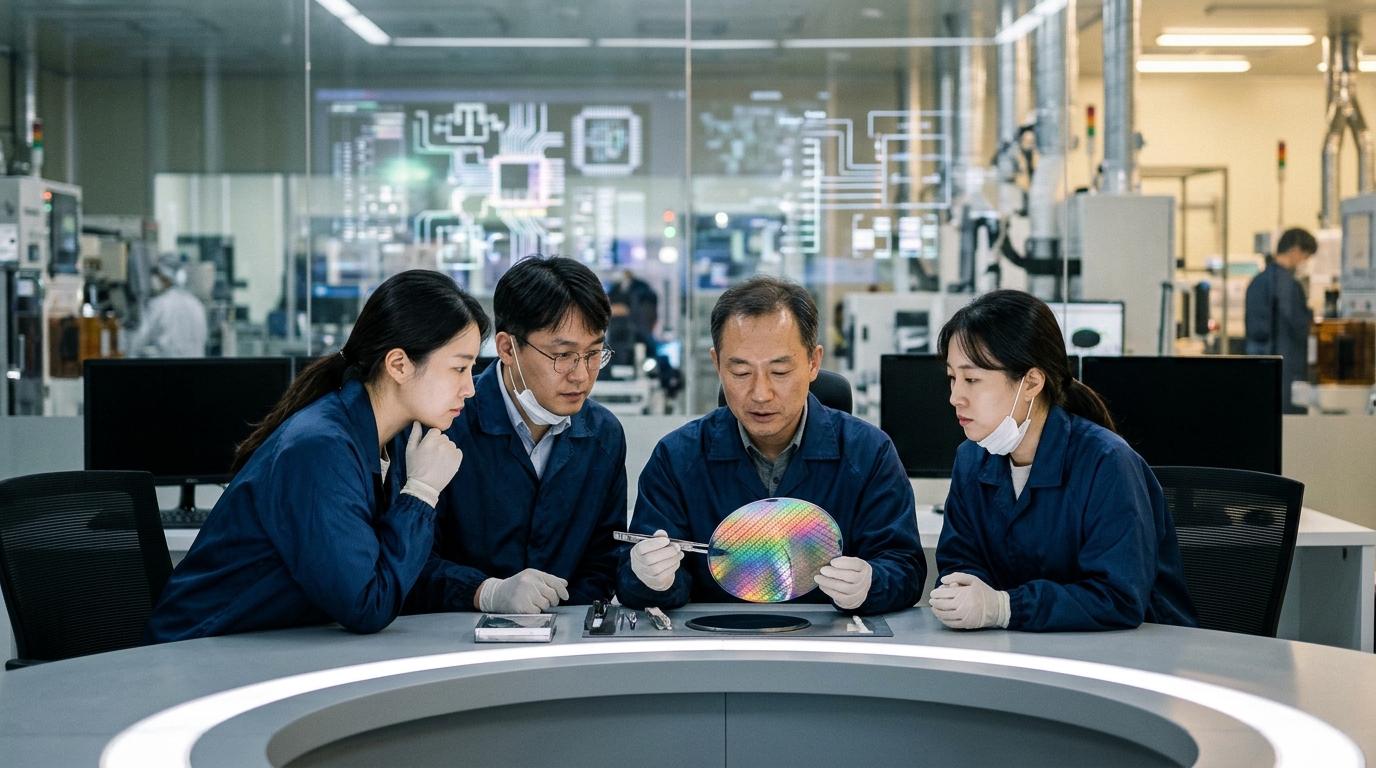
▲ 첨단 반도체 연구개발 클린룸에서 연구원들이 차세대 실리콘 웨이퍼와 미세 회로 아키텍처를 정밀 분석하고 있다. / 공식기록사진
TSMC 창업자인 모리스 창은 일찍이 '새벽에 출근해 날을 꼬박 새우고 다음 날 아침 귀가했다가 오후에 다시 회사로 나오는 강도 높은 몰입이야말로 오늘날 TSMC의 초격차를 만든 축적의 시간'이라고 강조한 바 있습니다. 미국 역시 연봉 10만 7,432달러 이상의 전문직에 대해 근로시간 상한을 두지 않아, 애플은 신형 아이폰 개발 시 1년 반 동안 밤낮없이 집중 몰입 연구를 펼칩니다. 일본도 연소득 1,075만 엔 이상의 고급 인력에 대해 근로시간 규제를 면제하는 '고도 프로페셔널 제도'를 두고 있습니다. 반면 한국은 삼성전자와 SK하이닉스 같은 세계적 기업의 연구원들마저 퇴근 시간이 되면 컴퓨터가 꺼지고 주말 연구동 주차장이 텅 비는 실정입니다.
4. 특별연장근로 인가율 90% 이면의 진실… 영업비밀 유출 우려와 연구 단절의 족쇄
고용노동부와 노동계는 현행 '특별연장근로 인가제도'가 이미 충분히 작동하고 있어 별도의 예외 법안이 필요 없다고 반박합니다. 실제 노동부가 국회에 제출한 공식 자료에 따르면, 특별연장근로 인가율은 2024년 94.0%, 2025년 92.9%, 2026년 상반기 92.1%로 매년 90%를 훌쩍 넘고 있습니다. 특히 2025년 한 해 동안 반도체 기업들이 연구개발 목적으로 신청한 46건 중 45건(97.8%)이 승인되었고, 삼성전자(25건)와 SK하이닉스(3건)의 신청분은 전건 인가되었다는 점을 근거로 내세웁니다.
하지만 산업 현장 전문가들은 이러한 90%대 인가율 통계야말로 현실을 호도하는 '통계의 착시'라고 강력히 반박합니다. 특별연장근로를 승인받으려면 관할 노동관서에 발주서와 납품 계약서, 생산 계획은 물론 상세한 연구개발 과제 기술서까지 제출해야 하는데, 여기에 핵심 기술과 영업비밀이 고스란히 담겨 있기 때문입니다. 기술 유출을 우려한 기업들이 애초에 신청 자체를 기피하다 보니, SK하이닉스의 최근 3년간 연구개발 특별연장근로 신청은 연평균 단 1건에 불과했고 주요 소재·부품·장비 협력업체들도 연 1~4건 수준에 머물렀습니다. 더욱이 1회 인가 기간이 최대 6개월로 묶여 있어 프로젝트가 연장될 때마다 장비를 멈추고 재인가 심사를 받아야 하는 연구 단절이 반복되고 있습니다.
국가 및 주요 기업
근로시간 제도 유형
R&D 현장 운용 실태
글로벌 기술 경쟁력 수준
대만 (TSMC·미디어텍)
노사 합의 시 1일 최대 12시간 허용 (탄력 근무)
2교대 24시간 365일 무중단 R&D (월 180.3시간 근무)
글로벌 첨단 파운드리 3nm·2nm 시장 독점적 지배
미국 (엔비디아·애플)
화이트칼라 이그젬션 (연봉 $107,432 이상 상한 무제한)
신제품 개발 시 1년 반 집중 몰입 후 6개월 여유 주기 운용
글로벌 반도체 원천기술 및 AI 가속기 지표 100점 (기준국)
일본 (라피더스·소니)
고도 프로페셔널 제도 (연 1,075만 엔 이상 상한 면제)
최첨단 2nm 공정 연구진 밤샘 실험 및 자율 몰입
차세대 반도체 기술 지표 88.8점 (한국 86점 상회)
한국 (삼성전자·SK하이닉스)
주 52시간 일률 상한 (특별연장근로 관서 인가제)
퇴근 시간 자동 PC 셧다운, 주말 연구동 주차장 소등
차세대 반도체 기술 지표 86점 (미국·유럽·일본에 열세)
[자료: 한국산업기술진흥원(KIAT) 기술수준평가 및 대만 노동부 통계 종합]
5. 노동계의 과로 사회 경고와 용수·전력의 한계… 상생과 지속 가능한 반도체 해법
정부 내부에서도 부처 간 시각차가 첨예하게 갈렸습니다. 산업통상자원부는 '반도체 패권 경쟁은 1분 1초를 다투는 속도전이며 관료주의적 서류 심사로는 글로벌 경쟁을 따라잡을 수 없다'며 법적 특례 도입을 강력히 주장했습니다. 반면 고용노동부는 '물 들어올 때 노를 저어야 하지만 법정 근로시간의 무제한 예외는 노동자의 건강권을 해칠 수 있어 신중해야 한다'며 현행 제도의 유연한 운영을 고수했습니다. 이와 관련해 국민의힘 고동진 의원은 '중국 딥시크 연구원들이 주 52시간만 지켰겠느냐'며 몰입형 연구 환경 조성을 촉구했고, 더불어민주당 이재명 대표는 '고소득 전문가들이 자발적으로 합의해 일정 기간 몰아 일하고 충분히 쉬는 방식은 합리성이 있다'며 특별법 본안과 분리하여 심도 있게 재검토하자는 중재안을 내놓았습니다.
반도체 특별법을 둘러싼 논란은 비단 근로시간 문제에만 머물지 않습니다. 시민단체와 환경학계에서는 용인과 평택의 반도체 메가 클러스터에 투입되는 막대한 공업용수와 전력이 한계에 부딪혔다며 '기후 부정의'와 재벌 특혜 의혹을 제기하고 있습니다. 실제로 용인 클러스터가 본격 가동되는 2035년 이후 하루에 필요한 공업용수만 170만 톤에 달하지만, 한강 수계의 남는 물을 모두 끌어와도 하루 100만 톤가량이 턱없이 부족한 상황입니다. 국가의 필수 공공재인 물과 전력을 특정 대기업의 생산 라인에 무제한 우선 배정하는 것이 과연 정당하냐는 시민사회의 따가운 시선도 존재합니다.
Published: 2026-11-08 |
Desk: Manintop Politics & Policy Bureau |
Author: Dr. Seung Youb Ssin (Seung Youb Ssin, Ph.D.)
▲ Lawmakers and technological experts deliberate on the Semiconductor Special Act and labor flexibility policies inside a parliamentary committee room. / Press Documentation
◈ Executive Briefing & Strategic Insights
Semiconductor Special Act Passed: Enacted tax credit extensions, Yongin-Pyeongtaek infrastructure subsidies, and expedited licensing.
White-Collar Exemption Severed: Proposed 52-hour cap exemptions for top 3 percent R&D earners (140M KRW+) deferred due to labor opposition.
Global 24-Hour R&D Divide: Taiwan TSMC operates continuous 24-hour rotations (working 22.7 more monthly hours than Korea); US and Japan waive caps.
Statistical Illusion in 90 Percent Approval: Trade secret exposure fears suppress applications (SK Hynix filed only 3 in 3 years); 6-month caps halt research.
Infrastructure Deficits in Mega-Clusters: 2035 Yongin cluster requires 1.7M tons of daily water, facing an estimated 1.0M-ton daily deficit from Han River basins.
As the global artificial intelligence and semiconductor hegemony race escalates into an unrelenting war of speed, South Korea's high-stakes Semiconductor Special Act has crossed the parliamentary threshold to defend the nation's core industrial lifeline. However, the most fiercely contested provision during legislative deliberations—exempting core research and development personnel from the statutory 52-Hour Workweek through a white-collar exemption—was ultimately severed from the main statutory package following resolute resistance from organized labor and intense bipartisan gridlock. This outcome crystallizes the sharp confrontation between industry demands for uninterrupted round-the-clock research immersion to secure technological leadership and labor insistence on upholding the foundational Labor Standards Act to safeguard worker health.
1. Parliamentary Passage of the Semiconductor Special Act: National Safeguards Through Tax Credits and Infrastructure
The legislative package encompassing the Semiconductor Special Act and the K-Chips Act represents an expansive national economic bulwark designed to counter the United States CHIPS Act and astronomical state subsidies deployed across Taiwan and Japan. The enacted framework legally solidifies multi-faceted public assistance across tax reductions, strategic financing, water and power utility infrastructure, and accelerated administrative approvals, ensuring domestic high-tech chipmakers can preserve their hyper-gap advantages in volatile global markets.
Specifically, the statute extends the operational timeline and tax deduction ratios under the K-Chips Act for facility capital investments and research spending. Furthermore, it establishes explicit legal grounds for the national government and local municipalities to directly finance critical electricity transmission grids and industrial water networks indispensable for the mega-clusters in Yongin and Pyeongtaek, while introducing an expedited fast-track permitting process that bundles zoning, environmental clearances, and construction permits to dramatically compress fab development timelines.
Policy Dimension
Statutory Framework Details
Current Institutional Bottlenecks
Anticipated Economic Impact
Investment Tax Credits (K-Chips)
Extends sunset timelines and maintains deduction ratios for R&D and fab capex
Sunset risks stalling private capital reinvestment
Spurs continuous reinvestment of corporate earnings into advanced technology
Public Infrastructure Subsidies
State funding for electricity grids and industrial pipelines in Yongin and Pyeongtaek
Astronomical infrastructure overhead passed to firms
Reduces upfront fab overhead and guarantees stable utility access
Permit Fast-Track System
Synchronized processing of zoning, environmental clearance, and land compensation
Sequential reviews take years before groundbreaking
Dramatically compresses timeline from site selection to full fab operation
Direct Cash Subsidy Authority
Explicit statutory authority enabling government to dispense direct grants
Lack of direct funding weakened global recruitment
Establishes legal parity with US CHIPS Act and Japanese subsidy models
[Source: Ministry of Trade, Industry and Energy Policy Briefings and National Assembly Committee Reports]
2. The Core Controversy of White-Collar Exemption: Proposed R&D Relief for Top 3 Percent Earners
Despite the passage of this landmark legislation, the mood across the semiconductor engineering and industrial community remains subdued. The pivotal white-collar exemption clause, which dominated parliamentary debate, was excised from the final bill and relegated to future legislative review. Designed for high-earning specialized researchers whose intellectual output cannot be measured by rigid punch-clock hours, the exemption lifts statutory working time caps and overtime pay in exchange for elevated base salaries and generous performance bonuses. The administration and ruling party initially sought to exempt R&D personnel earning over 140 million KRW annually, representing the top three percent of income earners, subject to individual written consent and mandatory eleven consecutive hours of daily rest.
Opposition from organized labor and parliamentary progressives was immediate and uncompromising. Major umbrella unions, including the Korean Confederation of Trade Unions and the Federation of Korean Trade Unions, argued that permitting sectoral exemptions would dismantle the seventy-year foundation of the Labor Standards Act, inevitably shifting grueling overtime burdens onto subcontracted researchers and assembly-line workers. Aligning with labor concerns, the Democratic Party exerted decisive resistance. To prevent the entire economic package from stalling, rival parties compromised by enacting tax and infrastructure incentives while deferring the labor flexibility debate to separate standalone deliberations.
3. TSMC 24-Hour Continuous R&D vs Korea 52-Hour Cap: Dynamics of the Global Tech Speed War
This legislative compromise elicited profound concern across domestic semiconductor development facilities, where engineers warn that the research gap with Taiwan Semiconductor Manufacturing Company (TSMC) begins with lab lighting hours. According to August 2024 statistics from Taiwan's Ministry of Labor, Taiwanese employees work an average of 180.3 hours per month, surpassing their South Korean counterparts at 157.6 hours by 22.7 hours each month. By allowing daily working hours to extend up to twelve hours upon mutual agreement, TSMC operates a continuous two-shift R&D rotation that keeps its advanced laboratories active twenty-four hours a day, 365 days a year.
▲ Research engineers analyze advanced patterned silicon wafers and microarchitecture diagrams in a state-of-the-art semiconductor laboratory. / Press Documentation
TSMC founder Morris Chang famously remarked that intense immersion—arriving at dawn, working overnight, returning home the next morning, and returning to the lab that afternoon—constitutes the accumulated time that built TSMC's technological dominance. Similarly, the United States imposes no statutory ceiling on professional personnel earning over 107,432 dollars annually, enabling Apple to conduct eighteen months of nonstop intensive development during iPhone product cycles. Japan also maintains a highly skilled professional system exempting elite specialists earning over 10.75 million yen. In contrast, South Korean researchers at global leaders like Samsung Electronics and SK Hynix see computer systems shut down automatically at closing time, leaving research facility parking lots empty over weekends.
4. Reality Behind the 90 Percent Approval Rate: Trade Secret Leakage Fears and Research Disruption
In defense of current statutes, the Ministry of Employment and Labor and labor advocacy groups maintain that the existing special overtime approval system operates effectively, rendering statutory exemptions redundant. Ministry records submitted to the National Assembly indicate that special overtime approval rates reached 94.0 percent in 2024, 92.9 percent in 2025, and 92.1 percent during the first half of 2026. Labor officials emphasize that forty-five out of forty-six R&D applications filed by semiconductor firms in 2025—a 97.8 percent rate—were approved, including every petition submitted by Samsung Electronics (twenty-five cases) and SK Hynix (three cases).
Industry specialists counter that these elevated approval percentages represent a statistical illusion that masks operational reality. Securing special overtime authorization requires corporations to submit purchase orders, detailed production plans, and highly confidential R&D project blueprints to local labor bureaus, exposing sensitive technological trade secrets to external scrutiny. Fearing intellectual property leakage, chipmakers frequently forgo the application process entirely; SK Hynix averaged merely one annual R&D overtime petition over the past three years, while major materials and equipment suppliers submitted between one and four cases annually. Furthermore, because individual authorizations are capped at six months, research teams must halt experiments to undergo re-examinations whenever projects run long.
Country & Corporation
Working Time Framework
Operational R&D Environment
Global Technology Standing
Taiwan (TSMC, MediaTek)
Up to 12 hours daily upon mutual consent (flexible hours)
Dominant global monopoly over 3nm and 2nm foundry nodes
United States (Nvidia, Apple)
White-collar exemption (no cap above $107,432 annual salary)
18-month high-intensity sprints during product development
Benchmark leader in semiconductor IP and AI accelerators (100 pts)
Japan (Rapidus, Sony)
High-level professional system (exempt above 10.75M JPY)
Autonomous immersion on 2nm advanced development
Next-generation technology index score of 88.8 pts (above Korea)
South Korea (Samsung, SK Hynix)
Uniform 52-hour cap (statutory special overtime permits)
Automatic PC shutdown at close, empty research campuses
Next-generation tech index at 86 pts (lagging US, EU, Japan)
[Source: Korea Institute for Advancement of Technology (KIAT) and Taiwan Ministry of Labor Data]
5. Labor Warnings on Overwork and Infrastructure Limits: Pathways Toward Sustainable Semiconductor Innovation
Sharp friction also emerged between administrative ministries. The Ministry of Trade, Industry and Energy argued that technological supremacy is a race against time where bureaucratic paper reviews cannot match global competitive tempos, urging statutory exceptions. Conversely, the Ministry of Employment and Labor insisted that while industrial momentum is vital, indefinite exemptions threaten worker health, advocating flexible utilization of existing frameworks. Lawmaker Ko Dong-jin questioned whether Chinese AI researchers at DeepSeek adhered to 52-hour caps, urging concentrated research environments, while Democratic Party leader Lee Jae-myung acknowledged the economic logic of voluntary immersion followed by extended rest periods, suggesting detached review outside the core statute.
Controversy surrounding the special act extends beyond working hours into resource constraints. Civic groups and environmental scholars warn that the staggering industrial water and electrical capacity demanded by the mega-clusters in Yongin and Pyeongtaek has reached physical thresholds, sparking accusations of climate injustice and corporate favoritism. Upon reaching full capacity after 2035, the Yongin cluster will require 1.7 million tons of industrial water daily, yet even exhausting surplus water from the Han River basin leaves a daily deficit of approximately one million tons. Allocating finite public resources primarily to corporate manufacturing lines has drawn mounting civic criticism.
Dr. Seung Youb Ssin (Seung Youb Ssin, Ph.D.) Senior Political & Policy Correspondent This dispatch was formulated in strict accordance with statutory legislative transcripts, administrative data from the Ministry of Employment and Labor, and official data from the Taiwan Ministry of Labor. All rights reserved.
PRO SOURCING ENGINE만인의 탑 빅데이터 솔루션
★ 가입 시 600 크레딧(120회) 전원 무료
내가 찾는 상품 키워드, 지금 얼마나 검색될까?
네이버 월간 검색량 + 구글 볼륨 + 아이템스카우트 실시간 상품수와 경쟁강도 배지를 0.5초 만에 무료로 확인하세요.
MANINTOP NEWSLETTER
📬 만인의 탑 뉴스레터 무료 구독
오늘 보신 정책·시사 뉴스가 유익하셨나요? 매일 엄선되는 알짜 복지 혜택과 국회 실시간 속보를 이메일로 가장 먼저 받아보세요. (평생 무료)
1월이 시작되면 감기는 이미 우리 곁에 와 있습니다. 2월, 3월, 4월까지 이어지는 추위와 건조함은 코와 목을 가장 먼저 공격합니다. 아침에 일어나자마자 막혀 있는 코. 계속 흐르는 콧물. 괜히 칼칼해지는 목. 이 증상은 “시작”일 뿐입니다. 한 번 무너지면 일주일, 길면 한 달까지 끌고 갑니다. 약을 먹으면 잠깐 괜찮아집니다. 하지만 며칠 뒤 또 반복됩니다. 왜일까요? 감기는 ‘치료’의 문제가 아니라 ‘관리’의 문제이기 때문입니다. 대부분은 감기가 오고 나서 약을 찾습니다. 하지만 진짜 중요한 건 감기가 오기 전에 코와 목을 지키는 것입니다. 건조한 실내 공기, 차가운 바깥 공기, 눈에 보이지 않는 세균. 코와 목은 매일 공격받고 있습니다. 지긋지긋하죠! 그런데도 우리는 아무 준비 없이 버티고 있습니다. 이번 겨울도 그렇게 보낼 건가요? 사실 방법은 어렵지 않습니다. 코를 깨끗하게 관리하고, 목을 따뜻하게 보호하고, 점막을 촉촉하게 유지하고, 기관지를 미리 관리하고, 외부 공기를 차단하는 것. 이 다섯 가지만 꾸준히 해도 감기약 없이 겨울을 보내는 것이 충분히 가능합니다. 🔥 이제부터 그 방법을 하나씩 살펴보겠습니다. 🔥 1. 코와 목을 먼저 관리해야 하는 과학적 이유 감기의 대부분은 코 점막에서 시작됩니다. 국제 학술지 Nature Reviews Microbiology 와 Journal of Allergy and Clinical Immunology 에 실린 호흡기 감염 관련 연구들에서는, 감기 바이러스가 비강 상피세포에 먼저 부착해 증식한다는 점을 설명하고 ...
리모델링사업이 진행 중인 아파트를 매매할 때 “계약금 10%를 언제까지 내야 하느냐”는 질문이 특히 많이 나옵니다. 이주공고(이주 안내)가 7~11월쯤이라고 들으면, 그 시점에 맞춰 계약금도 움직일 것 같아서 더 헷갈리기 쉽습니다. 하지만 실제 납부기한은 ‘이주공고가 언제냐’만으로 자동 결정되지 않는 경우가 많습니다. 1) 계약금 10% 납부기한: 결국 ‘문서에 적힌 일정’이 기준 계약금 10%를 언제까지 납부해야 하는지는, 내가 서명하는 매매계약서(특약 포함) 와 사업주체/조합이 제시한 공고·안내문 에 적힌 납부 일정이 기준이 됩니다. 실제 공고문에서는 분양대금 납부의 큰 틀(계약금→중도금→잔금)을 먼저 안내하고, 상세 일정은 별도 표나 유의사항으로 제시하는 방식이 흔합니다. 또, 계약서 문구에 따라 지급 시점이 조건부로 설정될 수도 있습니다. 예를 들어 한 사례 소개 자료에서는 용역계약서에 잔금(10%) 지급시기가 “사업승인 후”로 기재되어 있었다는 점이 언급됩니다. 이런 식으로 ‘사업 단계’와 지급을 연동하는 문구가 들어가면, 질문의 답은 계약서 문구를 확인해야만 확정됩니다. 관련 내용은 링크 에서 문구 사례를 확인할 수 있습니다. 2) 입주자모집공고에서 확인되는 ‘납부 순서’와 잔금 마감 시점 공고문에 적힌 문구를 보면, 납부 순서와 잔금 마감에 대한 기준이 비교적 명확하게 제시되는 경우가 있습니다. 예를 들어 한 입주자모집공고에는 “분양금액(주택가격)은 계약금, 중도금, 잔금의 순서로 납부”하며 “잔금은 입주(열쇠 수령일) 전에 완납”해야 한다고 안내되어 있습니다. (문구 확인: 링크 ) 이 문구가 의미하는 바는 최소 2가지입니다. 분양/공급 형태의 문서에서는 ‘계약금→중도금→잔금’ 흐름이 공식적으로 안내될 수 있습니다. 잔금은 “입주(열쇠 수령)” 이전에 완납해야 한다는 마감 기준이 문서에 적혀 있을 수 있습니다. 다만, 위 공고문 문구는 잔금 마감에 대한 기준을 보여주지만, 계약금 10%의...
윤석열 전 대통령 탄핵 인용 소식을 접하면, 가장 궁금한 지점은 ‘헌재가 정확히 무엇을 위헌·위법으로 봤는가’입니다. 또한 탄핵과 별개로 진행되는 형사재판(내란 우두머리 혐의 등)이 어디까지 왔는지도 함께 정리할 필요가 있습니다. 아래 내용은 제공된 기사/게시물 스니펫과 링크에서 확인되는 범위만 모아, 일반인이 흐름을 이해하기 쉽게 정리한 것입니다. 1) 탄핵 인용 관련: 스니펫에서 확인되는 ‘판단의 골격’ 제공된 근거 중 조국혁신당 사이트에는 헌법재판소가 윤석열 탄핵 심판에서 “피청구인의 위헌·위법행위는 국민 신임 …”이라는 취지로 판단했다는 문장이 인용돼 있습니다( 링크 ). 이 인용문만 놓고 보면, ‘위헌·위법행위’가 있었는지와 그로 인해 ‘국민의 신임’이 어떻게 평가됐는지가 핵심 축으로 소개됩니다. 다만 질문에서 요청하신 세부 항목, 즉 비상계엄 선포 자체를 문제 삼은 구체적 이유, 계엄 이후 조치(포고령, 국회 통제 등)의 어떤 지점이 헌법 위반인지, 국회의 권한행사 방해 및 정치활동 제약을 어떤 논리로 판단했는지 등은, 이번에 제공된 근거의 제목/스니펫만으로는 조항·사실관계·판단 구조가 그대로 제시돼 있지 않습니다. 따라서 이 글에서는 ‘헌재가 무엇을 문제 삼았다’는 세부 리스트를 단정적으로 재구성하기보다, 현재 확인 가능한 문구 수준의 요약(위헌·위법행위 → 국민 신임의 문제로 평가)까지만 적습니다. 만약 헌재 결정문 전문(주문 및 이유)이 추가로 확인되면, 그때는 문장 단위로 ‘어떤 행위’와 ‘어떤 헌법 원리/조항’이 연결되는지(예: 권력분립, 국회의 권한, 정치적 기본권 등) 구조화해 정리하는 것이 가장 정확합니다. 2) 형사 절차(내란 혐의) 관련: 체포영장과 1심 선고 언급 탄핵 심판과 별도로, 12·3 비상계엄 사태로 내란 혐의를 받는 윤석열 대통령에 대해 2024년 12월 31일 체포 영장이 발부됐다는 BBC 보도가 있습니다( 링크 ). 해당 보도는 ‘현직 대통령’에 대한 체포영장 발부라는 점을 함께 언급합니다. 또...