[심층기획] '스테로이드 한계 넘는다'... 비타민 A, 천식 손상 기도 섬모세포 재생과 상피 장벽 복원 규명
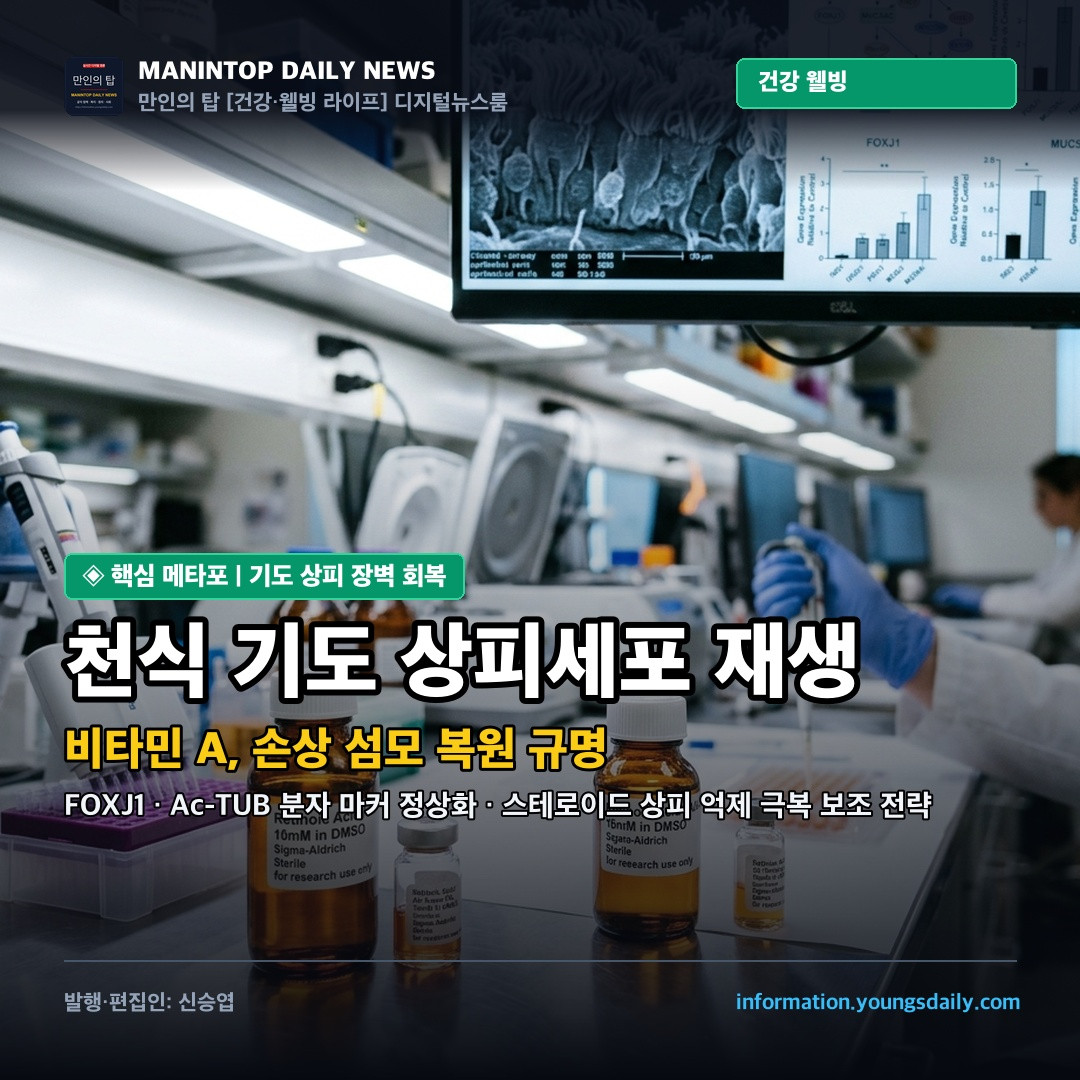
전 세계 3억 명 이상이 고통받고 있는 대표적인 만성 기도 염증 질환인 천식에서, 기존 표준 치료제인 흡입형 스테로이드의 구조적 한계를 보완할 수 있는 결정적인 분자생물학적 재생 기전이 밝혀졌다. 기도 염증을 억제하면서도 정작 손상된 상피 장벽의 자체 회복을 방해하던 약리학적 딜레마를 비타민 A(레티노산)를 통해 극복하고, 기도의 핵심 정화 기구인 '섬모세포'를 되살릴 수 있다는 실증 데이터가 세계 의학계에 공표되었다.
중국 충칭의과대학교 부속 어린이병원 호흡기내과 유경월(Jingyue Liu) 교수 연구팀은 국제 면역학 권위지인 '알레르골로지아 앤드 이뮤노패솔로지(Allergologia et Immunopathologia)'에 발표한 연구 논문을 통해, 집먼지진드기(HDM)로 유도된 천식 모델에서 비타민 A 및 그 활성 대사물인 올트랜스 레티노산(ATRA)이 섬모 생성의 마스터 전사인자인 FOXJ1과 섬모 미세관 핵심 단백질인 Ac-TUB(acetyl-α-tubulin)의 발현을 정상화함으로써 파괴된 기도 상피 장벽의 완전성을 획기적으로 복원한다는 사실을 최초로 증명했습니다.
1. 연구 배경: 기존 흡입형 스테로이드 치료가 직면한 '상피 회복 억제' 딜레마
기도 상피(Airway Epithelium)는 외부 유입 알레르겐, 병원성 바이러스, 미세먼지 등 물리화학적 독성 입자에 맞서는 인체 호흡기의 제1선 방어 장벽입니다. 정상인의 기도 상피는 점막 표면의 50~90%를 차지하는 섬모세포(Ciliated cells)를 비롯해 기저세포, 점액 분비세포 등으로 치밀하게 구성되어 있습니다. 이 중 섬모세포는 초당 수십 회에 달하는 일정한 방향의 정밀한 진탕 운동을 통해 이물질을 기침과 가래로 배출하는 점막섬모 청정(Mucociliary Clearance, MCC)의 핵심 엔진입니다.
그러나 천식 환자의 기도는 만성 알레르기 염증으로 인해 상피세포가 뜯겨 나가고(박리), 섬모가 탈락하며, 술잔세포가 과도하게 증식(화생)하여 끈적한 점액이 기도를 틀어막는 병리적 리모델링을 겪습니다. 현재 임상에서 1차 표준 치료제로 처방되는 글루코코르티코이드(흡입형 스테로이드)는 면역세포의 염증 반응을 강력하게 진화하지만, 심각한 이면의 한계를 동반합니다.
연구팀의 이전 기초 연구(Liu et al., 2013)에 따르면, 덱사메타손과 같은 글루코코르티코이드는 생체 내 GILZ(글루코코르티코이드 유도 류신 지퍼) 단백질 신호전달을 자극하여, 상처 입은 기도 상피세포가 스스로 분열하고 이동하여 손상 부위를 메우는 '재상피화(Re-epithelialization) 및 자체 치유' 과정을 부분적으로 억제하는 역설적 작용을 나타냅니다. 염증 불길은 잡았으나 무너진 상피 장벽과 탈락한 섬모는 복구되지 못해, 약을 줄이거나 끊으면 미세 자극에도 천식이 재발하는 악순환이 반복되어 온 것입니다. 따라서 염증 억제를 넘어 기도 상피 장벽을 본질적으로 재생시키는 보조 치료 중재 기술의 개발이 절실했습니다.
2. 실험 설계: 집먼지진드기(HDM) 천식 모델과 체외 기관지 세포의 이중 검증
충칭의대 연구팀은 비타민 A의 기도 상피 수호 효능을 입증하기 위해 생체 내(In vivo) 마우스 천식 모델과 체외(In vitro) 인간 기관지 상피세포주(16HBE)를 유기적으로 결합한 정밀 실험을 전개했습니다.
동물 실험에서는 6~8주령의 C57BL/6 암컷 마우스를 (1) 정상 대조군, (2) HDM 유도 천식군, (3) 비타민 A 치료 천식군으로 배정했습니다. 천식군은 0일차와 14일차에 집먼지진드기 항원(20 μg)을 비강 내 투여하여 전신 감작을 유도한 뒤, 21일부터 29일까지 격일로 항원을 기도에 야기했습니다. 치료군은 감작 개시 시점부터 7일 간격으로 비타민 A(체중 g당 44 IU)를 위강(경구) 투여했습니다.
연구팀은 메타콜린(Methacholine) 농도 기울기(0~50 mg/mL)에 따른 강화 일시정지(Penh) 지표를 측정해 기도 과민성(AHR)을 정밀 평가했으며, 기관지폐포 세척액(BALF) 내 호산구 및 총 염증세포 수, 혈청 총 IgE 농도를 분석했습니다. 또한 혈청 내 활성 레티놀 농도를 고성능 액체 크로마토그래피(HPLC)로 측정하고, 폐 조직 H&E 염색, 글리코겐 주기산-시프(PAS) 염색, 주사전자현미경(SEM), 면역형광(IF) 고초점 공초점 현미경 스캐닝 및 qRT-PCR, 웨스턴 블롯을 통해 형태학적·분자생물학적 데이터를 종합 도출했습니다.
| 측정 항목 및 분자 바이오마커 | 정상 대조군 (Control) | 천식 모델군 (HDM Asthma) | 비타민 A 치료군 (Asthma + VA) | 통계적 유의성 및 임상적 의미 |
|---|---|---|---|---|
| 혈청 레티놀 농도 (μmol/L) | 1.08 ± 0.09 | 0.58 ± 0.09 (급감) | 0.91 ± 0.08 (정상화) | 천식 시 체내 비타민 A 고갈(P<0.001), 경구 보충 시 정상 농도로 통계적 유의 회복(P<0.01) |
| Ac-TUB 상대 발현량 (마우스 폐) | 1.00 (기준) | 약 0.11 (89% 소실) | 약 0.41 (3.7배 반등) | 섬모 미세관 골격 단백질. 천식군 대비 비타민 A 치료군에서 유의미한 상향 회복(P<0.01) |
| FOXJ1 상대 발현량 (마우스 폐) | 1.00 (기준) | 약 0.18 (82% 소실) | 약 1.55 (8.6배 폭증) | 섬모세포 분화 총괄 전사인자. 천식군 대비 유의하게 반전 상승(P<0.05), 섬모 생성 재가동 |
| MUC5AC 상대 발현량 (마우스 폐) | 1.00 (기준) | 약 2.35 (과다 분비) | 약 1.68 (감소 경향) | 술잔세포 점액 분비 마커. 대조군 대비 천식군 증가(P<0.05), VA군 감소 경향 확인 |
| 기관 섬모 미세구조 (SEM 관찰) | 고밀도, 균일한 방향성 | 무질서, 탈락, 끈적한 점액 부착 | 섬모 배열 및 형태학적 완전성 복원 | 전자현미경을 통해 비타민 A에 의한 기도 상피 물리적 구조 재건 시각적 실측 입증 |

3. 핵심 발견: 혈청 레티놀 고갈의 역전과 주사전자현미경(SEM)이 포착한 섬모 재건
이번 연구에서 가장 주목할 생화학적 사실은 천식이 발병하면 생체 내 비타민 A가 급격히 고갈된다는 점입니다. HPLC 측정 결과 정상 마우스의 혈청 레티놀 농도는 1.08 ± 0.09 μmol/L였으나, 천식 마우스에서는 0.58 ± 0.09 μmol/L로 거의 절반 수준으로 곤두박질쳤습니다(P<0.001). 심각한 만성 염증 상태가 체내 레티놀 대사를 교란하고 소모를 촉진하기 때문입니다. 비타민 A를 투여받은 천식 마우스는 혈청 레티놀 농도가 0.91 ± 0.08 μmol/L로 정상치에 근접하게 회복되었습니다(P<0.01).
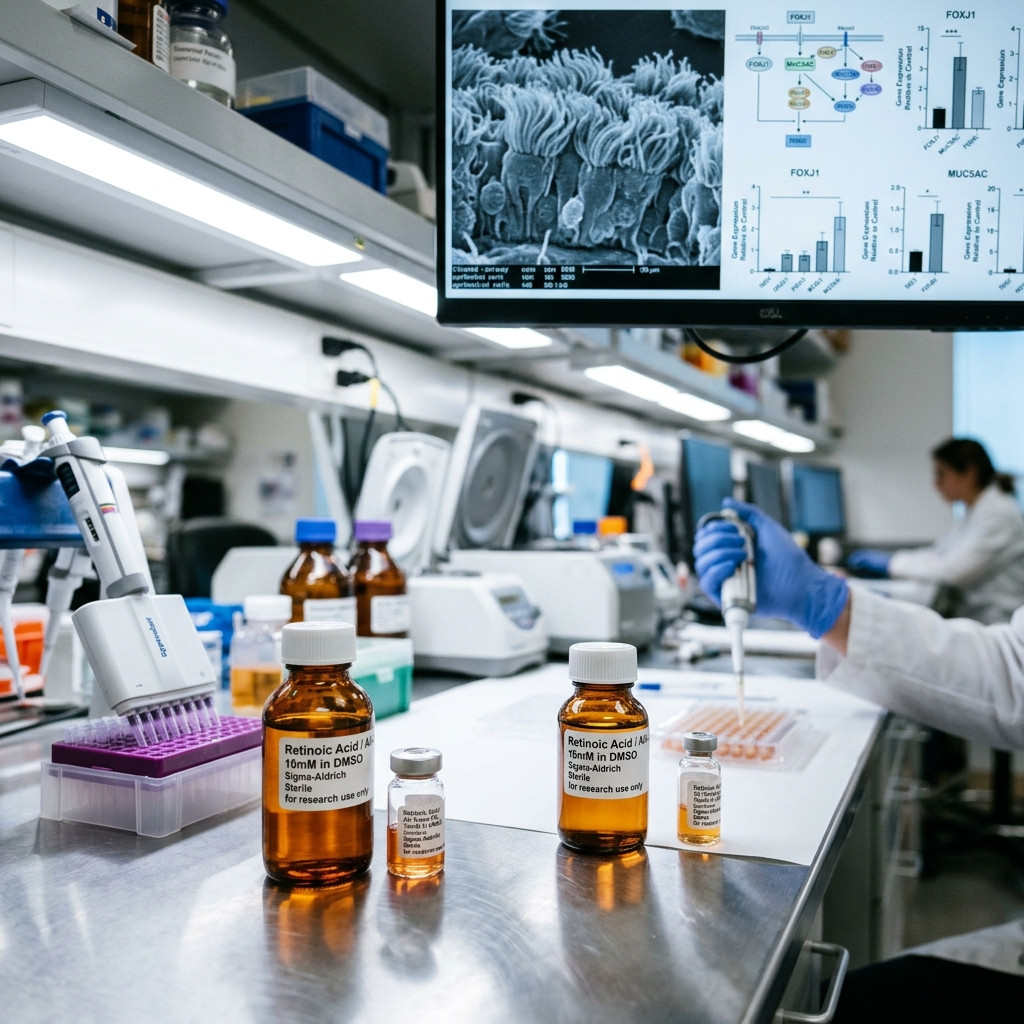
상피세포의 구조적 복원은 주사전자현미경(SEM) 사진에서 압도적인 시각적 증거로 확인되었습니다. 정상 마우스의 기관 섬모는 빽빽한 밀도와 일정한 파도 모양의 정돈된 배향성을 유지하고 있었습니다. 반면 천식 마우스 기도는 섬모가 대량 탈락하여 듬성듬성하고, 남은 섬모마저 꺾이고 엉켜 무질서했으며 표면은 농축된 병리적 점액에 뒤덮여 있었습니다. 비타민 A를 치료한 군에서는 기관 점막을 가득 채운 섬모의 밀도와 정렬 상태가 기적적으로 되살아나, 정상 대조군에 필적하는 매끄럽고 견고한 물리적 구조를 되찾았습니다.
4. 분자 기전 분석: 섬모 전사인자 FOXJ1과 골격 단백질 Ac-TUB의 극적 부활
비타민 A가 기도 상피를 되살리는 약리적 표적은 명확했습니다. 유전자 및 단백질 발현 분석 결과, 천식 마우스의 폐 조직 내에서 섬모세포 미세관의 핵심 골격 단백질인 Ac-TUB(acetyl-α-tubulin) 발현은 정상 대비 89%나 급감(0.11)해 있었습니다. 그러나 비타민 A를 투여하자 Ac-TUB 단백질 발현이 0.41로 3.7배 이상 반등했습니다(P<0.01).
더욱 결정적인 변화는 섬모 생성을 관장하는 마스터 스위치인 FOXJ1 전사인자에서 관찰되었습니다. FOXJ1은 기저세포가 섬모세포로 분화하고 섬모 구조물을 합성하도록 명령하는 핵심 인자입니다. 천식군에서 0.18로 추락했던 FOXJ1 발현은 비타민 A 투여 후 1.55로 무려 8.6배나 폭증하며 정상치를 웃도는 수준으로 활성화되었습니다(P<0.05). 이는 비타민 A와 활성 대사물인 레티노산(ATRA)이 휴면 혹은 손상 상태에 빠진 세포핵 내 유전체 전사 기구를 직접 자극하여, 섬모세포의 분화와 섬모 신생(Ciliogenesis)을 강력하게 재가동시켰음을 뜻합니다.
이러한 기전은 인간 기관지 상피세포주(16HBE)를 활용한 체외 시험에서도 일관되게 재현되었습니다. 집먼지진드기 항원으로 Ac-TUB 발현이 억제된 인간 세포에 올트랜스 레티노산(ATRA 2 μM)을 처리하자 Ac-TUB 및 FOXJ1 단백질 합성이 유의하게 복원되어, 생쥐뿐 아니라 인간 호흡기 상피에서도 비타민 A 대사 경로가 동일한 섬모 재생 스위치로 작동함을 확증했습니다.
호흡기 상피세포는 단순한 물리적 필터가 아닌 최첨단 면역 사령탑입니다. 2022~2023년 하버드 의대 및 노스이스트라대 연구진(Bleier, Amiji 등)이 JACI에 발표한 바에 따르면, 코 점막 상피세포는 바이러스 침입 시 수십억 개의 세포외 소포체(EV) 스웜을 분출하여 바이러스를 결합·중화합니다. 그러나 겨울철 찬 공기(외부 4.4°C)에 노출되어 비강 온도가 37°C에서 32°C로 5°C만 떨어져도 TLR3 매개 EV 분비량이 41.9% 급감하고 항바이러스 miR-17 탑재가 23.8% 줄어 감염에 취약해집니다. 비타민 A를 통한 상피 섬모 장벽 복원은 이러한 점막 면역 소포체 방어선이 원활히 작동할 수 있는 생리학적 온상을 수호하는 필수 기반입니다.
5. 임상적 시사점과 주의사항: 스테로이드를 보완하는 '병용 보조 치료'의 정석
상피세포 섬모의 기능적 지표인 점막섬모 청정(MCC) 능력은 생활습관에 의해서도 크게 좌우됩니다. 브라질 상오 파울루 주립대(UNESP) Uzeloto 연구팀의 418명 대상 임상 연구에 따르면, 사카린 수송 검사(STT)로 측정한 이물질 배출 시간은 비흡연자(10.55분) 대비 직접 흡연자(13.41분)와 간접 흡연자(13.72분)에서 현저히 지연되었습니다. 특히 남성 흡연자는 15.45분까지 지연되어 담배 연기가 섬모의 물리적 구조와 운동 진탕 주파수를 파괴함을 실증했습니다. 여기에 알레르기 비염 환자에서 생리식염수 세척(mRQLQ 삶의 질 점수 36.7점에서 10.10점으로 대폭 개선)과 같은 상피 수분 공급 보조 치료가 임상적 유효성을 입증받았듯, 비타민 A는 호흡기 상피 장벽의 구조적 재건을 이끄는 새로운 영양약리학적 보조제로서 높은 잠재력을 지닙니다.
그러나 본 연구 결과를 임상 현장에 적용할 때는 명확한 의학적 주의가 요구됩니다. 첫째, 비타민 A는 기존의 흡입형 스테로이드 치료를 대체하는 단독 약제가 아닙니다. 스테로이드가 급성 염증의 불길을 끄는 동안, 스테로이드의 상피 치유 억제 한계를 보완하여 기도 장벽을 재건하는 '병용 보조 치료(Adjunct Therapy)' 개념으로 이해해야 합니다.
둘째, 환자의 임의 고용량 영양제 복용은 엄격히 금기됩니다. 비타민 A는 수용성 비타민과 달리 간에 축적되는 지용성 비타민이므로, 고용량을 장기 과다 복용할 경우 간 독성, 두통, 어지럼증, 골다공증, 기형아 출산 위험 등 심각한 과다증(Hypervitaminosis A) 부작용이 발생할 수 있습니다. 본 연구는 동물 위강 투여와 세포 시험에 기반한 전임상 결과이므로, 향후 최적의 국소 흡입 제형이나 정밀 용량 설정을 위한 인체 임상 시험이 수반되어야 합니다. 기도의 자가 치유 능력을 되살려 천식의 만성화를 차단하려는 이번 분자생물학적 성과는 호흡기 질환 치료 패러다임을 상피 장벽 재생으로 확장시키는 중대한 이정표입니다.
[취재 후기 및 의학적 안내]
본 기획 보도는 충칭의과대학교 연구팀이 Allergologia et Immunopathologia에 발표한 동료 평가 학술 논문, 하버드 의대 및 노스이스트라대의 JACI 점막 면역 논문, UNESP의 점막섬모 청정 임상 연구 논문을 바탕으로 의학적 사실만을 정밀 취재·교차 검증하여 작성되었습니다. 천식은 전문의의 정확한 진단과 흡입제 처방이 필수적인 만성 질환이며, 임의로 기존 처방약을 중단하거나 고용량 보충제를 자가 투여해서는 안 됩니다.
[In-Depth] 'Overcoming Steroid Limits'... Vitamin A Regenerates Damaged Airway Ciliated Cells and Restores Epithelial Barrier in Asthma
In bronchial asthma—a premier chronic inflammatory airway disease afflicting over 300 million individuals globally—a pivotal biomolecular regenerative mechanism has been identified to overcome the structural limitations of conventional first-line inhaled corticosteroids. While synthetic glucocorticoids suppress allergic inflammation with remarkable efficacy, they paradoxically impede endogenous epithelial self-repair. New landmark empirical evidence demonstrates that Vitamin A and its bioactive metabolite, retinoic acid, overcome this pharmacological dilemma, revitalizing the respiratory system's primary clearance engine: airway ciliated cells.
A research team led by Professor Jingyue Liu at the Department of Respiratory Medicine, Children's Hospital of Chongqing Medical University, published a peer-reviewed investigation in the international journal Allergologia et Immunopathologia. Utilizing a house dust mite (HDM)-induced asthma model and human bronchial epithelial cells (16HBE), the team demonstrated for the first time that Vitamin A (VA) and all-trans retinoic acid (ATRA) reactivate the master ciliogenesis transcription factor FOXJ1 and the core structural microtubule protein Ac-TUB (acetyl-α-tubulin), decisively reconstructing disrupted airway epithelial barrier integrity.
1. Research Context: The 'Epithelial Healing Suppression' Dilemma of Inhaled Corticosteroids
The airway epithelium forms the body's primary frontline physical, mechanical, and immunological defense barrier against inhaled aeroallergens, viral pathogens, and toxic airborne particulate matter. Under homeostatic physiological conditions, healthy airway epithelium is densely populated by ciliated cells (accounting for 50% to 90% of all mucosal cells), basal progenitor cells, and secretory cells. Among these, multiciliated cells execute coordinated, unidirectional ciliary metachronal wave beating at dozens of cycles per second, driving mucociliary clearance (MCC) to propel trapped pathogens and foreign debris upward out of the bronchial tree.
In chronic asthmatic airways, persistent type-2 inflammatory signaling causes extensive epithelial shedding, ciliary denudation, goblet cell hyperplasia, hypersecretion of viscid mucus, and progressive fibroproliferative tissue remodeling. Although first-line inhaled glucocorticoids (e.g., fluticasone, budesonide, dexamethasone) effectively extinguish active eosinophilic inflammation, they harbor a fundamental mechanistic flaw.
Prior investigation by the same research group (Liu et al., 2013) demonstrated that glucocorticoids induce expression of GILZ (Glucocorticoid-Induced Leucine Zipper) protein, which partially arrests endogenous epithelial re-epithelialization and suppresses cell migration required to heal wounded mucosa. Consequently, while active inflammatory flares are temporarily suppressed, the broken epithelial barrier and depleted ciliated cells remain unhealed, leaving hyperreactive airways vulnerable to immediate exacerbation upon minimal allergen exposure. Developing targeted pharmacological interventions that actively promote ciliary regeneration and epithelial barrier restoration has thus stood as a critical unmet medical necessity.
2. Experimental Architecture: Dual In Vivo HDM Murine Asthma Model and In Vitro 16HBE Cell Assay
To substantiate the therapeutic efficacy of Vitamin A in respiratory mucosal restoration, the Chongqing Medical University investigators engineered a rigorous dual-platform experimental design combining an in vivo murine asthma model with an in vitro human bronchial epithelial cell line (16HBE).
In the in vivo arm, 6- to 8-week-old female C57BL/6 mice maintained under specific pathogen-free (SPF) conditions were randomized into three cohorts: (1) control group, (2) HDM-induced asthma model, and (3) Vitamin A-treated asthmatic group (Asthma + VA). Sensitization was established by intranasal instillation of 20 μg house dust mite extract on days 0 and 14, followed by airway challenge on days 21, 23, 25, 27, and 29. The treatment cohort received oral gavage of Vitamin A at a dose of 44 IU/g body weight every 7 days (days 0, 7, 14, 21, and 28).
Airway hyperresponsiveness (AHR) was quantitatively mapped across methacholine concentration gradients (0 to 50 mg/mL) via non-invasive plethysmography measuring enhanced pause (Penh). Bronchoalveolar lavage fluid (BALF) was harvested for total inflammatory cell counts and eosinophil differential profiling, while serum total IgE levels were quantified via ELISA. Serum retinol concentrations were profiled through high-performance liquid chromatography (HPLC). Histological morphology and ciliary architecture were examined using H&E, Periodic Acid-Schiff (PAS) glycogen staining, Scanning Electron Microscopy (SEM), and confocal laser scanning immunofluorescence, complemented by qRT-PCR and Western blotting for molecular quantification.
| Assay Parameter & Biomarker | Control Cohort | Asthma Model (HDM) | Vitamin A Treated (Asthma + VA) | Statistical Significance & Biological Context |
|---|---|---|---|---|
| Serum Retinol Level (μmol/L) | 1.08 ± 0.09 | 0.58 ± 0.09 (Plummeted) | 0.91 ± 0.08 (Restored) | Severe retinol depletion under chronic inflammation (P<0.001); restored near baseline via oral VA (P<0.01) |
| Ac-TUB Relative Expression (Lung) | 1.00 (Reference) | ~0.11 (89% Reduction) | ~0.41 (3.7x Rebound) | Core axonemal microtubule protein; highly significant upregulation following VA treatment (P<0.01) |
| FOXJ1 Relative Expression (Lung) | 1.00 (Reference) | ~0.18 (82% Depletion) | ~1.55 (8.6x Surge) | Master transcription factor driving ciliogenesis; dramatic reversal above normal baseline (P<0.05) |
| MUC5AC Relative Expression (Lung) | 1.00 (Reference) | ~2.35 (Hypersecretion) | ~1.68 (Downward Trend) | Major gel-forming mucin in goblet cells; elevated in asthma (P<0.05), mitigated under VA intervention |
| Tracheal Cilia Ultrastructure (SEM) | Dense, Parallel, Uniform | Disrupted, Sparse, Entangled | Reconstructed Ciliary Forest | Scanning electron microscopy directly confirms visual restoration of epithelial structural integrity |
3. Core Findings: Reversal of Serum Retinol Depletion & Scanning Electron Microscopy Validation
A striking biochemical discovery from the Chongqing investigation is the profound systemic depletion of endogenous Vitamin A triggered by chronic allergic asthma. While healthy control animals maintained steady-state serum retinol concentrations of 1.08 ± 0.09 μmol/L, levels in HDM-sensitized asthmatic mice crashed by nearly 50% down to 0.58 ± 0.09 μmol/L (P<0.001). Persistent systemic and local pulmonary inflammation accelerates metabolic catabolism and tissue utilization of circulating retinoids. Oral administration of Vitamin A successfully rescued circulating levels, elevating serum retinol back to 0.91 ± 0.08 μmol/L (P<0.01).
The definitive anatomical evidence of tissue restoration was captured via Scanning Electron Microscopy (SEM). In healthy control animals, tracheal luminal surfaces presented a lush, uniform carpet of elongated cilia oriented in cohesive wave-like alignments. In untreated asthmatic mice, the ciliary carpet was devastated: ciliated cells were largely stripped away, remaining cilia were stunted, fragmented, and disoriented, and the epithelial landscape was choked by dense adhering plugs of mucus. Following Vitamin A intervention, the tracheal mucosal lining exhibited a remarkable transformation, regenerating a dense, parallel, healthy ciliary forest closely mirroring homeostatic architecture.
4. Molecular Mechanism: The Dramatic Renaissance of Ciliogenesis Master Regulator FOXJ1 and Ac-TUB
The biomolecular targets orchestrating this structural rescue were delineated through transcriptomic and Western blot assays. In asthmatic lung parenchyma, expression of acetyl-α-tubulin (Ac-TUB)—the post-translationally stabilized microtubule building block essential for axoneme structural rigidity—collapsed by 89% down to a relative ratio of 0.11. Vitamin A administration triggered a 3.7-fold upregulation of Ac-TUB back to 0.41 (P<0.01), re-establishing intracellular microtubule scaffold integrity.
Even more profound was the restoration of Forkhead Box J1 (FOXJ1), the master transcription factor governing multiciliogenesis. FOXJ1 coordinates the transcriptional cascade commanding basal bodies to dock at the apical membrane and initiate ciliary axoneme assembly. In asthmatic mice, FOXJ1 expression plummeted to 0.18. Upon Vitamin A treatment, FOXJ1 expression surged 8.6-fold to 1.55 (P<0.05), markedly exceeding baseline healthy levels. This proves that Vitamin A and its nuclear receptor agonist, retinoic acid, directly stimulate transcriptional reprogramming in quiescent or injured progenitor cells to re-engage multiciliated differentiation.
This molecular circuitry was validated in vitro within cultured human bronchial epithelial cells (16HBE). When human airway cells were challenged with house dust mite allergen, Ac-TUB synthesis was suppressed; subsequent treatment with all-trans retinoic acid (ATRA, 2 μM) successfully stimulated robust re-expression of both Ac-TUB and FOXJ1, confirming that retinoic acid receptor signaling functions as an identical conserved ciliogenesis switch across both murine and human bronchial epithelium.
Respiratory mucosal epithelium is far from a passive mechanical sheet; it functions as an autonomous immunological sentinel. Groundbreaking research published in the Journal of Allergy and Clinical Immunology (JACI) by Harvard Medical School and Northeastern University teams (Bleier, Amiji et al.) revealed that nasal epithelial cells deploy billions of antimicrobial extracellular vesicles (EVs) as a defensive swarm upon viral encounter. However, exposure to cold winter air (4.4°C outdoor ambient, causing a 5°C intranasal temperature drop from 37°C to 32°C) reduces TLR3-mediated EV secretion by 41.9%, diminishes antiviral miR-17 cargo by 23.8%, and suppresses viral decoy receptors LDLR and ICAM-1 by up to 77.2%. Regenerating the physical ciliated barrier via Vitamin A provides the essential physiological bedrock required for these delicate epithelial vesicle defenses to survive and operate.
5. Clinical Perspectives and Medical Warnings: Standardizing Adjunct Therapeutic Protocols
The functional efficacy of respiratory cilia—quantified via mucociliary clearance (MCC)—is heavily vulnerable to environmental and lifestyle insults. In a landmark clinical study of 418 subjects conducted by Uzeloto and colleagues at São Paulo State University (UNESP), Saccharin Transport Test (STT) transit times were significantly prolonged in active smokers (13.41 minutes) and passive second-hand smokers (13.72 minutes) compared to non-smoking controls (10.55 minutes, P<0.01), with male smokers worsening to 15.45 minutes. Toxic combustion byproducts paralyze ciliary beat frequency and shred axonemes. Just as isotonic saline irrigation offers validated clinical relief in allergic rhinitis (improving mRQLQ quality-of-life scores from 36.7 to 10.10, P<0.001), retinoid-mediated airway regeneration provides a transformative pharmacological paradigm for repairing injured mucosal architecture.
However, translating these laboratory discoveries into clinical practice demands strict adherence to two cardinal medical caveats. First, Vitamin A does not replace inhaled corticosteroid maintenance pharmacotherapy. Inhaled steroids remain irreplaceable for extinguishing acute eosinophilic inflammation. Vitamin A serves strictly as an adjunct restorative therapy designed to repair the epithelial barrier that corticosteroids leave unhealed.
Second, unsupervised self-supplementation with high-dose Vitamin A is strictly dangerous. Unlike water-soluble vitamins, Vitamin A is fat-soluble and bioaccumulates in hepatic tissue. Uncontrolled chronic overconsumption poses severe risks of hypervitaminosis A, including hepatotoxicity, intracranial hypertension, osteoporotic fractures, and teratogenic birth defects. Because current findings originate from preclinical murine models and cellular assays, translation into human clinical therapeutics requires formal randomized clinical trials to optimize localized inhalation delivery or micro-metered therapeutic windows. By unlocking the airway's innate regenerative capacity, this discovery represents a profound leap toward curing chronic mucosal vulnerability in asthma.
[Editorial Transparency & Medical Disclaimer]
This in-depth investigative report was compiled, reviewed, and cross-verified utilizing peer-reviewed literature published in Allergologia et Immunopathologia by Chongqing Medical University, mucosal immunology research from Harvard Medical School in JACI, and mucociliary clearance investigations from UNESP. Bronchial asthma is a chronic respiratory condition requiring individualized diagnosis and physician-directed pharmacotherapy. Patients must never discontinue prescribed inhalation therapy or self-administer unverified high-dose nutritional supplements without professional medical guidance.
내가 찾는 상품 키워드, 지금 얼마나 검색될까?
네이버 월간 검색량 + 구글 볼륨 + 아이템스카우트 실시간 상품수와 경쟁강도 배지를 0.5초 만에 무료로 확인하세요.


