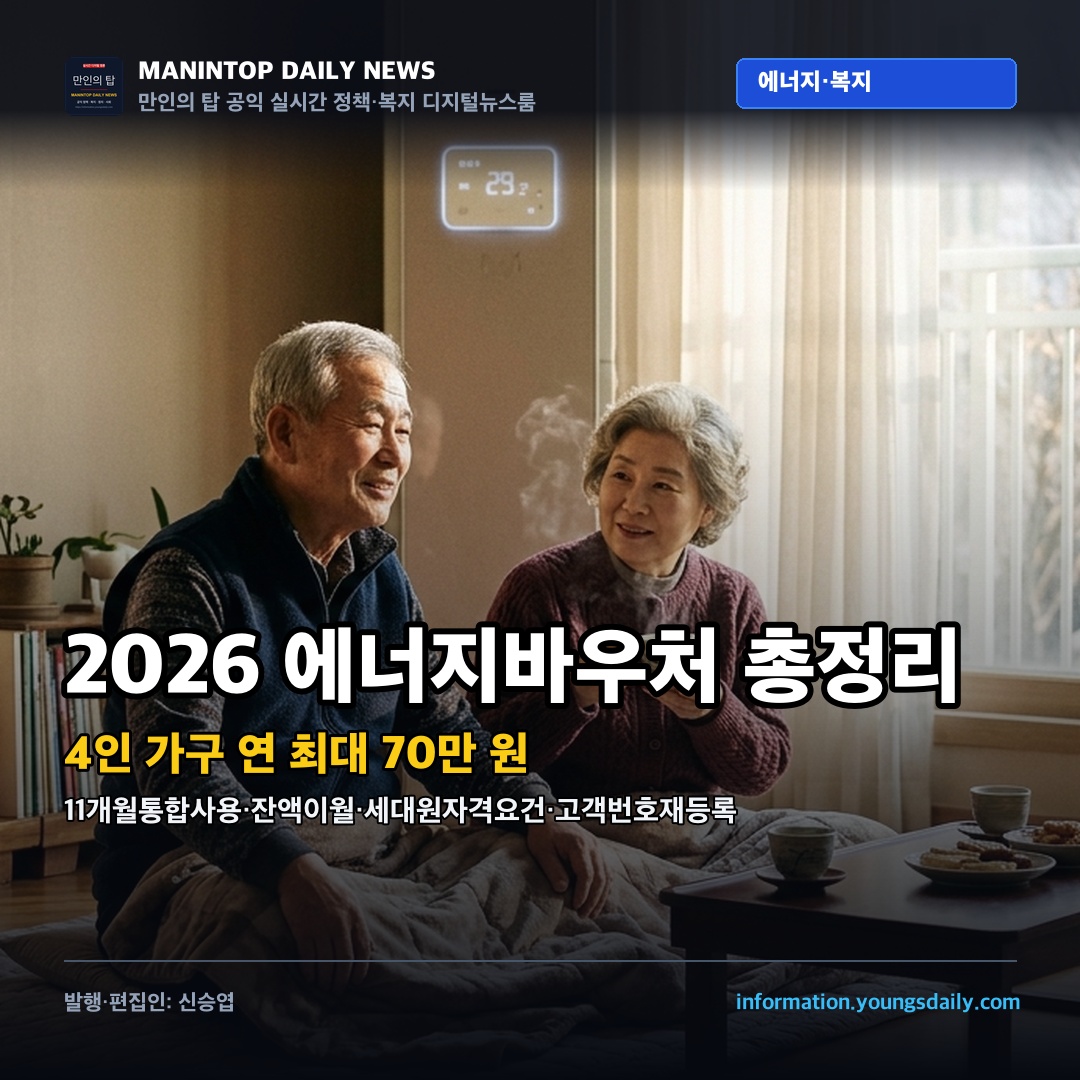
기후에너지환경부와 한국에너지공단이 주관하는 2026년도 에너지바우처 사업은 4인 이상 세대 기준 연 최대 70만 1,300원을 지원하며, 여름철 냉방과 겨울철 난방의 계절별 칸막이를 허물고 11개월 동안 자유롭게 나누어 쓸 수 있도록 개편되었습니다. 생계·의료·주거·교육급여 수급자격과 노인·영유아·장애인·임산부 등 세대원 특성을 모두 충족해야 하는 이중 문턱, 이사 후 전입신고만 믿다 탈락하는 고객번호 누락 함정, 그리고 쪽방·고시원 거주자를 위한 현금 예외지급 절차까지 취약계층과 서민이 꼭 알아야 할 핵심 팩트를 알기 쉽게 총정리합니다.
SPONSORED · ADVERTISEMENT
1. 4인 가구 연 최대 70만 원과 '11개월 통합 사용' 메커니즘
- 2026년 가구원수별 연간 총 지원금액: * 1인 세대: 295,200원 (타 동절기 연료비 희망 시 하절기 한정 40,700원) * 2인 세대: 407,500원 (하절기 한정 58,800원) * 3인 세대: 532,700원 (하절기 한정 75,800원).
* 4인 이상 세대: 701,300원 (하절기 한정 102,000원) - 11개월 통합 사용 메커니즘: 2026년 7월 1일부터 2027년 5월 31일까지 총 11개월간 연간 지원 총액 한도 내에서 하절기와 동절기 구분 없이 에너지를 소비할 수 있다.
- 잔액 이월과 몰아 쓰기: 여름철에 남은 잔액은 별도 신청 없이 겨울철 난방비로 자동 이월된다. 여름철 전기요금을 아끼고 겨울 난방에 집중하고 싶다면 '하절기 요금 미차감'을 신청해 전액을 동절기로 넘길 수 있다.
- 기초생활보장 수급권 보호: 에너지바우처 지원금은 공공부조 소득인정액 산정에 전혀 반영되지 않아 다른 복지 급여가 감액되지 않는다.
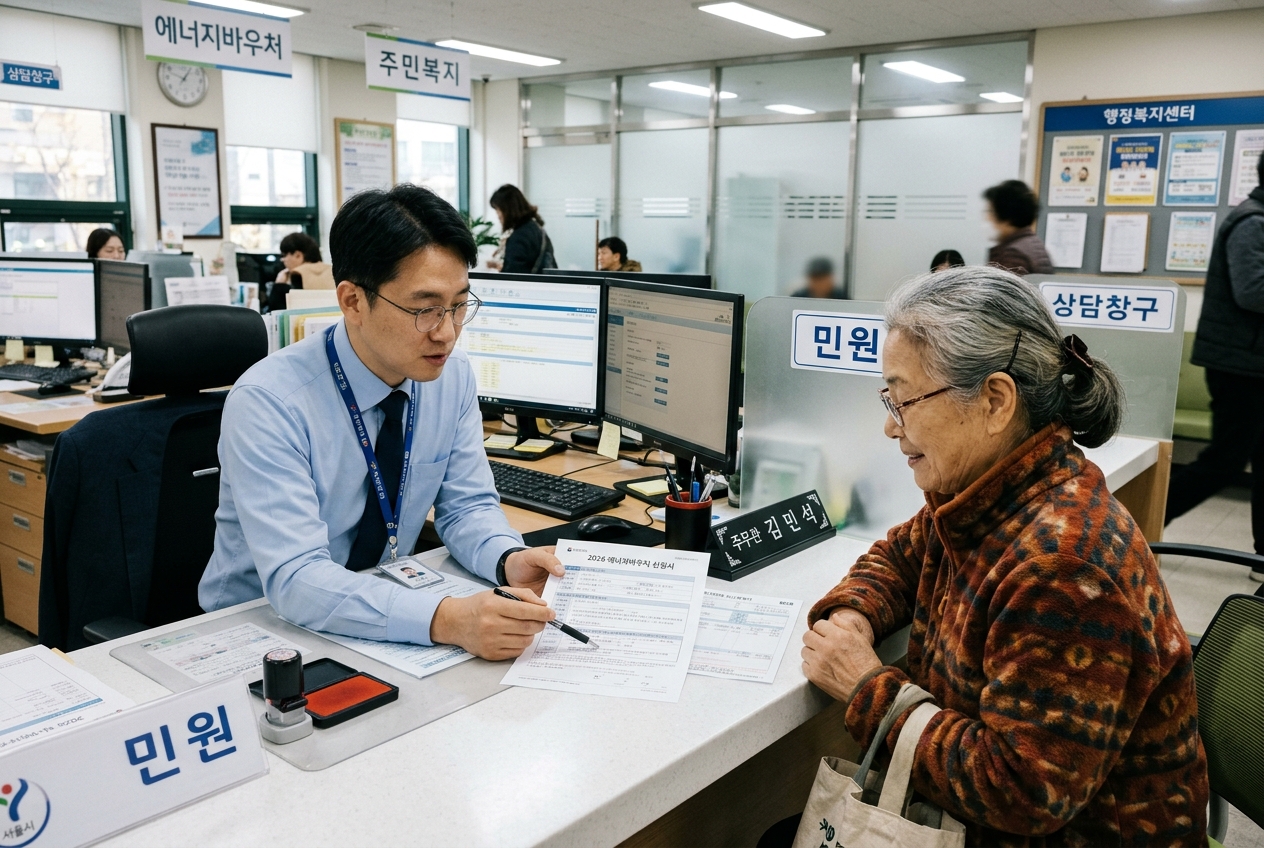
▲ 주민센터 행정복지센터 복지 창구에서 담당 공무원이 민원인에게 2026년도 에너지바우처 신청 서식과 요금차감 등록 절차를 안내하는 모습 / 복지 정책 현장 자료
2. 수혜 자격 팩트체크: "소득 기준 + 세대원 특성" 이중 문턱
- 소득 요건: 「국민기초생활 보장법」에 따른 생계급여, 의료급여, 주거급여, 교육급여 수급 가구여야 한다. - 세대원 특성 요건(필수 결합): 기초수급 가구라도 구성원 전체가 건강한 성인 단독 가구면 탈락한다. 주민등록 등본상 수급자 본인 또는 세대원이 다음 중 하나 이상 해당해야 한다.
* 노인: 1961년 12월 31일 이전 출생자 (전산 자동 확인) * 영유아: 2019년 1월 1일 이후 출생한 7세 이하 취학 전 아동 (2019년생 7세 아동은 취학면제·유예 승인서 필요) * 장애인: 등록 장애인.
* 임산부: 임신 중이거나 분만 후 6개월 미만 여성 (진단서·확인서) * 중증·희귀·중증난치질환자: 산정특례 대상 질환 등록자 * 한부모가족: 한부모가족지원법에 따른 지원 대상자 * 소년소녀가정: 가정위탁보호 아동 포함
* 다자녀 세대: 부 또는 모가 있고 19세 미만 자녀가 2명 이상 포함된 세대 - 연탄전환 에너지바우처: 2026년 1월 이후 연탄보일러를 기름·가스 보일러로 교체한 가구(차상위계층까지 확대, 시공확인서 필수).
가구 규모 및 구분
연간 총 지원금액
11개월 통합 사용 혜택
필수 신청 및 주의사항
1인 세대
연 295,200원
하절기·동절기 구분 없이 11개월 자유 분할
타 동절기 연료비(연탄 등) 희망 시 하절기 40,700원
2인 세대
연 407,500원
여름철 잔액 겨울 자동 이월 (미차감 신청 가능)
이사 후 새 주소지 고지서로 고객번호 재등록 필수
3인 세대
연 532,700원
전기·도시가스·지역난방 요금차감 또는 국민행복카드
소득 기준 + 세대원 특성(노인·영유아 등) 동시 충족 필수
4인 이상 세대
연 최대 701,300원
연간 총액 한도 내 냉·난방 에너지 비용 전액 활용
기초수급자라도 건강한 성인 단독 가구는 대상 제외
주거취약 예외지급
계좌 현금 입금 지원
고시원·쪽방 등 개별 계량기 없는 가구 현금 지급
압류방지통장 불가(일반계좌 필수), 실거주확인서 제출
SPONSORED · ADVERTISEMENT
3. 신청 일정 타임라인과 '전산 처리 중단기' 주의보
- 신청 기간: 일반 에너지바우처 2026년 6월 15일 ~ 12월 31일 / 연탄전환 바우처 2026년 8월 7일 ~ 12월 31일. - 사용 기간: 2026년 7월 1일 ~ 2027년 5월 31일 (약 11개월).
* 하절기 사용: 2026년 7월 1일 ~ 9월 30일 * 동절기 사용: 가상카드 2026년 10월 1일 ~ 2027년 5월 31일 / 국민행복카드 실물 2026년 10월 3일 ~ 2027년 5월 31일 - 접수 일시 중단기(전산 포인트 생성 및 정산):.
* 1차 중단: 2026년 6월 27일 ~ 6월 30일 (하절기 포인트 생성) * 2차 중단: 2026년 10월 1일 ~ 10월 2일 (동절기 전환 정산) * 3차 중단: 2026년 12월 말 2~3일간 (연도 마감 처리).
- 신청 방식 선택: * 가상카드(요금차감): 고지서에서 자동 차감. 하절기 전기, 동절기 전기·도시가스·지역난방 중 택1 (고객번호 필수). * 실물카드(국민행복카드): 등유·LPG·연탄 배달 구매 시 카드 결제 (배달비 포함 결제 가능). 거동 불편 어르신은 가족 대리 신청 또는 가상카드 권장.
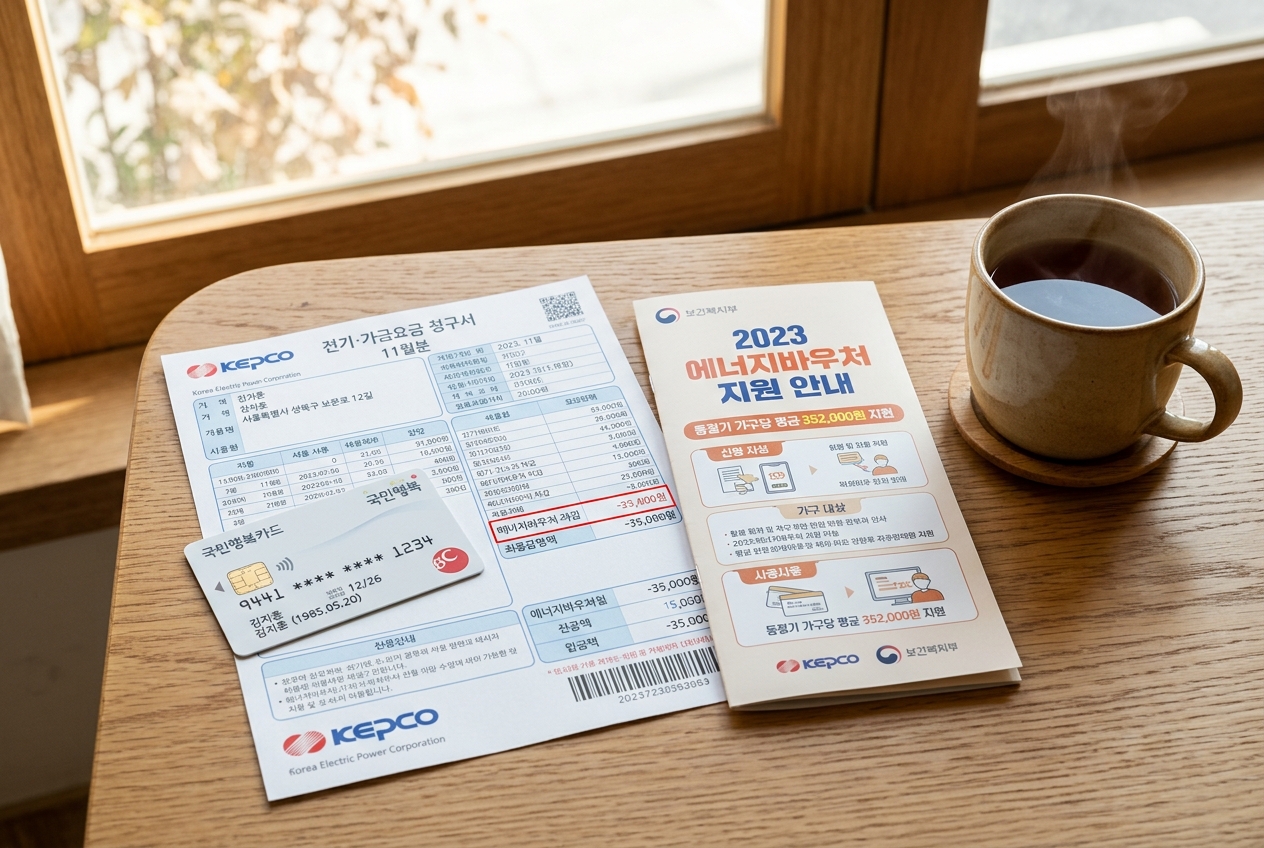
▲ 전기·도시가스 고지서와 국민행복카드, 에너지바우처 이용 안내서가 정돈된 모습 / 한국에너지공단 공식 안내 자료
4. 매년 반복되는 3대 함정과 사각지대 '예외지급' 구제책
- 함정 1: "자동 신청 믿고 방심하다 탈락": 변동 없는 가구는 자동 연장되지만, 이사를 했거나 세대원 변동(출생, 사망, 전출)이 있는 가구는 자동 신청에서 제외되므로 반드시 재신청해야 한다. - 함정 2: "전입신고와 바우처 주소 변경은 별개": 이사 후 전입신고만 하고 바우처 변경을 누락하면 이전 주소지 고객번호로 차감되어 혜택이 중단된다. 새 주소지 고지서를 들고 즉시 고객번호를 재등록해야 한다.
- 함정 3: 중복 수혜 금지 및 부정사용 형사처벌: 한국광해광업공단 연탄쿠폰, 긴급복지 동절기 연료비와 동절기 바우처는 중복 수령 불가. 바우처 카드 매매나 카드깡 적발 시 전액 환수 및 1년 이하 징역 또는 1천만 원 이하 벌금 처벌.
- 사각지대 해소 '예외지급'(현금 계좌 입금): * 고시원, 쪽방, 여인숙 등 개별 계량기가 없어 요금차감이나 카드 결제가 불가한 가구, 전세사기 피해자로서 실거주지와 등본 주소지가 달라진 가구는 현금 계좌 입금 방식의 예외지급 신청 가능.
* 실거주확인서와 입실확인서 필요. * 절대 주의: 압류방지통장(행복지킴이통장 등)으로는 바우처 예외지급금 입금이 불가하므로 반드시 일반 계좌를 준비해야 한다.
A Comprehensive Guide to the Key Benefits and Eligibility for the 2026 Energy Voucher Program
The Energy Voucher Program for 2026, organized by the Ministry of Climate, Energy, and Environment and the Korea Energy Agency, will provide up to 701,300 KRW annually for households of four or more. The program has been restructured to eliminate seasonal barriers for summer cooling and winter heating, allowing for flexible usage over an 11-month period. This summary aims to clarify essential facts for vulnerable groups and low-income households, addressing the dual eligibility requirements based on livelihood, medical, housing, and educational benefits, as well as the characteristics of household members such as the elderly, infants, disabled individuals, and pregnant women. It also highlights potential pitfalls, such as the risk of losing customer numbers due to reliance on post-move registration, and outlines the cash exception payment procedures for residents of boarding houses and small rooms.
📌 Key Takeaways
Annual total amounts will be distributed based on the number of household members, starting from 295,000 won for one person and up to 701,000 won for households with four or more members.
From July 2026 to May 2027, there will be no seasonal distinctions for free division and automatic rollover of remaining balances.
It is mandatory to simultaneously meet the criteria for basic livelihood security and vulnerable characteristics of household members; customers must re-register their identification number when moving, and exceptions for cash payments will apply.
1. Annual Support of Up to 700,000 Won for Four-Person Households and the '11-Month Integrated Usage' Mechanism
- Total annual support amounts by household size for 2026: * Single-person household: 295,200 Won (40,700 Won limited to summer if desired for other winter fuel costs).
* Two-person household: 407,500 Won (58,800 Won limited to summer) * Three-person household: 532,700 Won (75,800 Won limited to summer).
* Households with four or more members: 701,300 Won (102,000 Won limited to summer) - 11-month integrated usage mechanism: From July 1, 2026, to May 31, 2027, energy can be consumed without distinction between summer and winter within the total annual support limit for a total of 11 months.
- Balance carryover and lump-sum usage: Any remaining balance from the summer will automatically carry over to winter heating costs without a separate application. If households wish to save on summer electricity bills and focus on winter heating, they can apply for 'no summer fee deduction' to transfer the entire amount to winter.
- Protection of basic livelihood security recipients: Energy voucher support amounts are not reflected in the calculation of public assistance income, ensuring that other welfare benefits are not reduced.
▲ Civil servant explaining 2026 Energy Voucher application forms and utility bill deduction registration at a community administrative center / Social Welfare Policy Archive
- Income requirement: Households must be recipients of livelihood support, medical assistance, housing assistance, or educational assistance under the National Basic Livelihood Security Act.
- Household member characteristics requirement (mandatory combination): Even if a household is a basic livelihood recipient, if all members are healthy adults in a single-person household, they will be disqualified. The recipient or household members must meet at least one of the following criteria:.
* Elderly: Born before December 31, 1961 (automatically verified through the system) * Infants and toddlers: Children aged 7 or younger born after January 1, 2019 (a waiver approval is required for 7-year-olds born in 2019).
* Disabled: Registered persons with disabilities * Pregnant women: Women who are pregnant or have given birth within the last six months (medical certificate required).
* Persons with severe, rare, or intractable diseases: Individuals registered with designated special diseases * Single-parent families: Individuals eligible under the Single-Parent Family Support Act.
* Youth homes: Including children in foster care * Multi-child households: Households with at least one parent and two or more children under 19.
- Coal conversion energy vouchers: Households that replace coal boilers with oil or gas boilers after January 2026 (expanded to low-income households, installation confirmation required).
Category
Target Scope
Standard / Benefit
Procedure / Action
Single-person household
Annual amount: 295,200 won
Free installment over 11 months without distinction between summer and winter seasons
If desired, winter fuel costs (such as briquettes) during summer: 40,700 won
Two-person household
Annual amount: 407,500 won
Unused summer balance automatically rolls over to winter (application for non-deduction possible)
It is mandatory to re-register the customer number with the new address after moving
Three-person household
Annual amount: 532,700 won
Deductions for electricity, city gas, and district heating fees or through the National Happiness Card
Must simultaneously meet income criteria and household member characteristics (such as elderly or infants)
Households with four or more members
Annual maximum amount: 701,300 won
Full utilization of heating and cooling energy costs within the annual total limit
Even basic livelihood recipients are excluded if they are healthy adults living alone
Exceptions for vulnerable housing
Support for cash deposits into accounts
Cash payments for households without individual meters, such as goshiwons and small rooms
No seizure protection accounts allowed (regular accounts required), submission of proof of actual residence is necessary
3. Application Schedule Timeline and 'System Processing Interruption' Advisory
- Application period: General energy vouchers from June 15 to December 31, 2026 / Coal conversion vouchers from August 7 to December 31, 2026.
- Usage period: From July 1, 2026, to May 31, 2027 (approximately 11 months). * Summer usage: July 1, 2026, to September 30, 2026.
* Winter usage: Virtual card from October 1, 2026, to May 31, 2027 / Physical National Happiness Card from October 3, 2026, to May 31, 2027.
- Interruption of application reception (system point generation and settlement): * First interruption: June 27 to June 30, 2026 (summer point generation).
* Second interruption: October 1 to October 2, 2026 (winter transition settlement) * Third interruption: End of December 2026 for 2-3 days (year-end processing).
- Application method selection: * Virtual card (fee deduction): Automatically deducted from the bill. Choose between summer electricity or winter electricity, city gas, or district heating (customer number required).
* Physical card (National Happiness Card): Card payment when purchasing kerosene, LPG, or coal delivery (payment including delivery fee is possible). Elderly individuals with mobility issues are encouraged to have family members apply on their behalf or use the virtual card.
▲ Electricity and gas utility bills arranged with a National Happiness Card and Energy Voucher guide booklet / Korea Energy Agency Official Archive
4. The Three Recurring Traps and Blind Spots: 'Exception Payment' Relief Measures
- Trap 1: "Failing to apply due to over-reliance on automatic application": Households with no changes will be automatically renewed, but those that have moved or experienced changes in household members (birth, death, relocation) are excluded from automatic applications and must reapply.
- Trap 2: "Change of address for registration and voucher are separate": If a household only registers their new address after moving but fails to update the voucher, benefits will be suspended as deductions will occur under the previous address's customer number. They must immediately re-register their customer number with the new address bill.
- Trap 3: Prohibition of duplicate benefits and criminal penalties for misuse: Households cannot receive both the Korea Mine Rehabilitation and Mineral Resources Corporation coal coupons and emergency welfare winter fuel costs along with winter vouchers. If caught selling or misusing voucher cards, full recovery of funds will occur, along with penalties of up to one year in prison or fines up to 10 million Won.
- Blind spot resolution 'exception payment' (cash account deposit): * Households without individual meters, such as those in goshiwons, small rooms, or inns, and households that have been victims of rental fraud with discrepancies between their actual residence and registered address can apply for exception payments via cash account deposits.
* Verification of actual residence and entry confirmation documents are required. * Important caution: Exception payment funds cannot be deposited into seizure-preventive accounts (such as Happiness Keeper accounts), so a regular account must be prepared.
Recommended Deep-Dive Investigations TOP 3
GLOBAL REPORT
1월이 시작되면 감기는 이미 우리 곁에 와 있습니다. 2월, 3월, 4월까지 이어지는 추위와 건조함은 코와 목을 가장 먼저 공격합니다. 아침에 일어나자마자 막혀 있는 코. 계속 흐르는 콧물. 괜히 칼칼해지는 목. 이 증상은 “시작”일 뿐입니다. 한 번 무너지면 일주일, 길면 한 달까지 끌고 갑니다. 약을 먹으면 잠깐 괜찮아집니다. 하지만 며칠 뒤 또 반복됩니다. 왜일까요? 감기는 ‘치료’의 문제가 아니라 ‘관리’의 문제이기 때문입니다. 대부분은 감기가 오고 나서 약을 찾습니다. 하지만 진짜 중요한 건 감기가 오기 전에 코와 목을 지키는 것입니다. 건조한 실내 공기, 차가운 바깥 공기, 눈에 보이지 않는 세균. 코와 목은 매일 공격받고 있습니다. 지긋지긋하죠! 그런데도 우리는 아무 준비 없이 버티고 있습니다. 이번 겨울도 그렇게 보낼 건가요? 사실 방법은 어렵지 않습니다. 코를 깨끗하게 관리하고, 목을 따뜻하게 보호하고, 점막을 촉촉하게 유지하고, 기관지를 미리 관리하고, 외부 공기를 차단하는 것. 이 다섯 가지만 꾸준히 해도 감기약 없이 겨울을 보내는 것이 충분히 가능합니다. 🔥 이제부터 그 방법을 하나씩 살펴보겠습니다. 🔥 1. 코와 목을 먼저 관리해야 하는 과학적 이유 감기의 대부분은 코 점막에서 시작됩니다. 국제 학술지 Nature Reviews Microbiology 와 Journal of Allergy and Clinical Immunology 에 실린 호흡기 감염 관련 연구들에서는, 감기 바이러스가 비강 상피세포에 먼저 부착해 증식한다는 점을 설명하고 ...
리모델링사업이 진행 중인 아파트를 매매할 때 “계약금 10%를 언제까지 내야 하느냐”는 질문이 특히 많이 나옵니다. 이주공고(이주 안내)가 7~11월쯤이라고 들으면, 그 시점에 맞춰 계약금도 움직일 것 같아서 더 헷갈리기 쉽습니다. 하지만 실제 납부기한은 ‘이주공고가 언제냐’만으로 자동 결정되지 않는 경우가 많습니다. 1) 계약금 10% 납부기한: 결국 ‘문서에 적힌 일정’이 기준 계약금 10%를 언제까지 납부해야 하는지는, 내가 서명하는 매매계약서(특약 포함) 와 사업주체/조합이 제시한 공고·안내문 에 적힌 납부 일정이 기준이 됩니다. 실제 공고문에서는 분양대금 납부의 큰 틀(계약금→중도금→잔금)을 먼저 안내하고, 상세 일정은 별도 표나 유의사항으로 제시하는 방식이 흔합니다. 또, 계약서 문구에 따라 지급 시점이 조건부로 설정될 수도 있습니다. 예를 들어 한 사례 소개 자료에서는 용역계약서에 잔금(10%) 지급시기가 “사업승인 후”로 기재되어 있었다는 점이 언급됩니다. 이런 식으로 ‘사업 단계’와 지급을 연동하는 문구가 들어가면, 질문의 답은 계약서 문구를 확인해야만 확정됩니다. 관련 내용은 링크 에서 문구 사례를 확인할 수 있습니다. 2) 입주자모집공고에서 확인되는 ‘납부 순서’와 잔금 마감 시점 공고문에 적힌 문구를 보면, 납부 순서와 잔금 마감에 대한 기준이 비교적 명확하게 제시되는 경우가 있습니다. 예를 들어 한 입주자모집공고에는 “분양금액(주택가격)은 계약금, 중도금, 잔금의 순서로 납부”하며 “잔금은 입주(열쇠 수령일) 전에 완납”해야 한다고 안내되어 있습니다. (문구 확인: 링크 ) 이 문구가 의미하는 바는 최소 2가지입니다. 분양/공급 형태의 문서에서는 ‘계약금→중도금→잔금’ 흐름이 공식적으로 안내될 수 있습니다. 잔금은 “입주(열쇠 수령)” 이전에 완납해야 한다는 마감 기준이 문서에 적혀 있을 수 있습니다. 다만, 위 공고문 문구는 잔금 마감에 대한 기준을 보여주지만, 계약금 10%의...
윤석열 전 대통령 탄핵 인용 소식을 접하면, 가장 궁금한 지점은 ‘헌재가 정확히 무엇을 위헌·위법으로 봤는가’입니다. 또한 탄핵과 별개로 진행되는 형사재판(내란 우두머리 혐의 등)이 어디까지 왔는지도 함께 정리할 필요가 있습니다. 아래 내용은 제공된 기사/게시물 스니펫과 링크에서 확인되는 범위만 모아, 일반인이 흐름을 이해하기 쉽게 정리한 것입니다. 1) 탄핵 인용 관련: 스니펫에서 확인되는 ‘판단의 골격’ 제공된 근거 중 조국혁신당 사이트에는 헌법재판소가 윤석열 탄핵 심판에서 “피청구인의 위헌·위법행위는 국민 신임 …”이라는 취지로 판단했다는 문장이 인용돼 있습니다( 링크 ). 이 인용문만 놓고 보면, ‘위헌·위법행위’가 있었는지와 그로 인해 ‘국민의 신임’이 어떻게 평가됐는지가 핵심 축으로 소개됩니다. 다만 질문에서 요청하신 세부 항목, 즉 비상계엄 선포 자체를 문제 삼은 구체적 이유, 계엄 이후 조치(포고령, 국회 통제 등)의 어떤 지점이 헌법 위반인지, 국회의 권한행사 방해 및 정치활동 제약을 어떤 논리로 판단했는지 등은, 이번에 제공된 근거의 제목/스니펫만으로는 조항·사실관계·판단 구조가 그대로 제시돼 있지 않습니다. 따라서 이 글에서는 ‘헌재가 무엇을 문제 삼았다’는 세부 리스트를 단정적으로 재구성하기보다, 현재 확인 가능한 문구 수준의 요약(위헌·위법행위 → 국민 신임의 문제로 평가)까지만 적습니다. 만약 헌재 결정문 전문(주문 및 이유)이 추가로 확인되면, 그때는 문장 단위로 ‘어떤 행위’와 ‘어떤 헌법 원리/조항’이 연결되는지(예: 권력분립, 국회의 권한, 정치적 기본권 등) 구조화해 정리하는 것이 가장 정확합니다. 2) 형사 절차(내란 혐의) 관련: 체포영장과 1심 선고 언급 탄핵 심판과 별도로, 12·3 비상계엄 사태로 내란 혐의를 받는 윤석열 대통령에 대해 2024년 12월 31일 체포 영장이 발부됐다는 BBC 보도가 있습니다( 링크 ). 해당 보도는 ‘현직 대통령’에 대한 체포영장 발부라는 점을 함께 언급합니다. 또...