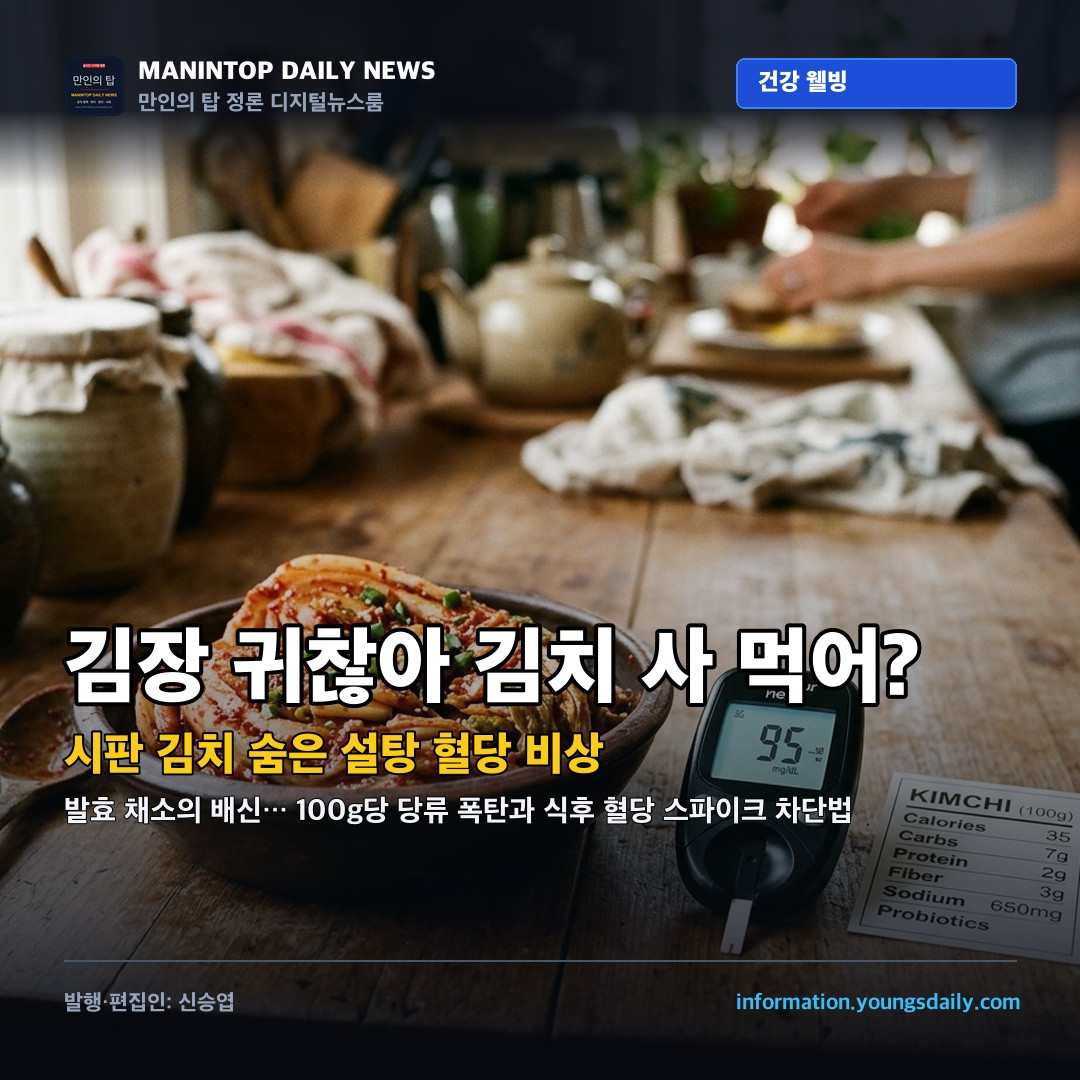
▲ 전통 발효 배추김치와 식후 혈당 측정기 및 시판 영양성분표 / 만인의 탑 DB·세계김치연구소
“김장 담그기 귀찮아서 그냥 김치 사 먹는데 왜 혈당이 치솟을까?” 1~2인 가구 증가와 물가 상승으로 김장을 포기하고 시판 포장김치를 사 먹는 가정이 급증한 가운데, 마트에서 판매되는 일부 시판 김치가 대중적인 입맛을 맞추기 위해 '너무 달아' 당뇨 환자와 건강 관리자들의 식후 혈당 관리에 비상이 걸렸습니다. 발효 채소라는 안도감에 무심코 듬뿍 먹었다가 밥 한 공기보다 더 위험한 설탕과 물엿의 습격으로 혈당 스파이크를 겪는 사례가 늘어나면서 올바른 영양성분 판별법이 절실해지고 있습니다.
만인의 탑 당뇨·영양의학 핵심 팩트 브리핑
전통 김치 vs 시판 김치의 당류 격차: 본래 배추와 무의 극소량 당분으로 100g당 당류 1g 미만이어야 할 김치가 시판 제품에선 설탕·물엿 첨가로 3~6g 이상으로 최대 5배 급증
식이섬유의 착시와 혈당 스파이크: 발효 채소라는 맹신으로 매 끼니 섭취할 경우, 밥(탄수화물)과 함께 액상과당·설탕 절임을 섭취하는 것과 같아 식후 1~2시간 혈당이 180mg/dL 이상으로 폭증
혈당 안심 김치 섭취 3대 황금률: 포장지 뒷면 100g당 당류 1~2g 이하 저당 김치 확인, 탄수화물 섭취 전 김치 섬유질을 먼저 씹는 '식이섬유 퍼스트' 준수, 조리 시 설탕 추가 엄금
1. 김장 포기족의 증가와 식탁 위 '달콤한 함정'
본격적인 늦가을에 접어들며 과거 온 가족이 모여 배추 수십 포기를 절이던 김장 풍경이 빠르게 사라지고 있습니다. 배춧값 폭등과 1~2인 가구의 증가, 번거로운 노동을 피하려는 라이프스타일의 변화로 대형마트나 온라인 쇼핑몰에서 포장김치를 정기적으로 사 먹는 '김포족(김장 포기족)'이 대세로 자리 잡았습니다.
하지만 문제는 시판 김치의 맛에 숨어 있습니다. 집에서 직접 담근 김치는 멸치액젓, 새우젓, 고춧가루, 마늘, 생강 등 천연 양념에 배추 본연의 미세한 당분과 젖산균 발효를 통해 깊은 감칠맛을 냅니다. 반면 대량 생산되어 유통되는 시판 김치는 현대인의 입맛을 사로잡기 위해 '단짠(달고 짠)' 조합을 극대화합니다. 제조사들이 빠른 숙성과 익숙한 감칠맛을 내기 위해 백설탕, 물엿, 매실청, 배 농축액, 찹쌀풀 등을 아낌없이 쏟아붓고 있기 때문입니다.
2. '채소 반찬'의 배신… 밥상 위에서 터지는 식후 혈당 스파이크
많은 당뇨 환자와 내당능 장애(당뇨 전단계) 성인들은 "김치는 식이섬유가 풍부한 배추 채소니까 아무리 많이 먹어도 살도 안 찌고 혈당도 안 오른다"는 위험한 착각에 빠집니다. 실제로 식품의약품안전처와 세계김치연구소의 영양 분석에 따르면, 전통 김치는 100g당 당류가 1g 미만으로 매우 낮습니다. 그러나 시중에서 판매되는 인기 배추김치 제품들을 살펴보면 100g당 당류 함량이 3g에서 많게는 5~6g 이상에 달하는 경우가 허다합니다.
한국인의 한 끼 김치 섭취량이 평균 100~150g임을 감안할 때, 한 끼 식사만으로 각설탕 1~2개 분량의 단순당을 김치만으로 섭취하는 셈입니다. 흰쌀밥이나 국수 등 정제 탄수화물과 함께 이처럼 설탕이 범벅된 김치를 먹으면, 포도당이 소장 점막을 통해 급속도로 흡수되면서 식후 1시간 혈당이 180~200mg/dL 이상으로 치솟는 급격한 '혈당 스파이크'를 유발합니다. 이는 췌장 베타세포를 혹사시키고 혈관 내피세포에 만성 염증을 일으키는 지름길입니다.
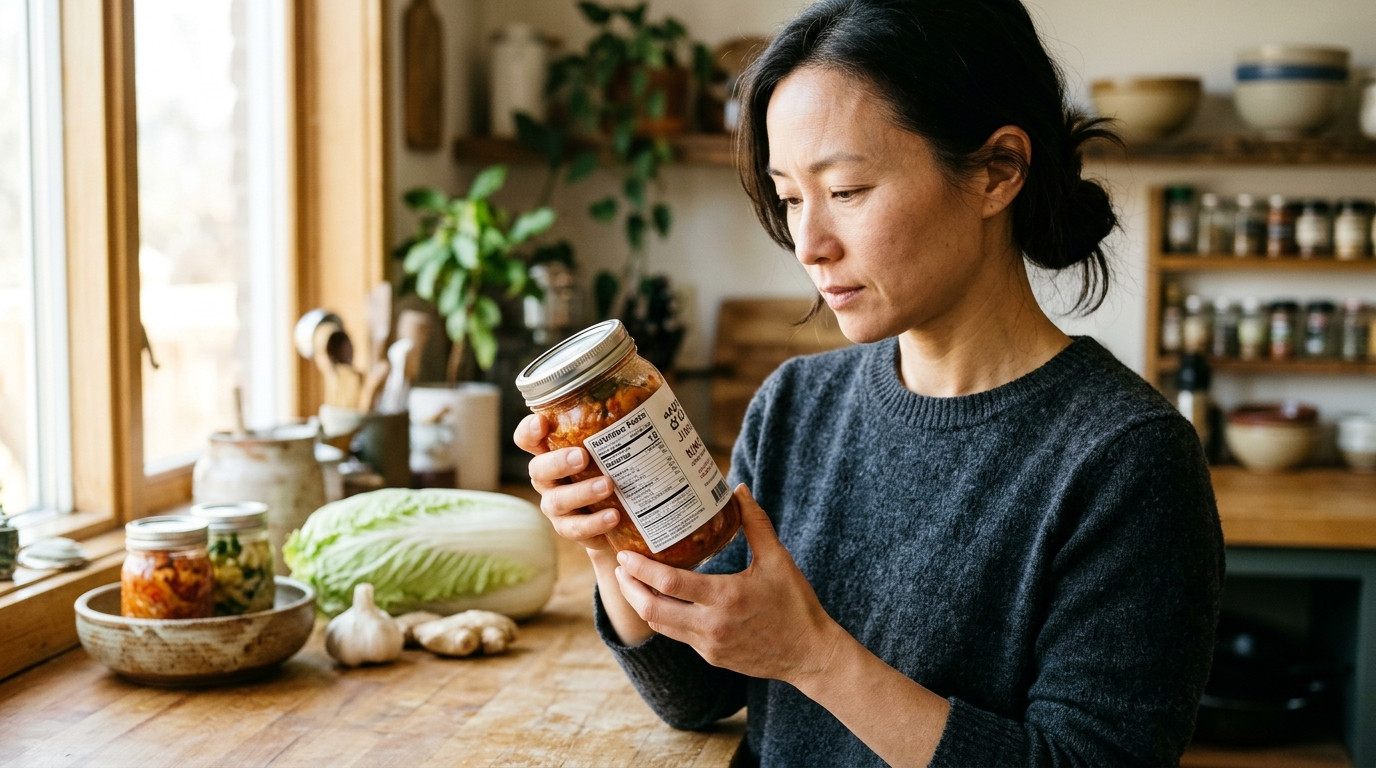
▲ 시판 포장김치 뒷면의 당류 및 나트륨 함량을 꼼꼼히 확인하는 소비자 / 만인의 탑 DB·식품의약품안전처
3. 김치찌개와 김치볶음밥의 치명적 함정: 당독소의 폭발
생김치 상태에서의 당분도 문제지만, 조리 과정에서 가해지는 조리법은 혈당에 더욱 치명적입니다. 신김치로 김치찌개나 김치찜, 김치볶음밥을 조리할 때 대다수의 가정과 식당에서는 신맛을 잡고 감칠맛을 극대화한다는 명목으로 설탕이나 올리고당을 추가로 한두 숟가락씩 듬뿍 투입합니다.
이미 당분이 다량 첨가된 시판 김치에 기름과 설탕을 더해 고온에서 볶거나 끓이면, 유산균은 모두 사멸하는 반면 당분과 단백질이 결합하여 '최종당화산물(AGEs, 당독소)'이 폭발적으로 생성됩니다. 이렇게 조리된 김치는 부드럽게 익어 식이섬유의 혈당 완충 효과마저 상실하게 되며, 혈당 수치를 수직 상승시키는 최악의 혈당 폭탄 메뉴로 돌변합니다.
4. 혈당 안심하고 김치 즐기는 '스마트 선별 & 섭취법'
그렇다면 김치를 아예 끊어야 할까요? 결코 그렇지 않습니다. 김치는 잘 선별하여 섭취하면 오히려 혈당을 안정시키는 최고의 천연 혈당 지킴이가 됩니다. 첫째, 시판 김치를 구매할 때는 반드시 포장 뒷면의 '영양성분표'를 확인해야 합니다. 식품의약품안전처의 영양표시 기준을 살펴 100g당 당류가 1.5g 이하인 저당 김치를 선택하고, 원재료명에 백설탕, 액상과당, 물엿이 앞쪽에 표기된 제품은 피해야 합니다.
둘째, 식사 순서의 마법인 '식이섬유 퍼스트(Fiber-First)' 원칙을 지키는 것입니다. 밥이나 육류를 입에 넣기 전, 아삭한 저당 생김치를 먼저 천천히 씹어 먹으면 배추의 불용성·수용성 식이섬유가 십이지장과 소장 벽에 젤 형태의 완충 그물망을 형성합니다. 이를 통해 뒤이어 들어오는 밥의 탄수화물이 흡수되는 속도를 최대 30% 지연시켜 혈당 스파이크를 효과적으로 막아낼 수 있습니다. 조리 시에는 설탕 대신 양파나 대파의 천연 단맛을 활용하거나 알룰로스를 극소량 사용하는 지혜가 필요합니다.
구분 항목
전통 가정식 저당 김치
일반 시판 포장김치
혈당 및 대사 영향
100g당 당류 함량
0.5g ~ 1.5g 미만
3.0g ~ 6.0g 이상
시판 김치 당류가 최대 3~5배 이상 과다
주요 단맛 부재료
배추 본연의 당, 무채, 양파
백설탕, 물엿, 과일농축액, 찹쌀풀
정제 단순당 투입으로 장내 급속 흡수
식후 혈당 반응
식이섬유로 혈당 상승 완충
식후 1시간 혈당 스파이크 유발
당뇨 환자 인슐린 저항성 악화 위험
만인의 탑 보건의학 특별취재팀발행인 겸 편집인: 신승엽 (Seung Youb Ssin)
MANINTOP MEDICAL & WELLNESS · GLOBAL EDITION
The Hidden Sugars in Commercial Kimchi: How Store-Bought Fermented Foods Trigger Postprandial Blood Glucose Spikes
Reported by Seung Youb Ssin, Ph.D. | Publisher & Editor-in-Chief
With rising household preferences for convenience over arduous seasonal kimchi-making, the consumption of commercially packaged kimchi has surged across urban populations. However, clinical nutritionists and endocrinologists warn that many mass-produced commercial kimchis are heavily sweetened with refined sugars, corn syrup, and starch pastes to cater to sweet-savory palates, creating an unsuspected hazard for diabetic and prediabetic individuals. While traditional kimchi is inherently a low-glycemic, fiber-rich fermented superfood, modern industrial processing can transform everyday side dishes into potent drivers of postprandial glucose excursions.
MANINTOP Executive Fact Briefing: Nutritional Glycemic Control
Widening Sugar Disparity in Commercial Fermentation: While authentic artisanal kimchi contains under 1 gram of natural sugar per 100 grams, commercial store-bought variants frequently register 3 to 6 grams due to added sucrose and syrup additives.
The Vegetable Illusion and Glycemic Volatility: Presuming packaged kimchi is purely fibrous produce, unmonitored mealtime intake can inadvertently mimic sweet glazes, accelerating rapid duodenal carbohydrate absorption and postprandial glycemic spikes.
Clinical Guidelines for Safe Kimchi Intake: Inspect mandatory nutrition facts labels for products with under 2 grams of sugar per 100 grams, adopt the 'Fiber-First' eating sequence before refined starches, and strictly avoid adding sugar during secondary culinary preparation.
1. The Industrial Shift in Traditional Fermentation
Across modern urban societies, the labor-intensive heritage of autumn kimchi preparation has rapidly given way to mass-produced retail alternatives. Propelled by single-person households and commercial accessibility, consumers increasingly rely on commercially packaged kimchi as an essential dietary staple.
However, industrial food manufacturing introduces a consequential metabolic compromise. Authentic domestic kimchi relies on natural lactobacillus lactic acid fermentation acting upon the trace sugars inherent in napa cabbage and radishes, complemented by unrefined sea salt, chili, garlic, and ginger. Conversely, commercial brands heavily formulate with refined sucrose, high-fructose corn syrup, plum extract, and glutinous rice paste to hasten microbial fermentation and satisfy mass-market preferences for hyper-palatable sweet-savory notes.
2. The Vegetable Fallacy: Uncovering Postprandial Glucose Volatility
Many individuals managing type 2 diabetes or metabolic syndrome operate under the erroneous assumption that kimchi, being fermented cruciferous produce, can be consumed without quantitative glycemic restraint. Laboratory analyses from the World Institute of Kimchi confirm that traditional preparation yields under 1.0 gram of free sugars per 100-gram serving. In stark contrast, commercial supermarket labels frequently disclose sugar concentrations spanning 3.0 to 6.0 grams per 100 grams.
Given that standard mealtime consumption readily reaches 100 to 150 grams, a diner unknowingly ingests the glycemic equivalent of multiple sugar cubes disguised within a savory fermented side dish. When co-ingested with refined white rice, these unbuffered simple sugars provoke rapid intestinal glucose transport, triggering sharp postprandial glucose excursions surpassing 180 to 200 mg/dL. This chronic glycemic volatility accelerates microvascular endothelial damage and exhausts pancreatic beta-cell reserve.
▲ A consumer carefully inspecting sugar and sodium content on commercial kimchi nutrition labels / MANINTOP Archive·MFDS
3. Culinary Hazards: Advanced Glycation End-Products in Cooked Kimchi
The metabolic threat compounds significantly during secondary culinary preparation. In home cooking and commercial restaurants, aged sour kimchi is commonly stewed into rich soups or stir-fried with pork and rice. To counteract harsh acidity, culinary recipes routinely prescribe adding extra tablespoons of refined white sugar or honey directly into high-heat cooking oil.
This high-temperature interaction between free reducing sugars, lipids, and dietary proteins completely destroys beneficial probiotic strains while catalyzing the prolific formation of Advanced Glycation End-products (AGEs). Furthermore, prolonged thermal breakdown softens vegetable cellular walls, eliminating the physical viscous barrier that dietary fiber typically provides against rapid starch hydrolysis.
4. Clinical Nutrition Protocols: Smarter Product Selection and Intake Sequences
Eliminating kimchi entirely from the diet is neither necessary nor clinically recommended, as authentic low-sugar fermentation confers profound prebiotic and cardiovascular benefits. Instead, patients should exercise stringent discernment. Foremost, consumers must audit the mandatory Nutrition Facts label on product packaging, deliberately selecting formulations containing under 1.5 grams of total sugar per 100 grams and rejecting products listing sugar or corn syrup among primary ingredient hierarchies.
Second, individuals should rigorously implement the Fiber-First sequencing paradigm. Consuming raw, unheated low-sugar kimchi prior to ingesting cooked starches allows plant polysaccharides to coat the duodenal mucosa, mechanically decelerating enzymatic carbohydrate breakdown by up to 30 percent. During cooking, substituting granulated sugars with natural allulose or allium vegetables provides a robust strategy to preserve metabolic longevity while savoring Korea's celebrated heritage food.
Nutritional Metric
Traditional Low-Sugar Kimchi
Mass-Market Retail Kimchi
Metabolic Significance
Sugar Content (per 100g)
0.5g to 1.5g
3.0g to 6.0g+
Up to 3-5x excess sugar in commercial packs
Primary Sweeteners
Cruciferous cellular sugars, radish, onion
Refined sucrose, corn syrup, starch glazes
Rapid proximal intestinal glucose uptake
Postprandial Glycemia
Blunted glucose absorption curve
Sharp glycemic spikes over 180 mg/dL
Elevated insulin resistance in diabetic cohorts
MANINTOP Medical Science TeamPublisher & Editor: Seung Youb Ssin, Ph.D.
MANINTOP NEWSLETTER
📬 만인의 탑 뉴스레터 무료 구독
오늘 보신 정책·시사 뉴스가 유익하셨나요? 매일 엄선되는 알짜 복지 혜택과 국회 실시간 속보를 이메일로 가장 먼저 받아보세요. (평생 무료)
Computer Programmer who love programming.
Computer Programmer Who love Riding Bicycle.
Computer Programmer who love trip in abroad.
Computer Programmer who love studying about programming
- even if sometimes it's very boring.
Computer Programmer who love talking with person.
- I love communication with person.


0 댓글