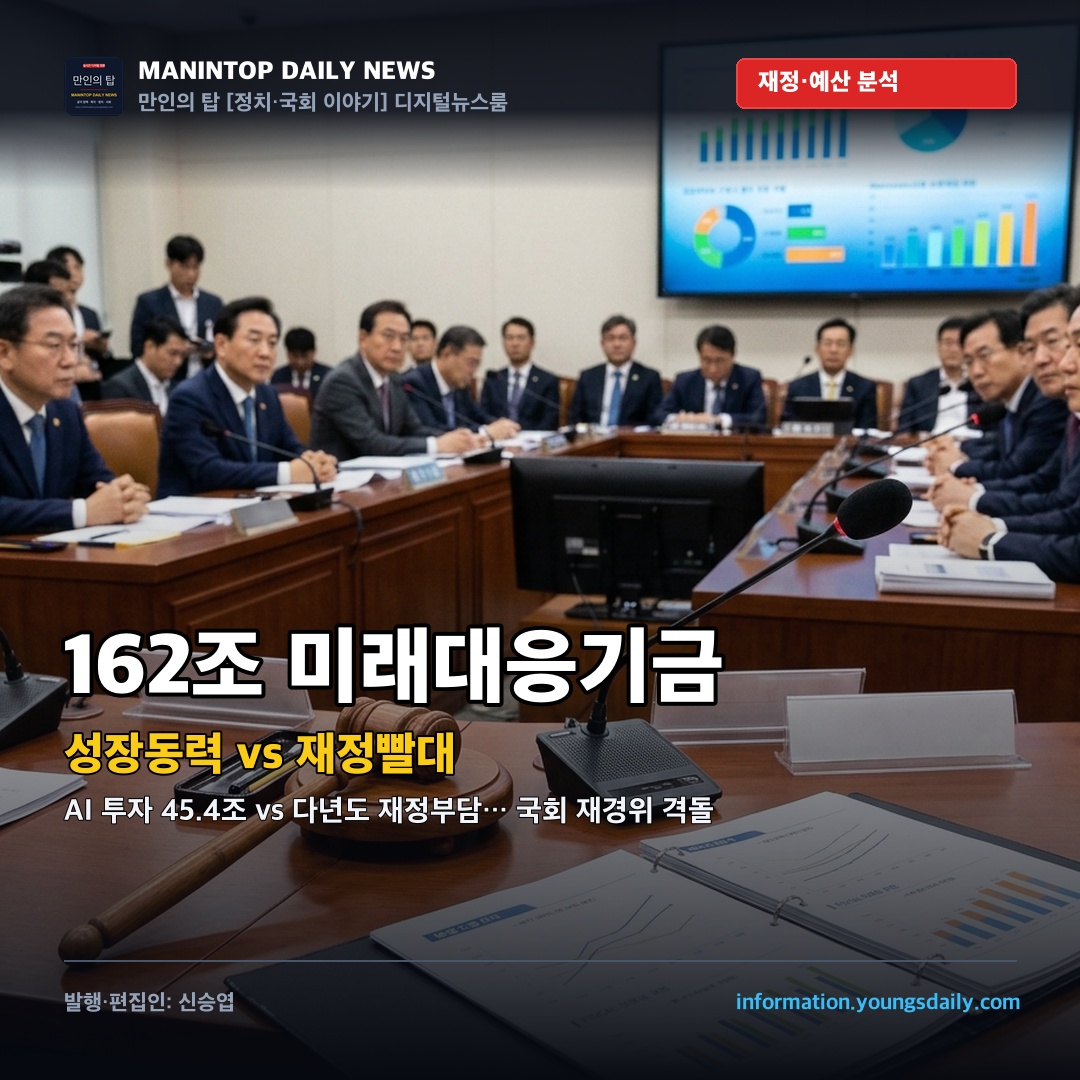
▲ 국회 재정경제기획위원회 종합국정감사에서 정부가 초과 세수 162조 3000억 원을 재원으로 추진하는 '미래대응기금' 신설안을 두고 인공지능(AI) 국가 전략 투자라는 여당과 다년도 재정 부담 및 절차적 하자를 지적하는 야당이 정면충돌하고 있다. ⓒ 만인의 탑
정부가 반도체와 첨단 기술 대기업의 실적 호조에 따른 초과 세수 약 162조 3,000억 원을 투입해 신설을 추진 중인 ‘미래대응기금’을 둘러싸고 국회 재정경제기획위원회에서 여야가 정면충돌했다. 인공지능(AI) 대전환기를 선도하고 국가 잠재성장률을 끌어올리기 위한 ‘전략적 국가 투자’라는 정부·여당의 입장과, 경기 변동성을 무시한 채 다년도 사업에 재정을 묶어 차기 정권에 짐을 떠넘기는 ‘재정 빨대이자 쌈짓돈’이라는 야당의 공세가 팽팽히 맞서며 2027년도 예산 정국의 최대 뇌관으로 부상하고 있다.
1. 162조 원 미래대응기금의 실체: 재원 조성과 배분 구상
정부가 국회에 제출한 미래대응기금 설치안의 핵심은 최근 10개년 장기 내국세 추세선을 약 162조 3,000억 원 웃돌 것으로 추산되는 법인세 등 추가 세수를 일반회계로 일괄 귀속시키는 대신, 별도의 독립된 국가 기금으로 적립해 운용하겠다는 것이다.
정부는 전체 기금 규모 가운데 45조 4,000억 원을 향후 5개년에 걸쳐 4대 핵심 분야인 ▲인공지능(AI) 컴퓨팅 인프라 및 차세대 반도체 원천기술 확보, ▲청년 미래 자산 형성 및 주거 안정, ▲지방 균형발전 거점 메가클러스터 조성, ▲첨단 이공계 전략 인재 양성에 전략적으로 집중 배정할 계획이다. 아울러 남은 잔여 재원은 신규 국채 발행 물량을 선제적으로 축소하는 데 투입함으로써 국가채무 비율 급등을 방어하고 국가 신용등급을 안정적으로 수호하겠다는 것이 정부의 청사진이다.
2. 여야의 극명한 시각차: “미래 먹거리 결단” vs “재정 빨대·절차적 하자”
국회 재경위 종합국정감사에서 더불어민주당은 글로벌 기술 패권 전쟁에서 살아남기 위한 불가피한 재정적 결단임을 역설했다. 단년도 예산의 경직성을 극복하고 다년도에 걸쳐 지속적이고 예측 가능한 대규모 투자를 집행하기 위해서는 법률로 뒷받침되는 특별 기금이 필수적이라는 논리다.
반면 국민의힘은 기금의 태생적 위험성과 절차적 결함을 조목조목 집중 추궁했다. 특히 반도체 사이클의 다운턴(하강 국면)이 도래할 경우 세수가 급감할 텐데, 기금 지출의 약 94%가 다년도 계속사업으로 설계되어 있어 결국 미래 세대에 천문학적인 고정 부채를 전가하는 '재정 빨대'가 될 것이라고 질타했다. 또한 기금을 주도한 기획예산처가 재정 주무 부처인 재정경제부의 법안 수정·삭제 의견 10건(미래대응기금법 7건, 국가재정법 3건)을 단 한 글자도 반영하지 않고 묵살한 채 단 3일 만에 입법예고를 마쳤다는 내부 문건을 공개하며 '졸속 입법'과 '재경부 패싱'을 강하게 성토했다.
쟁점 분야
정부 및 여당 (더불어민주당) 주장
야당 (국민의힘) 비판 및 반론
재원 규모 및 성격
초과 세수 162조 원 활용, 국채 발행 축소와 AI 전략 투자의 선순환 구축
반도체 일시 호황에 기댄 착시 현상, 세수 급감 시 국가 재정 파탄 위험
지출 구조 (45.4조)
AI·반도체·청년·인재 4대 미래 분야에 다년도 연속적 재정 지원 보장
지출의 94%가 다년도 사업에 묶여 사실상 차기 정권 부담 떠넘기기
거버넌스 및 절차
법제처 사전 협의 및 국가재정법령에 따른 정당한 정부 입법 절차 이행
재경부 반대 의견 10건 전액 묵살 및 3일 만의 졸속 입법예고 (재경부 패싱)
국회 통제권
기금운용계획안 제출을 통해 국회의 상시적 결산·심의 감독권 보장
일반회계 엄격한 통제를 우회하여 행정부 재량으로 집행하는 ‘대통령 쌈짓돈’
3. 국회예산정책처(NABO) 및 재정 학계의 신중론
국회예산정책처(NABO)와 거시 재정 전문가들은 기금 신설에 앞서 세수 추계의 지속가능성과 재정 거버넌스의 원칙을 면밀히 검증해야 한다고 조언한다.
NABO의 분석에 따르면 내국세 초과 세수는 글로벌 IT 경기와 메모리 반도체 수출 단가에 극도로 민감하게 연동되어 있어, 이를 고정적인 복지·지원 및 대규모 계속사업의 재원으로 바인딩할 경우 세수 결손 발생 시 일반회계로부터 막대한 전입금을 끌어다 써야 하는 구조적 결함이 발생할 수 있다. 학계에서는 기금 신설의 타당성을 인정하더라도, 기존 특별회계와의 중복 투자를 방지하고 국회의 기금 삭감·조정 권한을 대폭 강화하는 제도적 안전장치가 선행되어야 한다고 지적한다.
4. 향후 정국 파장: 2027년도 본예산 심사와 기금법의 연계 투쟁
국정감사가 마무리되는 즉시 국회는 677조 원 안팎의 2027년도 정부 예산안 종합 심사에 돌입한다. 이번 미래대응기금법 제정안은 단순한 개별 법안을 넘어 여야 예산 대치의 핵심 승부처가 될 전망이다.
정부·여당은 미래대응기금법을 예산안과 연계하여 정기국회 내 강행 처리를 모색할 방침인 반면, 야당은 재정 건전성 수호와 절차적 하자 시정을 명분으로 결사 저지에 나설 태세다. 162조 원이라는 천문학적 규모의 나랏돈을 둘러싼 여야의 격돌은 향후 국가 재정의 건전성과 미래 산업 경쟁력의 명운을 가를 중대한 분수령이 될 것이다.
만인의 탑 정치·재정 에디토리얼 데스크
발행·편집인: 신승엽 | 기사 등록: 2026년 10월 25일 | 출처: 국회 재정경제기획위원회 회의록, 국회예산정책처(NABO) 재정보고서, 기획예산처 공보
▲ In the National Assembly’s Finance, Planning and Economy Committee, ruling and opposition parties sharply clashed over the government's proposed 162.3-trillion-won Future Response Fund, debating AI strategic growth investments versus long-term fiscal liabilities and procedural defects. ⓒ Manintop Daily
The National Assembly’s Finance, Planning and Economy Committee erupted into intense partisan gridlock over the government’s ambitious proposal to establish a 162.3-trillion-won ‘Future Response Fund’ funded by surplus tax revenues from booming semiconductor and high-tech sectors. While the government and ruling party champion the fund as an indispensable strategic national investment to spearhead artificial intelligence (AI) transformation and elevate long-term growth potential, the opposition condemns it as a dangerous fiscal liability that binds multi-year public finances while bypassing fiscal oversight, turning the measure into the premier battleground of the upcoming 2027 national budget debates.
1. Anatomizing the 162-Trillion-Won Fund: Capital Allocation and Strategic Blueprints
At the core of the government's legislative blueprint submitted to the National Assembly is the strategy to earmark an estimated 162.3 trillion won in corporate tax surpluses exceeding the 10-year internal tax trendline, segregating it into an autonomous sovereign reserve fund rather than absorbing it into the general account.
Out of the total capital pool, the government intends to inject 45.4 trillion won over five years across four strategic pillars: (1) advanced AI computing infrastructure and semiconductor core intellectual property, (2) youth asset formation and housing stability, (3) balanced regional mega-cluster development, and (4) high-tech STEM elite talent cultivation. The remaining balance will be deployed to preemptively curtail fresh government bond issuances, directly defending the national sovereign debt ratio and securing national creditworthiness.
2. Partisan Polarization: Strategic National Leap vs. Fiscal Trap and Procedural Violations
During the committee hearings, the ruling Democratic Party underscored that the fund is an urgent strategic imperative to survive intensifying global techno-nationalist rivalry. Proponents argued that overcoming the rigid annual nature of traditional budget cycles requires a statutory sovereign fund capable of predictable, sustained, multi-year strategic capital deployments.
Conversely, the opposition People Power Party dismantled the fund’s structural fragilities and procedural anomalies. Lawmakers emphasized that relying on volatile semiconductor super-cycles is reckless, pointing out that approximately 94% of the fund’s outlays are locked into multi-year continuing expenditures—effectively burdening future generations and succeeding administrations with inflexible commitments. Furthermore, the opposition exposed internal government communications revealing that the Planning and Budget Ministry completely sidelined ten official statutory revisions submitted by the Ministry of Economy and Finance, rushing the legislative notice through in merely three days.
Pillar of Contention
Government & Ruling Party Position
Opposition (PPP) Critique & Objections
Revenue Capitalization
Leveraging 162T won surplus to establish virtuous cycle between debt reduction and AI investment
Illusion driven by temporary semiconductor windfall; risks fiscal insolvency during downturns
Outlay Structure (45.4T)
Guaranteed multi-year funding across four strategic high-tech and talent sectors
94% locked into continuing projects, binding succeeding administrations in fiscal commitments
Procedural Governance
Lawful legislative process conducted under National Finance Act and legal ministry reviews
Completely ignored 10 statutory objections from Finance Ministry; rushed in 3-day notice
Parliamentary Oversight
Fund operating plan submitted to National Assembly ensures continuous audit and review
Evades rigorous general account scrutiny, creating discretionary executive slush funds
3. Fiscal Prudence from Parliamentary Budget Experts and Academia
The National Assembly Budget Office (NABO) and macroeconomic scholars urge meticulous verification of revenue sustainability and fiscal governance before codifying the fund into law.
NABO analyses caution that internal tax windfalls correlate directly with volatile global tech demand and memory chip spot prices. Tying temporary windfall gains to permanent or continuing expenditure frameworks could trigger systemic deficits during cyclical downturns, necessitating massive bailouts from the general account. Economists emphasize that even if strategic investments are warranted, rigid firewalls must be enacted to prevent redundant spending alongside traditional special accounts, while statutory powers of the National Assembly to trim fund outlays must be fortified.
4. Political Trajectory: Budget Showdown and Legislative Linkage
With the conclusion of parliamentary audits, lawmakers are shifting immediately into comprehensive deliberations over the proposed 677-trillion-won 2027 national budget. The Future Response Fund Act has established itself as the ultimate flashpoint for legislative confrontation.
While the administration seeks to bind the fund’s passage to the regular budget timeline, the opposition vows an unyielding blockade in the name of fiscal discipline and constitutional checks and balances. The impending confrontation over 162 trillion won of national treasure will profoundly shape South Korea’s fiscal integrity and future technological competitiveness.
Manintop Daily Political & Fiscal Editorial Desk
Publisher & Editor-in-Chief: Seung Youb Ssin | Published: October 25, 2026 | Source: National Assembly Finance Committee Records & NABO Fiscal Evaluation Reports
MANINTOP NEWSLETTER
📬 만인의 탑 뉴스레터 무료 구독
오늘 보신 정책·시사 뉴스가 유익하셨나요? 매일 엄선되는 알짜 복지 혜택과 국회 실시간 속보를 이메일로 가장 먼저 받아보세요. (평생 무료)
Computer Programmer who love programming.
Computer Programmer Who love Riding Bicycle.
Computer Programmer who love trip in abroad.
Computer Programmer who love studying about programming
- even if sometimes it's very boring.
Computer Programmer who love talking with person.
- I love communication with person.
1월이 시작되면 감기는 이미 우리 곁에 와 있습니다. 2월, 3월, 4월까지 이어지는 추위와 건조함은 코와 목을 가장 먼저 공격합니다. 아침에 일어나자마자 막혀 있는 코. 계속 흐르는 콧물. 괜히 칼칼해지는 목. 이 증상은 “시작”일 뿐입니다. 한 번 무너지면 일주일, 길면 한 달까지 끌고 갑니다. 약을 먹으면 잠깐 괜찮아집니다. 하지만 며칠 뒤 또 반복됩니다. 왜일까요? 감기는 ‘치료’의 문제가 아니라 ‘관리’의 문제이기 때문입니다. 대부분은 감기가 오고 나서 약을 찾습니다. 하지만 진짜 중요한 건 감기가 오기 전에 코와 목을 지키는 것입니다. 건조한 실내 공기, 차가운 바깥 공기, 눈에 보이지 않는 세균. 코와 목은 매일 공격받고 있습니다. 지긋지긋하죠! 그런데도 우리는 아무 준비 없이 버티고 있습니다. 이번 겨울도 그렇게 보낼 건가요? 사실 방법은 어렵지 않습니다. 코를 깨끗하게 관리하고, 목을 따뜻하게 보호하고, 점막을 촉촉하게 유지하고, 기관지를 미리 관리하고, 외부 공기를 차단하는 것. 이 다섯 가지만 꾸준히 해도 감기약 없이 겨울을 보내는 것이 충분히 가능합니다. 🔥 이제부터 그 방법을 하나씩 살펴보겠습니다. 🔥 1. 코와 목을 먼저 관리해야 하는 과학적 이유 감기의 대부분은 코 점막에서 시작됩니다. 국제 학술지 Nature Reviews Microbiology 와 Journal of Allergy and Clinical Immunology 에 실린 호흡기 감염 관련 연구들에서는, 감기 바이러스가 비강 상피세포에 먼저 부착해 증식한다는 점을 설명하고 ...
리모델링사업이 진행 중인 아파트를 매매할 때 “계약금 10%를 언제까지 내야 하느냐”는 질문이 특히 많이 나옵니다. 이주공고(이주 안내)가 7~11월쯤이라고 들으면, 그 시점에 맞춰 계약금도 움직일 것 같아서 더 헷갈리기 쉽습니다. 하지만 실제 납부기한은 ‘이주공고가 언제냐’만으로 자동 결정되지 않는 경우가 많습니다. 1) 계약금 10% 납부기한: 결국 ‘문서에 적힌 일정’이 기준 계약금 10%를 언제까지 납부해야 하는지는, 내가 서명하는 매매계약서(특약 포함) 와 사업주체/조합이 제시한 공고·안내문 에 적힌 납부 일정이 기준이 됩니다. 실제 공고문에서는 분양대금 납부의 큰 틀(계약금→중도금→잔금)을 먼저 안내하고, 상세 일정은 별도 표나 유의사항으로 제시하는 방식이 흔합니다. 또, 계약서 문구에 따라 지급 시점이 조건부로 설정될 수도 있습니다. 예를 들어 한 사례 소개 자료에서는 용역계약서에 잔금(10%) 지급시기가 “사업승인 후”로 기재되어 있었다는 점이 언급됩니다. 이런 식으로 ‘사업 단계’와 지급을 연동하는 문구가 들어가면, 질문의 답은 계약서 문구를 확인해야만 확정됩니다. 관련 내용은 링크 에서 문구 사례를 확인할 수 있습니다. 2) 입주자모집공고에서 확인되는 ‘납부 순서’와 잔금 마감 시점 공고문에 적힌 문구를 보면, 납부 순서와 잔금 마감에 대한 기준이 비교적 명확하게 제시되는 경우가 있습니다. 예를 들어 한 입주자모집공고에는 “분양금액(주택가격)은 계약금, 중도금, 잔금의 순서로 납부”하며 “잔금은 입주(열쇠 수령일) 전에 완납”해야 한다고 안내되어 있습니다. (문구 확인: 링크 ) 이 문구가 의미하는 바는 최소 2가지입니다. 분양/공급 형태의 문서에서는 ‘계약금→중도금→잔금’ 흐름이 공식적으로 안내될 수 있습니다. 잔금은 “입주(열쇠 수령)” 이전에 완납해야 한다는 마감 기준이 문서에 적혀 있을 수 있습니다. 다만, 위 공고문 문구는 잔금 마감에 대한 기준을 보여주지만, 계약금 10%의...
윤석열 전 대통령 탄핵 인용 소식을 접하면, 가장 궁금한 지점은 ‘헌재가 정확히 무엇을 위헌·위법으로 봤는가’입니다. 또한 탄핵과 별개로 진행되는 형사재판(내란 우두머리 혐의 등)이 어디까지 왔는지도 함께 정리할 필요가 있습니다. 아래 내용은 제공된 기사/게시물 스니펫과 링크에서 확인되는 범위만 모아, 일반인이 흐름을 이해하기 쉽게 정리한 것입니다. 1) 탄핵 인용 관련: 스니펫에서 확인되는 ‘판단의 골격’ 제공된 근거 중 조국혁신당 사이트에는 헌법재판소가 윤석열 탄핵 심판에서 “피청구인의 위헌·위법행위는 국민 신임 …”이라는 취지로 판단했다는 문장이 인용돼 있습니다( 링크 ). 이 인용문만 놓고 보면, ‘위헌·위법행위’가 있었는지와 그로 인해 ‘국민의 신임’이 어떻게 평가됐는지가 핵심 축으로 소개됩니다. 다만 질문에서 요청하신 세부 항목, 즉 비상계엄 선포 자체를 문제 삼은 구체적 이유, 계엄 이후 조치(포고령, 국회 통제 등)의 어떤 지점이 헌법 위반인지, 국회의 권한행사 방해 및 정치활동 제약을 어떤 논리로 판단했는지 등은, 이번에 제공된 근거의 제목/스니펫만으로는 조항·사실관계·판단 구조가 그대로 제시돼 있지 않습니다. 따라서 이 글에서는 ‘헌재가 무엇을 문제 삼았다’는 세부 리스트를 단정적으로 재구성하기보다, 현재 확인 가능한 문구 수준의 요약(위헌·위법행위 → 국민 신임의 문제로 평가)까지만 적습니다. 만약 헌재 결정문 전문(주문 및 이유)이 추가로 확인되면, 그때는 문장 단위로 ‘어떤 행위’와 ‘어떤 헌법 원리/조항’이 연결되는지(예: 권력분립, 국회의 권한, 정치적 기본권 등) 구조화해 정리하는 것이 가장 정확합니다. 2) 형사 절차(내란 혐의) 관련: 체포영장과 1심 선고 언급 탄핵 심판과 별도로, 12·3 비상계엄 사태로 내란 혐의를 받는 윤석열 대통령에 대해 2024년 12월 31일 체포 영장이 발부됐다는 BBC 보도가 있습니다( 링크 ). 해당 보도는 ‘현직 대통령’에 대한 체포영장 발부라는 점을 함께 언급합니다. 또...




0 댓글