▲ 노년기 체중 변동성과 골격근량 사수의 중요성을 설명하는 노인의학 전문의 / 만인의 탑 DB·서울대병원 강남센터
“살 빠졌다고 좋아했는데 이게 웬일일까?” 나이가 들면서 살이 쏙 빠지면 몸이 가벼워졌다며 반기는 어르신들이 많지만, 75세 이상 노년기에는 의도치 않은 체중 감소나 심한 체중 널뛰기가 전체 사망률을 최대 62%까지 치솟게 만드는 치명적인 위험 신호라는 대규모 임상 연구 결과가 발표되었습니다. 서울대학교병원 강남센터와 숭실대학교 공동 연구팀이 국민건강보험공단 빅데이터를 통해 48만여 명의 고령층을 장기 추적 분석한 결과, 노년기에는 살을 빼는 것보다 체중을 안정적으로 유지하는 것이 장수의 핵심 관건임이 밝혀졌습니다.
만인의 탑 노인의학 핵심 팩트 브리핑
48만 명 빅데이터 추적 분석: 75세 이상 고령층에서 2년 주기로 체중이 크게 오르내린(널뛰기) 그룹은 안정적으로 유지한 그룹에 비해 총 사망 위험이 최대 62% 급증
'체중 유지의 착시' 위험성 규명: 초기와 최종 체중 차이가 5% 이내로 동일하더라도, 중간 과정에서 체중 요요가 심했던 노인은 체중을 일정하게 지킨 노인보다 사망률이 41% 높음
노년기 체중 변동의 치명적 기전: 살이 빠질 땐 근육과 골밀도가 우선 소실되고, 다시 찔 땐 내장지방만 쌓이는 '근감소성 비만'과 전신 미세염증 및 숨은 질환의 조기 경고 신호
1. 살 빠지면 건강해진다? 75세 이후엔 '생명 단축의 신호'
중장년층까지는 비만이 당뇨병과 고혈압, 심근경색 등 대사 질환의 온상으로 지목되며 체중 감량이 일차적인 건강 목표가 됩니다. 하지만 75세를 넘어서는 후기 고령기에 접어들면 건강 관리의 공식이 완전히 정반대로 뒤집힙니다. 노인의학계에서는 오히려 약간의 살집이 있고 체중이 듬직하게 유지되는 노인이 마른 노인보다 훨씬 오래 산다는 '비만의 역설(Obesity Paradox)'이 정설로 통합니다.
서울대학교병원 강남센터 가정의학과 서지연·최지민 교수와 숭실대학교 정보통계보험수리학과 한경도 교수 공동 연구팀은 국민건강보험공단 건강검진을 받은 75세 이상 노인 48만 7,925명을 평균 5년 이상 추적 관찰했습니다. 연구팀은 2년 주기로 측정된 체중의 변화 폭(체중 변동성)을 4개 그룹으로 나누어 장기 사망률을 정밀 비교했습니다. 그 결과, 체중 변동성이 가장 컸던 최상위 사분위 그룹은 체중을 일정하게 유지한 그룹에 비해 총 사망 위험이 무려 62%나 높은 것으로 나타났습니다.
2. 겉보기엔 같아도 속은 곪았다… '체중 유지의 착시 현상'
이번 연구에서 가장 충격적인 발견은 바로 '체중 유지의 착시(Illusion of Weight Stability)'였습니다. 대부분의 사람들은 몇 년 전 체중과 현재 체중이 비슷하면 "내 체중 관리는 정상"이라고 안도합니다. 그러나 연구팀이 추적 관찰 시작 시점과 최종 시점의 체중 차이가 5% 미만으로 거의 동일한 노인들만을 따로 떼어내 심층 분석한 결과, 중간 과정에서 체중이 자주 오르내린 노인은 체중을 안정적으로 유지한 노인보다 사망률이 41%나 더 높았습니다.
체중이 오르락내리락하는 요요 현상은 심혈관계와 뇌혈관 질환 사망률뿐만 아니라, 암과 호흡기 감염 질환으로 인한 사망 위험까지 동반 상승시키는 것으로 확인되었습니다. 즉, 노년기에는 현재 시점의 체중 숫자만 볼 것이 아니라, 그동안 체중이 얼마나 안정적으로 요동치지 않고 지속되었는가가 생체 저항력을 가늠하는 결정적 척도라는 뜻입니다.
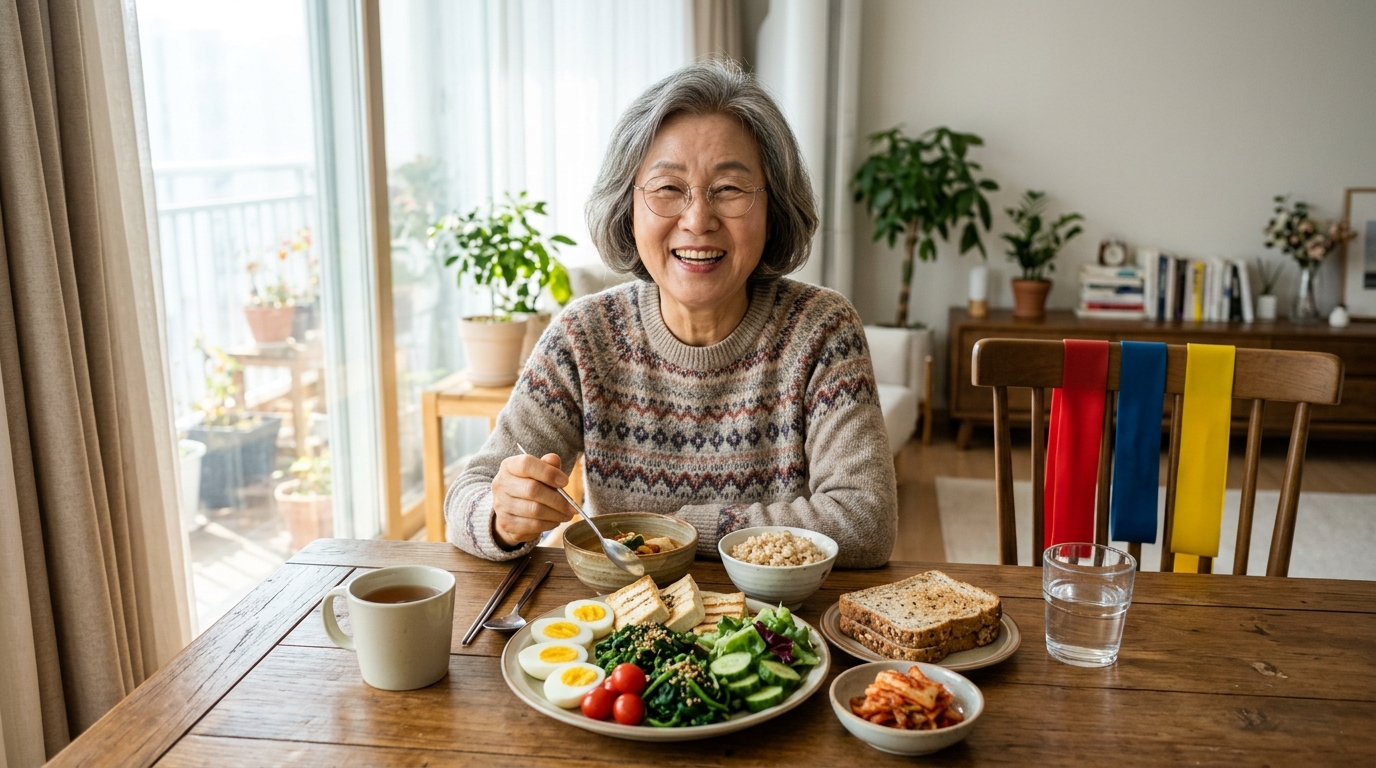
▲ 단백질 식단과 가벼운 근력 운동으로 체중 안정성을 유지하는 건강한 노년의 일상 / 만인의 탑 DB·대한노인의학회
3. 근육은 날아가고 기름만 찬다… '근감소성 비만'의 덫
왜 노년기의 체중 널뛰기는 이토록 치명적일까요? 병태생리학적 핵심 원인은 노화에 따른 '체성분 재구성의 비대칭성'에 있습니다. 젊을 때는 살이 빠질 때 지방이 주로 연소되지만, 노화가 진행된 신체는 체중이 줄어들 때 면역력과 생명 유지에 필수적인 골격근량과 골밀도가 우선적으로 급격히 빠져나갑니다.
문제는 살이 다시 찔 때입니다. 빠져나간 근육은 저절로 생기지 않는 반면, 새로 불어나는 체중은 고스란히 복부 내장지방과 혈관 지방으로 채워집니다. 결국 겉으로는 몸무게가 제자리로 돌아온 것처럼 보여도 몸 안은 근육이 소실되고 독성 지방만 가득 찬 '근감소성 비만(Sarcopenic Obesity)' 상태로 악화됩니다. 이는 거동 장애, 낙상 골절, 흡인성 폐렴, 면역 결핍을 유발하며 급격한 신체 노쇠(Frailty)의 낭떠러지로 환자를 몰아넣게 됩니다.
4. 75세 이후 장수 비결: '다이어트 금지'와 체중 안정성 지키기
따라서 70대 중반 이후에는 날씬해지기 위한 인위적인 다이어트나 식사량 감량을 전면 중단해야 합니다. 세계보건기구와 대한노인의학회의 진료 지침 역시 고령기에는 체질량지수(BMI) 23~26 수준의 약간 살집이 있는 과체중 상태를 유지할 때 총 사망률이 가장 낮고 감염병 저항력이 높다고 권고합니다.
최고의 건강 수칙은 체중의 급변을 막는 '체중 안정성(Weight Stability)'입니다. 매주 정해진 시간에 체중을 측정하여 1년에 2~3kg 이상의 체중 감소가 나타나는지 면밀히 살펴야 합니다. 만약 특별히 밥맛이 떨어지지 않았는데도 살이 저절로 빠진다면 초기 악성 종양, 내분비 장애, 심부전 등 숨은 중증 질환의 위험 신호일 수 있으므로 즉시 종합 검진을 받아야 합니다. 식단에서는 매 끼니 달걀, 생선, 두부, 육류 등 양질의 단백질을 고루 섭취하고, 의자에서 일어서기나 벽 짚고 팔굽혀펴기 등 가벼운 저강도 근력 운동으로 하체 근육을 지켜내는 것이 노년의 건강수명을 지키는 확실한 방패입니다.
연구 분석 그룹
체중 변동성 특성
총 사망 위험률 (HR)
임상 해석 및 시사점
체중 안정 유지군
2년 주기 체중 변화 1~2kg 미만 유지
기준 (1.00)
골격근량 보존, 가장 긴 기대수명 및 노쇠 예방
착시형 체중 유지군
시작-끝 체중은 같으나 중간 요요 극심
41% 상승 (1.41)
근감소성 비만 진행, 심뇌혈관 질환 위험 급증
체중 널뛰기 최상위군
체중 급증 및 급감이 반복적으로 발생
62% 폭증 (1.62)
숨은 중증 질환 경고, 전신 면역 저하 및 낙상 위험
만인의 탑 보건의학 특별취재팀발행인 겸 편집인: 신승엽 (Seung Youb Ssin)
MANINTOP MEDICAL & WELLNESS · GLOBAL EDITION
The Illusion of Weight Loss in Old Age: How Weight Fluctuation Increases Senior Mortality by 62 Percent
Reported by Seung Youb Ssin, Ph.D. | Publisher & Editor-in-Chief
While weight loss is frequently celebrated in younger demographics as a fitness milestone, unintended thinning or repetitive weight fluctuation in older adults represents a severe physiological warning sign linked to a 62 percent surge in all-cause mortality. Analyzing longitudinal National Health Insurance Service big data spanning 487,925 Korean seniors aged 75 and older, a joint research team from Seoul National University Hospital Gangnam Center and Soongsil University uncovered that weight stability—rather than weight reduction—serves as the paramount clinical determinant of longevity and frailty prevention.
Massive 487,000-Cohort Investigation: Seniors aged 75 and older exhibiting the highest degree of weight fluctuation faced up to a 62 percent elevated risk of all-cause mortality compared to stable counterparts.
The Deceptive Illusion of Stability: Even when initial and final body weights remained within a 5 percent margin, individuals experiencing severe intermediate weight cycling showed a 41 percent higher mortality rate.
Pathophysiology of Geriatric Weight Cycling: Senior weight loss preferentially depletes skeletal muscle and bone mass, whereas weight rebound selectively deposits visceral fat, culminating in accelerated sarcopenic frailty and systemic vascular strain.
1. The Obesity Paradox: Why Weight Loss in Late Life Threatens Survival
Across young and middle-aged adulthood, adiposity reduction serves as an essential therapeutic objective to blunt atherosclerotic cardiovascular events and metabolic dysfunction. However, upon crossing the threshold into late senescence past age 75, clinical guidelines undergo a complete inversion. In geriatric medicine, slightly overweight elders consistently outlive underweight counterparts—a phenomenon authenticated in epidemiological literature as the Obesity Paradox.
A multi-institutional investigation conducted by Professors Ji Yeon Seo and Ji-Min Choi of Seoul National University Hospital Gangnam Center, alongside Professor Kyung-Do Han of Soongsil University, analyzed 487,925 elderly Koreans aged 75 and older from the National Health Insurance Service database across a five-year surveillance period. Stratifying subjects into quartiles based on biennial body weight variability, the researchers discovered that seniors in the highest fluctuation tier suffered a staggering 62 percent elevation in all-cause mortality relative to those maintaining stable weight trajectories.
2. The Deceptive Illusion of Stability: The Peril of Hidden Weight Cycling
The most consequential clinical revelation was the identification of the Illusion of Weight Stability. Lay perception presumes that if initial and final weights across several years appear nearly identical, metabolic homeostasis is secure. Yet when the investigators isolated a sub-cohort whose starting and ending body weights differed by less than 5 percent, individuals who had undergone volatile intermediate weight cycling still exhibited a 41 percent higher mortality hazard compared to stable controls.
This repetitive weight instability catalyzed significant escalations in cardiovascular, cerebrovascular, pulmonary, and malignant disease mortality. These empirical findings substantiate that measuring static weight at isolated clinical visits fails to capture vulnerability; rather, longitudinal trajectory stability serves as the decisive barometer of physiological resilience.
▲ Active senior maintaining skeletal muscle mass and weight stability through balanced protein nutrition / MANINTOP Archive·KGS
3. Sarcopenic Obesity: The Asymmetric Biology of Aging Tissue Loss
The underlying biological mechanism explaining this excess mortality lies in the asymmetric pathophysiology of senior body recomposition. When elderly individuals lose mass, the body preferentially catabolizes skeletal muscle and bone mineral density rather than subcutaneous adipose reserves.
Crucially, when body mass rebounds, lost motor units do not spontaneously regenerate. Instead, recovered mass consists overwhelmingly of ectopic visceral adiposity and intermuscular lipid infiltration, precipitating rapid Sarcopenic Obesity. This structural decline triggers ambulatory dysfunction, devastating fall fractures, immune incompetence, and irreversible physical frailty.
4. Clinical Longevity Mandate: Halting Caloric Restriction to Safeguard Muscle
Consequently, intentional dietary restriction or cosmetic slimming must be strictly discontinued past age 75. Clinical protocols endorsed by geriatric societies advocate maintaining a body mass index (BMI) within the 23 to 26 range, where systemic infectious defenses and cardiopulmonary reserves remain optimal.
The foremost clinical imperative is preserving absolute Weight Stability. Weekly weight monitoring should be instituted; an involuntary drop exceeding 2 to 3 kilograms within a single year demands immediate diagnostic screening for occult malignancies, congestive heart failure, or endocrine disorders. Concurrently, elders should prioritize high-quality dietary proteins—such as eggs, fish, tofu, and lean poultry—paired with habitual resistance exercises like chair squats and wall push-ups to preserve the skeletal muscle architecture vital for independent survival.
Cohort Stratum
Trajectory Characteristics
All-Cause Hazard Ratio
Clinical Significance
Stable Weight Cohort
Biennial fluctuation under 1-2 kg
Reference (1.00)
Skeletal muscle preservation, maximum longevity
Illusion of Stability
Identical start and end, severe mid-cycling
+41% Elevated (1.41)
Progression to sarcopenic obesity, vascular decay
Extreme Fluctuation
Repeated sharp spikes and declines
+62% Surge (1.62)
Marker of occult disease, immune failure, fall risk
MANINTOP Medical Science TeamPublisher & Editor: Seung Youb Ssin, Ph.D.
MANINTOP NEWSLETTER
📬 만인의 탑 뉴스레터 무료 구독
오늘 보신 정책·시사 뉴스가 유익하셨나요? 매일 엄선되는 알짜 복지 혜택과 국회 실시간 속보를 이메일로 가장 먼저 받아보세요. (평생 무료)
Computer Programmer who love programming.
Computer Programmer Who love Riding Bicycle.
Computer Programmer who love trip in abroad.
Computer Programmer who love studying about programming
- even if sometimes it's very boring.
Computer Programmer who love talking with person.
- I love communication with person.
1월이 시작되면 감기는 이미 우리 곁에 와 있습니다. 2월, 3월, 4월까지 이어지는 추위와 건조함은 코와 목을 가장 먼저 공격합니다. 아침에 일어나자마자 막혀 있는 코. 계속 흐르는 콧물. 괜히 칼칼해지는 목. 이 증상은 “시작”일 뿐입니다. 한 번 무너지면 일주일, 길면 한 달까지 끌고 갑니다. 약을 먹으면 잠깐 괜찮아집니다. 하지만 며칠 뒤 또 반복됩니다. 왜일까요? 감기는 ‘치료’의 문제가 아니라 ‘관리’의 문제이기 때문입니다. 대부분은 감기가 오고 나서 약을 찾습니다. 하지만 진짜 중요한 건 감기가 오기 전에 코와 목을 지키는 것입니다. 건조한 실내 공기, 차가운 바깥 공기, 눈에 보이지 않는 세균. 코와 목은 매일 공격받고 있습니다. 지긋지긋하죠! 그런데도 우리는 아무 준비 없이 버티고 있습니다. 이번 겨울도 그렇게 보낼 건가요? 사실 방법은 어렵지 않습니다. 코를 깨끗하게 관리하고, 목을 따뜻하게 보호하고, 점막을 촉촉하게 유지하고, 기관지를 미리 관리하고, 외부 공기를 차단하는 것. 이 다섯 가지만 꾸준히 해도 감기약 없이 겨울을 보내는 것이 충분히 가능합니다. 🔥 이제부터 그 방법을 하나씩 살펴보겠습니다. 🔥 1. 코와 목을 먼저 관리해야 하는 과학적 이유 감기의 대부분은 코 점막에서 시작됩니다. 국제 학술지 Nature Reviews Microbiology 와 Journal of Allergy and Clinical Immunology 에 실린 호흡기 감염 관련 연구들에서는, 감기 바이러스가 비강 상피세포에 먼저 부착해 증식한다는 점을 설명하고 ...
리모델링사업이 진행 중인 아파트를 매매할 때 “계약금 10%를 언제까지 내야 하느냐”는 질문이 특히 많이 나옵니다. 이주공고(이주 안내)가 7~11월쯤이라고 들으면, 그 시점에 맞춰 계약금도 움직일 것 같아서 더 헷갈리기 쉽습니다. 하지만 실제 납부기한은 ‘이주공고가 언제냐’만으로 자동 결정되지 않는 경우가 많습니다. 1) 계약금 10% 납부기한: 결국 ‘문서에 적힌 일정’이 기준 계약금 10%를 언제까지 납부해야 하는지는, 내가 서명하는 매매계약서(특약 포함) 와 사업주체/조합이 제시한 공고·안내문 에 적힌 납부 일정이 기준이 됩니다. 실제 공고문에서는 분양대금 납부의 큰 틀(계약금→중도금→잔금)을 먼저 안내하고, 상세 일정은 별도 표나 유의사항으로 제시하는 방식이 흔합니다. 또, 계약서 문구에 따라 지급 시점이 조건부로 설정될 수도 있습니다. 예를 들어 한 사례 소개 자료에서는 용역계약서에 잔금(10%) 지급시기가 “사업승인 후”로 기재되어 있었다는 점이 언급됩니다. 이런 식으로 ‘사업 단계’와 지급을 연동하는 문구가 들어가면, 질문의 답은 계약서 문구를 확인해야만 확정됩니다. 관련 내용은 링크 에서 문구 사례를 확인할 수 있습니다. 2) 입주자모집공고에서 확인되는 ‘납부 순서’와 잔금 마감 시점 공고문에 적힌 문구를 보면, 납부 순서와 잔금 마감에 대한 기준이 비교적 명확하게 제시되는 경우가 있습니다. 예를 들어 한 입주자모집공고에는 “분양금액(주택가격)은 계약금, 중도금, 잔금의 순서로 납부”하며 “잔금은 입주(열쇠 수령일) 전에 완납”해야 한다고 안내되어 있습니다. (문구 확인: 링크 ) 이 문구가 의미하는 바는 최소 2가지입니다. 분양/공급 형태의 문서에서는 ‘계약금→중도금→잔금’ 흐름이 공식적으로 안내될 수 있습니다. 잔금은 “입주(열쇠 수령)” 이전에 완납해야 한다는 마감 기준이 문서에 적혀 있을 수 있습니다. 다만, 위 공고문 문구는 잔금 마감에 대한 기준을 보여주지만, 계약금 10%의...
윤석열 전 대통령 탄핵 인용 소식을 접하면, 가장 궁금한 지점은 ‘헌재가 정확히 무엇을 위헌·위법으로 봤는가’입니다. 또한 탄핵과 별개로 진행되는 형사재판(내란 우두머리 혐의 등)이 어디까지 왔는지도 함께 정리할 필요가 있습니다. 아래 내용은 제공된 기사/게시물 스니펫과 링크에서 확인되는 범위만 모아, 일반인이 흐름을 이해하기 쉽게 정리한 것입니다. 1) 탄핵 인용 관련: 스니펫에서 확인되는 ‘판단의 골격’ 제공된 근거 중 조국혁신당 사이트에는 헌법재판소가 윤석열 탄핵 심판에서 “피청구인의 위헌·위법행위는 국민 신임 …”이라는 취지로 판단했다는 문장이 인용돼 있습니다( 링크 ). 이 인용문만 놓고 보면, ‘위헌·위법행위’가 있었는지와 그로 인해 ‘국민의 신임’이 어떻게 평가됐는지가 핵심 축으로 소개됩니다. 다만 질문에서 요청하신 세부 항목, 즉 비상계엄 선포 자체를 문제 삼은 구체적 이유, 계엄 이후 조치(포고령, 국회 통제 등)의 어떤 지점이 헌법 위반인지, 국회의 권한행사 방해 및 정치활동 제약을 어떤 논리로 판단했는지 등은, 이번에 제공된 근거의 제목/스니펫만으로는 조항·사실관계·판단 구조가 그대로 제시돼 있지 않습니다. 따라서 이 글에서는 ‘헌재가 무엇을 문제 삼았다’는 세부 리스트를 단정적으로 재구성하기보다, 현재 확인 가능한 문구 수준의 요약(위헌·위법행위 → 국민 신임의 문제로 평가)까지만 적습니다. 만약 헌재 결정문 전문(주문 및 이유)이 추가로 확인되면, 그때는 문장 단위로 ‘어떤 행위’와 ‘어떤 헌법 원리/조항’이 연결되는지(예: 권력분립, 국회의 권한, 정치적 기본권 등) 구조화해 정리하는 것이 가장 정확합니다. 2) 형사 절차(내란 혐의) 관련: 체포영장과 1심 선고 언급 탄핵 심판과 별도로, 12·3 비상계엄 사태로 내란 혐의를 받는 윤석열 대통령에 대해 2024년 12월 31일 체포 영장이 발부됐다는 BBC 보도가 있습니다( 링크 ). 해당 보도는 ‘현직 대통령’에 대한 체포영장 발부라는 점을 함께 언급합니다. 또...





0 댓글