▲ "신청 안 해도 복지혜택 받는다"…정부, 복지급여 '신청주의' 폐지 및 공무원 직권신청 대폭 확대 (공식 보도 자료)
📌 핵심 브리핑 · 주요 쟁점 및 핵심 요약
국가가 복지 혜택을 제공할 때 지원 대상자가 직접 서류를 갖추어 신청해야만 급여를 지급하던 오랜 원칙인 '신청주의(申請主義)'가 대폭 개선된다. 보건복지부는 정보 부족이나 행정 절차의 어려움으로 인해 수급 자격이 있음에도 복지 혜택을 받지 못하는 사각지대를 해소하기 위해, 국민이 신청하지 않더라도 국가와 지방자치단체가 선제적으로 수급 자격을 확인해 복지급여를 지급하고 위기가구에는 공무원이 직접 직권으로 신청하는 '선제지원 복지' 체계로 전격 전환한다.
SPONSORED · ADVERTISEMENT
추진 및 찬성 측 핵심 논리
공정과 상식의 원칙에 따라 실체적 진실을 명명백백하게 규명하고 국민적 의혹을 해소해야 한다는 단호한 입장.
반대 및 비판 측 핵심 논리
정치적 표적 공세이자 국정 흔들기에 불과하며, 법리적 요건을 결여한 정쟁용 정치 쇼에 불과하다는 정면 반박.
1. '신청주의 개선 6법' 성립과 하위법령 정비 추진
정부는 지난 2026년 10월 1일 제439회 국회 본회의에서 복지급여 신청주의 개선을 위한 보건복지부 소관 6개 개정 법률안(이하 '신청주의 개선 6법')을 의결하고 10월 20일 개정·공포했다. 통과된 6개 법률은 사회보장기본법, 사회보장급여의 이용·제공 및 수급권자 발굴에 관한 법률(사회보장급여법), 아동수당법, 기초연금법, 장애인연금법, 국민기초생활 보장법(기초생활보장법)이다.
개정 법률이 2027년 1월 21일부터 본격 시행됨에 따라, 보건복지부는 법률에서 위임한 세부 절차와 서식을 정비하기 위해 사회보장급여법, 기초생활보장법, 아동수당법, 장애인연금법 등 4개 법률의 시행령 및 시행규칙 일부개정령안을 2026년 10월 30일부터 12월 9일까지 입법예고했다.
▲ 취약계층 대상 기초생활보장 생계급여 및 사회보장 통합 복지 상담 현장 / 정부 공식 자료
🔍 주요 쟁점 팩트체크 및 구조 진단
양측의 주장이 평행선을 달리는 가운데, 핵심 법률 조항과 관련 규정상 수사 및 특검 추진 요건이 충족되는지 여부가 향후 사법·정치적 분수령이 될 전망입니다.
2. 출생신고만 하면 자동 지급…아동·부모 관련 수당 개편
보편적으로 지급되는 아동 관련 복지급여는 보호자가 일일이 신청서를 작성해 제출해야 했던 절차가 전면 폐지된다. 기존에는 부모나 보호자가 주민센터를 방문하거나 온라인으로 신청서를 제출해야만 수당이 지급되었으나, 앞으로는 출생신고가 접수되거나 출생 사실이 행정망에 확인되는 즉시 지방정부가 보호자에게 계좌 확인 동의서를 요청하는 방식으로 전환된다. 보호자는 별도의 복지 신청서 없이 계좌 확인 절차에 동의하기만 하면 급여를 수령할 수 있다. 만약 보호자가 수급을 원하지 않을 경우에는 지급하지 않을 수 있는 법적 근거도 함께 마련됐다.
지급 시기 또한 획기적으로 개선된다. 기존에는 출생 후 60일이 지나 신청할 경우 신청한 달부터만 급여가 지급되어 이전 기간의 수당을 받지 못하는 불이익이 발생했으나, 개정 이후에는 신청 여부와 상관없이 '출생한 달'부터 소급하여 아동수당과 부모급여를 받을 수 있게 된다. 아울러 첫만남이용권 지급 규정이 기존 지자체 재량에서 국가의 법적 '의무'로 전환되어 수급권 보장이 대폭 강화된다.
구분
관련 법률
주요 개편 핵심
세부 시행 기준
기본원칙·절차
사회보장기본법·급여법
국가·지자체 선제적 지원 책무 명시
국민 신청 없어도 수급 확인 시 직권 지급
보편급여 자동
아동수당법
아동수당·부모급여 신청 절차 폐지
출생신고 연계 계좌 동의 기반 출생월 소급
위기가구 직권
기초생활보장법·급여법
위기가구 공무원 직권신청 대상 대폭 확대
금융조사 본인 한정 및 공무원 면책 신설
신청 간주·연계
기초연금법·장애인연금법
장애인연금 수급자 65세 도달 시 자동 연계
중증장애인 전체로 수급 대상 전면 확대
SPONSORED · ADVERTISEMENT
▲ 복지 사각지대 해소를 위한 공무원 직권신청 및 어르신·취약가구 선제 지원 체계 / 복지 행정 자료
3. 복지 사각지대 해소…위기가구 공무원 '직권신청' 및 면책 도입
갑작스러운 위기 상황이나 의사소통 불능으로 본인이 복지급여를 신청하지 못해 일가족이 비극에 처하는 사례를 방지하기 위해 담당 공무원의 '직권신청' 권한이 대폭 확대된다. 기존에는 심신미약이나 심신상실 등 극히 제한적인 경우에만 당사자 동의 없는 직권신청이 허용되었으나, 앞으로는 담당 공무원이 생계유지가 곤란하다고 판단할 경우 위기가구·고독사 위험자로 3회 이상 발굴된 가구, 자살 시도자 포함 위기가구, 긴급복지 지원 이후에도 위기가 지속되는 가구, 미성년자·발달장애인 가구 등에 대해 본인 동의 없이도 사회보장급여를 직권 신청할 수 있다.
아울러 개인정보 침해를 최소화하기 위해 직권신청 시 금융조사 범위를 '수급권자 본인'으로 한정하고, 긴급 시에는 간이 소득·재산 조사만으로 생계급여를 우선 결정해 즉시 지원하는 패스트트랙이 가동된다. 현장 복지 공무원들이 적극적으로 위기가구를 발굴·지원할 수 있도록 법률상 '면책 규정'과 '면책 추정' 제도도 신설됐다.
4. 복지급여 간 '신청 간주제' 도입과 위기정보 연계망 강화
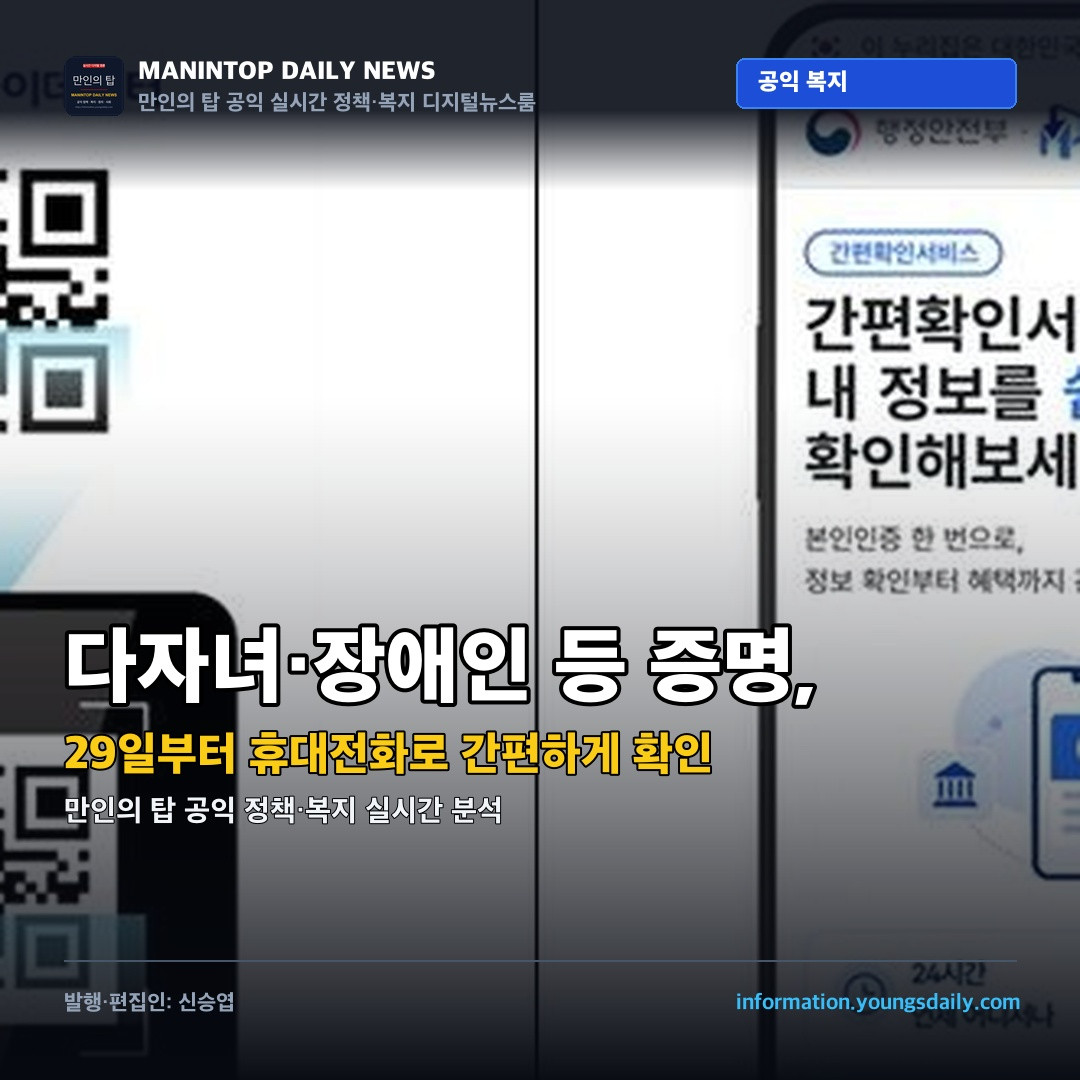
이미 특정 복지급여를 받고 있거나 수급 자격을 검증받은 대상자가 다른 급여 자격을 갖추게 된 경우, 별도의 신청 절차를 거치지 않아도 신청한 것으로 처리하는 '신청 간주제'가 본격 도입된다. 장애인연금을 받던 수급자가 만 65세에 도달하면 별도 신청 없이 기초연금을 신청한 것으로 간주하여 국가가 소득·재산을 조사한 후 자동으로 지급하며, 생계·의료급여 수급 중인 18세 이상 중증장애인도 자동으로 장애인연금 수급 조사를 받게 된다. 또한 장애인연금 수급 대상이 종전 1~3급 중복장애 기준에서 장애인복지법상 '장애의 정도가 심한 장애인' 전체로 전면 확대된다.
정부는 고독사 위험 가구 발굴을 위해 요양보호사 및 요양 대상자 정보를 시스템에 연계하고, 보훈보상대상자의 상이등급 정보를 연계해 미등록 장애인을 선제적으로 찾아내는 등 촘촘한 사회안전망을 완성하여 2027년 1월 21일부터 법안을 차질 없이 시행할 방침이다.
"Receive Welfare Benefits Without Application"…Government Abolishes 'Application Requirement' for Welfare Benefits and Significantly Expands Officials' Authority to Apply on Behalf of Citizens
The longstanding principle of "application-based eligibility," which required beneficiaries to submit documents and apply for welfare benefits in order to receive assistance, is set to undergo significant reform. The Ministry of Health and Welfare has announced a proactive shift to a "preemptive support welfare" system. This change aims to address the gaps where individuals who qualify for welfare benefits are unable to access them due to a lack of information or difficulties with administrative procedures. Under the new system, the government and local authorities will proactively verify eligibility for welfare benefits without requiring citizens to apply, and in cases of crisis, public officials will directly initiate applications on behalf of those in need.
📌 Key Takeaways
The government will transition to an automatic verification and proactive support system without requiring applications.
Payments will be retroactively issued from the month of birth upon consent for account verification linked to birth registration.
In cases of discovery three times or more, a provision for official applications by civil servants and legal immunity will be established.
1. Establishment of the 'Six Laws for Improving Application Procedures' and Promotion of Subordinate Legislation Revisions
On October 1, 2026, during the 439th National Assembly plenary session, the government approved six amendment bills related to improving application procedures for welfare benefits, under the Ministry of Health and Welfare (hereinafter referred to as the 'Six Laws for Improving Application Procedures'). These six laws include the Basic Social Security Act, the Act on the Use and Provision of Social Security Benefits and the Discovery of Beneficiaries (Social Security Benefits Act), the Child Allowance Act, the Basic Pension Act, the Disability Pension Act, and the National Basic Livelihood Security Act (Basic Livelihood Security Act).
With the amended laws set to take effect on January 21, 2027, the Ministry of Health and Welfare has announced plans to revise the detailed procedures and forms mandated by the laws. From October 30 to December 9, 2026, the ministry will conduct legislative notice for partial amendments to the enforcement decrees and rules of four laws: the Social Security Benefits Act, the Basic Livelihood Security Act, the Child Allowance Act, and the Disability Pension Act.
▲ On-site consultation for basic livelihood support and consolidated social welfare benefits / Official Government Archive
2. Automatic Payment Upon Birth Registration: Overhaul of Child and Parental Benefits
The previously required procedure for guardians to individually fill out and submit application forms for universally provided child-related welfare benefits will be completely abolished.
Previously, parents or guardians had to visit local government offices or submit applications online to receive benefits. However, in the future, once a birth registration is received or the birth is confirmed through administrative networks, local governments will request guardians to consent to account verification. Guardians will only need to agree to the account verification process without a separate welfare application to receive benefits. Additionally, a legal basis has been established to ensure that benefits are not paid if the guardian does not wish to receive them.
The timing of payments will also see significant improvements. Previously, if an application was made more than 60 days after birth, benefits would only be paid from the month of application, resulting in a disadvantage of not receiving benefits for the prior period. After the amendments, benefits such as child allowances and parental benefits will be retroactively available from the month of birth, regardless of the application status. Furthermore, the regulation for the provision of first meeting vouchers will shift from local government discretion to a legal 'obligation' of the state, significantly strengthening the guarantee of entitlement.
Category
Target Scope
Standard / Benefit
Procedure / Action
Basic Principles and Procedures
Social Security Basic Act and Benefit Act
Clarification of the proactive support responsibilities of the state and local governments
Automatic payment upon confirmation of eligibility without a citizen's application
Universal benefits to be provided automatically
Child Allowance Act
Elimination of application procedures for child allowance and parental benefits
Retroactive payments based on consent linked to birth registration accounts
Automatic assistance for crisis households
Basic Living Security Act and Benefit Act
Significant expansion of the target group for automatic applications by public officials for crisis households
Introduction of restrictions on financial investigations and immunity for public officials
Assumed applications and linkages
Basic Pension Act and Disability Pension Act
Automatic linkage for disability pension recipients upon reaching 65 years of age
Comprehensive expansion of eligibility for disability benefits to all individuals with severe disabilities
3. Addressing Welfare Blind Spots: Introduction of 'Official Applications' by Public Officials for Crisis Households
To prevent tragic situations where families cannot apply for welfare benefits due to sudden crises or communication barriers, the authority for public officials to make 'official applications' will be significantly expanded.
Previously, official applications without the consent of the individual were only permitted in extremely limited cases, such as mental incapacity. However, in the future, if a public official determines that a household is struggling to maintain their livelihood, they will be able to make official applications for social security benefits without the individual's consent for households identified as crisis households or at risk of solitary death, those who have attempted suicide, households where crises persist even after emergency welfare support, and households with minors or individuals with developmental disabilities.
Additionally, to minimize privacy violations, the scope of financial investigations during official applications will be limited to the 'beneficiary themselves,' and in emergencies, a fast-track system will be activated to prioritize the determination of livelihood benefits based on simplified income and asset investigations for immediate support. Legal provisions for 'immunity' and 'presumption of immunity' have also been established to enable field welfare officials to actively identify and support crisis households.
▲ Proactive administrative application system and welfare support for vulnerable citizens / Ministry of Health and Welfare Archive
4. Introduction of 'Presumed Application' for Welfare Benefits and Strengthening of Crisis Information Networks
The 'presumed application' system will be officially introduced, allowing individuals who are already receiving certain welfare benefits or have verified eligibility for benefits to be processed as having applied without going through separate application procedures.
For example, beneficiaries of disability pensions who reach the age of 65 will be considered to have applied for basic pensions without a separate application, with the state conducting income and asset investigations and automatically providing payments. Additionally, individuals aged 18 and older receiving livelihood or medical benefits will automatically undergo investigations for disability pension eligibility. The criteria for disability pension recipients will also be expanded from the previous 1-3 grade overlapping disability standards to include all individuals classified as 'severely disabled' under the Disability Welfare Act.
To identify households at risk of solitary death, the government plans to link information from caregivers and care recipients within the system, as well as connect information on disability ratings for veterans, proactively identifying unregistered individuals with disabilities. The government aims to implement these measures without delay starting January 21, 2027.
Recommended Deep-Dive Investigations TOP 3
GLOBAL REPORT
Computer Programmer who love programming.
Computer Programmer Who love Riding Bicycle.
Computer Programmer who love trip in abroad.
Computer Programmer who love studying about programming
- even if sometimes it's very boring.
Computer Programmer who love talking with person.
- I love communication with person.
1월이 시작되면 감기는 이미 우리 곁에 와 있습니다. 2월, 3월, 4월까지 이어지는 추위와 건조함은 코와 목을 가장 먼저 공격합니다. 아침에 일어나자마자 막혀 있는 코. 계속 흐르는 콧물. 괜히 칼칼해지는 목. 이 증상은 “시작”일 뿐입니다. 한 번 무너지면 일주일, 길면 한 달까지 끌고 갑니다. 약을 먹으면 잠깐 괜찮아집니다. 하지만 며칠 뒤 또 반복됩니다. 왜일까요? 감기는 ‘치료’의 문제가 아니라 ‘관리’의 문제이기 때문입니다. 대부분은 감기가 오고 나서 약을 찾습니다. 하지만 진짜 중요한 건 감기가 오기 전에 코와 목을 지키는 것입니다. 건조한 실내 공기, 차가운 바깥 공기, 눈에 보이지 않는 세균. 코와 목은 매일 공격받고 있습니다. 지긋지긋하죠! 그런데도 우리는 아무 준비 없이 버티고 있습니다. 이번 겨울도 그렇게 보낼 건가요? 사실 방법은 어렵지 않습니다. 코를 깨끗하게 관리하고, 목을 따뜻하게 보호하고, 점막을 촉촉하게 유지하고, 기관지를 미리 관리하고, 외부 공기를 차단하는 것. 이 다섯 가지만 꾸준히 해도 감기약 없이 겨울을 보내는 것이 충분히 가능합니다. 🔥 이제부터 그 방법을 하나씩 살펴보겠습니다. 🔥 1. 코와 목을 먼저 관리해야 하는 과학적 이유 감기의 대부분은 코 점막에서 시작됩니다. 국제 학술지 Nature Reviews Microbiology 와 Journal of Allergy and Clinical Immunology 에 실린 호흡기 감염 관련 연구들에서는, 감기 바이러스가 비강 상피세포에 먼저 부착해 증식한다는 점을 설명하고 ...
리모델링사업이 진행 중인 아파트를 매매할 때 “계약금 10%를 언제까지 내야 하느냐”는 질문이 특히 많이 나옵니다. 이주공고(이주 안내)가 7~11월쯤이라고 들으면, 그 시점에 맞춰 계약금도 움직일 것 같아서 더 헷갈리기 쉽습니다. 하지만 실제 납부기한은 ‘이주공고가 언제냐’만으로 자동 결정되지 않는 경우가 많습니다. 1) 계약금 10% 납부기한: 결국 ‘문서에 적힌 일정’이 기준 계약금 10%를 언제까지 납부해야 하는지는, 내가 서명하는 매매계약서(특약 포함) 와 사업주체/조합이 제시한 공고·안내문 에 적힌 납부 일정이 기준이 됩니다. 실제 공고문에서는 분양대금 납부의 큰 틀(계약금→중도금→잔금)을 먼저 안내하고, 상세 일정은 별도 표나 유의사항으로 제시하는 방식이 흔합니다. 또, 계약서 문구에 따라 지급 시점이 조건부로 설정될 수도 있습니다. 예를 들어 한 사례 소개 자료에서는 용역계약서에 잔금(10%) 지급시기가 “사업승인 후”로 기재되어 있었다는 점이 언급됩니다. 이런 식으로 ‘사업 단계’와 지급을 연동하는 문구가 들어가면, 질문의 답은 계약서 문구를 확인해야만 확정됩니다. 관련 내용은 링크 에서 문구 사례를 확인할 수 있습니다. 2) 입주자모집공고에서 확인되는 ‘납부 순서’와 잔금 마감 시점 공고문에 적힌 문구를 보면, 납부 순서와 잔금 마감에 대한 기준이 비교적 명확하게 제시되는 경우가 있습니다. 예를 들어 한 입주자모집공고에는 “분양금액(주택가격)은 계약금, 중도금, 잔금의 순서로 납부”하며 “잔금은 입주(열쇠 수령일) 전에 완납”해야 한다고 안내되어 있습니다. (문구 확인: 링크 ) 이 문구가 의미하는 바는 최소 2가지입니다. 분양/공급 형태의 문서에서는 ‘계약금→중도금→잔금’ 흐름이 공식적으로 안내될 수 있습니다. 잔금은 “입주(열쇠 수령)” 이전에 완납해야 한다는 마감 기준이 문서에 적혀 있을 수 있습니다. 다만, 위 공고문 문구는 잔금 마감에 대한 기준을 보여주지만, 계약금 10%의...
윤석열 전 대통령 탄핵 인용 소식을 접하면, 가장 궁금한 지점은 ‘헌재가 정확히 무엇을 위헌·위법으로 봤는가’입니다. 또한 탄핵과 별개로 진행되는 형사재판(내란 우두머리 혐의 등)이 어디까지 왔는지도 함께 정리할 필요가 있습니다. 아래 내용은 제공된 기사/게시물 스니펫과 링크에서 확인되는 범위만 모아, 일반인이 흐름을 이해하기 쉽게 정리한 것입니다. 1) 탄핵 인용 관련: 스니펫에서 확인되는 ‘판단의 골격’ 제공된 근거 중 조국혁신당 사이트에는 헌법재판소가 윤석열 탄핵 심판에서 “피청구인의 위헌·위법행위는 국민 신임 …”이라는 취지로 판단했다는 문장이 인용돼 있습니다( 링크 ). 이 인용문만 놓고 보면, ‘위헌·위법행위’가 있었는지와 그로 인해 ‘국민의 신임’이 어떻게 평가됐는지가 핵심 축으로 소개됩니다. 다만 질문에서 요청하신 세부 항목, 즉 비상계엄 선포 자체를 문제 삼은 구체적 이유, 계엄 이후 조치(포고령, 국회 통제 등)의 어떤 지점이 헌법 위반인지, 국회의 권한행사 방해 및 정치활동 제약을 어떤 논리로 판단했는지 등은, 이번에 제공된 근거의 제목/스니펫만으로는 조항·사실관계·판단 구조가 그대로 제시돼 있지 않습니다. 따라서 이 글에서는 ‘헌재가 무엇을 문제 삼았다’는 세부 리스트를 단정적으로 재구성하기보다, 현재 확인 가능한 문구 수준의 요약(위헌·위법행위 → 국민 신임의 문제로 평가)까지만 적습니다. 만약 헌재 결정문 전문(주문 및 이유)이 추가로 확인되면, 그때는 문장 단위로 ‘어떤 행위’와 ‘어떤 헌법 원리/조항’이 연결되는지(예: 권력분립, 국회의 권한, 정치적 기본권 등) 구조화해 정리하는 것이 가장 정확합니다. 2) 형사 절차(내란 혐의) 관련: 체포영장과 1심 선고 언급 탄핵 심판과 별도로, 12·3 비상계엄 사태로 내란 혐의를 받는 윤석열 대통령에 대해 2024년 12월 31일 체포 영장이 발부됐다는 BBC 보도가 있습니다( 링크 ). 해당 보도는 ‘현직 대통령’에 대한 체포영장 발부라는 점을 함께 언급합니다. 또...







0 댓글