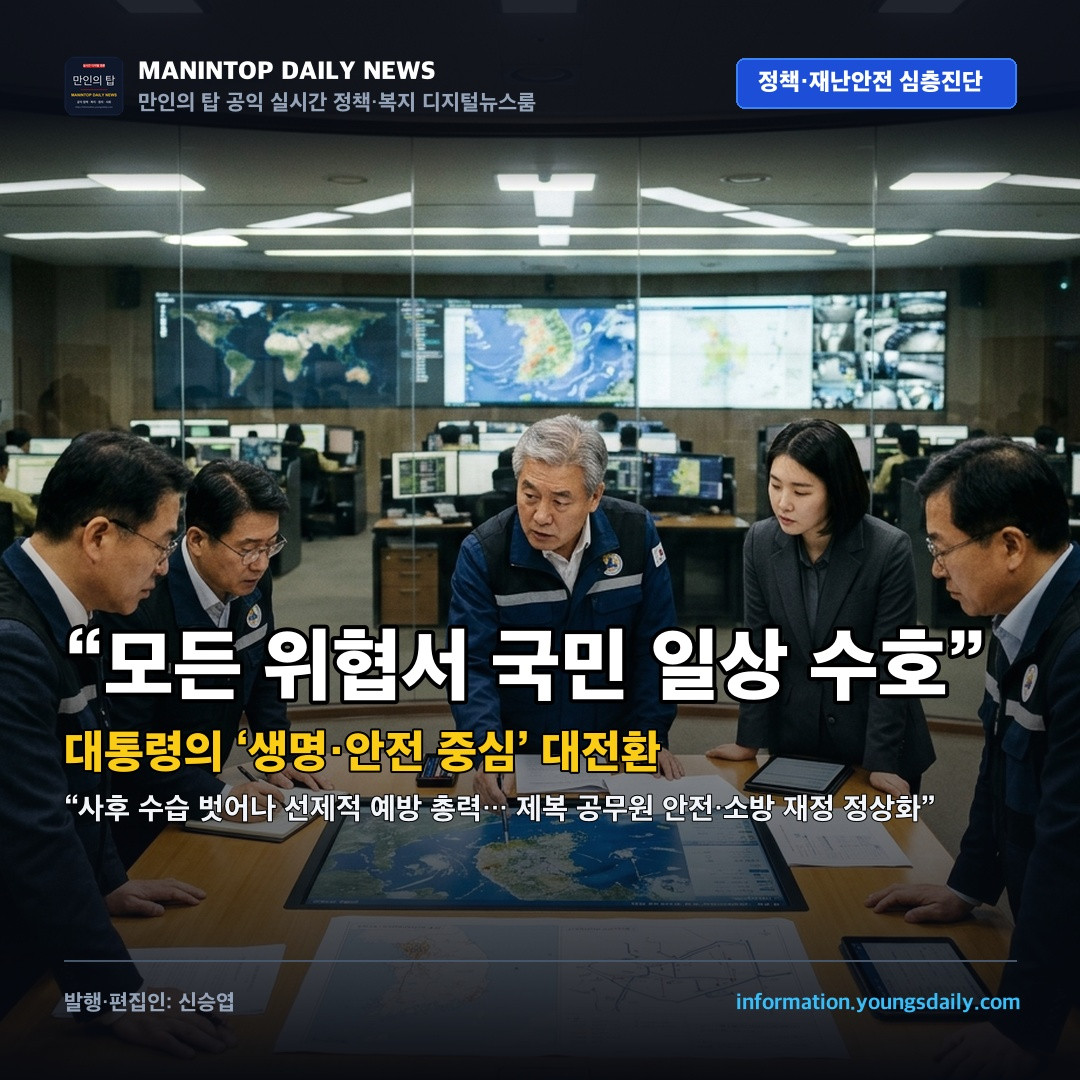
▲ 정부서울청사 국가재난안전종합상황실에서 범정부 관계부처 지휘관들이 전국 재난 안전망 가동 현황을 실시간 점검하고 있다. ⓒ 만인의 탑
이재명 대통령이 국무회의를 통해 "국가는 모든 위협으로부터 국민의 일상을 안전하게 지켜야 할 무한한 책무가 있다"며 "국민의 목숨을 살리는 정부, 국민의 일상을 온전히 지키는 나라를 만드는 데 국가의 모든 행정·재정 역량을 집중하라"고 강력히 지시했습니다. 도심 빌딩 방화 테러와 고속도로 2차 사고 순직, 화재 진압 및 산업 현장의 인명 피해가 잇따르는 가운데, 국정의 중심축을 사후 수습에서 '생명·안전 중심의 사전 예방 거버넌스'로 전면 전환하겠다는 국가적 선언입니다.
1. 도심 테러와 현장 참변의 경고… 국민 일상 위협 요인의 총체적 진단
최근 대한민국 도심과 산업 현장은 예측하기 어려운 복합적 안전 위협에 직면해 있습니다. 대낮 서울 강남 테헤란로 역삼동의 오피스 빌딩에서 7분 간격으로 인화물질이 살포되어 19명이 다치고 변리사가 심정지에 빠지는 도심 방화 참변이 발생했고, 야간 고속도로에서는 1차 사고 현장을 수습하던 30대 경찰관이 뒤따르던 음주 운전 차량에 치여 순직하는 비극이 빚어졌습니다. 국민이 안심하고 출근하고 일하는 지극히 평범한 일상이 한순간에 산산조각 나는 사고들이 잇따르고 있습니다.
대통령의 이번 지시는 이러한 일상적 위협을 단순한 개별 사고나 운에 맡길 사안이 아니라, 국가 시스템의 총체적 결함으로 엄중히 규정한 것입니다. 사고가 터진 뒤 책임 공방을 벌이고 땜질식 대책을 내놓던 과거의 후진적 관행을 완전히 뿌리뽑고, 국민의 일상을 위협하는 요소를 국가가 선제적으로 식별하여 원천 차단하는 능동적 안전망을 구축하라는 강력한 주문입니다.
혁신 핵심 정책 영역
대통령 지시 및 주요 정책 과제
근본 원인 및 혁신 추진 동기
제도적·사회적 기대 효과
국정 철학 및 최고 기조
“국민의 목숨을 살리는 정부, 일상을 온전히 지키는 나라”로 국정 역량 총결집
대형 참사 이후에만 급조되던 관행적 사후 수습 행정의 악순환 단절
국가 존립의 제1 목적을 국민의 생명과 평온한 일상 보호로 재정의
현장 제복 공무원 안전망
2차 사고 방지용 첨단 유도 차량 보급 및 고성능 방호구 국비 100% 지원
사고 수습 경찰관 참변 및 화재 진압 대원 순직의 구조적 방지
국민을 지키는 소방·경찰의 생명부터 국가가 완벽하게 책임지는 원칙 확립
소방·재난 재정 정상화
소방 국가직 전환 6년 차 지자체 재정 전가 극복 및 소방안전교부세율 대폭 확대
지자체 소방 예산 압박 해소와 중앙정부 분담률 50% 법제화 추진
정치적 말잔치를 넘어선 실질적 국비 투입으로 전국 안전 격차 완전 해소
도심·산업 복합 재난 대비
다중이용 오피스 인화물질 반입 통제 및 첨단 산업단지 방폭 인프라 의무화
역삼동 연쇄 방화 및 배터리·화학공장 화재 등 신종 복합 위험 차단
도시 설계와 산업 안전 기준의 전면적 현대화를 통한 사전 예방체계 완성
2. 제복 공무원 보호와 소방 재정 정상화… 생명·안전 거버넌스의 현실적 해법
새로운 안전 거버넌스의 출발점은 최일선에서 국민의 생명을 구하는 소방관과 경찰관 등 제복 공무원의 안전과 처우를 국가가 온전히 보장하는 일입니다. 야간 고속도로나 위험 현장 출동 시 2차 사고를 원천 차단할 수 있는 고성능 스마트 유도 방호 차량을 전국에 즉각 보급하고, 현장 지휘관의 자율성과 면책 범위를 확대하여 대원들이 위축되지 않고 신속히 대처할 수 있는 현장 중심 안전망을 갖추기로 했습니다.
아울러 최근 정치권의 '소방 재정 빨대' 설화 논란으로 촉발된 소방 재정의 기형적 구조도 획기적으로 개선됩니다. 소방공무원이 국가직으로 전환된 지 6년이 지났음에도 인건비와 장비 예산의 대부분을 지자체에 떠넘겨왔던 모순을 해소하기 위해, 소방안전교부세를 영구 확충하고 중앙정부의 국비 분담률을 50%까지 법제화하는 소방재정 정상화 입법이 가속화될 전망입니다.
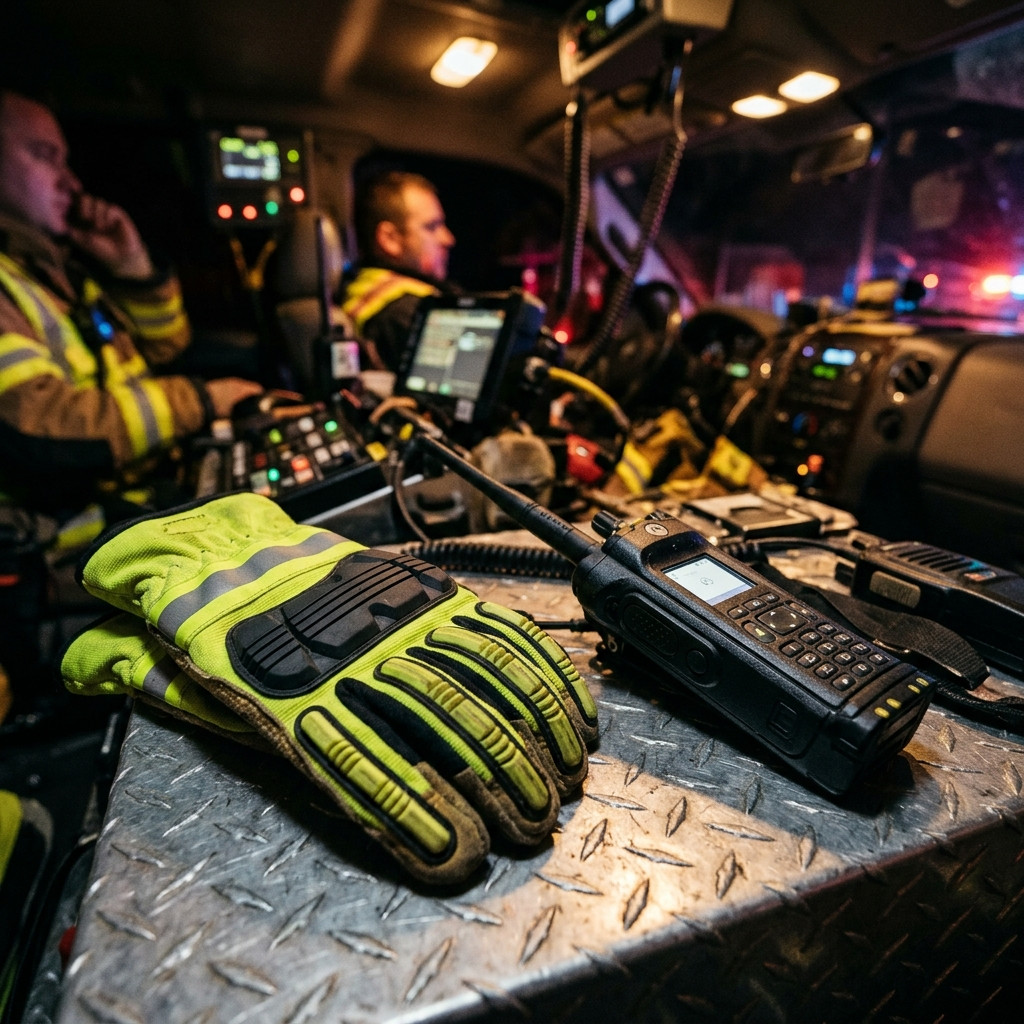
▲ 재난 현장 지휘차량에 탑재된 스마트 무전 통신 단말기와 현장 대원 안전 보호 장비. ⓒ 만인의 탑
3. 예방 중심의 도심 복합 방재… 신뢰받는 선진 안전 국가로의 도약
도심 다중이용 오피스 빌딩과 첨단 산업 시설에 대한 방재 기준도 획기적으로 상향 조정됩니다. 개방형 로비로 인해 누구든 위험 인화물질을 들고 출입할 수 있었던 고층 빌딩에 스피드게이트와 보안 검색 매뉴얼을 전면 도입하고, 인공지능 기반 지능형 CCTV를 통해 이상 행동이나 연기·화염 징후를 실시간 감지하는 스마트 관제 시스템이 공공과 민간 전반으로 확대됩니다.
국가의 품격은 국민이 매일 누리는 일상의 안전함에서 완성됩니다. 출근길 지하철에서, 업무를 보는 빌딩 안에서, 심야의 고속도로 위에서 그 어떤 시민도 불의의 위협으로 목숨을 잃지 않는 사회를 만드는 것은 타협할 수 없는 국가의 제1 소명입니다. 정치적 수사에 머물지 않고 입법과 예산으로 뒷받침되는 강력한 재난안전 혁신을 통해 진정한 선진 안전 복지 국가로 도약해야 할 때입니다.
▲ Inside the National Disaster and Safety Situation Room, public safety leaders coordinate real-time disaster monitoring networks across South Korea. ⓒ MANINTOP Global Newsroom
President Lee Jae-myung delivered a decisive national mandate during a Cabinet council session, stating that the government bears an infinite responsibility to safeguard the daily peace and safety of every citizen against all threats. Calling for the total concentration of state administrative and financial resources to create a nation that preserves human lives, the administration declared a systemic paradigm shift from retrospective crisis management to proactive, life-centered national governance.
1. Urban Emergencies and the Call for Systemic Protection
South Korea's urban centers and industrial corridors have recently confronted an unprecedented series of compound safety perils. Coordinated incendiary assaults in Seoul's Gangnam business hub injured nineteen office professionals, while a highway police officer on night duty was fatally struck in a secondary collision while securing an initial accident site. These recurring tragedies have shaken public confidence in the basic security of routine workplace environments and everyday transit.
The presidential directive redefines these recurring hazards not as isolated occurrences, but as structural deficiencies requiring immediate administrative resolution. Eradicating outdated practices of passive damage containment and bureaucratic deflection, the national strategy mandates the proactive identification and elimination of safety risks before they inflict irreversible harm on citizens.
Core Strategic Domain
Presidential Directives
Underlying Root Causes
Systemic Impact
National Governance Philosophy
Mobilizing all state administrative power to protect citizen lives and daily routines
Breaking recurring cycles of passive post-disaster cleanups with proactive governance
Redefining the fundamental purpose of the state around human safety and well-being
First Responder Protection
Mandating full central funding for advanced protective gear and highway safety barriers
Preventing fatal secondary crashes among emergency personnel during roadside operations
Establishing the imperative that the state must thoroughly protect those who protect citizens
Fiscal Restructuring of Safety
Expanding national emergency grant shares to resolve local municipal budget disparities
Overcoming municipal fiscal strain by legislating fifty percent national co-funding
Eliminating regional safety discrepancies through substantial and predictable funding
Urban & Complex Risk Mitigation
Enforcing building perimeter security and explosion-proof protocols for industrial hubs
Intercepting emerging urban threats including incendiary arson and high-tech plant fires
Modernizing urban architectural codes and industrial regulations for systemic prevention
2. First Responder Welfare and Structural Budget Reforms
The core of the restructured safety governance focuses on safeguarding the frontline emergency responders who risk their lives for the public. State agencies are expediting the nationwide deployment of advanced smart impact-attenuating command vehicles to shield roadside operations, alongside the complete central treasury subsidization of heavy-duty personal protective equipment for police and fire personnel.
Addressing contentious parliamentary debates surrounding local firefighting costs, the administration plans structural fiscal reforms. Although emergency personnel transitioned to national civil service status six years ago, regional municipal budgets have carried the majority of operating expenses. The government is advancing legislation to permanently expand emergency safety grants and establish fifty percent central co-funding, securing equitable safety resources nationwide.
▲ Tactical disaster communication transceivers and reflective safety equipment ready for immediate field deployment on an incident response console. ⓒ MANINTOP Global Newsroom
3. Proactive Urban Prevention and the Leap to Advanced Safety Standards
Architectural safety codes for high-density commercial towers and industrial parks are undergoing comprehensive modernization. High-rise properties with open public lobbies will implement access control turnstiles and security screening protocols to intercept hazardous chemical accelerants, while artificial intelligence analytics in closed-circuit cameras will detect smoke, ignition anomalies, and erratic behaviors in real time.
The true measure of an advanced nation resides in the uncompromised peace of mind experienced by its citizens in daily life. Whether navigating morning transit, working inside corporate offices, or driving on nighttime expressways, no citizen should lose their life to preventable hazards. Grounded in legislative commitment and substantial fiscal backing, South Korea is charting a decisive course toward becoming a world-leading safety society.
MANINTOP NEWSLETTER
📬 만인의 탑 뉴스레터 무료 구독
오늘 보신 정책·시사 뉴스가 유익하셨나요? 매일 엄선되는 알짜 복지 혜택과 국회 실시간 속보를 이메일로 가장 먼저 받아보세요. (평생 무료)
Computer Programmer who love programming.
Computer Programmer Who love Riding Bicycle.
Computer Programmer who love trip in abroad.
Computer Programmer who love studying about programming
- even if sometimes it's very boring.
Computer Programmer who love talking with person.
- I love communication with person.
1월이 시작되면 감기는 이미 우리 곁에 와 있습니다. 2월, 3월, 4월까지 이어지는 추위와 건조함은 코와 목을 가장 먼저 공격합니다. 아침에 일어나자마자 막혀 있는 코. 계속 흐르는 콧물. 괜히 칼칼해지는 목. 이 증상은 “시작”일 뿐입니다. 한 번 무너지면 일주일, 길면 한 달까지 끌고 갑니다. 약을 먹으면 잠깐 괜찮아집니다. 하지만 며칠 뒤 또 반복됩니다. 왜일까요? 감기는 ‘치료’의 문제가 아니라 ‘관리’의 문제이기 때문입니다. 대부분은 감기가 오고 나서 약을 찾습니다. 하지만 진짜 중요한 건 감기가 오기 전에 코와 목을 지키는 것입니다. 건조한 실내 공기, 차가운 바깥 공기, 눈에 보이지 않는 세균. 코와 목은 매일 공격받고 있습니다. 지긋지긋하죠! 그런데도 우리는 아무 준비 없이 버티고 있습니다. 이번 겨울도 그렇게 보낼 건가요? 사실 방법은 어렵지 않습니다. 코를 깨끗하게 관리하고, 목을 따뜻하게 보호하고, 점막을 촉촉하게 유지하고, 기관지를 미리 관리하고, 외부 공기를 차단하는 것. 이 다섯 가지만 꾸준히 해도 감기약 없이 겨울을 보내는 것이 충분히 가능합니다. 🔥 이제부터 그 방법을 하나씩 살펴보겠습니다. 🔥 1. 코와 목을 먼저 관리해야 하는 과학적 이유 감기의 대부분은 코 점막에서 시작됩니다. 국제 학술지 Nature Reviews Microbiology 와 Journal of Allergy and Clinical Immunology 에 실린 호흡기 감염 관련 연구들에서는, 감기 바이러스가 비강 상피세포에 먼저 부착해 증식한다는 점을 설명하고 ...
리모델링사업이 진행 중인 아파트를 매매할 때 “계약금 10%를 언제까지 내야 하느냐”는 질문이 특히 많이 나옵니다. 이주공고(이주 안내)가 7~11월쯤이라고 들으면, 그 시점에 맞춰 계약금도 움직일 것 같아서 더 헷갈리기 쉽습니다. 하지만 실제 납부기한은 ‘이주공고가 언제냐’만으로 자동 결정되지 않는 경우가 많습니다. 1) 계약금 10% 납부기한: 결국 ‘문서에 적힌 일정’이 기준 계약금 10%를 언제까지 납부해야 하는지는, 내가 서명하는 매매계약서(특약 포함) 와 사업주체/조합이 제시한 공고·안내문 에 적힌 납부 일정이 기준이 됩니다. 실제 공고문에서는 분양대금 납부의 큰 틀(계약금→중도금→잔금)을 먼저 안내하고, 상세 일정은 별도 표나 유의사항으로 제시하는 방식이 흔합니다. 또, 계약서 문구에 따라 지급 시점이 조건부로 설정될 수도 있습니다. 예를 들어 한 사례 소개 자료에서는 용역계약서에 잔금(10%) 지급시기가 “사업승인 후”로 기재되어 있었다는 점이 언급됩니다. 이런 식으로 ‘사업 단계’와 지급을 연동하는 문구가 들어가면, 질문의 답은 계약서 문구를 확인해야만 확정됩니다. 관련 내용은 링크 에서 문구 사례를 확인할 수 있습니다. 2) 입주자모집공고에서 확인되는 ‘납부 순서’와 잔금 마감 시점 공고문에 적힌 문구를 보면, 납부 순서와 잔금 마감에 대한 기준이 비교적 명확하게 제시되는 경우가 있습니다. 예를 들어 한 입주자모집공고에는 “분양금액(주택가격)은 계약금, 중도금, 잔금의 순서로 납부”하며 “잔금은 입주(열쇠 수령일) 전에 완납”해야 한다고 안내되어 있습니다. (문구 확인: 링크 ) 이 문구가 의미하는 바는 최소 2가지입니다. 분양/공급 형태의 문서에서는 ‘계약금→중도금→잔금’ 흐름이 공식적으로 안내될 수 있습니다. 잔금은 “입주(열쇠 수령)” 이전에 완납해야 한다는 마감 기준이 문서에 적혀 있을 수 있습니다. 다만, 위 공고문 문구는 잔금 마감에 대한 기준을 보여주지만, 계약금 10%의...
윤석열 전 대통령 탄핵 인용 소식을 접하면, 가장 궁금한 지점은 ‘헌재가 정확히 무엇을 위헌·위법으로 봤는가’입니다. 또한 탄핵과 별개로 진행되는 형사재판(내란 우두머리 혐의 등)이 어디까지 왔는지도 함께 정리할 필요가 있습니다. 아래 내용은 제공된 기사/게시물 스니펫과 링크에서 확인되는 범위만 모아, 일반인이 흐름을 이해하기 쉽게 정리한 것입니다. 1) 탄핵 인용 관련: 스니펫에서 확인되는 ‘판단의 골격’ 제공된 근거 중 조국혁신당 사이트에는 헌법재판소가 윤석열 탄핵 심판에서 “피청구인의 위헌·위법행위는 국민 신임 …”이라는 취지로 판단했다는 문장이 인용돼 있습니다( 링크 ). 이 인용문만 놓고 보면, ‘위헌·위법행위’가 있었는지와 그로 인해 ‘국민의 신임’이 어떻게 평가됐는지가 핵심 축으로 소개됩니다. 다만 질문에서 요청하신 세부 항목, 즉 비상계엄 선포 자체를 문제 삼은 구체적 이유, 계엄 이후 조치(포고령, 국회 통제 등)의 어떤 지점이 헌법 위반인지, 국회의 권한행사 방해 및 정치활동 제약을 어떤 논리로 판단했는지 등은, 이번에 제공된 근거의 제목/스니펫만으로는 조항·사실관계·판단 구조가 그대로 제시돼 있지 않습니다. 따라서 이 글에서는 ‘헌재가 무엇을 문제 삼았다’는 세부 리스트를 단정적으로 재구성하기보다, 현재 확인 가능한 문구 수준의 요약(위헌·위법행위 → 국민 신임의 문제로 평가)까지만 적습니다. 만약 헌재 결정문 전문(주문 및 이유)이 추가로 확인되면, 그때는 문장 단위로 ‘어떤 행위’와 ‘어떤 헌법 원리/조항’이 연결되는지(예: 권력분립, 국회의 권한, 정치적 기본권 등) 구조화해 정리하는 것이 가장 정확합니다. 2) 형사 절차(내란 혐의) 관련: 체포영장과 1심 선고 언급 탄핵 심판과 별도로, 12·3 비상계엄 사태로 내란 혐의를 받는 윤석열 대통령에 대해 2024년 12월 31일 체포 영장이 발부됐다는 BBC 보도가 있습니다( 링크 ). 해당 보도는 ‘현직 대통령’에 대한 체포영장 발부라는 점을 함께 언급합니다. 또...




0 댓글