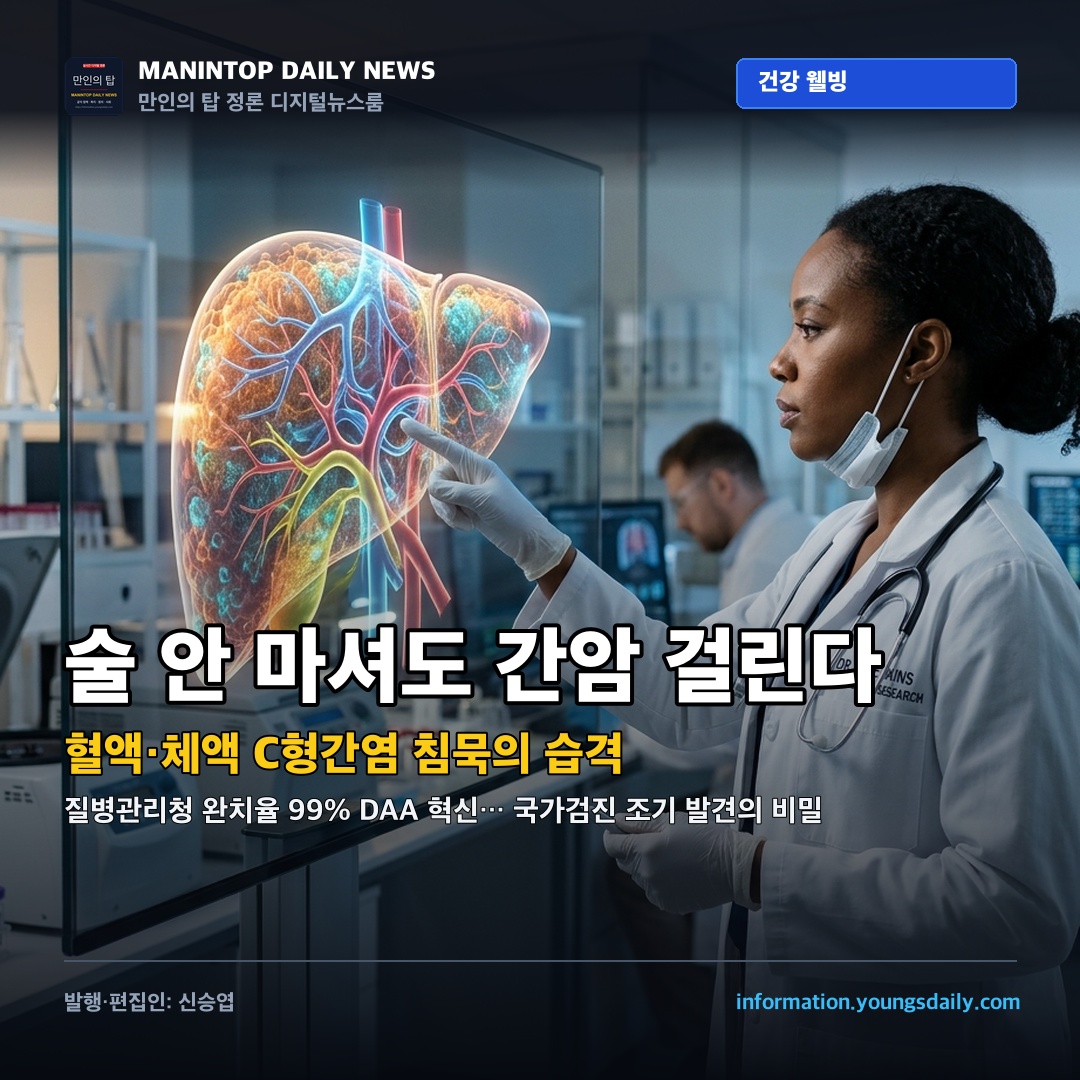
▲ 혈액·체액 전파 바이러스성 간염과 간암 조기 차단 의학 솔루션 / 만인의 탑 DB·질병관리청
“술을 한 방울도 마시지 않는데 왜 간암에 걸릴까?” 많은 이들이 간 질환과 간암의 주원인으로 과도한 음주를 떠올리지만, 실제 국내 간암 환자의 70% 이상은 혈액과 체액을 통해 전파되는 B형 및 C형 간염 바이러스 감염에서 비롯됩니다. 특히 백신이 없어 무방비로 노출되기 쉬운 C형 간염은 초기 감염자의 약 70%가 아무런 증상을 느끼지 못하는 '침묵의 살인자'로 불립니다. 하지만 최근 바이러스 증식을 99% 박멸하는 경구용 항바이러스제(DAA)의 도입과 만 56세 국가건강검진 편입으로 완치의 길이 열렸습니다.
만인의 탑 간 질환·간암 예방 핵심 팩트 브리핑
간암의 숨겨진 주범, 바이러스성 간염: 국내 간암 환자의 약 70~80%는 음주가 아닌 바이러스성 간염(B형 60%, C형 10~15%)이 원인으로 비음주자도 고위험군에 포함
혈액·체액을 통한 전파 경로: 미소독 문신·피어싱·반영구 시술, 주사 바늘 재사용, 면도기·손톱깎이 공유가 주원인이며 식사나 악수 등 일상 접촉으로는 전염 불가
경구 치료제 DAA의 99% 완치 기적: 과거 인터페론 주사의 부작용을 극복하고, 하루 1회 8~12주 복용만으로 체내 바이러스를 98~99% 박멸하여 간암 발생 위험 영구 차단
1. 음주보다 무서운 침묵의 바이러스… 비음주자도 간암에 걸린다
흔히 간 질환이나 간암이라고 하면 술을 매일 마시는 애주가들의 전유물로 생각하기 쉽습니다. 그러나 대한간학회와 국립암센터의 역학 조사에 따르면, 국내 간세포암(간암) 환자 10명 중 7~8명은 음주가 아닌 바이러스성 간염(B형 간염 약 60%, C형 간염 약 10~15%)에 의해 발병합니다. 특히 평생 술을 한 방울도 입에 대지 않은 여성이나 고령층에서도 간암 진단이 내려지는 주된 원인이 바로 이 C형 간염 바이러스(HCV)입니다.
간은 신경세포가 적어 손상이 심각해질 때까지 통증을 거의 느끼지 못하는 대표적인 '침묵의 장기'입니다. C형 간염에 감염되더라도 환자의 70% 이상은 피로감이나 가벼운 소화불량 외에는 자각 증상이 전혀 없습니다. 이를 방치할 경우 바이러스가 간세포에 만성 염증을 일으키고, 조직이 점차 섬유화되며 딱딱하게 굳는 간경변증을 거쳐 결국 치명적인 간암으로 비가역적 악화를 밟게 됩니다.
2. 혈액과 체액이 매개체… 일상 속 은밀한 전파 경로를 주의하라
B형 간염은 영유아기 국가예방접종 사업을 통해 전 국민적인 항체 형성이 이루어져 발병률이 급격히 줄었습니다. 반면 C형 간염은 바이러스 변이가 심해 아직 전 세계적으로 상용화된 예방 백신이 없습니다. 따라서 감염의 핵심 통로가 되는 혈액과 체액 노출 경로를 철저히 인지하고 차단하는 것이 가장 중요합니다.
주요 전파 경로는 소독되지 않은 바늘을 사용하는 문신, 피어싱, 눈썹 문신 등 반영구 미용 시술입니다. 또한 불법 무면허 침술, 오염된 주사기 재사용, 감염자의 피가 묻을 수 있는 면도기나 손톱깎이를 가족 간에 공동 사용하는 습관도 감염 위험을 높입니다. 반면 C형 간염은 공기나 비말, 침으로 전염되지 않으므로 식사를 함께 하거나 식기를 공유하고, 악수를 하거나 포옹을 하는 일상적인 신체 접촉으로는 결코 전파되지 않습니다.
▲ 간 전문의 진료 상담과 정밀 간 초음파 검진 및 DAA 경구 완치 치료 / 만인의 탑 DB·대한간학회
3. 99% 완치의 기적… 하루 1알 경구제(DAA)가 바꾼 의학 혁신
불과 10여 년 전만 하더라도 C형 간염 치료는 혹독한 고통의 연속이었습니다. 페그인터페론 주사제와 리바비린 복합 요법은 심한 탈모, 전신 통증, 우울증 등 극심한 부작용을 동반했으며 완치율도 50~60%에 그쳤습니다. 그러나 바이러스의 특정 단백질 복제를 정밀하게 직접 차단하는 직접작용 항바이러스제(DAA, Direct-Acting Antiviral)의 개발로 의학 역사의 패러다임이 완전히 뒤바뀌었습니다.
현재 임상에서 처방되는 DAA 치료제는 주사가 아닌 간편한 알약(경구제)으로, 하루 한 번 8주에서 12주간 복용하는 것만으로 완치율(SVR12)이 98~99%에 달합니다. 부작용 역시 거의 없어 고령 환자도 안전하게 치료받을 수 있습니다. 체내에서 바이러스가 완벽히 사멸되면 손상되던 간세포가 회복되면서 간경변증의 진행이 멈추고, 간암 발생 위험이 70% 이상 영구적으로 격감합니다.
4. 만 56세 국가건강검진 도입… 숨은 보균자 찾아내는 골든타임
C형 간염 정복의 가장 큰 걸림돌은 치료법의 부재가 아니라, 환자 본인이 감염 사실을 모른 채 지내는 '진단 사각지대'였습니다. 이에 질병관리청과 보건복지부는 유병률이 급격히 증가하는 연령대인 '만 56세 성인'을 대상으로 C형 간염 항체 선별검사를 국가건강검진 필수 항목으로 전격 편입했습니다.
선별검사에서 항체 양성이 나올 경우 국가 지원을 통해 확진 검사(HCV RNA 정량 검사)를 받고 즉시 건강보험이 적용되는 DAA 치료로 연계될 수 있습니다. 만 56세 대상자는 물론, 과거 수혈 경험이 있거나 비위생적인 시술을 받은 적이 있는 성인이라면 한 번쯤 혈액검사를 받아 숨은 간염 바이러스를 찾아내는 것이 침묵의 간암을 원천 봉쇄하는 가장 지혜로운 생명 지킴 수칙입니다.
구분 항목
B형 간염 (HBV)
C형 간염 (HCV)
임상 관리 및 대처 핵심
예방 백신
국가필수예방접종 (백신 완비)
백신 없음 (변이 심함)
혈액·체액 노출 원천 차단 및 위생 수칙 준수
전파 경로
수직감염, 혈액, 성 접촉
문신·피어싱, 주사침, 면도기 공유
비위생적 시술 금지, 손톱깎이 개별 사용
완치 여부
바이러스 억제 (장기 항바이러스제)
8~12주 DAA 복용 시 99% 완치
만 56세 국가검진 적극 수검 및 조기 박멸
만인의 탑 보건의학 특별취재팀발행인 겸 편집인: 신승엽 (Seung Youb Ssin)
MANINTOP MEDICAL & WELLNESS · GLOBAL EDITION
Beyond Alcohol: How Bloodborne Hepatitis C Drives Liver Cancer and the 99% Cure Revolution
Reported by Seung Youb Ssin, Ph.D. | Publisher & Editor-in-Chief
Challenging the common misconception that liver cancer is exclusively provoked by heavy alcohol abuse, clinical epidemiological data confirms that over 70 percent of hepatocellular carcinomas in South Korea originate from bloodborne viral hepatitis B and C. In particular, Hepatitis C Virus (HCV)—for which no preventative vaccine exists—remains notoriously asymptomatic in roughly 70 percent of infected individuals during early stages, quietly progressing toward irreversible cirrhosis and malignancy over decades. However, the advent of direct-acting antiviral (DAA) oral regimens with a 99 percent curative clearance rate, coupled with state-sponsored screening at age 56, has transformed this once fatal condition into an entirely curable infection.
Primary Viral Drivers of Hepatic Malignancy: Between 70 to 80 percent of domestic liver cancer cases stem from viral hepatitis rather than alcohol consumption, placing non-drinkers at equal peril if infected.
Strict Bloodborne and Body Fluid Transmission: Infection spreads through unsterilized tattoo needles, cosmetic piercings, contaminated syringes, and shared razor blades, while routine social interactions and shared meals pose zero risk.
The Direct-Acting Antiviral (DAA) Revolution: Modern oral DAA therapeutics achieve a 98 to 99 percent sustained virologic response (SVR) within 8 to 12 weeks of once-daily pill intake, drastically reducing liver cancer morbidity.
1. The Silent Viral Pathogen Outpacing Alcohol in Liver Malignancy
Public consciousness frequently conflates chronic hepatic damage and liver cancer exclusively with heavy alcoholism. However, comprehensive epidemiological surveillance by the Korean Association for the Study of the Liver (KASL) and the National Cancer Center reveals that 70 to 80 percent of hepatocellular carcinomas are attributable to viral hepatitis (Hepatitis B accounting for 60%, Hepatitis C for 10 to 15%). Strikingly, lifetime teetotalers and elderly demographics routinely face hepatic malignancy strictly as a downstream complication of untreated Hepatitis C Virus (HCV) infection.
The liver possesses scarce sensory innervation within its parenchymal tissue, remaining virtually painless until architectural collapse is advanced. Over 70 percent of acute and early chronic HCV carriers exhibit zero overt symptoms, occasionally misattributing subtle malaise to transient fatigue. Left undiagnosed, sustained intrahepatic viral replication provokes progressive necroinflammation, advancing across twenty to thirty years into extensive fibrosis, cirrhosis, and fatal oncogenesis.
2. Bloodborne Transmission Mechanics: Guarding Against Everyday Inoculation
While widespread pediatric vaccination has contained Hepatitis B across generations, Hepatitis C exhibits extraordinary genetic hypervariability, precluding the development of a preventive vaccine. Consequently, strict avoidance of percutaneous exposure to contaminated blood and infectious body fluids remains the foremost defensive boundary.
Primary transmission routes encompass unsterilized needles utilized during unregulated cosmetic tattooing, micro-blading, ear piercings, unsterile medical procedures, and shared personal grooming implements such as razors and nail clippers. Conversely, HCV cannot spread through casual domestic interactions: sharing meals, communal cutlery, airborne droplets, handshakes, and supportive embraces pose absolutely zero transmission risk.
▲ Clinical hepatology consultation and precision diagnosis for oral antiviral intervention / MANINTOP Archive·KASL
3. Therapeutic Milestone: The 99 Percent Curative Clearance with Oral DAAs
A decade ago, HCV intervention required grueling subcutaneous pegylated interferon and ribavirin regimens, notorious for severe cytopenias, psychiatric distress, and dismal 50 percent response profiles. This clinical landscape underwent a profound transformation with the discovery of Direct-Acting Antivirals (DAAs)—small-molecule oral agents that specifically inhibit viral NS3/4A proteases and NS5A/B polymerases.
Administered as a once-daily oral tablet over a brief 8 to 12-week course, contemporary DAAs accomplish a sustained virologic response (SVR12) exceeding 98 to 99 percent with exceptional safety profiles across all age tiers. Complete clearance of circulating viral RNA halts progressive fibrogenesis, reversing early portal hypertension and precipitating a 70 to 80 percent permanent reduction in lifetime hepatocellular carcinoma risk.
4. Expanding National Health Screening at Age 56: Eliminating Diagnostic Blindspots
The primary barrier to HCV eradication has shifted from pharmacological limitations to silent undiagnosed prevalence. In response, the Korea Disease Control and Prevention Agency (KDCA) and the Ministry of Health and Welfare officially integrated HCV antibody screening into the National Health Examination for citizens reaching age 56.
Individuals screening antibody-positive receive state-subsidized confirmatory HCV RNA diagnostic testing, smoothly transitioning into reimbursed curative DAA therapies. For anyone with a history of invasive cosmetic procedures or past blood transfusions, proactive screening represents an indispensable medical intervention to neutralize an otherwise silent oncogenic threat.
Diagnostic Parameter
Hepatitis B Virus (HBV)
Hepatitis C Virus (HCV)
Clinical Management Protocol
Preventative Vaccine
Universal national pediatric immunization
No vaccine (High viral mutation)
Strict avoidance of unsterilized percutaneous exposure
Transmission Vectors
Vertical, blood, sexual fluids
Tattoos, piercings, shared razors, syringes
Individual grooming tools, professional sterile facilities
Curative Efficacy
Long-term viral load suppression
98-99% SVR cure in 8-12 weeks
National screening at age 56 and rapid DAA cure
MANINTOP Medical Science TeamPublisher & Editor: Seung Youb Ssin, Ph.D.
MANINTOP NEWSLETTER
📬 만인의 탑 뉴스레터 무료 구독
오늘 보신 정책·시사 뉴스가 유익하셨나요? 매일 엄선되는 알짜 복지 혜택과 국회 실시간 속보를 이메일로 가장 먼저 받아보세요. (평생 무료)
Computer Programmer who love programming.
Computer Programmer Who love Riding Bicycle.
Computer Programmer who love trip in abroad.
Computer Programmer who love studying about programming
- even if sometimes it's very boring.
Computer Programmer who love talking with person.
- I love communication with person.
1월이 시작되면 감기는 이미 우리 곁에 와 있습니다. 2월, 3월, 4월까지 이어지는 추위와 건조함은 코와 목을 가장 먼저 공격합니다. 아침에 일어나자마자 막혀 있는 코. 계속 흐르는 콧물. 괜히 칼칼해지는 목. 이 증상은 “시작”일 뿐입니다. 한 번 무너지면 일주일, 길면 한 달까지 끌고 갑니다. 약을 먹으면 잠깐 괜찮아집니다. 하지만 며칠 뒤 또 반복됩니다. 왜일까요? 감기는 ‘치료’의 문제가 아니라 ‘관리’의 문제이기 때문입니다. 대부분은 감기가 오고 나서 약을 찾습니다. 하지만 진짜 중요한 건 감기가 오기 전에 코와 목을 지키는 것입니다. 건조한 실내 공기, 차가운 바깥 공기, 눈에 보이지 않는 세균. 코와 목은 매일 공격받고 있습니다. 지긋지긋하죠! 그런데도 우리는 아무 준비 없이 버티고 있습니다. 이번 겨울도 그렇게 보낼 건가요? 사실 방법은 어렵지 않습니다. 코를 깨끗하게 관리하고, 목을 따뜻하게 보호하고, 점막을 촉촉하게 유지하고, 기관지를 미리 관리하고, 외부 공기를 차단하는 것. 이 다섯 가지만 꾸준히 해도 감기약 없이 겨울을 보내는 것이 충분히 가능합니다. 🔥 이제부터 그 방법을 하나씩 살펴보겠습니다. 🔥 1. 코와 목을 먼저 관리해야 하는 과학적 이유 감기의 대부분은 코 점막에서 시작됩니다. 국제 학술지 Nature Reviews Microbiology 와 Journal of Allergy and Clinical Immunology 에 실린 호흡기 감염 관련 연구들에서는, 감기 바이러스가 비강 상피세포에 먼저 부착해 증식한다는 점을 설명하고 ...
리모델링사업이 진행 중인 아파트를 매매할 때 “계약금 10%를 언제까지 내야 하느냐”는 질문이 특히 많이 나옵니다. 이주공고(이주 안내)가 7~11월쯤이라고 들으면, 그 시점에 맞춰 계약금도 움직일 것 같아서 더 헷갈리기 쉽습니다. 하지만 실제 납부기한은 ‘이주공고가 언제냐’만으로 자동 결정되지 않는 경우가 많습니다. 1) 계약금 10% 납부기한: 결국 ‘문서에 적힌 일정’이 기준 계약금 10%를 언제까지 납부해야 하는지는, 내가 서명하는 매매계약서(특약 포함) 와 사업주체/조합이 제시한 공고·안내문 에 적힌 납부 일정이 기준이 됩니다. 실제 공고문에서는 분양대금 납부의 큰 틀(계약금→중도금→잔금)을 먼저 안내하고, 상세 일정은 별도 표나 유의사항으로 제시하는 방식이 흔합니다. 또, 계약서 문구에 따라 지급 시점이 조건부로 설정될 수도 있습니다. 예를 들어 한 사례 소개 자료에서는 용역계약서에 잔금(10%) 지급시기가 “사업승인 후”로 기재되어 있었다는 점이 언급됩니다. 이런 식으로 ‘사업 단계’와 지급을 연동하는 문구가 들어가면, 질문의 답은 계약서 문구를 확인해야만 확정됩니다. 관련 내용은 링크 에서 문구 사례를 확인할 수 있습니다. 2) 입주자모집공고에서 확인되는 ‘납부 순서’와 잔금 마감 시점 공고문에 적힌 문구를 보면, 납부 순서와 잔금 마감에 대한 기준이 비교적 명확하게 제시되는 경우가 있습니다. 예를 들어 한 입주자모집공고에는 “분양금액(주택가격)은 계약금, 중도금, 잔금의 순서로 납부”하며 “잔금은 입주(열쇠 수령일) 전에 완납”해야 한다고 안내되어 있습니다. (문구 확인: 링크 ) 이 문구가 의미하는 바는 최소 2가지입니다. 분양/공급 형태의 문서에서는 ‘계약금→중도금→잔금’ 흐름이 공식적으로 안내될 수 있습니다. 잔금은 “입주(열쇠 수령)” 이전에 완납해야 한다는 마감 기준이 문서에 적혀 있을 수 있습니다. 다만, 위 공고문 문구는 잔금 마감에 대한 기준을 보여주지만, 계약금 10%의...
윤석열 전 대통령 탄핵 인용 소식을 접하면, 가장 궁금한 지점은 ‘헌재가 정확히 무엇을 위헌·위법으로 봤는가’입니다. 또한 탄핵과 별개로 진행되는 형사재판(내란 우두머리 혐의 등)이 어디까지 왔는지도 함께 정리할 필요가 있습니다. 아래 내용은 제공된 기사/게시물 스니펫과 링크에서 확인되는 범위만 모아, 일반인이 흐름을 이해하기 쉽게 정리한 것입니다. 1) 탄핵 인용 관련: 스니펫에서 확인되는 ‘판단의 골격’ 제공된 근거 중 조국혁신당 사이트에는 헌법재판소가 윤석열 탄핵 심판에서 “피청구인의 위헌·위법행위는 국민 신임 …”이라는 취지로 판단했다는 문장이 인용돼 있습니다( 링크 ). 이 인용문만 놓고 보면, ‘위헌·위법행위’가 있었는지와 그로 인해 ‘국민의 신임’이 어떻게 평가됐는지가 핵심 축으로 소개됩니다. 다만 질문에서 요청하신 세부 항목, 즉 비상계엄 선포 자체를 문제 삼은 구체적 이유, 계엄 이후 조치(포고령, 국회 통제 등)의 어떤 지점이 헌법 위반인지, 국회의 권한행사 방해 및 정치활동 제약을 어떤 논리로 판단했는지 등은, 이번에 제공된 근거의 제목/스니펫만으로는 조항·사실관계·판단 구조가 그대로 제시돼 있지 않습니다. 따라서 이 글에서는 ‘헌재가 무엇을 문제 삼았다’는 세부 리스트를 단정적으로 재구성하기보다, 현재 확인 가능한 문구 수준의 요약(위헌·위법행위 → 국민 신임의 문제로 평가)까지만 적습니다. 만약 헌재 결정문 전문(주문 및 이유)이 추가로 확인되면, 그때는 문장 단위로 ‘어떤 행위’와 ‘어떤 헌법 원리/조항’이 연결되는지(예: 권력분립, 국회의 권한, 정치적 기본권 등) 구조화해 정리하는 것이 가장 정확합니다. 2) 형사 절차(내란 혐의) 관련: 체포영장과 1심 선고 언급 탄핵 심판과 별도로, 12·3 비상계엄 사태로 내란 혐의를 받는 윤석열 대통령에 대해 2024년 12월 31일 체포 영장이 발부됐다는 BBC 보도가 있습니다( 링크 ). 해당 보도는 ‘현직 대통령’에 대한 체포영장 발부라는 점을 함께 언급합니다. 또...




0 댓글