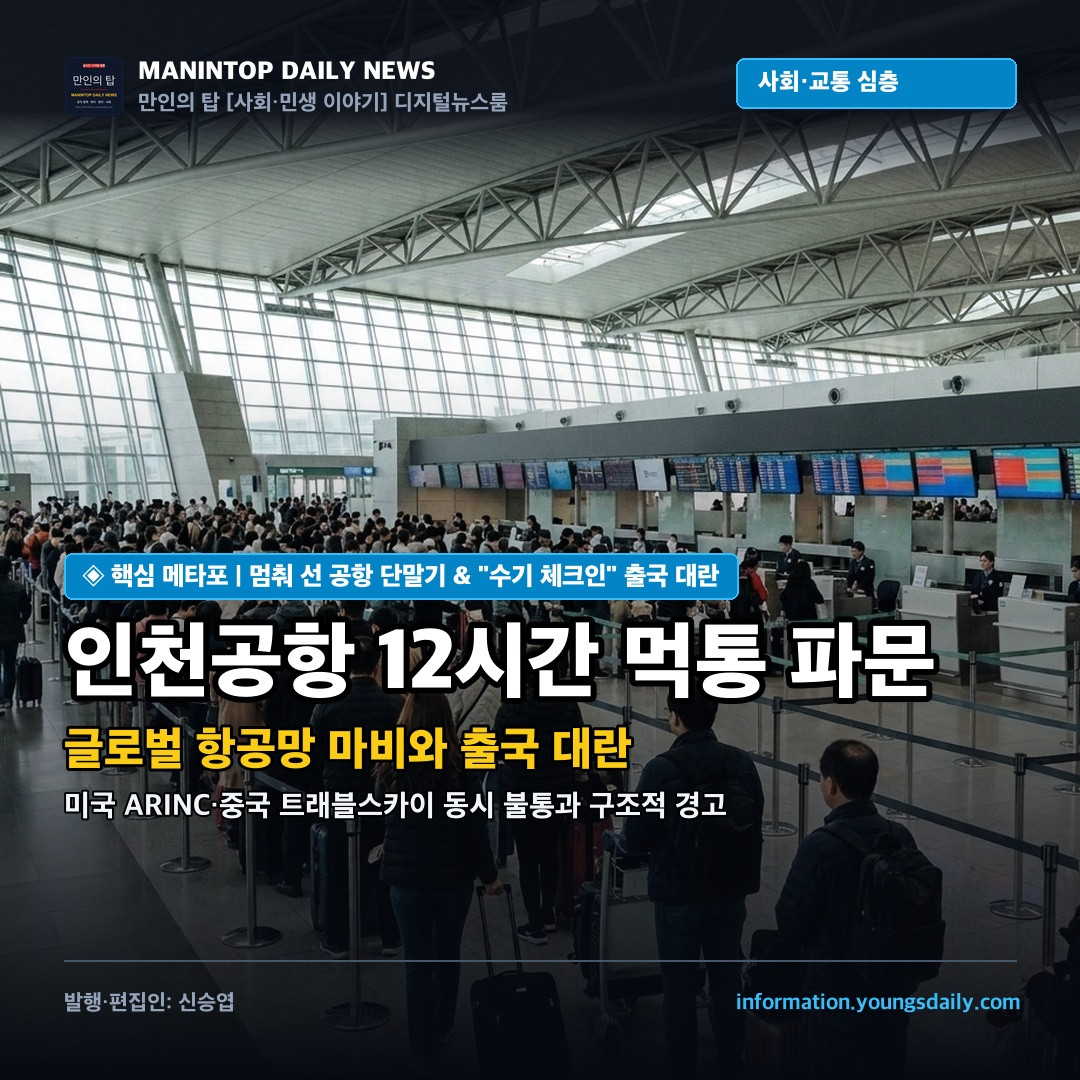
▲ 글로벌 항공 통신망 장애로 수속이 전면 지연된 인천국제공항 출국장 체크인 카운터 앞에 수많은 여객들이 캐리어를 끈 채 줄지어 대기하고 있다. / 보도자료사진
◈ 만인의 탑 핵심 에디토리얼 브리핑
12시간 출국 마비: 미국 에어링크(ARINC)와 중국 트래블스카이(TravelSky) 동시 장애로 13개 항공사, 1,200여 명 대기 및 58편 지연
수기 체크인 파행: 컴퓨터 전산 차단으로 종이 장부에 손으로 승객 정보를 적는 아날로그 발권 동원 및 대기 시간 4시간 속출
8시간 늑장 신고 논란: 새벽 4시 30분 장애 발생 후 공항공사 종합상황실 공식 통보까지 8시간 소요되어 위기 공조 허점 노출
해외 IT 의존 탈피 시급: 백업 통신망 다중화, 공항 자체 에지 컴퓨팅 비상 발권(Fall-Back) 구축, 1시간 지연 시 자동 비상 SOP 법제화 제언
대한민국 대표 관문인 인천공항이 글로벌 네트워크 먹통 사태로 반나절 동안 전면 마비되며 사상 초유의 12시간 출국 대란이 빚어졌다. 미국의 공항 통신 인프라인 에어링크(ARINC) 네트워크 불통과 중국 전용 발권망인 트래블스카이(TravelSky) 장애가 동시에 겹치면서 탑승 수속과 발권이 전면 중단되었고, 공항 출국장에는 최대 1,200여 명의 여객이 발이 묶이고 50여 편이 넘는 항공기가 지연 출항하는 혼란이 이어졌다. 이번 사태는 단일 해외 전산 인프라에 전적으로 의존해 온 공항 통신 체계의 구조적 취약점을 여실히 드러냈다.
1. 12시간 마비된 인천공항… 1,200여 명 대기 및 항공기 지연 속출
전산 장애는 10월 30일 새벽 4시 30분 인천국제공항 제1여객터미널과 제2여객터미널 출국장 체크인 단말기에서 통신 단절이 간헐적으로 나타나며 시작되었다. 초기 단순 접속 지연으로 여겨졌던 문제는 정오를 지나며 급격히 악화되어 외국계 항공사의 일반 발권 업무가 사실상 전면 중단되는 사태로 치달았다. 제1터미널 8개사와 제2터미널 5개사 등 총 13개 항공사가 직접적인 타격을 입었으며, 수속 카운터마다 대기 인원이 최대 1,200명까지 불어나며 대기 줄이 공항 출입문 앞까지 길게 이어졌다.
조사 항목
세부 피해 현황 및 통계 지표
장애 발생 및 복구 시각
2026년 10월 30일 04:30 발생 ~ 17:00 정상화 (총 12시간 30분 소요)
직접 영향 입주 항공사
총 13개 항공사 (제1여객터미널 8개사, 제2여객터미널 5개사)
전산 전면 셧다운 항공사
중국남방항공, 중국동방항공, 중국국제항공(에어차이나) 등 3개사
출국장 최대 현장 대기 인원
약 1,200여 명 (수속 카운터 앞 및 터미널 진입 통로 포화)
지연 운항 항공편 규모
총 58편 (중국·동남아 노선 중심 평균 2~3시간 이상 출발 지연)
이번 전산 장애는 발생 12시간 30분 만인 당일 오후 5시경 관련 통신망과 발권 서버가 복구되면서 수속이 재개되었다. 그러나 지연된 승객들이 일시에 카운터로 몰리며 출국장 혼잡은 야간까지 이어졌고, 중국 노선을 중심으로 총 58편에 달하는 항공편이 2~3시간 이상 지연 출발하며 대규모 스케줄 차질을 초래했다.
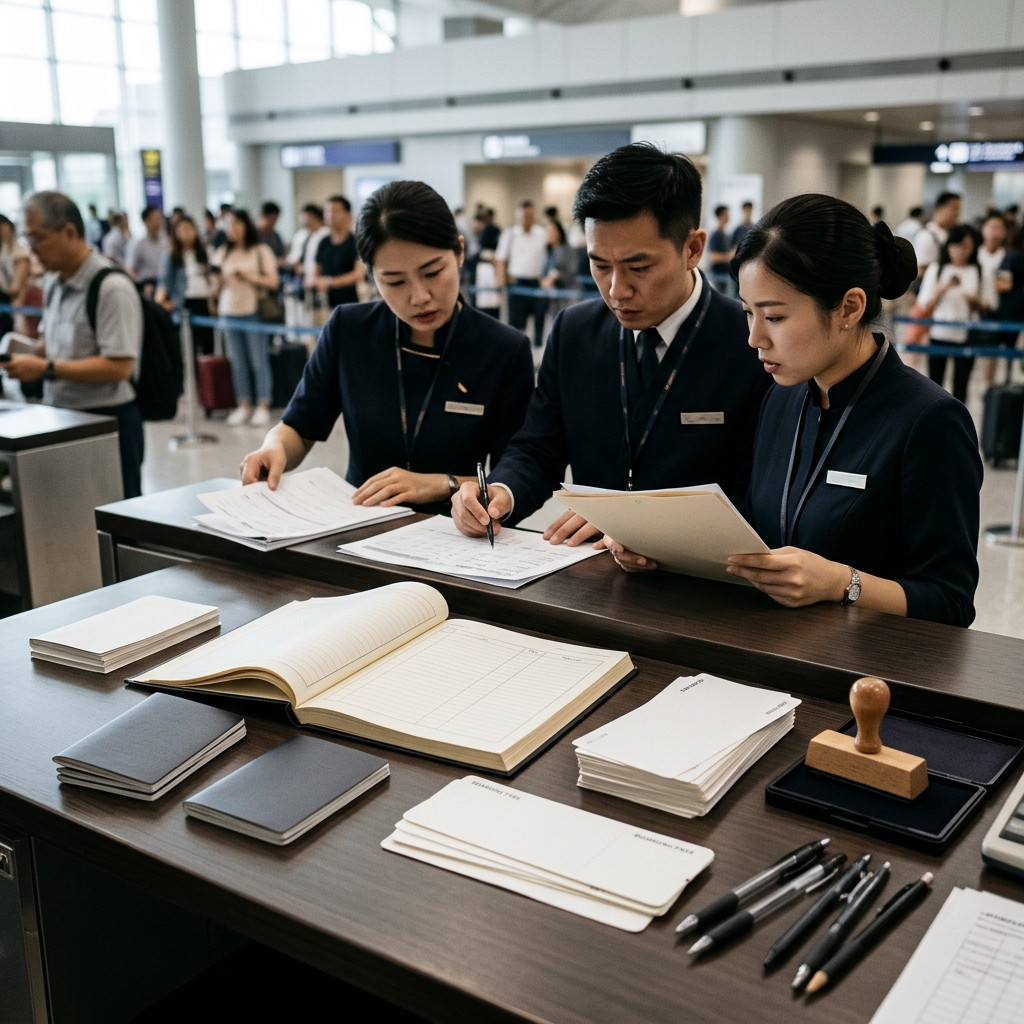
▲ 항공 통신망 마비로 컴퓨터 발권이 불가능해지자 공항 수속 카운터에서 지상직 직원이 종이 승객 명부와 여권을 대조하며 수작업 발권을 진행하고 있다. / 보도자료사진
2. 美 ARINC와 中 TravelSky의 겹악재… 복합 장애 메커니즘
이번 사태의 핵심 원인은 해외에 기반을 둔 두 개의 거대 항공 통신 네트워크가 동시에 마비된 복합 장애로 확인되었다. 첫 번째 원인은 미국 RTX 산하 콜린스 에어로스페이스의 글로벌 공항 통신망인 에어링크(ARINC)의 회선 불안정이었다. ARINC는 공항 카운터 단말기와 각 항공사 본사 데이터베이스를 연결해 발권과 수하물 처리 데이터를 실시간 교환하는 핵심 인프라로, 이 통신망의 데이터 전송이 차단되면서 13개 항공사의 체크인이 연쇄적으로 중단되었다.
두 번째 악재는 중국민항정보그룹이 운영하는 중국 국적 항공사 전용 발권·예약 시스템인 트래블스카이(TravelSky)의 동시 장애였다. 낮 12시 무렵부터 트래블스카이 서버마저 응답을 멈추면서 중국남방항공, 중국동방항공, 중국국제항공(에어차이나) 등 중국계 3대 항공사의 전산 수속이 완전히 불가능해졌다. ARINC 통신 문제만 겪은 항공사들은 속도 저하에 그쳤으나, 트래블스카이 장애가 중복된 중국계 항공사들은 시스템이 완전 셧다운되었다.
3. '수기 체크인' 동원된 현장… 환승 파행과 승객 분통
전산망이 차단되자 현장 지상직 승무원들은 승객의 여권을 육안으로 대조하고 종이 장부에 탑승 정보를 볼펜으로 적어 넣는 '수기 체크인' 방식으로 긴급 대응에 나섰다. 그러나 한 사람당 수초 만에 끝나는 전산 자동 발권에 비해 수작업 수속은 처리 시간이 수배 이상 늘어날 수밖에 없었다.
카운터 앞 대기 시간이 4시간 이상 길어지고 복구 시점조차 공유되지 않자 지친 승객들의 항의가 쏟아졌다. 특히 상하이나 광저우를 경유해 유럽, 중동, 아프리카로 향하려던 장거리 환승 승객들은 3시간 이상 이륙이 지연되면서 연계 항공편을 놓쳐 전체 여행 일정을 취소해야 하는 막대한 피해를 입었다.
인천국제공항공사는 출국장 혼잡 완화를 위해 안내 및 보안 인력 60여 명을 긴급 투입해 대기열을 정돈하고 동선을 확보했다. 아울러 보안검색대 운영 인력을 확충하고 법무부에 출국심사 인력 추가 배치를 요청하는 등 수속 병목 현상을 해소하기 위한 현장 조치를 가동했다.
4. 새벽 4시 30분 발생, 낮 12시 30분 접수… 8시간 격차 논란
이번 사태에서 행정·운영상 가장 큰 문제점으로 지적된 대목은 새벽 4시 30분 장애 발생 이후 공항공사 종합상황실에 공식 신고가 접수되기까지 무려 8시간이 걸렸다는 점이다. 국가 핵심 기반시설인 국제공항의 출국망이 마비되었음에도 관제 기관, 통신 사업자, 항공사 간의 초기 상황 공유 및 위기 공조 체계가 제대로 작동하지 않았다는 비판이 거세다.
5. 글로벌 항공 IT 외주화의 그늘… 2024년 MS 대란과의 비교
항공 IT 전문가들은 이번 사고가 2024년 7월 발생한 마이크로소프트(MS) 및 크라우드스트라이크 클라우드 장애와 구조적으로 판박이라고 지적한다. 당시에도 보안 소프트웨어 충돌로 국내 저비용항공사(LCC)의 발권 시스템이 마비되어 12시간 동안 수기 발권에 의존해야 했다.
비교 지표
2024년 7월 MS-크라우드스트라이크 대란
2026년 10월 인천공항 체크인 대란
근원적 장애 원인
MS Azure 기반 크라우드스트라이크 보안 패치 충돌
美 ARINC 통신망 및 中 TravelSky 발권망 복합 불통
복구 소요 시간
약 12시간 (당일 15:30 ~ 익일 03:30 정상화)
약 12시간 30분 (당일 04:30 ~ 17:00 정상화)
주요 피해 대상
제주항공, 이스타항공, 에어프레미아 등 국내 LCC 3사
중국남방·동방·국제항공 등 인천공항 13개 입주 외항사
비상 대응 방식
종이 탑승권 수기 발권 및 인력 투입
현장 종이 장부 수기 체크인 및 60여 명 인력 배치
구조적 공통 취약점
해외 독점 클라우드 차단 시 공항 자체 통제 불가
해외 단일 전산망 의존에 따른 공항 마비 리스크 전이
고도로 디지털화된 스마트 공항 체계는 운영 효율성을 극대화했지만, 해외 독점 IT망에 문제가 발생할 경우 공항 자체적으로 제어할 수 있는 대체 수단이 전혀 없다는 치명적 한계를 드러냈다. 외부 인프라 장애 리스크가 국내 관문 공항으로 고스란히 전이되는 취약성이 입증된 것이다.
6. 백업망 이원화와 자체 비상 대응 체계 구축 제언
전문가들은 향후 유사한 대란을 방지하기 위해 통신망 회선 이원화(SITA 등 타 글로벌 망 다중화), 중앙 서버 단절 시에도 자체 전자 탑승권을 발행할 수 있는 에지 컴퓨팅 비상 서브시스템(Fall-Back) 구축, 1시간 이상 지연 시 비상 수속으로 자동 전환되는 표준 운영 절차(SOP) 법제화가 시급하다고 제언한다.
신승엽 (Seung Youb Ssin, Ph.D.) 사회·교통 전문기자 / 공학박사 무단 전재 및 재배포 금지
▲ Extensive queues of travelers with rolling luggage wait anxiously near check-in counters inside Incheon International Airport after a global network failure severed ticketing systems. / Press Documentation
◈ Manintop Core Editorial Briefing
Twelve-Hour Departure Gridlock: Simultaneous outages across ARINC and TravelSky affected 13 airlines, stranding 1,200 travelers and delaying 58 international flights
Manual Check-In Disruption: System failure forced ground staff to manually record passenger data onto paper manifests, triggering delays exceeding four hours
Eight-Hour Reporting Lag: Incident originated at 4:30 AM but was formally escalated to airport operations command only at 12:30 PM, exposing coordination gaps
Infrastructure Reforms Demanded: Experts urge secondary network routing, edge-computing fall-back systems, and mandatory SOP triggers when delays exceed one hour
Incheon International Airport, South Korea's premier gateway, was plunged into an unprecedented twelve-hour departure crisis after a global network blackout paralyzed passenger check-in and ticketing services. A compounding failure of Collins Aerospace's American-operated ARINC aviation telecommunications infrastructure and China's proprietary TravelSky ticketing network abruptly halted passenger processing, stranding up to 1,200 travelers inside terminal departure halls and delaying over 50 international flights. The prolonged incident exposed critical structural vulnerabilities in airport communications heavily reliant on single foreign IT backbones.
1. Twelve Hours of Gridlock: 1,200 Stranded Travelers and Cascading Delays
The disruption commenced at approximately 4:30 AM on October 30, when check-in and automated ticketing terminals across Terminals 1 and 2 exhibited intermittent connectivity drops. What began as minor network latency deteriorated sharply into the afternoon, bringing routine ticketing operations for several international carriers to an effective standstill. A total of 13 airlines—eight operating in Terminal 1 and five in Terminal 2—were directly impacted, swelling terminal queues to roughly 1,200 stranded passengers and pushing lines outward toward terminal entrance doors.
Investigation Category
Detailed Operational Metrics and Impact Summary
Outage Timeline
Commenced Oct 30 at 04:30 KST; fully normalized at 17:00 KST (12.5 hours total duration)
Impacted Tenant Carriers
13 international airlines (8 carriers in Terminal 1, 5 carriers in Terminal 2)
Total Blackout Carriers
China Southern Airlines, China Eastern Airlines, and Air China
Peak Passenger Queue
Approximately 1,200 travelers congesting counters and primary circulation aisles
Flight Delay Volume
58 total flights delayed (average 2 to 3 hours departure lag on China and Asian routes)
The technical paralysis ended approximately twelve and a half hours after its inception, with regular check-in operations resuming around 5:00 PM once foreign telecommunications links and ticketing servers recovered. However, as thousands of backlogged travelers converged simultaneously on check-in counters, terminal congestion persisted late into the evening, forcing 58 flights—primarily along Chinese routes—to suffer departure delays of two to three hours.
▲ Ground handling staff manually verify passenger passports against paper flight manifests and write boarding passes by hand after computer networks failed. / Press Documentation
2. Compound Failure: ARINC Telecommunications and TravelSky Outage
Technical evaluations confirmed that the operational crisis was triggered by a dual compound failure across two major overseas aviation IT backbones. The primary catalyst was network instability within the ARINC communications infrastructure operated by Collins Aerospace, an RTX subsidiary. Because ARINC provides real-time data exchange between local terminal check-in workstations and distant airline headquarters databases for ticketing and baggage handling (BHS), the transmission failure triggered cascading terminal disconnects across 13 tenant airlines.
A secondary compounding factor emerged when TravelSky, the centralized passenger reservation and ticketing network operated by China TravelSky Holding Company for Chinese flag carriers, suffered a concurrent outage around midday. Consequently, electronic check-in systems for major Chinese carriers, including China Southern, China Eastern, and Air China, crashed entirely. While carriers suffering only ARINC issues endured slower processing, airlines reliant on TravelSky suffered total terminal blackouts.
3. Manual Handwritten Check-in: Missed Transfers and Traveler Anguish
With electronic databases completely severed, frontline ground handling staff resorted to emergency manual procedures, physically cross-referencing printed passenger manifests and writing boarding details onto paper passes with ink pens. However, this labor-intensive process multiplied transaction times per traveler, causing extreme terminal bottlenecks compared to instant computerized scanning.
As check-in counter waits exceeded four hours without concrete restoration forecasts, exhausted travelers voiced vehement frustration across departure halls. Transit passengers attempting to connect through Shanghai or Guangzhou to downstream destinations in Europe, the Middle East, and Africa suffered acute disruptions, as delays exceeding three hours caused them to miss international connections and abandon travel itineraries entirely.
To alleviate terminal gridlock, Incheon International Airport Corporation deployed over 60 auxiliary personnel to direct passenger flows and organize physical queuing lanes. Concurrently, the authority increased security screening lane throughput and requested additional immigration processing personnel from the Ministry of Justice to expedite departures.
4. Administrative Lag: An Eight-Hour Reporting Delay Under Scrutiny
Administratively, the most severe vulnerability highlighted by the crisis was the eight-hour reporting lag between initial network degradation at 4:30 AM and formal notification reaching the airport operations command center at 12:30 PM. The delay demonstrated an absence of real-time multi-agency crisis coordination among air navigation authorities, international telecommunications providers, and commercial carriers.
5. The Shadow of Offshore IT Dependency: Parallels with the 2024 MS Outage
Aviation IT analysts noted striking parallels between this incident and the July 2024 global outage caused by Microsoft Azure and CrowdStrike software updates, which paralyzed reservation systems across three South Korean low-cost carriers and necessitated twelve hours of emergency manual ticketing.
Comparative Dimension
July 2024 MS-CrowdStrike Crisis
October 2026 Incheon Airport Outage
Root Technical Cause
Faulty CrowdStrike endpoint security update on MS Azure
Dual failure across US ARINC network and Chinese TravelSky servers
Restoration Duration
Approximately 12 hours (15:30 to 03:30 next morning)
Approximately 12.5 hours (04:30 to 17:00 same day)
Primary Impacted Entities
Domestic LCCs (Jeju Air, Eastar Jet, Air Premia)
13 international tenant airlines (Air China, China Eastern, China Southern)
Contingency Mechanism
Handwritten paper boarding passes and manual verification
Physical paper passenger ledger check-in and 60 emergency staff
Structural IT Exposure
Zero local control during overseas cloud infrastructure failure
Critical hub paralysis driven by single offshore network dependencies
While high-level digital automation has maximized routine operational efficiency, modern smart airports face severe exposure when external overseas IT networks fail, leaving local authorities with virtually zero autonomous workarounds. The incident clearly demonstrated how offshore IT vulnerabilities directly translate into acute operational bottlenecks at national hub airports.
6. Systemic Prescriptions: Redundancy, Edge Computing, and SOP Reforms
Industry experts urge systemic upgrades, including mandating multi-vendor telecommunications redundancy via independent secondary networks such as SITA, deploying edge-computing fall-back subsystems capable of issuing local boarding passes during central server cuts, and establishing statutory protocols that automatically trigger emergency manual handling when delays exceed one hour.
Computer Programmer who love programming.
Computer Programmer Who love Riding Bicycle.
Computer Programmer who love trip in abroad.
Computer Programmer who love studying about programming
- even if sometimes it's very boring.
Computer Programmer who love talking with person.
- I love communication with person.
1월이 시작되면 감기는 이미 우리 곁에 와 있습니다. 2월, 3월, 4월까지 이어지는 추위와 건조함은 코와 목을 가장 먼저 공격합니다. 아침에 일어나자마자 막혀 있는 코. 계속 흐르는 콧물. 괜히 칼칼해지는 목. 이 증상은 “시작”일 뿐입니다. 한 번 무너지면 일주일, 길면 한 달까지 끌고 갑니다. 약을 먹으면 잠깐 괜찮아집니다. 하지만 며칠 뒤 또 반복됩니다. 왜일까요? 감기는 ‘치료’의 문제가 아니라 ‘관리’의 문제이기 때문입니다. 대부분은 감기가 오고 나서 약을 찾습니다. 하지만 진짜 중요한 건 감기가 오기 전에 코와 목을 지키는 것입니다. 건조한 실내 공기, 차가운 바깥 공기, 눈에 보이지 않는 세균. 코와 목은 매일 공격받고 있습니다. 지긋지긋하죠! 그런데도 우리는 아무 준비 없이 버티고 있습니다. 이번 겨울도 그렇게 보낼 건가요? 사실 방법은 어렵지 않습니다. 코를 깨끗하게 관리하고, 목을 따뜻하게 보호하고, 점막을 촉촉하게 유지하고, 기관지를 미리 관리하고, 외부 공기를 차단하는 것. 이 다섯 가지만 꾸준히 해도 감기약 없이 겨울을 보내는 것이 충분히 가능합니다. 🔥 이제부터 그 방법을 하나씩 살펴보겠습니다. 🔥 1. 코와 목을 먼저 관리해야 하는 과학적 이유 감기의 대부분은 코 점막에서 시작됩니다. 국제 학술지 Nature Reviews Microbiology 와 Journal of Allergy and Clinical Immunology 에 실린 호흡기 감염 관련 연구들에서는, 감기 바이러스가 비강 상피세포에 먼저 부착해 증식한다는 점을 설명하고 ...
리모델링사업이 진행 중인 아파트를 매매할 때 “계약금 10%를 언제까지 내야 하느냐”는 질문이 특히 많이 나옵니다. 이주공고(이주 안내)가 7~11월쯤이라고 들으면, 그 시점에 맞춰 계약금도 움직일 것 같아서 더 헷갈리기 쉽습니다. 하지만 실제 납부기한은 ‘이주공고가 언제냐’만으로 자동 결정되지 않는 경우가 많습니다. 1) 계약금 10% 납부기한: 결국 ‘문서에 적힌 일정’이 기준 계약금 10%를 언제까지 납부해야 하는지는, 내가 서명하는 매매계약서(특약 포함) 와 사업주체/조합이 제시한 공고·안내문 에 적힌 납부 일정이 기준이 됩니다. 실제 공고문에서는 분양대금 납부의 큰 틀(계약금→중도금→잔금)을 먼저 안내하고, 상세 일정은 별도 표나 유의사항으로 제시하는 방식이 흔합니다. 또, 계약서 문구에 따라 지급 시점이 조건부로 설정될 수도 있습니다. 예를 들어 한 사례 소개 자료에서는 용역계약서에 잔금(10%) 지급시기가 “사업승인 후”로 기재되어 있었다는 점이 언급됩니다. 이런 식으로 ‘사업 단계’와 지급을 연동하는 문구가 들어가면, 질문의 답은 계약서 문구를 확인해야만 확정됩니다. 관련 내용은 링크 에서 문구 사례를 확인할 수 있습니다. 2) 입주자모집공고에서 확인되는 ‘납부 순서’와 잔금 마감 시점 공고문에 적힌 문구를 보면, 납부 순서와 잔금 마감에 대한 기준이 비교적 명확하게 제시되는 경우가 있습니다. 예를 들어 한 입주자모집공고에는 “분양금액(주택가격)은 계약금, 중도금, 잔금의 순서로 납부”하며 “잔금은 입주(열쇠 수령일) 전에 완납”해야 한다고 안내되어 있습니다. (문구 확인: 링크 ) 이 문구가 의미하는 바는 최소 2가지입니다. 분양/공급 형태의 문서에서는 ‘계약금→중도금→잔금’ 흐름이 공식적으로 안내될 수 있습니다. 잔금은 “입주(열쇠 수령)” 이전에 완납해야 한다는 마감 기준이 문서에 적혀 있을 수 있습니다. 다만, 위 공고문 문구는 잔금 마감에 대한 기준을 보여주지만, 계약금 10%의...
윤석열 전 대통령 탄핵 인용 소식을 접하면, 가장 궁금한 지점은 ‘헌재가 정확히 무엇을 위헌·위법으로 봤는가’입니다. 또한 탄핵과 별개로 진행되는 형사재판(내란 우두머리 혐의 등)이 어디까지 왔는지도 함께 정리할 필요가 있습니다. 아래 내용은 제공된 기사/게시물 스니펫과 링크에서 확인되는 범위만 모아, 일반인이 흐름을 이해하기 쉽게 정리한 것입니다. 1) 탄핵 인용 관련: 스니펫에서 확인되는 ‘판단의 골격’ 제공된 근거 중 조국혁신당 사이트에는 헌법재판소가 윤석열 탄핵 심판에서 “피청구인의 위헌·위법행위는 국민 신임 …”이라는 취지로 판단했다는 문장이 인용돼 있습니다( 링크 ). 이 인용문만 놓고 보면, ‘위헌·위법행위’가 있었는지와 그로 인해 ‘국민의 신임’이 어떻게 평가됐는지가 핵심 축으로 소개됩니다. 다만 질문에서 요청하신 세부 항목, 즉 비상계엄 선포 자체를 문제 삼은 구체적 이유, 계엄 이후 조치(포고령, 국회 통제 등)의 어떤 지점이 헌법 위반인지, 국회의 권한행사 방해 및 정치활동 제약을 어떤 논리로 판단했는지 등은, 이번에 제공된 근거의 제목/스니펫만으로는 조항·사실관계·판단 구조가 그대로 제시돼 있지 않습니다. 따라서 이 글에서는 ‘헌재가 무엇을 문제 삼았다’는 세부 리스트를 단정적으로 재구성하기보다, 현재 확인 가능한 문구 수준의 요약(위헌·위법행위 → 국민 신임의 문제로 평가)까지만 적습니다. 만약 헌재 결정문 전문(주문 및 이유)이 추가로 확인되면, 그때는 문장 단위로 ‘어떤 행위’와 ‘어떤 헌법 원리/조항’이 연결되는지(예: 권력분립, 국회의 권한, 정치적 기본권 등) 구조화해 정리하는 것이 가장 정확합니다. 2) 형사 절차(내란 혐의) 관련: 체포영장과 1심 선고 언급 탄핵 심판과 별도로, 12·3 비상계엄 사태로 내란 혐의를 받는 윤석열 대통령에 대해 2024년 12월 31일 체포 영장이 발부됐다는 BBC 보도가 있습니다( 링크 ). 해당 보도는 ‘현직 대통령’에 대한 체포영장 발부라는 점을 함께 언급합니다. 또...




0 댓글