▲ 중동발 공급 충격과 북극발 혹한 예보로 유럽 TTF 가스 선물이 메가와트시(MWh)당 100유로를 돌파한 가운데, 글로벌 에너지 확보전이 전개되고 있다. / 공식 에너지 분석 보도사진 ⓒ 만인의 탑
2022년 러시아의 우크라이나 침공 이후 한동안 진정 국면을 보였던 글로벌 천연가스 시장이 중동 지역의 군사적 충돌 격화와 올겨울 북극발 혹한 예보가 맞물리며 다시 극심한 소용돌이에 직면했습니다. 유럽 천연가스 가격의 기준점인 네덜란드 TTF 선물 가격이 4년 만에 장중 메가와트시(MWh)당 100유로를 돌파하며 3배 폭등한 가운데, 호르무즈 해협의 항행 불안으로 세계 최대 수출국 카타르의 LNG 공급망이 사실상 마비되었습니다. 유럽이 부족한 물량을 채우기 위해 글로벌 현물(Spot) 시장에 대거 진입하면서 유럽 TTF와 동아시아 JKM 지표가 강하게 동조화되었고, 한국·일본·ASEAN 등 아시아 수입국들과 천문학적 프리미엄을 둘러싼 가스 선점 경쟁이 격화되고 있습니다. 미국이 셰일가스 수출을 가속화하고 있으나 파이프라인 수송망 부족과 인허가 지연이라는 구조적 병목에 부딪히면서, 전 세계 에너지는 '저비용 효율'에서 '안보 프리미엄' 중심으로 대전환을 맞이하고 있습니다.
핵심 팩트 브리핑
핵심 지표 1: 유럽 TTF 가스 선물 MWh당 100유로 돌파: 장중 100.30유로 기록, 연초 28~30유로 대비 234% 폭등 및 이번 달에만 38% 상승하며 2022년 이후 최고치 기록
핵심 지표 2: 중동 리스크와 카타르 공급 마비: 호르무즈 해협 불안으로 EU LNG 수입의 8%를 차지하던 카타르 물량 차질, 유럽 가스 저장고 재고율 70%대 중반(5년 평균 82% 하회)으로 급락
핵심 지표 3: TTF-JKM 동조화와 한·아시아 물량 쟁탈전: 유럽의 현물(Spot) 싹쓸이로 JKM MMBtu당 20달러 후반 급등, 한국·일본 및 2027년 순수입국 전환을 앞둔 ASEAN의 조달 안보 비상
핵심 지표 4: 미국 공급 확대의 파이프라인 병목: 2026년 일일 174 Bcf/d 수출 확장에도 불구하고 퍼미안·애팔래치아 내륙 가스전과 멕시코만 연안 터미널을 잇는 송유관 인허가 지연이 핵심 제약
1. MWh당 100유로 선 깨진 유럽 가스 시장: 재집결된 에너지 위기 공포
2022년 러시아의 우크라이나 침공 이후 가까스로 안정을 찾는 듯했던 글로벌 천연가스 시장이 다시 거대한 소용돌이에 휘말리고 있습니다. 중동 지역의 군사적 긴장 고조와 올겨울 북극발 극심한 한파 예보가 동시에 가시화되면서, 유럽 천연가스 가격이 4년 만에 다시 메가와트시(MWh)당 100유로 선을 넘어섰습니다.
금융전문지 파이낸셜뉴스(FT) 및 유럽 에너지 시장 지표에 따르면, 유럽 천연가스 가격의 벤치마크인 네덜란드 TTF 거래소의 11월 인도분 가스 가격은 장중 MWh당 100.30유로(약 15만 원)까지 급등했습니다. 이는 연초 MWh당 28~30유로 안팎에서 거래되던 것에 비해 약 3배(234%) 이상 폭등한 수치이며, 이번 달에만 38%가량 상승한 결과입니다. MWh당 100유로는 시장 심리상 강력한 저항선이자 장기적 에너지 위기의 재발을 알리는 신호탄으로 평가받습니다.
유럽이 2022년 러시아산 파이프라인 가스(PNG) 의존도를 낮추는 대신 액화천연가스(LNG) 수입 터미널을 대거 확충하며 재편했던 공급망은, 중동 분쟁이라는 새로운 지정학적 충격 앞에서 다시 한번 심각한 시험대에 올랐습니다.
2. 중동 지정학 리스크와 카타르 공급 차질, 그리고 역대 최저의 유럽 재고
이번 가격 폭등의 직접적인 발화점은 중동 지역의 지정학적 리스크 심화입니다. 미국 행정부가 중동 지역에 대한 고강도 군사 작전 가능성을 내비치고 호르무즈 해협의 항행 불안이 가중되면서, 세계 최대 LNG 수출국 중 하나인 카타르의 공급망이 직격탄을 맞았습니다.
브뤼셀의 경제 정책 연구소 브루겔(Bruegel)에 따르면, 카타르 등 중동산 LNG는 지난해 EU 전체 LNG 수입량의 약 8%를 차지했습니다. 그러나 호르무즈 해협 운송 차질과 주요 생산 시설의 운영 중단으로 인해 수개월째 가스 운반선 입항이 사실상 마비된 상태입니다. 에너지 컨설팅업체 에너지 아스펙츠(Energy Aspects)는 중동 분쟁이 장기화될 경우 이번 겨울철 중동산 LNG 공급 부족 확률이 기존 51%에서 73%로 급상승했다고 분석했습니다.
문제는 공급이 막힌 상황에서 유럽의 천연가스 비축량이 최악의 수준으로 떨어졌다는 점입니다. 에너지 싱크탱크 IEEFA(에너지경제·재무분석연구소)와 블룸버그 집계에 따르면, 유럽연합의 지하 가스 저장고 재고율은 70%대 중반에 머물고 있습니다. 이는 지난해 같은 기간(82.9%)이나 2023년(98.5%)은 물론, 최근 5년 평균인 82%를 크게 밑도는 수치입니다.
유로뉴스(Euronews) 및 주택에너지가격지수(HEPI) 분석에 따르면, 이러한 난방 가스 가격 급등은 가계 경제에도 직접적인 타격을 가하고 있습니다. 겨울철 동안 약 10,000kWh의 가스를 사용하는 전형적인 유럽 가구의 경우, 에너지 비용 상승분만으로 약 600유로(부가가치세 20% 포함 시 약 715유로, 약 107만 원) 이상의 추가 난방비 부담을 지게 될 것으로 추산됩니다.
에너지 연구기관 우드맥켄지(Wood Mackenzie)의 톰 마제크-맨서 이사는 겨울철 평균 기온이 유지된다 하더라도 내년 3월 말 유럽의 가스 재고율이 17~20% 수준까지 떨어질 수 있다고 경고했습니다. 여기에 북극 상공의 '갑작스러운 성층권 워밍' 현상으로 북유럽과 동유럽에 혹한이 들이닥칠 경우, 가스 재고는 조기 고갈될 위험에 처해 있습니다. 또한 2027년 1월부터 시행되는 EU의 러시아산 LNG 전면 수입 금지 조치에 대비해 유럽 국가들은 지난겨울보다 가스 소비량을 최소 7% 이상 의무적으로 감축해야 하는 이중고를 안고 있습니다.
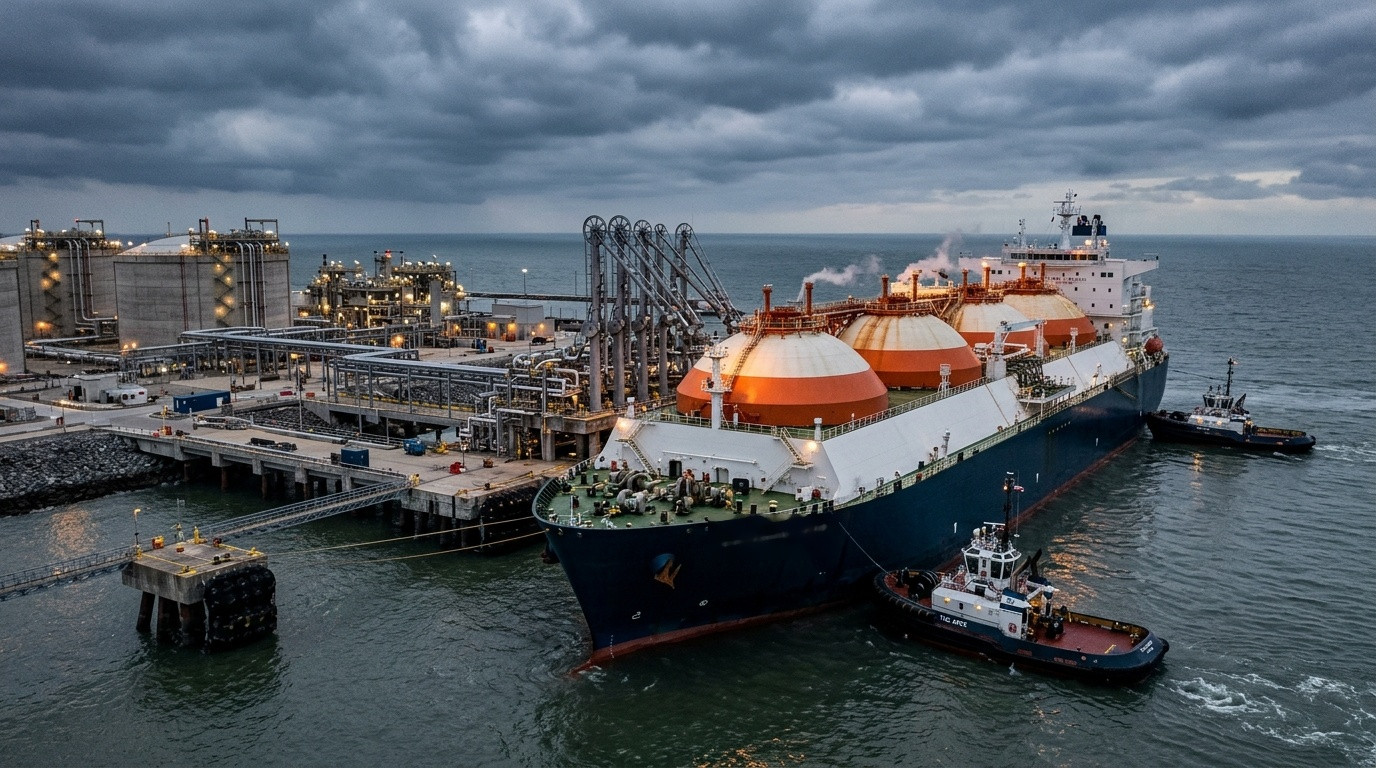
▲ 유럽 해안 LNG 인수 기지 현장. 카타르 공급망 마비와 동절기 재고 부족에 대응하여 대형 LNG 운반선들이 접안 작업을 서두르고 있다. / 공식 해양물류 보도사진 ⓒ 만인의 탑
3. TTF-JKM 동조화: 한국과 ASEAN으로 번진 가스 선점 총력전
유럽의 천연가스 잔여 재고 부족은 유럽 대륙에 국한된 문제에 그치지 않고 동아시아 가스 시장 전체로 파장을 넓히고 있습니다. 유럽 국가들이 부족한 물량을 메우기 위해 글로벌 현물(Spot) 시장에서 미국산 및 비중동산 LNG를 싹쓸이하기 시작하면서, 과거 별개로 움직이던 유럽과 아시아 가스 시장이 고도로 동조화(Coupling)되는 현상이 뚜렷해졌습니다.
에너지경제연구원 노남진 선임연구위원의 분석에 따르면, 유럽의 LNG 의존도가 높아짐에 따라 유럽 대표 가스 지표인 TTF와 동아시아 LNG 현물 지표인 JKM(Japan Korea Marker)이 매우 밀접하게 연동되고 있습니다. 중동 사태 이후 TTF와 JKM 현물 가격은 모두 이전 대비 2배 이상 치솟았으며, 유럽이 아시아 수입국보다 높은 가격(Premium)을 제시하며 물량을 빼앗아가는 구조가 형성되었습니다.
이로 인해 한국과 일본, 그리고 동남아시아(ASEAN) 국가들의 에너지 안보에 비상이 걸렸습니다. 한국가스공사를 비롯한 동아시아 주요 수입사들은 겨울철 난방용 가스 물량 확보를 위해 높은 현물 프리미엄을 지불해야 하는 상황에 직면했습니다. 특히 최근 인공지능(AI) 데이터센터 확산에 따른 전력 수요 폭증이 겹치면서 가스발전용 수요마저 가파르게 늘어나고 있습니다.
동남아시아 국가연합(ASEAN)의 취약성은 더욱 심각합니다. 아세안 에너지센터(ACE)에 따르면, ASEAN의 천연가스 공급 중 약 17%가 중동 지역과 직간접적으로 연계되어 있습니다. 역내 가스전의 성숙 및 생산량 감소가 진행되는 가운데, ACE는 ASEAN이 이르면 2027년 천연가스 순수입 지역으로 전환될 것으로 전망합니다. 로이터 통신은 LNG 현물 가격이 MMBtu당 20달러 중후반대까지 폭등함에 따라 가격 민감도가 높은 아시아 신흥국들이 LNG 구매를 포기하고 석탄과 석유 등 고탄소 에너지원으로 되돌아가는 현상이 관측되고 있다고 전했습니다.
4. 미국 LNG의 대팽창과 파이프라인의 벽: 매장량이 아닌 관로 인프라가 문제
유럽과 아시아의 공급 난란을 해소할 유일한 대안으로 미국의 LNG 수출 확대가 주목받고 있습니다. 미국 에너지정보청(EIA)과 국제에너지기구(IEA)에 따르면, 미국은 셰일 가스 생산 확대를 바탕으로 2025년 일일 151억 입방피트(Bcf/d)의 LNG를 수출한 데 이어, 2026년 174 Bcf/d, 2027년 186 Bcf/d로 수출량을 늘려가며 세계 최대 LNG 수출국의 지위를 공고히 하고 있습니다.
IEA의 'Gas 2025' 중기 전망 보고서는 2030년까지 전 세계적으로 약 300 bcm/yr(연간 약 3,000억 입방미터) 규모의 신규 LNG 액화 설비가 건설될 예정이며, 이 중 70% 이상을 미국과 카타르가 차지할 것으로 예상했습니다. 미국 내에서는 셰니에르 에너지(Cheniere Energy), 벤처 글로벌(Venture Global, CP2 프로젝트), 넥스트디케이드(NextDecade, 리오 그란데 LNG 4·5호 트레인), 셈프라(Sempra, 포트 아서 2단계) 등 대형 프로젝트들이 최종투자결정(FID)을 완료하고 상업 운전을 준비 중입니다.
미국 교통부 파이프라인·유해물질안전청(PHMSA)은 미국 LNG 시설의 안전 규제를 현대화하고 국립화재방호협회(NFPA) 표준을 반영함으로써 인프라 개발 속도를 높이고 운영 비용을 연간 약 1억 달러(약 1,350억 원) 절감하겠다는 법안을 추진하고 있습니다. 연방에너지규제위원회(FERC) 역시 승인 절차 간소화를 시도하고 있습니다.
그러나 미국 현지 에너지 업계는 단순한 가스 매장량이나 연안의 액화 터미널 용량보다 더 근본적인 병목 지점이 존재한다고 경고합니다. 미국 최대 미드스트림 기업인 윌리엄스 컴퍼니(Williams Companies)의 데이비드 맥켈립스 부사장은 최근 열린 해양기술컨퍼런스(OTC)에서 '미국 LNG 수출 성장의 진짜 장애물은 가스 매장량이 아니라 파이프라인 수송망과 지하 저장 인프라의 부족'이라고 단언했습니다.
맥켈립스 부사장은 퍼미안 바신이나 애팔래치아, 헤인즈빌 등 내륙 셰일전에서 생산된 천연가스가 멕시코만 연안의 LNG 수출 터미널로 유입되지 못한다면 지층 속에 묻힌 막대한 가스는 시장에서 아무런 가치를 갖지 못한다며, 현재 미국에서는 파이프라인 건설 자체보다 인허가를 취득하는 데 더 오랜 시간과 인프라 비용이 소요되는 구조적 지연이 발생하고 있다고 지적했습니다. 미국 주간천연가스협회(INGAA)와 NERA 경제분석연구소 보고서 역시 송유·송가관망 확충이 필수적이라고 강조하지만, 법적 소송과 환경 영향 평가 지연으로 인해 파이프라인 신설 속도가 LNG 터미널 증설 속도를 따라가지 못하고 있는 실정입니다.
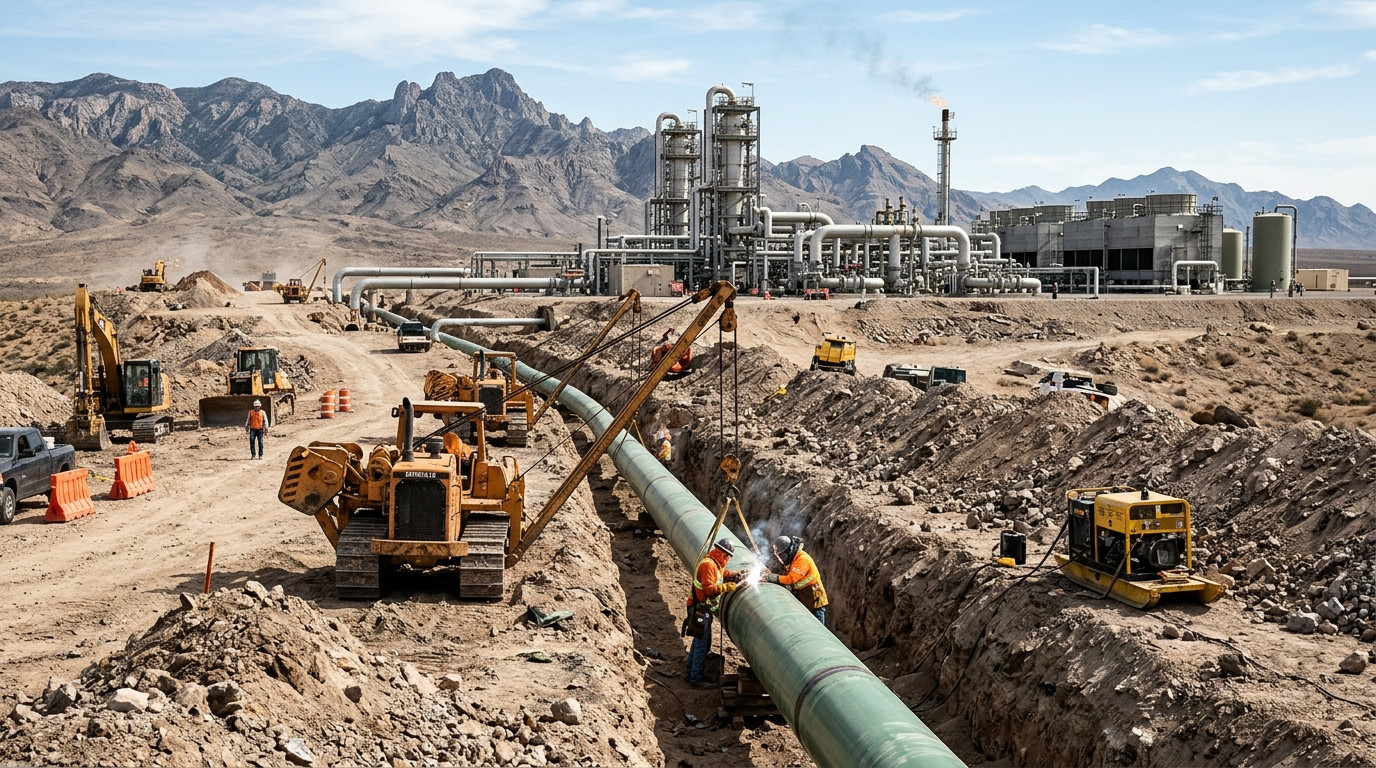
▲ 미국 셰일가스 생산지 파이프라인 부설 현장. 터미널 액화 설비 증설에도 불구하고 내륙 송유·송가관망 인허가 지연이 핵심 병목으로 부상했다. / 공식 인프라 구축 보도사진 ⓒ 만인의 탑
5. '저비용' 시대의 종언: 에너지 안보 프리미엄과 조달 포트폴리오 재편
반복되는 지정학적 충격과 공급망 분절은 세계 각국의 에너지 확보 패러다임을 뿌리째 흔들고 있습니다. 과거 생산비가 저렴한 특정 국가로부터 대규모 파이프라인이나 장기 계약을 통해 가스를 저렴하게 들여오던 '효율성 중심'의 시대는 막을 내렸습니다. 이제는 다소 추가 비용을 지불하더라도 공급 차질에 견딜 수 있는 '에너지 안보 프리미엄'을 우선시하는 시대가 도래했습니다.
대외경제정책연구원(KIEP) 강문수 연구위원은 '최대한 저렴하게 에너지를 구매하던 단일 시장 접근법은 효용을 다했다'며 '비용이 커지더라도 공급선을 다변화하고 경제 안보 차원에서 비축 인프라를 확충하는 국면이 지속될 것'이라고 진단했습니다.
단국대학교 경제학과 조홍종 교수 또한 '계절별·지역별 구매 시점을 분산하고 장기 계약과 현물 계약을 적절히 배분하는 등 국가 차원의 천연가스 조달 포트폴리오를 전면 재점검해야 한다'면서 '국내 LNG 재고 저장 시설의 확충과 해외 자원 개발 지분 확보 등 비상시 충격을 완화할 수 있는 다층적 방어선을 구축해야 한다'고 제언했습니다.
올겨울 닥쳐올 기온 변동과 중동 사태의 향방은 단기적인 난방비 향방뿐만 아니라, 향후 10년간 글로벌 에너지 전환과 수급 질서를 좌우할 분수령이 될 전망입니다. 지정학적 리스크가 상시화된 글로벌 무대에서 안정적인 에너지망을 확보하는 국가만이 경제적 충격을 최소화하고 공공 생존권을 지켜낼 수 있을 것입니다.
권역 및 주체
주요 시장 영향 및 현황
구조적 취약점 및 제약
안보 및 정책 시사점
유럽 연합 (EU)
TTF 100유로 돌파, 재고율 70%대 중반(5년 평균 82% 하회)
카타르 공급 차질, 2027 러시아 가스 전면 금지
가구당 연간 600~715유로 추가 부담 및 강제 7% 수요 감축
한국 및 일본
TTF-JKM 동조화로 현물가 2배 이상 급등
AI 데이터센터 전력 수요 폭증으로 가스발전 수요 가중
유럽과 현물 카고 싹쓸이 선점 경쟁 심화, 도입 단가 상승 압박
동남아시아 (ASEAN)
중동 가스 연계율 17%, MMBtu당 20달러 후반 급등
역내 가스전 노후화 및 2027년 순수입국 전환 전망
고유가·고가 LNG로 인한 석탄·석유 역회귀 및 전환 차질
미국 (수출 기지)
2026년 일일 174 Bcf/d 수출, 신규 액화 70% 집중
내륙 셰일전-멕시코만 터미널 파이프라인 인허가 지연
PHMSA 규제 현대화 연 1억 달러 절감 추진 속 미드스트림 병목
글로벌 에너지 패러다임
저비용 단일 시장 효율성 중심 조달 모델의 완전한 종언
지정학적 리스크 상시화 및 운송 루트 단절 취약성
'에너지 안보 프리미엄' 상시화, 비축 저장망 및 지분 확보 필수
특별취재팀발행인 겸 편집인: 신승엽 (Seung Youb Ssin)
▲ Global Energy Infrastructure and Liquefied Natural Gas Market Dynamics / Official Press Archive
The global liquefied natural gas (LNG) market has entered a renewed state of acute disruption as escalating military conflict in the Middle East collides with severe winter polar freeze forecasts across the Northern Hemisphere. Benchmark Dutch Title Transfer Facility (TTF) natural gas futures surged past €100 per megawatt-hour (MWh) for the first time in four years—a dramatic threefold surge since January—driven by maritime transit hazards in the Strait of Hormuz and extensive disruptions to Qatar's export infrastructure. As European utilities scramble for replacement cargoes in the global spot market, the structural coupling of European TTF and East Asian JKM benchmarks has triggered fierce bidding wars with South Korea, Japan, and ASEAN economies. While the United States continues to ramp up export capacity, inland midstream pipeline bottlenecks and protracted regulatory delays constrain terminal feedgas volumes, compelling sovereign buyers worldwide to pivot from cost-efficiency toward a structural 'energy security premium.'
Core Fact Briefing
Key Metric 1: European TTF Surpasses €100/MWh: Dutch benchmark futures surged to an intraday high of €100.30/MWh, surging 234% year-to-date and 38% this month alone, testing four-year resistance thresholds.
Key Metric 2: Middle East Conflict Stalls Qatari Cargoes: Heightened risks around the Strait of Hormuz paralyzed exports from Qatar (which provided 8% of EU LNG imports), driving EU underground storage down to mid-70% levels.
Key Metric 3: TTF-JKM Coupling Drives Asian Price Spikes: Aggressive European spot purchasing propelled Asian spot LNG past $20/MMBtu, placing intense procurement pressure on South Korea, Japan, and developing ASEAN markets.
Key Metric 4: Midstream Pipeline Bottlenecks Constrain U.S. Exports: Despite U.S. export growth reaching 17.4 Bcf/d in 2026, interstate pipeline capacity and regulatory litigation represent the primary bottleneck limiting Gulf Coast terminals.
1. European Gas Benchmark Tops €100/MWh: The Resurgence of Energy Crisis Fears
The relative stability that settled over global natural gas markets following the severe shocks of the 2022 Russian invasion of Ukraine has abruptly unraveled. With military clashes intensifying across the Middle East alongside meteorological warnings of a severe Arctic freeze, European wholesale natural gas benchmarks have shattered the psychologically critical €100 per megawatt-hour (MWh) ceiling for the first time in four years.
Market data from the Dutch Title Transfer Facility (TTF)—the primary pricing benchmark for continental Europe—showed front-month contracts surging to an intraday high of €100.30 per MWh. This represents a staggering 234% increase compared to baseline levels of €28 to €30 recorded at the start of the year, with prices climbing 38% in the current month alone. Energy economists broadly view the €100 threshold as an institutional inflection point, heralding sustained industrial cost pressures and persistent macroeconomic volatility.
Europe's post-2022 energy realignment, which aggressively replaced pipeline natural gas from Russia with flexible seaborne LNG import infrastructure, is now facing its most rigorous operational test as geopolitical instability sweeps across key global transit waterways.
2. Middle East Geopolitical Risks, Qatar Supply Disruptions, and Europe's Depleted Storage
The immediate catalyst behind this price spike is the acute escalation of conflict in the Middle East. With the United States expanding naval operations and maritime passage through the strategic Strait of Hormuz rendered precarious, export facilities in Qatar—one of the world's preeminent LNG suppliers—have experienced severe disruption.
According to Brussels-based think tank Bruegel, Qatari LNG historically accounted for approximately 8% of the European Union's aggregate imports. However, tanker transit delays and operational halts at key liquefaction terminals have virtually immobilized shipments. Consultancy Energy Aspects warned that prolonged regional conflict raises the probability of severe winter supply deficits from 51% to 73%.
Compounding these supply constraints is the historically precarious state of European gas inventories. Data compiled by the Institute for Energy Economics and Financial Analysis (IEEFA) and Bloomberg indicate that EU underground storage facilities are hovering in the mid-70% range. This sits significantly below the 82.9% recorded at this point last year, the 98.5% achieved in 2023, and the five-year seasonal average of 82%.
Analyses from Euronews and the Household Energy Price Index (HEPI) highlight that wholesale increases are translating rapidly into retail hardship. A typical European residential consumer utilizing 10,000 kWh of gas during the winter faces an incremental cost burden exceeding €600 (rising to approximately €715, or $780, when including 20% VAT).
Tom Marzec-Manser, Director of Gas Analytics at Wood Mackenzie, cautioned that even under normal winter temperature distributions, Europe's storage cushions could diminish to an alarming 17% to 20% by late March 2027. Should meteorological patterns trigger sudden stratospheric warming, early inventory exhaustion remains a tangible risk. Concurrently, mandated preparations for a complete ban on Russian LNG imports by January 2027 necessitate an immediate 7% compulsory reduction in seasonal European gas consumption.
▲ Commercial LNG Carrier Berthing at Coastal Terminal Amid Winter Supply Scramble / Official Maritime Energy Press Archive
3. TTF-JKM Market Coupling: The Gas Scramble Spreads to Korea, Japan, and ASEAN
The inventory deficits in Europe are not an isolated regional affair; their reverberations are dramatically reshaping gas markets across the Asia-Pacific. As European procurement entities aggressively pursue uncommitted global spot cargoes—predominantly from the United States—the historical divergence between European and Asian pricing has dissolved into tight systemic coupling.
According to research by Senior Research Fellow Roh Nam-jin of the Korea Energy Economics Institute (KEEI), Europe's structural reliance on flexible LNG has tethered the Dutch TTF index directly to the Japan Korea Marker (JKM), the benchmark for Asian spot deliveries. Since the eruption of Middle Eastern hostilities, both TTF and JKM have doubled, with European buyers frequently bidding substantial premiums to divert cargoes away from Asian terminals.
This dynamic has triggered acute procurement pressures for major importers including Korea Gas Corporation (KOGAS) and Japan's JERA. Both nations must secure supplemental spot volumes amidst rising base-load electricity demand driven by hyperscale artificial intelligence data centers, severely inflating fiscal expenditures for utilities and industrial consumers alike.
The vulnerability of developing economies across the Association of Southeast Asian Nations (ASEAN) is particularly pronounced. The ASEAN Centre for Energy (ACE) estimates that 17% of the bloc's gas supply remains tied to Middle Eastern channels. With mature domestic gas fields depleting, ACE projects that ASEAN will become a net gas importer by 2027. Reuters reported that as spot prices surge toward the upper $20s per MMBtu, price-sensitive developing economies in Asia are increasingly abandoning spot LNG tenders, reverting to heavy fuel oil and coal.
4. U.S. LNG Expansion Meets the Pipeline Wall: Midstream Infrastructure as the True Bottleneck
Amid global supply disruptions, the international community has increasingly looked to the United States as the primary relief valve. Data from the U.S. Energy Information Administration (EIA) and the International Energy Agency (IEA) confirm that U.S. LNG export capacity reached 15.1 billion cubic feet per day (Bcf/d) in 2025, climbing to 17.4 Bcf/d in 2026 and an anticipated 18.6 Bcf/d in 2027, cementing America's dominance as the world's leading exporter.
The IEA's 'Gas 2025' medium-term outlook projects roughly 300 billion cubic meters per year (bcm/yr) of new global liquefaction capacity coming online by 2030, with over 70% concentrated in the United States and Qatar. Major U.S. projects—including Cheniere Energy expansions, Venture Global's CP2 facility, NextDecade's Rio Grande Trains 4 and 5, and Sempra's Port Arthur Phase 2—have achieved Final Investment Decisions (FID) or progressed into active engineering.
Federal agencies are actively working to streamline execution. The Pipeline and Hazardous Materials Safety Administration (PHMSA) under the Department of Transportation is modernizing 49 CFR Part 193 regulations, integrating National Fire Protection Association (NFPA) standards to accelerate deployment while cutting compliance expenditures by $100 million annually, complemented by Federal Energy Regulatory Commission (FERC) permitting reforms.
However, midstream operators emphasize that subsurface gas reserves and coastal liquefaction trains do not constitute the primary constraint. David McKellips, Vice President of Commodity Marketing at Williams Companies, stressed at the Offshore Technology Conference (OTC) that interstate pipeline transmission and geological storage represent the genuine bottleneck limiting U.S. export velocity.
McKellips noted that vast reserves in the Permian, Appalachian, and Haynesville shale basins hold zero commercial liquidity if gas cannot physically reach the Gulf Coast corridor, warning that protracted permitting litigation and National Environmental Policy Act (NEPA) challenges now routinely take longer to navigate than actual physical pipeline construction. Reports from the Interstate Natural Gas Association of America (INGAA) and NERA Economic Consulting underscore that without expedited interstate pipeline approvals, coastal liquefaction terminals will remain structurally feedgas-constrained.
▲ Major Interstate Pipeline Construction Traversing Shale Basins / Official Energy Infrastructure Press Archive
5. The End of the Low-Cost Era: Energy Security Premiums and Procurement Portfolio Reshaping
Successive geopolitical shocks and supply chain fragmentation have dismantled the foundational tenets of modern global energy procurement. The paradigm of just-in-time, lowest-cost gas sourcing via fixed pipelines or single-source long-term contracts has concluded. In its stead, sovereign governments and utilities are institutionalizing an 'energy security premium' that accepts higher capital and operating expenditures as essential insurance against systemic disruptions.
Kang Moon-soo, Research Fellow at the Korea Institute for International Economic Policy (KIEP), observed that single-market, cost-minimization procurement strategies are no longer viable, emphasizing that multi-origin supplier diversification and expanded domestic strategic reserves are now paramount imperatives.
Professor Cho Hong-jong of Dankook University's Department of Economics similarly urged a comprehensive restructuring of national gas procurement portfolios. Cho highlighted the necessity of balancing term contracts with strategic spot flexibility, while aggressively expanding domestic cryogenic storage capacity and acquiring upstream equity stakes to erect multi-tiered defensive barriers against macro shocks.
The severity of the upcoming winter and the trajectory of Middle Eastern geopolitical tensions will not merely determine short-term heating tariffs; they will set the definitive terms for global energy transitions and sovereign security architectures over the decade ahead. In an era of structural geopolitical friction, only nations with diversified, resilient, and well-buffered energy supply chains will successfully navigate the turbulent transition.
Computer Programmer who love programming.
Computer Programmer Who love Riding Bicycle.
Computer Programmer who love trip in abroad.
Computer Programmer who love studying about programming
- even if sometimes it's very boring.
Computer Programmer who love talking with person.
- I love communication with person.
1월이 시작되면 감기는 이미 우리 곁에 와 있습니다. 2월, 3월, 4월까지 이어지는 추위와 건조함은 코와 목을 가장 먼저 공격합니다. 아침에 일어나자마자 막혀 있는 코. 계속 흐르는 콧물. 괜히 칼칼해지는 목. 이 증상은 “시작”일 뿐입니다. 한 번 무너지면 일주일, 길면 한 달까지 끌고 갑니다. 약을 먹으면 잠깐 괜찮아집니다. 하지만 며칠 뒤 또 반복됩니다. 왜일까요? 감기는 ‘치료’의 문제가 아니라 ‘관리’의 문제이기 때문입니다. 대부분은 감기가 오고 나서 약을 찾습니다. 하지만 진짜 중요한 건 감기가 오기 전에 코와 목을 지키는 것입니다. 건조한 실내 공기, 차가운 바깥 공기, 눈에 보이지 않는 세균. 코와 목은 매일 공격받고 있습니다. 지긋지긋하죠! 그런데도 우리는 아무 준비 없이 버티고 있습니다. 이번 겨울도 그렇게 보낼 건가요? 사실 방법은 어렵지 않습니다. 코를 깨끗하게 관리하고, 목을 따뜻하게 보호하고, 점막을 촉촉하게 유지하고, 기관지를 미리 관리하고, 외부 공기를 차단하는 것. 이 다섯 가지만 꾸준히 해도 감기약 없이 겨울을 보내는 것이 충분히 가능합니다. 🔥 이제부터 그 방법을 하나씩 살펴보겠습니다. 🔥 1. 코와 목을 먼저 관리해야 하는 과학적 이유 감기의 대부분은 코 점막에서 시작됩니다. 국제 학술지 Nature Reviews Microbiology 와 Journal of Allergy and Clinical Immunology 에 실린 호흡기 감염 관련 연구들에서는, 감기 바이러스가 비강 상피세포에 먼저 부착해 증식한다는 점을 설명하고 ...
리모델링사업이 진행 중인 아파트를 매매할 때 “계약금 10%를 언제까지 내야 하느냐”는 질문이 특히 많이 나옵니다. 이주공고(이주 안내)가 7~11월쯤이라고 들으면, 그 시점에 맞춰 계약금도 움직일 것 같아서 더 헷갈리기 쉽습니다. 하지만 실제 납부기한은 ‘이주공고가 언제냐’만으로 자동 결정되지 않는 경우가 많습니다. 1) 계약금 10% 납부기한: 결국 ‘문서에 적힌 일정’이 기준 계약금 10%를 언제까지 납부해야 하는지는, 내가 서명하는 매매계약서(특약 포함) 와 사업주체/조합이 제시한 공고·안내문 에 적힌 납부 일정이 기준이 됩니다. 실제 공고문에서는 분양대금 납부의 큰 틀(계약금→중도금→잔금)을 먼저 안내하고, 상세 일정은 별도 표나 유의사항으로 제시하는 방식이 흔합니다. 또, 계약서 문구에 따라 지급 시점이 조건부로 설정될 수도 있습니다. 예를 들어 한 사례 소개 자료에서는 용역계약서에 잔금(10%) 지급시기가 “사업승인 후”로 기재되어 있었다는 점이 언급됩니다. 이런 식으로 ‘사업 단계’와 지급을 연동하는 문구가 들어가면, 질문의 답은 계약서 문구를 확인해야만 확정됩니다. 관련 내용은 링크 에서 문구 사례를 확인할 수 있습니다. 2) 입주자모집공고에서 확인되는 ‘납부 순서’와 잔금 마감 시점 공고문에 적힌 문구를 보면, 납부 순서와 잔금 마감에 대한 기준이 비교적 명확하게 제시되는 경우가 있습니다. 예를 들어 한 입주자모집공고에는 “분양금액(주택가격)은 계약금, 중도금, 잔금의 순서로 납부”하며 “잔금은 입주(열쇠 수령일) 전에 완납”해야 한다고 안내되어 있습니다. (문구 확인: 링크 ) 이 문구가 의미하는 바는 최소 2가지입니다. 분양/공급 형태의 문서에서는 ‘계약금→중도금→잔금’ 흐름이 공식적으로 안내될 수 있습니다. 잔금은 “입주(열쇠 수령)” 이전에 완납해야 한다는 마감 기준이 문서에 적혀 있을 수 있습니다. 다만, 위 공고문 문구는 잔금 마감에 대한 기준을 보여주지만, 계약금 10%의...
윤석열 전 대통령 탄핵 인용 소식을 접하면, 가장 궁금한 지점은 ‘헌재가 정확히 무엇을 위헌·위법으로 봤는가’입니다. 또한 탄핵과 별개로 진행되는 형사재판(내란 우두머리 혐의 등)이 어디까지 왔는지도 함께 정리할 필요가 있습니다. 아래 내용은 제공된 기사/게시물 스니펫과 링크에서 확인되는 범위만 모아, 일반인이 흐름을 이해하기 쉽게 정리한 것입니다. 1) 탄핵 인용 관련: 스니펫에서 확인되는 ‘판단의 골격’ 제공된 근거 중 조국혁신당 사이트에는 헌법재판소가 윤석열 탄핵 심판에서 “피청구인의 위헌·위법행위는 국민 신임 …”이라는 취지로 판단했다는 문장이 인용돼 있습니다( 링크 ). 이 인용문만 놓고 보면, ‘위헌·위법행위’가 있었는지와 그로 인해 ‘국민의 신임’이 어떻게 평가됐는지가 핵심 축으로 소개됩니다. 다만 질문에서 요청하신 세부 항목, 즉 비상계엄 선포 자체를 문제 삼은 구체적 이유, 계엄 이후 조치(포고령, 국회 통제 등)의 어떤 지점이 헌법 위반인지, 국회의 권한행사 방해 및 정치활동 제약을 어떤 논리로 판단했는지 등은, 이번에 제공된 근거의 제목/스니펫만으로는 조항·사실관계·판단 구조가 그대로 제시돼 있지 않습니다. 따라서 이 글에서는 ‘헌재가 무엇을 문제 삼았다’는 세부 리스트를 단정적으로 재구성하기보다, 현재 확인 가능한 문구 수준의 요약(위헌·위법행위 → 국민 신임의 문제로 평가)까지만 적습니다. 만약 헌재 결정문 전문(주문 및 이유)이 추가로 확인되면, 그때는 문장 단위로 ‘어떤 행위’와 ‘어떤 헌법 원리/조항’이 연결되는지(예: 권력분립, 국회의 권한, 정치적 기본권 등) 구조화해 정리하는 것이 가장 정확합니다. 2) 형사 절차(내란 혐의) 관련: 체포영장과 1심 선고 언급 탄핵 심판과 별도로, 12·3 비상계엄 사태로 내란 혐의를 받는 윤석열 대통령에 대해 2024년 12월 31일 체포 영장이 발부됐다는 BBC 보도가 있습니다( 링크 ). 해당 보도는 ‘현직 대통령’에 대한 체포영장 발부라는 점을 함께 언급합니다. 또...




0 댓글