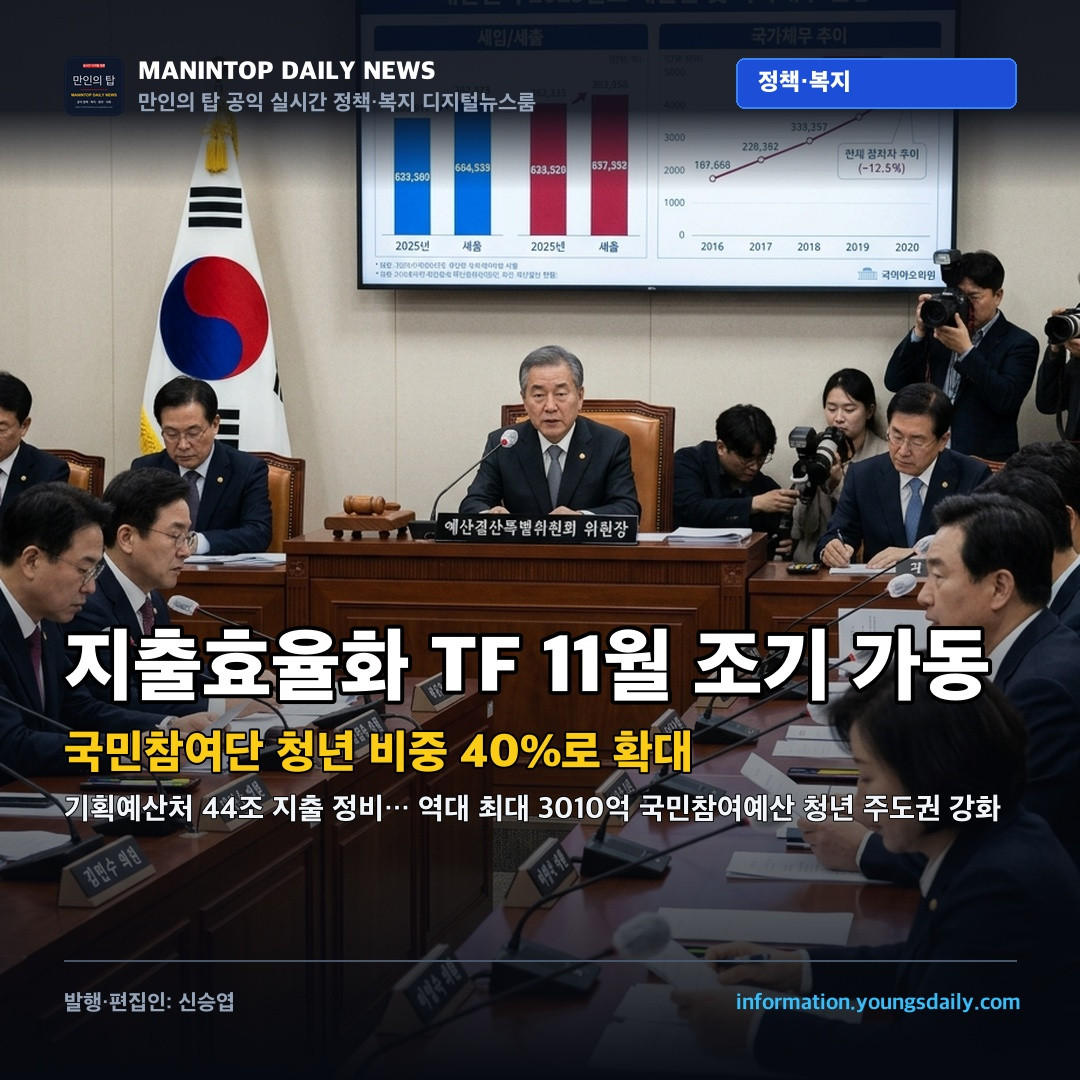
정부 '지출효율화 TF' 11월 조기 가동… 국민참여예산단 청년 비중 40%로 대폭 확대
▲ 정부 '지출효율화 TF' 11월 조기 가동… 국민참여예산단 청년 비중 40%로 대폭 확대 / 만인의 탑 만인의 탑 정부 재정복지 및 청년참여 데스크
📌 만인의 탑 핵심 브리핑 · 이 글에서 다루는 핵심 내용

정부가 관행적·낭비성 국가 재정 누수를 원천 차단하고 국민이 직접 예산 편성에 참여하는 '국민주권재정'을 실현하기 위해 '지출효율화 태스크포스(TF)'를 오는 11월 조기 가동한다. 아울러 2027년 예산안에 역대 최대인 3,010억 원 규모의 국민참여예산을 편성하고, 국민참여단 내 청년(19~34세) 참여 비중을 기존 20.7%에서 40%(240명)로 두 배 대폭 확대하여 미래 세대의 정책 주도권을 대폭 강화하기로 했다.

SPONSORED · ADVERTISEMENT

1. 44조 원 낭비성 지출 대수술… 11월 조기 가동하는 '지출효율화 TF'

정부가 관행화된 예산 낭비를 근절하고 재정의 건전성을 확보하기 위해 범부처 지출 구조조정의 칼을 다시 빼 들었다. 기획예산처는 10월 26일 정부서울청사에서 민간위원 11명과 기재부·교육부·복지부 등 관계 부처가 참석한 가운데 '제3차 재정운용전략협의회'를 열고, 지출효율화 TF 조기 가동 및 국민참여예산제도 활성화 방안을 전격 확정했다.

정부는 지난해 말 41개 부·처·청과 80여 명의 민간위원이 참여한 지출효율화 TF를 통해 지방교육재정교부금의 내국세 자동연동 구조를 혁신하고, 17개 부처에 분산되어 있던 중소기업 지원사업 232개를 통폐합하는 등 88개 과제에서 총 44조 2,000억 원의 지출을 정비하는 성과를 거두었다. 정부는 이러한 성과를 이어가기 위해 내년도 지출효율화 TF를 예년보다 대폭 앞당겨 오는 11월부터 조기 가동하기로 했다. 예산 편성 직전 형식적으로 이뤄지던 사후 검토에서 탈피하여, 연초부터 심층 평가를 거쳐 차기 국가재정운용계획에 효율화 과제를 선제 반영하겠다는 포석이다.

만인의 탑 현장 보도 실사
▲ 현장 취재 및 관련 기관 공식 브리핑 / 만인의 탑

2. AI 어시스턴트 '지출돋보기' 전면 도입… 재정 누수 핀셋 검증

이번 지출효율화의 가장 큰 기술적 진과는 인공지능(AI) 기반의 상시 모니터링 시스템 구축이다. 정부는 사업 검토와 국회·감사원·언론의 지적 사항 분석에 최첨단 AI 어시스턴트인 '지출돋보기'를 전격 투입한다. 그동안 수만 건에 달하는 정부 재정 사업 간의 유사·중복성을 공무원 인력만으로 교차 검증하는 데는 한계가 있었다. AI 지출돋보기는 각 부처의 예산서와 사업설명자료, 결산 내역을 빅데이터로 분석하여 부처 간 칸막이로 숨겨진 중복 사업과 집행 부진 사업을 핀셋 적발해 낸다. 아울러 해외 주요 선진국의 유사 공공 프로젝트 예산 구조와 성과 지표를 실시간 비교 분석하여 가장 경제적인 재정 개선안을 작업반에 제공하게 된다.

구분 항목 기존 재정 운영 방식 개편된 지출효율화 & 국민참여 체계 국민 및 청년 실질 수혜
지출 점검 시점 연말 예산 편성 직전 사후적 형식 점검 11월 조기 가동으로 사전·심층 구조조정 44조 원 규모 낭비성 예산 조기 감축
AI 재정 분석 인력 중심의 수작업 감사 및 서류 검토 AI 어시스턴트 '지출돋보기' 전면 도입 부처 간 중복·유사 사업 빈틈없는 적발
청년 참여 규모 국민참여단 내 청년 20.7% (120명) 청년 비중 40% (240명)로 2배 대폭 확대 청년 맞춤형 복지·일자리 예산 주도 편성
제안 편의성 복잡한 공문서 양식 작성 부담 온라인 'AI 작성 도우미' 및 실명 표기제 원클릭 사업 제안 및 우수 제안자 포상금
SPONSORED · ADVERTISEMENT

3. 역대 최대 3010억 원… 국민참여단 청년 비중 20.7%에서 40%로 확대

국민이 낸 세금의 쓰임새를 국민이 직접 결정하는 '국민참여예산'도 역대 최대 규모로 확대된다. 정부는 2027년도 예산안에 총 3,010억 원(21개 사업)의 국민참여예산을 편성했다. 이는 2018년 제도 도입 이래 단일 연도 기준 최대 규모다.

특히 재정 운용의 미래 주역인 청년 세대의 목소리를 전폭적으로 반영하기 위해 국민참여단 내 청년(19~34세) 비중을 현행 20.7%(120명)에서 40%(240명)로 두 배 확대한다. 청년들의 주거, 일자리, 자산 형성, 마음건강 등 청년 세대가 절실히 필요로 하는 실질적 지원 사업이 국가 예산에 직결될 수 있는 제도적 고속도로를 놓은 셈이다. 또한 일반 청년들을 대상으로 한 '청년정책 아이디어 공모전'도 정례화하여 창의적인 청년 복지 정책을 국가 예산에 적극 담아낼 방침이다.

일반 국민의 참여 문턱도 획기적으로 낮춘다. 복잡한 행정 서식 때문에 사업 제안을 주저하던 시민들을 위해 온라인 국민참여예산 플랫폼에 'AI 사업제안 작성 도우미'를 도입한다. 시민이 일상 언어로 아이디어를 입력하면 AI가 정부 예산 사업 규격에 맞는 정형화된 사업계획서로 자동 변환해 준다.

아울러 정부는 '찾아가는 국민제안'을 매달 현장에서 개최하고, 국민과 전문가, 공무원이 머리를 맞대고 사업을 설계하는 '토론형 참여'를 재개한다. 특히 채택된 우수 사업 제안자에게는 정부 표창과 함께 포상금을 지급하고, 예산안과 정책 공고에 제안자의 실명을 공식 표기하는 '제안자 실명제'를 전격 시행하여 국민적 자긍심을 고취할 계획이다. 상세한 사업 제안 방법과 문의는 기획예산처 재정혁신총괄과(044-214-1810)를 통해 확인할 수 있다.

RECOMMENDED STORIES · SPONSORED
발행·편집인: 신승엽
Government to Launch Spending Efficiency Task Force Early in November: Expands Youth Share in National Participatory Budgeting to 40%
▲ Official Press Coverage & Contextual Archive / MANINTOP Global Newsroom
MANINTOP GLOBAL NEWSROOM · ENGLISH EDITION

Government to Launch Spending Efficiency Task Force Early in November: Expands Youth Share in National Participatory Budgeting to 40%

The South Korean government will launch its 2027 Spending Efficiency Task Force ahead of schedule this November to eradicate fiscal inertia and entrench citizen-sovereign budgeting. Concurrently, authorities established a record 301 billion KRW participatory budget while doubling the proportion of youth participants aged 19 to 34 from 20.7% to 40% (240 representatives), empowering the next generation to directly shape national welfare and fiscal priorities.
📌 Key Takeaways
  • Verified factual reporting regarding Government to Launch Spending Efficiency Task.
  • In-depth contextual and institutional analysis by MANINTOP Global Newsroom.
  • Official implementation schedule and verifiable public guidelines confirmed.

1. Surgical Overhaul of 44 Trillion KRW: November Launch for Spending Efficiency TF

The South Korean government is escalating efforts to eliminate structural fiscal waste and restore budgetary sustainability. On October 26, the Ministry of Planning and Budget convened the 3rd Fiscal Strategy Coordination Council with ministerial leadership and 11 private-sector experts, finalizing plans to activate the 2027 Spending Efficiency Task Force this November. Building upon the prior restructuring of 88 major initiatives—including severing the automatic linkage between internal taxes and provincial education grants and consolidating 232 overlapping small business subsidies across 17 ministries—the early kickoff transitions from reactive year-end cuts to proactive multi-year optimization.

Government to Launch Spending Efficiency Task Force Early in November: Expands Youth Share in National Participatory Budgeting to 40% press coverage photo
▲ Official Press Archive & Contextual Documentation / MANINTOP Global Newsroom

2. Deploying 'AI Fiscal Magnifier': Algorithmic Scrutiny Against Budget Redundancy

A pivotal technological hallmark of the renewed fiscal drive is the deployment of an artificial intelligence engine named the 'AI Fiscal Magnifier'. Historically, cross-checking tens of thousands of departmental projects for duplicative funding exceeded manual auditing capacity. The AI assistant systematically ingests budget briefs, audit reports, and parliamentary critiques, instantly pinpointing inter-agency redundancies and underperforming programs while benchmarking corresponding international fiscal frameworks to formulate viable consolidation pathways.

3. Record 301 Billion KRW Participatory Budget: Youth Share Doubled to 40%

Citizen empowerment reaches unprecedented scale with a record 301 billion KRW (across 21 major programs) earmarked for participatory budgeting in the upcoming fiscal blueprint. Crucially, the government is doubling the youth quota (ages 19 to 34) on the National Participatory Panel from 20.7% (120 representatives) to 40% (240 representatives). This structural recalibration grants younger generations decisive voting authority over national appropriations, ensuring vital allocations for youth housing, vocational transition, and mental health programs. Annual youth policy competitions will further feed grassroots innovations directly into cabinet budgets.

4. Eliminating Paperwork Friction via AI Drafting and Accredited Bylines

Institutional barriers preventing ordinary citizens from proposing fiscal projects are being removed through digital automation. The participatory platform now features an AI Proposal Assistant that instantly translates everyday vernacular suggestions into formal bureaucratic blueprints. Monthly field outreach sessions and deliberative town halls will collaborate directly with public contributors. Outstanding contributors will receive official ministerial commendations, monetary prizes, and permanent public attribution with accredited bylines displayed on enacted budget documentation. Inquiries are managed through the Ministry of Planning and Budget.

Category Target Scope Standard / Benefit Procedure / Action
Review Timeline Ex-post mechanical screening right before yearend Preemptive launch in November for structural audits Early trimming of 44 trillion KRW in redundant programs
AI Fiscal Audit Manual manpower audits prone to blind spots Deployment of AI Fiscal Magnifier assistant Algorithmic detection of cross-ministry duplications
Youth Allocation Limited youth quota of 20.7% (120 participants) Doubled youth representation to 40% (240 members) Direct youth control over employment and living budgets
Proposal Utility Cumbersome bureaucratic paperwork barriers AI proposal drafting assistant and accredited bylines Frictionless one-click submissions with cash incentives
Publisher & Editor-in-Chief: Seung Youb Ssin, Ph.D.
Global Newsroom: MANINTOP GLOBAL NEWSROOM