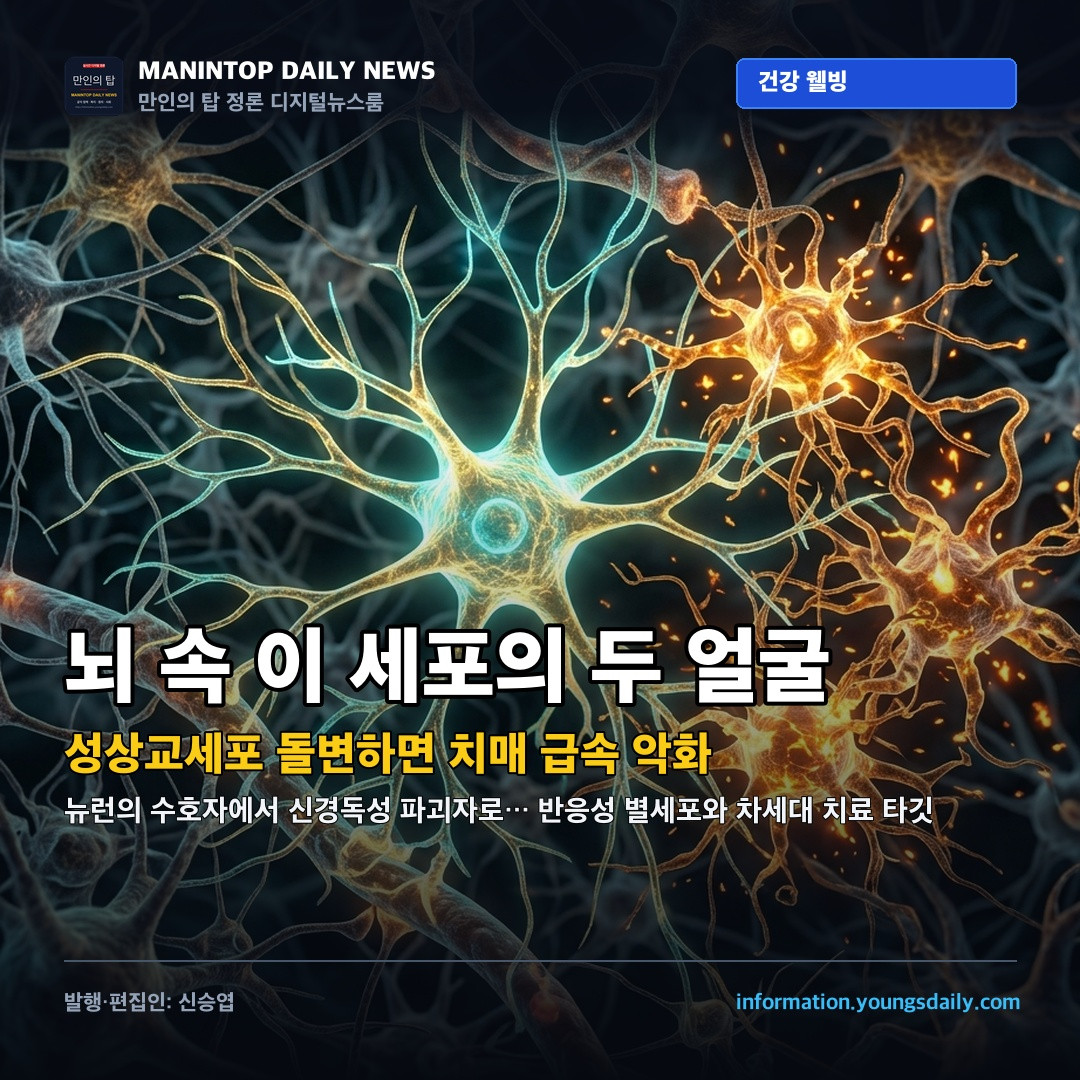
▲ 뇌 속에서 신경세포보다 5배 이상 많이 존재하는 성상교세포는 평상시 뉴런을 지키는 수호자이지만, 병리적 염증 환경에 노출되면 신경독성을 뿜어내는 파괴자로 돌변한다. / 만인의 탑 DB
뇌 속 ‘이 세포’의 두 얼굴로 불리는 성상교세포가 평소에는 신경망을 지키는 핵심 보호자 역할을 하다가, 만성 신경염증에 노출되면 신경독성을 내뿜으며 치매를 급속히 악화시키는 주범으로 돌변한다는 최신 신경생물학 연구 결과가 공개됐다. 신경세포(뉴런)의 조연으로만 여겨졌던 별세포의 이중성이 규명되면서, 알츠하이머병 치료의 패러다임이 단순 아밀로이드 단백질 제거에서 교세포 환경 제어로 대전환을 맞고 있다.
1. 뉴런보다 5배 많은 뇌 성상교세포… 삼자 시냅스와 글림파틱 청소 시스템
인간의 뇌 속에는 신호 전달을 담당하는 신경세포(뉴런)보다 약 5배 이상 많은 수의 성상교세포(Astrocyte·별세포)가 촘촘히 그물망을 형성하고 있다. 별 모양의 무수한 돌기를 뻗어 신경세포와 모세혈관 사이를 이어주는 이 세포는 뇌 항상성 유지의 절대적 기둥이다.
성상교세포는 신경세포 간 시냅스 틈새를 감싸는 '삼자 시냅스(Tripartite Synapse)' 구조를 이룬다. 흥분성 신경전달물질인 글루탐산이 과도하게 분비되면 이를 즉시 회수해 글루타민으로 무독화 재활용함으로써 신경세포의 흥분독성(Excitotoxicity) 사멸을 원천 차단한다. 또한 혈관 주변의 성상교세포 종판(End-feet)에 밀집된 아쿠아포린4(AQP4) 수전도 채널은 깊은 수면 중 뇌 척수액을 순환시켜 아밀로이드 베타와 타우 등 치매 독성 단백질을 씻어내는 글림파틱 시스템(Glymphatic System)의 핵심 엔진으로 기능한다.
💡 [신경과학 브리프] 정상 휴지기 성상교세포의 4대 뇌 보호 기능
성상교세포는 신경세포에 젖산(에너지원)을 공급하고, 글루탐산 농도를 조절해 흥분독성을 방지하며, 수면 중 AQP4 수전도 채널로 치매 노폐물을 씻어내는 동시에 손상된 세포 찌꺼기를 자가포식으로 분해합니다.
2. '반응성 성상교세포'의 비극적 돌변… 치매 독성 과산화수소와 시냅스 파괴
하지만 노화와 만성 미세염증, 뇌혈관 손상이 누적되면 보호자였던 성상교세포는 치명적인 '반응성 성상교세포(Reactive Astrocyte)'로 형태와 유전자 발현을 완전히 바꾼다. 미세아교세포가 분비하는 염증 신호(IL-1α, TNF 등)에 자극받아 독성 A1형 세포로 전환되는 것이다.
돌변한 성상교세포는 신경세포 보호 기능을 일제히 중단한다. 글루탐산 회수율이 떨어지며 주변 뉴런이 독성에 노출되고, 자체 효소인 마오-B(MAO-B)가 비정상적으로 과활성화되어 억제성 신경전달물질인 가바(GABA)와 유독성 과산화수소(H2O2)를 대량 분비한다. 이 활성산소는 해마 신경세포의 수상돌기 가시를 파괴하고 시냅스 연결을 끊어버려, 기억력 감퇴와 인지 저하를 폭발적으로 가속화한다.
▲ 반응성 성상교세포가 분비하는 염증 물질과 활성산소는 해마 신경망을 마비시키며, 자가포식 가소성이 상실될 때 알츠하이머 병리가 급격히 악화된다. / 만인의 탑 DB
특히 최근 연구에 따르면 세포 내 노폐물을 청소하는 성상교세포의 '자가포식(Autophagy) 가소성'이 무너질 때 치매 악화가 걷잡을 수 없이 진행된다. 스스로 독성 응집체를 소화하지 못하면서 만성 염증 찌꺼기를 주변 뇌 조직으로 전파하는 악순환의 진원지가 되는 셈이다.
3. 기존 아밀로이드 항체 치료제의 한계와 '성상교세포 가역 회복' 치매 신약 패러다임
지금까지 글로벌 제약업계가 내놓은 레카네맙, 도나네맙 등 1세대 알츠하이머 항체 치료제들은 뇌에 쌓인 아밀로이드 베타 플라크를 제거하는 데 집중해 왔다. 하지만 플라크를 걷어내도 이미 반응성으로 돌변한 성상교세포가 지속적으로 신경독성을 뿜어내면 인지 기능 회복에는 명백한 한계가 존재했다.
이에 따라 글로벌 신경과학계는 '반응성 성상교세포를 다시 원래의 온순한 보호자 상태로 되돌리는(가역성 회복)' 표적 치료제 개발에 총력을 기울이고 있다. 한국 기초과학연구원(IBS)과 해외 선도 연구팀들은 과활성화된 마오-B 효소를 선택적·가역적으로 억제하는 신약 후보물질(KDS2010 등)을 통해, 성상교세포의 독성 물질 분비를 원천 차단하고 인지 기능을 유의미하게 회복시키는 성과를 입증하고 있다.
비교 영역
정상 휴지기 성상교세포
반응성 독성 성상교세포
치매 병리적 영향
형태 및 세포 상태
섬세한 별 모양 돌기, 얇은 섬유
비대해진 세포체, 돌기 위축
시냅스 물리적 지지력 상실 및 신경망 고립
신경전달물질 조절
글루탐산 신속 회수(GLT-1 정상)
회수 중단 및 독성 GABA 과다 분비
신경세포 흥분독성 및 시냅스 전달 마비
염증 및 산화 반응
항산화 글루타치온 공급
과산화수소(H2O2) 및 염증 사이토카인 방출
해마 신경세포 괴사 및 뇌 위축 가속
뇌 노폐물 청소
AQP4 글림파틱 및 자가포식 활성
자가포식 부전 및 단백질 배출 차단
아밀로이드 베타 및 타우 응집체 축적 극대화
4. 뇌 속 성상교세포의 독성 스위치 끄는 일상 실천… 깊은 수면과 항염증 식단
성상교세포가 독성 세포로 변모하는 것을 막기 위해 일상생활에서 실천할 수 있는 가장 강력한 예방법은 '수면 위생의 사수'다. 성상교세포의 AQP4 글림파틱 세척 시스템은 깨어 있을 때는 작동하지 않으며, 오직 깊은 서파 수면(NREM 3단계) 중에만 뇌 세포 간격이 60% 이상 벌어지며 가동된다. 하루 7시간의 중단 없는 수면을 유지해야 뇌 속 별세포가 밤새 청소 작업을 완수할 수 있다.
둘째는 규칙적인 중강도 유산소 운동이다. 주 3회, 30분 이상 등에 땀이 맺힐 정도로 걷거나 달리면 뇌 유래 신경영양인자(BDNF)가 분비되어 성상교세포가 반응성 형태로 돌변하는 신호 전달 경로를 직접 차단한다.
셋째는 항산화 지중해-MIND 식단의 실천이다. 블루베리의 안토시아닌, 올리브유와 등푸른생선의 오메가-3 지방산, 녹황색 채소의 폴리페놀은 전신 미세염증을 낮춰 성상교세포의 염증성 활성화를 막는다. 일상 속 수면과 식습관의 작은 교정이 뇌 속 가장 거대한 수호 세포의 변심을 막아내는 최선의 방패다.
만인의 탑 보건의료 전문 에디토리얼
발행·편집인: 신승엽 (Seung Youb Ssin) | 만인의 탑 뉴스룸
▲ Outnumbering neurons fivefold, astrocytes safeguard cerebral homeostasis in resting states but transform into aggressive neurotoxic agents under chronic neuroinflammatory stress. / MANINTOP DB
The dual nature of astrocytes in the brain—long celebrated as indispensable custodians of synaptic health—has taken center stage in cognitive neuroscience following groundbreaking evidence revealing their catastrophic metamorphosis into neurotoxic drivers of rapid Alzheimer's disease progression. Formerly relegated to passive structural support roles, star-shaped astrocytes are now recognized as decisive arbiters of neurodegeneration, shifting global dementia therapeutics from isolated amyloid targeting toward cellular glial homeostatic restoration.
1. Outnumbering Neurons Fivefold: Tripartite Synapses and the Glymphatic Cleansing Engine
Within the human central nervous system, astrocytes (star-shaped glial cells) outnumber signal-transmitting neurons by roughly five to one, forming an interconnected parenchymal matrix. Extending thousands of fine cytoplasmic leaflets that interface between microvessels and synapses, astrocytes serve as the bedrock of neural homeostasis.
They constitute the physiological core of the 'Tripartite Synapse'. When excitatory glutamate is discharged into synaptic clefts, astrocytic transporters rapidly sequester and convert it into benign glutamine, safeguarding neighboring neurons against fatal excitotoxicity. Furthermore, specialized water channels known as Aquaporin-4 (AQP4), densely polarized along astrocytic vascular end-feet, power the nocturnal glymphatic system, driving cerebrospinal fluid influx to flush out toxic amyloid-beta and tau aggregates during restorative slow-wave sleep.
💡 [Neuroscience Brief] Four Core Pillars of Resting Astrocyte Protection
Homeostatic astrocytes provide lactate energy substrates to neurons, buffer extracellular glutamate to avoid excitotoxicity, drive glymphatic waste clearance via AQP4 channels during deep sleep, and clear toxic debris through active autophagy.
2. The Fatal Switch: Reactive Astrogliosis, Hydrogen Peroxide Surges, and Synaptic Pruning
However, when exposed to persistent aging stresses, microvascular lesions, and accumulating amyloid oligomers, quiescent astrocytes undergo a pathological transformation termed 'Reactive Astrogliosis'. Primed by microglial inflammatory cytokines including IL-1alpha and TNF, they transition into an aggressive neurotoxic phenotype.
Upon adopting this destructive state, astrocytes abandon protective duties. Glutamate clearance collapses, leaving synaptic terminals vulnerable. Simultaneously, astrocytic monoamine oxidase-B (MAO-B) undergoes aberrant hyperactivation, synthesizing excessive inhibitory GABA and copiously spewing toxic hydrogen peroxide (H2O2). This oxidative deluge amputates dendritic spines in the hippocampus and severs synaptic communication, accelerating memory loss and cognitive demise.
▲ Reactive astrocytes release chronic inflammatory mediators and hydrogen peroxide, inducing hippocampal synaptic severance when cellular autophagic plasticity collapses. / MANINTOP DB
Crucially, recent investigations highlight that the loss of astrocytic autophagic plasticity acts as the final tipping point. Incapable of degrading internalized proteinaceous debris, reactive astrocytes become chronic epicenters of smoldering neuroinflammation across cerebral networks.
3. Beyond Amyloid Monotherapy: Reversing Reactive Astrocytes as a Transformative Paradigm
First-generation monoclonal antibody therapeutics—such as lecanemab and donanemab—focused squarely on clearing extracellular amyloid plaques. Yet clinical trial data reveal that even after substantial plaque reduction, cognitive decline frequently persists if reactive astrocytes continue their toxic barrage.
Consequently, global neuroscience has shifted toward 'reverting reactive astrocytes back to their benign, protective state'. Pioneering neurobiologists are developing selective, reversible MAO-B inhibitors that disarm astrocytic hydrogen peroxide production, demonstrating substantial restoration of synaptic plasticity and spatial memory in pre-clinical Alzheimer models.
4. Disarming the Astrocytic Toxin Switch: Deep Sleep Architecture and Anti-Inflammatory Nutrition
Shielding astrocytes against neurotoxic activation requires prioritizing fundamental lifestyle disciplines, led by uncompromised sleep architecture. The astrocytic AQP4 glymphatic cleansing cascade remains dormant during wakefulness, initiating only during deep slow-wave sleep (NREM stage 3) when interstitial channels expand by over 60 percent. Sustaining seven hours of uninterrupted nocturnal rest ensures astrocytes complete nightly waste filtration.
Second, regular aerobic physical activity stimulates brain-derived neurotrophic factor (BDNF) synthesis, suppressing the transcriptional pathways that provoke reactive transformation.
Third, adopting an anti-inflammatory MIND or Mediterranean dietary regimen rich in berry anthocyanins, extra virgin olive oil polyphenols, and marine omega-3 fatty acids quenches systemic micro-inflammation. These daily interventions secure the fidelity of our cerebral guardian cells, safeguarding lifelong cognitive resilience.
MANINTOP Public Health Editorial Board
Publisher & Editor-in-Chief: Seung Youb Ssin | MANINTOP Global Newsroom
Recommended Deep-Dive Investigations TOP 3
MANINTOP GLOBAL
Computer Programmer who love programming.
Computer Programmer Who love Riding Bicycle.
Computer Programmer who love trip in abroad.
Computer Programmer who love studying about programming
- even if sometimes it's very boring.
Computer Programmer who love talking with person.
- I love communication with person.
1월이 시작되면 감기는 이미 우리 곁에 와 있습니다. 2월, 3월, 4월까지 이어지는 추위와 건조함은 코와 목을 가장 먼저 공격합니다. 아침에 일어나자마자 막혀 있는 코. 계속 흐르는 콧물. 괜히 칼칼해지는 목. 이 증상은 “시작”일 뿐입니다. 한 번 무너지면 일주일, 길면 한 달까지 끌고 갑니다. 약을 먹으면 잠깐 괜찮아집니다. 하지만 며칠 뒤 또 반복됩니다. 왜일까요? 감기는 ‘치료’의 문제가 아니라 ‘관리’의 문제이기 때문입니다. 대부분은 감기가 오고 나서 약을 찾습니다. 하지만 진짜 중요한 건 감기가 오기 전에 코와 목을 지키는 것입니다. 건조한 실내 공기, 차가운 바깥 공기, 눈에 보이지 않는 세균. 코와 목은 매일 공격받고 있습니다. 지긋지긋하죠! 그런데도 우리는 아무 준비 없이 버티고 있습니다. 이번 겨울도 그렇게 보낼 건가요? 사실 방법은 어렵지 않습니다. 코를 깨끗하게 관리하고, 목을 따뜻하게 보호하고, 점막을 촉촉하게 유지하고, 기관지를 미리 관리하고, 외부 공기를 차단하는 것. 이 다섯 가지만 꾸준히 해도 감기약 없이 겨울을 보내는 것이 충분히 가능합니다. 🔥 이제부터 그 방법을 하나씩 살펴보겠습니다. 🔥 1. 코와 목을 먼저 관리해야 하는 과학적 이유 감기의 대부분은 코 점막에서 시작됩니다. 국제 학술지 Nature Reviews Microbiology 와 Journal of Allergy and Clinical Immunology 에 실린 호흡기 감염 관련 연구들에서는, 감기 바이러스가 비강 상피세포에 먼저 부착해 증식한다는 점을 설명하고 ...
리모델링사업이 진행 중인 아파트를 매매할 때 “계약금 10%를 언제까지 내야 하느냐”는 질문이 특히 많이 나옵니다. 이주공고(이주 안내)가 7~11월쯤이라고 들으면, 그 시점에 맞춰 계약금도 움직일 것 같아서 더 헷갈리기 쉽습니다. 하지만 실제 납부기한은 ‘이주공고가 언제냐’만으로 자동 결정되지 않는 경우가 많습니다. 1) 계약금 10% 납부기한: 결국 ‘문서에 적힌 일정’이 기준 계약금 10%를 언제까지 납부해야 하는지는, 내가 서명하는 매매계약서(특약 포함) 와 사업주체/조합이 제시한 공고·안내문 에 적힌 납부 일정이 기준이 됩니다. 실제 공고문에서는 분양대금 납부의 큰 틀(계약금→중도금→잔금)을 먼저 안내하고, 상세 일정은 별도 표나 유의사항으로 제시하는 방식이 흔합니다. 또, 계약서 문구에 따라 지급 시점이 조건부로 설정될 수도 있습니다. 예를 들어 한 사례 소개 자료에서는 용역계약서에 잔금(10%) 지급시기가 “사업승인 후”로 기재되어 있었다는 점이 언급됩니다. 이런 식으로 ‘사업 단계’와 지급을 연동하는 문구가 들어가면, 질문의 답은 계약서 문구를 확인해야만 확정됩니다. 관련 내용은 링크 에서 문구 사례를 확인할 수 있습니다. 2) 입주자모집공고에서 확인되는 ‘납부 순서’와 잔금 마감 시점 공고문에 적힌 문구를 보면, 납부 순서와 잔금 마감에 대한 기준이 비교적 명확하게 제시되는 경우가 있습니다. 예를 들어 한 입주자모집공고에는 “분양금액(주택가격)은 계약금, 중도금, 잔금의 순서로 납부”하며 “잔금은 입주(열쇠 수령일) 전에 완납”해야 한다고 안내되어 있습니다. (문구 확인: 링크 ) 이 문구가 의미하는 바는 최소 2가지입니다. 분양/공급 형태의 문서에서는 ‘계약금→중도금→잔금’ 흐름이 공식적으로 안내될 수 있습니다. 잔금은 “입주(열쇠 수령)” 이전에 완납해야 한다는 마감 기준이 문서에 적혀 있을 수 있습니다. 다만, 위 공고문 문구는 잔금 마감에 대한 기준을 보여주지만, 계약금 10%의...
윤석열 전 대통령 탄핵 인용 소식을 접하면, 가장 궁금한 지점은 ‘헌재가 정확히 무엇을 위헌·위법으로 봤는가’입니다. 또한 탄핵과 별개로 진행되는 형사재판(내란 우두머리 혐의 등)이 어디까지 왔는지도 함께 정리할 필요가 있습니다. 아래 내용은 제공된 기사/게시물 스니펫과 링크에서 확인되는 범위만 모아, 일반인이 흐름을 이해하기 쉽게 정리한 것입니다. 1) 탄핵 인용 관련: 스니펫에서 확인되는 ‘판단의 골격’ 제공된 근거 중 조국혁신당 사이트에는 헌법재판소가 윤석열 탄핵 심판에서 “피청구인의 위헌·위법행위는 국민 신임 …”이라는 취지로 판단했다는 문장이 인용돼 있습니다( 링크 ). 이 인용문만 놓고 보면, ‘위헌·위법행위’가 있었는지와 그로 인해 ‘국민의 신임’이 어떻게 평가됐는지가 핵심 축으로 소개됩니다. 다만 질문에서 요청하신 세부 항목, 즉 비상계엄 선포 자체를 문제 삼은 구체적 이유, 계엄 이후 조치(포고령, 국회 통제 등)의 어떤 지점이 헌법 위반인지, 국회의 권한행사 방해 및 정치활동 제약을 어떤 논리로 판단했는지 등은, 이번에 제공된 근거의 제목/스니펫만으로는 조항·사실관계·판단 구조가 그대로 제시돼 있지 않습니다. 따라서 이 글에서는 ‘헌재가 무엇을 문제 삼았다’는 세부 리스트를 단정적으로 재구성하기보다, 현재 확인 가능한 문구 수준의 요약(위헌·위법행위 → 국민 신임의 문제로 평가)까지만 적습니다. 만약 헌재 결정문 전문(주문 및 이유)이 추가로 확인되면, 그때는 문장 단위로 ‘어떤 행위’와 ‘어떤 헌법 원리/조항’이 연결되는지(예: 권력분립, 국회의 권한, 정치적 기본권 등) 구조화해 정리하는 것이 가장 정확합니다. 2) 형사 절차(내란 혐의) 관련: 체포영장과 1심 선고 언급 탄핵 심판과 별도로, 12·3 비상계엄 사태로 내란 혐의를 받는 윤석열 대통령에 대해 2024년 12월 31일 체포 영장이 발부됐다는 BBC 보도가 있습니다( 링크 ). 해당 보도는 ‘현직 대통령’에 대한 체포영장 발부라는 점을 함께 언급합니다. 또...







0 댓글